
TOP 2
CLASSROOM LACING SETS
Wooden patterns · Lowercase letters

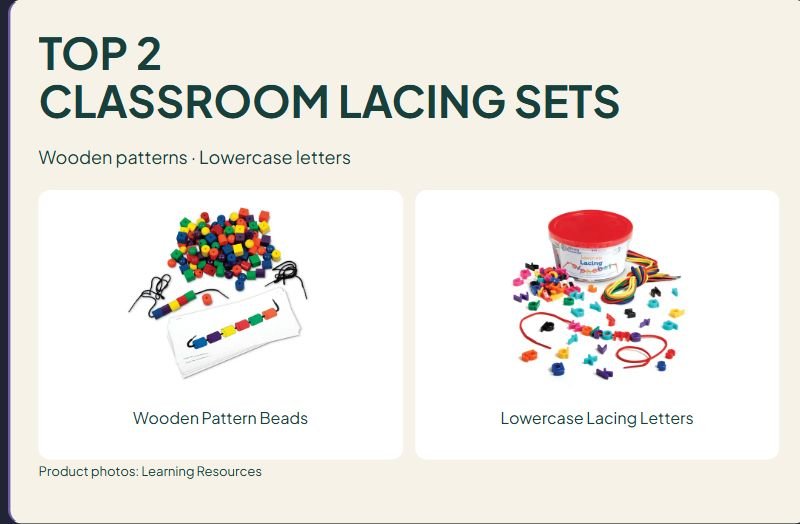
Wooden Pattern Beads

Lowercase Lacing Letters
Product photos: Learning Resources
Affiliate disclosure: As an Amazon Associate I earn from qualifying purchases. Purchases through our links may earn a commission at no additional cost to you.
Classroom lacing sets can look similar in a shopping photo, but the pieces change the activity. Wooden shapes suit copying and extending patterns. Lowercase letter pieces suit selecting letters and threading short words. Before comparing the headline piece counts, count the supplied laces: that number can be a more useful starting point for planning a center.
This comparison covers two Learning Resources sets with different purposes. It draws on manufacturer specifications, rather than hands-on testing. Neither is a substitute for direct instruction, and a long string of letters does not show that a child understands the sounds or meaning of a word.
Quick comparison
| Set | Manufacturer-listed contents | Useful starting task | Main planning limitation |
|---|---|---|---|
| Beads & Pattern Cards, LER0139 | 108 wooden beads, 20 activity cards, two 36-inch laces | Copy a short repeating color or shape pattern | Two supplied laces limit simultaneous threading |
| Lowercase Lacing Alphabet, LER6402 | 260 plastic lowercase letters, 15 laces | Select letters for a familiar short word | Check the actual duplicate letters needed for each group |
Both manufacturers' product pages specify ages 3+ and warn about small parts for children under 3. Match the task to the individual learner as well as the age label. Keep strings and small pieces in supervised activities and follow the current package instructions.
1. Beads & Pattern Cards Activity Set: for shape and color sequences
Learning Resources lists 108 wooden beads in six colors, with spheres, cubes and cylinders. Twenty activity cards provide models to follow. The two black laces are each 36 inches long, with 1-inch plastic tips, according to the manufacturer.
The useful distinction is the combination of loose shapes and printed models. A child can first arrange a sequence on the table, explain what repeats, then thread it. That separates the pattern decision from the handling task. It also gives the adult a chance to see whether a mistake comes from choosing the next piece or getting it onto the lace.
Why consider it: The same beads can support sorting, copying and extending patterns. A learner can make a color pattern while keeping the shape constant, then try a shape pattern with color held constant. Those are different challenges, even when both activities use the same tub.
Limitations: This is not a 108-student supply. Only two laces are included. A small group could share roles, but children waiting for a lace need a meaningful task, such as laying out or checking a sequence. If you need independent threading for more students, confirm compatible additional laces separately rather than assuming they come with the set.
An activity to try: Make a short red-blue repeating unit using the same bead shape. Ask the child to copy it with loose beads before threading. Then cover the next position and ask what should go there and why. Start with a short sequence rather than filling the entire lace.
Choose it when: The lesson goal is explaining a repeating unit or matching a visual sequence, with threading as part of the activity.
2. Lowercase Lacing Alphabet: for selecting and ordering letters
The Lowercase Lacing Alphabet, LER6402, includes 260 colored plastic lowercase letters and 15 laces. The manufacturer describes sorting letters and stringing words among its uses. This set changes the content of the task from geometric patterns to alphabet symbols.
Fifteen laces give a teacher more simultaneous threading materials than the two-lace bead set. However, that does not guarantee every student can build every word at once. The exact repeated letters required by names and word lists matter. Check the pieces in the actual set before assigning identical words across a group.
Why consider it: Loose letters let children select an ordered sequence before threading. An adult can model a short word, ask the child to find its letters, and discuss their order. The letters can also be used on the table when threading would add too much difficulty to the language task.
Limitations: This is a lowercase set. Do not buy it expecting uppercase pieces for the first letter of a name or sentence. Nor should selecting a piece be described as handwriting practice: threading letters and forming letters on paper are different actions. If the goal is quick word changes, threading and unthreading may take longer than arranging movable letters on a flat surface.
An activity to try: Choose one familiar short word with letters you have already taught. Place only the required pieces and a few carefully chosen alternatives in a tray. Ask the child to arrange the word first, explain the sequence, then thread it. Keep the spoken reading or spelling step explicit rather than treating completion of the string as the whole lesson.
Choose it when: You want a supervised letter-selection activity and have planned for the letter combinations each learner needs.
How to choose classroom lacing sets
Start with the lesson, then the handling action
Use the wooden set for color and shape sequences. Use the alphabet set for selecting and ordering lowercase letters. If a learner understands the content but struggles to thread, let them arrange the pieces first. You can observe the academic task without making lace handling the only way to respond.
Plan materials by working positions
For each table, list how many children will thread at once and how many will build or check sequences. Count the laces, trays and specific pieces required for those roles. A large total piece count can hide a shortage of the one item everyone needs at the same moment.
For alphabet work, prepare small selections matched to the lesson rather than putting all 260 pieces on the table. That makes setup and cleanup more manageable and lets you check whether duplicate letters are available before students begin.
Keep cleanup part of the activity
Use a tray or clearly defined work area so loose pieces stay together. At the end, return pieces to the agreed containers and count the laces. Inspect the materials according to the package care instructions before the next session. Storage is especially important when younger children share the room.
Questions before buying
Which set is better for a whole class?
Neither listing's total piece count answers that alone. The wooden set supplies two laces; the alphabet set supplies 15. Decide whether your class will rotate through a center, work in pairs or thread independently, then check the necessary quantities. Do not assume either pack supplies one complete independent activity for every student.
Are lacing letters the same as magnetic letters?
No. These lowercase pieces are intended for threading. If you want to move letters quickly on a magnetic surface, choose a verified magnetic product and check the surface compatibility. For this activity, threading time is part of the practical tradeoff.
Does this guide include customer ratings or test results?
No. This comparison uses manufacturer-listed contents and editorial activity planning. We have not tested these sets or verified customer review excerpts for this guide. Check the current Amazon listing's selected model, contents, seller and return information before ordering.
For a format that lets children rearrange letters without unthreading them, see our magnetic letter set comparison. Choose the handling action that fits the lesson, and check the required letter combinations before group work.






Leave a Comment