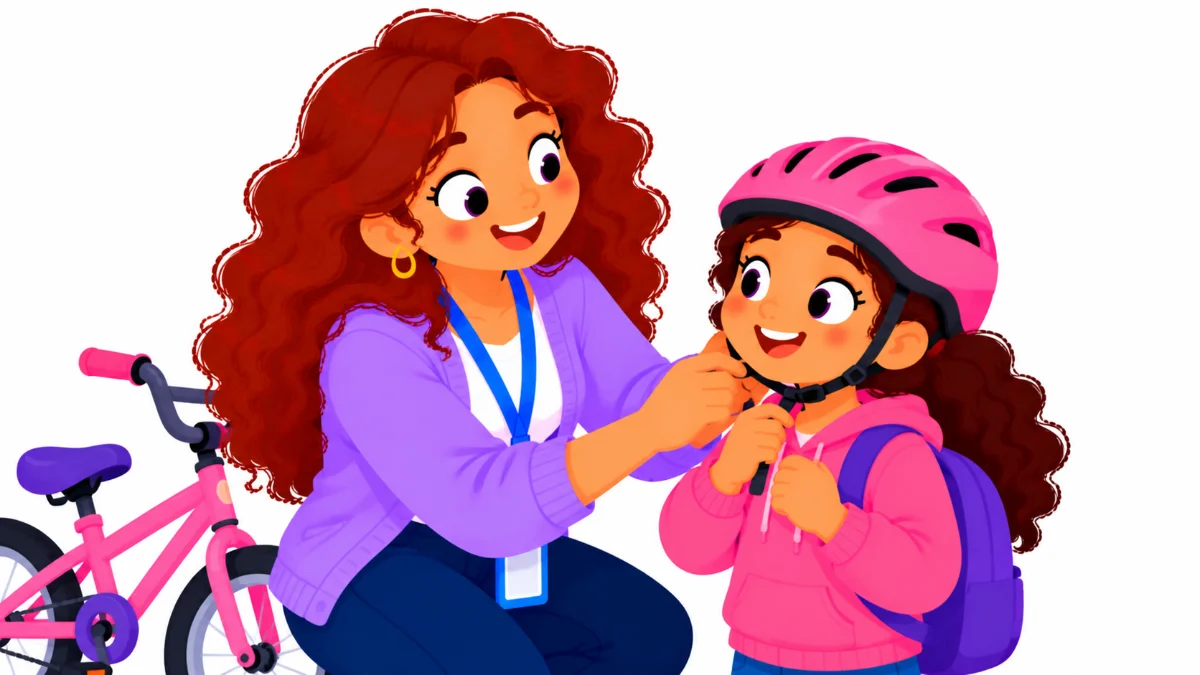

Summer safety for kids is easy to talk about and much harder to teach. A child can repeat “wear sunscreen” and “stay near the lifeguard” in June, then forget both on the first hot afternoon at the pool. Knowing a rule and using it in the moment are two different skills.
This guide shows you how to close that gap. After reading, you will be able to pick the summer situations that matter most for one student, break each skill into small observable steps, practice with real scenarios, record progress on a simple checklist, and share the results with the family before the break begins.
Examples are fictional. Adapt to the student’s goals and agreed supports. This is guidance, not a diagnosis.
At a glance
- Choose two or three summer situations the student will really face.
- Turn each rule into steps you can see and count.
- Practice with scenarios first, then in real places with an adult nearby.
- Record steps done on a short checklist, not a general impression.
- Share the checklist with families so practice continues all summer.
1. Pick the summer situations that matter most
First, resist the urge to teach every summer risk at once. Sun, water, bikes, insects, fireworks, travel, and screens all matter. However, a student learns more from three well-practiced situations than from twelve rushed ones.
Start by asking the family a few simple questions. Where will the child spend most of the summer? Will there be a pool, a lake, or a beach? Does the child ride a bike or scooter? Will the child be home alone for short periods? The answers point you to the situations that matter most.
For example, Leo is a fictional ten-year-old in a life skills class. His family plans weekly trips to a community pool, and he rides his bike in the neighborhood with his older sister. He also tends to stay outside on hot days until he feels unwell. Therefore, his teacher, Mr. Ortiz, picks three situations: water and pool safety, bike safety, and heat and hydration.
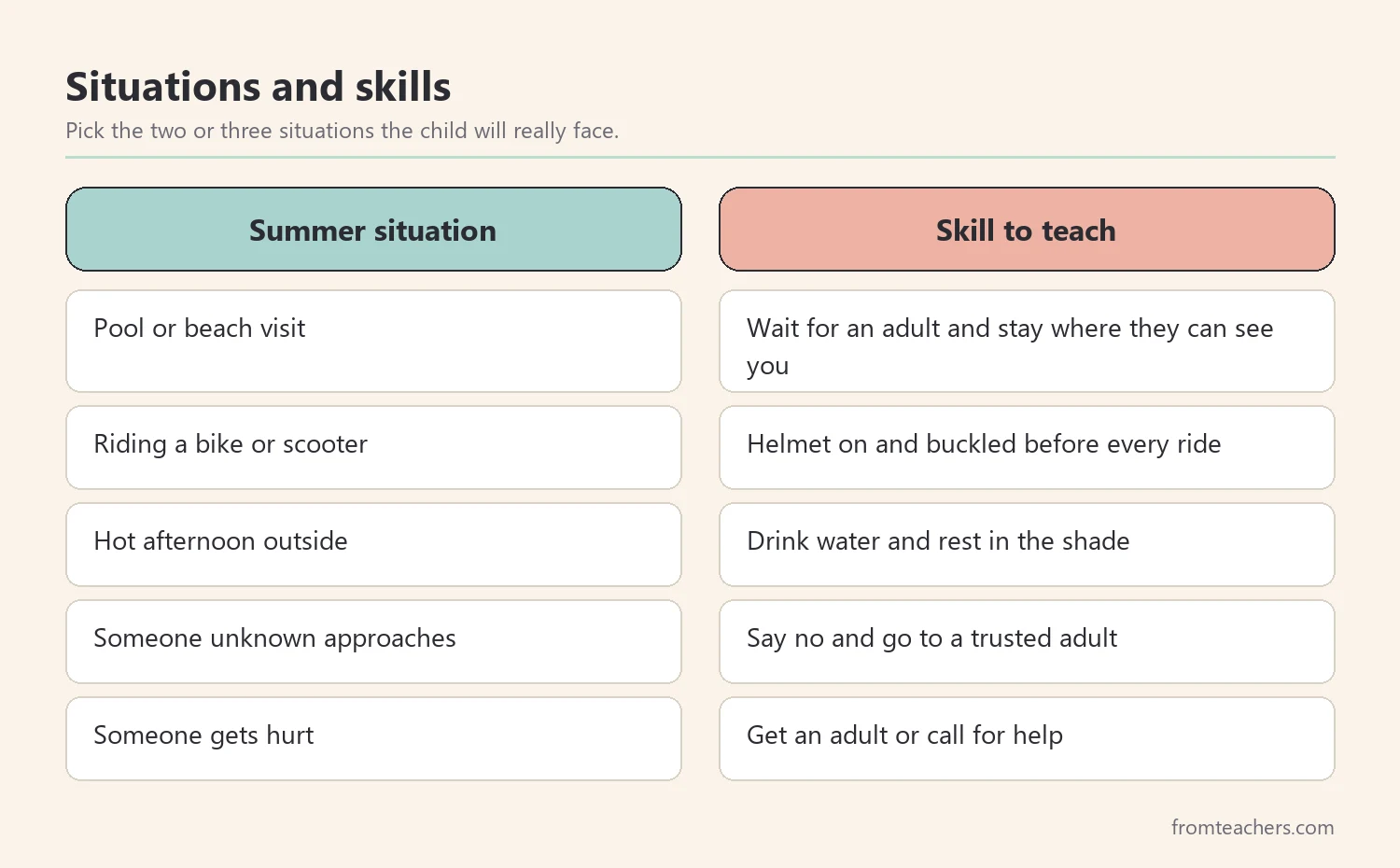
Questions to ask the family
| Question | Why it matters |
|---|---|
| Where will the child spend most days? | Shows the main settings to practice in. |
| Is there water nearby? | Points to pool, lake, or beach routines. |
| Does the child ride a bike or scooter? | Points to helmet and road routines. |
| Who supervises during the day? | Tells you who needs a copy of the plan. |
| Any trips or big events planned? | Flags travel or fireworks routines. |
Next, notice what the child already does well. If Leo always wears his helmet, that routine needs only a quick check, not a full unit. In contrast, a routine he often skips deserves the most teaching time. This way, your summer safety for kids plan stays short and focused.
Also, write the choice down with a short reason. This makes it easy to explain your plan at a family meeting. In addition, it keeps the team from drifting into extra topics before the first skills are solid.
2. Break each summer safety skill into observable steps
A rule like “be safe at the pool” is too broad to teach or measure. Instead, describe what the child does, in order, in words anyone could check. This is often called a task analysis, and it is the core of good summer safety for kids.
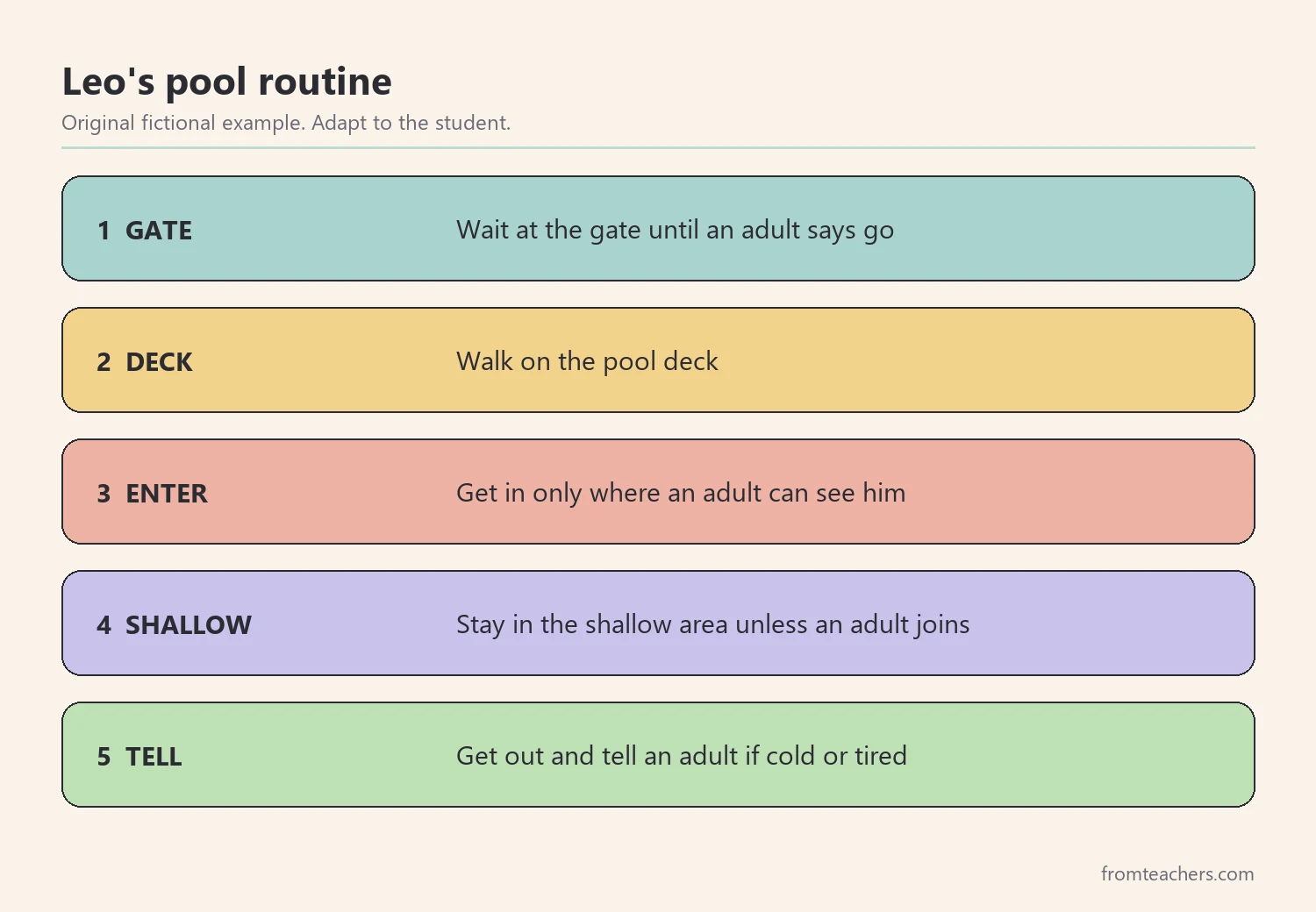
For Leo’s pool routine, Mr. Ortiz writes five steps:
- Wait at the gate until an adult says “go.”
- Walk, do not run, on the pool deck.
- Get into the water only where an adult can see him.
- Stay in the shallow area unless an adult joins him.
- Get out and tell an adult if he feels cold or tired.
Each step is something you can see. Either Leo waited at the gate, or he did not. As a result, two adults watching the same moment will record the same answer.
Similarly, the bike routine might include putting on a helmet, buckling the strap, checking for cars at the driveway, and riding on the side the family agrees on. The heat routine might include drinking water at set times, resting in the shade, and telling an adult when he feels dizzy or too hot. Keep each list to four to six steps.
Tips for writing good steps
- Start each step with a verb: wait, walk, buckle, drink, tell.
- Avoid vague words like “carefully” or “properly.”
- Match the steps to the family’s actual rules.
- Check with the family before you teach the routine.
3. Teach with scenarios and role play
Next, practice the routine in a calm setting before the real one. Scenarios let a child rehearse a decision without real danger. They also let you pause, ask a question, and try again.
For instance, Mr. Ortiz uses short scenario cards. One card says, “You are at the pool gate. Your friend runs in. What do you do?” Leo answers, then acts it out in the classroom with a taped “gate” on the floor. If he forgets a step, Mr. Ortiz models it and lets him try again.
Role play works especially well for stranger awareness and personal boundaries. For example, students practice saying “No, I need to ask my grown-up” and walking to a trusted adult. Keep the tone calm and practical. The goal is a confident routine, not fear.
If you want ready-made pages for this step, the summer safety skills checklists cover twelve real situations, including water and pool safety, bicycle safety, stranger awareness, and first aid and when to call for help. You can pick only the pages that fit your student.
4. Practice in real settings with support
Once the child knows the routine in class, move it into a real setting. Skills learned in one place do not always carry over to another. Therefore, practice where the skill will actually be used, with an adult close by.
Start with the most support the child needs, then fade it. At first, an adult might walk the child through each step. Later, a short spoken reminder may be enough. Finally, the child completes the routine alone while the adult simply watches.
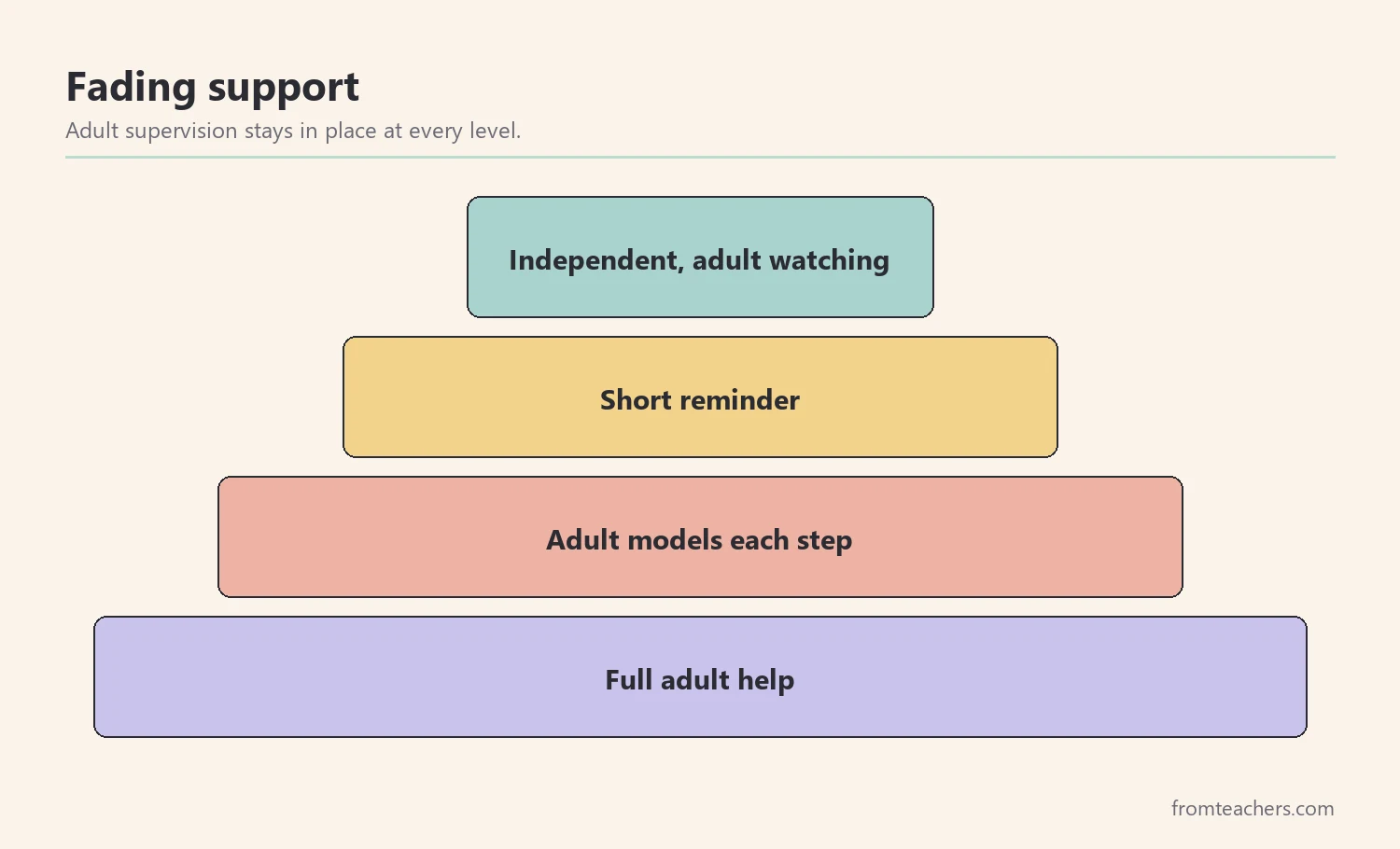
For Leo, the school arranges a practice visit to a local pool with family consent. On the first visit, his aide shows each step and stands next to him. By the third visit, she gives a single reminder at the gate. Meanwhile, his family practices bike checks in the driveway on weekends.
Making real-setting practice go smoothly
- Visit at a quiet time, when the space is less crowded and noisy.
- Bring the same scenario card used in class as a visual reminder.
- Agree on one short phrase every adult will use for each step.
- Keep the first visits short, and end on a success.
- Write down any step that looked different in the real place.
Also, expect some steps to slip in a new setting. Noise, heat, and excitement make routines harder. That is normal, and it simply tells you where to add support for the next visit.
Remember that adult supervision around water is never faded. A child can become independent in the steps of a routine, but an adult still watches. In the same way, helmet use and road rules stay in place no matter how skilled the child becomes.
5. Record summer safety for kids with a simple checklist
Without data, progress becomes a guess. A short checklist lets you count steps completed without help each time the child practices. That number is easy to share and easy to compare from week to week.
For each practice, mark every step as done alone, done with a reminder, or not done. Then count the steps done alone. Keep a note about the setting and the support level. Over time, you will see which steps are solid and which still need teaching.
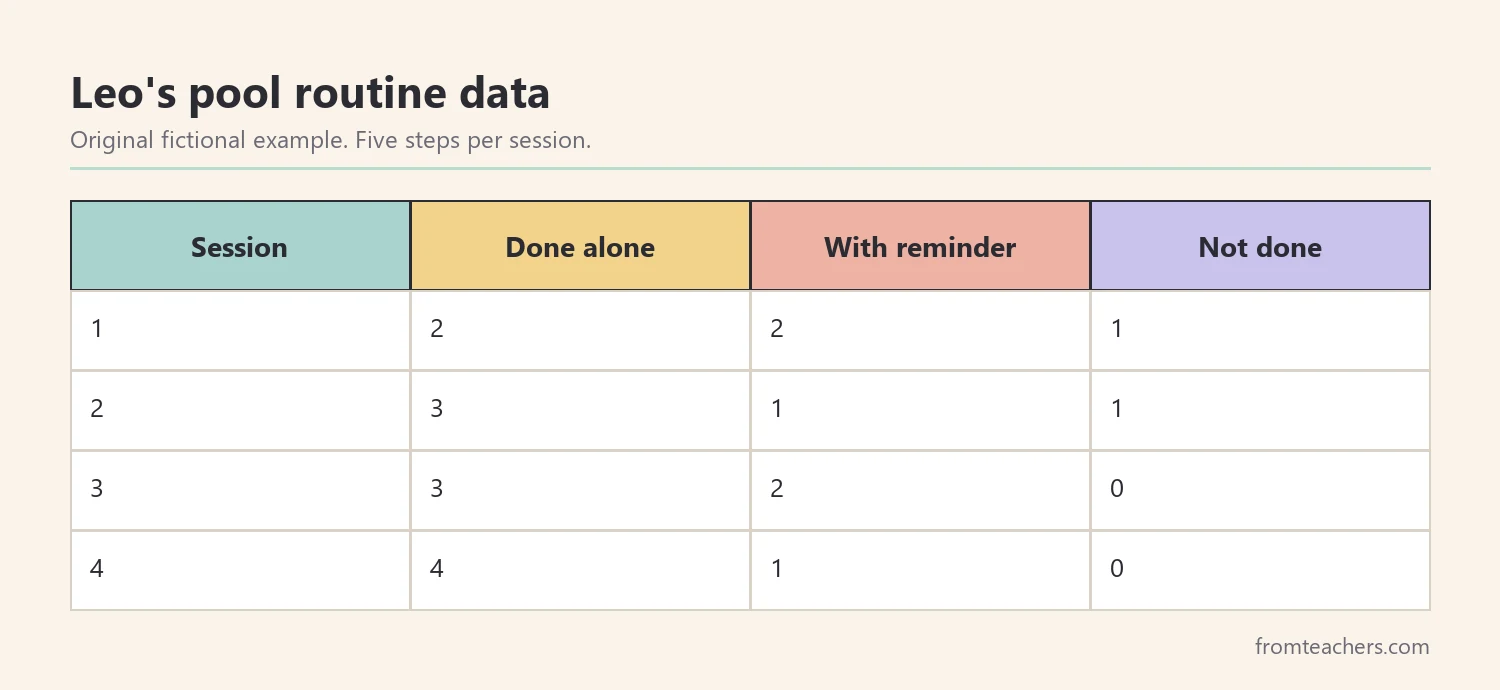
In Figure 4, Leo’s first session shows 2 steps done alone, 2 with a reminder, and 1 not done, which adds up to the 5 steps in the routine. By the fourth session, he does 4 steps alone and needs 1 reminder. The step he still needs help with is telling an adult when he feels cold or tired, so that becomes the next teaching focus.
Also, keep notes short and factual. “Waited at gate without reminder” is more useful than “did great today.” Specific notes help families and other staff continue the same routine.
What to write on each entry
- Date and setting, such as classroom, pool, or driveway.
- Steps done alone, with a reminder, and not done.
- Support level used during the practice.
- One sentence about what to teach next.
6. Review and share the plan with the family
Summer is when school staff step back and families take over. Because of that, the last step is a clear handoff. Share the routines, the latest checklist, and one or two goals the family can keep practicing.
Keep the handoff short. A single page with the routine steps and an empty checklist is often enough. In addition, include a short list of when to call for help, written in simple words the child can also understand.
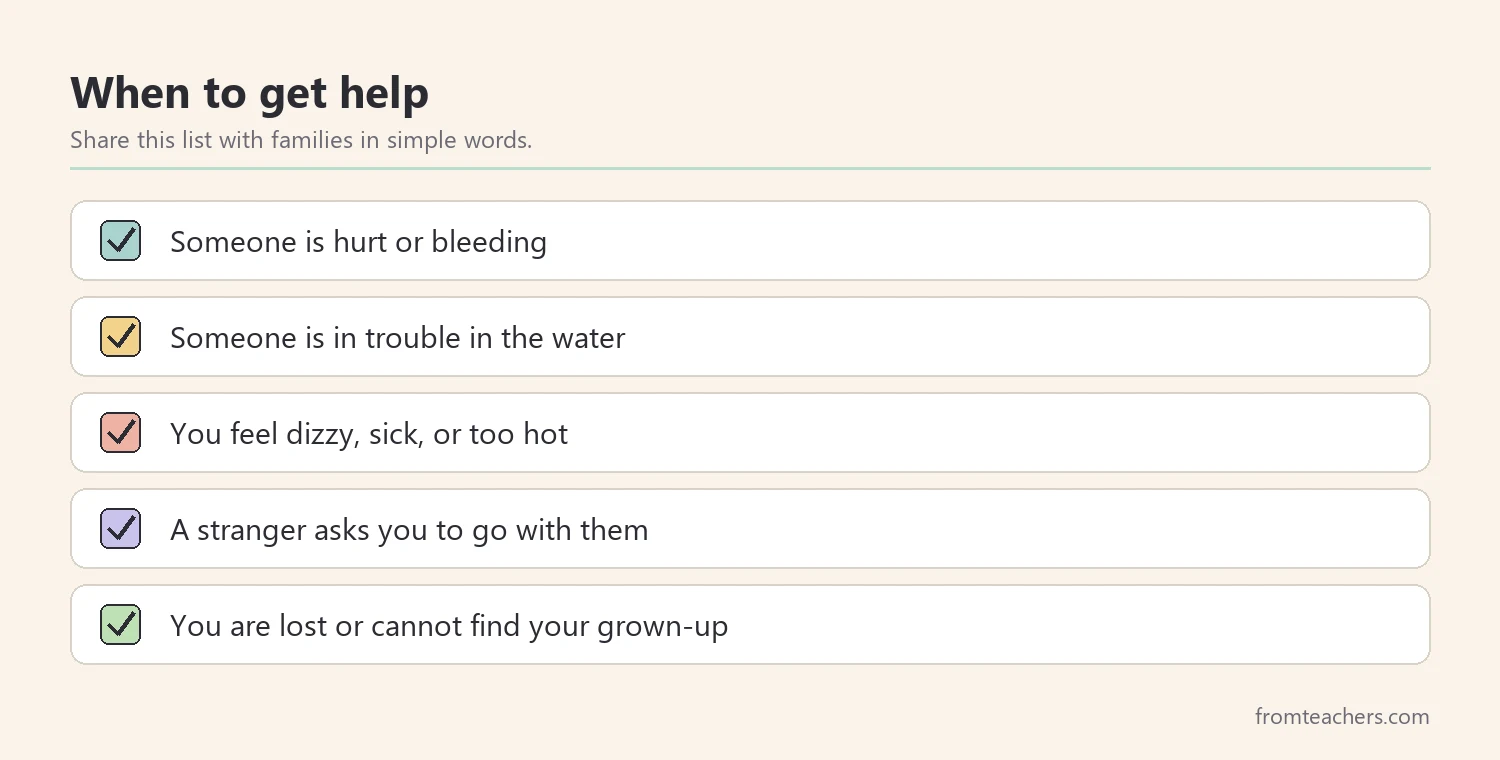
For Leo, Mr. Ortiz sends home the pool, bike, and heat routines with blank checklists. His family agrees to record one pool visit each week. When school starts again, the team compares the summer checklists with the June data. As a result, they know right away which routines held up and which need a refresher.
Finally, thank the family for their part. Safety routines grow strongest when home and school use the same steps and the same words.
Common mistakes and how to avoid them
- Teaching too many topics at once. Fix: pick two or three situations based on the child’s real summer plans.
- Using vague rules. Fix: write routines as short, observable steps that start with a verb.
- Practicing only in the classroom. Fix: move practice into real settings with an adult close by.
- Fading supervision along with prompts. Fix: fade reminders, but keep adult supervision around water and traffic.
- Recording general impressions. Fix: count steps done alone on a checklist each time.
- Ending the plan when school ends. Fix: hand families the routines and blank checklists for the summer.
Questions teachers and parents ask about summer safety for kids
At what age should children start learning summer safety skills?
Young children can start with simple routines, such as waiting at the pool gate or wearing a hat. As they grow, the steps become more detailed. The right starting point depends on the child’s skills, not only on age.
How many steps should a safety routine have?
Four to six steps is a good range for most students. Fewer steps may skip something important. More steps can feel overwhelming and are harder to record.
Should I teach stranger awareness without scaring the child?
Yes. Focus on simple actions, such as saying “No” and going to a trusted adult. Practice in a calm, matter-of-fact way. The goal is confidence, not fear.
Can these routines be used for students without disabilities?
Absolutely. Clear steps and short practice help every child. The checklist approach simply makes progress easier to see and share.
What if the child does well in class but not at the pool?
That is common. Skills often need practice in each new setting. Go back to more support at the pool, then fade it again step by step.
Related reading: Navigating the Path to Adulthood: Building Essential Life Skills, The Power of Data Tracking in Special Education, and How Parents and Teachers Can Team Up for Special Education Success.
A companion resource for teaching summer safety for kids:
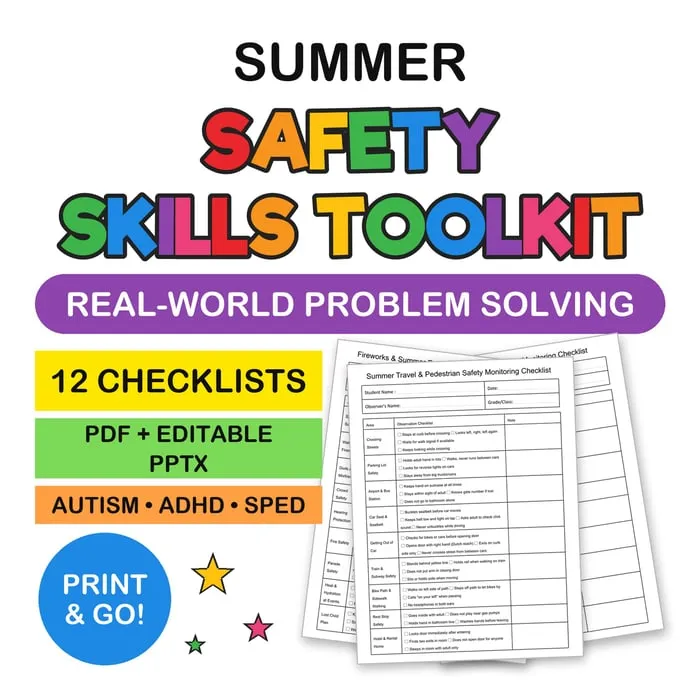
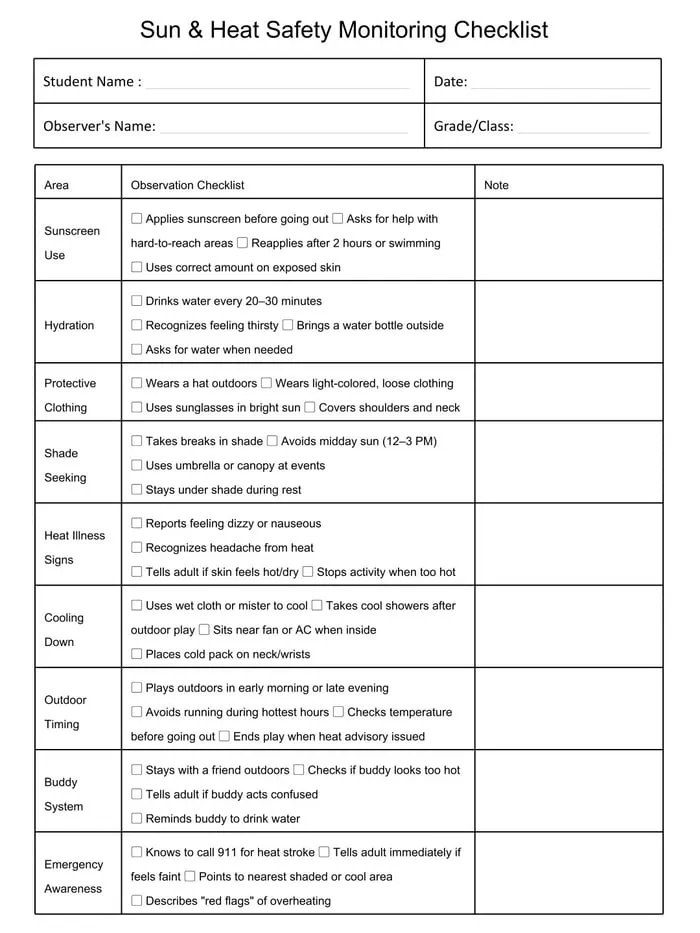
Summer Safety Skills Toolkit: Real-World Scenarios and Problem Solving Checklists: a set of 12 monitoring checklists for life skills teachers, therapists, and families, covering sun and heat, water and pool, stranger awareness, bikes, home alone and emergencies, first aid, and more. Includes a PDF and an editable PowerPoint version.
Sources and scope
- HealthyChildren.org: the American Academy of Pediatrics website for parents, with general guidance on child safety topics.
- Centers for Disease Control and Prevention: public health information, including injury prevention and heat safety.
- American Red Cross: resources on water safety and first aid.
- National Highway Traffic Safety Administration: information on bicycle and pedestrian safety.
- Safe Kids Worldwide: a nonprofit focused on preventing childhood injuries.
This guide covers how to teach and track everyday safety routines at school and home. It does not replace swimming lessons, first aid training, medical advice, or the safety rules of a specific pool, park, or program.
Key takeaways
- Choose a few summer situations based on the child’s real plans.
- Write each routine as four to six observable steps.
- Practice with scenarios, then in real settings with support.
- Fade reminders, but never fade adult supervision around water and traffic.
- Record steps done alone and hand the routines to families for the summer.




Leave a Comment