
Student voice strategies help a teacher hear what a student really thinks about their own school day. Picture a planning meeting where adults discuss a fifth grader’s goals for an hour, and the student is asked one question at the very end: “Is that okay with you?” She nods, and the meeting closes.
That nod is not real voice. After reading this guide, you will be able to capture a student’s own words, build real choices into lessons, plan peer roles, keep two-way communication with families, prepare the student for changes, and show the student that what they said led to action.
Examples are fictional. Adapt to the student’s goals and agreed supports. This is guidance, not a diagnosis.
At a glance
- Record the student’s own words, in the way they communicate best.
- Offer small, real choices in every lesson, not just once a term.
- Give students shared roles with peers, not only helpers around them.
- Keep a short, two-way exchange with the family every week.
- Close the loop: tell the student what changed because they spoke up.
1. Capture the student’s own words
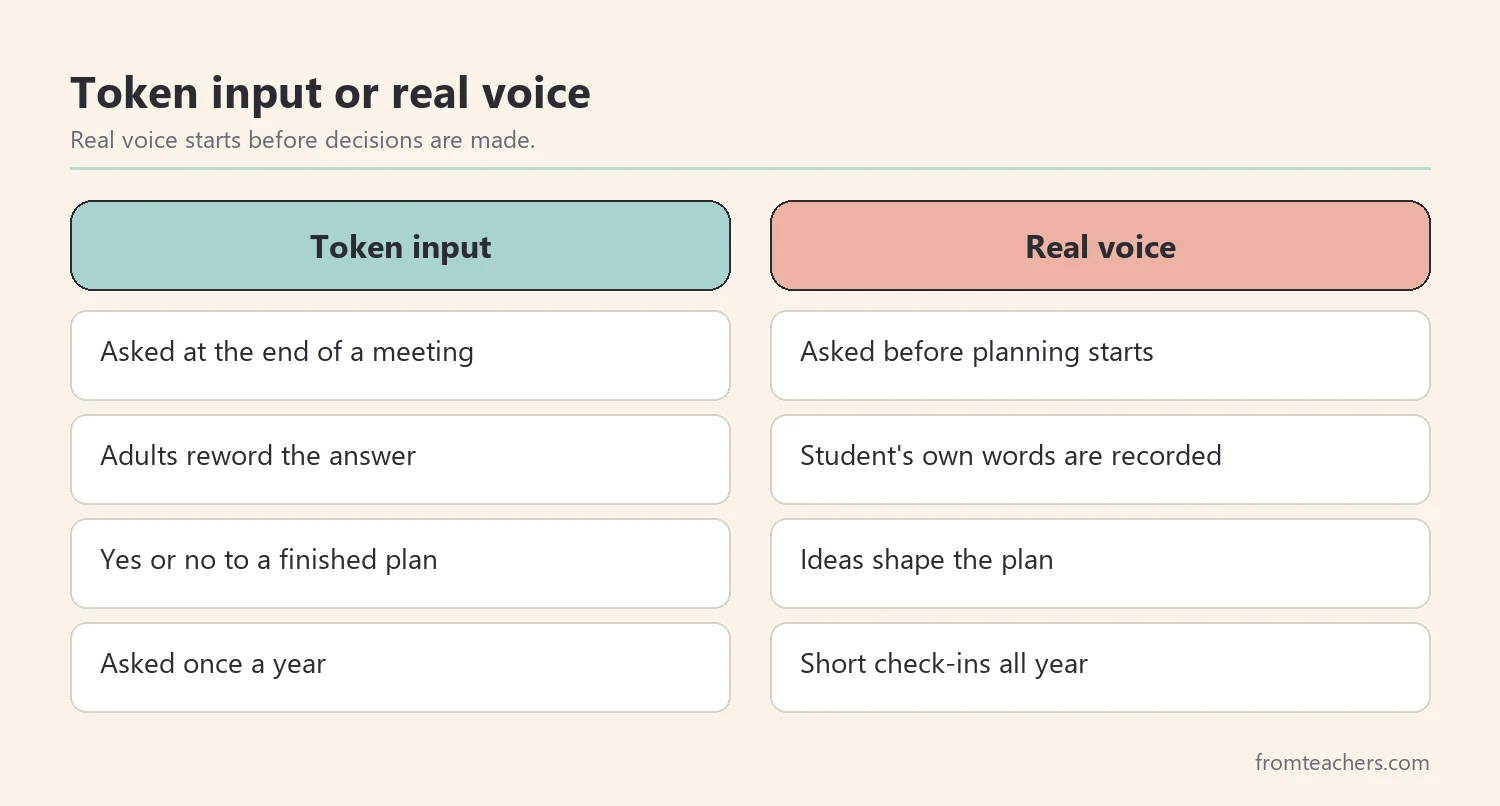
First, collect what the student says about school before adults decide anything. Ask what they enjoy, what feels hard, what helps, and what they want to get better at. Then write their answers in their own words, not in adult language.
Not every student answers in full sentences, and that is fine. Some students point to pictures, use a communication device, or answer yes and no questions. Others share more through drawing or by showing you an object. Therefore, choose a format that fits the student, and record the answer exactly as given.
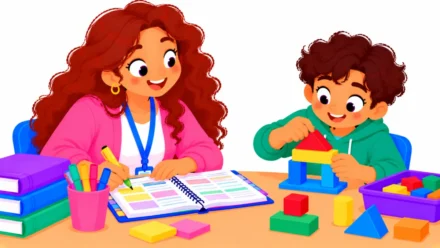
For example, Nora is a fictional fifth grader who uses short phrases and picture cards. Her teacher, Mr. Hayes, sits with her for ten minutes and shows cards for different parts of the day. Nora points to “reading with a partner” and says “good.” She points to “writing” and says “too long.” Mr. Hayes writes both answers down word for word.
Good questions to start with
- What is the best part of your school day?
- What part feels too hard or too long?
- What helps you when work feels hard?
- Who do you like working with?
- What do you want to get better at this year?
Making the conversation comfortable
Choose a calm time and a quiet place. A student who just came in from a noisy recess may not be ready to talk. In addition, sit beside the student rather than across a desk, and keep the session short.
Next, explain why you are asking. For example, “I want to plan your day with your ideas in it.” Students share more when they know their answers will be used. Finally, thank them for every answer, including “I don’t know.”
Also, ask again over time. One conversation in September gives you a snapshot, not a full picture. Short check-ins every few weeks show how the student’s views change.
2. Build real choices into every lesson
Next, turn what you heard into choices the student can make every day. Choice is one of the simplest student voice strategies, and it works best when it is small and frequent. A choice between two ways to show learning often matters more than a big choice once a term.
Plan choices by lesson phase. At the start, the student might choose where to sit or which example to try first. During practice, they might choose a partner, a tool, or a format. At the end, they might choose how to share what they learned.
| Lesson phase | Choice offered | Nora chose |
|---|---|---|
| Start | Seat at table or carpet | Table |
| Practice | Write or draw and label | Draw and label |
| Practice | Work alone or with a partner | Partner |
| Share | Tell the class or tell the teacher | Tell the teacher |
For Nora, writing felt “too long.” So during a science lesson, Mr. Hayes offers two ways to record an experiment: write three sentences, or draw the result and add labels. Nora chooses to draw and label. She finishes, and her labels show she understood the idea. As a result, the choice removed a barrier without lowering the goal.
If you want a ready form for this step, the family and student voice forms pack includes a student voice and choices form and an inclusive lesson preparation sheet for planning access and participation by lesson phase.
3. Plan peer roles that include every student
Inclusion means more than sitting in the same room. A student needs a real role in what the group is doing. However, peers often do not know how to invite a classmate who communicates or moves differently. That is where a little planning helps.
Start by looking at the group activity and listing the roles inside it: materials manager, timekeeper, reader, illustrator, or reporter. Then match a role to the student’s strengths and preferences. Finally, teach peers a simple, accessible way to invite the student into the task.
For example, in a group project on habitats, Nora takes the role of illustrator. Her partner reads the facts aloud, and Nora draws the habitat. At the end, she holds up the picture while her partner explains it. Because the role fits her strengths, she contributes something the group really needs.
Making peer invitations accessible
- Teach peers to offer two clear options instead of open questions.
- Show peers how to wait for an answer without rushing.
- Rotate roles so the student is not always the helper or the helped.
- Check with the student privately about how the group felt.
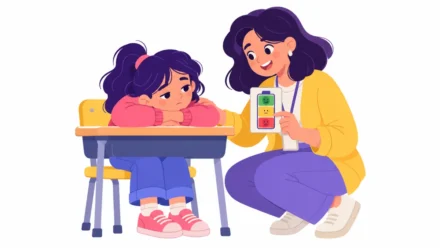
Afterward, ask the student how the group work felt. A quick thumbs up, thumbs down, or a choice between two faces is enough. If the role did not feel right, try a different one next time. Over the weeks, these short check-ins turn peer planning into one more of your everyday student voice strategies, because the student helps decide where they fit in the group.
Also, notice how peers change. Classmates who learn to wait for an answer and offer clear options often start doing it without reminders. That shift benefits the whole class.
4. Open two-way communication with families
Families know things about a student that school staff never see. They know what the child talks about at dinner, what worries them at bedtime, and what makes them proud. Strong student voice strategies include the family as a partner, not just an audience.
Two-way means the family can share too, not only receive updates. A short weekly exchange works well. School writes one success and one thing to try at home. The family writes one thing from home and one question. Keep it brief so it actually happens.
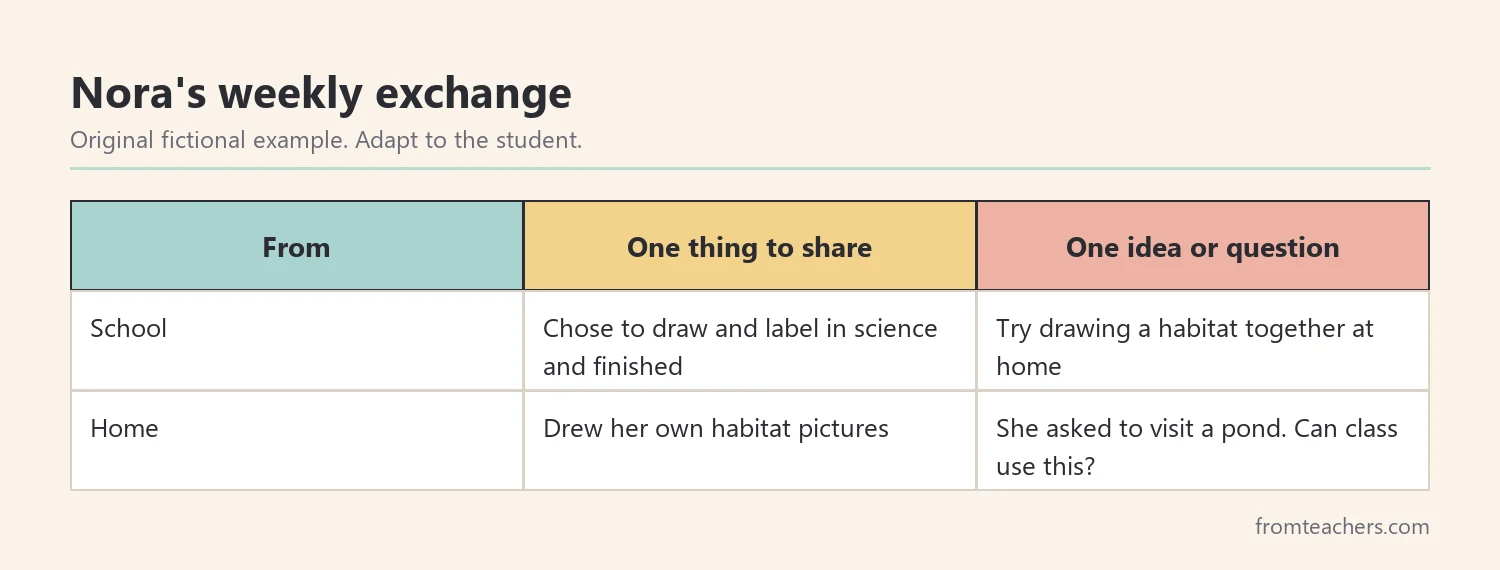
For Nora, Mr. Hayes and her family use a simple exchange sheet. In one week, the school shares that Nora chose to draw and label in science and finished the task. Her family writes back that she drew her own pictures of the habitat at home and asked to visit a pond. That note gives Mr. Hayes an idea for the next lesson.
Also, agree on communication early. A family partnership planner can capture how often you will share, which method works best, and how the family wants to be involved. In addition, a home learning agreement can set one manageable practice activity instead of a long list of homework.
5. Prepare for changes together
Changes in routine are hard for many students. A substitute teacher, a field trip, or a new classroom can feel overwhelming. Yet these moments are also good chances to practice voice, because the student can help plan what will help.
Before a change, tell the student what will be different and when. Then ask what would make it easier. The student might want a picture of the new place, a familiar object, or a partner they trust. Write their ideas down and use them.
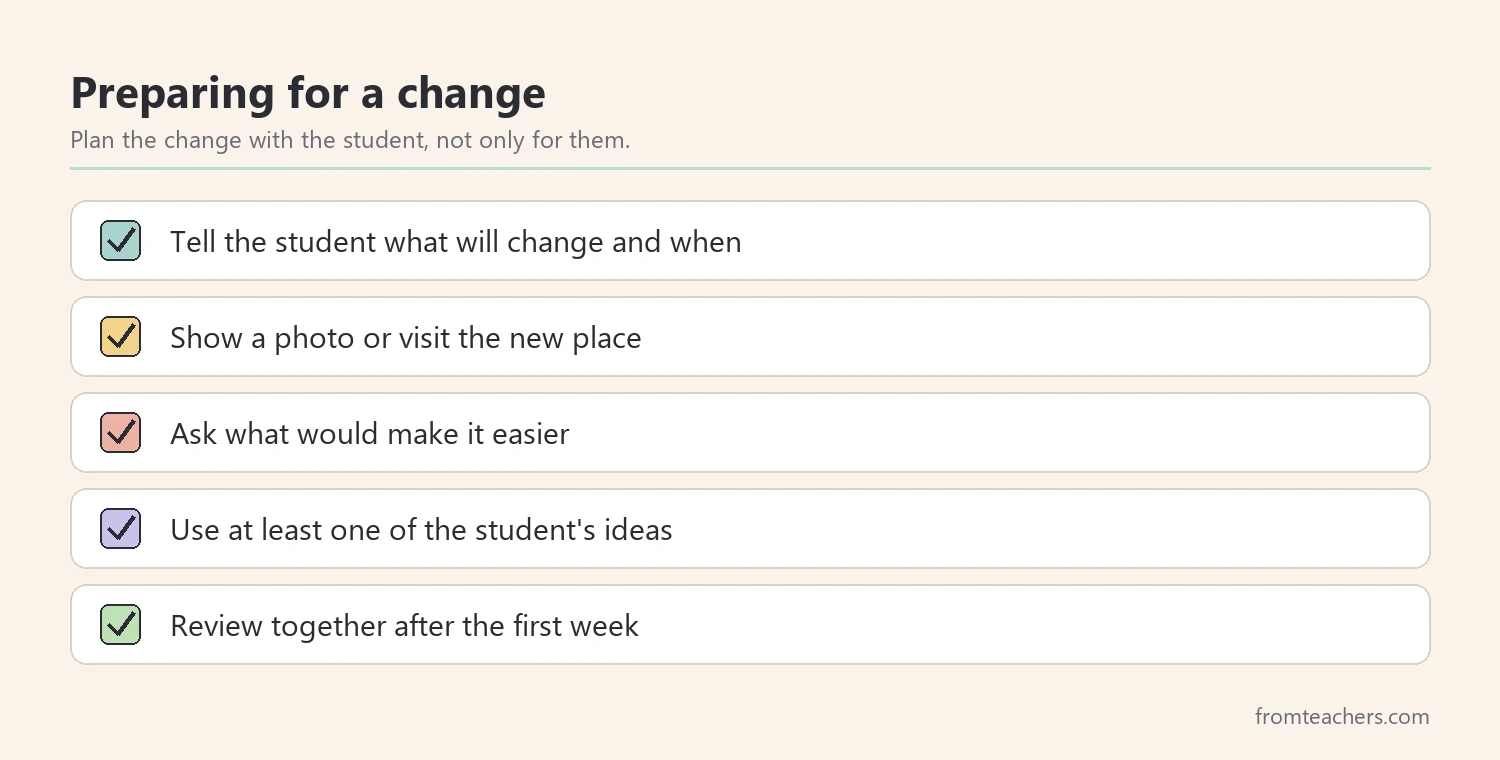
For instance, Nora’s class is moving to a new reading room after a winter break. Mr. Hayes shows her photos of the room and asks where she would like to sit. She chooses a table near the window. On the first day, he greets her at the door with her partner. After the week, they talk about what went well and what to change.
Changes that are worth planning for
| Change | One student voice question |
|---|---|
| Substitute teacher | What should the sub know about you? |
| Field trip | Who would you like to sit with on the bus? |
| New classroom | Where would you like your seat to be? |
| New schedule | Which part of the day worries you most? |
Finally, review the change afterward. Ask the student what helped and what did not. That review becomes part of their record of voice, and it helps you plan the next change.
6. Close the loop on student voice strategies
Voice only matters when it leads to action. If a student shares ideas and nothing changes, they quickly learn that speaking up is pointless. Therefore, the last step is to show the student what happened because of what they said.
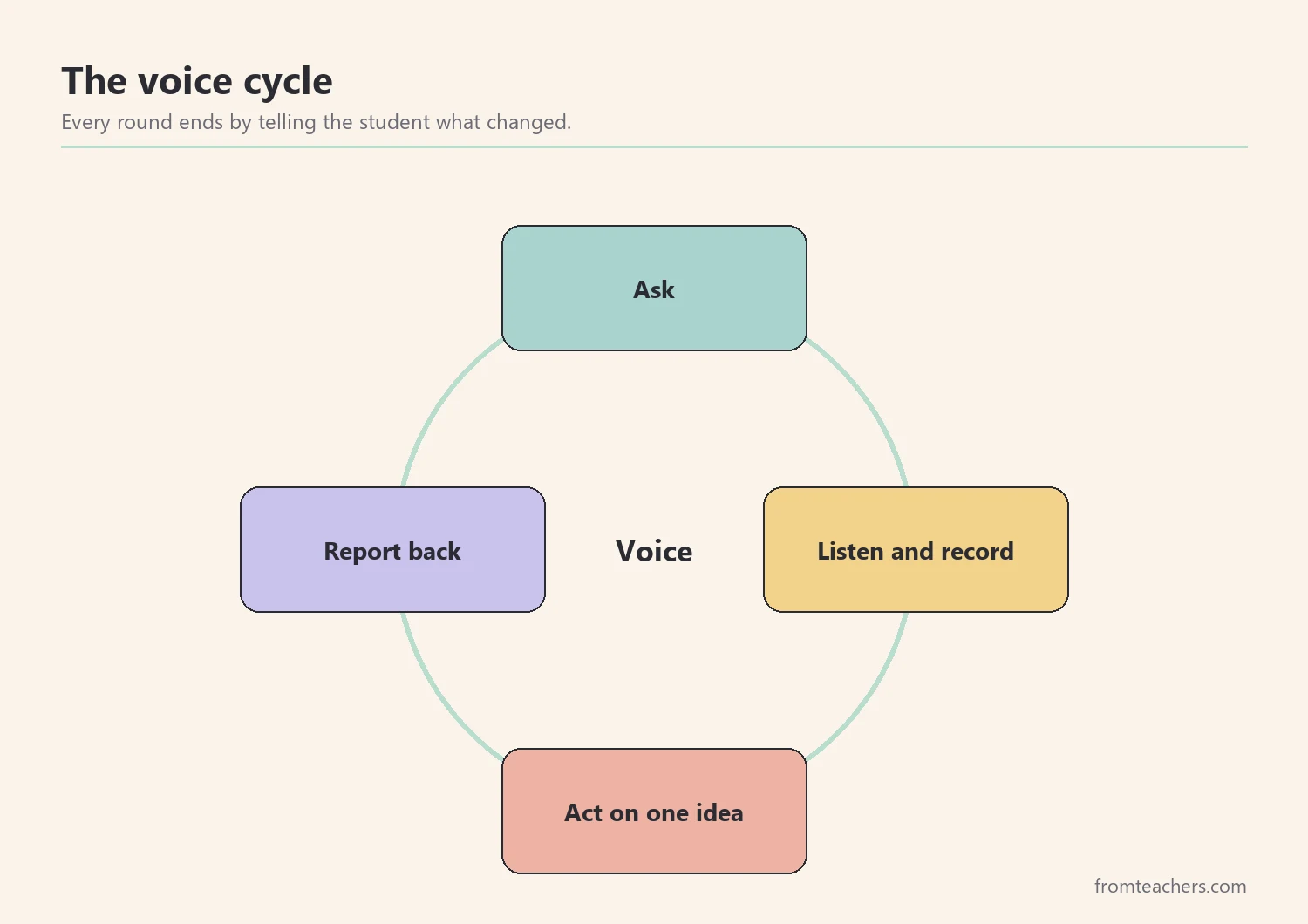
Use a simple cycle. Ask the student, listen and record, act on at least one idea, and then report back. “You said writing felt too long. Now you can choose to draw and label in science.” That one sentence tells the student their words had power.
Also, look at work samples when you review progress. A work sample analysis can help you separate what a student knows from the conditions of the task. For example, Nora’s labeled drawing showed she understood the science idea. The long writing task had hidden that understanding.
Finally, bring the student’s words to planning meetings. Read their answers aloud, or let the student share them in their own way. When the adults hear the student first, the plan starts from the right place.
Common mistakes and how to avoid them
- Asking only at the end of a meeting. Fix: collect the student’s views before adults make decisions.
- Rewriting the student’s words. Fix: record answers exactly as the student gave them.
- Offering choices that do not matter. Fix: give choices that change how the student accesses the task.
- Making families only receivers. Fix: use a two-way exchange where families share too.
- Never reporting back. Fix: tell the student what changed because they spoke up.
Questions teachers and parents ask about student voice strategies
How can a student with limited speech share their voice?
Use the way the student communicates best: pictures, a device, gestures, or yes and no questions. Give extra time to answer. Record the response exactly, and check your understanding with the student.
Won’t too many choices slow the lesson down?
Not if choices are small and planned. Two options are usually enough. Over time, students make choices quickly because the routine is familiar.
How often should I ask for student input?
Short check-ins every few weeks work well, plus quick choices every day. Also ask before big changes and before planning meetings.
What should parents do if their child’s voice is missing from plans?
Ask the team how the student’s views were collected. Share what your child says at home. You can also ask whether the student can attend part of the meeting or share ideas in advance.
Do these strategies work in general education classes?
Yes. Choice, peer roles, and two-way family communication help all students. They are especially useful in inclusive classes where students have different ways of learning and communicating.
Related reading: How Parents and Teachers Can Team Up for Special Education Success, How Teachers Communicate With Parents in Special Education: Building a Strong Partnership, and Accommodations vs Modifications in Special Education: The Difference Explained.
A companion resource for student voice strategies:
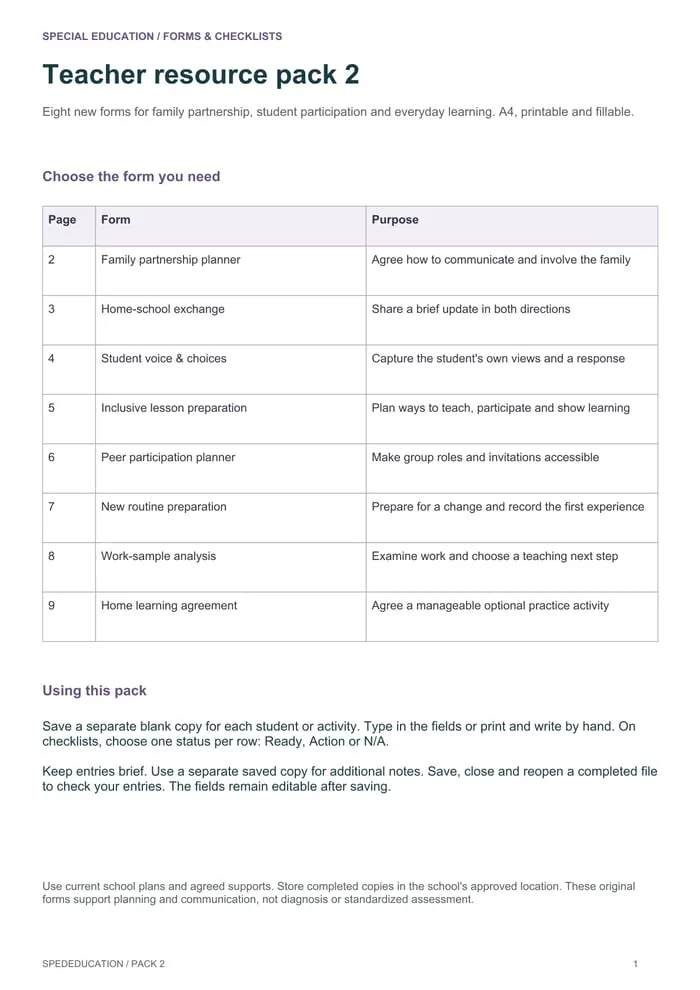
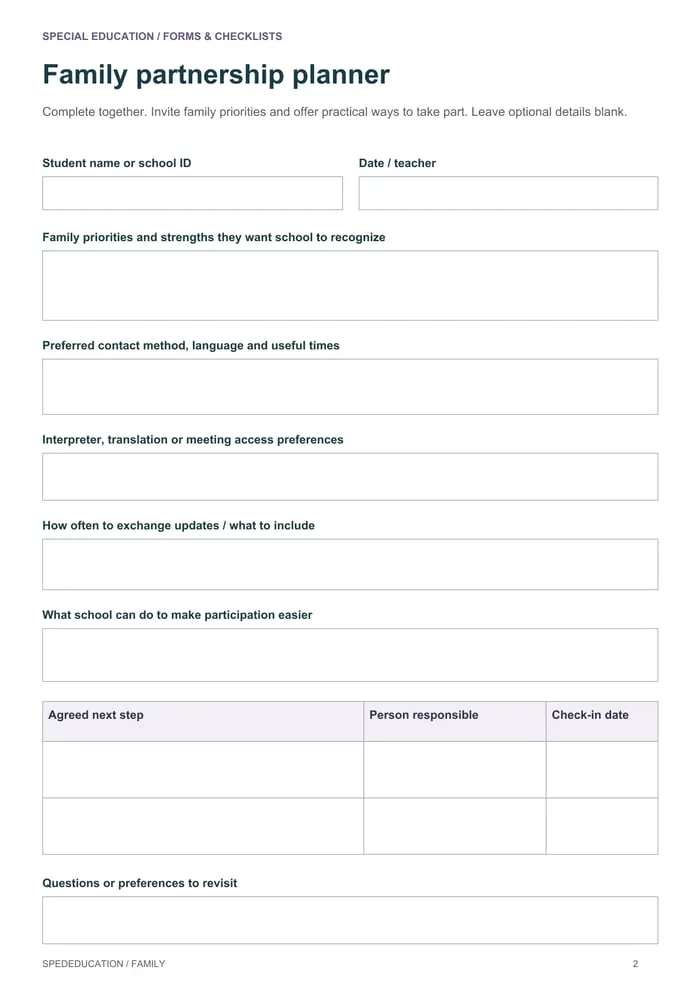
Special Education Family and Student Voice Forms Pack 2: eight fillable forms for family partnership and student voice, including a family partnership planner, home school exchange, student voice and choices form, inclusive lesson preparation sheet, peer participation planner, new routine preparation form, work sample analysis form, and home learning agreement.
Sources and scope
- Individuals with Disabilities Education Act: the U.S. Department of Education site on IDEA, including student and parent participation in planning.
- IRIS Center: free modules on inclusive practice and family engagement.
- CAST: the organization behind the Universal Design for Learning framework, which emphasizes options and choice.
- Center for Parent Information and Resources: resources for families of children with disabilities.
This guide covers practical ways to include student and family voice in everyday teaching and planning. It does not replace legal guidance on IEP procedures or the decisions of a student’s team.
Key takeaways
- Collect the student’s own words before adults make decisions.
- Offer small, real choices in every lesson phase.
- Plan peer roles that fit the student’s strengths.
- Keep a short two-way exchange with families.
- Always report back on what changed because the student spoke up.

Leave a Comment