
A modified lesson plan starts with a familiar moment. The class is about to begin a science lesson on the water cycle, and you already know one student cannot yet read the textbook passage or write the three-paragraph explanation everyone else will write. You do not want to hand her a coloring page. You want her to learn real science, at a level she can reach.
This guide shows you how to adapt one general education lesson for one student in five steps: start from the original objective, write the modified objective, adapt instruction, materials, and assessment, plan individualized activities and supports, then monitor progress. By the end, you will have a clear, one-page plan that a co-teacher, a paraprofessional, or a substitute can follow.
Examples are fictional. Adapt to the student’s goals and agreed supports. This is guidance, not a diagnosis.
At a glance
- Always begin with the grade-level objective, then decide what changes.
- Modifications change what the student learns; accommodations change how.
- Keep the modified objective connected to the same topic as the class.
- Plan instruction, materials, assessment, and supports on one page.
- Record progress after each lesson and review the plan with the team.
1. Start your modified lesson plan from the original objective
The most common shortcut is to start with the student and build something separate. Instead, start with the lesson the class is already doing. A modified lesson plan works best when it stays tied to the same topic, the same day, and the same classroom routines.
First, copy the original objective word for word. Then, underline the core idea students must understand. For example, in “Explain how water moves through the water cycle by evaporation, condensation, and precipitation,” the core idea is that water changes form and moves in a repeating cycle.
Next, gather the student information you need. A typical plan begins with the student’s name, grade, subject, and current IEP goals. Read those goals before you change anything, because the modifications should move the student toward them, not away from them.
Worked example. Maya is a sixth grader in a general education science class. Her IEP includes a reading goal for answering literal questions about short texts and a writing goal for producing complete sentences with a word bank. She participates well in hands-on activities. Her teachers want her in the water cycle lesson with the class, working on the same core idea.
Finally, list what Maya can already do with this topic. She can name rain and clouds and describes puddles drying in the sun. That is a useful starting point, and it tells you the modified objective should build from real-world examples she knows.
In addition, note the date and length of the lesson. A plan for a single forty-five minute period looks very different from a plan for a week-long unit, so set that boundary before you start writing.
2. Write the modified objective
Now decide what will change. Here, it helps to be precise about two terms. An accommodation changes how a student learns or shows learning, such as having text read aloud. A modification changes what the student is expected to learn, such as fewer concepts or a simpler level of the same skill. Our guide to accommodations vs modifications explains the difference in more detail.
If an accommodation is enough, you do not need a modified lesson plan at all. However, when the grade-level objective is beyond the student’s current level even with supports, the IEP team may agree to modify it. Write the new objective so it keeps the core idea, is observable, and can be checked in one lesson.
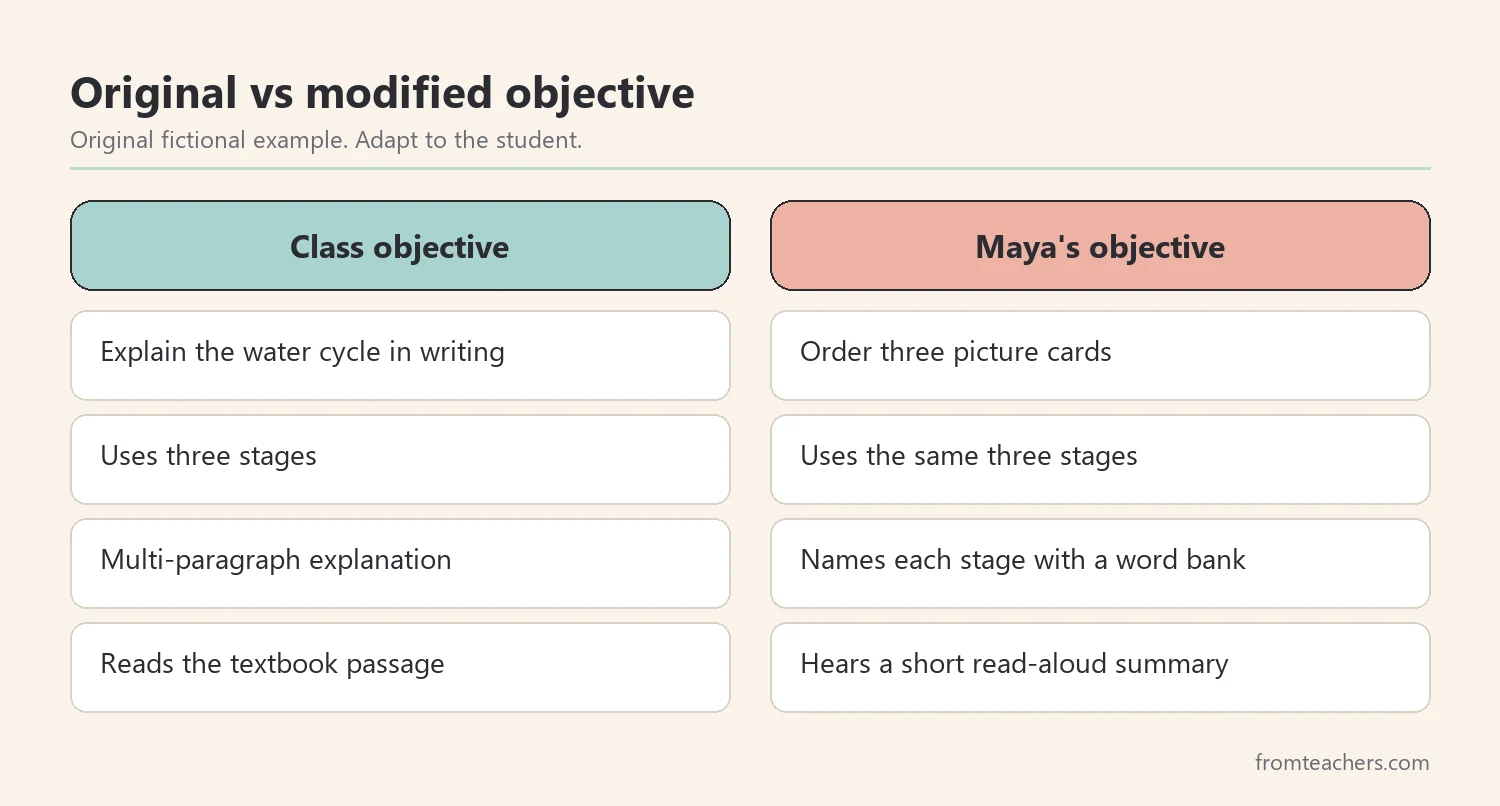
Worked example. The class objective asks students to explain the water cycle in writing using three stages. Maya’s modified objective reads: “Maya will put three picture cards in order (evaporation, condensation, precipitation) and name each stage, using a word bank.” She still learns the three stages and the cycle. However, she shows it through sequencing and naming instead of a multi-paragraph explanation.
Before you move on, check the modified objective against three questions. Is it the same topic as the class? Is it connected to an IEP goal? Can you tell, at the end of the lesson, whether she met it? If all three answers are yes, the objective is ready.
3. Adapt instruction, materials, and assessment
With the objective set, adapt the three parts of the lesson that most affect access. Keep each change small and specific, so any adult can follow it without guessing.
Instructional methods. Decide how the student will receive the key information. For instance, you might pre-teach three vocabulary words, use a short video clip, or give a hands-on demonstration before the class reading.
Materials. Then, choose or create materials at the student’s level: picture cards, a shortened text, a graphic organizer, or a word bank. Ideally, they look similar to what classmates use, so the student does not stand out.
Assessment. Finally, decide how the student will show learning. The assessment should measure the modified objective, not the original one. Otherwise, the student is graded on a goal no one expected her to reach.
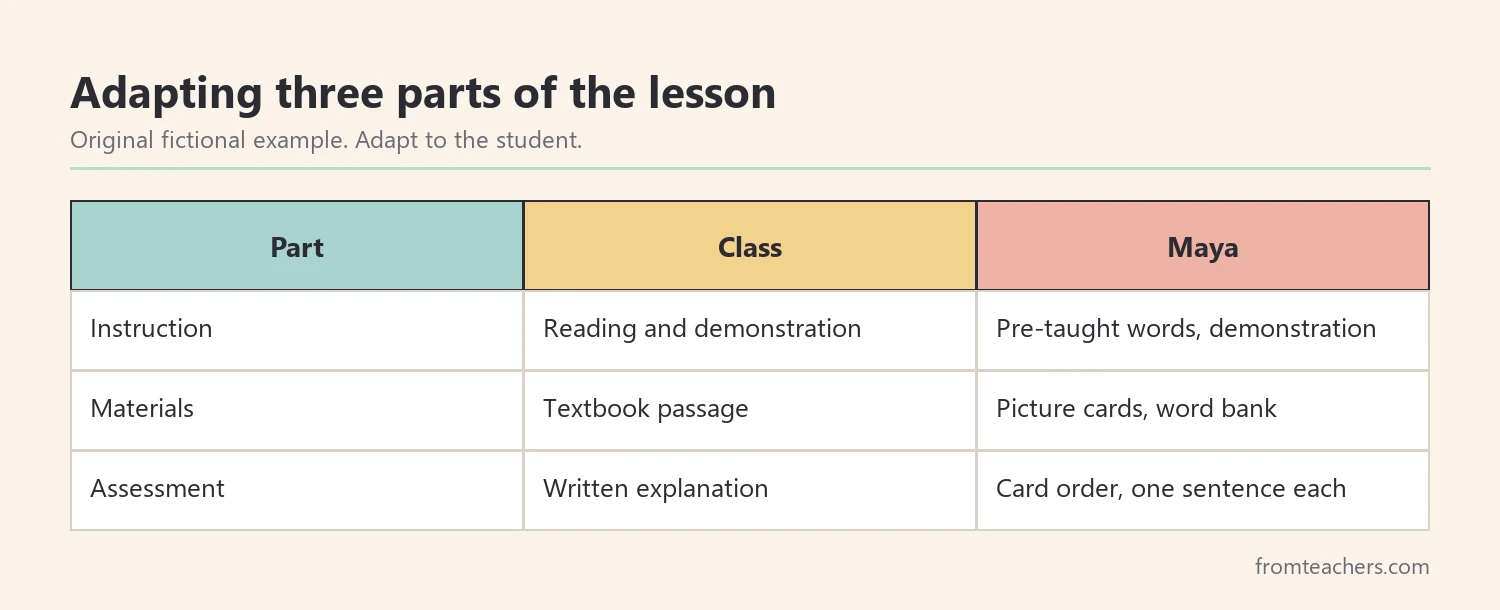
Worked example. For Maya’s modified lesson plan, the special education teacher pre-teaches “evaporation,” “condensation,” and “precipitation” with pictures the day before. During the lesson, Maya joins the class demonstration of a warm cup covered with plastic wrap. Her materials are three picture cards, a word bank, and a short, read-aloud summary. Her assessment is the card sequence plus one labeled sentence for each card.
Meanwhile, keep her in the same seat group as her classmates. A peer can read the summary with her while the teacher circulates. As a result, she learns the same science in the same room, with a path that fits her current skills.
Before the lesson, run a quick access check. Can the student reach every material? Does she know where to put finished work? Does every adult know which supports she uses? A five-minute check like this prevents most of the small problems that derail a modified lesson plan in the middle of class.
4. Plan individualized activities and supports
A strong modified lesson plan includes a few short activities the student will actually do, in order. Three is a practical number for a single lesson: one to introduce, one to practice, and one to show learning.
First, write each activity in one or two sentences with the materials it needs. Then, note who will support the student during each one. If a paraprofessional is involved, include the exact prompt you want them to use, so the support is consistent.
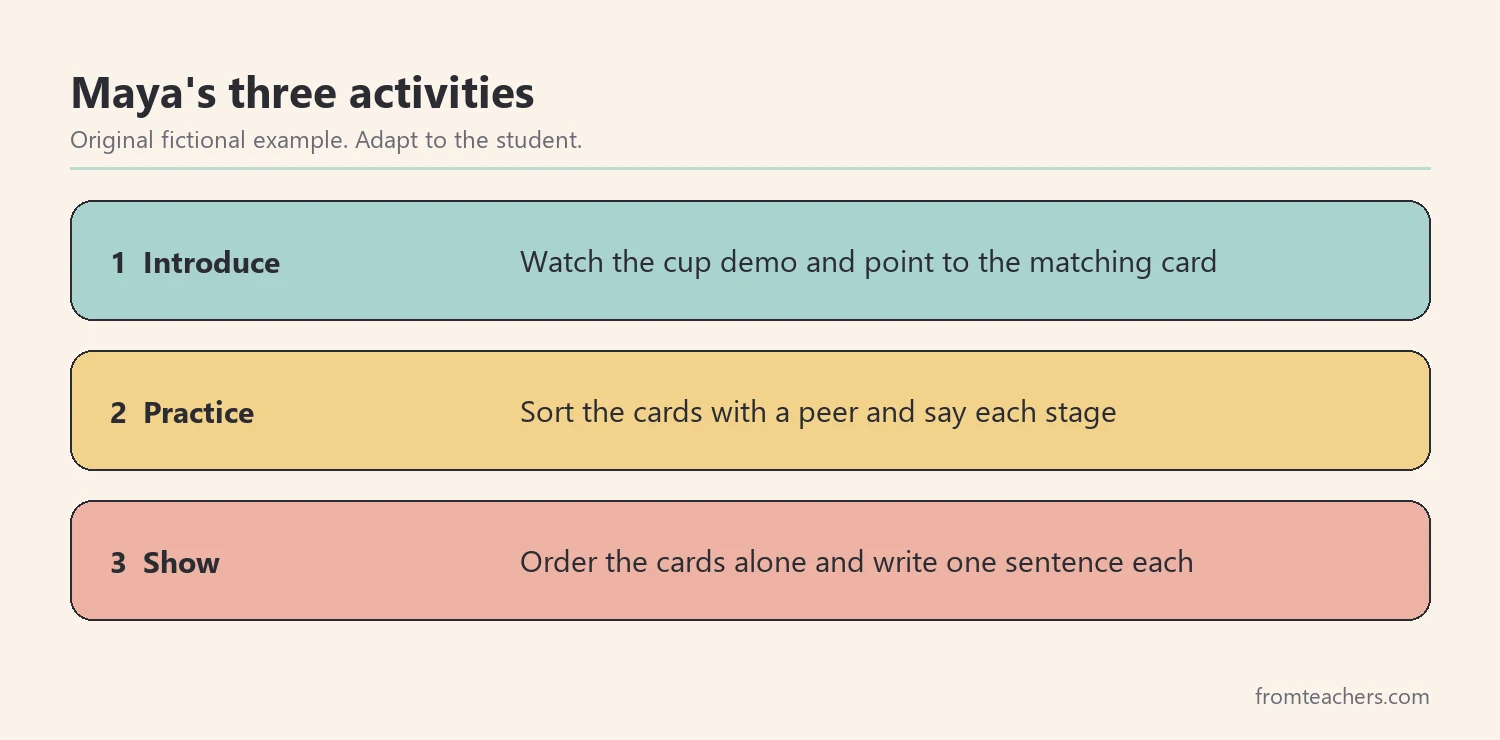
Worked example. Maya’s three activities are:
- Activity 1, introduce: Watch the cup demonstration and point to the picture card that matches what she sees (water drops forming on the wrap).
- Activity 2, practice: With a peer, sort the three cards into order and say each stage name aloud.
- Activity 3, show learning: On her own, order the cards and write one sentence per card using the word bank.
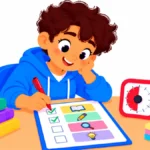
Next, add behavioral supports and testing accommodations. These stay in place even when the objective is modified. For example, Maya’s IEP lists a visual checklist for multi-step tasks, a short movement break after twenty minutes, and test items read aloud. Write them into the plan, so nobody forgets them on a busy day.
If you plan modified lessons often, a structured template saves real time. The fillable modified curriculum planning sheet has sections for student information, original and modified objectives, modifications for instruction, materials, and assessment, three individualized activities, behavioral supports and testing accommodations, and progress monitoring notes.
Similarly, plan what happens when an activity runs short or long. A spare practice set of cards, or a short drawing task about the same stage, keeps the student learning while classmates finish. In short, the modified lesson plan should cover the whole period, not just the main task.
5. Monitor progress and review the modified lesson plan
A modified lesson plan is only as useful as the information it gives you afterward. Therefore, record a quick note after each lesson: the date, what the student did, how much support she needed, and whether she met the modified objective.
Keep the measure simple. For Maya, the clearest measure is how many of the three cards she places and labels correctly on her own. Over several lessons, that number shows whether the plan is working and when she is ready for a bigger step.
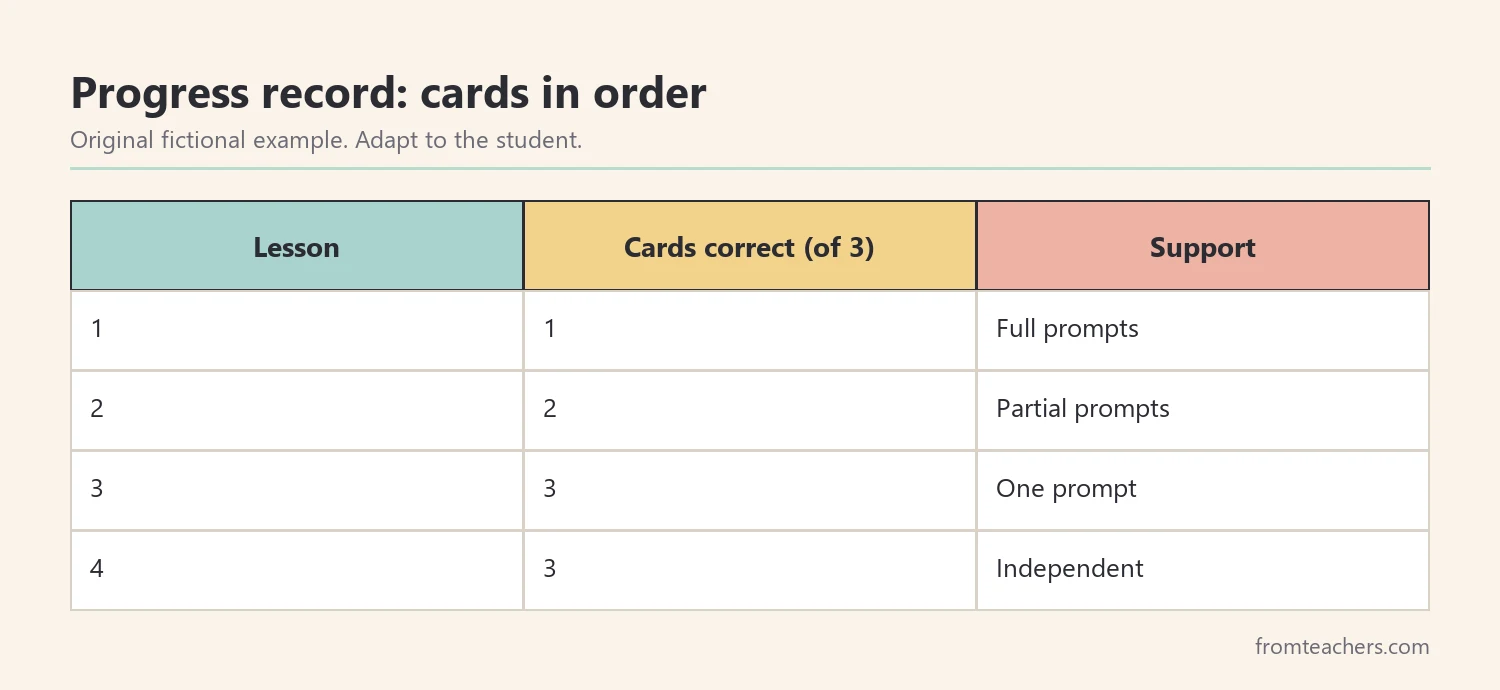
Worked example. In the first lesson, Maya orders 1 of 3 cards correctly with full prompts. By the second lesson, she orders 2 of 3 with partial prompts. In the third and fourth lessons, she orders all 3 cards, first with one prompt, then on her own. Her teachers decide to raise the objective for the next unit: she will add a fourth card showing collection.
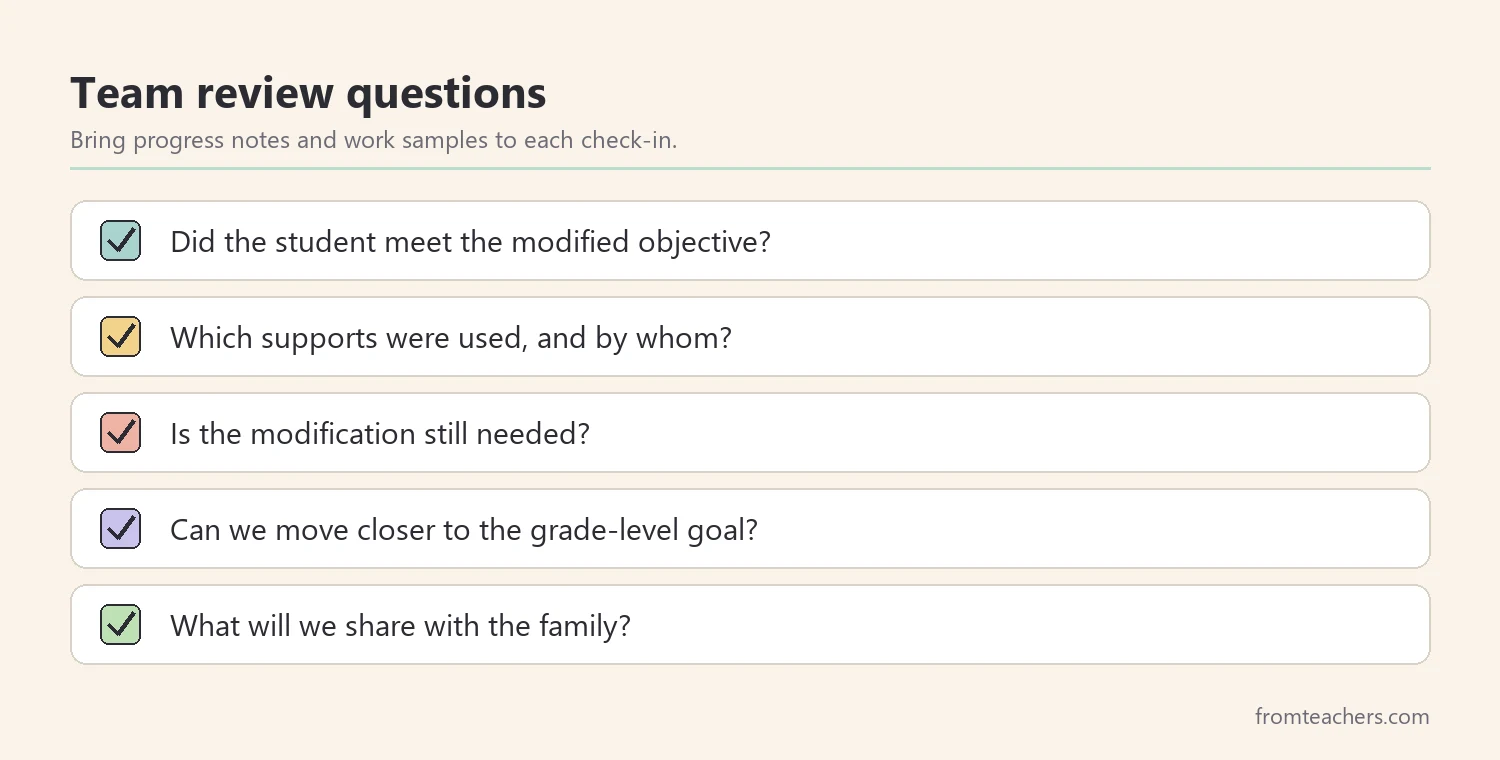
Also, review the plan with the team on a regular schedule, such as every few weeks. Bring the progress notes, samples of work, and one question: is the modification still needed, or can we move closer to the grade-level objective? Furthermore, share a short summary with the family, including one thing their child can now do.
Over time, these notes become one of your most valuable records. When the IEP team meets, a stack of short entries shows exactly what the student learned, which supports worked, and where she still needs help. That evidence makes decisions about the next modified lesson plan much easier for everyone.
Common mistakes and how to avoid them
Most problems with a modified lesson plan come from small planning gaps, not from the student. Each one below has a simple fix.
- A separate activity on a different topic. Fix: keep the same topic and core idea as the class.
- Modifying when an accommodation would do. Fix: try access supports first, then modify only if needed.
- Grading against the original objective. Fix: assess the modified objective you actually taught.
- Vague support notes. Fix: write the exact prompt and who gives it.
- No progress record. Fix: add one line after every lesson.
- Never raising expectations. Fix: review regularly and step up when the data shows success.
Questions teachers and parents ask about a modified lesson plan
Who decides whether a student gets a modified lesson plan?
Decisions about modifying what a student is expected to learn are made through the IEP process. Classroom teachers then turn those decisions into daily plans. If you are unsure, talk with the special education teacher before you modify.
How long does it take to write a modified lesson plan?
The first one may take some time. After that, a template and a clear process make it much faster. Many teachers reuse the same supports and adjust only the objective and activities.
Can a general education teacher write a modified lesson plan?
Yes, ideally with the special education teacher. The general educator knows the lesson and the class, while the special educator knows the IEP goals. Planning together usually produces the best plan.
Does a modified lesson plan affect grades?
Grading policies for modified work vary by school and district. Check your local policy and the student’s IEP. Whatever the policy, grade the student against the modified objective she was taught.
How do I explain a modified lesson plan to parents?
Show the original objective next to the modified one. Then, explain how it connects to their child’s IEP goals and share a work sample. Parents usually appreciate seeing that their child learns the same topic as classmates.
Related reading: Special Education Strategies Guide, Parent-Teacher Collaboration in Special Education, and Special Education Tracking Tools.
A companion resource for a modified lesson plan:
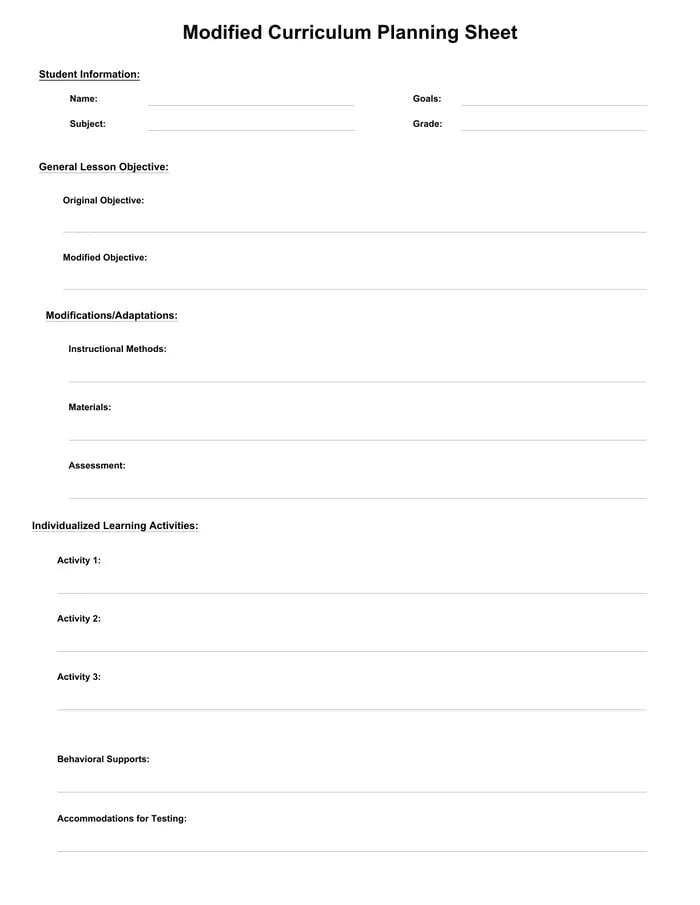
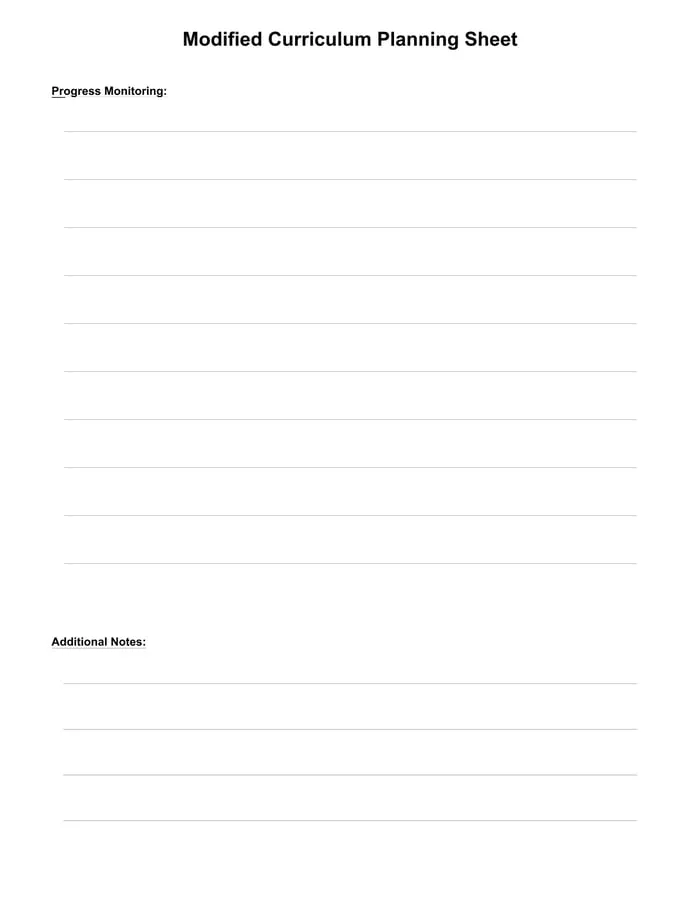
Modified Curriculum Planning Sheet for Special Education: a fillable PDF that walks you from the original objective through modifications, three individualized activities, behavioral supports, testing accommodations, and progress monitoring notes, ready to complete digitally or print.
Sources and scope
- IDEA, U.S. Department of Education: the law behind special education services, IEPs, and access to the general curriculum.
- IRIS Center, Vanderbilt University: free modules on accommodations, instructional supports, and progress monitoring.
- Understood.org: practical articles for families and teachers on accommodations and modifications.
- CAST: resources on Universal Design for Learning and flexible lesson design.
This guide covers planning a modified lesson for one student within a general education lesson. It does not replace IEP team decisions or local grading policies.
Key takeaways
- Build every modified lesson plan from the grade-level objective.
- Modify what is learned only when accommodations are not enough.
- Adapt instruction, materials, and assessment, and write supports down.
- Plan three short activities that move from guided to independent.
- Record progress after each lesson and raise expectations when ready.







Leave a Comment