
Independent work skills are easy to overlook until a student sits frozen in front of an assignment. Picture a seventh grader with a science poster due Friday. She has the directions, the materials, and the ability, yet twenty minutes later the page is still blank and her hand is up for the fourth time.
This guide gives you a five-step routine to teach students how to plan, time, organize, monitor, and reflect on a task. By the end, you will be able to set up a simple planning process that a student can use on any assignment, and you will know how to fade your support so the skills become their own.
Examples are fictional. Adapt to the student’s goals and agreed supports. This is guidance, not a diagnosis.
At a glance
- Big tasks feel impossible until they are broken into a few small, visible steps.
- Estimating time, then checking the real time, teaches students to plan honestly.
- A quick readiness check prevents most of the “I can’t find my pencil” delays.
- Students need a plan for getting stuck that does not start with raising a hand.
- Short reflection after the task is where independence really grows.
1. Break the task into five clear steps
First, teach the student that every assignment is a set of smaller jobs. Many students who struggle to work alone are not lacking effort. Instead, they see the task as one huge block and cannot find the first move.
A five-step breakdown is a practical size. Fewer steps leave each one too big, while more steps can feel like another long list. Ask the student to read the directions, then write each step as a short action that starts with a verb: “Read,” “Sketch,” “Write,” “Glue,” “Check.”
Model this out loud the first few times. Think aloud as you break down a familiar task, such as packing a backpack or writing a paragraph. Then, do one together, and finally let the student try one while you watch. This gradual release is how independent work skills move from your head to theirs.
Also, ask the student to number the steps in the order they will do them. Sequencing is part of planning, and it often reveals confusion early. For example, a student who plans to glue pictures before sketching the layout will discover the problem on paper instead of halfway through the poster.
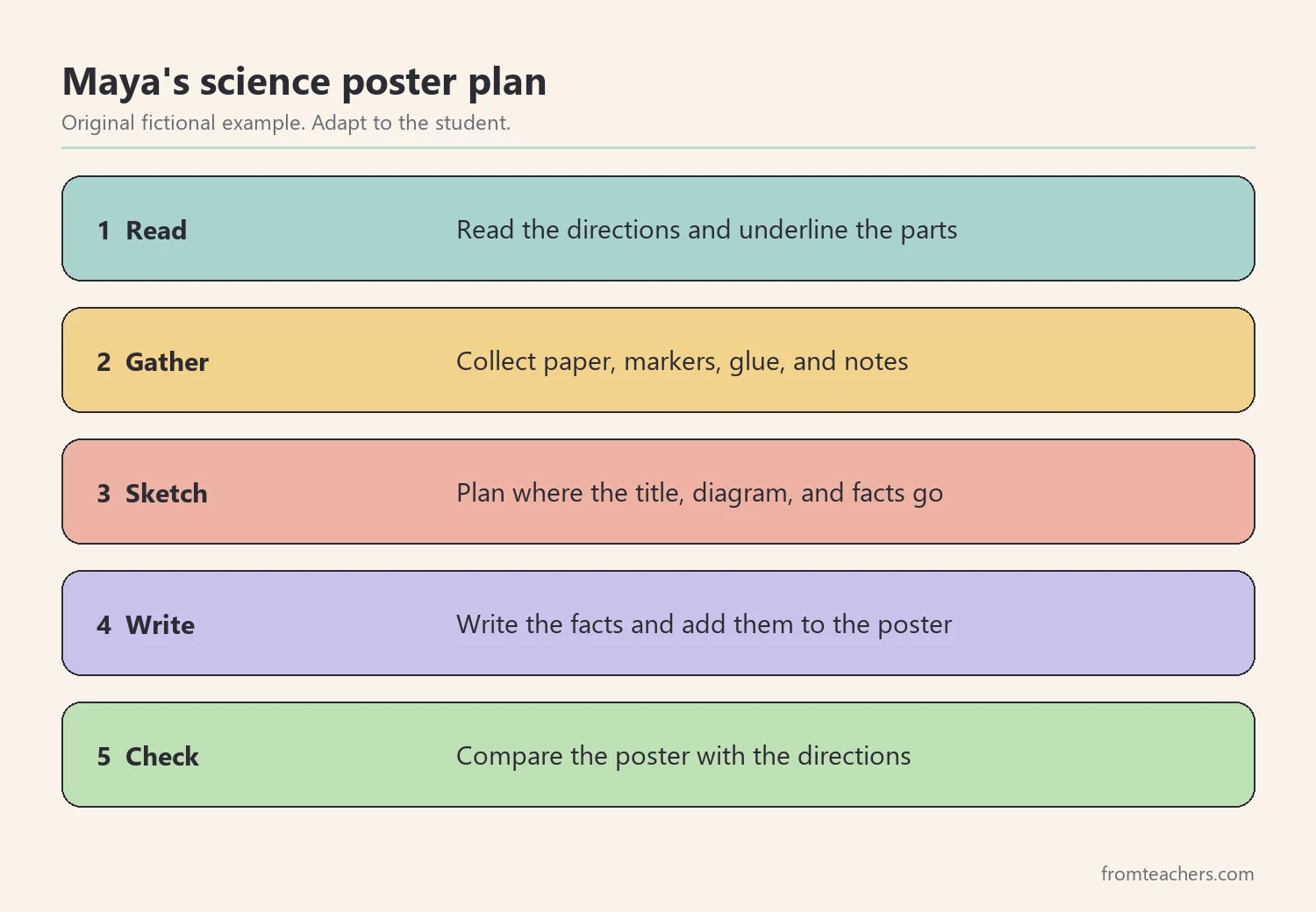
Worked example. Maya is a fictional student in grade 7 who often waits for help before starting. Her teacher sits with her for five minutes and they break the science poster into five steps: read the directions, gather materials, sketch the layout, write and add the facts, and check against the directions. Maya writes each step in her own words.
2. Estimate time and compare it with actual time
Next, add a time estimate to each step. Many students have little sense of how long things take, which leads to rushing at the end or giving up early. Estimating, then checking the real time, builds that sense through experience instead of lectures.
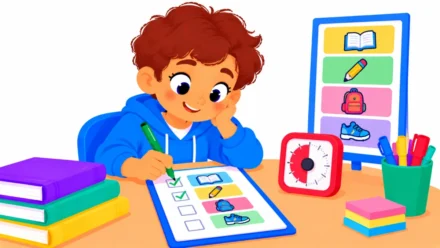
Keep it simple. Next to each step, the student writes a planned number of minutes. As they finish each step, they write the actual minutes. A visible timer or the classroom clock is enough. Afterward, they compare the two columns and note whether they stayed on schedule.
The goal is not perfect estimates. In fact, a big gap between planned and actual time is useful information. It tells the student, and you, which kinds of steps they tend to underestimate. Over a few weeks, most students start to adjust their plans on their own.
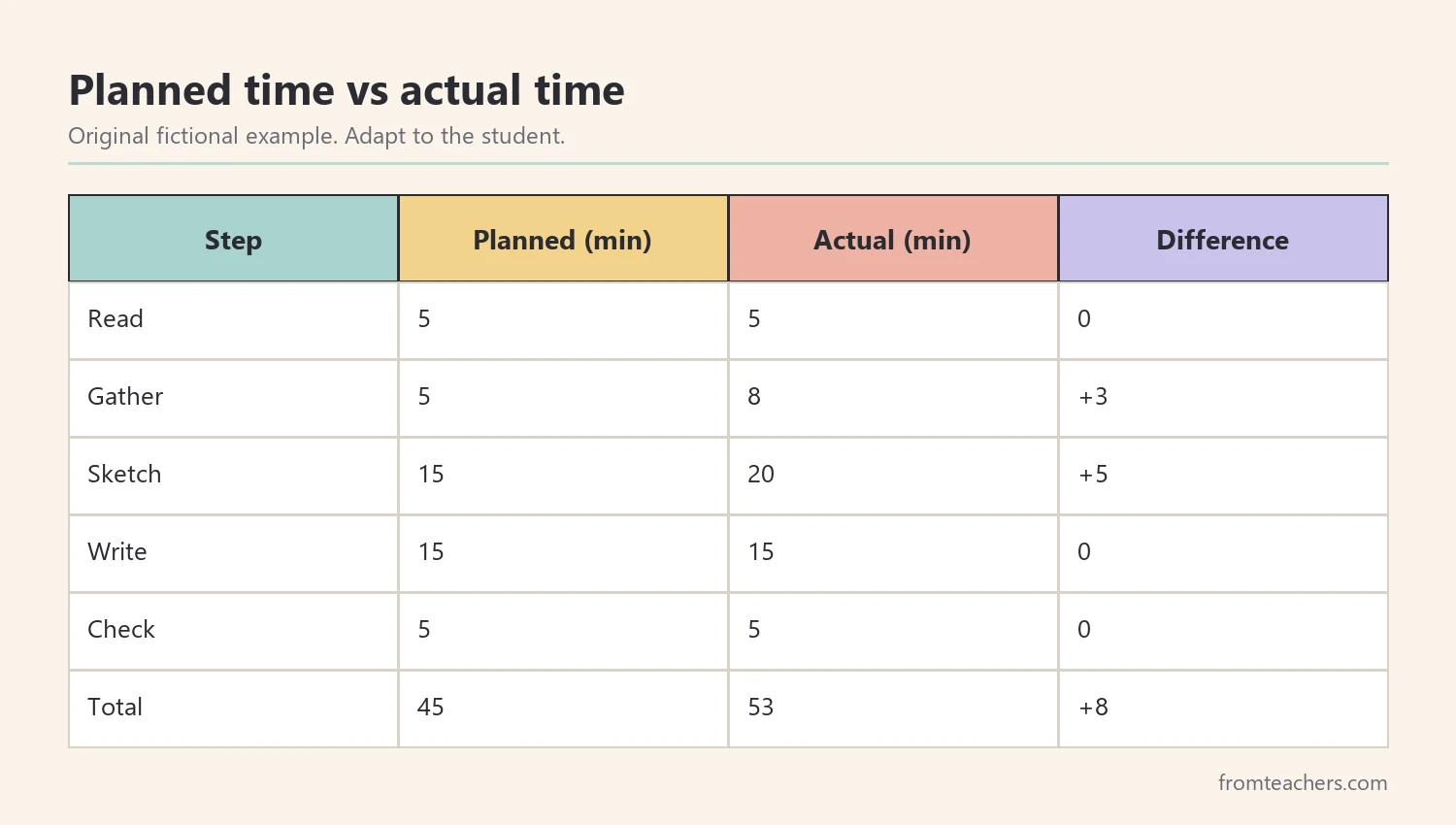
Worked example. Maya plans 45 minutes in total: 5 to read, 5 to gather, 15 to sketch, 15 to write, and 5 to check. Her actual times are 5, 8, 20, 15, and 5, for a total of 53 minutes. She ran 8 minutes over, mostly on gathering and sketching. Next time, she decides to give sketching 20 minutes.
In short, time tracking turns “I am bad at time” into “sketching takes me longer than I think,” which is something a student can actually fix.
To keep it low pressure, review the time columns together only once or twice a week at first. Ask one curious question, such as “Which step surprised you?” Then, let the student choose one change for the next plan. Students who pick their own adjustment are far more likely to try it.
3. Check materials and readiness before starting
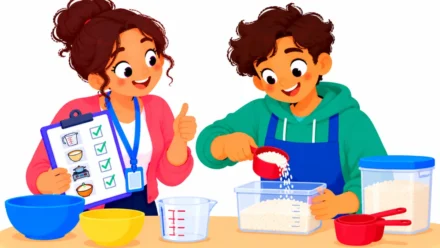
Then, before the timer starts, teach a quick readiness check. A surprising amount of lost work time comes from small interruptions: a missing glue stick, a dead laptop, directions left in a locker. Each one breaks focus and gives the student a reason to stop.
The check takes about a minute. The student looks at their steps, lists what each one needs, and checks off each item as it lands on the desk. Finally, they ask one question: “Do I know what to do first?” If the answer is no, that is the moment to ask for help, not ten minutes later.
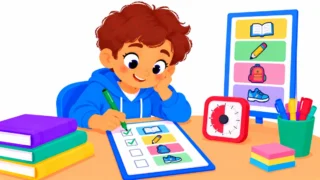
A printed or fillable sheet keeps this routine consistent. For example, the Executive Functioning and Independence Building Sheet includes an organization section for checking off needed materials and readiness alongside its task planning and time sections, so students follow the same steps every time.
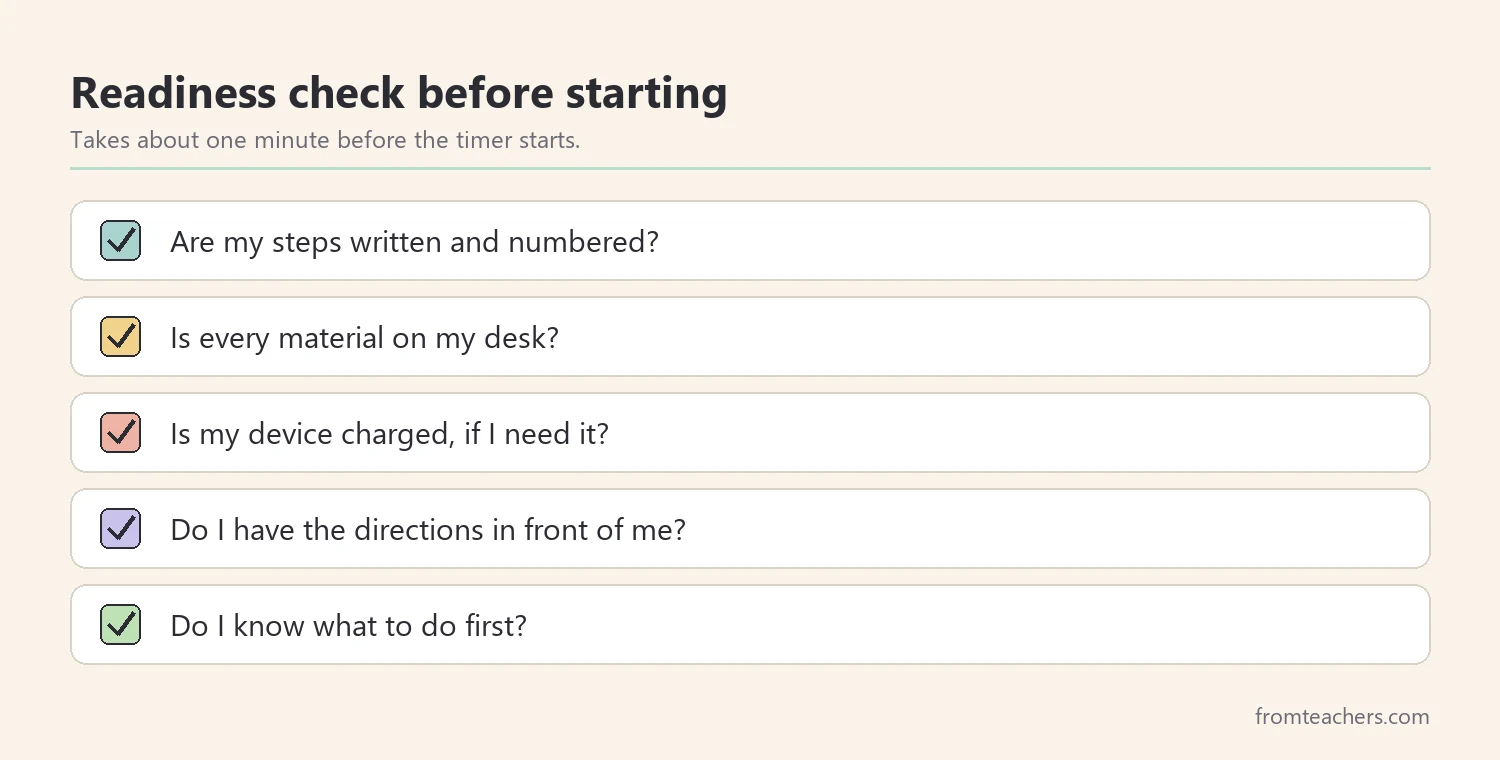
Worked example. During her first check, Maya notices she has no markers and her fact cards are at home. She borrows markers from the class bin and writes the facts from her notes instead. As a result, both problems are solved before work begins, not halfway through the sketch.
Over time, this check becomes a habit that pays off in every class, because the question “Am I ready?” works for math, writing, and labs alike.
4. Teach a plan for getting stuck
Even with a good plan, students get stuck. The difference is what happens next. Students who rely on adults raise a hand right away. Students with stronger independent work skills try a few strategies first, and they ask for help in a specific way when they need it.
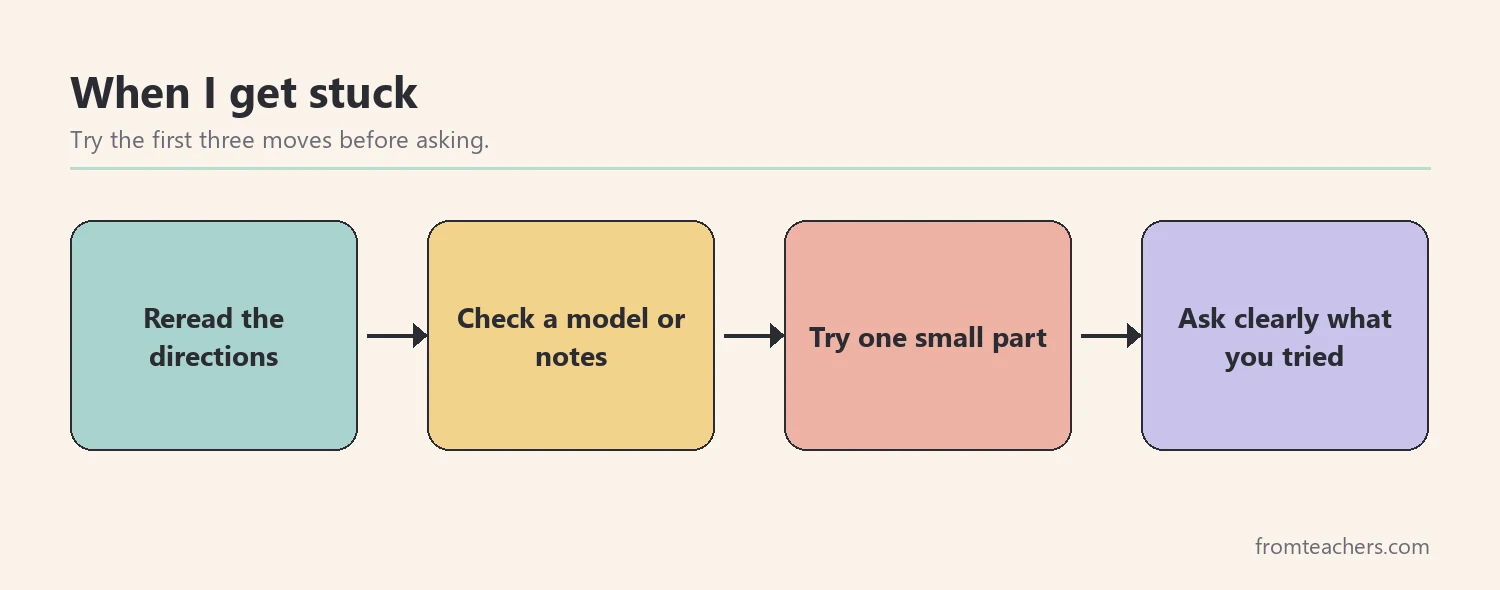
Teach a short, ordered help plan and post it where the student can see it. Keep it to four moves:
| Move | What the student does |
|---|---|
| Reread | Read the directions for this step again |
| Check a model | Look at an example or notes |
| Try one part | Do the smallest piece you can |
| Ask clearly | Say what you tried and where you are stuck |
The last move matters as much as the first three. “I don’t get it” gives you nothing to work with. In contrast, “I read the directions and looked at the example, but I don’t know how big the title should be” is a question you can answer in ten seconds.
Moreover, ask students to jot a quick note when they hit a challenge and how they solved it. This self-monitoring record becomes the raw material for reflection in the next step.
It also helps to practice the help plan when nothing is at stake. For example, give the class a short task with one deliberately unclear direction and walk through the four moves together. Afterward, praise specific questions when you hear them, so students learn that asking well is a skill, not a weakness. Similarly, at home, a parent can answer “I’m stuck” with “What have you tried so far?” before offering help.
Worked example. While sketching, Maya cannot decide where to place her diagram. She rereads the directions, then checks the sample poster on the wall. That solves it. Later, she gets stuck on a fact and asks, “I checked my notes but can’t find the habitat for this animal. Where should I look?” Her teacher points to one page, and she keeps going.
5. Reflect, rate effort, and fade support
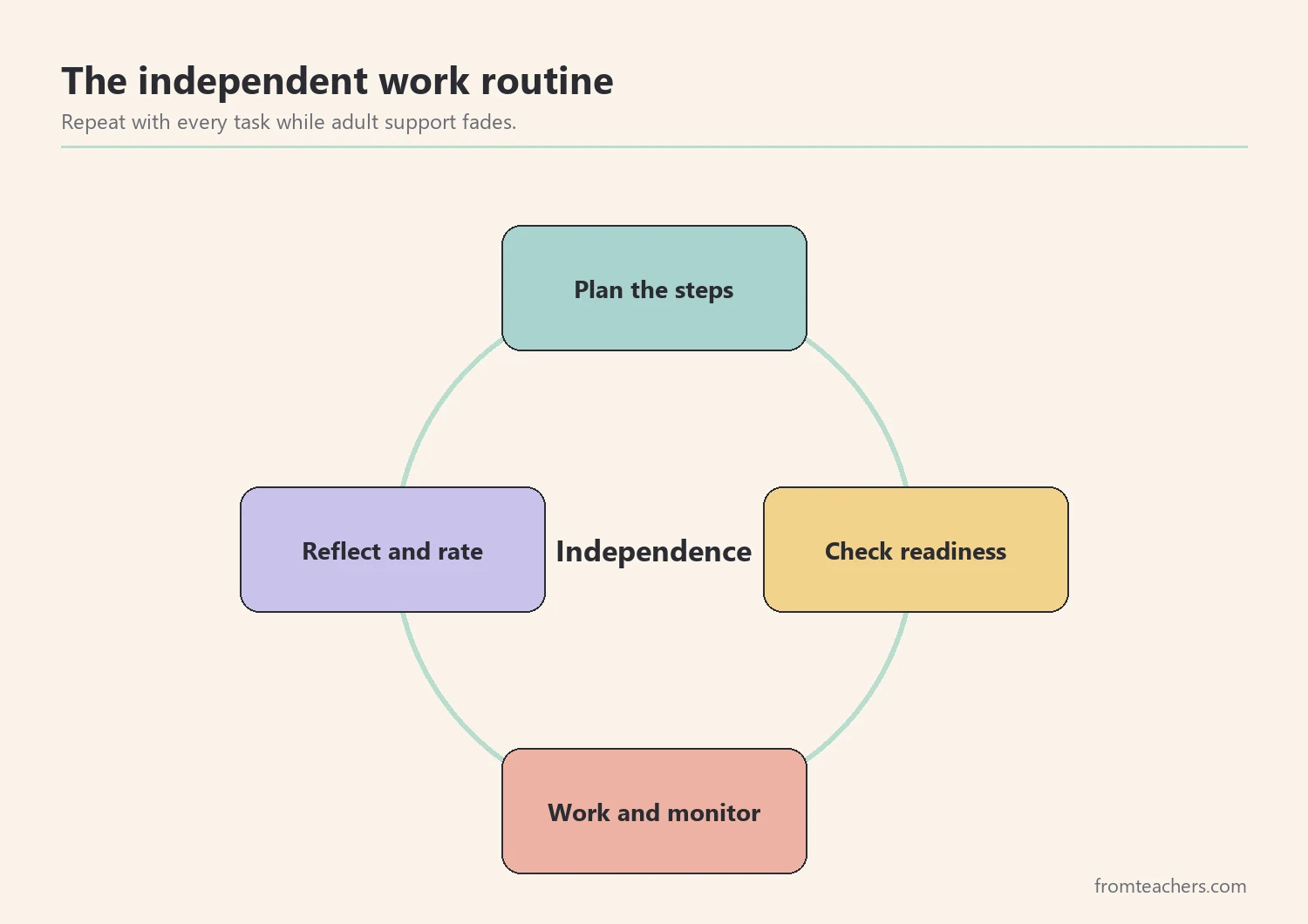
Finally, close each task with a short reflection. This is where independent work skills really grow, because the student connects what they did with how it turned out. Without reflection, the same problems repeat on the next assignment.
Keep the reflection to a few prompts. What was hard? How did I solve it? How was my effort, on a simple scale? What help did I need, and could I do that part myself next time? Students can answer in a few words. In addition, the answers help you decide which support to remove next.
Fading is the real goal. At first, you might sit beside the student for the planning step. After a few successes, you only check the finished plan. Later, the student plans alone and shows you only the reflection. Each step back tells the student that you trust their independent work skills.
| Stage | Adult role | Student role |
|---|---|---|
| Weeks 1 to 2 | Plans with the student | Writes the steps |
| Weeks 3 to 4 | Checks the finished plan | Plans and times alone |
| Weeks 5 and on | Reads the reflection | Runs the full routine |
Worked example. In her reflection, Maya writes that sketching was hard, that the sample poster helped, and that she rates her effort 4 out of 5. She notes that she needed help finding one fact. Her teacher decides that next time, Maya will plan alone and bring the plan for a quick check.
Common mistakes and how to avoid them
- Breaking the task down for the student. A ready-made list helps today but teaches little. Fix: model it, do it together, then let the student write the steps.
- Treating time gaps as failure. Students stop estimating honestly if the gap feels like a grade. Fix: present the gap as useful data for the next plan.
- Answering every raised hand right away. Quick rescue teaches students to wait. Fix: ask which help-plan moves they already tried.
- Skipping reflection when time runs short. This is the part that changes the next task. Fix: keep it to three quick prompts and protect two minutes for it.
- Never fading support. A student can depend on a checklist and an adult forever. Fix: plan in advance which support you will remove and when.
Questions teachers and parents ask about independent work skills
At what age can students start building independent work skills?
Younger children can start with two or three picture steps and a simple timer. Older students can use a full written plan with time estimates. The routine is the same, only the size changes.
How long until a student works more independently?
It varies widely from student to student. Many students show small changes, such as starting faster, within a few weeks of consistent practice. Track one simple measure, like minutes to start, so you can see real progress.
Can parents use the same routine for homework?
Yes. In fact, using the same steps at home and school helps the routine stick. Parents can ask the child to show their plan before starting, then check the reflection at the end instead of hovering during the work.
What if the student rushes through the planning sheet?
Keep the sheet short and connect it to a benefit the student cares about, like finishing sooner. Also, review one plan together briefly. When students see that planning saves time, they usually take it more seriously.
Do independent work skills belong in an IEP?
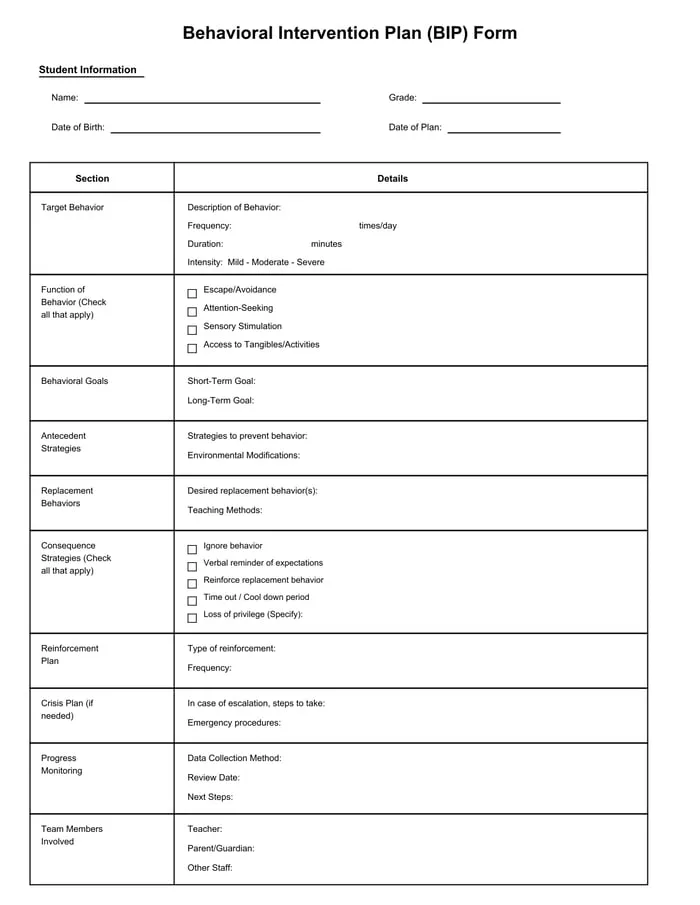
For some students, the IEP team may decide that skills like task initiation or self-monitoring need a goal or support. That decision belongs to the team. A planning routine like this one can help gather useful information for that conversation.
Related reading: ADHD in Children: A Guide to Effective Classroom and Home Support, 5 Practical Teaching Tips to Boost Classroom Focus and Learning, and Building Workplace Readiness: Essential Skills for Career Success.
A companion resource for independent work skills:
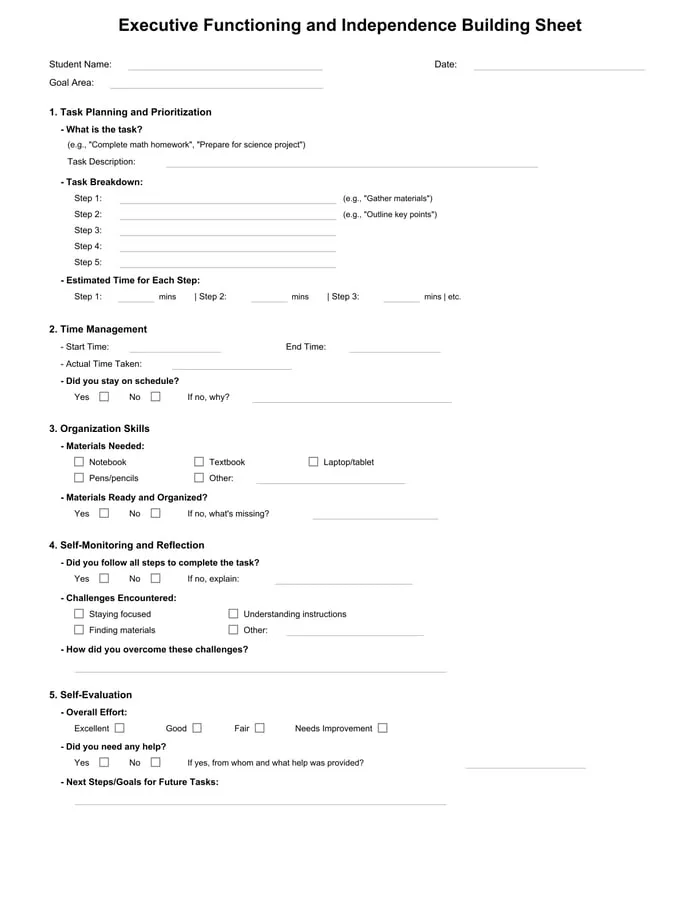
Executive Functioning and Independence Building Sheet: a fillable PDF that students can complete on a device or print, with sections for a five-step task breakdown with estimated times, planned versus actual time, materials and readiness, challenges and solutions, and a self-evaluation of effort and help needed.
Sources and scope
- Center on the Developing Child, Harvard University: research-based explanations of executive function and how it develops.
- CAST: the Universal Design for Learning framework, including supports for planning and self-regulation.
- Understood.org: practical articles for families and teachers on executive function and organization.
- IRIS Center, Vanderbilt University: free modules on self-regulation strategies and classroom routines.
This guide covers everyday classroom and home routines for planning and finishing tasks. It does not cover evaluation of executive function or attention difficulties, which belongs to qualified professionals.
Key takeaways
- Independent work skills start with breaking a task into about five clear steps.
- Planned versus actual time teaches students to estimate honestly.
- A one-minute readiness check removes many small interruptions.
- A posted help plan replaces “I don’t get it” with specific questions.
- Short reflection and planned fading turn the routine into the student’s own habit.





Leave a Comment