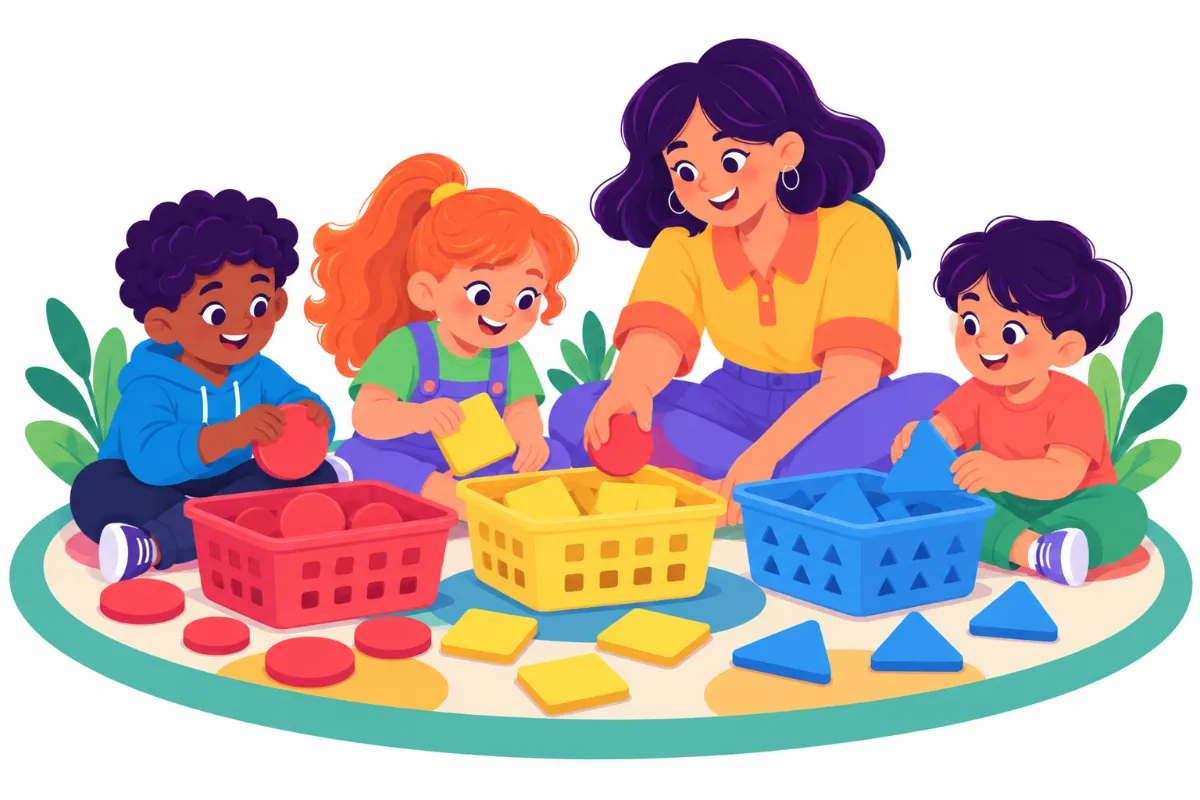

Teaching shapes and colors is one of the first real academic steps in early childhood, and it works best when children can see, touch, and name what they are learning. Shapes and colors are everywhere, so every walk, snack, and cleanup can become a short lesson.
However, many young learners mix up “square” and “rectangle” or call every pink thing red. That is completely normal. In this guide, you will find simple, playful ideas that help preschoolers and kindergarteners learn these concepts and keep them.
Why Teaching Shapes and Colors Matters Early
Shapes and colors are not just vocabulary words. In fact, they are the building blocks for later math, reading, and science skills. When a child sorts red blocks from blue blocks, she is practicing classification. When he notices that a triangle has three sides, he is starting geometry.
In addition, these concepts give children words to describe their world. A child who can say “I want the round green cup” is communicating more clearly. As a result, there are fewer frustrated moments for everyone.
- Early math: sorting, matching, patterns, and counting sides and corners
- Language: describing words, comparisons, and following directions
- Pre-writing: drawing circles, lines, and crosses prepares little hands for letters
- Observation: noticing details in pictures, books, and nature
Start With a Few Shapes and Colors at a Time
First, resist the urge to teach everything at once. Most children learn best with two or three new items at a time. For example, start with red, blue, and yellow, plus circle and square.
Next, add one new item only when the first ones feel easy. Because young brains need lots of repetition, revisit the same colors in many settings before moving on.
A simple order that works
- Colors: red, blue, yellow, then green, orange, purple, then pink, brown, black, white
- Shapes: circle, square, triangle, then rectangle, oval, star, heart, then diamond and hexagon
Also, always pair the word with a real object. “This is a circle. Look, the plate is a circle too!” helps the idea move from the page into real life.
Hands-On Activities for Teaching Shapes and Colors
Children learn through their bodies and senses. Therefore, the best activities let them move, build, and play.
Shape and color hunts
Give each child a paper with one shape or color on it. Then send them on a hunt around the room or yard. They can point, take a photo, or bring back small objects. Finally, gather together and share what everyone found.
Sorting trays
Fill a tray with buttons, pom-poms, or blocks. Children sort by color first, then by shape. Later, challenge them to sort by both: “Find all the blue triangles.”
Build it with your body
Ask small groups to lie on the floor and make a triangle or square together. This is silly, memorable, and great for gross motor skills.
Play dough shapes
Rolling a “snake” and joining the ends makes a circle. Four snakes make a square. As a result, children feel the difference between sides and curves.
Connect Shapes and Colors to the Real World
Children remember what feels familiar. For this reason, point out shapes and colors during everyday routines:
- At snack time, crackers can be squares, circles, or triangles
- On a walk, stop signs, wheels, windows, and doors are full of shapes
- During cleanup, ask kids to put away “everything yellow” first
- In picture books, pause and ask “What shape is the window? What color is the cat?”
Also, talk about how shapes combine. A house is a square with a triangle on top. A snowman is three circles. When children see that shapes are building blocks, they begin to notice them in drawings and buildings everywhere.
A visual guide can help here. For instance, this colorful shapes and colors learning guide for preschoolers connects each concept to things kids already see around them, which makes review time easy.
Teaching Shapes and Colors to Children Who Need Extra Help
Some children, including those with developmental delays, autism, or language disorders, may need a different path. Fortunately, a few small changes make a big difference.
- Match before naming: first ask the child to match two red cards, then to pick “red” when you say it, and only then to say “red” on their own
- Use high contrast: bold shapes on plain backgrounds are easier to see
- Add touch: textured or cutout shapes help children feel corners and curves
- Keep it short: three to five minutes of focused practice is plenty
- Celebrate effort: praise trying, not just right answers
In addition, check whether a child may have trouble seeing certain colors. If a child consistently confuses red and green, mention it to the family. The CDC developmental milestones page is a helpful reference for what to expect at each age.
Making Teaching Shapes and Colors Part of Daily Routines
Finally, consistency matters more than long lessons. A few minutes each day beats one big lesson each week.
Morning circle
Hold up a “color of the day” and ask children to find something they are wearing in that color.
Transitions
Line up by color: “Everyone wearing blue may line up.” This turns waiting time into learning time.
Art center
Offer only shape stamps or one color of paint on some days. As a result, children focus on one concept while they create.
Home connection
Send families one simple idea each week, like “Count circles at dinner tonight.” Parents love easy activities that fit their busy lives.
Frequently Asked Questions
At what age do kids learn shapes and colors?
Many children begin naming some colors and basic shapes between ages two and four. However, every child develops at a different pace, so focus on steady progress rather than a strict deadline.
Should I teach colors or shapes first?
There is no strict rule. Many teachers start with colors because they are easy to spot, then add shapes. Others teach a few of each together, which also works well.
What if my child keeps mixing up colors?
Mixing up colors is common at first. Keep practicing with matching games before naming. If confusion with certain colors continues, talk with your pediatrician.
Ready-to-use resource:
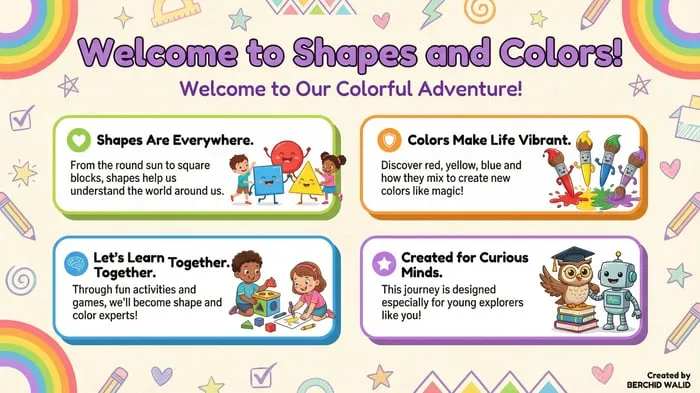
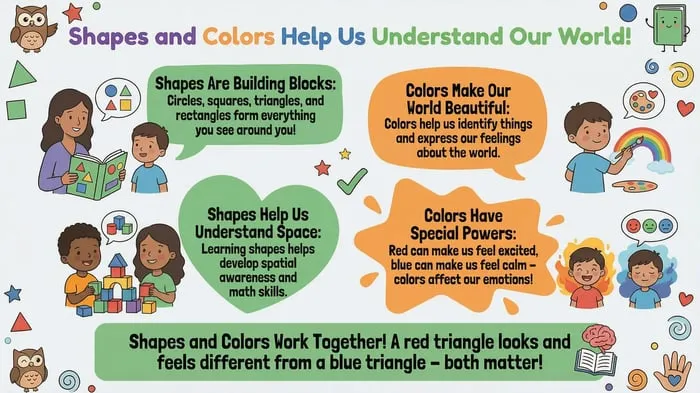
Shapes and Colors for Kids – Preschool Learning Fun: A 30-page visual guide that links every shape and color to objects kids already see, so new words stick faster.
Related reading: Learning Styles Student Success Guide and 5 Practical Teaching Tips to Boost Classroom Focus and Learning.
Also on FromTeachers:
Key Takeaways
- Introduce only two or three new shapes or colors at a time.
- Use hands-on hunts, sorting, and play dough to make learning stick.
- Connect every concept to real objects children see each day.
- Short daily practice makes teaching shapes and colors simple and effective.
Leave a Comment