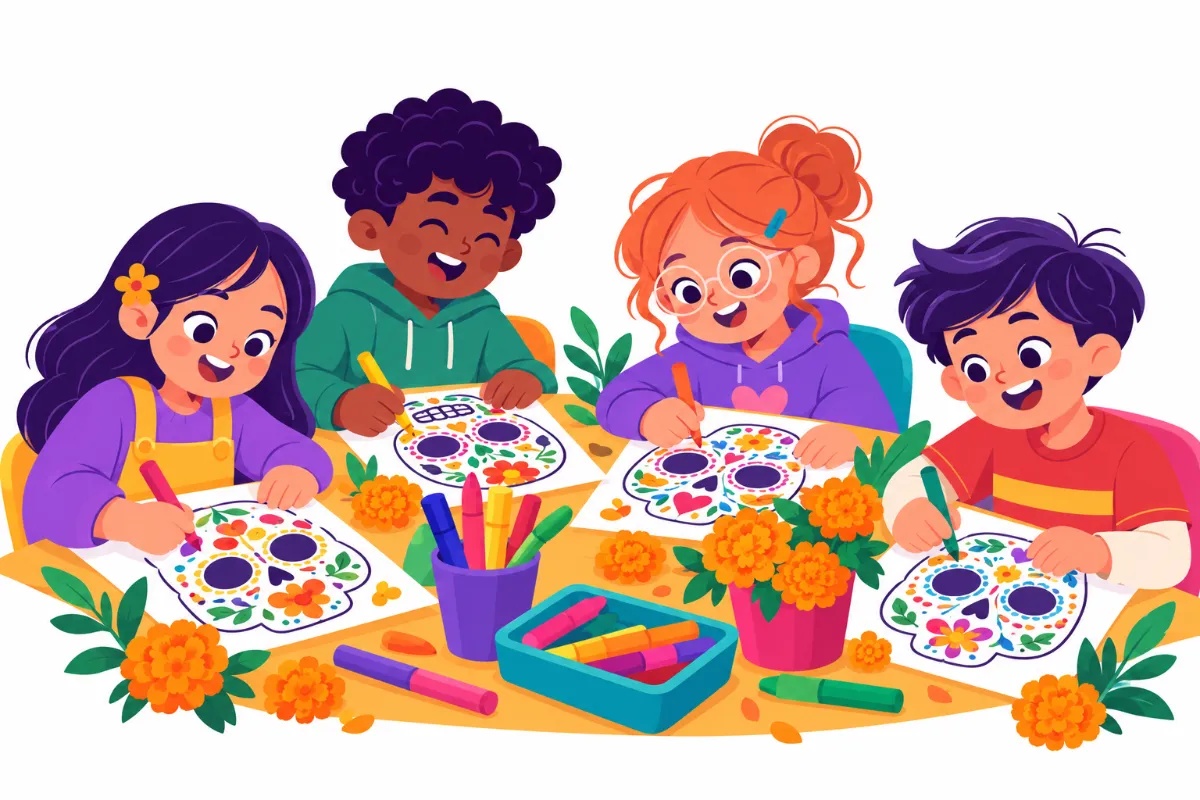

Sugar skull coloring activities are a joyful, hands-on way to explore Día de los Muertos in the classroom. The detailed patterns invite careful work, while the cultural background opens rich conversations. As a result, a simple coloring page can become a meaningful lesson.
This guide explains how to introduce sugar skulls respectfully and how coloring builds fine motor skills and focus. It works for classroom teachers, art teachers, and parents.
Understanding Día de los Muertos
Día de los Muertos, or Day of the Dead, is a Mexican tradition celebrated on November 1 and 2. Families honor and remember loved ones who have died. It is a celebration of life and memory, not a scary holiday.
Also, families build ofrendas, or altars, decorated with photos, marigolds, food, and sugar skulls. Therefore, it is important to teach the meaning before handing out coloring pages.
The Meaning Behind Sugar Skulls
Sugar skulls, or calaveras de azúcar, are decorated with bright colors and patterns. They often carry the name of a loved one. In addition, they represent the sweetness of life and remembrance.
For example, you can show photos of traditional sugar skulls and ask students what they notice. This builds curiosity and respect before creative work begins. The Smithsonian’s Day of the Dead spotlight offers reliable background for teachers.
Fine Motor Benefits of Sugar Skull Coloring Activities
Detailed designs give small hands a great workout. Coloring inside intricate shapes strengthens grip, control, and hand-eye coordination.
- Pencil grip: colored pencils encourage a mature tripod grasp.
- Precision: small spaces build careful, controlled movements.
- Endurance: longer designs build hand stamina for writing.
Because pages vary in detail, you can match the level of challenge to each student.
Coloring as a Mindfulness Practice
Symmetrical patterns are calming to color. In addition, the repeated shapes encourage focus and slow breathing. Many students find coloring a peaceful way to settle after recess or lunch.
For students with anxiety or ADHD, a quiet coloring station can be a useful regulation tool. Also, soft music can make the activity even more relaxing.
Lesson Ideas Beyond Coloring
Turn coloring pages into deeper learning with simple extensions.
- Symmetry in math: students identify lines of symmetry in each design.
- Writing: students write a short memory about someone they admire.
- Vocabulary: learn Spanish words like calavera, ofrenda, and cempasúchil.
- Class display: create a colorful, respectful bulletin board.
With a large set such as 100 sugar skull coloring page designs, every student can choose a pattern that suits their skill level.
Teaching Sugar Skull Coloring Activities Respectfully
Cultural lessons should honor the tradition. First, explain the meaning before decorating. Next, invite families who celebrate to share their experiences if they wish.
However, avoid treating sugar skulls as Halloween decorations. Finally, focus on remembrance, family, and celebration of life. This approach makes the activity educational and inclusive.
Setting Up a Calm Coloring Station
A dedicated coloring station gives students a quiet place to focus. First, gather colored pencils, fine-tip markers, and a few printed designs. Next, place the station in a calm corner with good light.
In addition, offer pages at different levels of detail. For example, simpler skulls with larger shapes suit younger students, while intricate designs challenge older ones. As a result, every student can find the right level of challenge.
Station Tips
- Keep supplies in labeled bins for easy cleanup
- Add a small timer for students who need structure
- Provide clipboards for students who prefer to sit elsewhere
- Display finished work to celebrate effort
Sugar Skull Coloring Activities at Home
Parents can use these pages to share family traditions or learn about a new culture together. For example, families can talk about relatives they remember while coloring. Also, coloring together creates a calm, connected moment after a busy day.
In addition, sugar skull coloring activities make a thoughtful rainy-day or holiday project. Finally, encourage children to explain the meaning of their design, which builds language and cultural understanding.
Getting Started This Week
First, plan a short introduction to Día de los Muertos with photos and simple facts. Next, let students choose a design that fits their skill and patience level. Then, play quiet music while they work. In addition, invite students to share their finished pages and explain their color choices. Finally, display the work respectfully as part of a cultural learning wall.
Frequently Asked Questions
Is Día de los Muertos the same as Halloween?
No. Although the dates are close, Día de los Muertos honors loved ones who have died. It has its own traditions and meaning.
What age are sugar skull coloring pages good for?
Simpler designs suit young children, while detailed patterns challenge older students and even adults.
What supplies work best?
Fine-tip markers and colored pencils work well for small details. Crayons suit younger children with larger designs.
Ready-to-use resource:
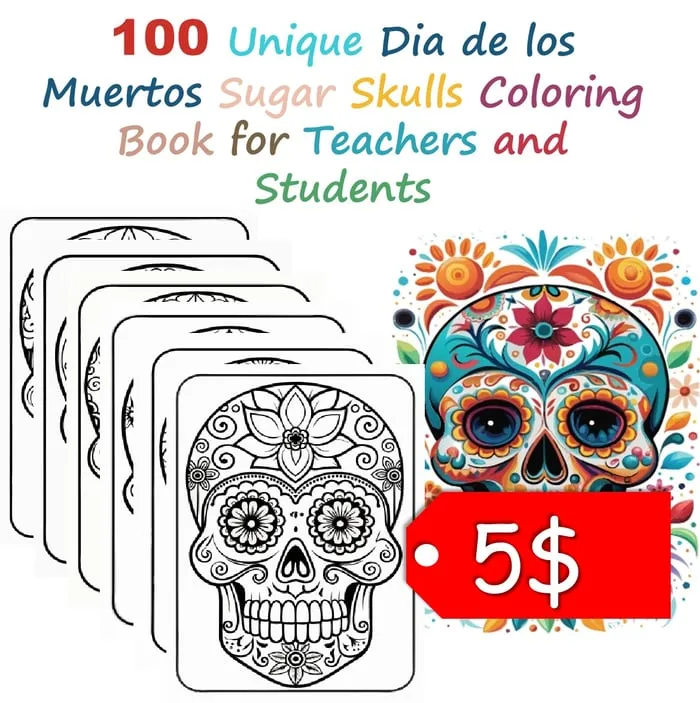
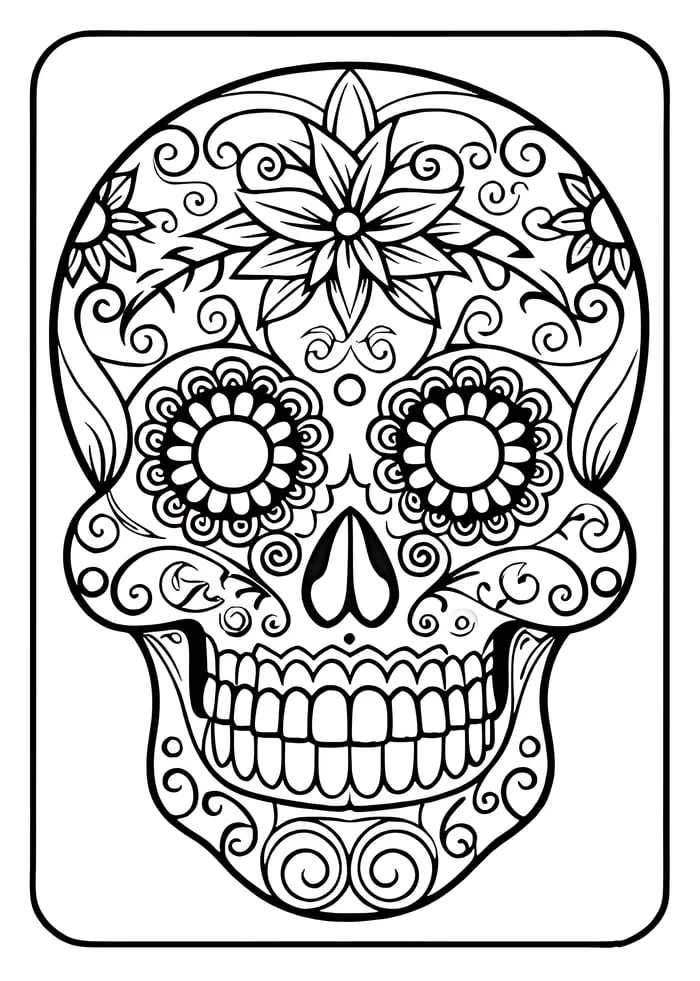
Sugar Skull Coloring Pages: 100 Designs: 100 unique, detailed sugar skull designs for cultural lessons, fine motor practice, and calm independent work.
Related reading: learning styles student success guide and 5 teaching tips to boost classroom focus.
Also on FromTeachers:
Key Takeaways
- Sugar skull coloring activities connect art with Día de los Muertos culture.
- Teach the meaning of the tradition before coloring.
- Detailed designs build fine motor skills and focus.
- Extend coloring into math, writing, and vocabulary lessons.

Leave a Comment