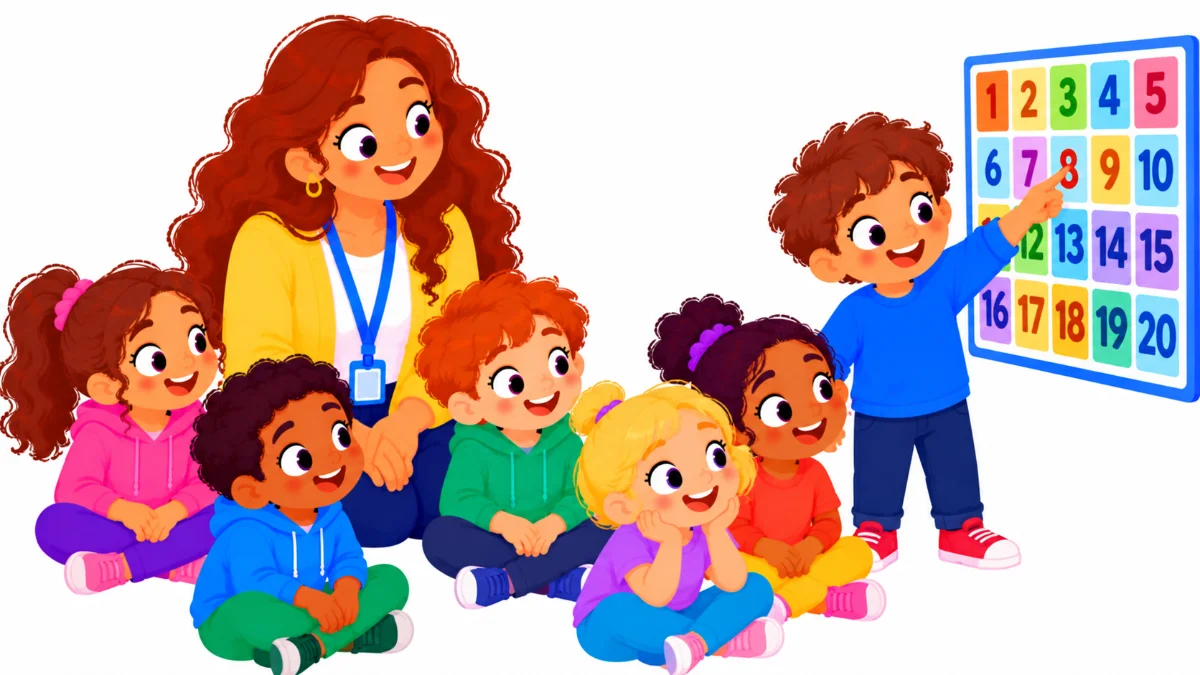

Early learning posters work best when children use them every day, not when they simply decorate the walls. Picture a kindergarten room with bright alphabet, number, and color charts on every wall. They look lovely, yet when the teacher asks a child to find the letter M, the child looks at the floor. Nobody has shown her how the posters connect to what she is learning.
This guide shows you how to turn a poster set into a daily teaching tool in five steps: plan placement, introduce one poster at a time, build posters into routines, turn them into games, and adapt as children grow. By the end, you will be able to use posters for real, active learning in preschool, kindergarten, special education, and ESL classrooms.
Examples are fictional. Adapt to the student’s goals and agreed supports. This is guidance, not a diagnosis.
At a glance
- Posters teach best when children interact with them daily.
- Place each poster where the related learning happens, at child eye level.
- Introduce one poster at a time instead of all at once.
- Short routines and games turn posters into active practice.
- Adapt use for English learners and students with additional needs.
1. Plan where early learning posters go
First, think about placement. Early learning posters are most useful when they sit near the activity they support. Put the alphabet poster near the writing or reading area, the number chart near math materials, and a calendar or days-of-the-week chart near the meeting space.
Next, hang posters at child eye level. Many classroom posters end up high on the wall, where adults see them but children do not. If children sit on the carpet, posters should be visible from there. If they work at tables, check the view from a seat.
Also, avoid covering every wall. Too many posters can make a room feel busy and make it hard for children to focus on the one that matters. A calmer wall, with a few well-chosen charts, often works better, especially for children who are sensitive to visual clutter.
In addition, leave space around each poster. Clear space makes it easier for children to point, and it lets you add a small label, photo, or student work next to the chart when you want to.
Then, plan which posters go up first. You do not need to hang the whole set on day one. Starting with two or three posters, and adding more over the first weeks, keeps attention on the new ones. A gradual start also helps you see which early learning posters children actually use.
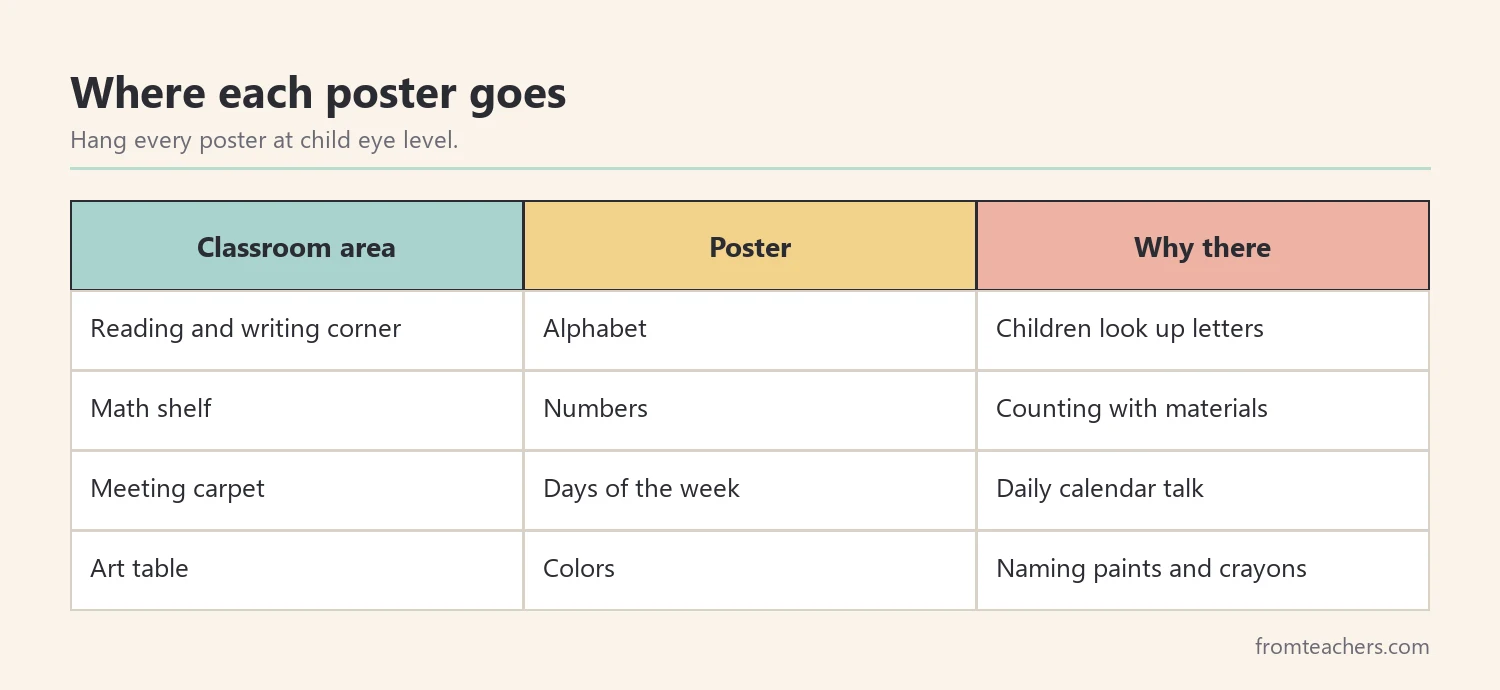
Worked example. Mia is a fictional kindergarten student who is learning English. Her teacher, Ms. Garcia, plans her walls before school starts. She puts the alphabet near the reading corner, the number chart beside the math shelf, and the days-of-the-week chart next to the carpet, all at child eye level.
2. Introduce one poster at a time
Next, introduce each poster on purpose. When early learning posters appear all at once, children may not notice any of them. Instead, introduce one poster in a short lesson, then use it every day that week.
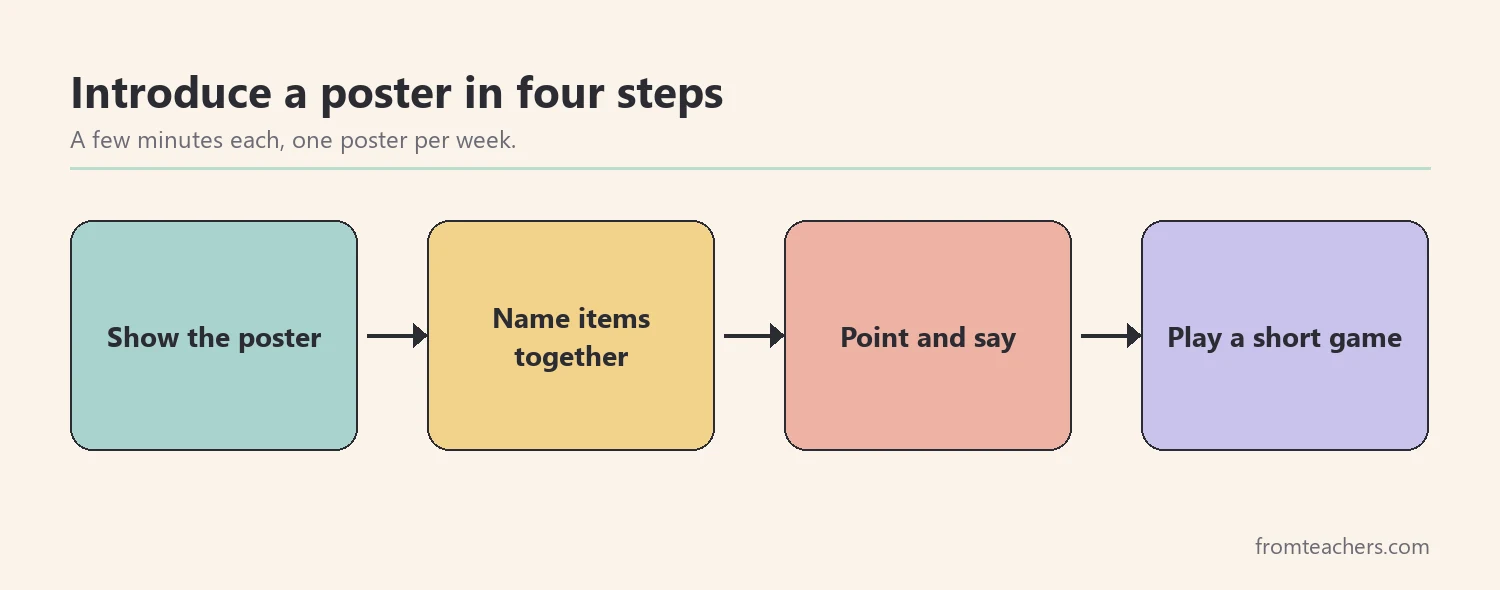
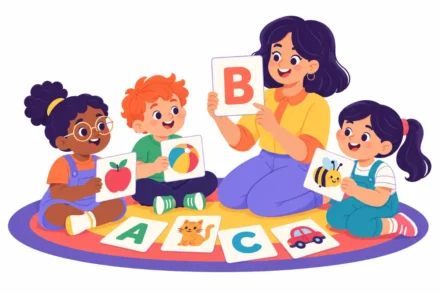
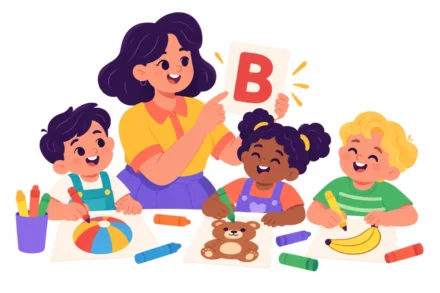
For example, a simple introduction might follow four steps. Show the poster. Name the items together. Invite children to point and say. Then use the poster in a short game. Each step takes only a few minutes.
Also, connect the poster to children’s lives. On a colors poster, ask, “Who is wearing something red today?” On a numbers chart, count children in a line. Real links help new words and concepts stick, and they show children that early learning posters describe their own world.
In addition, use gestures and pictures. Bright, friendly illustrations help children who are learning English or who are not yet reading. Pointing to the picture while saying the word gives two kinds of support at once. This is why early learning posters with clear images are so helpful for mixed-language classrooms.
For a ready-made set, the set of 7 educational classroom posters covers foundational concepts such as the alphabet, numbers, and colors with bright, friendly illustrations, which makes it practical for preschool, kindergarten, special education, and ESL rooms.
Worked example. In the first week, Ms. Garcia introduces only the colors poster. She shows it, names the colors with the class, and asks children to point to a color they are wearing. Mia points to her blue shoes and says “blue” with the group.
3. Build early learning posters into daily routines
Next, make the posters part of the day. Early learning posters are most powerful when they appear in routines children already know. A short moment at the same time each day turns a poster into steady practice.
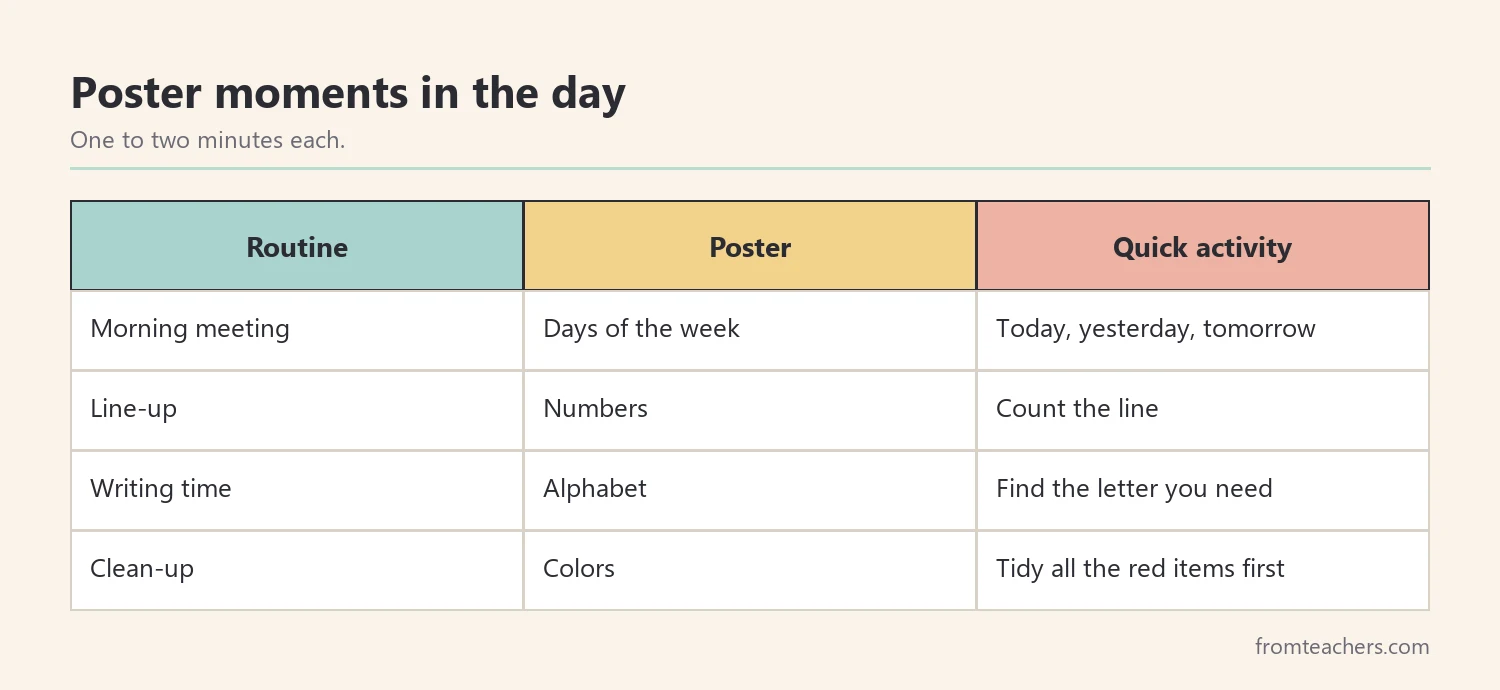
For example, during morning meeting, use the days-of-the-week chart to say today, yesterday, and tomorrow. During line-up, count children using the number chart. During writing, point to a letter on the alphabet poster when a child asks how to write a sound.
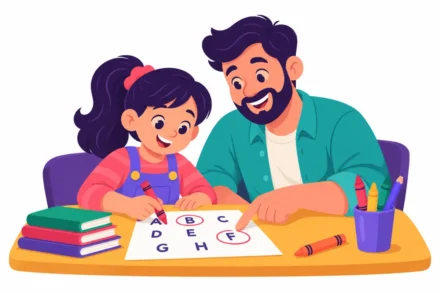
Also, encourage children to use posters on their own. When a child asks, “How do I write B?”, try “Can you find it on the alphabet poster?” This builds independence and teaches children that the wall is a resource, not just decoration. Over time, children who use early learning posters on their own ask fewer “how do I” questions and solve more problems themselves.
In addition, keep each poster moment short. One to two minutes is often enough. Many short practices across a day usually work better than one long lesson for young learners.
Meanwhile, notice which posters children use most. Those are often the ones linked to clear routines. If a poster is never used, think about a routine where it could fit, or move it closer to the related area.
Worked example. Each morning, Ms. Garcia asks a helper to find today on the days-of-the-week chart. At line-up, the class counts together using the number chart. During writing, Mia starts walking to the alphabet poster on her own to find letters.
4. Turn posters into active games
Next, add play. Simple games make early learning posters exciting and give children many chances to practice. Games also help children who learn best through movement. Active play with early learning posters can also release energy before a quieter task.
For example, play “I spy” with a poster: “I spy a color that starts with G.” Play “Jump to the number”: call a number and let a child tap it on the chart. Use a pointer or a small flashlight to make finding items feel special.
Also, invite children to lead. A child can be the “teacher” who points to items while the class names them. Leading builds confidence, especially for quieter children and English learners who may enjoy pointing before speaking.
In addition, mix posters together. “Find something red, then count to three” links the colors poster and the number chart in one game. Combining concepts keeps practice fresh as children learn more.
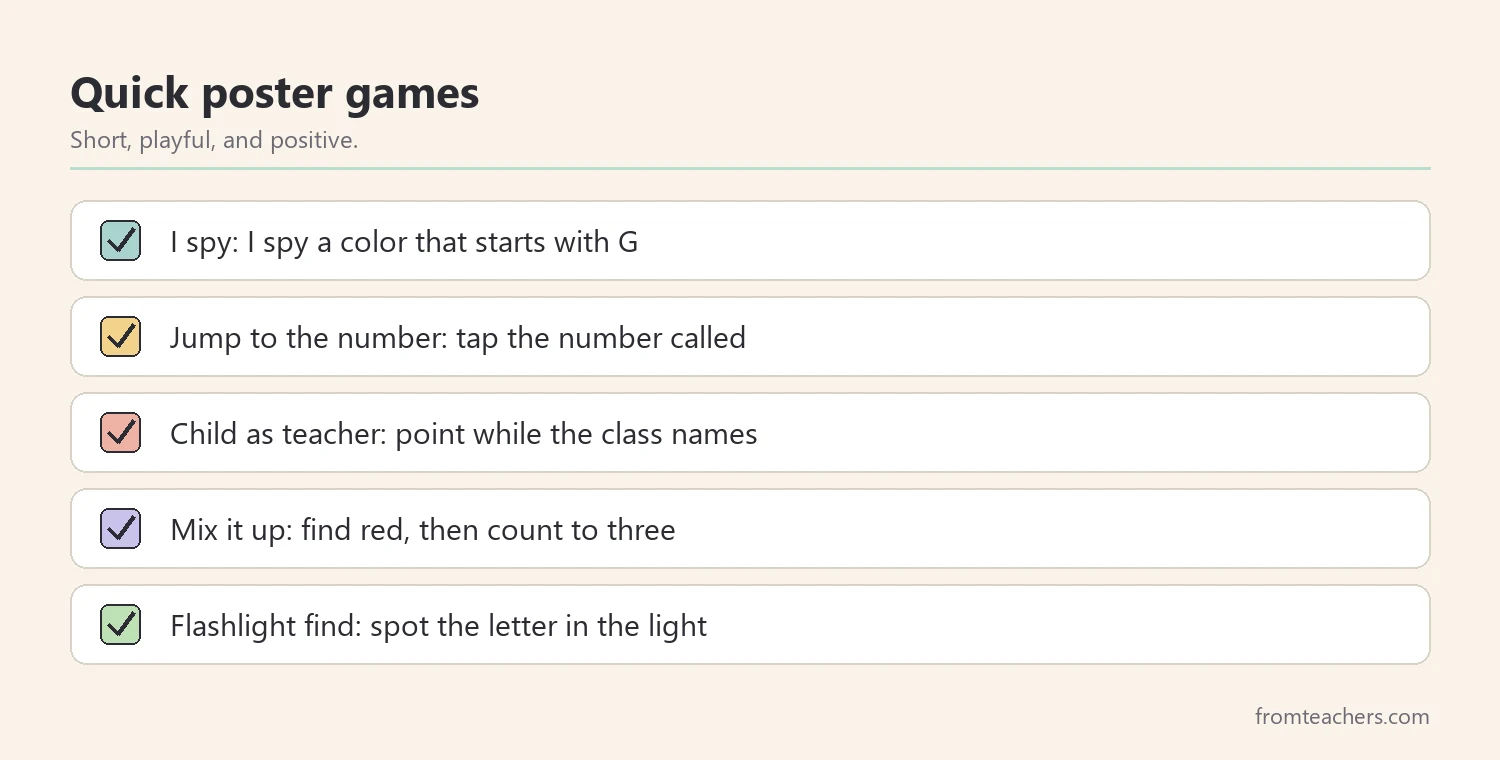
Meanwhile, keep games short and positive. Celebrate tries, not just correct answers. A warm, playful mood helps children take risks with new words and ideas.
Worked example. Ms. Garcia plays “Jump to the number” every Friday. Mia hops to the chart, taps the number 7, and says “seven.” Later, she leads a round of “I spy” on the colors poster, pointing while her classmates name each color.
5. Adapt and review as children grow
Finally, adjust how you use posters as children learn. Early in the year, focus on naming and pointing. Later, ask children to explain, compare, or use the poster to check their own work.
Also, adapt for different learners. English learners benefit from pictures, gestures, and repeated language. Students with additional needs may benefit from a smaller copy of a poster at their table, fewer items at a time, or extra time to respond. Early learning posters can support all of these approaches.
In addition, keep a simple record of what children know. A short check every few weeks, such as asking a child to point to letters or numbers, shows progress and helps you choose which posters to focus on next.
Next, refresh the wall when needed. If children have mastered a poster, move it to a less central spot and bring a new one forward. Fresh focus keeps attention high.
In addition, involve children in the change. Ask the class which poster they want to move and why. When children help decide how early learning posters are arranged, they feel ownership of the room, and they are more likely to keep using the charts. A short class vote or a helper job, such as “poster keeper” for the week, turns wall care into another small routine that builds responsibility.
Then, share posters with families. A small printed copy at home lets parents practice colors, numbers, or days of the week during everyday moments, such as cooking or getting dressed.
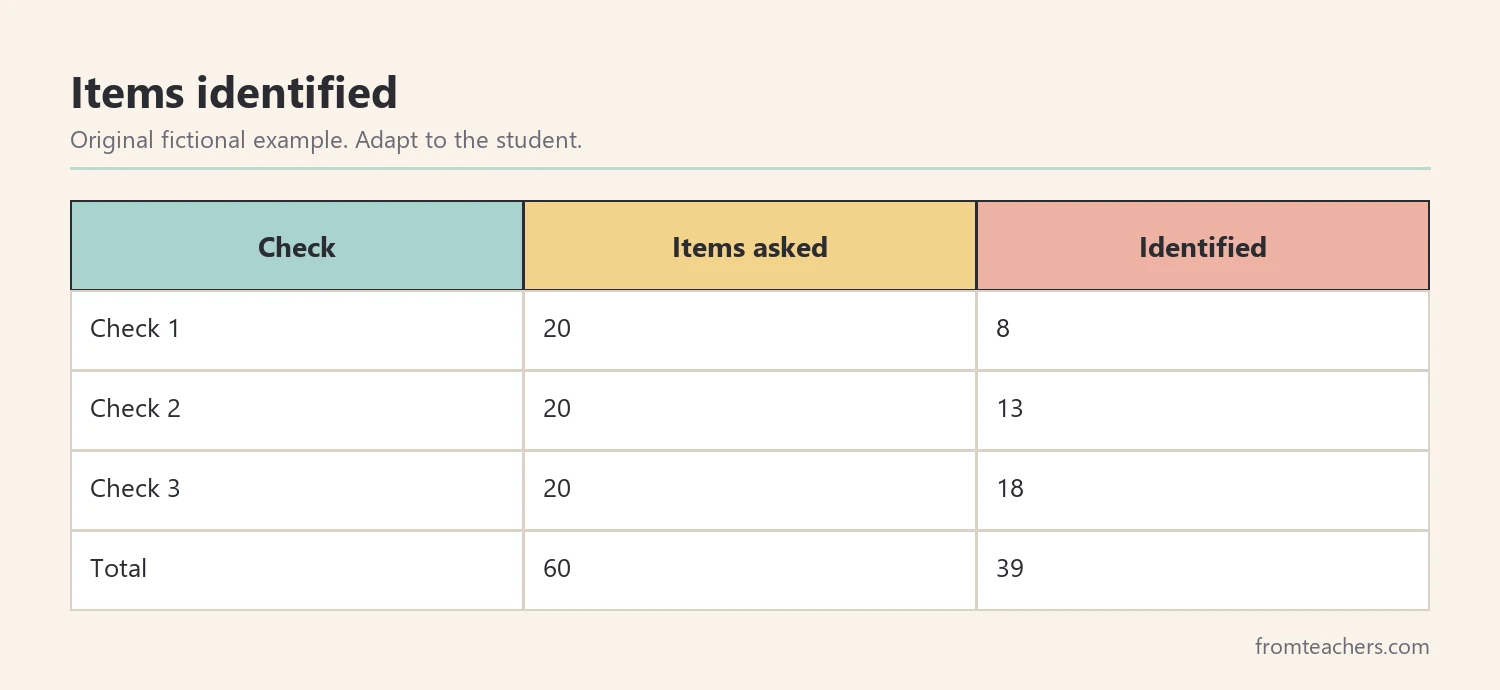
Worked example. Ms. Garcia checks Mia three times across the term using 10 letters and 10 numbers each time, so 20 items per check. In check 1, Mia identifies 8 of 20. By check 2, she identifies 13 of 20. In check 3, she identifies 18 of 20. Across three checks, that is 39 of 60 items, with clear growth each time.
Making posters work in special education and ESL rooms
In special education settings, early learning posters can support communication as well as academics. Children can point to a picture to answer a question, which helps when speech is still developing.
Also, in ESL classrooms, posters act as a shared word bank. Bright pictures with simple English labels help newcomers join lessons quickly. Repeating the same poster language every day builds confidence. Many teachers add a home-language label beside the English word, which makes early learning posters even more welcoming for families.
Finally, follow any supports in a child’s plan, such as visual supports or reduced visual clutter. Posters should help each child, not overwhelm them.
Common mistakes and how to avoid them
- Hanging posters too high. Children cannot see or reach them. Fix: hang at child eye level.
- Putting up everything at once. Nothing stands out. Fix: introduce one poster at a time.
- Treating posters as decoration. Children ignore them. Fix: build them into daily routines.
- Covering every wall. The room feels busy. Fix: choose a few posters and leave space.
- Doing all the pointing yourself. Children stay passive. Fix: let children point and lead.
- Never changing the wall. Attention fades. Fix: refresh posters as skills grow.
Questions teachers and parents ask about early learning posters
How many posters should a classroom have?
There is no set number. A few well-placed posters that children use daily usually help more than many unused ones. Add posters gradually and remove those that are no longer needed.
Are posters useful for children who cannot read yet?
Yes. Pictures, colors, and numbers give meaning without reading. Pointing and naming together helps children connect words to images.
Can posters help English learners?
Posters with clear pictures act as a visual word bank. Repeating the same words with the same pictures each day helps English learners build vocabulary.
How can parents use posters at home?
Hang one or two posters at child height and use them during everyday routines. Short, playful moments, like counting stairs or naming colors at dinner, work well.
Should posters be used in special education classrooms?
Yes, when they match each child’s needs. Some students benefit from a smaller desk copy or fewer items at a time. Follow the child’s plan and adjust as needed.
Related reading: Learning Styles Student Success Guide, Special Education: A Complete Guide for Parents and Educators, and 5 Practical Teaching Tips to Boost Classroom Focus and Learning.
A companion resource for early learning posters:
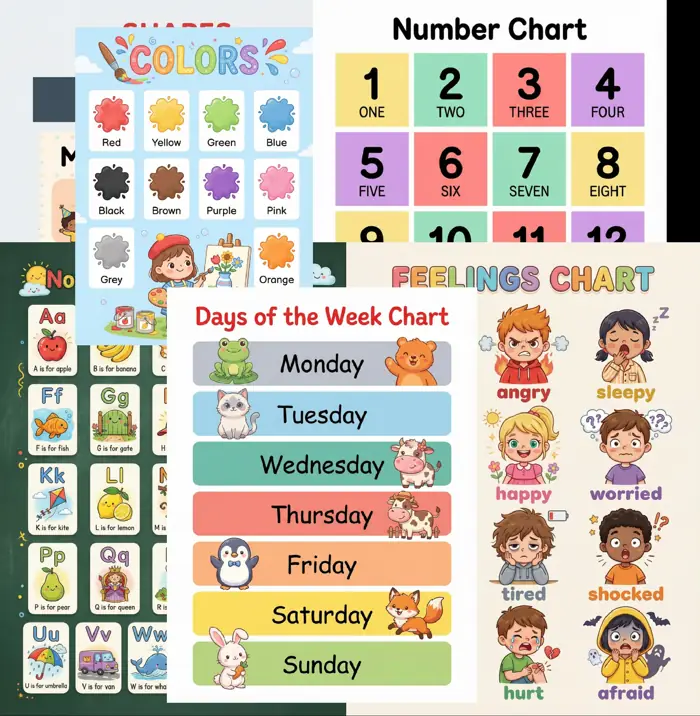
Set of 7 Educational Classroom Posters: Alphabet, Numbers, Colors and More: a bright, friendly early learning poster set covering foundational concepts for preschool, kindergarten, special education, and ESL classrooms.
Sources and scope
- NAEYC: the National Association for the Education of Young Children, with guidance on early learning environments.
- Head Start ECLKC: the Early Childhood Learning and Knowledge Center, with resources on early learning and dual language learners.
- Colorin Colorado: resources for educators and families of English language learners.
- CAST: the organization behind Universal Design for Learning, which encourages multiple ways to represent information.
This guide covers using classroom posters for early learning in preschool, kindergarten, special education, and ESL settings. It does not replace a full curriculum or individualized plans for students.
Key takeaways
- Early learning posters teach best when children use them daily.
- Place posters near related areas at child eye level.
- Introduce one poster at a time with a short routine.
- Build posters into routines and simple games.
- Adapt for diverse learners and refresh the wall over time.


Leave a Comment