

Meet the teacher night can feel short and crowded when your child has an IEP or a 504 plan. You have ten minutes, a line of families behind you, and a teacher trying to learn twenty-five names at once. Many parents walk out realizing they never mentioned the one thing that matters most.
This guide gives you a five-step plan for that evening and the weeks after it. You will prepare a one-page profile, choose the key points from your child’s plan, pick a few strong questions, use short scripts to start the conversation, and follow up so the partnership keeps going all year.
Examples are fictional. Adapt to the student’s goals and agreed supports. This is guidance, not a diagnosis.
At a glance
- Bring a one-page profile so the teacher remembers your child after the event.
- Choose two or three key supports from the IEP or 504 plan, not the whole document.
- Ask a few focused questions and save longer topics for a follow-up meeting.
- Use short, friendly scripts to set a collaborative tone.
- Follow up within a week and agree on how you will communicate.
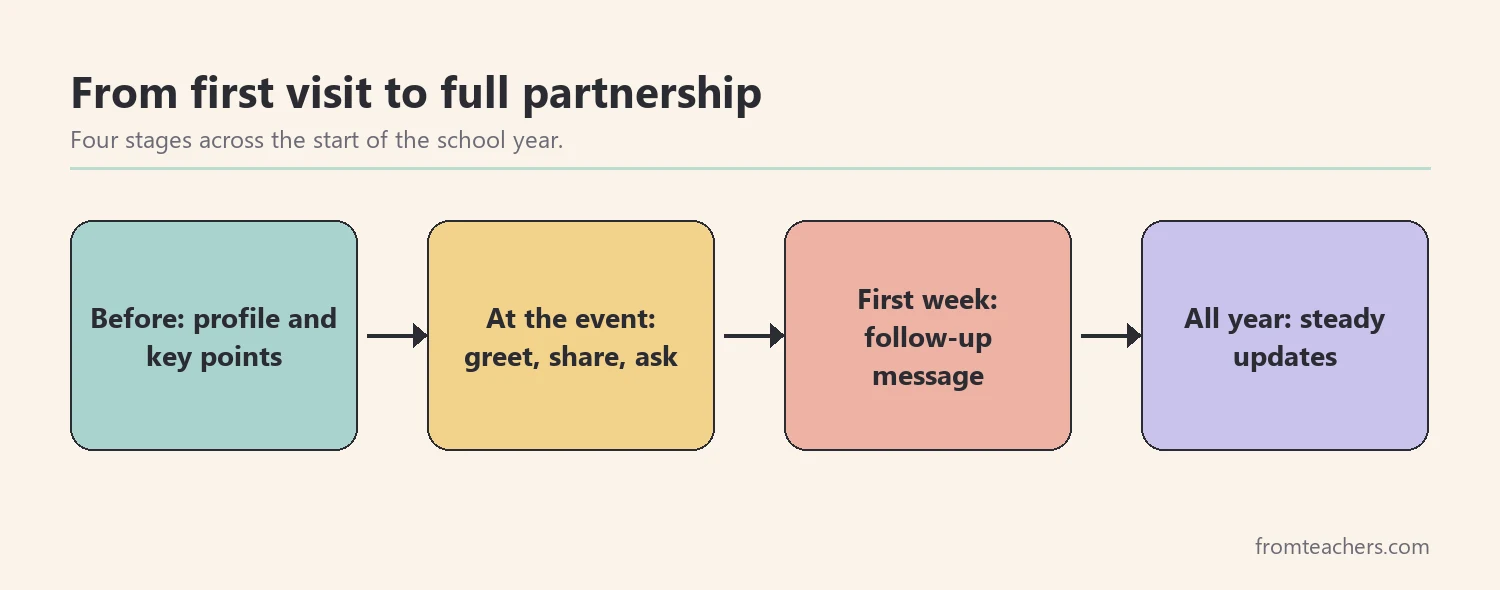
1. Prepare a one-page profile before meet the teacher night
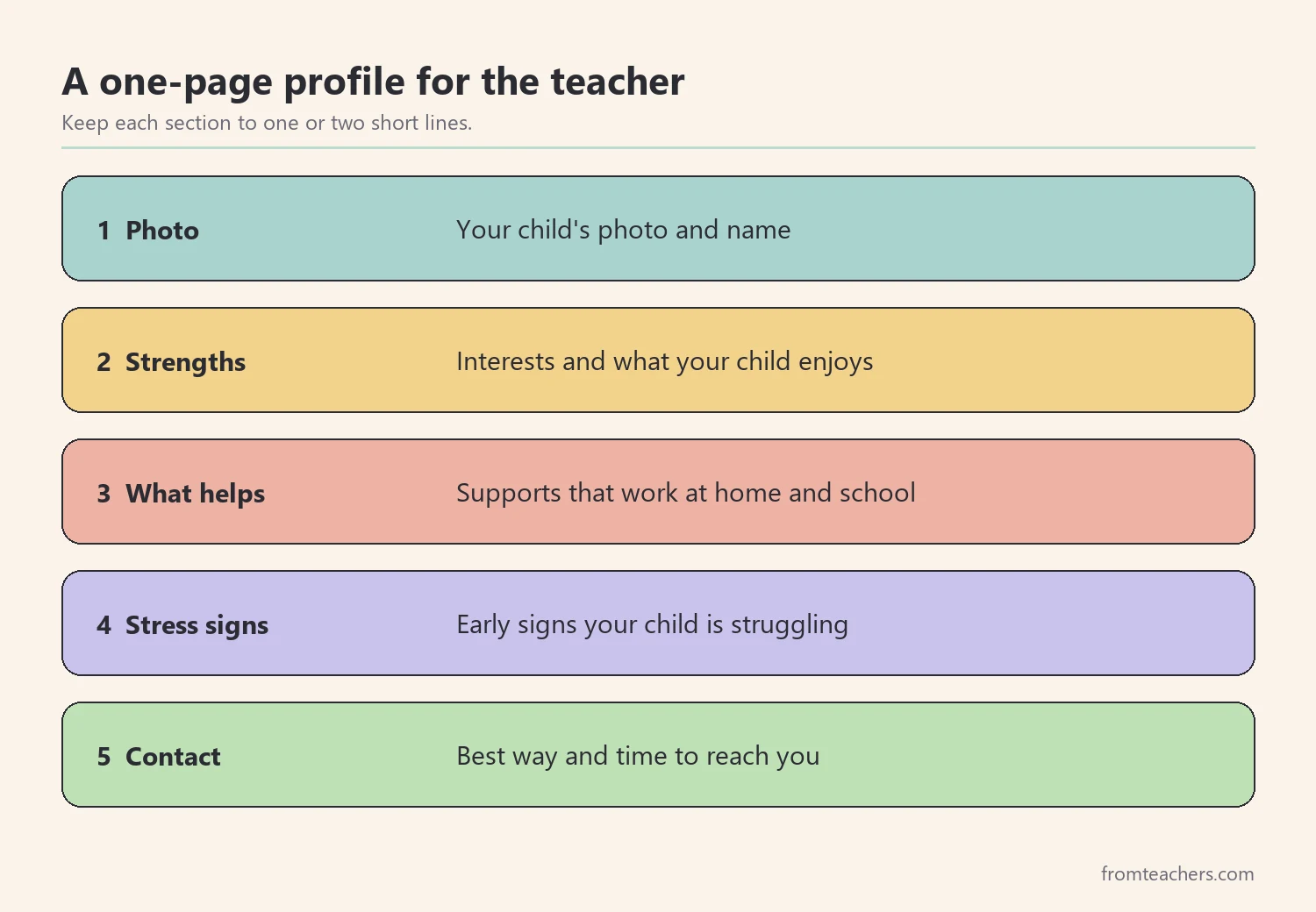
First, think about what the teacher needs to know in the first two weeks. A full IEP can run many pages, and the teacher may not have read it yet. A short profile gives a friendly, practical introduction that fits on one sheet.
A good profile has five parts. Start with a photo and your child’s name. Then list strengths and interests, because these help the teacher connect quickly. Next, add what helps, such as a visual schedule or extra time. After that, note early signs that your child is struggling. Finally, include your contact details and the best time to reach you.
Consider a fictional family. Nadia is the mother of Sami, who is starting grade 2 with an IEP for speech and language and some support with transitions. Here is what Nadia puts on Sami’s profile:
| Section | Sami’s profile |
|---|---|
| Strengths | Loves trains, builds with blocks, kind to younger kids |
| What helps | Picture schedule, warning before changes |
| Signs of stress | Covers ears, goes quiet, hides under a table |
| Contact | Email, evenings after 6 |
Keep the language plain and positive. Avoid long explanations of history or diagnosis. The goal of meet the teacher night is a warm start, and the profile supports that by giving the teacher something easy to keep on the desk.
Also, bring two copies. One is for the classroom teacher. The other can go to a specialist or paraprofessional if they are there. If they are not, ask the teacher to share it with the team.
What to bring to meet the teacher night
Beyond the profile, pack a small folder. Include a pen, your list of questions, and a sticky note for the teacher’s preferred contact details. If your child uses a communication tool, a sensory item, or a favorite object for comfort, bring that as well.
Also, think about timing. Arriving early often means a quieter room and a calmer teacher. For a child who finds noise hard, the first fifteen minutes of meet the teacher night can be much easier than the busy middle.
Finally, prepare your child at home. Show a photo of the school if you have one, explain who you will meet, and agree on a signal for when your child is ready to leave. A predictable plan makes the visit feel safer.
2. Review the IEP or 504 plan and pick key points
Next, read your child’s current IEP or 504 plan again before the event. You do not need to explain the whole plan at meet the teacher night. Instead, pick two or three supports that will matter most in the first weeks of school.
A simple way to choose is to ask yourself: what would make the biggest difference on day one? For many children, it is a support around transitions, communication, seating, or breaks. Write each one as a short sentence you can say in under thirty seconds.
For example, Nadia chooses three points for Sami:
- He uses a picture schedule and does best with a warning before changes.
- He sees the speech-language pathologist, and practice at home helps.
- When he goes quiet or covers his ears, a short break in a calm spot works well.
Then, check whether the teacher has access to the plan. In many schools, teachers receive a copy or a summary before the year starts. If you are unsure, it is fine to ask politely whether they have had a chance to see it yet.
In addition, note any questions about how a support will work in this classroom. For instance, where will the calm spot be, and who will help with the picture schedule? These are good topics for a follow-up meeting rather than for a crowded evening.
Finally, remember that the plan is a shared document. If something has changed over the summer, such as a new strength or a new challenge, write it down. You can share it on the night and ask how to bring it to the full team.
3. Plan your questions for meet the teacher night
Now plan your questions. Time at meet the teacher night is short, so choose three to five and put them in order of importance. A short list keeps the conversation focused and leaves room for the teacher to ask you questions too.
Good questions are practical and open. They ask how things work, not whether the teacher agrees with you. For example, “How do you like families to share updates?” invites a real answer. “Will you follow the IEP?” can sound like a challenge, even when you do not mean it that way.
In addition, think about who else your child will see during the day. Specials teachers, lunch staff, and bus staff may also need some information. You can ask the teacher how the school usually shares key supports with these adults.
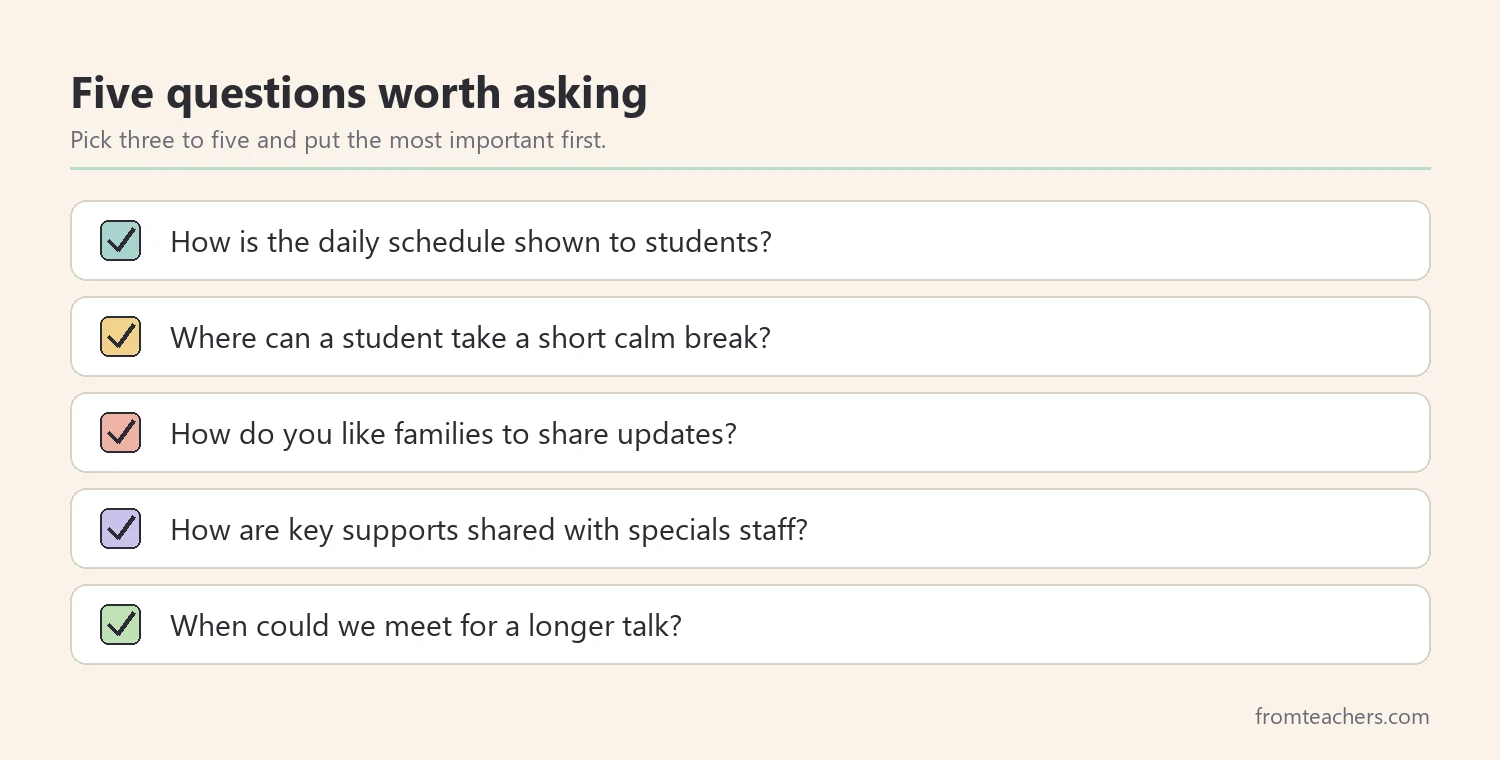
For Sami, Nadia picks four questions: how the daily schedule is shown, where a calm spot is, how updates are shared, and when a longer meeting could happen. She writes them on the back of the profile so she does not forget.
If you want ready-made lists, the Meet the Teacher guide for special education families includes question lists, sample scripts, and planning pages you can print before the event.
4. Use short scripts at meet the teacher night
Many parents find the first sentence the hardest. A short script removes that pressure. It also helps you sound calm and friendly even if you feel nervous about the year ahead.
A good opening script has three parts: a greeting, one positive line about your child, and an offer to help. For example: “Hi, I’m Nadia, Sami’s mom. He’s really excited about trains and building things. I brought a one-page profile that might help in the first few weeks.”
After that, share your key points briefly. Then hand over the conversation with a question. This keeps meet the teacher night feeling like a two-way exchange, not a briefing.
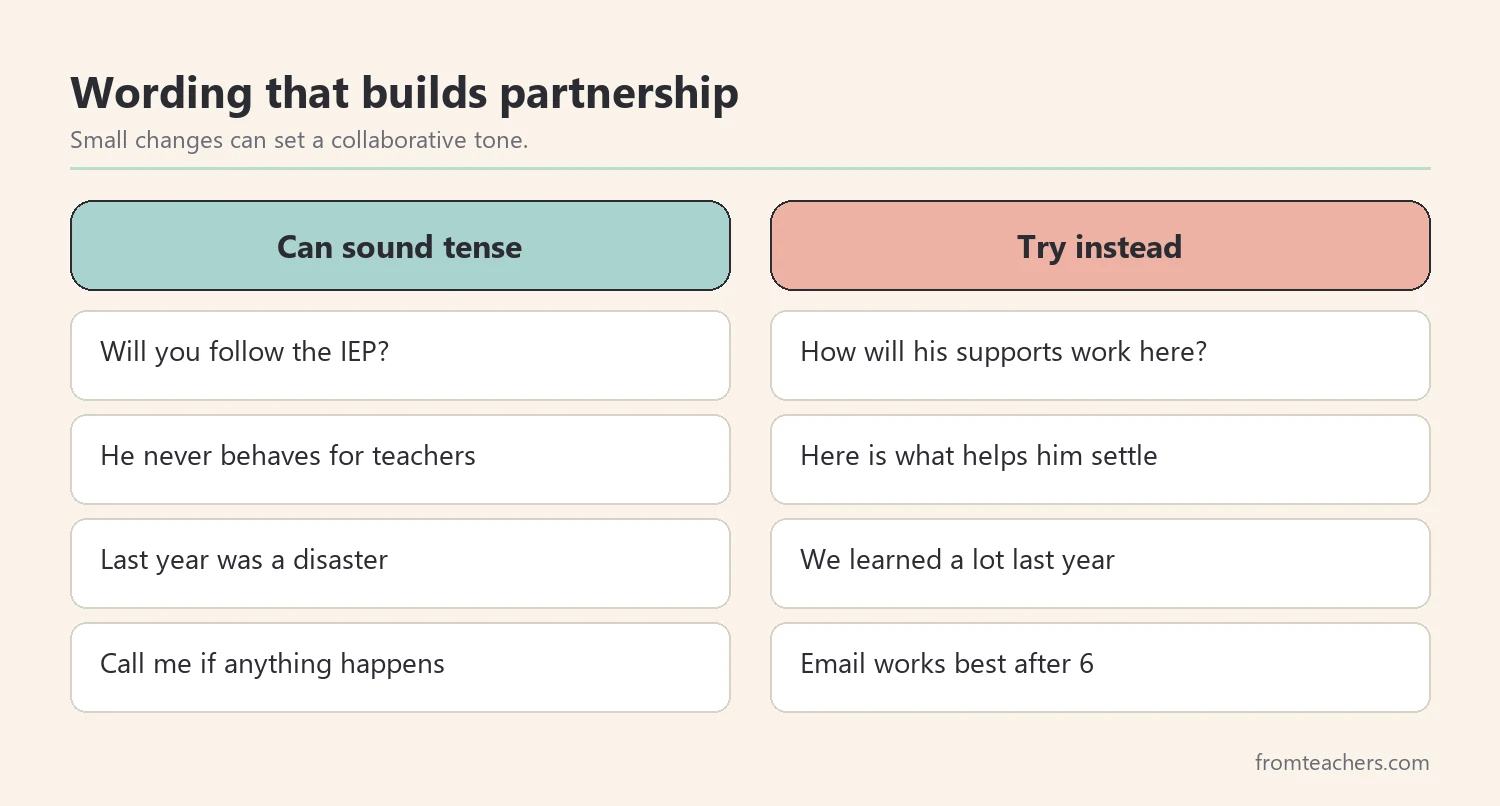
Also, prepare a script for when time runs out. For example: “I know you have lots of families tonight. Could we find fifteen minutes in the first couple of weeks to talk more?” This shows respect for the teacher’s time and still gets you a follow-up.
Meanwhile, bring your child into the conversation when it fits. Many children like to show the teacher something they made or to find their desk. Letting your child lead a small part of the visit can make the first day feel more familiar.
Finally, listen as much as you talk. Notice how the teacher describes the classroom routines. These details help you prepare your child at home, for instance by talking through the morning arrival or practicing the name of the reading corner.
5. Follow up after meet the teacher night
The work does not end when you leave the classroom. In fact, the follow-up is often where the real partnership starts. Within a week of meet the teacher night, send a short, friendly message.
Keep the message to a few sentences. Thank the teacher, repeat your contact details, attach the profile again, and suggest a time for a longer conversation. For example: “Thank you for meeting us. I’ve attached Sami’s profile again. Would a fifteen-minute call next Tuesday or Thursday work?”
Then, agree on how you will communicate through the year. Some teachers like a weekly note home, others prefer email or an app. Choose one main channel so messages do not get lost.
Here is how Nadia plans the first month:
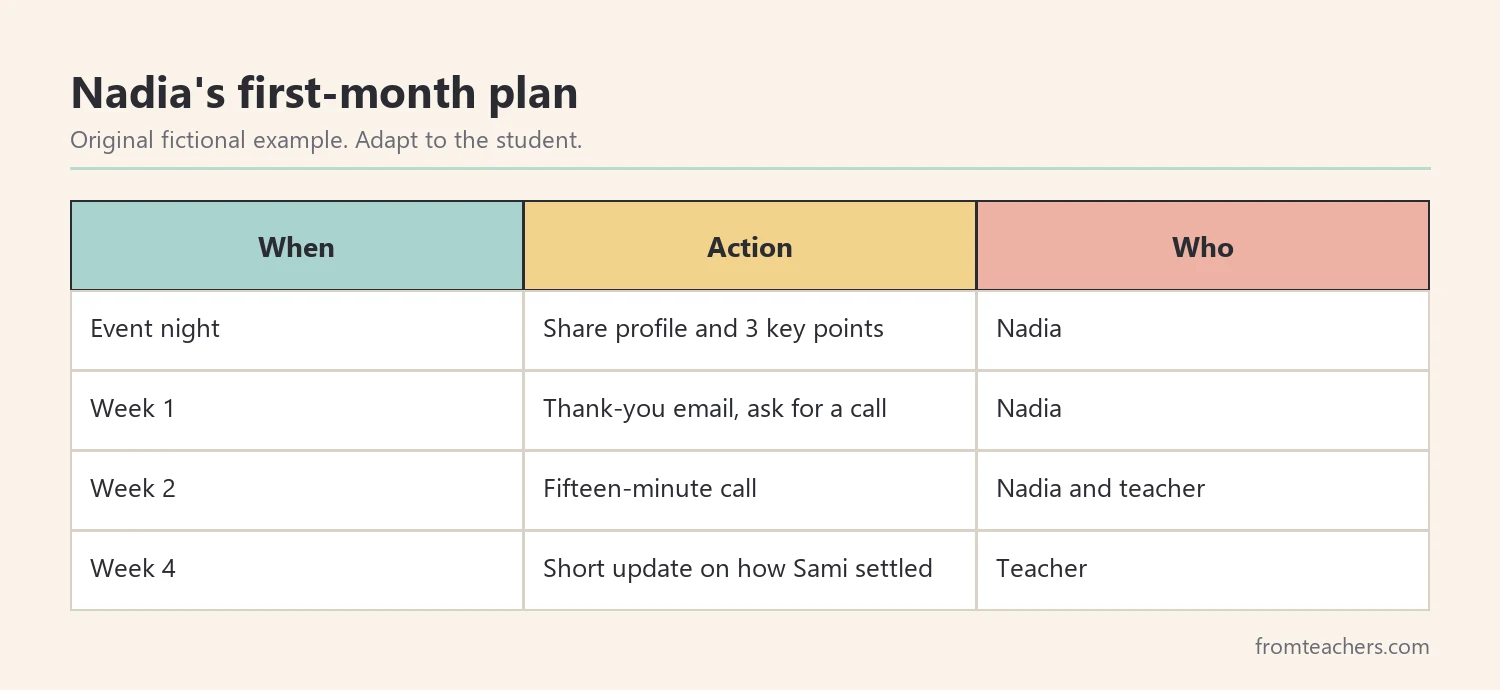
As the year goes on, share good news as well as concerns. A message like “Sami told us about the train book from library time” builds goodwill. When a harder conversation comes, that goodwill matters.
Finally, keep a simple log of your messages and meetings. A notebook or a page in your phone with the date and the main point is enough. It helps you prepare for IEP meetings and see how things change over time.
If both parents or caregivers attend
When two adults go to meet the teacher night together, decide roles in advance. One person can lead the conversation while the other watches your child and notes anything the teacher says. Afterward, compare notes in the car or at home while the details are still fresh.
If family members live apart, share the profile and the follow-up message with both. Ask the teacher whether updates can go to both addresses, so neither caregiver misses important news.
Common mistakes and how to avoid them
- Trying to explain the whole IEP in ten minutes. Fix: share two or three key supports and ask for a longer meeting.
- Leading with worries only. Fix: start with a strength or interest, then share what helps.
- Arriving without notes. Fix: bring the profile and write your questions on the back.
- Asking yes or no questions that sound like tests. Fix: ask open questions about how things work in the classroom.
- Waiting for the teacher to reach out first. Fix: send a short follow-up message within a week.
- Using many communication channels. Fix: agree on one main channel and stick with it.
Questions teachers and parents ask about meet the teacher night
Should my child come to meet the teacher night?
Often, yes. Seeing the classroom and meeting the teacher can make the first day less stressful. If crowds are hard for your child, ask whether a quieter time is possible, such as arriving early or visiting on another day.
Is meet the teacher night the right time to discuss IEP concerns?
It is a good time to mention key supports briefly. Detailed concerns usually need a separate meeting with more time and the right team members. Use the evening to request that meeting.
What if the teacher has not read the IEP yet?
That is common at the start of the year. Stay positive and share your one-page profile. Then ask when the team usually reviews plans and whether you can follow up after that.
How can teachers make meet the teacher night easier for families?
Teachers can offer a short sign-up for follow-up calls, a simple form for families to share strengths and needs, and a clear way to contact them. A welcoming tone helps families of children with disabilities feel included from the start.
What should I do if the conversation felt rushed?
Do not worry. Many evenings are busy. Send a friendly follow-up message, attach your profile, and suggest a time to talk. One rushed conversation does not define the year.
Related reading: How Teachers Communicate With Parents in Special Education: Building a Strong Partnership, Accommodations vs Modifications in Special Education: The Difference Explained, and Special Education: A Complete Guide for Parents and Educators.
A companion resource for meet the teacher night:

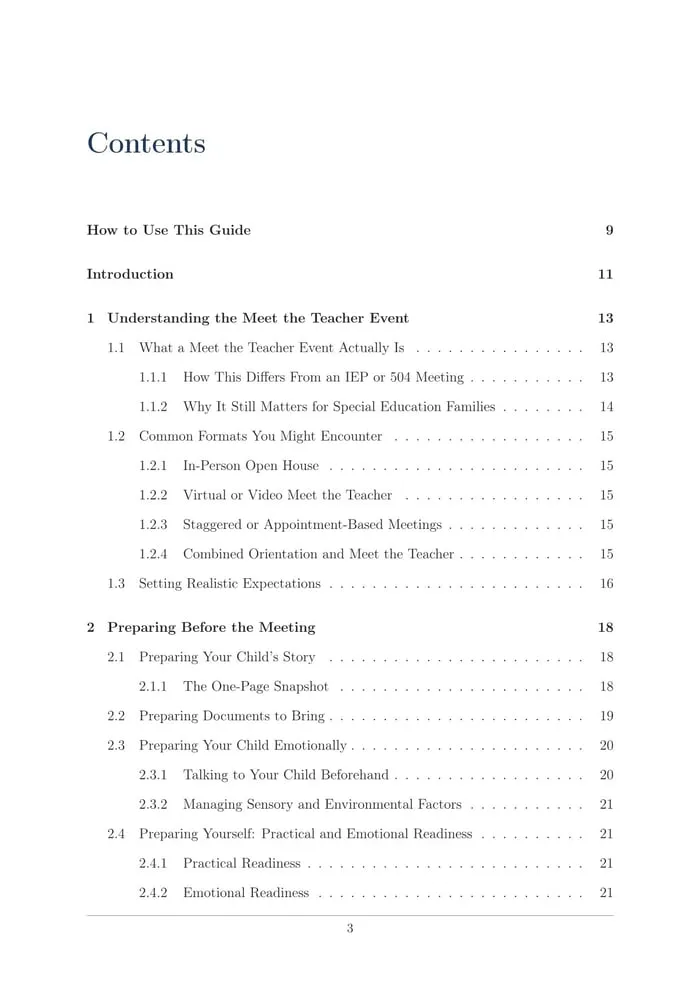
Meet the Teacher Guide for Special Education Families: a 101-page PDF guide covering preparation, communicating your child’s IEP or 504 plan, questions to ask, sample scripts and conversation starters, follow-up, and a year-long action plan, with printable templates and planning pages.
Sources and scope
- IDEA, U.S. Department of Education: the law behind special education services, IEPs, and parent participation.
- Center for Parent Information and Resources: guidance for families on IEPs and links to local parent centers.
- Understood.org: practical articles for families on IEPs, 504 plans, and working with teachers.
- IRIS Center, Vanderbilt University: free modules on collaborating with families and supporting students with disabilities.
This guide covers practical preparation and communication around the start of the school year. It does not give legal advice or replace your child’s IEP team, school procedures, or local parent support services.
Key takeaways
- Meet the teacher night is a warm start, not the place for the full IEP.
- A one-page profile helps the teacher remember your child.
- Choose two or three key supports and a few open questions.
- Short scripts make the conversation easier and friendlier.
- Follow up within a week and agree on one way to communicate.






Leave a Comment