

Vestibular processing strategies can change how a student experiences the most ordinary parts of the school day. Picture a second grader who clings to the railing on the stairs, avoids the swings at recess, and seems tired and unsteady after a busy assembly. Another student in the same class cannot stop spinning, rocking, or tipping back in a chair. Both may be responding to how their bodies sense movement and balance.
This guide gives you five steps to support these students: understand what the vestibular sense does, observe the student’s patterns, adjust the environment, plan movement into the day, and work with the team and family. By the end, you will have practical classroom ideas and a clear way to check whether they help.
Examples are fictional. Adapt to the student’s goals and agreed supports. This is guidance, not a diagnosis.
At a glance
- The vestibular sense helps us feel movement, balance, and the position of our head.
- Some students avoid movement, while others seek a lot of it.
- Observe specific moments before choosing a support.
- Adjust seating, routes, and routines, and plan calm movement breaks.
- Work with an occupational therapist and the family for individual advice.
1. Understand the vestibular sense
First, a quick background. The vestibular system, located in the inner ear, helps the body sense movement, balance, and changes in head position. It works closely with vision and with the body’s sense of position to keep us steady. We use it all day, from sitting upright in a chair to walking down a busy hallway.
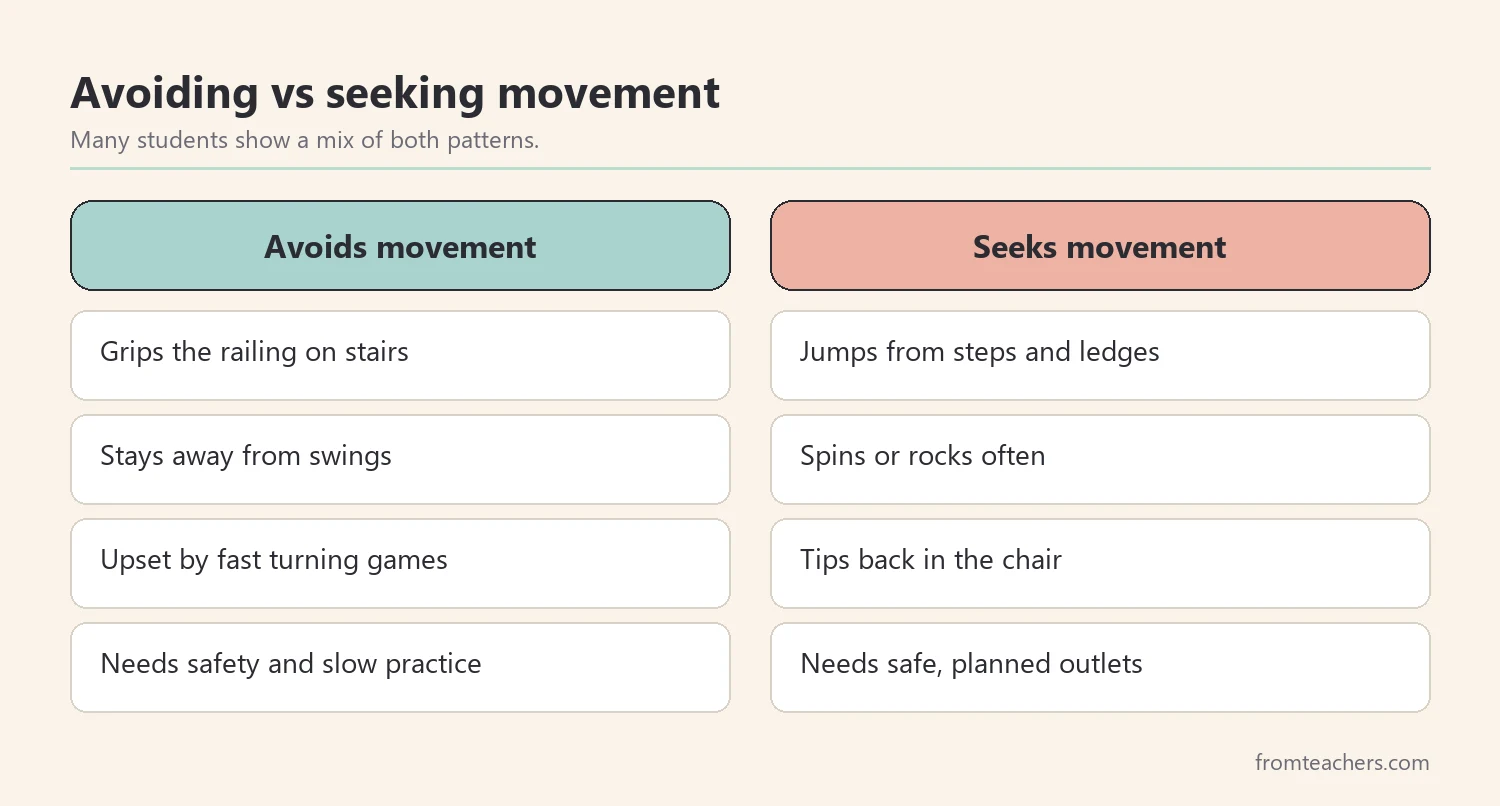
Some students process this information differently. Occupational therapists often describe two broad patterns. Some students are very sensitive to movement and may avoid it. Others seem to need more movement than their peers and seek it out. Many students show a mix depending on the day and setting.
Understanding these patterns matters because the right vestibular processing strategies depend on which one you see. A student who avoids movement needs safety and gradual practice. A student who seeks movement needs planned, safe ways to get it. Using the wrong support can make the day harder.
Expect patterns to change
Also, patterns can change. A student who avoids the swings in September may enjoy them by spring, while a student who seeks movement may need more on stressful days. Treat vestibular processing strategies as a flexible plan that you revisit, not a fixed label for the child.
Keep in mind that only qualified professionals, such as an occupational therapist, can evaluate sensory processing. Your role as a teacher or parent is to notice, describe, and support. Clear notes from the classroom help the professional and the team make good decisions.
In addition, remember that other things can look similar. Tiredness, an ear infection, vision problems, or anxiety can all affect balance and comfort. That is one more reason to share your observations with the family and the school team rather than guessing at causes.
2. Observe patterns before choosing vestibular processing strategies
Next, collect short notes for one or two weeks. Write the moment, the setting, and what the student did. Look for moments involving stairs, playground equipment, assemblies, physical education, and long periods of sitting. Good vestibular processing strategies always begin with this kind of observation.
Meet our fictional student, Sofia, a second grader. Sofia is kind and creative and loves drawing. However, she avoids the playground climbing frame, holds the railing tightly on stairs, and becomes tearful during physical education games that involve running and turning. Her teacher recorded these moments.
| Moment | What Sofia did |
|---|---|
| Walking down the stairs | Held railing with both hands, moved slowly |
| Recess | Stayed near the bench, avoided swings |
| PE relay game | Stopped and cried after turning quickly |
| Carpet time | Calm, sat steadily |
As a result, a pattern appeared. Sofia seemed most uncomfortable when her feet left the ground or when movement was fast and unpredictable. Calm, stable activities were fine. These notes gave the occupational therapist a clear starting point.
Also, write what helps. Sofia was calmer on the stairs when she walked at the end of the line with a friend. Small details like this often become the first supports you try.
For a student who seeks movement, the notes look different. You might see constant rocking, spinning, jumping from heights, or tipping a chair. Record when it happens most, such as after long seated lessons. That timing often points to the best moment for a planned movement break.
Questions to guide your notes
- Does the student avoid movement, seek it, or both at different times?
- Which settings are hardest: stairs, playground, gym, or crowded halls?
- Does the difficulty grow when the student is tired or the room is loud?
- What calms the student after a hard moment?
Answering these questions gives the team a shared picture. In addition, it helps the therapist suggest vestibular processing strategies that match the real school day instead of general advice.
3. Adjust the environment with vestibular processing strategies
Then, make the environment feel safer and more predictable. Small changes can reduce stress without singling the student out. Environmental vestibular processing strategies are often the easiest to try first.
- Offer a stable chair with feet flat on the floor or a footrest.
- Let the student walk at the end of the line on stairs.
- Give warnings before games that involve fast turns or spinning.
- Seat the student near a wall or table in busy spaces like assemblies.
- Keep pathways in the room clear and predictable.
For Sofia, her teacher added a small footrest under her desk, gave her a “line helper” role at the back of the line, and spoke with the PE teacher about offering a slower version of turning games. Sofia still joined in, just at her own pace.
Safe outlets for movement seekers
For movement-seeking students, the environment can offer safe outlets. A wobble cushion, a standing desk spot, or a resistance band on chair legs can give movement while the student keeps working. Always check with the occupational therapist before adding new equipment, and introduce it with clear rules.
| School moment | Support to try |
|---|---|
| Stairs and hallways | Walk at the end of the line with a buddy |
| Assemblies | Seat near a wall, with a clear exit |
| PE games | Offer a slower version and a warning |
| Long seated work | Stable chair, footrest, planned break |
Simple environmental vestibular processing strategies like these cost little and can be tried the same week. Start with one or two, then watch how the student responds.
If you want ready-made ideas, the vestibular processing strategy tables describe common symptoms with a practical aid and the insight behind each one.
4. Plan movement into the day
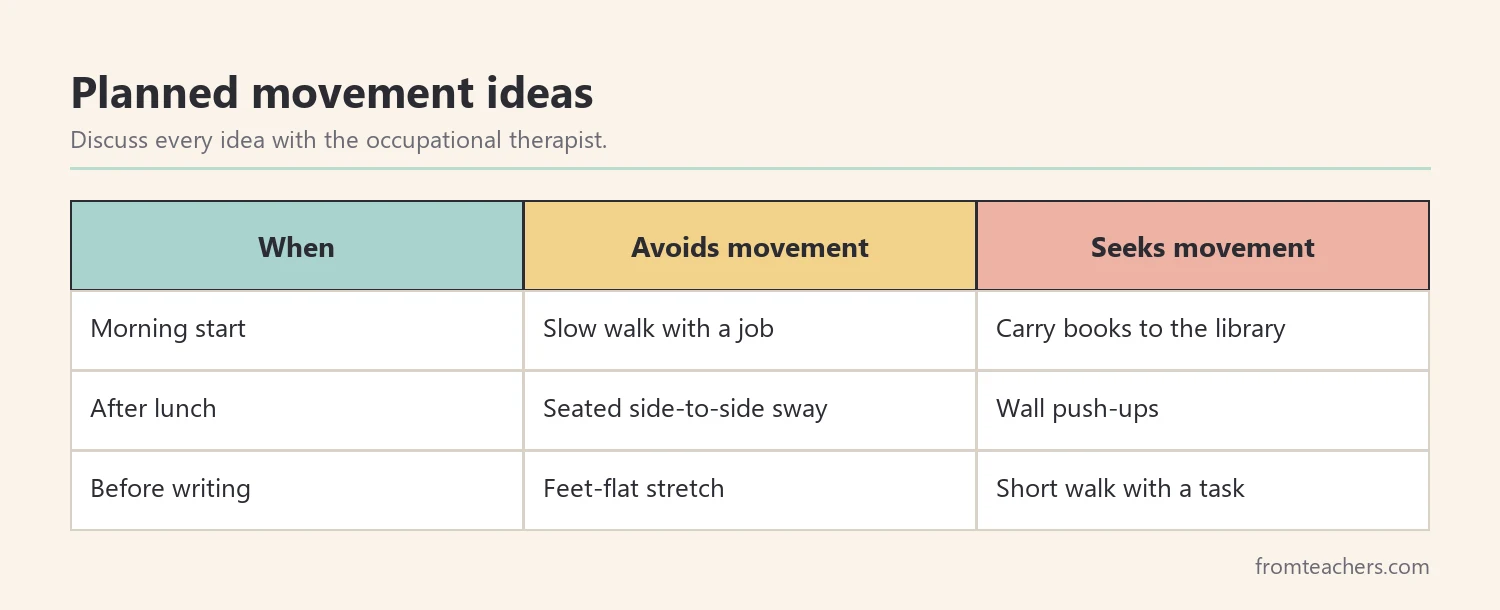
Many students benefit from planned, predictable movement. Instead of waiting for movement to happen by accident, build it into the schedule. Planned movement is one of the most useful vestibular processing strategies for both avoiding and seeking patterns.
For students who avoid movement, start small and slow. Gentle, predictable activities with feet on the ground often feel safe. Over time, and with guidance from the therapist, the student may try a little more. Never force a student onto equipment that scares them.
For students who seek movement, offer short, structured breaks with a clear start and end. Carrying books to the library, wall push-ups, or a short walk with a task can give movement without disrupting the class.
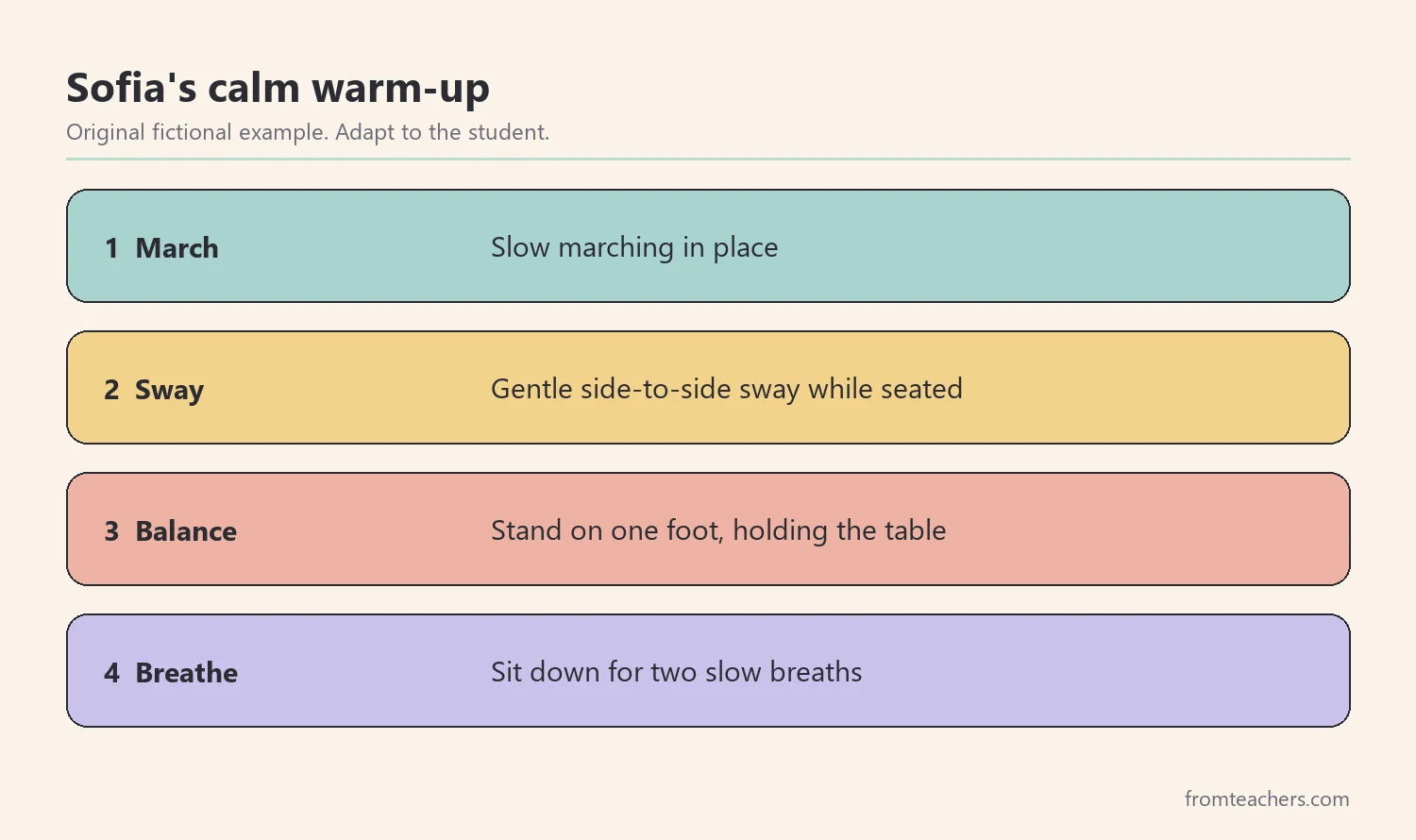
Sofia’s therapist suggested a short routine in the classroom: slow marching in place, a gentle side-to-side sway while seated, standing on one foot while holding the table, and then sitting down for two slow breaths. Her teacher used it as a whole-class warm-up after lunch. Because everyone did it, Sofia did not feel singled out.
Movement routines at home
At home, families can use the same idea. A short, calm movement routine before homework or bedtime gives the body a predictable rhythm. For a cautious child, that might be a slow walk around the garden or gentle rocking in a chair. For a child who seeks movement, it might be jumping on a cushion or pushing a laundry basket down the hall. Ask the therapist which activities fit the child, and keep them short and playful so they never feel like a chore.
Also, timing matters. Place movement before tasks that need steady attention, such as handwriting or independent reading. A short break after a long sitting block can help any student reset.
Finally, keep movement breaks calm and predictable. Use the same steps, the same order, and a clear signal to finish. Predictability is one of the quiet strengths of good vestibular processing strategies, because the student knows exactly what will happen and when it will end.
5. Work with the team and review vestibular processing strategies
Finally, keep the team connected. The occupational therapist can suggest individual activities and adjustments. The family can share what they see at home, such as how the student handles car rides, playground visits, or bath time. Together, you can choose vestibular processing strategies that fit the whole child.
Pick one or two simple measures. For Sofia, the team tracked how many recess periods she joined a playground activity and how many PE lessons she completed without stopping. They reviewed the record every four weeks.
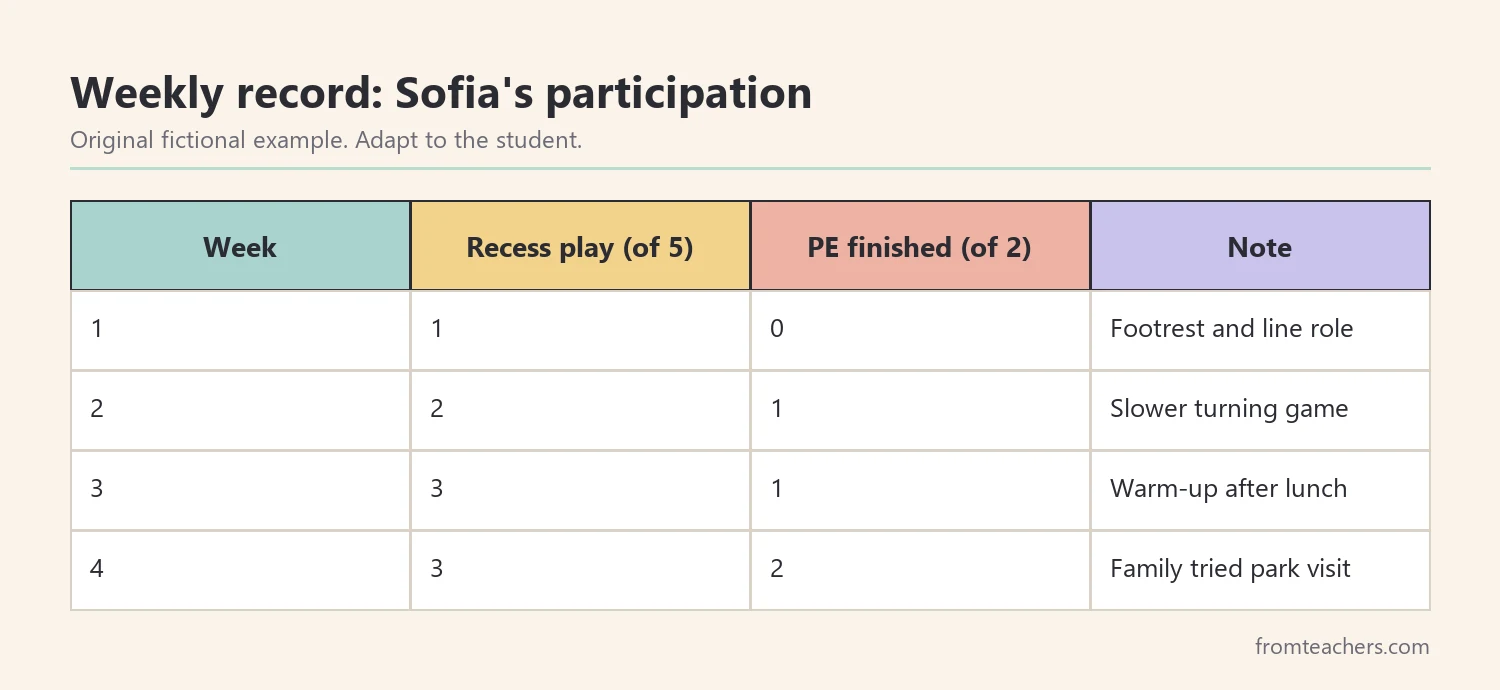
Change one support at a time so you know what helps. When something works, keep it. When it does not, ask the therapist what to adjust. In addition, include the student. Ask Sofia which parts feel easier now and which still feel scary. Her answers guide the next step.
Lastly, share the plan with every adult who works with the student, including PE teachers, recess staff, and substitutes. Consistent responses help the student feel safe across the school.
When progress is steady, discuss with the therapist whether to fade or change a support. For example, Sofia might move from walking at the end of the line to walking in the middle with a friend. Fading slowly protects the confidence she has built, and it shows that vestibular processing strategies are meant to grow with the student.
Common mistakes and how to avoid them
- Forcing participation. Instead, offer a safe, slower version and build up gradually.
- Treating movement seeking as bad behavior. Plan safe, structured movement breaks.
- Guessing the cause. Share observations and let qualified professionals evaluate.
- Adding equipment without guidance. Check with the occupational therapist first.
- Keeping the plan in one room. Share supports with PE, recess, and other staff.
Questions teachers and parents ask about vestibular processing strategies
What is vestibular processing?
It is how the brain uses information from the inner ear to sense movement, balance, and head position. Some students process this information differently, which can affect comfort and participation in movement activities.
Who should evaluate a student with movement difficulties?
An occupational therapist is often the right professional for sensory questions. A doctor may also check for other causes, such as ear or vision problems. Share your notes with the family and the school team.
Can vestibular processing strategies be used with the whole class?
Yes. Movement warm-ups, clear pathways, and predictable routines help many students. You can then add individual supports for students who need more.
What can parents do at home?
Parents can notice which movements feel comfortable or uncomfortable and share this with the therapist. Gentle, predictable play with feet on the ground is a good place to start for cautious children.
Can these supports be part of an IEP or 504 plan?
Yes, teams sometimes include sensory supports or occupational therapy services. Talk with the student’s team about what fits their plan.
Related reading: Managing Sensory Overload: Practical Strategies for Autism and ADHD, Bridging Gaps in Special Education: Practical Strategies for Teachers, and How Parents and Teachers Can Team Up for Special Education Success.
A companion resource for vestibular processing strategies:
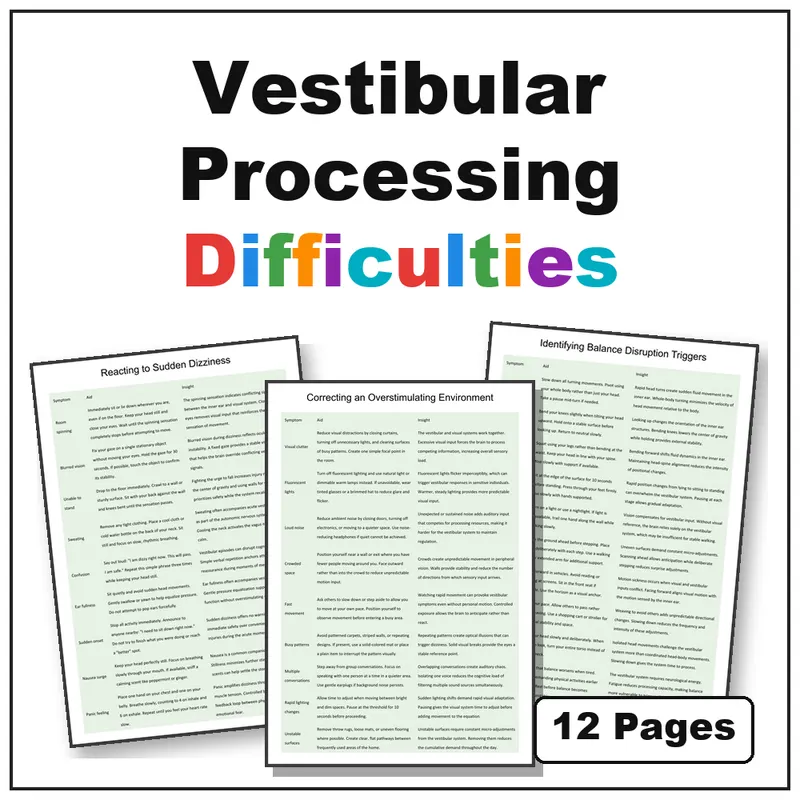
Vestibular Processing Difficulties | Movement and Balance Strategies: 12 printable strategy tables that describe each vestibular symptom with a practical aid and the insight behind it, covering balance, movement, and comfort in busy environments.
Sources and scope
- American Occupational Therapy Association: information about occupational therapy and the role of therapists in schools.
- Understood.org: practical articles for families and teachers on sensory processing and learning differences.
- IRIS Center, Vanderbilt University: free modules on classroom environments and evidence-based practices.
- IDEA, U.S. Department of Education: the law behind special education and related services such as occupational therapy.
This guide covers everyday classroom and home supports for students who avoid or seek movement. It does not cover diagnosis, therapy plans, or medical causes, which belong to qualified professionals and the student’s team.
Key takeaways
- The vestibular sense helps with movement, balance, and head position.
- Notice whether a student avoids or seeks movement before choosing supports.
- Adjust seating, routes, and routines to make the day feel safer.
- Plan short, predictable movement into the schedule.
- Review vestibular processing strategies with the therapist and family.








Leave a Comment