

The right classroom sensory strategies can turn a chaotic day into a calmer, more successful one. When a student seeks constant movement, covers their ears, or melts down without warning, the cause is often sensory. Understanding the senses helps teachers respond with skill instead of guesswork.
This guide explains sensory processing in simple terms and shares practical tools for teachers and parents. It focuses on everyday supports that work in real classrooms.
What Is Sensory Processing?
Sensory processing is how the brain takes in and organizes information from the senses. For most people, this happens automatically. However, some students experience sensations as too strong, too weak, or confusing.
As a result, a fire drill may feel painful, or sitting still may feel impossible. These are not choices. They are real differences in how the nervous system works.
The Eight Senses Teachers Should Know
Most of us learned about five senses. In fact, there are at least eight that affect learning.
- Sight, hearing, touch, taste, and smell
- Vestibular: balance and movement
- Proprioception: body position and muscle awareness
- Interoception: internal signals like hunger, thirst, and needing the bathroom
For example, a student who crashes into walls may be seeking proprioceptive input. Also, a student who forgets to eat may have weaker interoceptive signals.
Sensory Seekers vs Sensory Avoiders
Some students seek more input. They may fidget, chew items, or move constantly. Others avoid input. They may cover ears, refuse certain textures, or hide from crowds.
In addition, many students are both, depending on the sense. Therefore, observe carefully and note which senses seem involved. Occupational therapists can help with a full sensory profile.
Classroom Sensory Strategies That Work
Small adjustments help many students at once. First, look at the environment. Next, add tools and routines.
Environmental Changes
- Reduce visual clutter on walls
- Offer a quiet corner with soft lighting
- Give advance warning before loud events
Tools and Movement
- Noise-reducing headphones
- Wobble cushions or standing desks
- Heavy work jobs like carrying books or wiping tables
- Scheduled movement breaks
Also, an illustrated resource such as this comic-style sensory processing guide for teachers helps staff understand the “why” behind each tool.
Preventing Sensory Overload
Overload builds slowly before a meltdown. Therefore, watch for early signs like covering ears, pacing, or shutting down. Then, offer a break before things escalate.
In addition, teach students to recognize their own signals. For example, a simple card that says “I need a break” gives them a safe way to ask. For deeper support, see our guide to managing sensory overload.
Working With Families and Therapists
Parents know what calms their child at home. Also, occupational therapists can suggest specific sensory diets. Sharing that information builds consistency.
Finally, write effective classroom sensory strategies into IEPs or 504 plans when needed. The Understood.org site explains sensory processing challenges in family-friendly language.
Building a Sensory-Friendly Daily Routine
A predictable routine supports sensory needs all day. First, place movement breaks before long seated tasks. Next, follow busy activities with calm ones.
For example, after a loud assembly, plan a quiet reading time. In addition, warn students before transitions so changes do not feel sudden.
Sample Sensory Breaks
- Calming: deep breathing, a weighted lap pad, or dim lights
- Alerting: jumping jacks, a fast walk, or a cold drink of water
- Organizing: wall push-ups, carrying a crate, or chair push-ups
Because each student is different, observe which breaks help and adjust over time.
Classroom Sensory Strategies for the Whole Class
Many sensory supports help everyone, not just students with identified needs. For example, softer lighting and lower noise make classrooms calmer for all learners. Also, flexible seating gives students choices about how they work.
In addition, teach the whole class about the senses. When students understand that bodies need different things, they accept tools like headphones without teasing. As a result, classroom sensory strategies become part of a kind, inclusive culture.
Finally, review your setup each term. Small changes can make a big difference as students grow.
Getting Started This Week
First, observe one student who struggles and note which senses seem involved. Next, try one simple tool, such as headphones or a movement job. Then, track whether the student seems calmer or more focused. In addition, ask the family what works at home. Finally, share your notes with the occupational therapist if one is available. Small, careful experiments help you find the right supports faster.
Frequently Asked Questions
Is sensory processing difficulty the same as autism?
No. Sensory differences are common in autism and ADHD, but they also occur in children without either diagnosis.
Do sensory tools distract other students?
Usually not, once tools are taught with clear rules. Many classmates also benefit from movement and quiet options.
Who can assess sensory needs?
Occupational therapists typically assess sensory processing. Teachers can share observations to support that evaluation.
Ready-to-use resource:
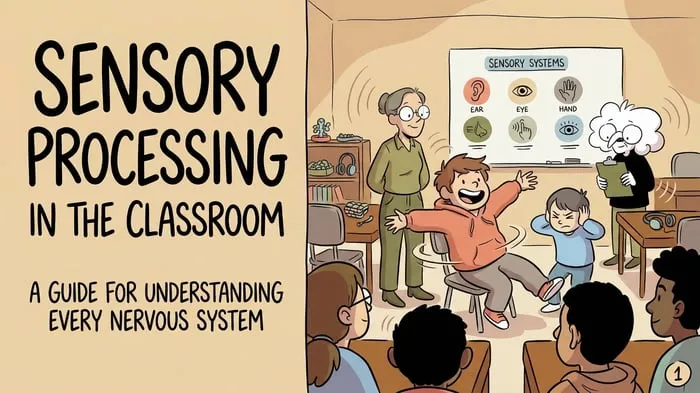
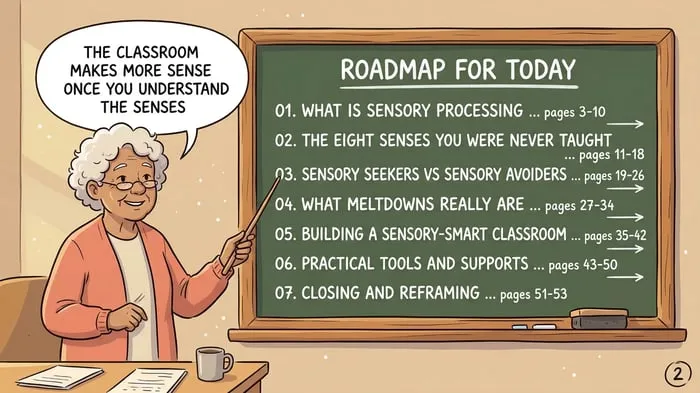
Sensory Processing in the Classroom: Strategies & Tools: A 53-page comic-style guide explaining the eight senses, seekers vs avoiders, and practical classroom tools.
Related reading: meltdowns vs tantrums and autism spectrum disorder guide.
Also on FromTeachers:
Key Takeaways
- Classroom sensory strategies start with understanding all eight senses.
- Students can be sensory seekers, avoiders, or both.
- Small environmental changes and movement tools help many learners.
- Watch for early overload signs and offer breaks before meltdowns.










Leave a Comment