

Sensory calming strategies for kids matter most in the moments when words stop working. Picture a first grader after recess: the room is loud, her shoes feel wrong, and she is crying under the table before anyone notices she was struggling. Telling her to “calm down” does not help, because her body has not yet learned how.
This guide walks you through five steps to build a personal calming toolkit with a child: notice their sensory patterns, explore calming options across the senses, test what actually works, teach the toolkit when the child is calm, and keep it going at school and at home. By the end, you will have a simple, individual plan instead of one generic “calm down” rule for everyone.
Examples are fictional. Adapt to the student’s goals and agreed supports. This is guidance, not a diagnosis.
At a glance
- Every child calms differently, so start by observing, not by assuming.
- Explore calming ideas through sight, sound, movement, touch, taste, and smell.
- Test a few strategies at a time and keep the ones that clearly help.
- Teach the toolkit during calm moments, not in the middle of a meltdown.
- Share one simple plan across home and school so adults respond the same way.
1. Notice patterns before choosing sensory calming strategies for kids
First, watch before you act. Sensory calming strategies for kids work best when they match what the child’s body actually needs. A child who is overwhelmed by noise needs something different from a child who is restless and seeking movement.
For about a week, jot down short notes whenever the child seems upset or dysregulated. Record the time, the setting, what was happening around them, and what helped, if anything. Keep it simple. A few words per entry are enough to spot patterns.
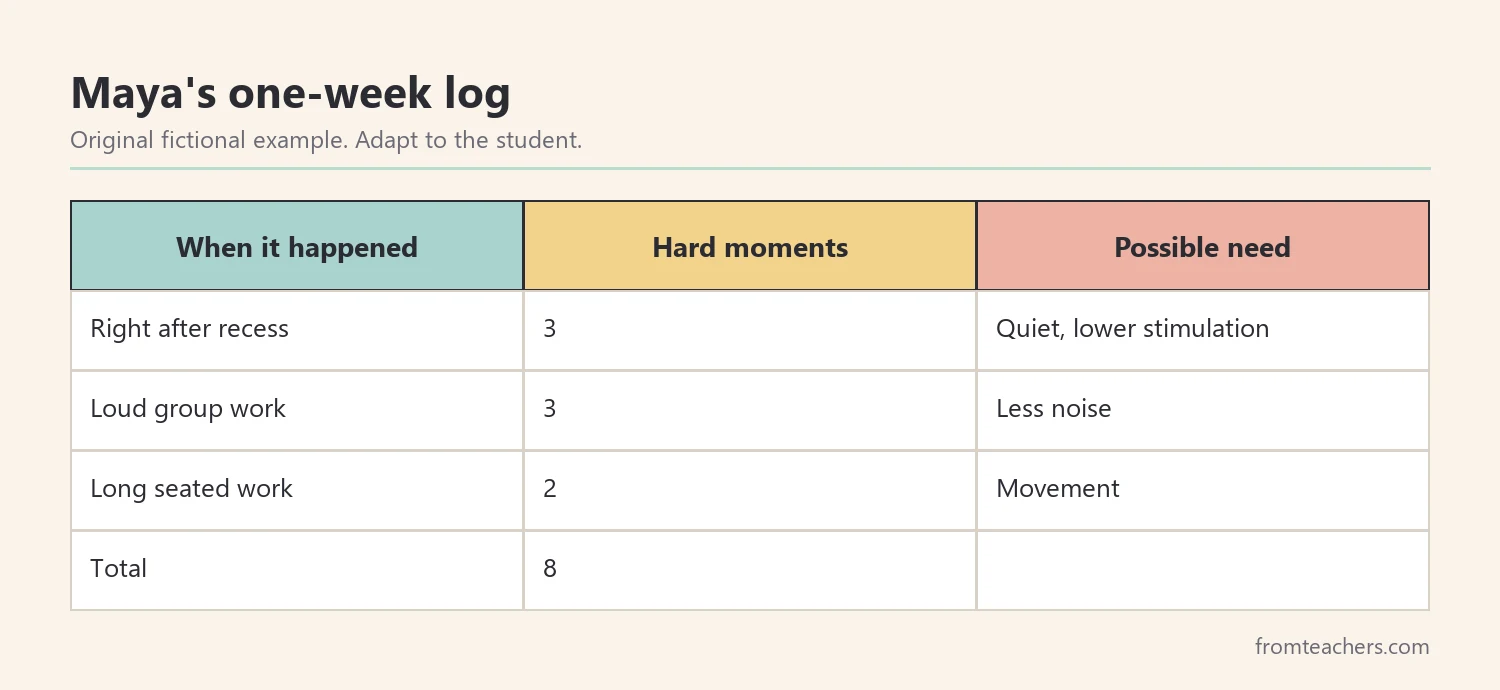
Let’s meet the child in this guide. Maya is a fictional first grader. Over one school week, her teacher, Mr. Chen, noted 8 hard moments. Of those, 3 happened right after recess, 3 happened during loud group work, and 2 happened during long periods of sitting. That pattern suggested two needs: quiet after busy times, and movement during long seated work.
| When it happened | Hard moments | Possible need |
|---|---|---|
| Right after recess | 3 | Quiet and lower stimulation |
| Loud group work | 3 | Less noise |
| Long seated work | 2 | Movement |
| Total | 8 |
Then, talk with the family. Parents often know which sounds, textures, or smells their child loves or avoids. Maya’s mother shared that Maya calms down at home by wrapping up in a heavy blanket and listening to soft music. That detail became a useful clue at school.
In addition, look at the environment itself. Bright overhead lights, a seat next to the door, or a noisy heater can quietly raise stress all day. Sometimes the most effective sensory calming strategies for kids start with small room changes, such as moving a seat or lowering the volume of a timer, before the child ever needs a tool.
Finally, remember that patterns can change. A child may react differently when tired, hungry, or unwell. So, treat your notes as a starting point, not a final answer.
2. Explore calming options across the senses
Next, build a menu of options. Calm does not come from one place. It can come through what a child sees, hears, feels, moves, smells, and tastes. Looking across all the senses gives you far more choices than a single calm corner rule.
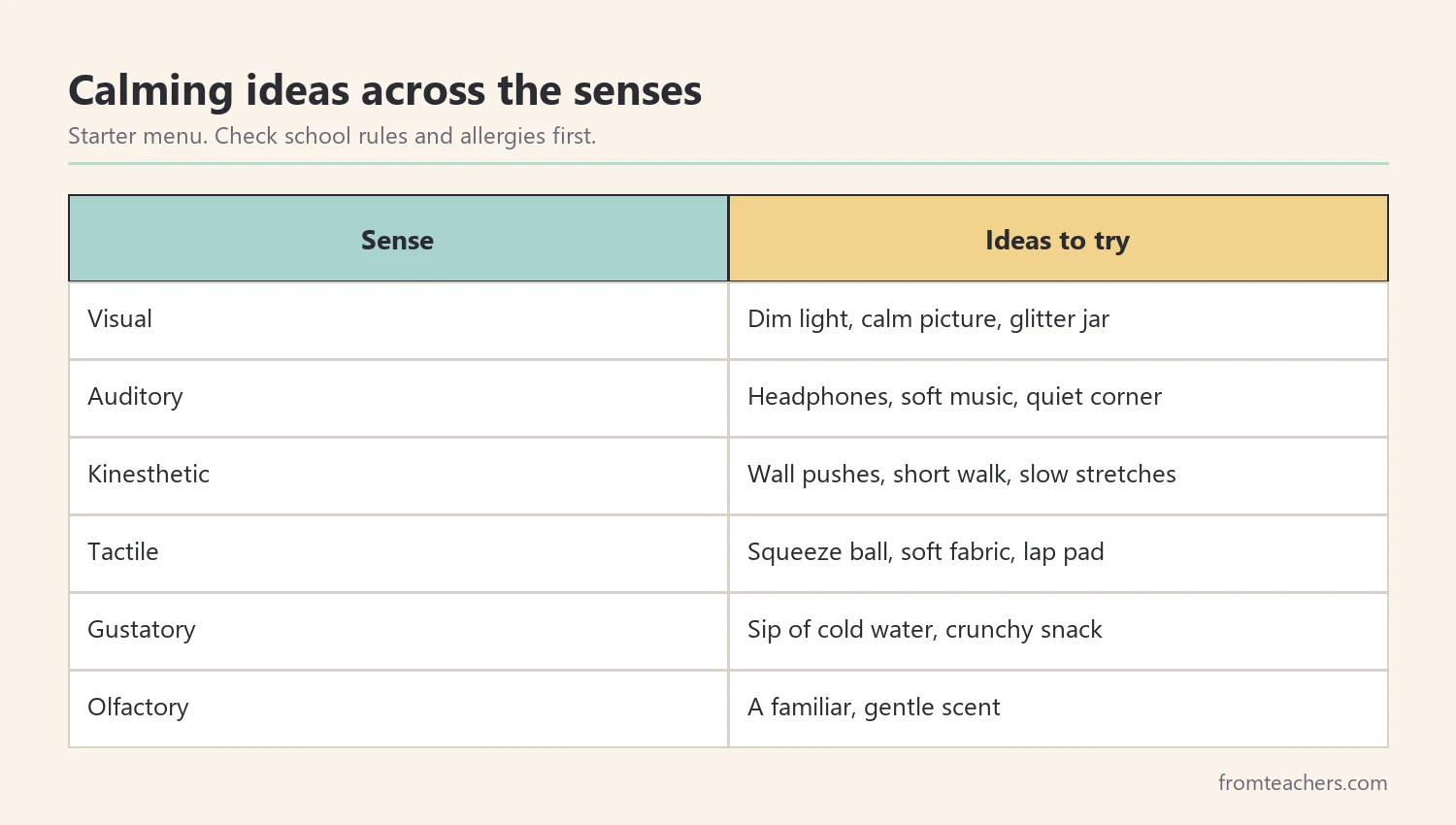
Here is a starter menu of sensory calming strategies for kids, grouped by sense. Not every idea will suit every child, and some need adult supervision or school approval.
| Sense | Calming ideas to try |
|---|---|
| Visual | Dim light, a calm picture, a slow glitter jar |
| Auditory | Headphones, soft music, a quiet corner |
| Kinesthetic | Wall pushes, a short walk, slow stretches |
| Tactile | Squeeze ball, soft fabric, a weighted lap pad |
| Gustatory | A sip of cold water, a crunchy snack |
| Olfactory | A familiar, gentle scent the child likes |
Also, think about the direction of the need. Some children need less input, such as quiet and dim light. Others need more input, such as heavy work or firm pressure, to feel organized. Your notes from step 1 help you choose which direction to explore first.
For Maya, the team picked a few options to try: headphones for loud times, a soft blanket in the reading corner, and wall pushes during long seated work. Together, these matched both needs from her log. If you want a child-friendly reference that walks kids through calming ideas for each sense, the five senses sensory toolkit visual guide covers visual, auditory, kinesthetic, tactile, gustatory, and olfactory calm in one place.
Keep the first menu short. Three to five options are usually plenty for a young child. A long list of sensory calming strategies for kids can feel overwhelming in itself, which defeats the purpose.
In addition, involve the child. Even young children can point to pictures and say “I like that” or “No.” Their choices increase the chance they will use a strategy when it counts.
3. Test sensory calming strategies for kids one at a time
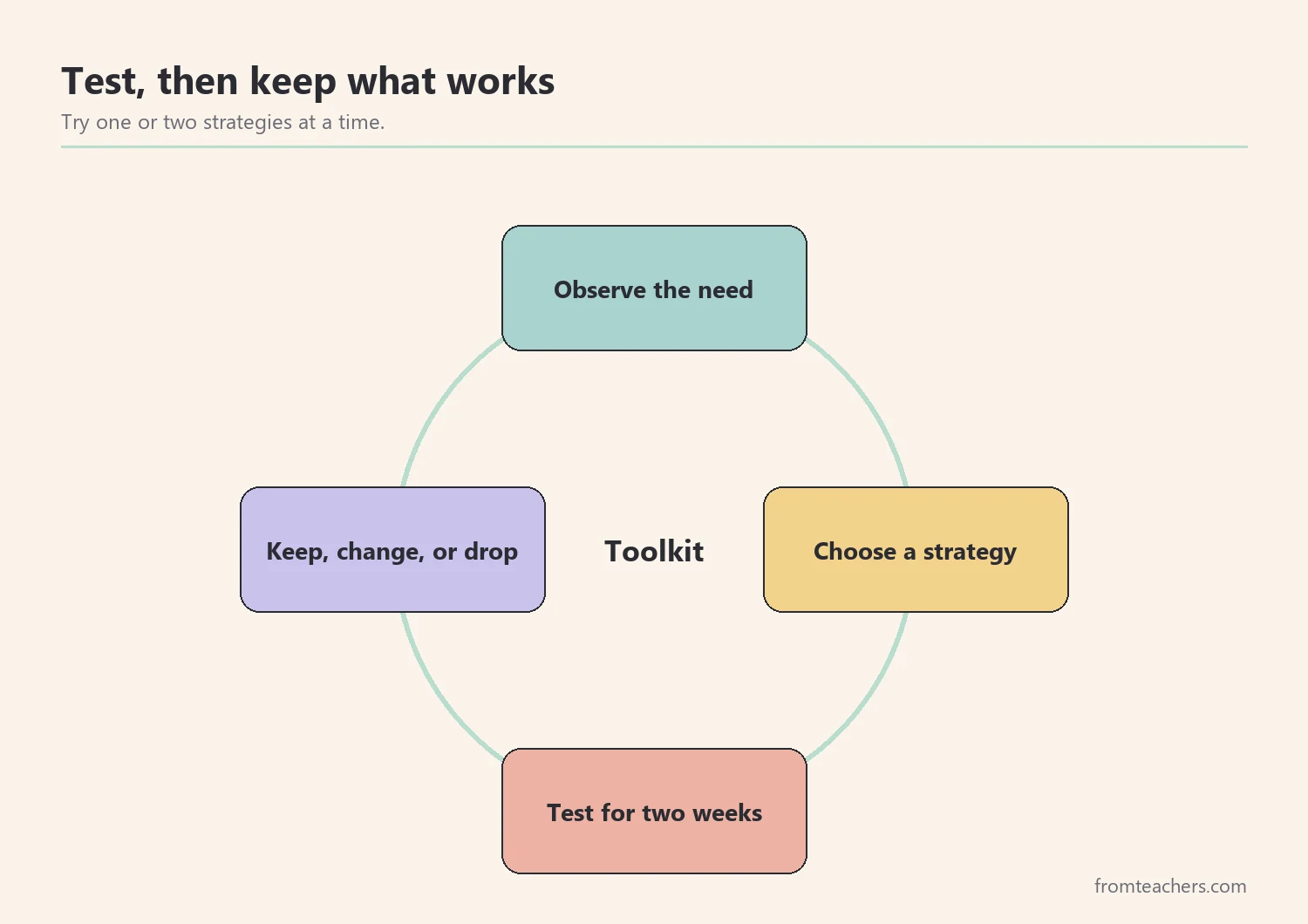
Once you have a short list, test it. Trying too many sensory calming strategies for kids at once makes it hard to tell which one actually helped. Instead, introduce one or two at a time and watch what happens.
Keep a simple tally for two weeks. Each time the child uses a strategy, note whether they seemed calmer afterward and how long it took to return to the activity. You do not need precise timing. “Back to work in a few minutes” versus “still upset after ten minutes” is enough.
For example, Mr. Chen tracked Maya’s three strategies over two weeks. She used headphones 6 times and returned to group work calmly 5 of those times. She used wall pushes 4 times and settled 3 of those times. The blanket was used twice, and both times she stayed upset for a long while, perhaps because the reading corner was near the busy doorway.
| Strategy | Times used | Calmer afterward | Decision |
|---|---|---|---|
| Headphones | 6 | 5 | Keep |
| Wall pushes | 4 | 3 | Keep |
| Blanket in corner | 2 | 0 | Move to a quieter spot and retry |
After the blanket moved to a quieter spot near the window, Maya tried it again. This time, she settled within a few minutes. That one change turned a failed idea into one of her favorite sensory calming strategies for kids in the classroom.
Notice that the blanket was not simply dropped. Sometimes a strategy fails because of the setting, not the idea itself. So, change one thing and try again before you give up.
However, stop any strategy that seems to increase distress. Watch the child’s face, body, and voice. Sensory calming strategies for kids should feel safe and comfortable, never forced.
4. Teach the toolkit when the child is calm
A strategy is only useful if the child can reach for it. Yet a child in the middle of a meltdown cannot learn something new. Therefore, teach and practice the toolkit during calm, happy moments.
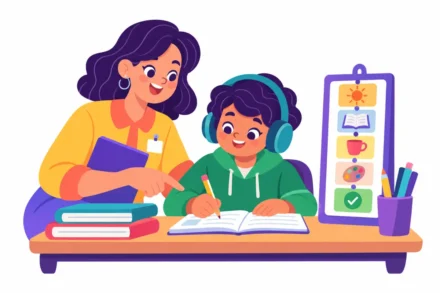
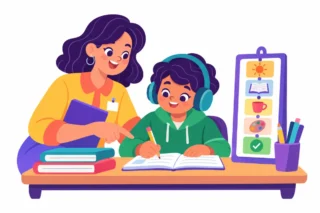
Start by making the toolkit visible. Many teachers use a small card or a ring of picture cards, one picture per strategy. Maya’s card shows three pictures: headphones, hands pushing a wall, and a blanket. Below each picture is one short word.
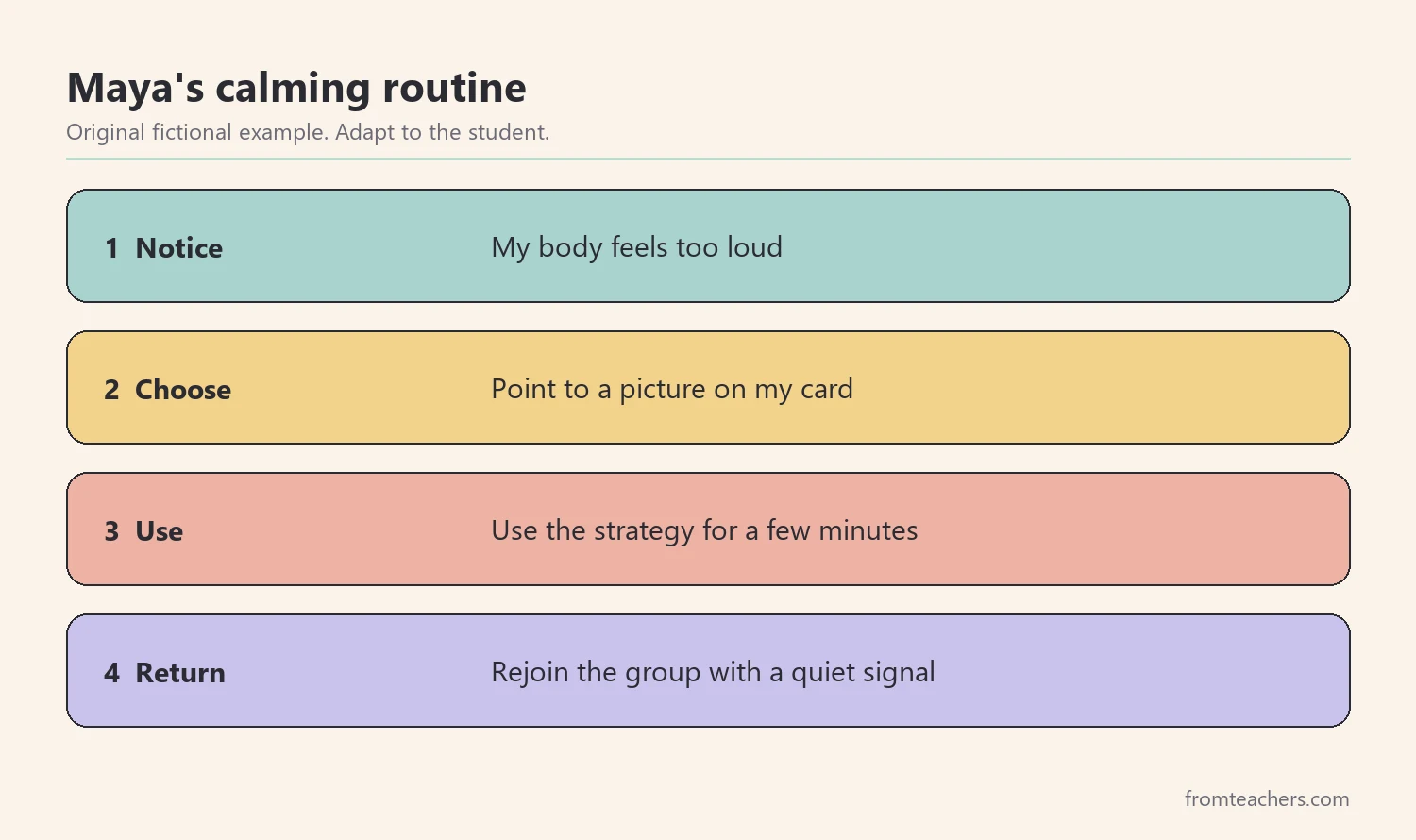
Next, practice the steps as a short routine. For instance, Mr. Chen and Maya practiced “Notice, Choose, Use, Return” a few times a week. First, Maya notices her body feels too loud. Then she points to a picture on her card. After that, she uses the strategy for a few minutes. Finally, she returns to the group with a quiet signal.
Also, model it yourself. Adults can say, “It is loud in here. I am going to take three slow breaths.” When children see grown-ups use sensory calming strategies for kids and adults alike, the tools feel normal instead of like a punishment.
Families can practice the same routine at home. For instance, Maya’s mother kept a copy of the picture card on the fridge and practiced it during calm evenings. Practicing sensory calming strategies for kids in two places helps the routine stick much faster than practicing in one.
Moreover, praise the attempt, not just the result. If Maya points to her card but still needs help, that is real progress. Over time, those small steps add up to more independence.
5. Keep sensory calming strategies for kids consistent at home and school
Finally, share the plan. A child who uses headphones at school but has nothing similar at home may struggle in the evenings. Likewise, a substitute who does not know about the card may tell the child to sit down and wait. Consistency helps sensory calming strategies for kids become habits.
Write a short, one-page plan. Include what tends to trigger stress, the child’s chosen strategies, where tools are kept, and how adults should respond. Share it with the family, specialists, and anyone who supervises the child.
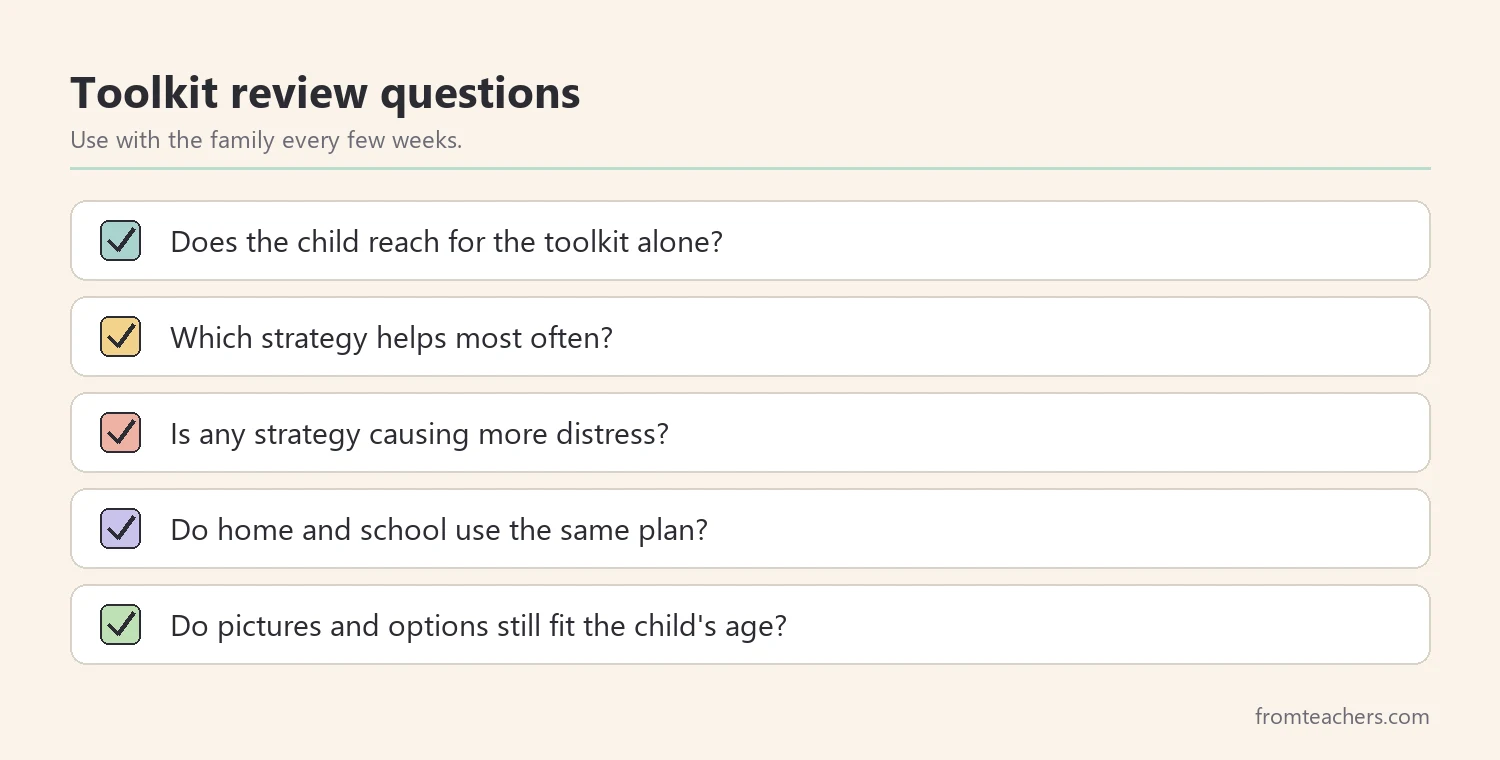
Then, review the plan every few weeks. Maya’s team met after a month and noticed that she now reached for her card on her own most of the time. They also added one new idea from home: a short walk with a trusted adult after very loud assemblies.
Also, plan for transitions such as field trips, assemblies, and substitute days. These are the times when sensory calming strategies for kids are needed most and remembered least. A small portable kit, such as headphones and a squeeze ball in a pouch, can travel with the child.
In addition, keep the toolkit flexible. Children grow, and their needs shift. A strategy that worked in first grade may feel babyish in third grade, so update the pictures and options as the child matures. When questions go beyond everyday classroom support, an occupational therapist or the school team can offer more individual guidance.
Common mistakes and how to avoid them
- Using one calm-down rule for every child. Fix: observe each child and build an individual toolkit.
- Trying many strategies at once. Fix: test one or two and track what happens.
- Teaching during a meltdown. Fix: practice the routine during calm moments.
- Dropping a strategy after one failure. Fix: check the setting and try one change first.
- Ignoring the room itself. Fix: check lighting, noise, and seating before adding sensory calming strategies for kids.
- Keeping the plan at school only. Fix: share a one-page plan with the family and all adults.
Questions teachers and parents ask about sensory calming strategies for kids
At what age can children use sensory calming strategies?
Even preschoolers can use simple sensory calming strategies for kids with adult support. Younger children usually need pictures, modeling, and an adult nearby. Older children can take more ownership of choosing and using their tools.
Are sensory calming strategies only for autistic children or children with ADHD?
No. Many children benefit from learning how their senses affect their mood. Children with sensory differences may need more support and more practice, but the basic ideas help a wide range of learners.
How do I know if a strategy is working?
Track how often the child uses it and whether they return to the activity calmer. Look for a pattern over a week or two rather than judging one moment. Ask the child how it felt too.
What if my child refuses to use the toolkit?
Refusal often means the options do not feel right yet. Let the child choose new pictures, practice when they are relaxed, and keep the tone playful. Never force a strategy on an upset child.
Can I use food or scents as calming tools at school?
Check school rules, allergies, and family preferences first. Many schools limit food and scents for safety reasons. When approved, keep choices simple and familiar to the child.
Related reading: Managing Sensory Overload: Practical Strategies for Autism and ADHD, Meltdowns vs Tantrums: A Guide to Understanding and Responding, and ADHD in Children: A Guide to Effective Classroom and Home Support.
A companion resource for sensory calming strategies for kids:
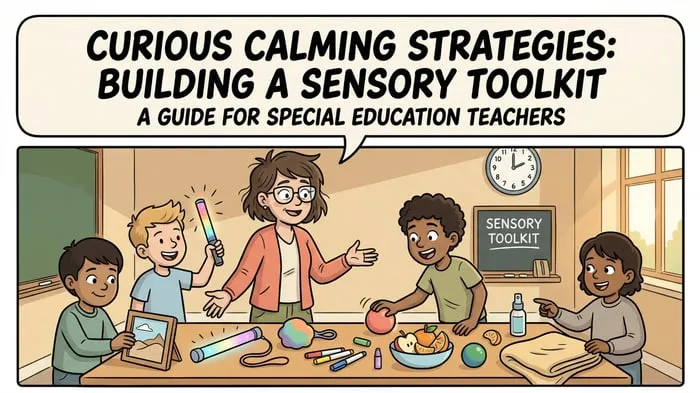
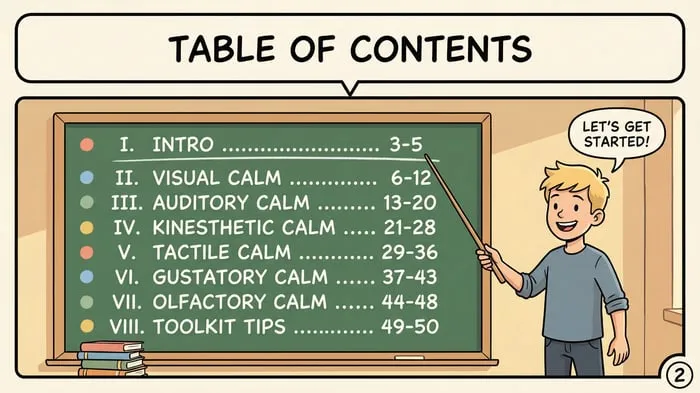
Sensory Toolkit: Calming Strategies for the Five Senses: a 50-page visual guide with an introduction to sensory calming, strategy sections for visual, auditory, kinesthetic, tactile, gustatory, and olfactory calm, and practical toolkit tips for early childhood through upper elementary.
Sources and scope
- American Occupational Therapy Association (AOTA): information on occupational therapy and sensory supports for children.
- Understood.org: practical articles for families and teachers on sensory processing and learning differences.
- IRIS Center, Vanderbilt University: free modules on classroom behavior and supporting students with disabilities.
- Centers for Disease Control and Prevention (CDC): general public health information on child development.
This guide covers everyday sensory calming ideas for classrooms and homes. It does not cover diagnosis or individual therapy, which belong to qualified professionals such as occupational therapists and the child’s team.
Key takeaways
- Observe patterns before choosing sensory calming strategies for kids.
- Build a menu across sight, sound, movement, touch, taste, and smell.
- Test one or two strategies and track what clearly helps.
- Teach the toolkit during calm moments with pictures and modeling.
- Share one simple plan across home and school and review it often.






Leave a Comment