

Team collaboration problems rarely announce themselves with a big fight. More often, they show up as a weekly meeting where two people do all the talking, a shared task nobody finishes, and a quiet sense that everyone is working hard in different directions. Whether you lead a grade-level team, a department, or an office group, that slow drift costs time, energy, and trust.
This guide gives you a five-step repair process: diagnose the pattern, clarify roles, reset communication, realign shared goals, and run focused problem-solving sessions, with a clear point for involving leadership. By the end, you will be able to turn a vague feeling of friction into a short, written plan your team can actually follow.
Examples are fictional. Adapt them to your team, your setting, and your organization’s policies. This is general guidance, not legal or HR advice.
At a glance
- Diagnose patterns before you assign blame. Most friction has a repeatable trigger.
- Unclear roles cause more conflict than difficult personalities.
- Agree on simple meeting and communication rules, then write them down.
- Return to one shared goal and a few visible measures of success.
- Know in advance when a problem needs leadership support.
1. Diagnose team collaboration problems before fixing them
First, slow down. When a team feels stuck, leaders often jump straight to a team-building activity or a stern talk. However, team collaboration problems usually follow a pattern, and you cannot fix a pattern you have not seen.
Start with a simple log for two or three weeks. Each time friction shows up, write down what happened, what seemed to trigger it, and what the impact was. Keep entries short and factual. “Lesson plans for Monday not uploaded by Friday; two members prepared the same unit” is more useful than “people are not pulling their weight.”
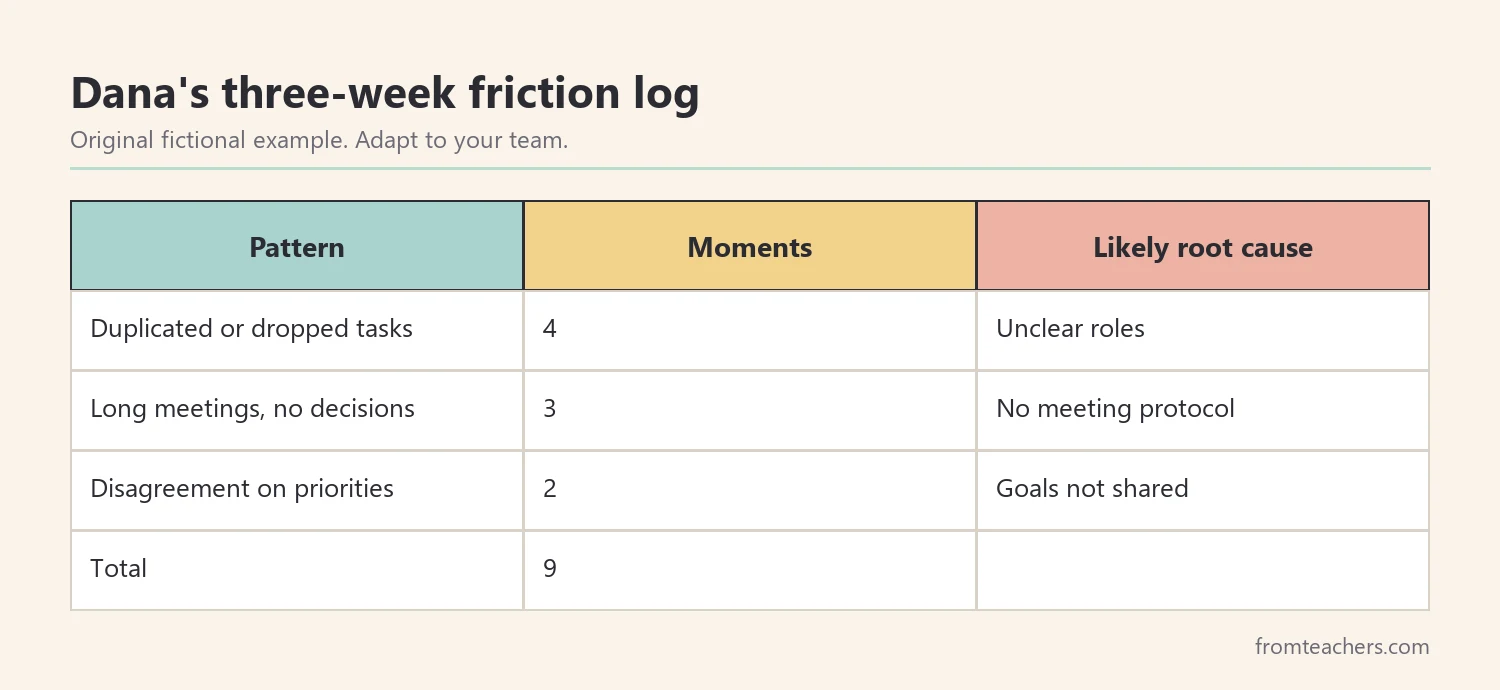
Let’s meet the fictional team in this guide. Dana leads a four-person grade-level team at a middle school. Over three weeks, she logged 9 friction moments. When she sorted them, 4 were about duplicated or dropped tasks, 3 were about meetings running long without decisions, and 2 were about disagreement over which goals mattered most. That sorting alone changed her plan.
| Pattern | Moments logged | Likely root cause |
|---|---|---|
| Duplicated or dropped tasks | 4 | Unclear roles |
| Long meetings, no decisions | 3 | No meeting protocol |
| Disagreement on priorities | 2 | Goals not shared |
| Total | 9 |
Then, separate behavior from cause. “Talks over others” is a behavior. “No agreed way to take turns” is a possible cause. Your repair will target causes, which keeps the conversation fair and less personal.
Also, pay attention to timing. Team collaboration problems often cluster around busy periods such as report cards, testing windows, or end-of-quarter deadlines. If most of your entries fall in the same week, the issue may be workload and planning, not attitude. In that case, the fix might be an earlier deadline or a shared calendar rather than a hard conversation.
Finally, share the summary with the team, not the raw notes about individuals. Saying “We had four task overlaps this month” invites problem-solving. Naming one person in front of everyone usually invites defense.
2. Clarify roles and responsibilities
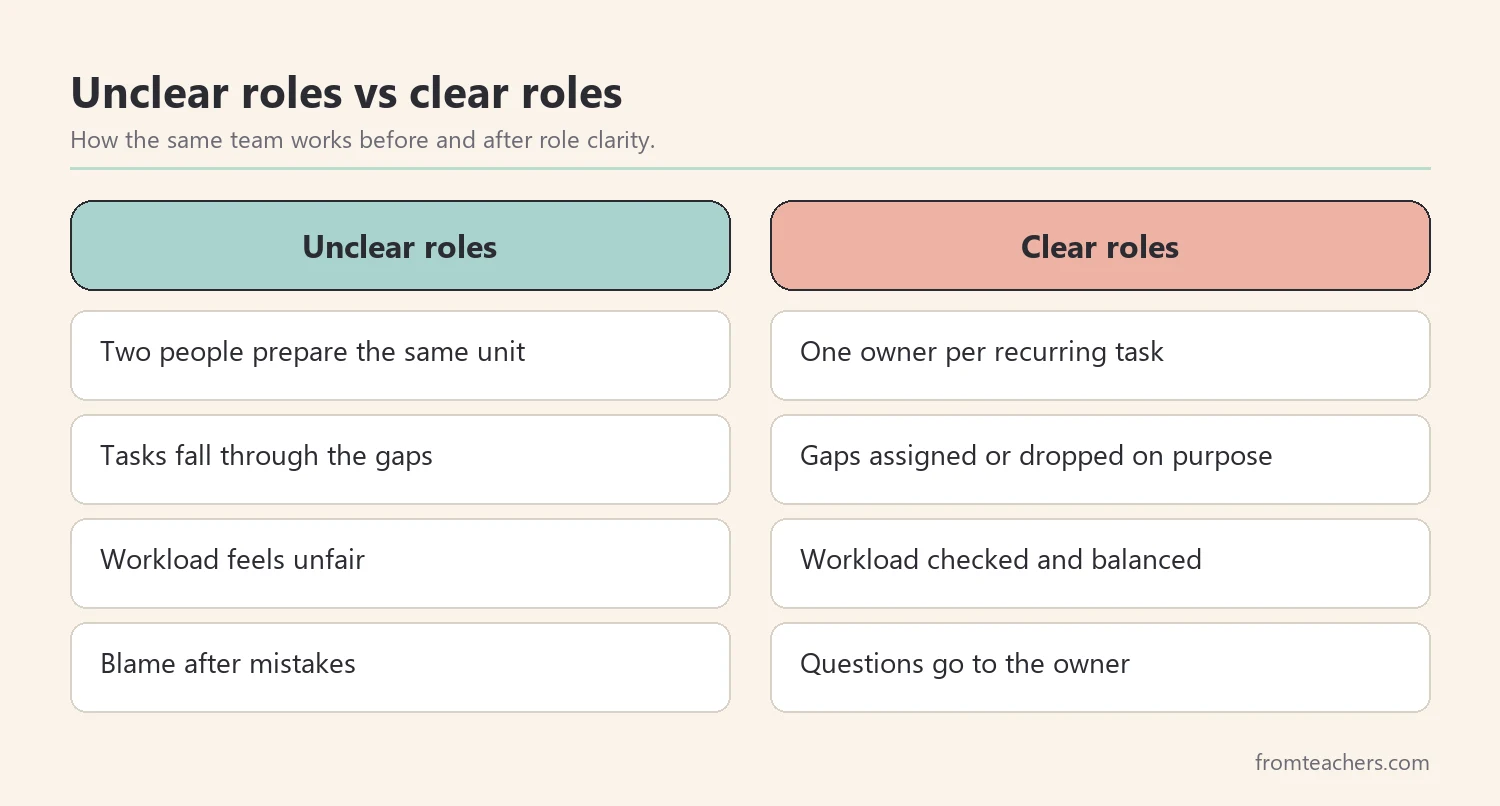
Because Dana’s largest pattern was dropped and duplicated work, she started with roles. Many team collaboration problems come from ambiguity: two people believe a task is theirs, or both believe it belongs to someone else. Neither person is wrong. The system is simply unclear.
Begin by listing every recurring task the team handles. Then, for each one, agree on who owns it, who helps, and who just needs to be informed. Keep the list visible in a shared document. A short, honest list beats a perfect chart that nobody opens.
| Task | Owner | Helps | Informed |
|---|---|---|---|
| Weekly lesson plan upload | Marcus | Priya | Whole team |
| Parent newsletter | Priya | Jo | Dana |
| Field trip logistics | Jo | Dana | Office |
| Meeting agenda and notes | Dana | Rotates | Whole team |
Next, look for overlap and gaps. If a task has two owners, pick one. If a task has none, assign it or decide to stop doing it. Also, check workload balance. One person owning six tasks while another owns one is a recipe for resentment.
After two weeks with the new role list, Dana’s team logged no duplicated lesson plans. That is a small win, but small wins rebuild trust. To speed up this step, a role clarity and responsibility alignment checklist from a collaboration repair toolkit can give your team a ready structure instead of a blank page.
3. Reset communication with team collaboration problems in mind
Next, look at how the team talks. Meetings are where many team collaboration problems become visible. Without shared rules, the most confident voices dominate, decisions stay vague, and people leave unsure of what happens next.
A communication reset does not need to be dramatic. Instead, agree on a few protocols and test them for a month. Dana proposed four, and the team voted to try them:
- Every meeting has a written agenda shared the day before.
- Each agenda item ends with a decision, an owner, and a date.
- Everyone speaks once before anyone speaks twice on a key item.
- Concerns about a person are raised privately first, not in the group.
Also, agree on channels. Which messages go by email, which by chat, and which need a face-to-face talk? Mixed channels often cause missed information. For example, Dana’s team decided that schedule changes always go in one shared chat thread, so nobody misses them.
Then, track whether the reset is working. A simple tracker can note meeting length, how many items ended with a clear decision, and whether notes were shared. In the first month, Dana’s meetings dropped from about 60 minutes to about 40, and more items ended with an owner. Those changes were easy to see because she wrote them down.
In addition, invite quieter members into the process. Some people avoid speaking in groups but will share useful ideas in writing. A short anonymous form before a meeting, asking what is working and what is not, can surface team collaboration problems that nobody wants to raise out loud. Dana used three questions and read the answers aloud, without names, at the start of the next meeting.
Finally, model the behavior yourself. If the leader interrupts, checks email during meetings, or skips the agenda, the protocols will fade quickly. Respectful dialogue is taught mostly by example.
4. Realign shared goals and priorities
Even with clear roles and better meetings, teams can still pull apart if they disagree about what matters most. Two of Dana’s logged moments came from exactly that: one teacher wanted to focus on test preparation, while another wanted to protect project time. Both goals were reasonable. The problem was that the team had never chosen.
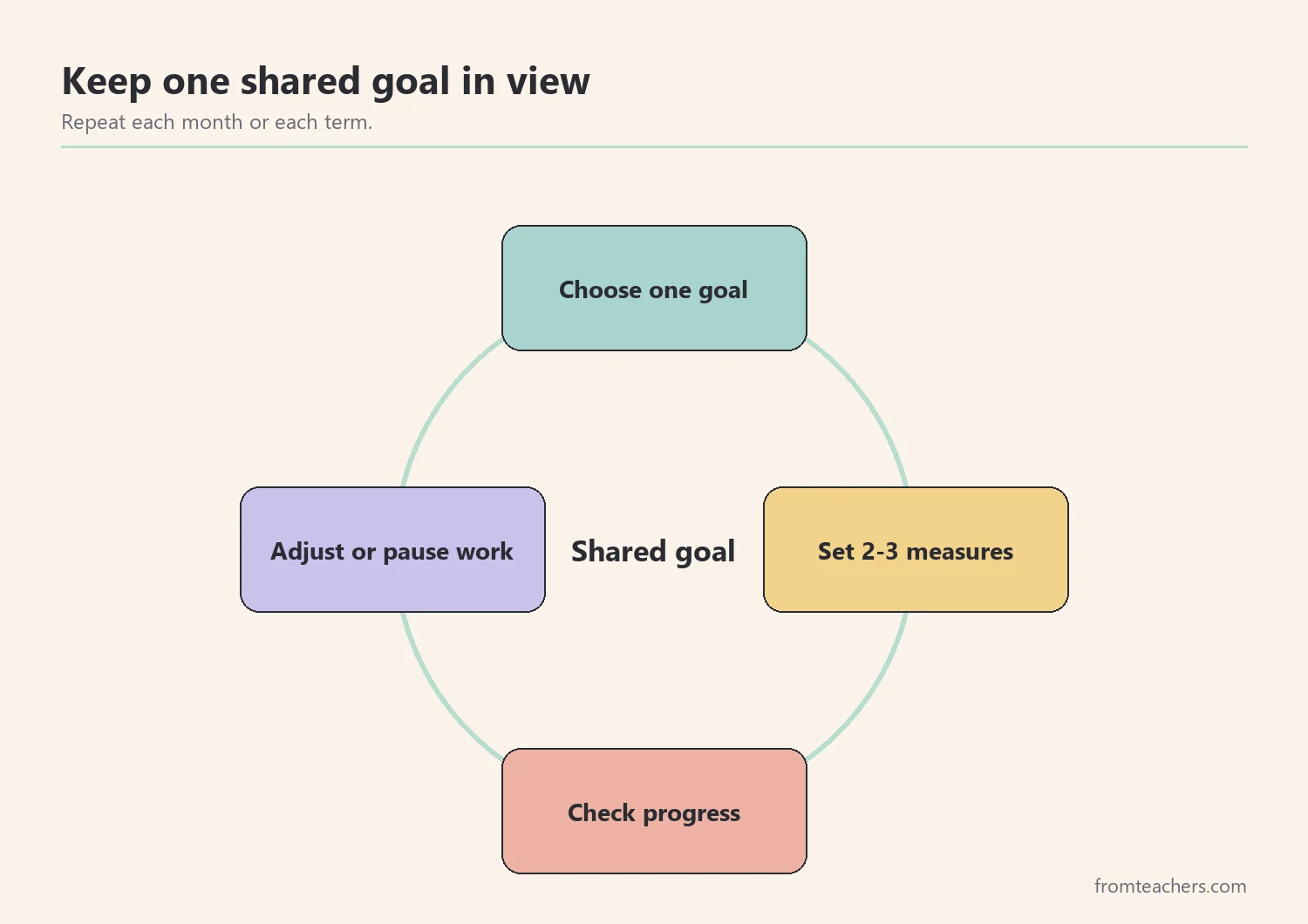
So, bring the team back to one shared goal for a set period, such as a quarter or a semester. Write it in plain language. “Every student in our grade completes two finished writing pieces this semester” is clearer than “improve literacy outcomes.”
Next, agree on two or three visible measures. They should be simple enough to check monthly. Then decide which existing activities support the goal and which can be paused. Saying no to some work is often the hardest, and most helpful, part of fixing team collaboration problems.
| Shared goal | Measure | Check |
|---|---|---|
| Two finished writing pieces per student | Pieces completed | Monthly |
| Same goal | Students needing extra conferences | Every two weeks |
| Same goal | Team feedback on workload | Monthly |
Moreover, connect each role from step 2 to the goal. When Marcus can see how his weekly lesson plan upload helps students finish writing pieces, the task feels meaningful rather than administrative. That link between daily work and the shared goal is one of the quietest, most reliable ways to prevent team collaboration problems from returning.
In addition, revisit the goal when circumstances change. A new district requirement or a staffing change may shift priorities. When that happens, update the goal openly instead of letting people quietly drift back to their own agendas.
5. Run focused sessions and know when to escalate
Some team collaboration problems need a dedicated conversation. When an issue keeps coming back, schedule a short, structured problem-solving session rather than squeezing it into a regular meeting. Structure keeps the talk on the problem instead of on personalities.
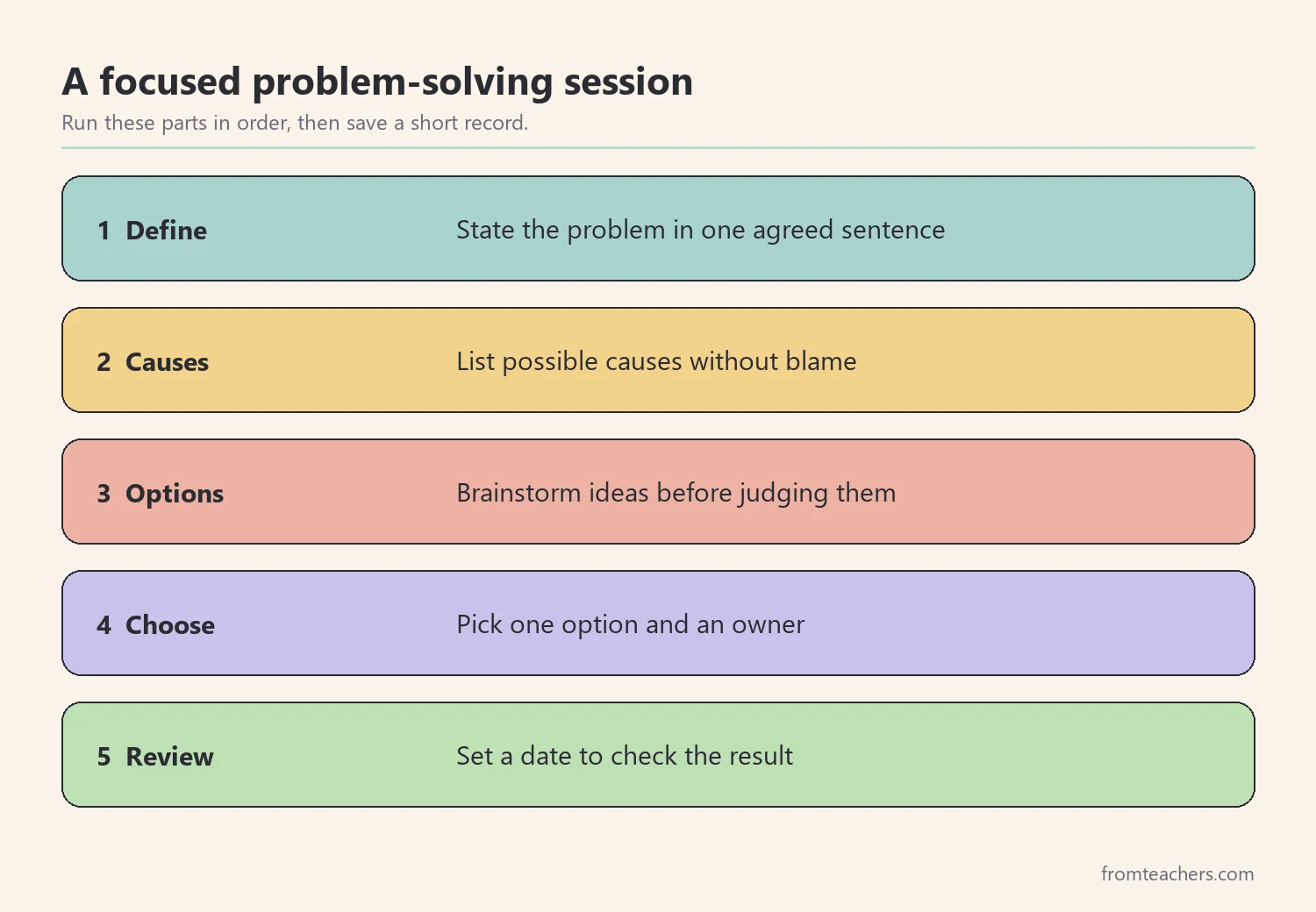
A simple session has five parts. First, define the problem in one sentence everyone agrees with. Second, list possible causes. Third, brainstorm options without judging them. Fourth, choose one option to try. Fifth, set a date to review it. Then record the outcome in a short session record so the team does not repeat the same discussion next month.
For instance, Dana’s team used one session on parent communication. The agreed problem: families were receiving mixed messages about homework. The team chose to send one combined weekly update instead of four separate notes. Four weeks later, they reviewed it and kept the change.
However, not every problem belongs at the team level. Repeated disrespect, possible policy violations, safety concerns, or conflicts that stay stuck after several honest attempts may need leadership or HR support. Decide in advance what triggers escalation, and document each request clearly: what happened, what the team already tried, and what support you need.
Before escalating, check that the team has truly tried the earlier steps. Leaders often receive requests about team collaboration problems that clearer roles or a meeting protocol could have solved. A brief note listing what was tried, and for how long, helps leadership respond quickly and fairly.
Escalating is not a failure. In fact, knowing when to ask for help protects team members and keeps small team collaboration problems from becoming large ones.
Common mistakes and how to avoid them
- Blaming individuals first. Fix: log patterns and look for system causes before talking about people.
- Using team-building games as the whole solution. Fix: pair any social activity with clear roles and meeting protocols.
- Holding long meetings without decisions. Fix: end each agenda item with a decision, an owner, and a date.
- Chasing too many goals at once. Fix: choose one shared goal per period and pause work that does not support it.
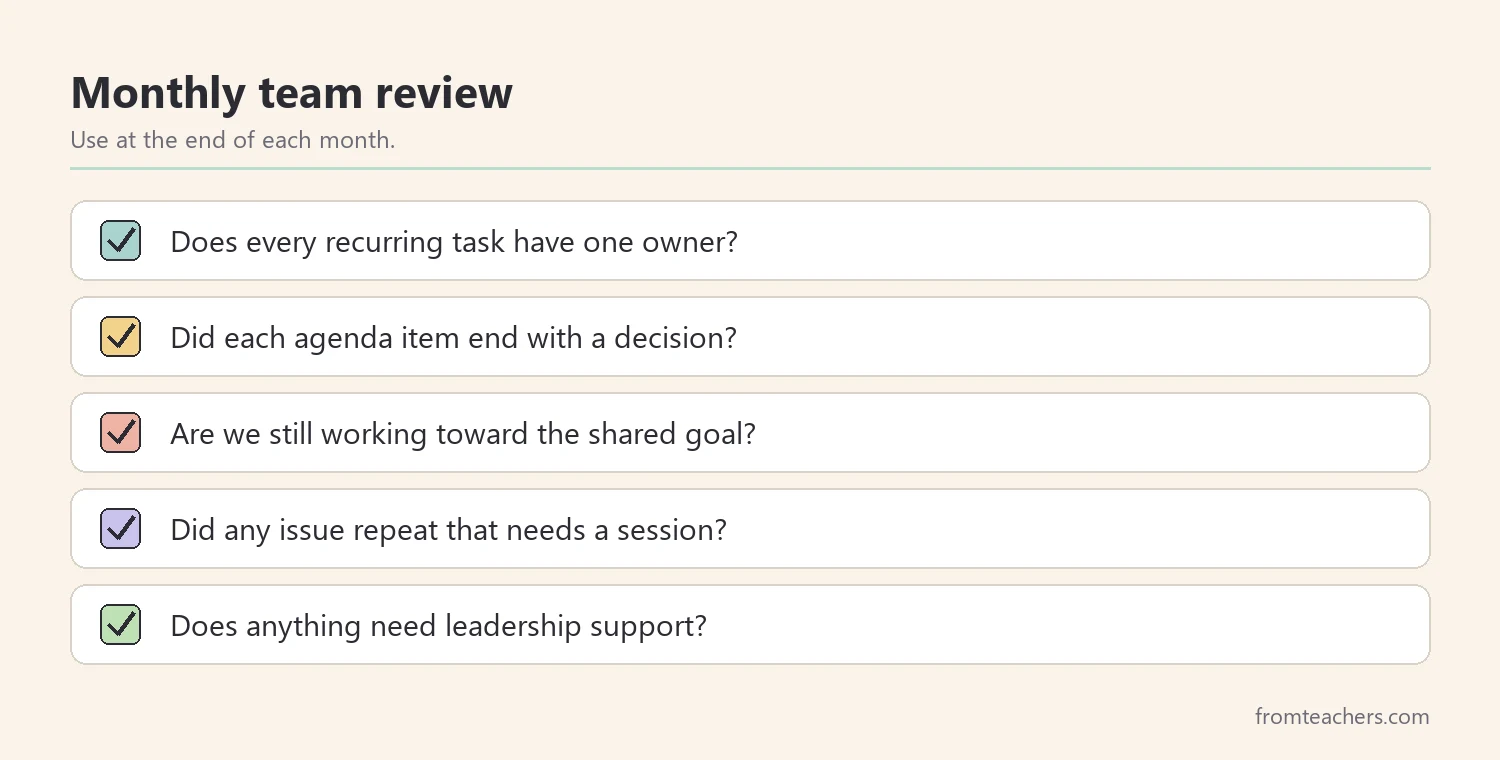
- Fixing once and never checking again. Fix: review team collaboration problems monthly with a short checklist.
- Waiting too long to involve leadership. Fix: agree on escalation triggers early and document requests.
Questions teachers and team leaders ask about team collaboration problems
What causes most team collaboration problems?
Common causes include unclear roles, weak meeting habits, and goals that were never agreed. Personality clashes do happen, but they are often made worse by these system gaps. Fixing the system first usually reduces conflict.
How long does it take to repair a struggling team?
It depends on the team and the size of the problem. Many teams notice small improvements within a few weeks of clarifying roles and meeting rules. Deeper trust usually takes longer and depends on consistent follow-through.
Should I address team collaboration problems in a group or one-on-one?
Use both. Patterns and shared rules belong in the group conversation. Concerns about one person’s behavior are usually better raised privately first.
What if one team member refuses to engage?
Start with a private, curious conversation to understand their view. Then connect the agreed roles and protocols to clear expectations. If the pattern continues, document it and follow your organization’s process for involving leadership.
Can these steps work for school teams?
Yes. Grade-level teams, departments, and co-teaching partners face the same issues of roles, meetings, and priorities. Adapt the tools to your school calendar and policies.
Related reading: How Parents and Teachers Can Team Up for Special Education Success, Building Workplace Readiness: Essential Skills for Career Success, and The Power of Data Tracking in Special Education.
A companion resource for team collaboration problems:
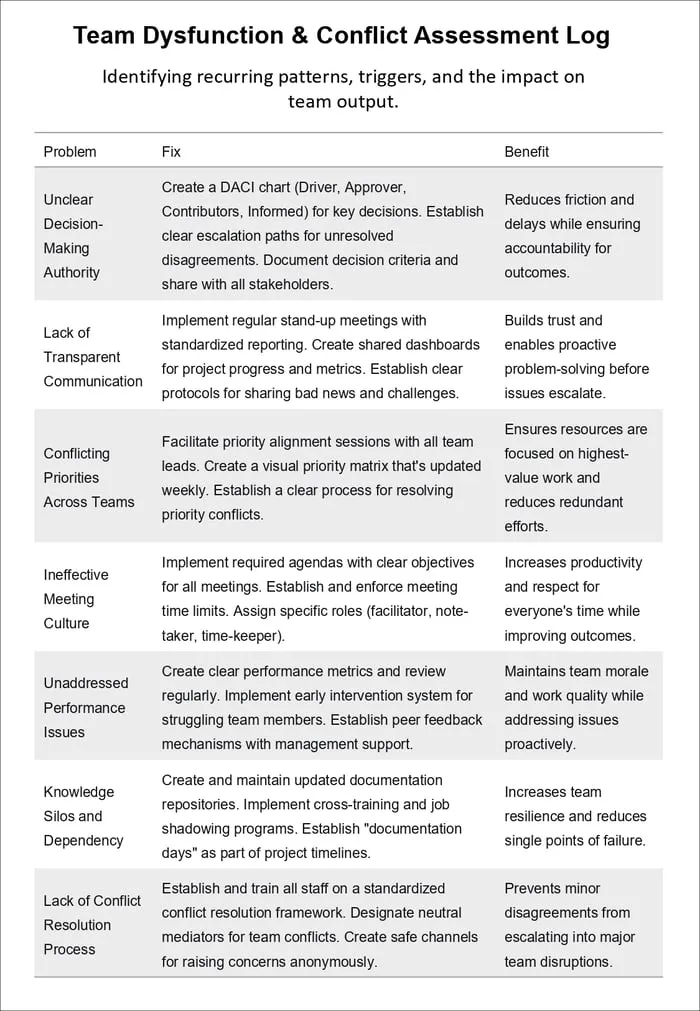
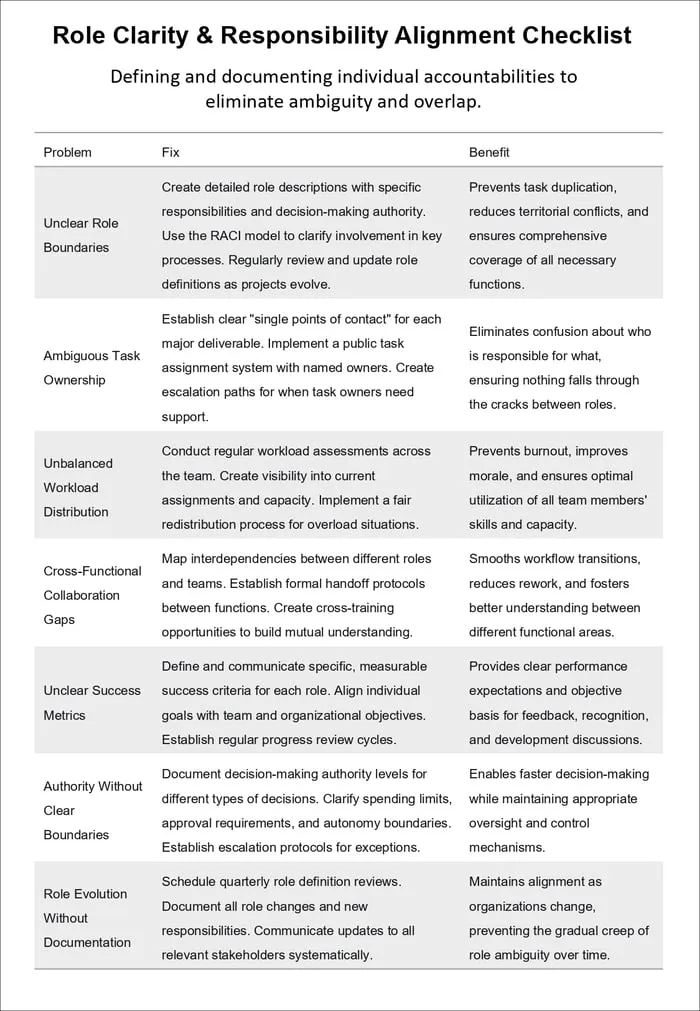
When Collaboration Breaks Down: An Intervention, Reflection, and Repair Toolkit: a 12-page printable toolkit in a Problem/Fix/Benefit format, with a dysfunction and conflict assessment log, a role clarity checklist, a communication reboot tracker, a goal realignment worksheet, a problem-solving session record, and an intervention request log.
Sources and scope
- Society for Human Resource Management (SHRM): general resources on workplace relations, teams, and conflict.
- Center for Creative Leadership: articles and research on leadership and team effectiveness.
- American Psychological Association: background on workplace psychology and healthy work environments.
- U.S. Office of Personnel Management: public guidance on performance management and workplace teams.
This guide covers practical steps for diagnosing and repairing everyday collaboration issues on small teams. It does not cover legal disputes, formal investigations, or HR policy, which belong to your organization’s leadership and qualified professionals.
Key takeaways
- Log team collaboration problems for a few weeks and sort them into patterns.
- Give every recurring task one clear owner.
- Reset meetings with agendas, decisions, owners, and dates.
- Choose one shared goal and a few simple measures.
- Use structured sessions, and escalate early when the team cannot solve it alone.




Leave a Comment