

Building attention skills for kids works best when children understand how their own brain works. Instead of hearing “pay attention” over and over, they learn practical steps to get ready, stay focused, and recover from distractions. As a result, focus starts to feel like a skill they control.
This guide shares child-friendly strategies for home and school. It is useful for parents, classroom teachers, and anyone supporting children with attention challenges.
Explaining Attention to Children
Children respond well to simple images. For example, describe attention as a flashlight. You choose where to point it, and sometimes it drifts.
In addition, explain that everyone’s flashlight wanders sometimes. This removes shame and helps children see focus as something they can practice.
Getting the Body Ready to Learn
Focus starts before the lesson. Sleep, food, and movement all affect attention.
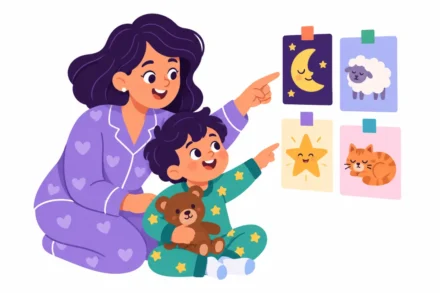
- Sleep: a regular bedtime supports better focus the next day.
- Nutrition: a balanced breakfast helps steady energy.
- Movement: a short burst of activity before sitting can help the brain settle.
Also, water breaks and stretching during long tasks keep attention fresh.
Teaching Attention Skills for Kids Step by Step
Attention skills grow with direct teaching and practice. First, set a clear goal for the task. Next, break the task into small steps. Then, check in after each step.
Focus Games to Practice
- Simon Says: builds listening and impulse control.
- I Spy: trains visual attention.
- Memory card games: strengthen working memory.
- Freeze dance: practices stopping and starting on cue.
Because games are fun, children practice without feeling pressured.
Handling Distractions With Confidence
Distractions will always happen. Therefore, the goal is to notice and return, not to never drift. Teach a simple “notice, name, return” routine.
For example, a child notices they are looking out the window. They name it: “I got distracted.” Then they return to the task. In addition, a visual reminder card helps them remember the steps. An illustrated story like the kids’ attention skills story about mastering focus teaches this routine in a fun way.
Supporting Attention at Home and School
Consistency helps skills stick. Also, using the same words in both places makes practice easier.
- Create a quiet homework space with few distractions
- Use a visual timer for short work sessions
- Praise effort when a child refocuses on their own
- Keep screens away during focused work
For children with ADHD, these strategies help but may not be enough alone. Therefore, families can find reliable information at the CDC’s ADHD pages and talk with their child’s doctor.
Celebrating Progress in Attention Skills for Kids
Progress may be slow, so celebrate small wins. For example, note when a child works for five minutes longer than before. Finally, ask children what strategies help them most. Their answers often surprise adults and build ownership.
Breaking Tasks Into Focus-Friendly Chunks
Long tasks can overwhelm young minds. Therefore, break work into short chunks with clear endings. For example, “Read two pages, then check in with me” feels much more doable than “Read the chapter.”
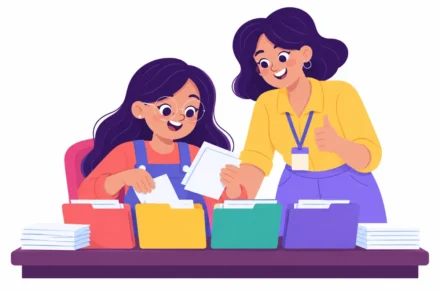
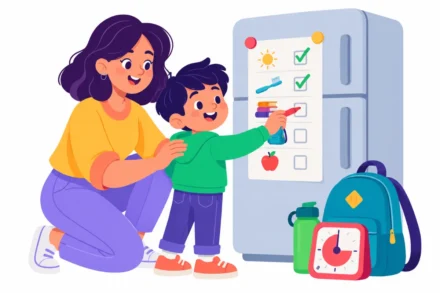
In addition, use a checklist so children can see their progress. Each checkmark brings a small sense of success. As a result, motivation stays higher.
Chunking Ideas
- Fold a worksheet so only one section shows at a time
- Use sticky notes to mark stopping points in reading
- Set a timer for five to ten minutes of focused work
- Add a short movement break between chunks
Calm Bodies, Focused Minds
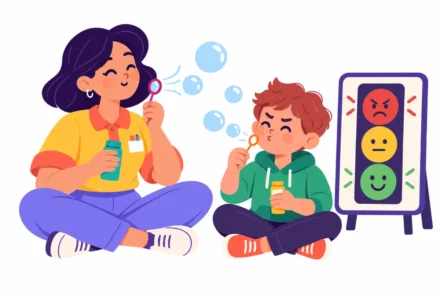
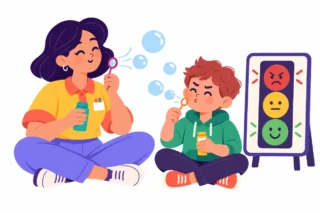
Strong feelings make attention harder. For example, a worried or excited child may struggle to settle. Therefore, teach a few calming tools, such as slow breathing or squeezing a stress ball.
Also, help children notice when their body feels “too fast” or “too slow.” Because emotions and focus are linked, calming strategies support attention skills for kids in every setting.
Getting Started This Week
First, choose one focus game and play it daily for a week. Next, introduce the flashlight idea and the notice, name, return routine. Then, use a visual timer for one short work session each day. In addition, celebrate every time a child refocuses on their own. Finally, ask the child which strategy helped most. Their answer guides what you practice next.
Frequently Asked Questions
At what age can children learn attention strategies?
Preschoolers can start with simple games. Older children can learn self-monitoring and planning strategies.
How long should young children be expected to focus?
Attention span grows with age. Short tasks with breaks work better than long sessions for young learners.
Are attention problems always ADHD?
No. Sleep, stress, hunger, and boredom can all affect focus. A professional can help if concerns continue.
Ready-to-use resource:
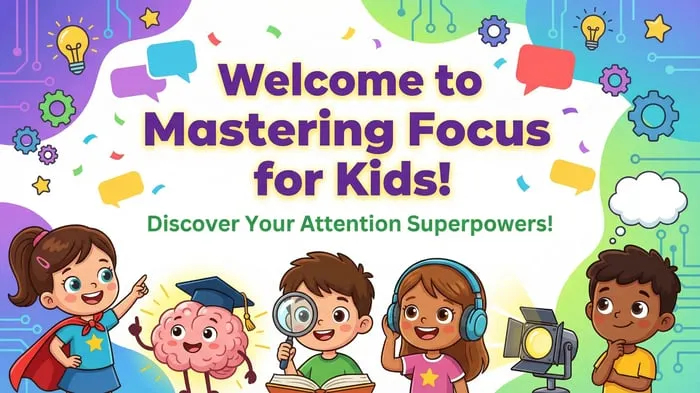
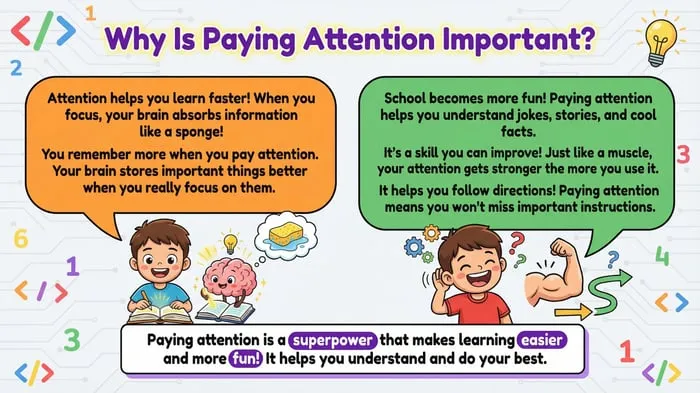
Mastering Focus for Kids: Attention Skills Story: An illustrated guide that teaches kids how attention works and how to handle distractions with confidence.
Related reading: ADHD in children: support strategies and 5 teaching tips to boost classroom focus.
Also on FromTeachers:
Key Takeaways
- Attention skills for kids grow when children understand how focus works.
- Sleep, food, and movement prepare the body to learn.
- Games and a “notice, name, return” routine build focus.
- Use consistent language at home and school, and celebrate small wins.


Leave a Comment