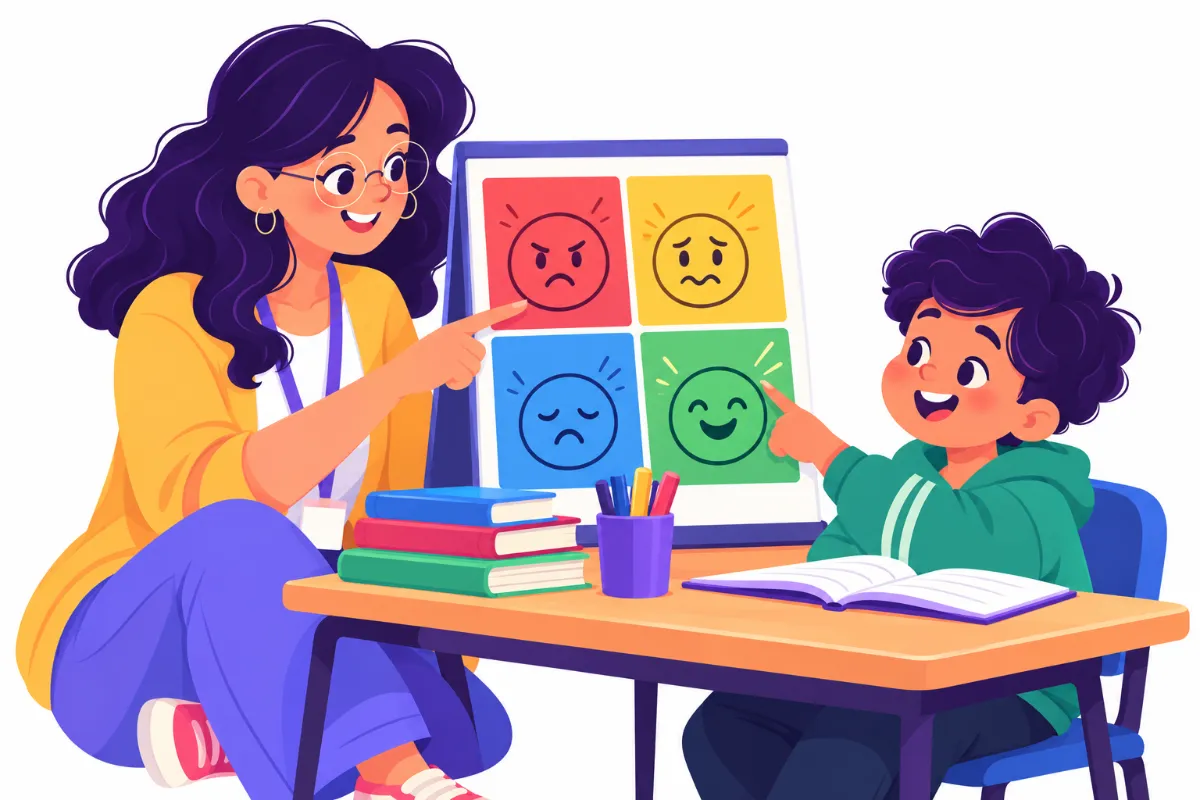

Managing classroom distractions is one of the hardest parts of teaching, especially for students with ADHD or sensory needs. A buzzing light, a whisper, or a worry from home can pull attention away in seconds. The good news is that students can learn to notice their focus level and get back on track.
This guide introduces a simple color-coded approach to focus, explains common types of distractions, and shares strategies teachers and parents can use right away.
Why Managing Classroom Distractions Starts With Awareness
Many students do not realize they have lost focus until the lesson is over. Therefore, the first step is helping them notice. When a student can say “I’m drifting,” they can choose a strategy.
In addition, awareness reduces shame. Instead of hearing “pay attention,” the student learns that focus changes throughout the day for everyone. As a result, they feel more capable and less blamed.
A Four-Zone Model for Focus
A color-coded scale gives students words for their attention level. For example:
- Green (optimal): “I’m focused and ready to learn.”
- Yellow (slow): “My mind is drifting a little.”
- Orange (overwhelmed): “Too much is happening. I can’t sort it out.”
- Red (blocked): “I can’t focus at all right now.”
Next, link each zone to a strategy. A yellow student might stretch or reread directions. An orange student might use headphones or move to a calmer spot.
Identifying Common Types of Distractions
Distractions come from inside and outside. Because the fix depends on the source, it helps to name it.
External Distractions
Noise, movement, visual clutter, and devices are common examples. Also, seating near doors or windows can increase interruptions.
Internal Distractions
Hunger, tiredness, worries, and daydreams pull attention from within. However, these are often harder for adults to see, so student self-reporting is valuable.
Strategies for Managing Classroom Distractions
Small environmental changes make a big difference. First, reduce visual clutter near the front of the room. Next, create a quiet corner with fewer stimuli.
- Offer noise-reducing headphones during independent work
- Use a visual timer for focused work sprints
- Give a “parking lot” sheet where students write off-topic thoughts for later
- Seat students away from high-traffic areas
- Build movement breaks into longer lessons
In addition, teach these strategies directly. A visual set like color-coded focus zone visual aids gives students a reminder they can use independently.
Supporting Students With ADHD
For students with ADHD, attention regulation is genuinely harder. Therefore, strategies must be taught, practiced, and supported, not just expected. The Understood.org site has helpful, family-friendly explanations of attention differences.
Also, pair self-monitoring with frequent positive feedback. For example, a quick thumbs-up when a student moves from yellow back to green reinforces the skill.
Bringing Focus Tools Home
Parents can use the same zone language during homework. Consistent words between school and home help children practice more often. As a result, the skill grows faster.
Finally, keep the tone curious and calm. Asking “What zone are you in?” works better than “Why aren’t you working?”
Teaching the Focus Zones Step by Step
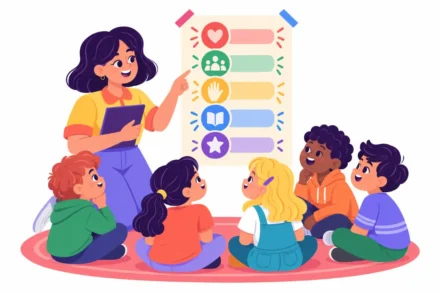
Students need practice before the zones become useful. First, introduce one zone per day with examples and pictures. Next, role-play what each zone looks and feels like.
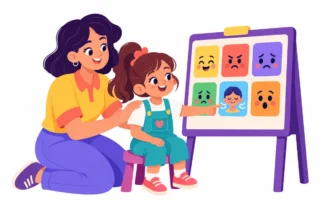
Then, add short check-ins during the day. For example, after a lesson, ask students to point to their zone on a chart. Because this takes seconds, it fits easily into transitions.
Ways to Practice
- Zone check-ins at the start and end of work periods
- A small zone card on each desk for quick self-reporting
- Class discussions about which strategies work in each zone
- Journals where older students track patterns in their focus
Managing Classroom Distractions as a Whole Class
Some distractions affect everyone. For example, a loud event next door or excitement before a holiday can pull the whole class off track. Therefore, have a whole-class reset routine ready.
A reset might include three deep breaths, a short stretch, and a restatement of the task. In addition, lowering lights or playing calm music can help. As a result, managing classroom distractions becomes a shared skill rather than a constant battle with individual students.
Finally, reflect on patterns. If distractions spike at certain times, adjust your schedule or room setup.
Getting Started This Week
First, choose one distraction strategy to teach this week. Next, model it yourself and practice it during a short, low-stakes task. Then, praise students who use it without a reminder. In addition, ask families to try the same words at home. Finally, after two weeks, add a second strategy. Small steps build lasting habits, and students feel proud as their focus improves.
Frequently Asked Questions
What age is a focus zone system best for?
Most elementary and middle school students can use it. Younger children may need fewer zones and more picture support.
Is this the same as the Zones of Regulation?
No. Emotional regulation scales focus on feelings, while a focus scale targets attention levels. They can work well together.
How long does it take students to learn self-monitoring?
It varies. Short daily practice over several weeks usually helps students start using the tool on their own.
Ready-to-use resource:
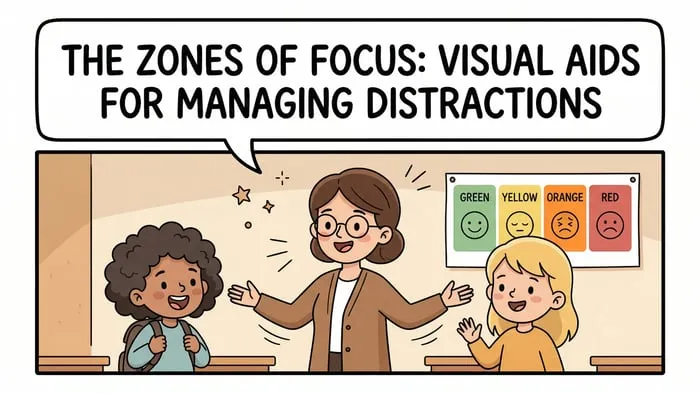
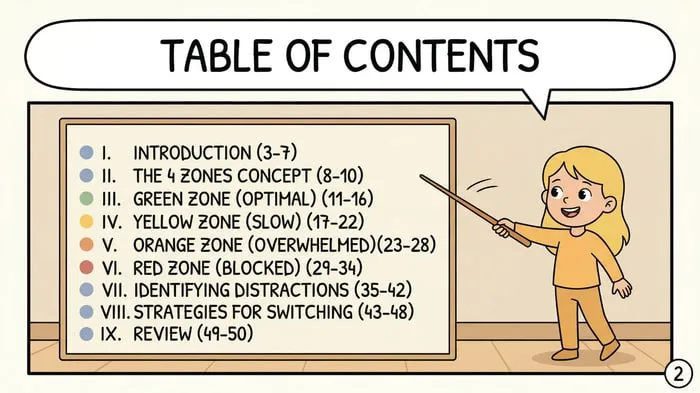
Zones of Focus – Visual Aids for Managing Distractions: A 50-page color-coded visual aid set that helps students recognize their focus level and get back on track.
Related reading: effective ADHD classroom strategies and 5 teaching tips to boost classroom focus.
Also on FromTeachers:
Key Takeaways
- Managing classroom distractions begins with helping students notice their focus level.
- A four-color scale gives students simple words for attention.
- Name the type of distraction, then match a strategy to it.
- Use the same language at school and at home for faster progress.






Leave a Comment