

Special needs parenting tips are most useful at the hardest moments of an ordinary day. Picture a seven-year-old standing at the bathroom sink, toothbrush in hand, while you repeat the same three reminders for the fourth time. The minty taste bothers him, the buzzing light distracts him, and the whole routine ends in tears for both of you.
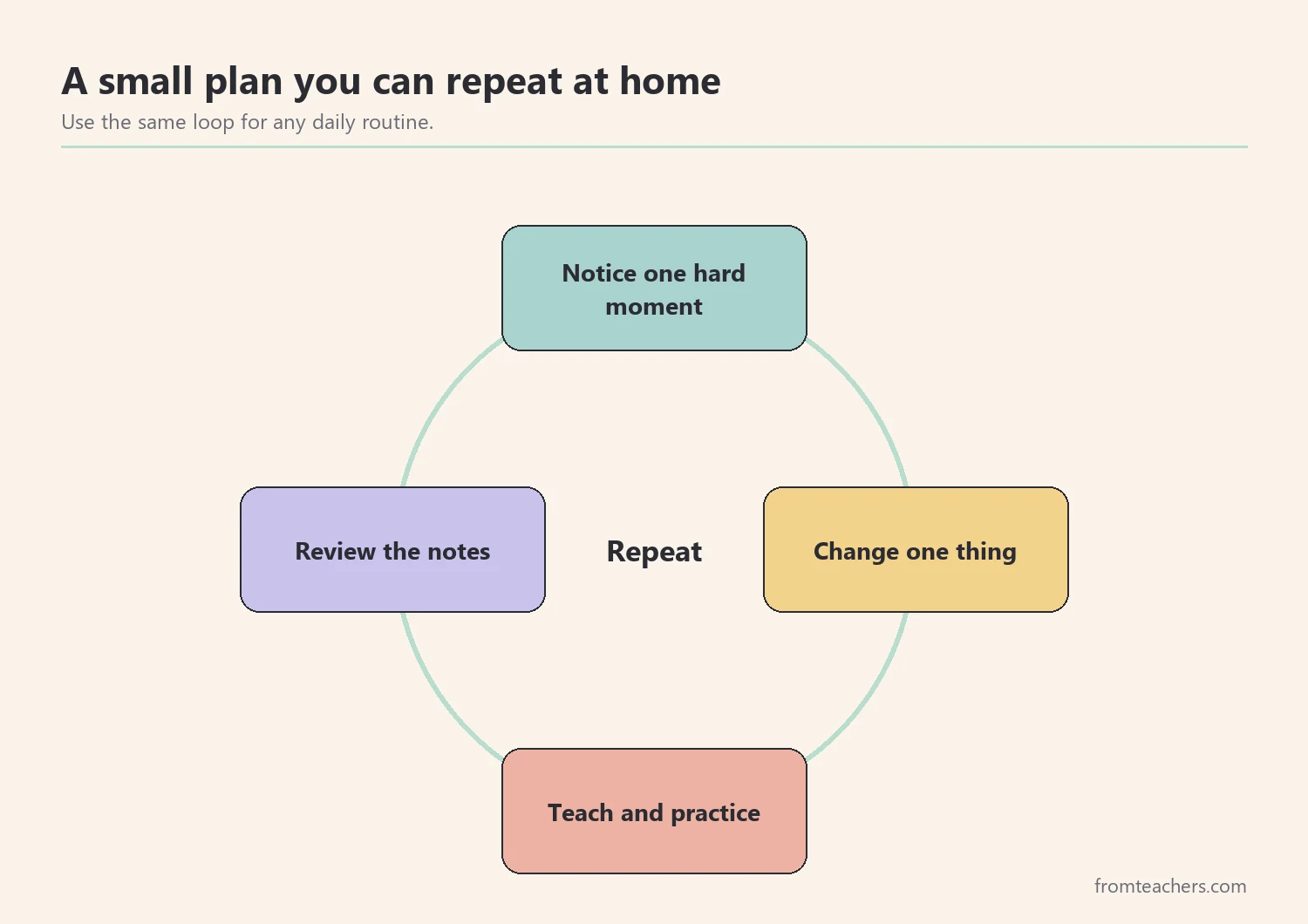
This guide turns that moment into a plan. You will learn a five-step process for home: notice the pattern, build a visual routine, support sensory needs, teach life skills in small steps, and track progress with your child’s school. By the end, you will have one calm routine you can repeat and grow.
Examples are fictional. Adapt to the student’s goals and agreed supports. This is guidance, not a diagnosis.
At a glance
- Pick one daily routine that causes the most stress and start there.
- Show the routine with pictures so your child does not have to remember every step.
- Adjust the sensory side of the task before you ask for more effort.
- Teach self-care and life skills one small step at a time.
- Keep a simple record and share it with your child’s teachers.
1. Start special needs parenting tips with one routine
First, resist the urge to change the whole day. Most special needs parenting tips fail because families try ten new ideas at once and cannot tell which one helped. Instead, choose a single routine that causes the most stress, such as getting dressed, brushing teeth, or leaving the house.
Next, watch that routine for three or four days. Write a short note each time: when it happened, what came right before, which step was hard, and what helped even a little. You do not need a special form. A note on your phone or a sticky note on the fridge works well.
Then, separate what you see from why it might happen. “Runs out of the bathroom” is what you see. “The toothpaste taste is too strong” or “he does not know the next step” are possible reasons. Your plan will target the reason, so keep both lists. In fact, this habit of testing a reason underlies all the special needs parenting tips that follow.
| What you see | Possible reason to test |
|---|---|
| Leaves the bathroom mid-routine | Unsure of the next step |
| Gags or spits right away | Strong taste or texture |
| Covers ears | Noisy fan or running water |
| Says “I can’t” | Too many steps at once |
Worked example. Leo is a fictional seven-year-old with sensory differences. His mother notes that toothbrushing is hard on five of five evenings. He covers his ears when the fan is on, and he stops after wetting the brush. However, he brushes more calmly on the weekend morning when the fan is off. The pattern points to noise and unclear steps, not to defiance.
In short, a few days of notes save weeks of guessing. As a result, your next special needs parenting tips will aim at the real problem.
2. Build a visual daily routine
Once you know the hard moment, make the steps visible. Visual routines are among the most practical special needs parenting tips because they work without extra talking. Your child can look at the next picture instead of waiting for your voice.
Start by writing the routine as five to seven short steps. Use the words you already say at home. Then, add a simple picture or photo for each step. Place the chart where the routine happens, at your child’s eye level.
Next, teach the chart like a new game. Walk through it together while everyone is calm, not in the middle of a hard evening. Point to each picture, do the step, and then move a clip or check a box. In addition, let your child point to the next step before you say it.
Visual routine checklist
- Five to seven steps, each with one action.
- A picture or photo for every step.
- The chart placed where the routine happens.
- A way to mark each step as done.
- A clear last step, such as “lights off” or “story time.”
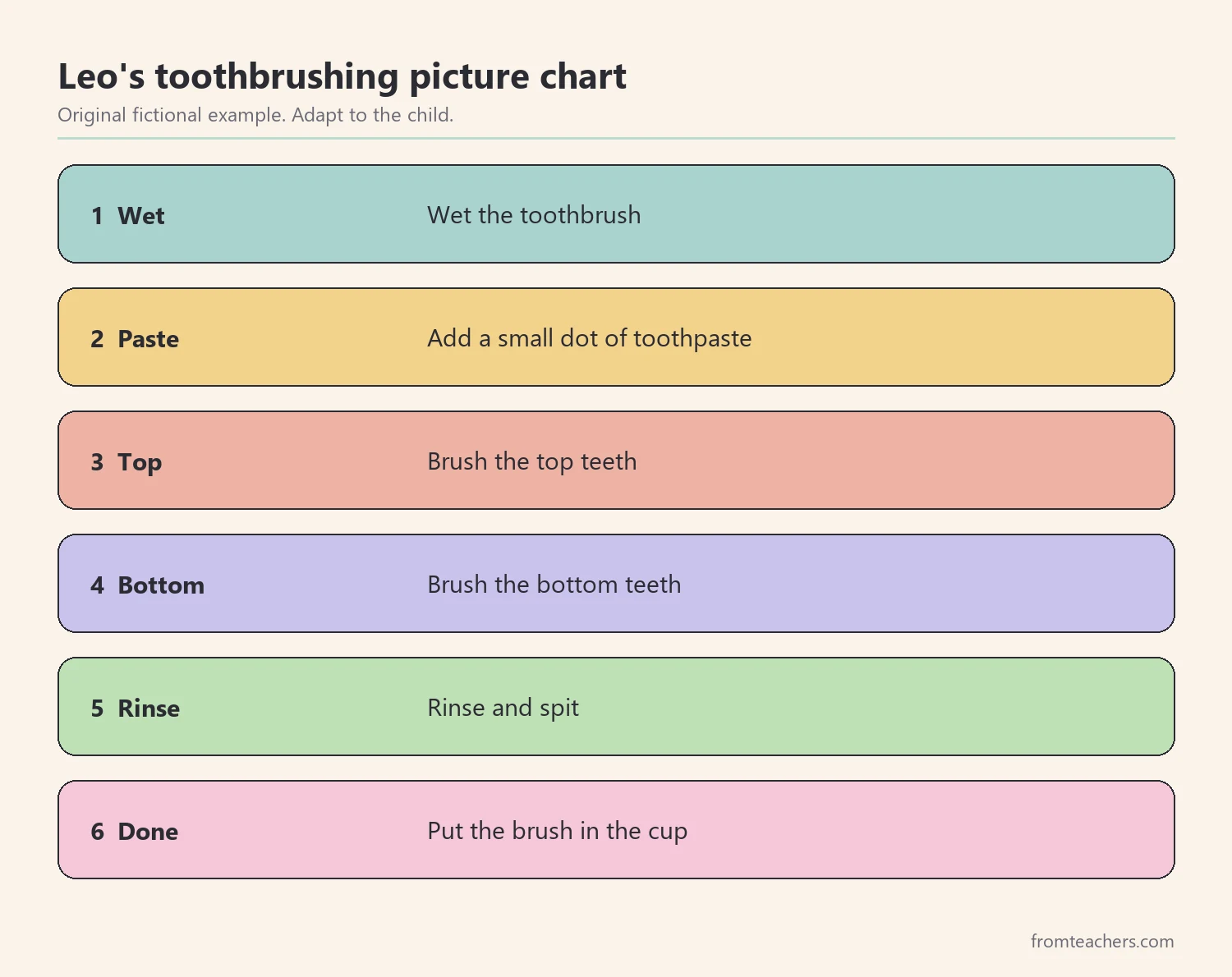
Worked example. Leo’s mother tapes a six-step picture chart beside the mirror. Each step has a photo of Leo doing it. After each step, he slides a clothespin down the edge of the chart. Within a week, he points to the next picture without being asked on most nights.
Finally, keep the chart the same for at least two weeks. Of all special needs parenting tips, consistency is the easiest to underestimate. Changing the pictures too often removes the predictability that makes it work.
3. Use special needs parenting tips for sensory support
Many hard routines are partly sensory. Sounds, textures, tastes, and lights can make a simple task feel overwhelming. Therefore, good special needs parenting tips adjust the sensory side of a task before asking a child to try harder.
Begin with the clues from your notes. Does your child cover ears, pull at clothing, avoid certain foods, or seek lots of movement? Some children avoid strong input, while others look for more of it. Many children do both, depending on the moment and how tired they are.
Next, change one sensory detail at a time. For example, turn off a loud fan, try a softer towel, dim a bright light, or offer a mild flavor of toothpaste. Then, watch for two or three days before changing something else. That way, you will know which change helped.
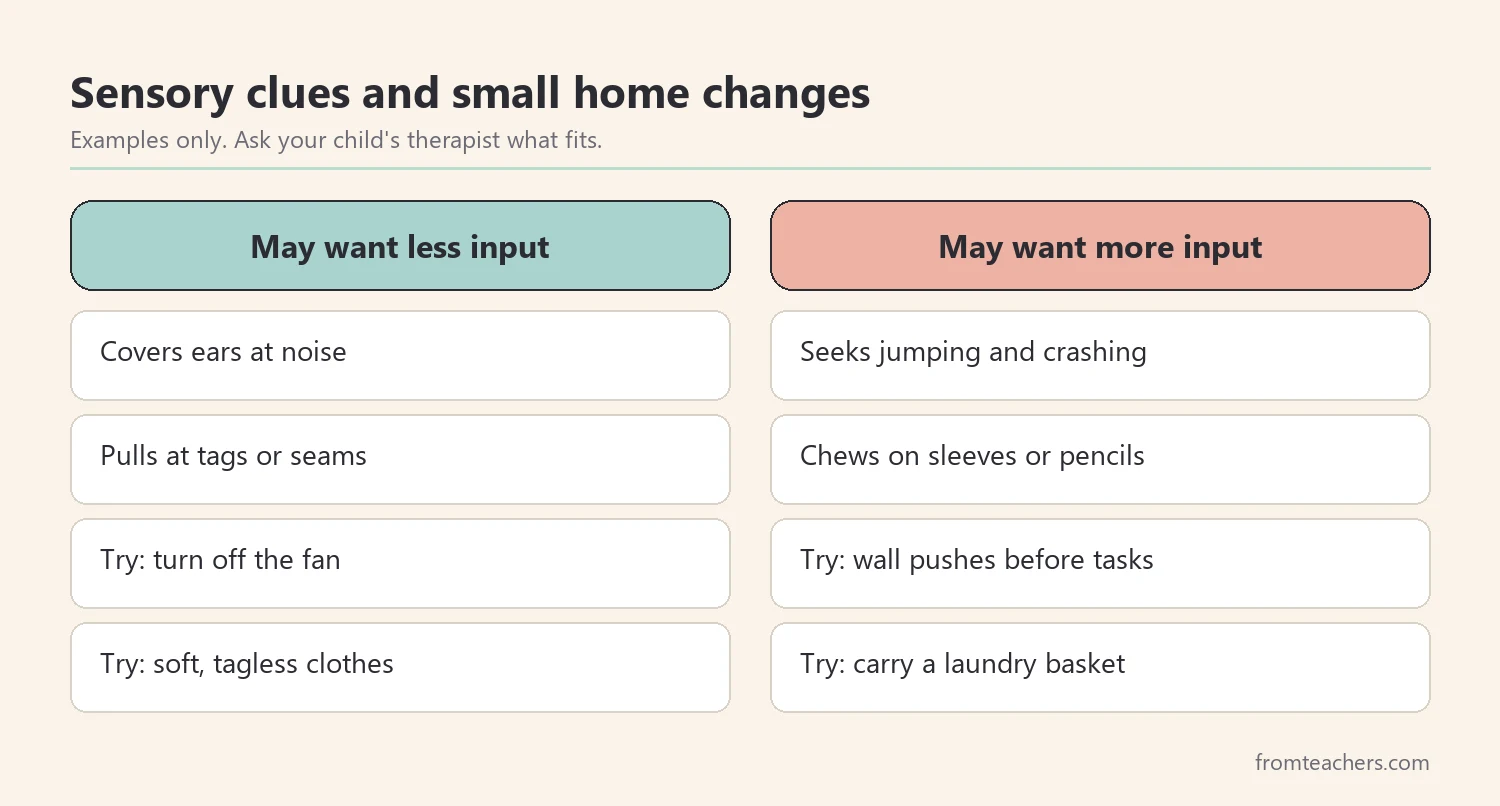
Also, build in calm sensory activities before demanding tasks. A few minutes of wall pushes, carrying a laundry basket, or a slow swing can help some children settle. Other children prefer a quiet corner with a soft blanket. If your child has an occupational therapist, ask which activities fit their plan.
If you want a ready-made reference, the Special Needs Parent Guide with 12 at-home strategy tables includes a sensory integration table alongside daily routines, self-regulation, and life skills.
Worked example. Leo’s mother switches off the bathroom fan and buys a mild toothpaste. A week later, she adds two minutes of wall pushes before the routine. Over the following week, Leo stops covering his ears and reaches the brushing step on most nights.
4. Special needs parenting tips for life skills and self-care
Life skills grow from small steps practiced often. Rather than teaching “get dressed,” teach “put on socks,” then “put on shirt.” This is one of the special needs parenting tips that pays off for years, because each small skill becomes a base for the next.
Start by breaking the skill into steps, just as you did for the visual routine. Then, decide where your child is right now. Can they do the step alone, with a reminder, with a gesture, or only with hands-on help? Write that down for each step.
Next, teach one step at a time. Many families find it helpful to do all the steps together except the last one, which the child finishes alone. When the last step is solid, add the step before it. This gives your child a feeling of finishing the task every time.
| Level of help | What it looks like |
|---|---|
| Full help | Your hand guides the action |
| Gesture | You point to the item or picture |
| Reminder | A short word, such as “brush” |
| Alone | Your child does it without help |
Also, fade your help on purpose. Among all the special needs parenting tips in this guide, fading is the one families most often skip. Move from full help to a gesture, then to a reminder, then to nothing. Fading slowly avoids the trap where your child waits for you before every step.
Worked example. Leo can wet his brush and rinse alone, but he needs full help to add toothpaste and brush all areas. His mother teaches the rinse step first, then the toothpaste step with a gesture toward the tube. After three weeks, he adds toothpaste with only a one-word reminder.
In other words, the goal is not perfect brushing tonight. It is a little less help each week.
5. Track progress and share it with school
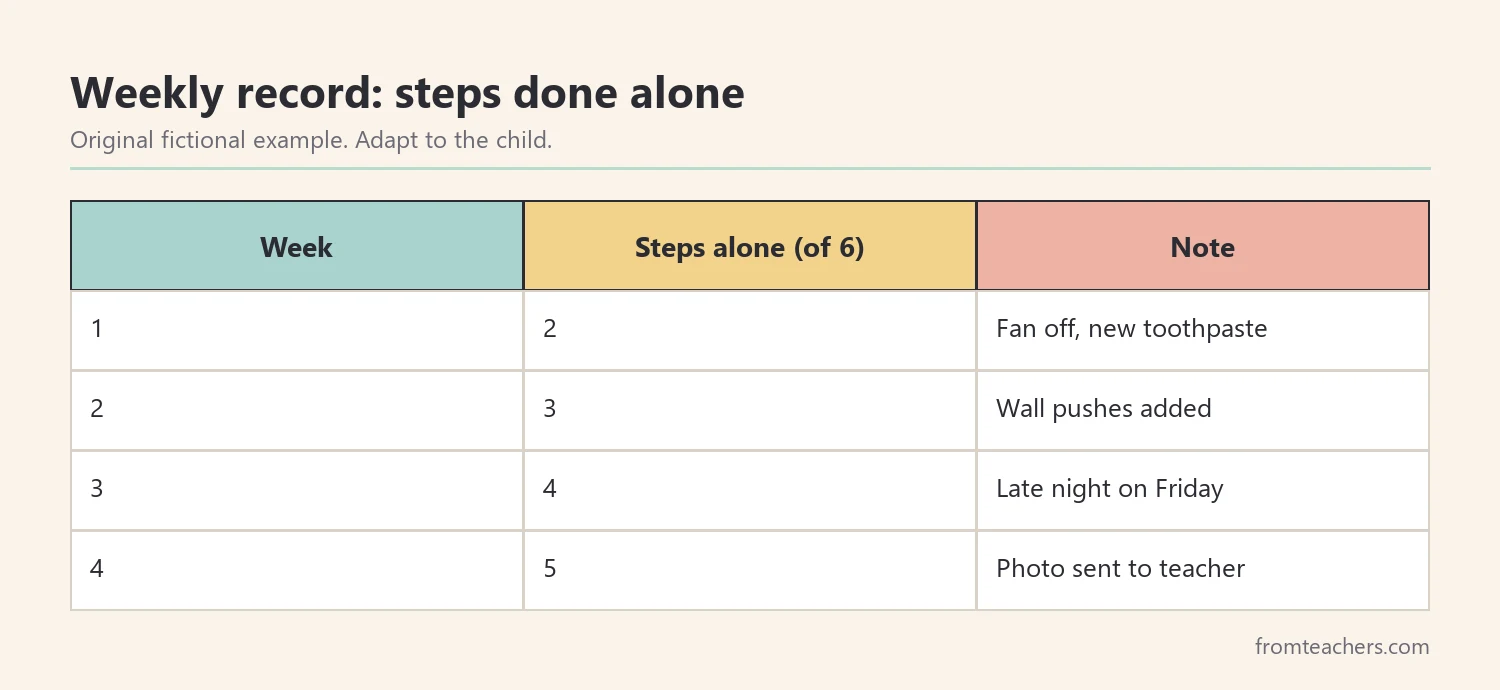
Without a record, it is hard to tell whether special needs parenting tips are working. So, choose one simple measure linked to the routine and record it on the same days each week. For example, count how many steps your child did alone.
Keep the record quick. A tally on the chart or a line in a notebook is enough. In addition, write a short note when something unusual happens, such as a late night, an illness, or a visitor. Those notes explain a bad day so you do not drop a strategy too soon.
Then, review your notes every three or four weeks. Reviewing on a schedule is one of the quieter special needs parenting tips, yet it keeps the plan honest. Ask what is working, what is still hard, and what to change next. Keep to one change at a time.
Also, share what works with your child’s teachers. Schools often use visual schedules and sensory breaks too, and matching words and pictures between home and school helps children feel secure. If your child has an IEP, bring your notes to meetings so the team sees how skills look at home.
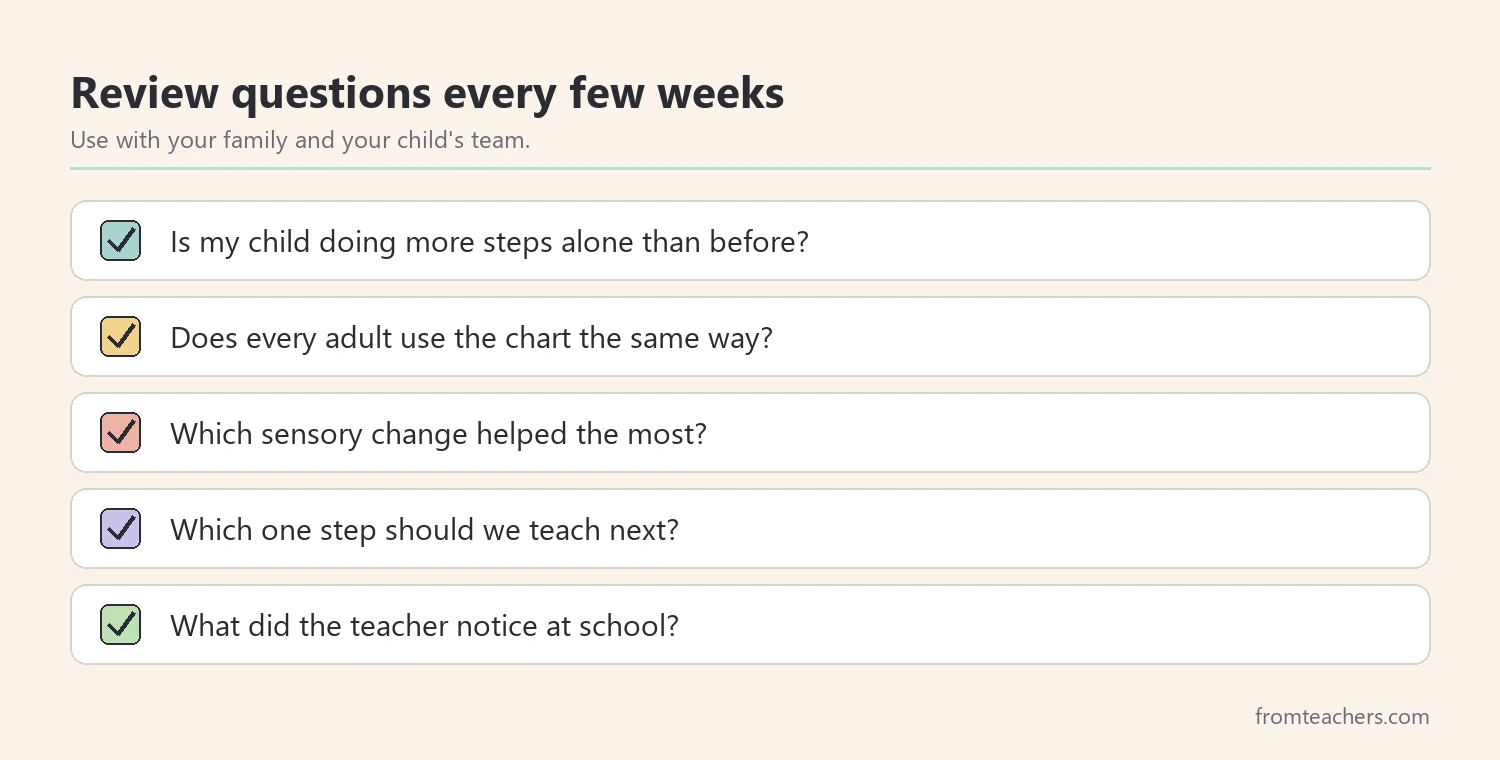
Worked example. Leo’s mother counts the steps he does alone on Monday, Wednesday, and Friday nights. Over four weeks, his count rises from two of six steps to five of six. She sends a photo of the chart to his teacher, who starts using the same pictures for handwashing at school.
Common mistakes and how to avoid them
- Changing everything at once. Too many new special needs parenting tips at once hide what helped. Fix: change one thing, track it, then add the next.
- Teaching during a meltdown. A child in distress cannot learn a new routine. Fix: practice the chart during calm times and keep hard moments short and kind.
- Ignoring the sensory side. Pushing through a noise or texture often makes the routine harder. Fix: adjust one sensory detail first, then ask for effort.
- Helping too much for too long. Children may wait for help they no longer need. Fix: fade from full help to gesture to reminder on purpose.
- Dropping a routine after one bad night. New habits take weeks. Fix: check your notes over several weeks before deciding.
Questions teachers and parents ask about special needs parenting tips
Where should I start if every routine is hard?
Start with the routine that causes the most stress for the whole family, or the one that happens most often. Success in one routine builds confidence for the next. Most special needs parenting tips work better when you focus on one area for a few weeks.
Do I need a therapist to use these ideas?
No, the ideas in this guide are everyday home strategies. However, if your child already works with a therapist, share your plan with them. They can suggest activities that fit your child’s goals.
How long until a visual routine works?
Every child is different. Many families notice small changes within a week or two, while new skills often take longer. Your weekly record will show the trend better than any single night.
Should I use rewards?
Small rewards can help a child practice a new routine at first. Keep them simple and linked to the routine, such as choosing the bedtime story. Over time, the finished routine itself often becomes the reward.
How can I make home and school match?
Ask your child’s teacher which words and pictures they use for routines, and share yours. Using the same language in both places is one of the simplest special needs parenting tips. It helps your child know what to expect everywhere.
Related reading: Managing Sensory Overload: Practical Strategies for Autism and ADHD, How Parents and Teachers Can Team Up for Special Education Success, and Navigating the Path to Adulthood: Building Essential Life Skills.
A companion resource for special needs parenting tips:
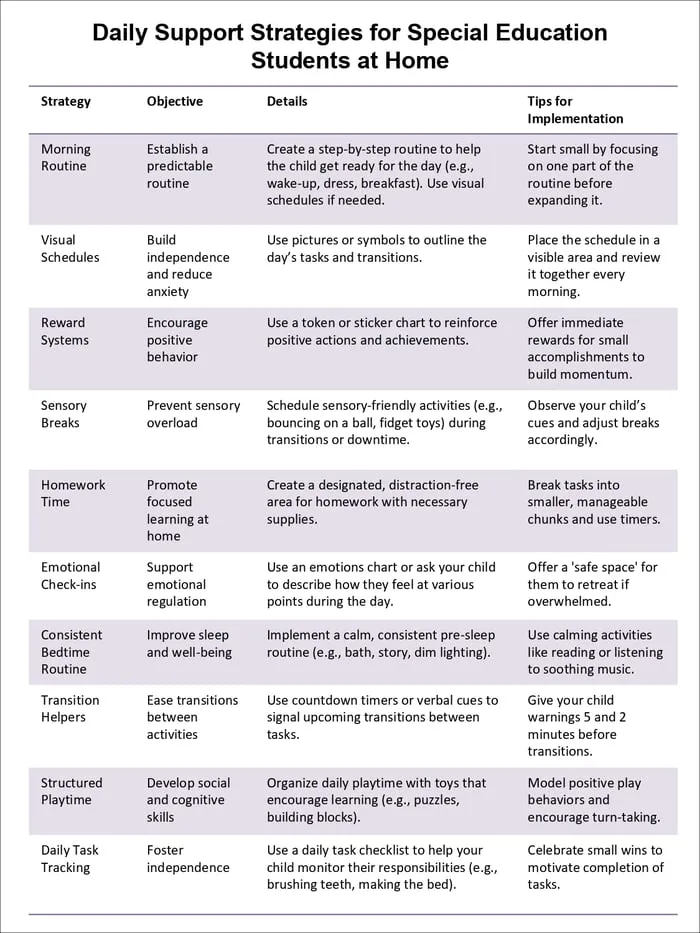
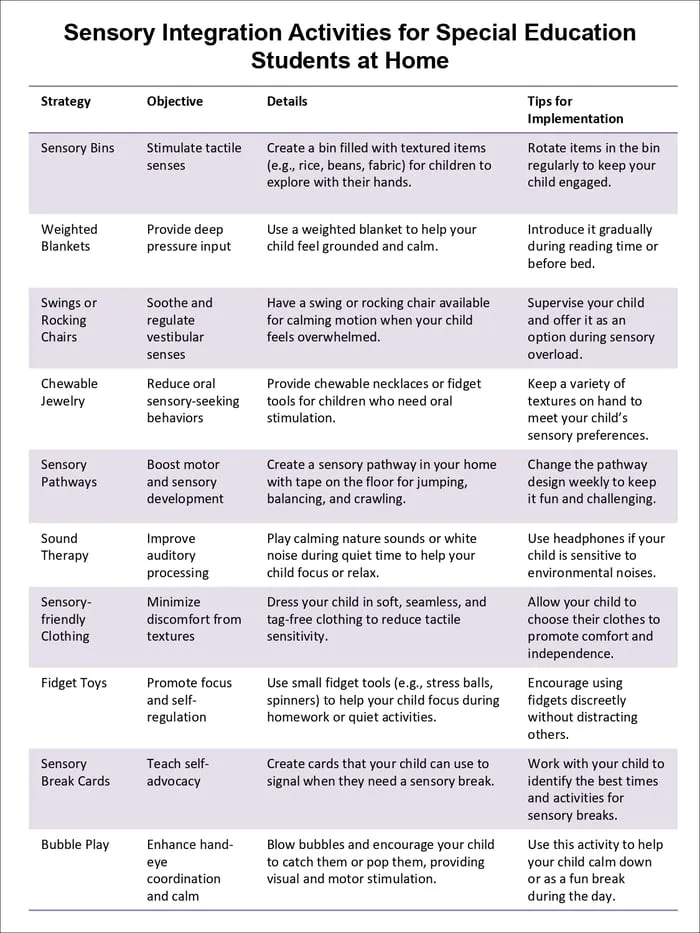
Special Needs Parent Guide: 12 At-Home Strategies for Sensory and Life Skills: twelve strategy tables covering daily routines, sensory integration, behavior, social skills, motor skills, speech and language, self-regulation, life skills, self-care, problem-solving, and time management, each with a strategy, objective, details, and tips.
Sources and scope
- CDC National Center on Birth Defects and Developmental Disabilities: general information for families about child development and disabilities.
- American Occupational Therapy Association: background on occupational therapy, including daily living and sensory support.
- Understood.org: practical articles for families on learning and thinking differences.
- Center for Parent Information and Resources: a hub that connects families with parent training and information centers.
- IDEA, U.S. Department of Education: the law behind special education services and IEPs.
This guide covers everyday home strategies for routines, sensory comfort, and life skills. It does not cover diagnosis, therapy plans, or medical advice, which belong to qualified professionals and your child’s team.
Key takeaways
- The best special needs parenting tips start with one routine and a few days of notes.
- A picture routine lets your child see the next step without waiting for you.
- Adjust one sensory detail before asking for more effort.
- Teach life skills in small steps and fade your help on purpose.
- Track one simple measure and share it with your child’s school.










Leave a Comment