
Autism puberty education is one of the topics adults most often put off, yet it is one that autistic teens need early, clearly, and with respect. Picture a thirteen-year-old who comes home upset because a classmate said she smelled, or who panics at school when her first period starts and nobody has explained what to do. These moments are avoidable when the teaching happens before the need.
This guide gives you a calm, step-by-step plan. By the end, you will be able to prepare the team, teach body changes in concrete language, break hygiene into visual routines, plan for periods at school and home, and protect privacy and dignity while building independence. The same fictional student appears in every step, so you can see how the plan comes together.
Examples are fictional. Adapt to the student’s goals and agreed supports. This is guidance, not a diagnosis.
At a glance
- Start autism puberty education before changes happen, so new experiences are expected, not frightening.
- Use concrete, accurate words and visuals, not hints or slang.
- Break hygiene into short routines with one step per picture.
- Plan for periods with a kit, a script, and a private place at school.
- Protect privacy and consent at every step, and fade adult help as skills grow.
1. Prepare the team for autism puberty education
First, agree on who teaches what. Autism puberty education works best when the family, the teacher, the school nurse, and any therapists use the same words and the same routines. Without that agreement, a student may hear one explanation at school and a different one at home, which can cause confusion and anxiety.
Next, talk with the family about values and preferences. Some families want the school to lead, while others prefer to teach the most private topics at home. Respect those choices, and write down what the school will cover, what the family will cover, and who the student can ask for help.
Also, think about why autism puberty education needs extra planning for autistic teens. Sensory differences can make showers, deodorant, or pads feel unbearable. Executive functioning challenges can make multi-step routines hard to start and finish. In addition, some students have trouble noticing body signals, such as a full bladder or sweat, which is often called interoception.
| Who | Possible role |
|---|---|
| Family | Shares preferences, teaches routines at home |
| Teacher | Teaches lessons, uses visuals, coordinates |
| School nurse | Supports health questions and period care |
| Occupational therapist | Helps with sensory needs and motor steps |
Worked example. Maya is a fictional autistic student, age 13, in grade 7. Her mother, her special education teacher, and the school nurse meet for twenty minutes. They agree that the teacher will teach body changes and hygiene routines, the nurse will help with period care at school, and her mother will lead the same routines at home.
2. Teach body changes with concrete language
Once the team agrees, start teaching. Autism puberty education should use clear, accurate words for body parts and changes. Phrases like “becoming a woman” or “your special time” are confusing for many autistic teens, who may take language literally. Instead, say exactly what happens and why.
Then, use visuals. Simple diagrams, photos of products, and short social stories help students understand what they cannot easily picture. For example, show a real pad, let the student hold it, and explain where it goes and how often to change it, before the first period ever arrives.
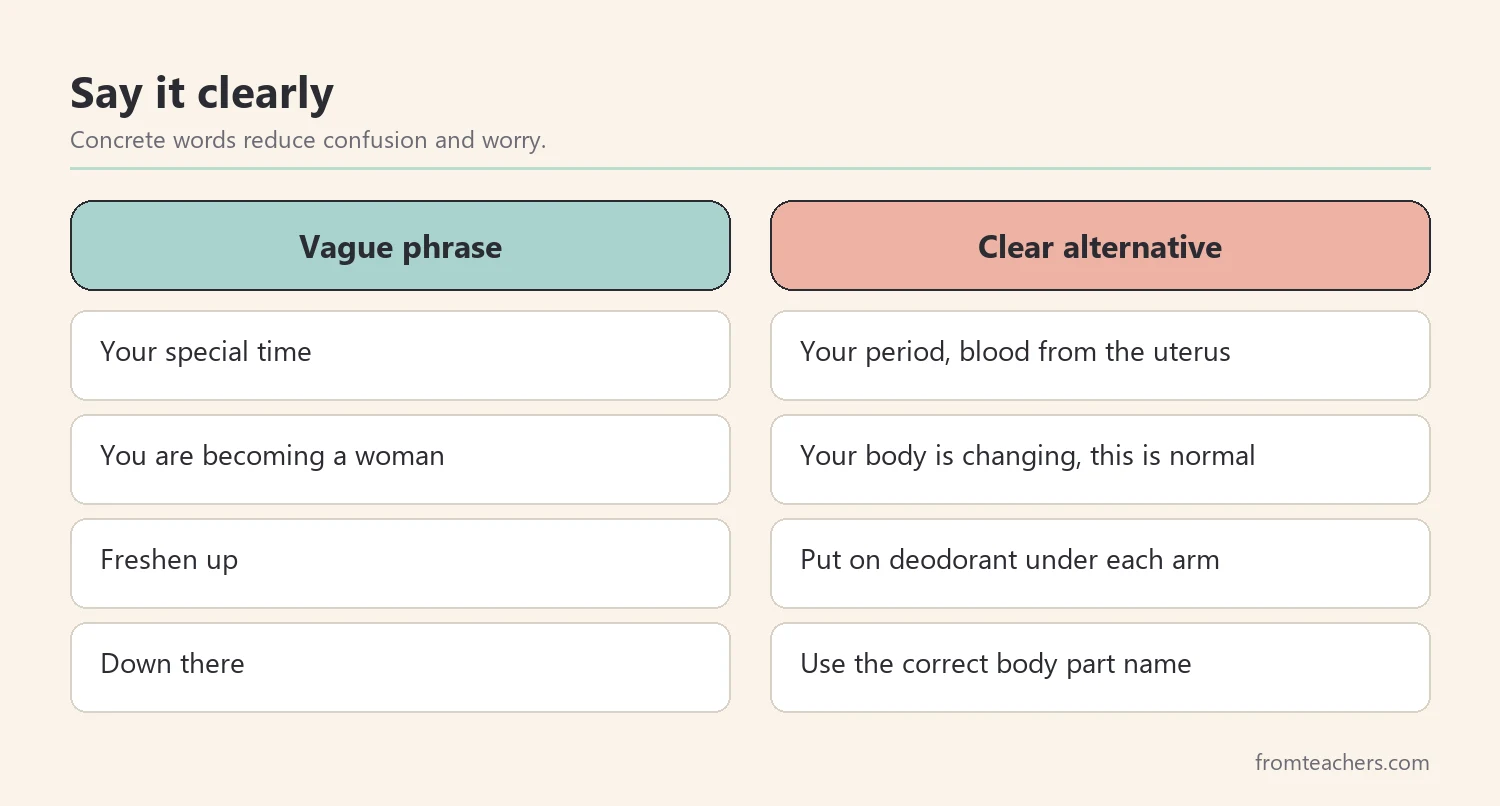
Good autism puberty education is also honest about feelings. Changes in the body can bring new emotions, and many teens find it easier to talk about them when they already have words such as “embarrassed,” “worried,” or “private.”
Teach in short sessions. One idea per lesson is often enough, such as “sweat and deodorant” one day and “hair growth” another day. Afterward, check understanding with a simple question, such as “What do we use under our arms after a shower?” Repeat key points over several weeks, because the goal is calm familiarity, not a single big talk.
In addition, explain that these changes are normal and happen to everyone, at different times. Reassurance matters as much as facts. Many teens worry that something is wrong with their body, so name that feeling and answer it directly.
Worked example. Maya’s teacher teaches one topic a week for six weeks. In week three, she shows Maya a pad, a pair of clean underwear, and a small bag. Maya practices folding and wrapping a pad. Her teacher uses the same words her mother uses at home.
3. Break hygiene into visual routines
Next, turn each hygiene skill into a short routine. A visual sequence with one step per picture helps a student start, stay on track, and finish. This is a core part of autism puberty education, because skills like showering and using deodorant now need to happen every day, often without an adult standing nearby.
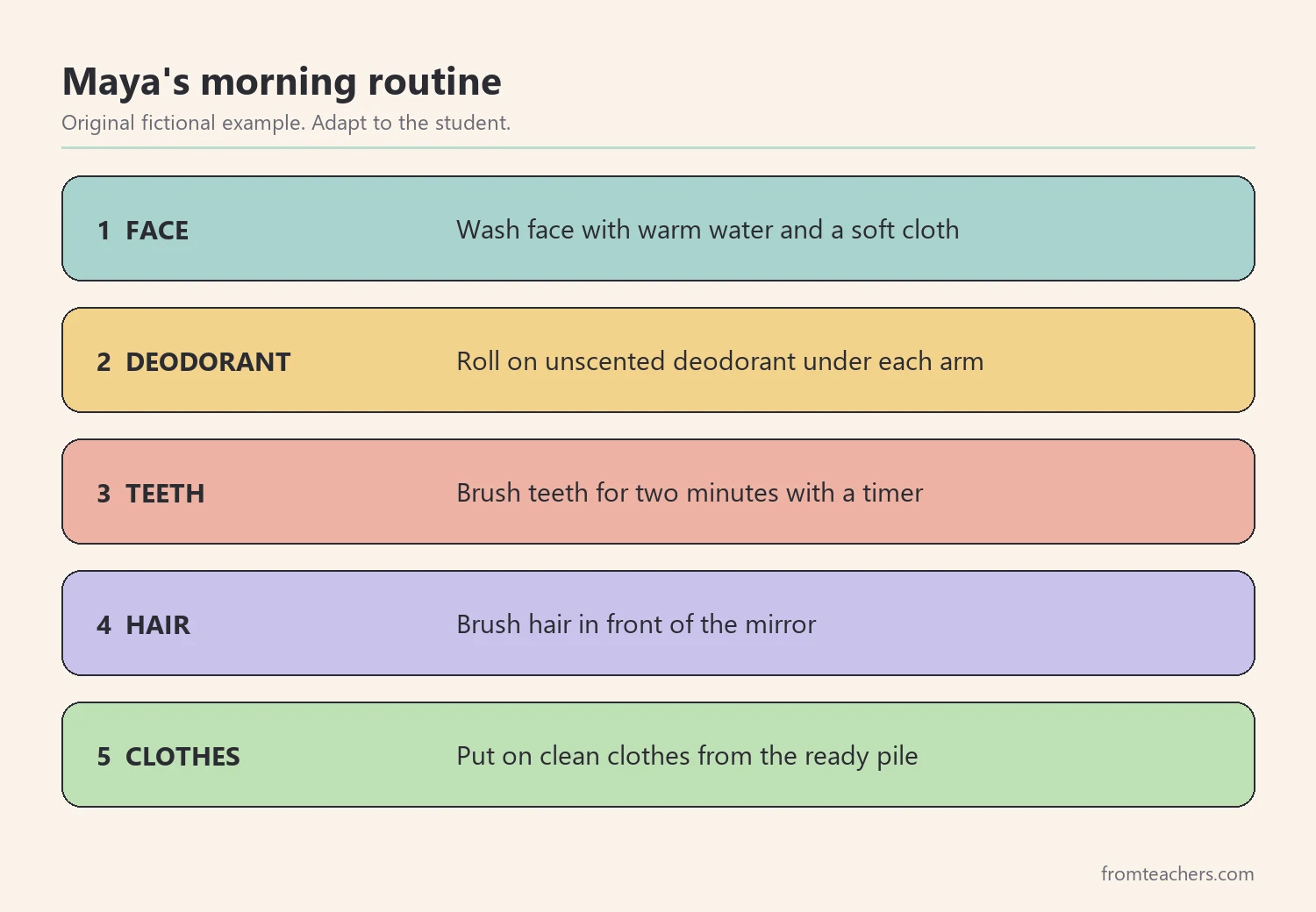
Visual routines are where autism puberty education turns into daily habits. A plan that lives only in a lesson rarely changes what happens in the bathroom at 7 a.m.
Start with the routine that matters most right now. For many teens, that is deodorant or showering. Watch the student try it, and note which steps they do alone and where they get stuck. Then, add a picture strip in the bathroom, a checklist inside a cabinet door, or a timer for steps that need a set length.
Also, adjust for sensory needs. For instance, try unscented or roll-on deodorant, a handheld shower head, or a soft towel. Let the student choose between two acceptable products, because having a say often reduces resistance.
The toileting and hygiene guide for older autistic students includes step-by-step routines for showering, toothbrushing, deodorant, and clothing, along with two sample social stories, which can save time when you build your own visual sequences.
Worked example. Maya’s morning routine has five steps: wash face, put on deodorant, brush teeth, brush hair, and put on clean clothes. She already brushes her teeth alone but forgets deodorant. A picture strip on the mirror and an unscented roll-on help her complete all five steps most mornings.
4. Plan for periods with dignity
Then, plan for menstruation before it starts. Autism puberty education should cover what a period is, what supplies to use, how to change a pad or other product, and what to do if it starts at school. A surprise period can be frightening for any teen, and more so for a student who struggles with change.
Put together a small kit with pads, clean underwear, a wet wipe pack, and a plastic bag. Keep one in the student’s backpack and one with the school nurse. Then, practice the routine in a calm moment, step by step, using a picture sequence if helpful.
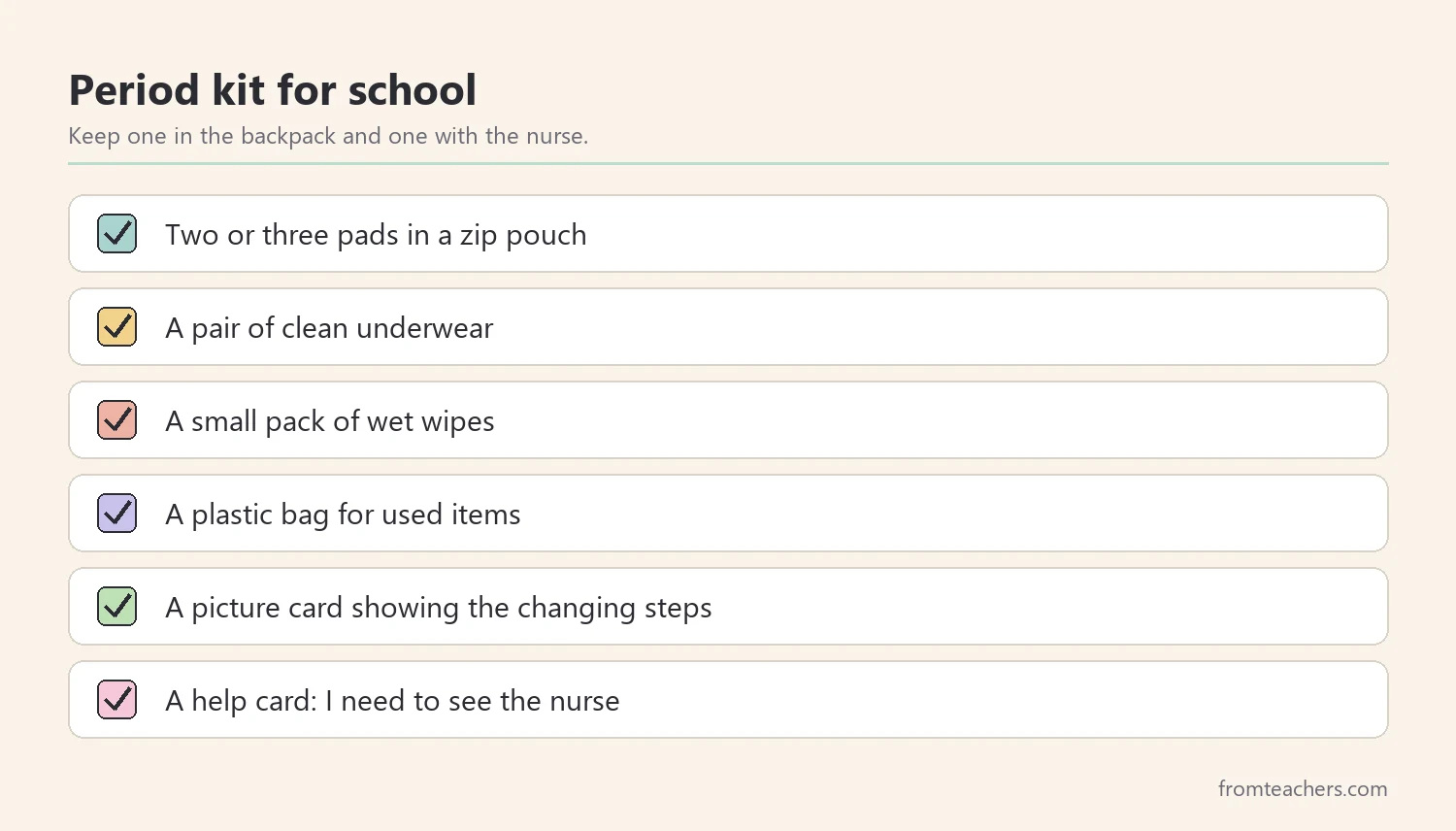
In addition, rehearse what to do if a period starts with no kit nearby. A simple rule, such as “Fold toilet paper, go to the nurse, show the card,” gives the student a plan instead of panic. Autism puberty education should also cover what to do with used products, since this step is easy to forget.
Also, give the student a short script to ask for help privately. For example, a card that says “I need to see the nurse” lets a student leave class without explaining in front of peers. Agree on this signal with the teacher ahead of time.
Questions to settle before the first period
- Where will the student change pads at school?
- Who is the trusted adult the student can go to?
- How will the student ask for help without speaking in front of others?
- How will home and school share information respectfully?
- What will happen if clothing gets stained?
If the student has very painful periods, very heavy bleeding, or other health concerns, the family should talk with the student’s doctor.
Worked example. Maya has a period kit in a zip pouch in her backpack and a spare with the nurse. She practices changing a pad at home with her mother using a six-picture sequence. Her teacher agrees that Maya can show a small card to leave class and go to the nurse.
5. Protect privacy and build independence
Finally, keep dignity at the center. Autism puberty education is also about teaching privacy: which body parts are private, where it is okay to change clothes, and who may help with personal care. Teens deserve the same privacy as their peers, even when they still need some support.
At school, follow your district’s policies on personal care, which often include having two adults present or nearby when staff help with intimate care. Always explain what you are going to do before you do it, ask for the student’s permission when possible, and use the least help needed.
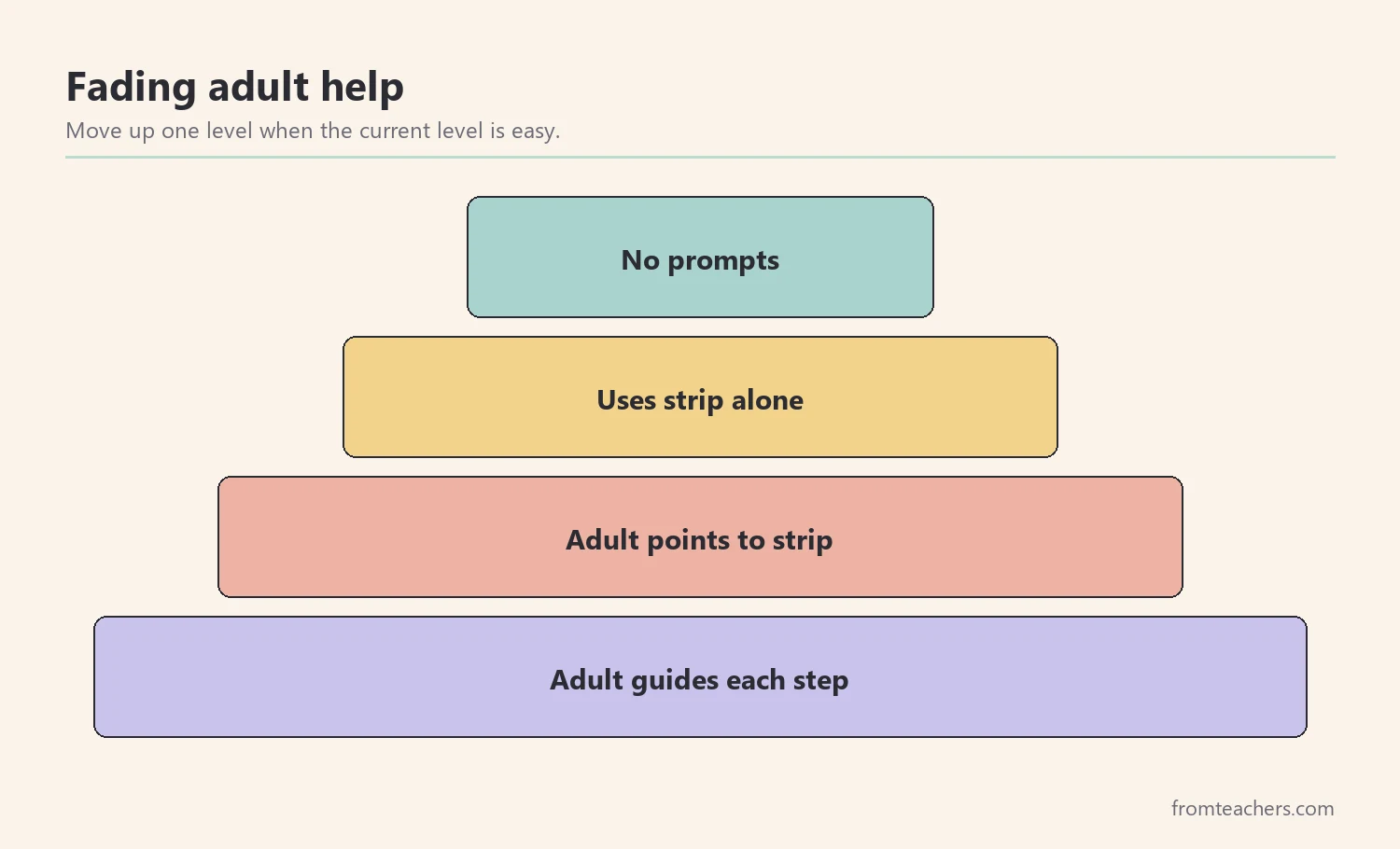
Clear privacy rules are one of the most protective parts of autism puberty education, because they give teens words and limits they can use in any setting.
Then, fade support gradually. For example, move from an adult guiding each step, to an adult pointing at the picture strip, to the student using the strip alone, and finally to the routine with no prompts. Record progress weekly so the team knows when to step back.
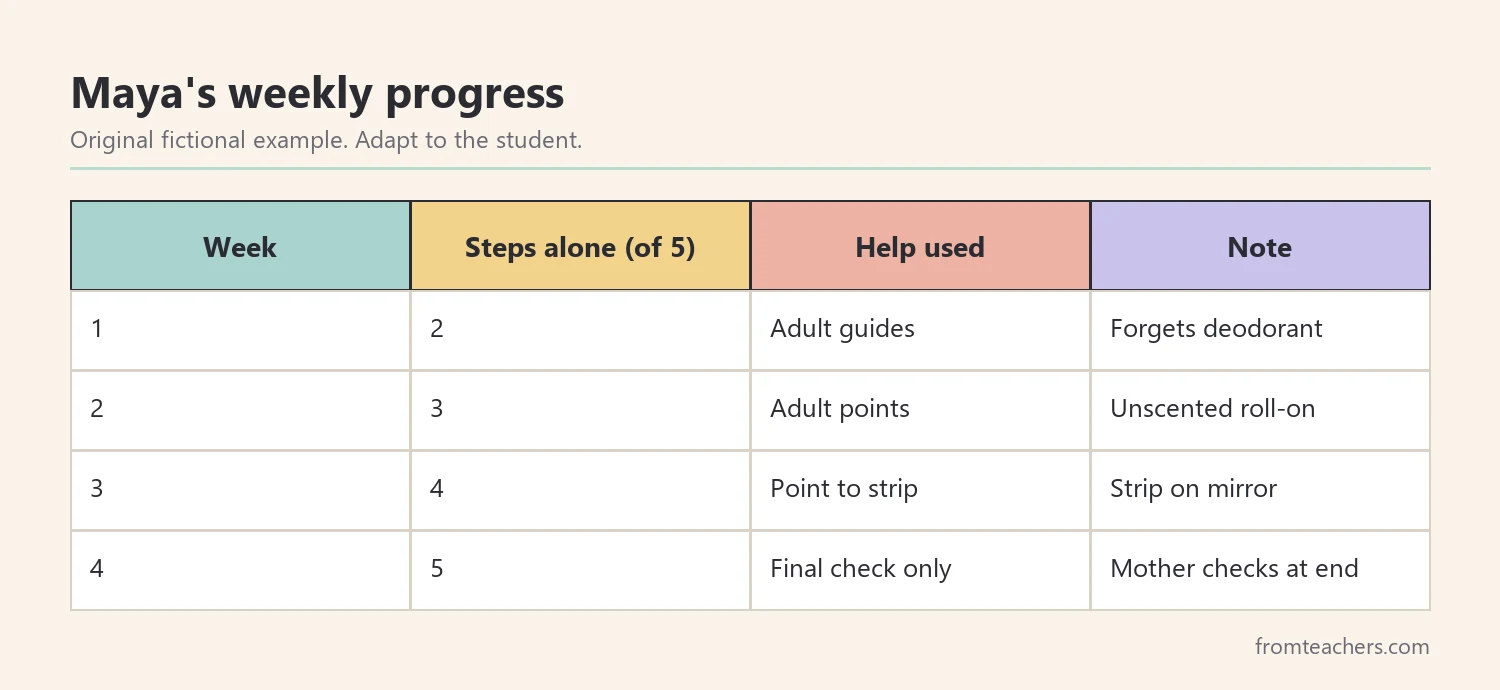
Also, talk with the student about who can help them, and who cannot. Simple, clear rules about private areas and safe adults help protect teens and give them words to use if something feels wrong.
Worked example. In week 1, Maya completes 2 of 5 morning steps on her own. By week 2, she completes 3, and by week 3 she completes 4 with only a point to the strip. In week 4, she completes all 5 alone, and her mother checks once at the end.
Common mistakes and how to avoid them
- Waiting until puberty starts. Fix: begin autism puberty education early, so changes are expected.
- Using vague or cute phrases. Fix: name body parts and changes clearly and calmly.
- Teaching everything in one talk. Fix: teach one idea at a time and repeat over weeks.
- Ignoring sensory barriers. Fix: try different products and let the student choose.
- Discussing private topics in front of peers. Fix: agree on a private signal and a private space.
- Keeping full adult help for too long. Fix: fade support based on weekly records.
Questions teachers and parents ask about autism puberty education
When should autism puberty education start?
Ideally, before the changes begin. Starting early gives the student time to learn words, routines, and supplies while things are calm. Talk with the family and the student’s doctor about timing for your child. Revisit topics yearly, since autism puberty education needs change as the student grows.
Who should teach these topics at school?
It depends on your school and the family’s wishes. Often the special education teacher teaches routines and the school nurse supports health questions. The key is that everyone uses the same words.
How do I handle a student who refuses to shower or use deodorant?
Look for sensory barriers first, such as water pressure, temperature, or product smell. Offer choices between acceptable options, shorten the routine, and use a visual sequence. If the struggle continues, an occupational therapist may help.
How can I protect a teen’s dignity during personal care?
Explain each step before you act, ask permission when possible, keep conversations private, and use the least help needed. Follow your school’s personal care policies, including any two adult rules.
Are social stories useful for teens?
Yes, social stories can support autism puberty education when the language and images match the student’s age. Avoid childish pictures. Use real photos or simple, age-respectful drawings, and keep the tone matter-of-fact.
Related reading: Dignity in Daily Care: Respectful Approaches to Toileting and Personal Hygiene for Older Autistic Students, Navigating the Path to Adulthood: Building Essential Life Skills, and Managing Sensory Overload: Practical Strategies for Autism and ADHD.
A companion resource for autism puberty education:
Toileting and Hygiene for Older Autistic Students: Puberty, Periods, Dignity: a PDF guide for teachers, paraprofessionals, school nurses, and parents with routines for school and home, menstrual care, scripts and email templates, sample social stories, and a privacy and consent framework.
Sources and scope
- HealthyChildren.org, American Academy of Pediatrics: parent information on puberty and adolescent health.
- CDC Autism Spectrum Disorder: general information about autism.
- IRIS Center, Vanderbilt University: free modules on evidence-based practices such as visual supports and task analysis.
- American Occupational Therapy Association: information on daily living skills and sensory needs.
This guide covers practical teaching of puberty, hygiene, and period care routines at home and school. It does not replace medical advice, your school’s personal care policies, or the decisions of the student’s family and IEP team.
Key takeaways
- Start autism puberty education early and agree on shared words across home and school.
- Keep autism puberty education concrete, visual, and repeated in short sessions.
- Turn hygiene into short visual routines and adjust for sensory needs.
- Prepare a period kit, a private signal, and a trusted adult before the first period.
- Protect privacy and dignity, and fade adult help as skills grow.









Leave a Comment