
A homework routine for kids can change the whole feel of an afternoon. Picture a kitchen at 4 p.m.: the backpack is still by the door, a snack is half eaten, and a parent has asked three times, “Did you start your homework yet?” The child is not refusing to learn. Often, they simply do not know where to begin or what comes next.
This guide shows you how to build a clear, visual plan that answers those questions before anyone has to ask. By the end, you will be able to set up a homework spot, break the work into visible steps, teach the routine, add breaks that help focus, and check each week whether it is working. Examples are fictional. Adapt to the student’s goals and agreed supports. This is guidance, not a diagnosis.
At a glance
- Choose the same time and place for homework most days.
- Turn homework into short, visible steps from snack to backpack.
- Teach the routine like any new skill: show, practice, then step back.
- Plan a short break on purpose instead of waiting for frustration.
- End with a small reward and a quick weekly review.
1. Set the time and place for a homework routine for kids
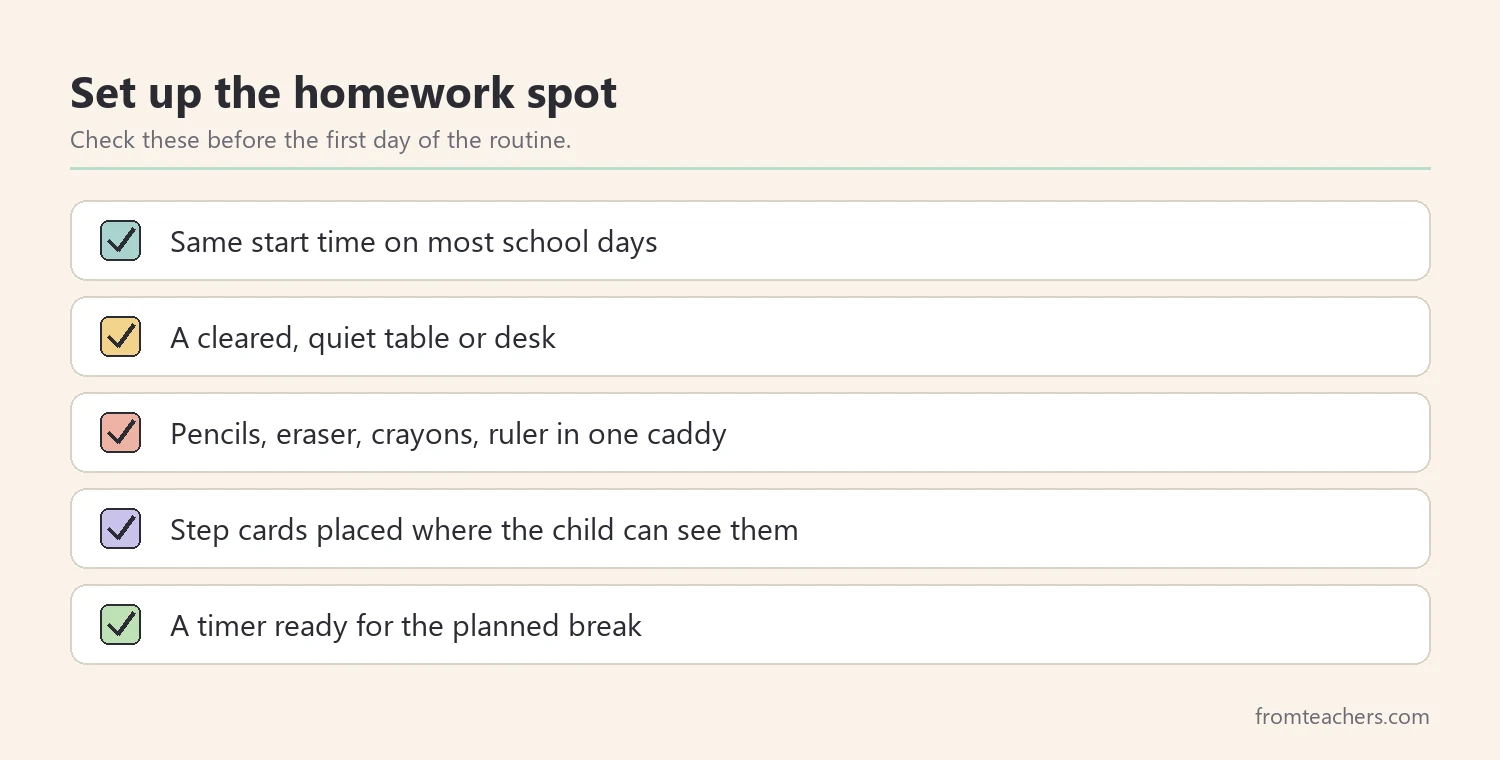
Predictability is the foundation of any homework routine for kids. When homework happens at roughly the same time and in the same spot, children spend less energy deciding and more energy doing.
Start with timing, since a homework routine for kids depends on it. Many children need a short break after school before they can focus again. A snack and some downtime first, then homework, works for many families. Others prefer to finish homework right away. Either choice is fine, as long as it stays mostly consistent.
Next, choose the place. A homework spot does not need to be a desk. A kitchen table works well if it is cleared and quiet during homework time. What matters is that supplies are close and distractions are low.
Worked example: Maya’s homework spot
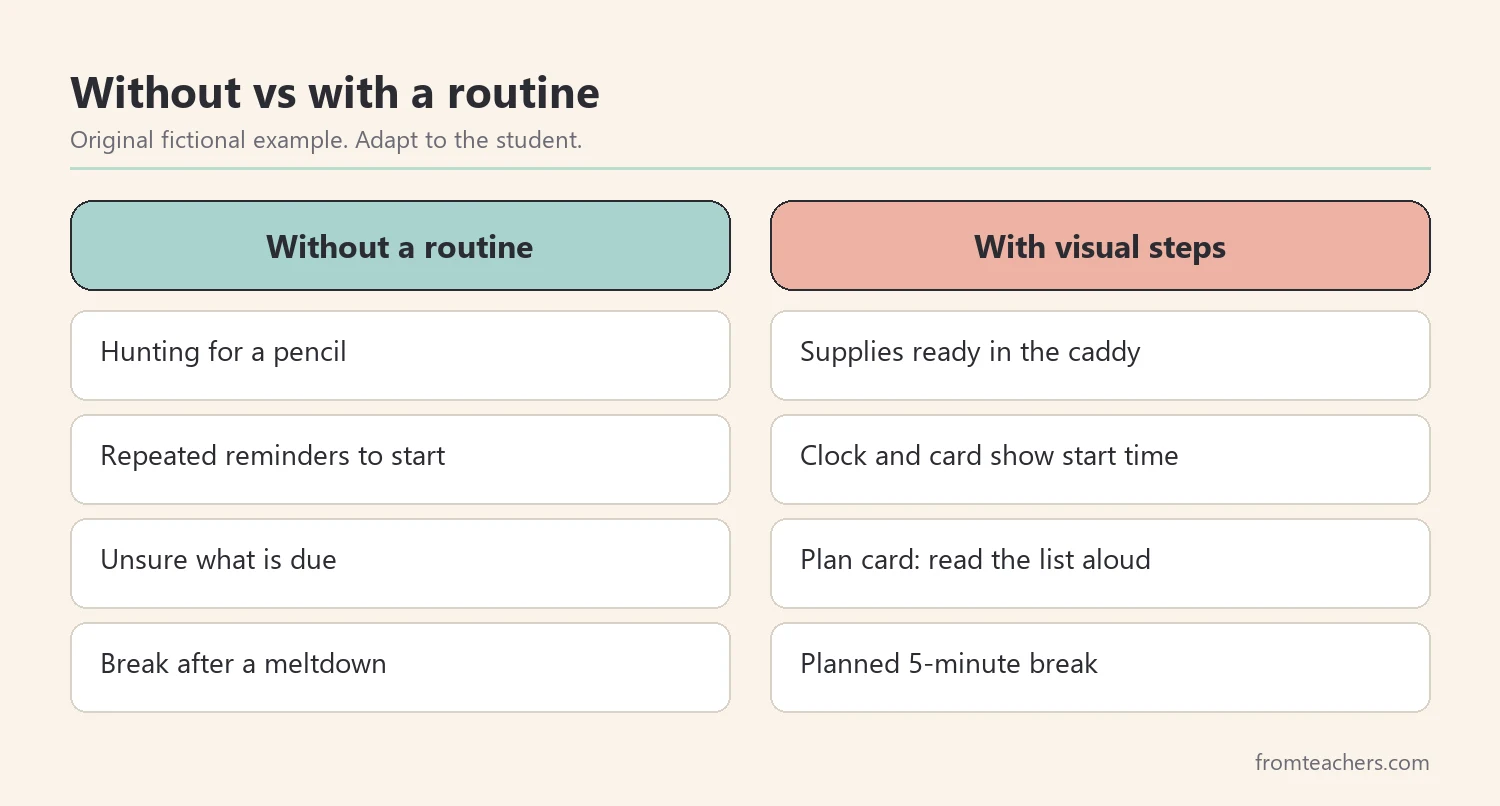
Maya is 8 and in grade 3. Her dad, Sam, notices that homework arguments start when Maya has to hunt for a pencil or her folder. Together, they set up a small homework caddy on the kitchen counter with pencils, an eraser, crayons, a ruler, and sticky notes.
They also agree on a start time: 4:00 p.m., after a 15-minute snack break that begins at 3:45 p.m. Sam tapes a small card with “Homework starts at 4:00” next to the caddy. Within a few days, Maya begins checking the clock herself.
When the week gets busy
Real life will interrupt even the best homework routine for kids. Sports practice, appointments, and family events move the start time. Rather than dropping the routine on those days, keep the steps and change only the clock.
For example, if Maya has swimming on Tuesdays, Sam moves her start time to 5:30 p.m. and keeps every card in the same order. The snack still comes first, and the backpack still comes last. Because the steps never change, a later start feels familiar instead of chaotic.
It also helps to show the week ahead. A small weekly card with start times for each day lets your child see changes before they happen. Fewer surprises usually mean fewer arguments, and a homework routine for kids that bends without breaking is one that lasts all year.
2. Break the work into visual steps
“Do your homework” is a big, vague instruction, and a homework routine for kids exists to make it smaller. For many children, especially those who find planning hard, it feels like being asked to climb a hill with no path. Visual steps turn that hill into a staircase.
Group the steps into four simple phases. First, get started: finish the snack and gather the homework folder. Second, plan: check what needs to be done. Third, work: complete each task, with a short break if needed. Fourth, finish: pack the backpack and enjoy a reward.
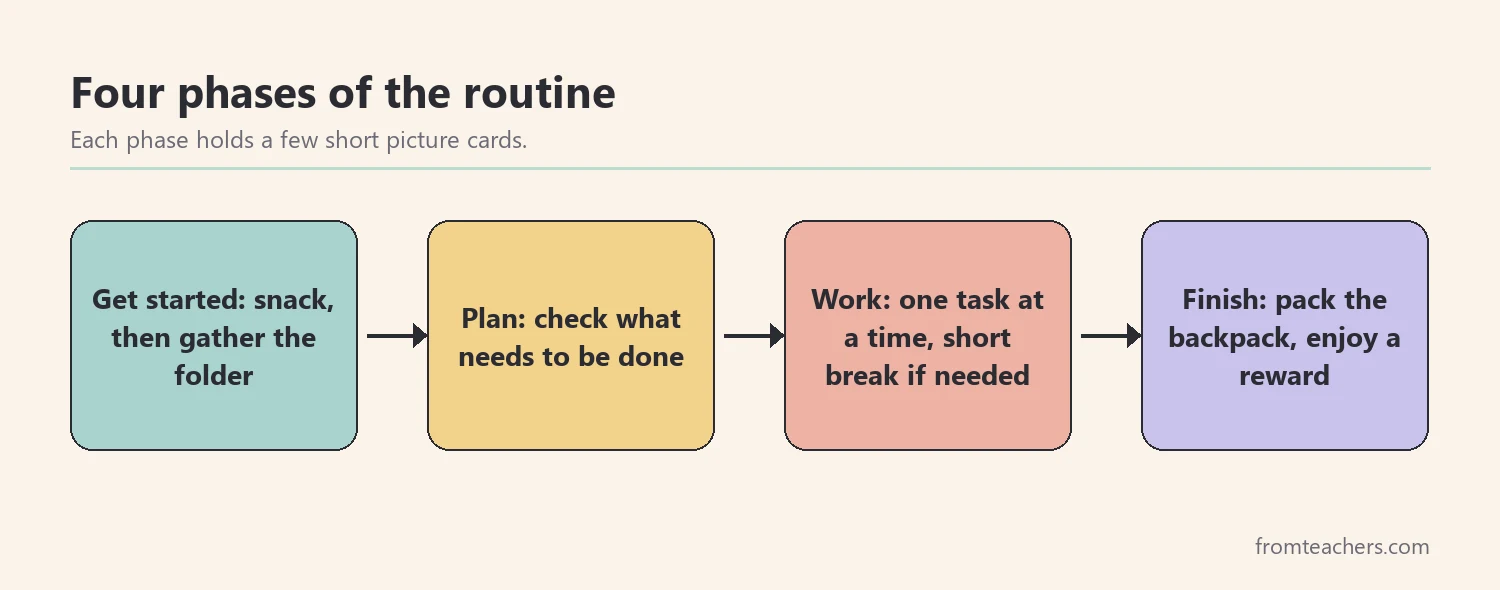
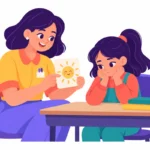
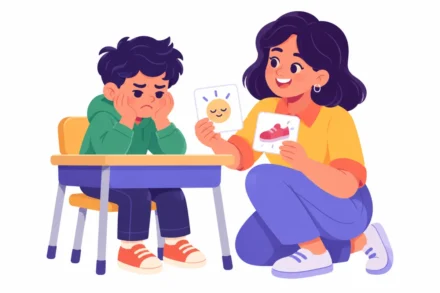
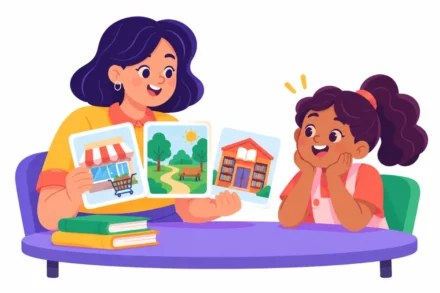
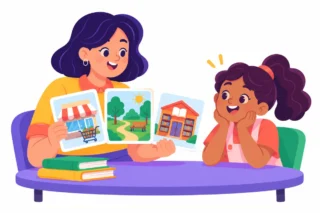
Within each phase, use small picture cards. Each card shows one action with a short, first-person sentence, like “I get my homework folder” or “I check what I need to do.” First-person language helps children see the routine as theirs, not something done to them.
For a ready-made set, the 12-step visual homework routine cards walk children from finishing a snack to earning a reward, with a friendly illustrated character on every card.
Worked example: Maya’s card strip
Sam lays out Maya’s cards in a row on the counter. When she finishes a step, she flips the card over. Seeing the row of flipped cards grow gives Maya a clear sense of progress. On the first day, she asks how many cards are left three times, but by the end of the week she counts them herself.
| Phase | Example card |
|---|---|
| Get started | I finish my snack |
| Plan | I check what I need to do |
| Work | I take a short break if I need one |
| Finish | I pack my backpack |
3. Teach the homework routine for kids step by step
A visual plan only helps if a child knows how to use it. Therefore, teach the homework routine for kids the same way you would teach any new skill: show it, practice it together, then step back gradually.
On the first day, walk through every card with your child. Point to the card, say the sentence aloud, and do the action together. Keep your tone light and calm. This is practice, not a test.
Over the next few days, let your child lead. Point to the card only when they get stuck. After a week or two, try sitting nearby without pointing at all. The goal is a child who can look at the cards and know what to do next.
Worked example: Maya’s first two weeks
During week 1, Sam stays at the table and reads each card with Maya. In week 2, he sits across the kitchen and only helps when she asks. On Thursday of week 2, Maya completes every card without a single reminder.
Sam notices one sticking point. Maya often skips “I check what I need to do” and jumps straight into a worksheet, then forgets the spelling practice. Instead of adding new rules, Sam asks her to read her assignment list aloud at that card. As a result, she stops missing tasks.
4. Plan breaks and focus support
Many children cannot work for long stretches without a break, and that is normal. A planned break is very different from a break that happens because a child has already melted down. Building one into the homework routine for kids gives everyone a calmer path.
Keep breaks short and specific. Five minutes of stretching, a drink of water, or a quick walk around the house usually works. Avoid screens during the break, because it can be hard to return from them.
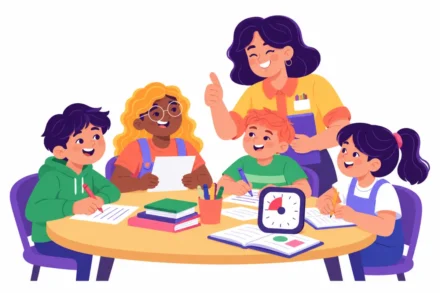
Use a timer so the break has a clear end. When the timer rings, the next card shows exactly what comes next. This makes the return to work feel like part of the plan rather than a punishment.
Worked example: Maya’s afternoon plan
Maya’s homework usually takes about 35 minutes. Sam splits it into two work blocks with a planned break between them.
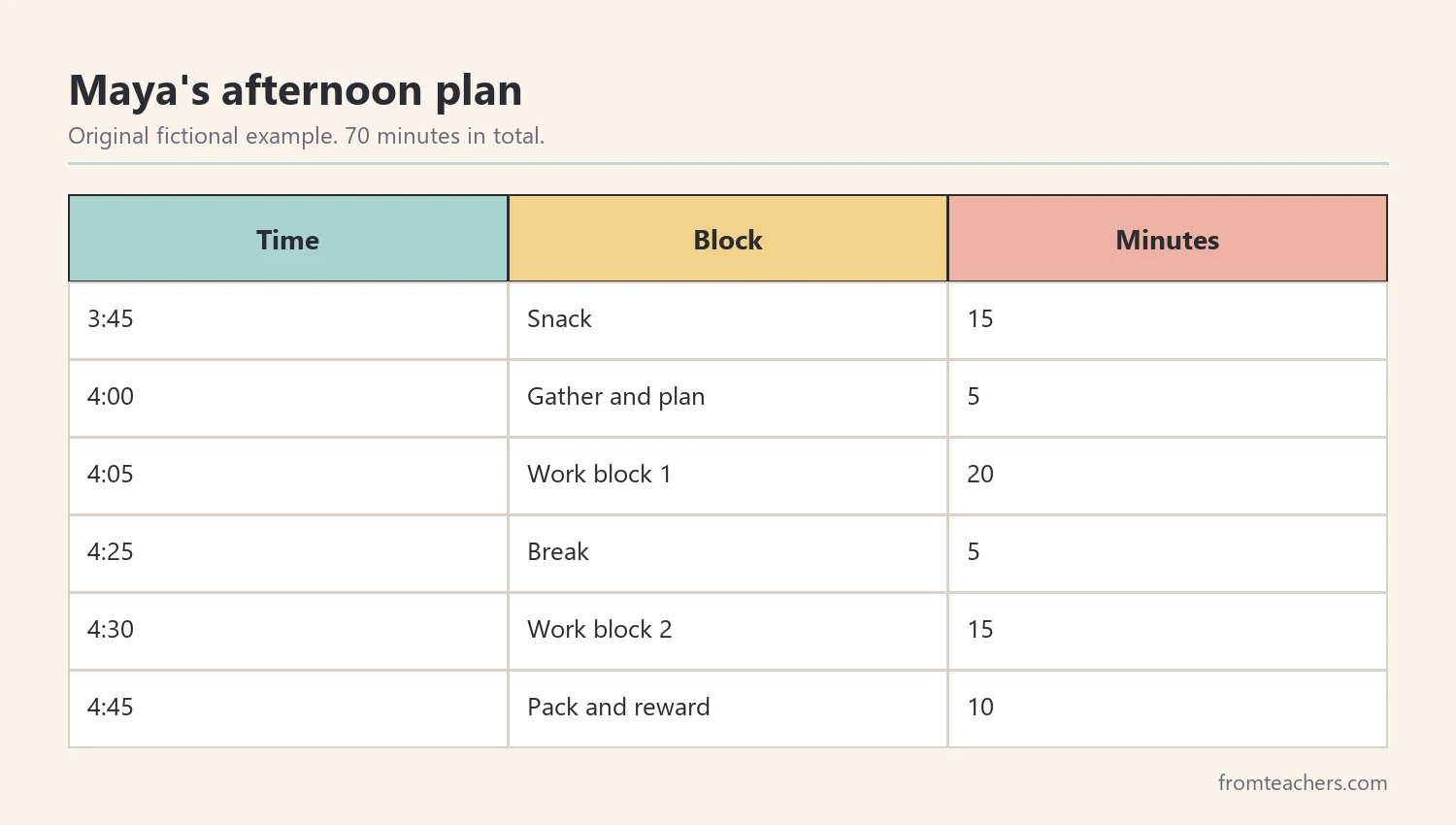
The plan runs from 3:45 to 4:55 p.m. A 15-minute snack comes first, then 5 minutes to gather and plan. Next, she works for 20 minutes, takes a 5-minute break, and works for another 15 minutes. Finally, she spends 10 minutes packing her backpack and enjoying her reward. Altogether, that is 70 minutes, with 35 minutes of actual homework.
In addition, Sam adds small focus supports. Maya keeps one sheet on the table at a time, and the rest stays in her folder. She also uses a sticky note to mark where she stopped before the break.
5. Finish strong and review the homework routine for kids
The last part of the routine matters as much as the first. Packing the backpack right away prevents the morning rush, and a small reward gives the routine a happy ending. Together, they help a homework routine for kids feel worth repeating.
Keep rewards simple and connected to the afternoon. Extra time with a favorite game, choosing a story at bedtime, or helping cook dinner all work well. The reward should come every time the routine is finished, especially in the early weeks.
Then, once a week, take five minutes to review. Look at what went well, what still causes trouble, and one small change to try. Include your child in the conversation, because they often notice things adults miss.
Worked example: Maya’s weekly review
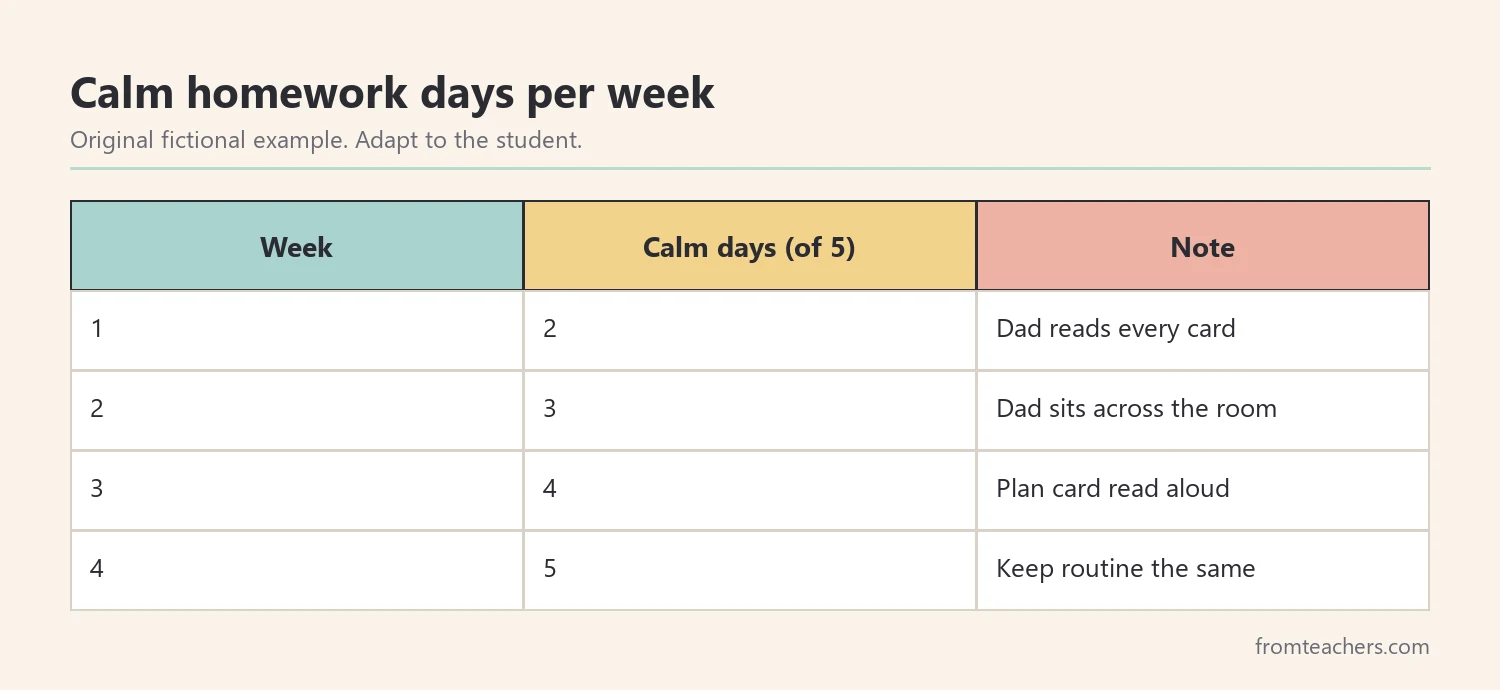
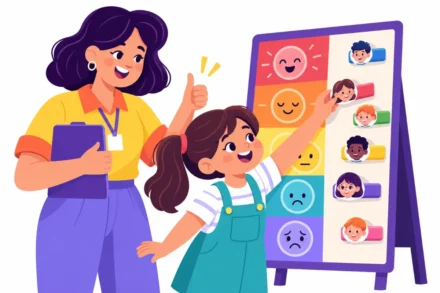
On Sunday, Sam and Maya look at a simple chart. They mark each school day with a check if the routine was finished without arguments. In week 1, Maya had 2 of 5 calm days. In week 2, she had 3 of 5. By week 3, she had 4 of 5, and in week 4 she had all 5.
Maya says the break is her favorite card. Sam says the backpack card has made mornings easier. They decide to keep everything the same and add one new card for reading time next month.
Notice what they did not do. They did not add new rules, raise the reward, or change three things at once. Small, one-at-a-time adjustments keep the routine familiar, and familiarity is exactly what makes it work. If a week goes badly, look for one cause, such as a late night or a new type of assignment, before changing the plan.
Common mistakes and how to avoid them
- Changing the homework routine for kids every day. Fix: keep the same time, place, and steps for at least two weeks before adjusting.
- Using too many words. Fix: one short sentence and one picture per card is enough.
- Waiting for frustration before a break. Fix: plan the break into the routine with a timer.
- Removing support too fast. Fix: step back gradually over one to two weeks, not overnight.
- Forgetting the ending. Fix: always finish with the backpack card and a small reward.
Questions teachers and parents ask about a homework routine for kids
How long should a homework routine for kids take?
It depends on the child’s age and the amount of homework assigned. Ask the teacher how long homework should usually take. Then build the homework routine for kids around that time, adding a snack before and packing up after.
What if my child refuses to start?
Look at the first card. Often, refusal happens because the first step feels too big. Make the first step tiny, like “I sit down and open my folder,” and celebrate it.
Can teachers use a homework routine for kids at school?
Yes. The same cards work for independent work time, homework clubs, or after-school programs, so the homework routine for kids travels easily. Sharing the cards with families also keeps language consistent between home and school.
Should rewards be given every day?
In the early weeks, consistent small rewards help a child connect the routine with something positive. Over time, the satisfaction of finishing and a calmer afternoon often become rewards on their own. You can then make rewards less frequent.
Does a visual routine help children in special education?
Many children who benefit from predictable, step-by-step supports find visual routines helpful, including some in special education. The routine should still be adapted to each child’s needs. Talk with the child’s teacher or team about what works at school.
Related reading: ADHD in Children: A Guide to Effective Classroom and Home Support, How Parents and Teachers Can Team Up for Special Education Success, and 5 Practical Teaching Tips to Boost Classroom Focus and Learning.
A companion resource for a homework routine for kids:
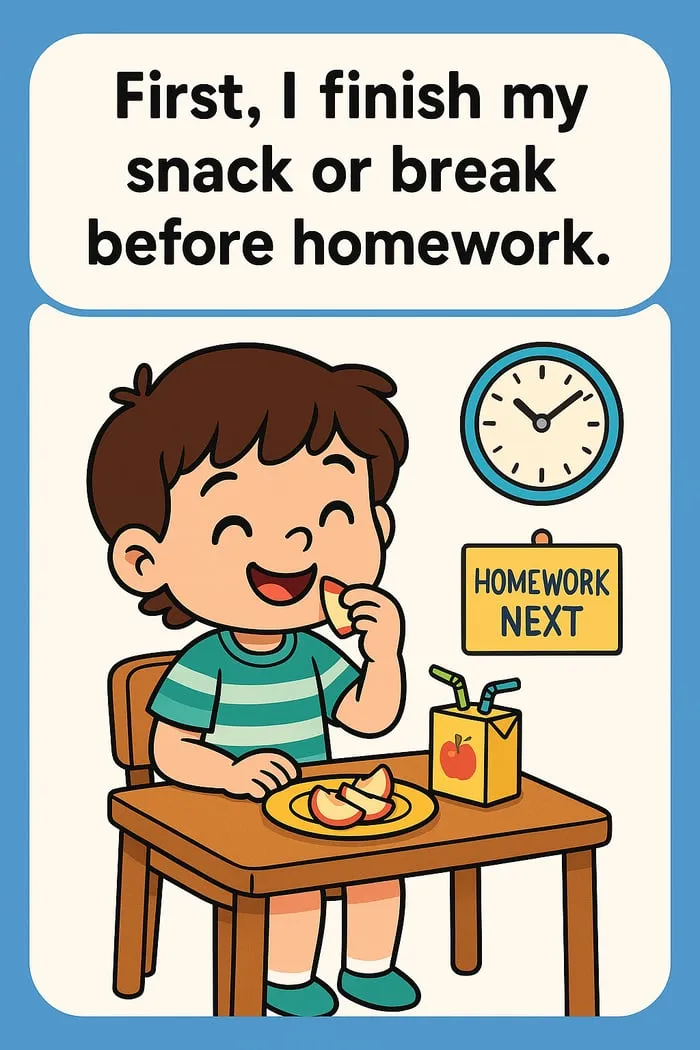
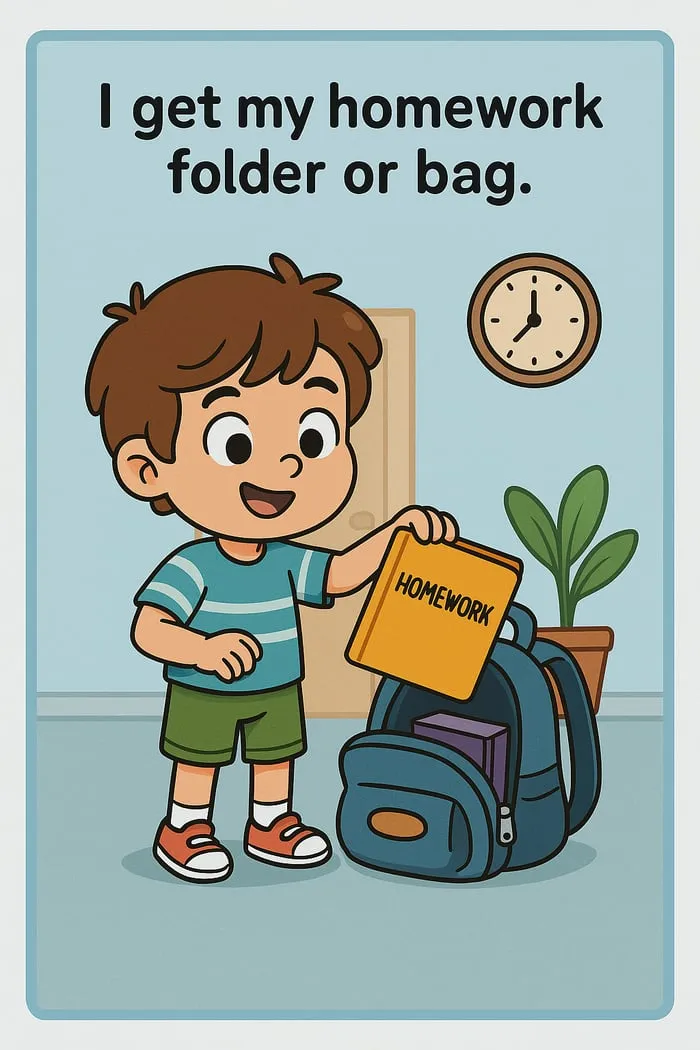
My Homework Routine: 12-Step Visual Cards: illustrated cards that guide children from finishing a snack to earning a reward, with planning steps, a built-in short break option, and a short first-person sentence on each card. Use them as a flip chart, a homework station visual, or individual cards.
Sources and scope
- HealthyChildren.org, American Academy of Pediatrics: parenting information on routines, school, and family life.
- Child Mind Institute: articles for families on focus, routines, and homework struggles.
- Understood.org: practical guidance for families of children who learn and think differently.
- U.S. Department of Education: general resources for families on supporting learning at home.
This guide covers building a visual homework routine at home or in an after-school setting. It does not cover diagnosis, attention or learning evaluations, or changes to homework amounts, which belong to teachers, school teams, and qualified professionals.
Key takeaways
- A homework routine for kids starts with a steady time and a ready homework spot.
- Visual steps turn “do your homework” into a clear path.
- Teach the routine, then step back gradually.
- Planned breaks and focus supports prevent frustration.
- End with the backpack and a reward, then review weekly.

Leave a Comment