

The freeze response in students is easy to miss and even easier to misread. Picture a grade 6 math lesson: the teacher calls on a student, and he simply stops. His eyes go blank, his shoulders curl forward, and he says nothing at all. To a busy adult, it can look like defiance or daydreaming. Often, it is neither.
This guide helps you see what is really happening and respond in a way that helps the student come back. By the end, you will be able to recognize common signs of freezing, track likely triggers, respond calmly in the moment, support a shame-free return, and build a simple plan with the student’s team. Examples are fictional. Adapt to the student’s goals and agreed supports. This is guidance, not a diagnosis.
At a glance
- A silent, still student may be in a stress response, not refusing.
- Watch for physical cues like shallow breathing, a hunched posture, and a blank stare.
- Track when freezing happens to find likely triggers.
- In the moment, lower demands and offer calm, quiet options instead of pushing.
- Afterward, help the student return with gentle, shame-free language.
1. Recognize the signs of a freeze response in students
When people feel threatened or overwhelmed, the body can react in different ways. Fight and flight are the reactions most adults know. Freeze is quieter. A freeze response in students can look like a child who has suddenly switched off.
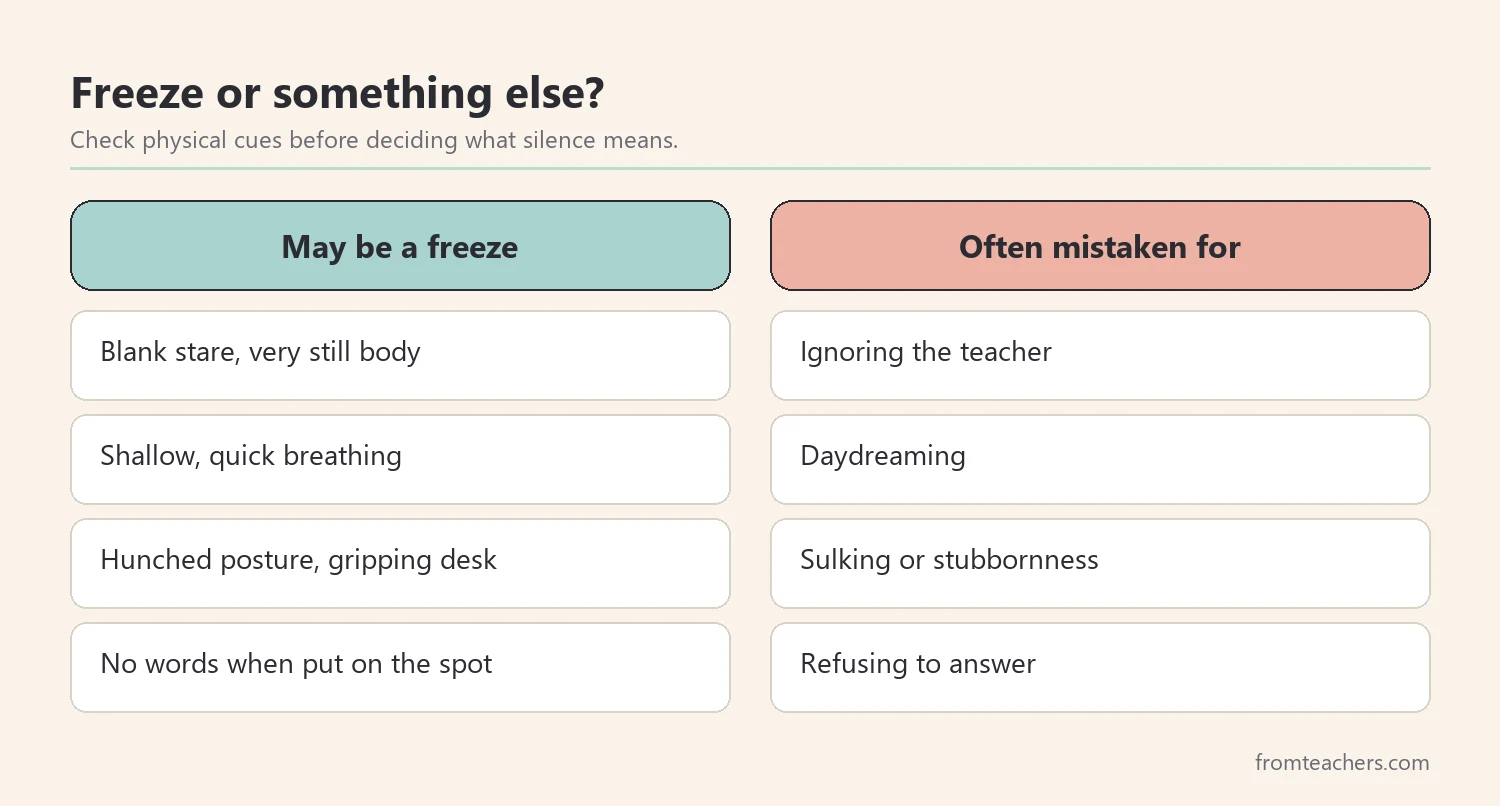
Because the freeze response in students is silent, it is often mistaken for something else. A teacher may think the student is being stubborn, ignoring instructions, or not paying attention. Pushing harder at that moment, with repeated questions or a louder voice, usually makes things worse rather than better.
Instead, learn to notice physical cues. Common signs include shallow breathing, a hunched or very still posture, a blank stare, and no response to questions. Some students may also look pale, grip their desk, or seem unable to move their hands.
Worked example: Jonah in math class
Jonah is in grade 6. His teacher, Ms. Hart, calls on him to share an answer in front of the class. Jonah stops writing, stares at his page, and does not speak. His breathing becomes quick and shallow.
In the past, Ms. Hart repeated the question twice and then moved on with a sigh. This time, she notices his stillness and his breathing. She quietly says, “I’ll come back to you,” and calls on someone else. Jonah does not have to perform while frozen, and the class moves on without attention on him.
2. Identify triggers behind the freeze response in students
The freeze response in students rarely comes out of nowhere. There are usually patterns, even if they are not obvious at first. Finding them helps you prevent many episodes before they start.
Keep a simple freeze response in students log for two weeks. Each time the student freezes, write the time, the activity, what happened just before, and how long it lasted. Keep entries short so the log is easy to maintain during a busy day.
Common triggers include being called on without warning, timed tasks, loud voices or sudden noise, unexpected changes, and correction in front of peers. However, every student is different, so let the log guide you rather than a general list.
Write down facts, not interpretations. For example, note “called on during math, silent for about three minutes” rather than “refused to answer.” Factual entries are easier to compare and fairer to the student. They also make conversations with families and colleagues calmer, because everyone is looking at the same simple record instead of competing impressions.
Worked example: Jonah’s two-week log
Ms. Hart logs 10 freeze episodes over two weeks. When she groups them, a pattern appears. Four happened when Jonah was called on without warning. Three happened during timed quizzes. Two happened when another student was corrected loudly nearby. One happened during an unplanned schedule change.
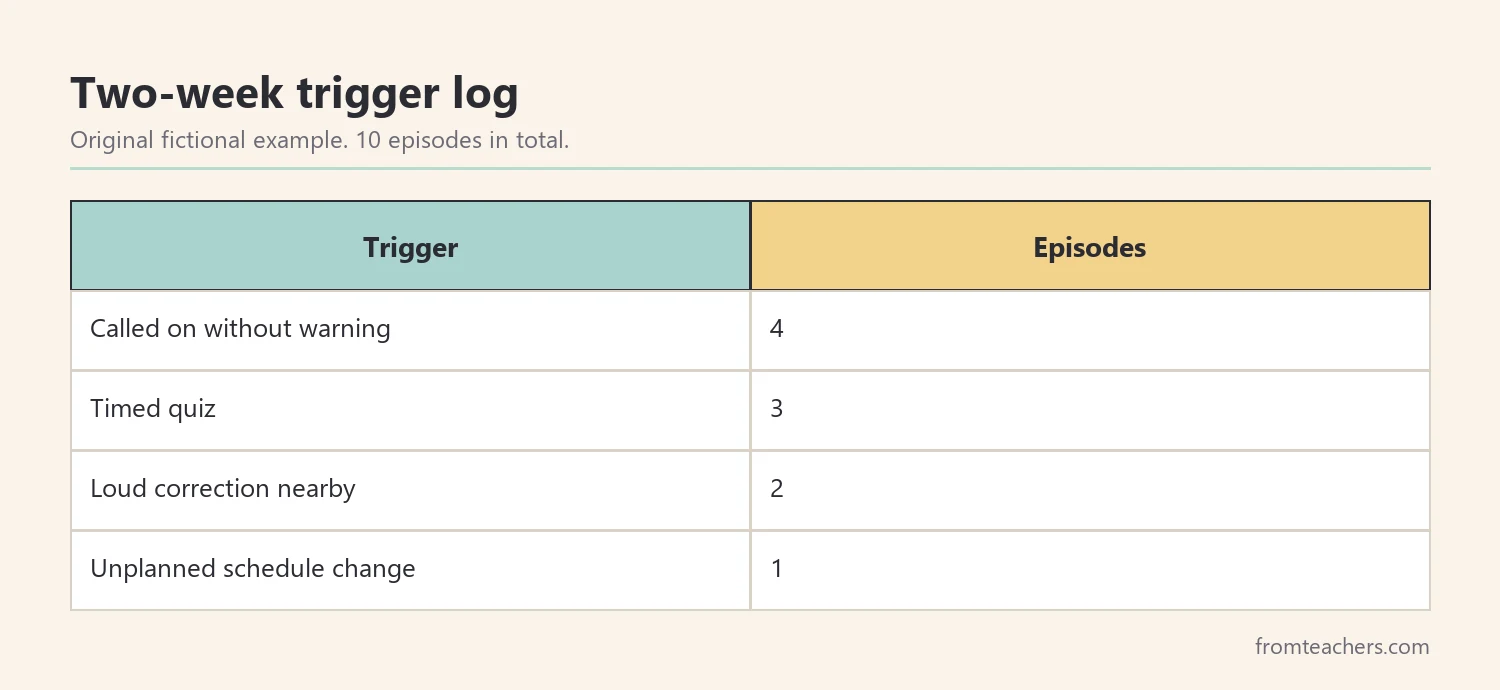
Four plus three plus two plus one makes ten. Seven of the ten episodes involved being put on the spot or working against a clock. That tells Ms. Hart exactly where to start making changes. Consequently, she decides to give Jonah warning before calling on him and to offer an untimed option for quizzes.
If you want a structured way to work through signs and triggers, the freeze response guide with Symptom, Aid, and Insight tables covers recognizing freezing, identifying triggers, and reacting to a student who goes silent.
3. Respond calmly to the freeze response in students
When you notice the freeze response in students, the goal is not to get an answer right away. The goal is to help the student feel safe enough to come back. Everything you do in the moment should lower pressure, not add to it.
First, stop the demand. Take the question off the table with a calm phrase like “I’ll check back with you.” Next, reduce attention. Move the class focus elsewhere so the student is not being watched. Then, offer a quiet option, such as a picture card, a nod, or pointing to a choice.
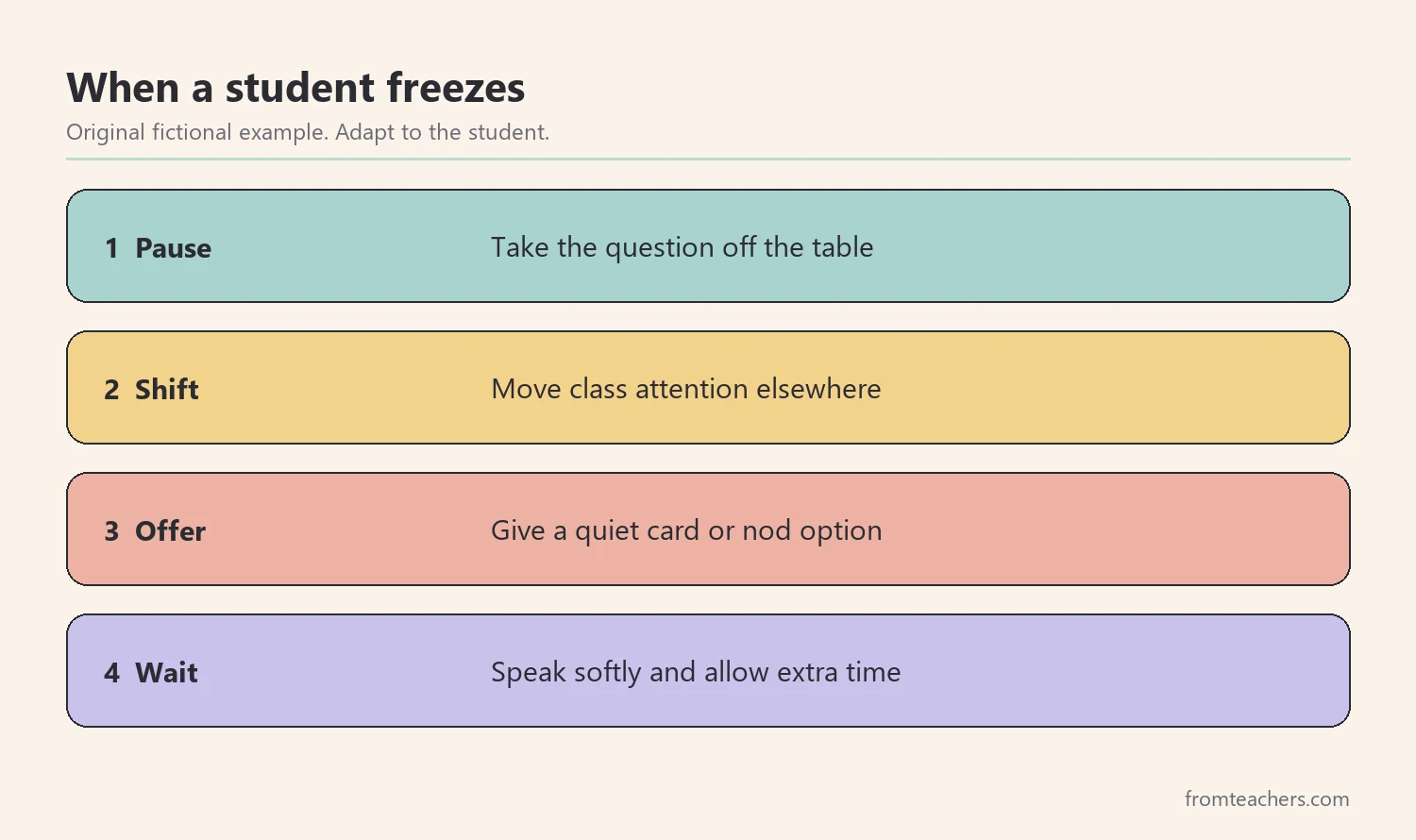
Your body language matters as much as your words. Speak softly and slowly. Get to the student’s eye level or sit nearby rather than standing over them. Give extra time to respond, and do not fill every silence.
Worked example: Jonah during a quiz
During a timed quiz, Jonah freezes again. Ms. Hart walks over calmly, crouches beside his desk, and says quietly, “No timer for you today. Take your time.” She places a small card on his desk with two pictures: a thumbs-up for “I’m okay” and a hand for “I need a minute.”
After a short pause, Jonah touches the hand picture. Ms. Hart nods and says, “That’s fine.” A few minutes later, he picks up his pencil and starts again. No one else in the class noticed.
What adults can do for themselves
Supporting the freeze response in students also asks something of the adults in the room. A silent student can feel frustrating, especially when the lesson is moving fast and other students are waiting. Noticing your own reaction is part of the skill.
Before you respond, take one slow breath yourself. A calm adult helps a stressed student feel safer, while a tense adult can add to the pressure without meaning to. In addition, remind yourself that the silence is not a personal challenge to your authority.
It also helps to agree on a plan in advance with any other adults who work with the student. Paraprofessionals, specialists, and substitutes should know the same calm steps, so the student meets the same response wherever they are. Consistency across adults makes the freeze response in students easier to support and, over time, less frequent.
4. Support a shame-free return after the freeze response in students
Coming back from a freeze can feel embarrassing for a student. Many worry that classmates noticed or that they are in trouble. How you handle the minutes afterward shapes how safe they feel the next time.
Use gentle, matter-of-fact language. Avoid asking “Why did you do that?” because the student may not know, and the question can feel like blame. Instead, try simple phrases that normalize the moment and point forward.
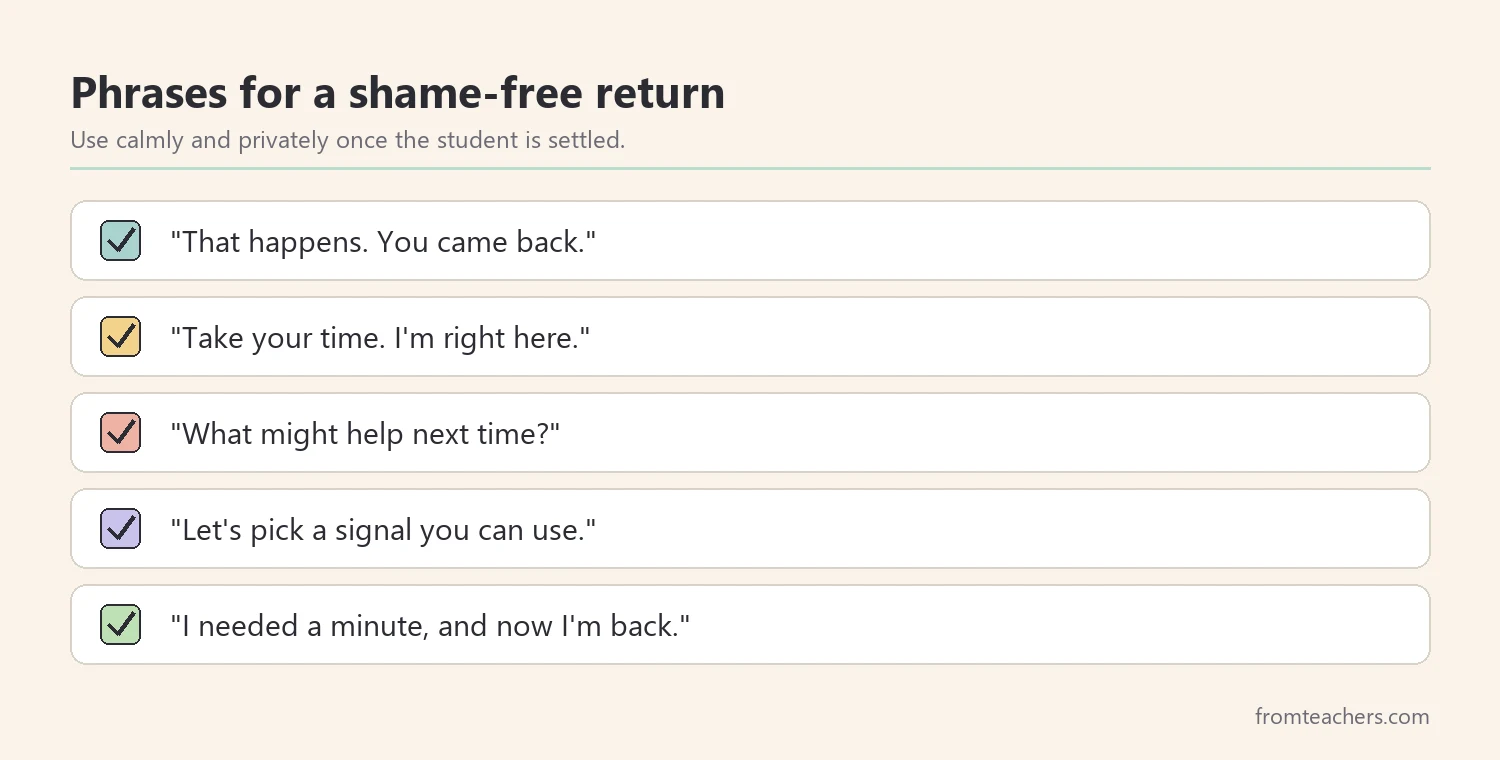
When the student is calm, and only then, you can talk briefly in private. Keep it short. Name what you saw without judgment, ask what might help next time, and agree on one small signal they can use. Some students also benefit from a short, kind way to take ownership, such as “I needed a minute, and now I’m back,” which builds confidence without shame.
Worked example: Jonah after class
After the lesson, Ms. Hart checks in with Jonah privately. She says, “Earlier it looked like things got hard. That happens. You came back, and that’s what matters.” Jonah shrugs, then says he hates being called on suddenly.
Together, they agree on a plan. Ms. Hart will tap his desk twice before calling on him, giving him a moment to prepare. Jonah will use the hand card if he needs more time. As a result, he has a clear, shared tool instead of a feeling of being caught out.
5. Plan ahead for the freeze response in students
Responding well to the freeze response in students in the moment is important. Even better is a plan that reduces how often freezing happens. A good plan uses what you learned from the trigger log and involves the people who know the student best.
Start with the classroom as a whole. Predictable routines, warnings before transitions, and calm correction help many students, not just one. Then add small supports for the student, like advance notice before being called on. Finally, for students with frequent freezing, work with the family, counselor, or special education team on an individual plan.
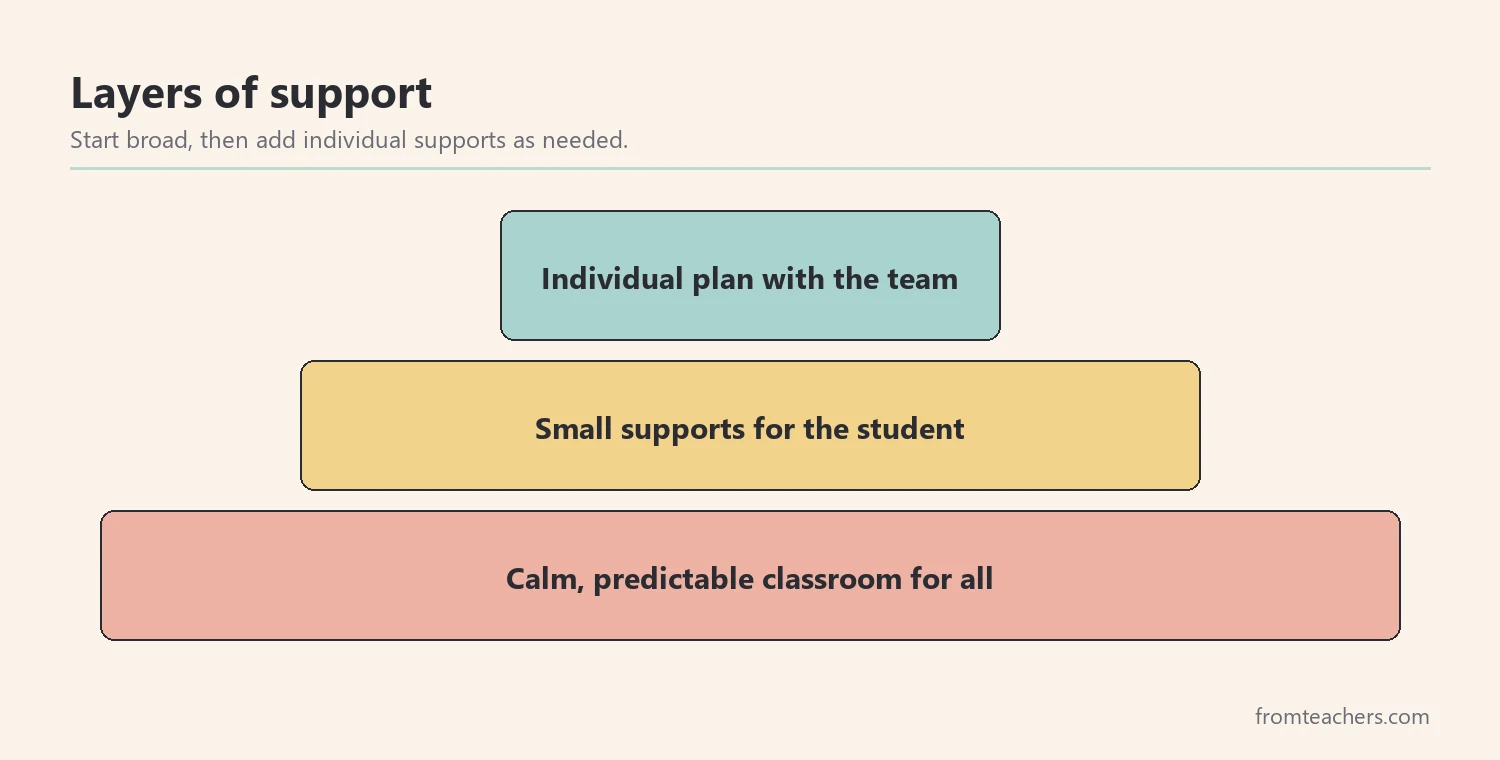
Review the plan every few weeks. Compare a new two-week log with the first one. If episodes are dropping, keep going. If not, look at which triggers remain and adjust one support at a time.
Worked example: Jonah’s next log
After four weeks with the desk-tap signal, the hand card, and an untimed quiz option, Ms. Hart logs another two weeks. This time, she records 4 episodes instead of 10. Two happened during a loud correction nearby, one during an unplanned change, and one when a substitute called on Jonah without warning.
Ms. Hart shares the logs with Jonah’s family and the school counselor. They agree to add the desk-tap signal to the substitute plan and to keep the other supports in place.
Common mistakes and how to avoid them
- Treating the freeze response in students as defiance. Fix: look for physical cues before deciding what the behavior means.
- Repeating the question louder. Fix: remove the demand and say you will check back.
- Talking it through in the moment. Fix: wait until the student is calm and talk privately.
- Asking “why” right away. Fix: use gentle, forward-looking phrases instead.
- Making the plan alone. Fix: involve the student, family, and school team.
Questions teachers and parents ask about the freeze response in students
Is the freeze response in students the same as refusing to work?
No. Refusal is usually a choice, while freezing is often a stress reaction the student cannot easily control. Looking for physical cues, like shallow breathing and a blank stare, helps you tell the difference.
Which students are more likely to freeze?
Any student can show the freeze response under enough stress. Students with anxiety, past trauma, or sensory sensitivities may freeze more often. Avoid labeling, and focus on the patterns you observe.
How long does a freeze episode last?
The length of the freeze response in students varies from child to child and from moment to moment. Some students return in seconds, while others need several minutes. A log helps you learn what is typical for each child.
What can parents do at home?
Parents can notice signs of the freeze response in students at home, such as when their child goes quiet under pressure, and use the same calm approach: lower demands, offer time, and talk later. Sharing what works at home with the teacher helps build a consistent plan.
When should I involve the school team?
If freezing happens often, lasts a long time, or affects learning and friendships, bring in the counselor, family, and special education team if the student has one. They can help build a plan and decide whether further support is needed.
Related reading: Essential Trauma-Informed Teaching Strategies for Modern Classrooms, Meltdowns vs Tantrums: A Guide to Understanding and Responding, and Managing Sensory Overload: Practical Strategies for Autism and ADHD.
A companion resource for the freeze response in students:
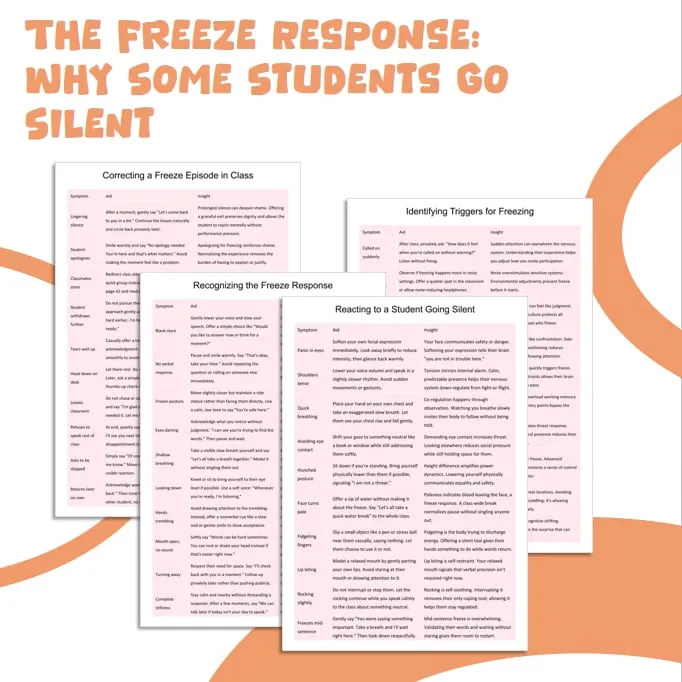
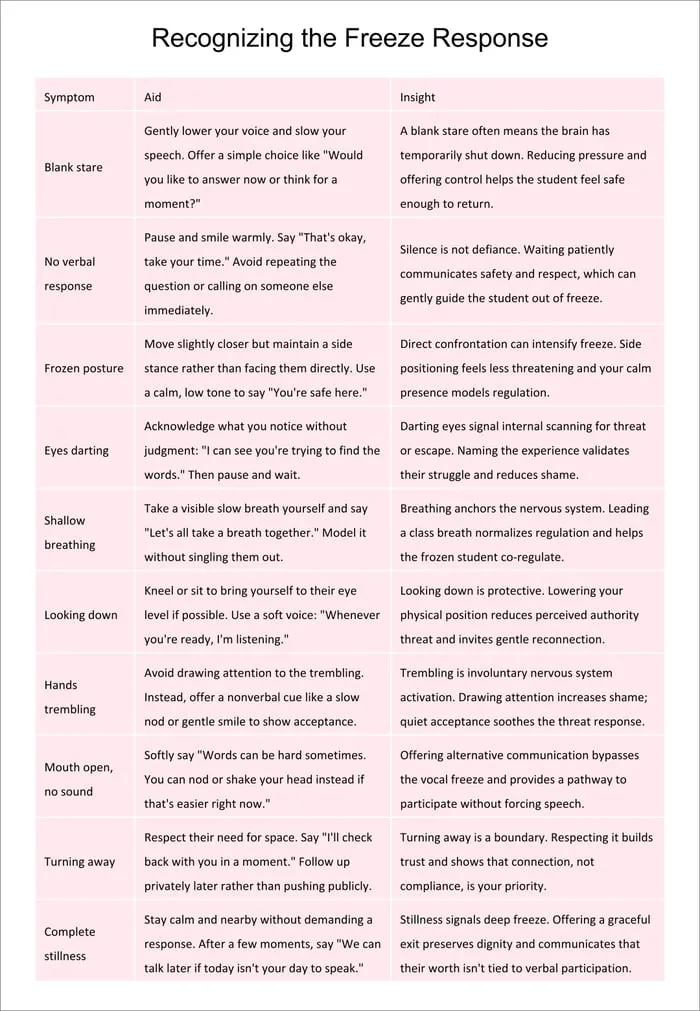
The Freeze Response: Why Some Students Go Silent: 12 pages of Symptom, Aid, and Insight tables on recognizing freezing, identifying triggers, and reacting to a student who goes silent, plus shame-free language for students and a guide for an episode already in progress.
Sources and scope
- National Child Traumatic Stress Network: resources for educators and families on how stress and trauma can affect children.
- IRIS Center, Vanderbilt University: free modules on classroom behavior and supportive practices.
- Understood.org: practical guidance on anxiety, attention, and learning differences.
- IDEA, U.S. Department of Education: the law behind special education services and individual plans.
This guide covers recognizing and responding to freezing in everyday school settings. It does not cover diagnosis, therapy, or crisis response, which belong to qualified professionals and the student’s team.
Key takeaways
- The freeze response in students often looks like defiance but is usually a stress reaction.
- Physical cues help you recognize freezing early.
- A short trigger log reveals patterns you can act on.
- In the moment, lower demands and offer quiet options.
- Support a shame-free return and plan ahead with the team.








Leave a Comment