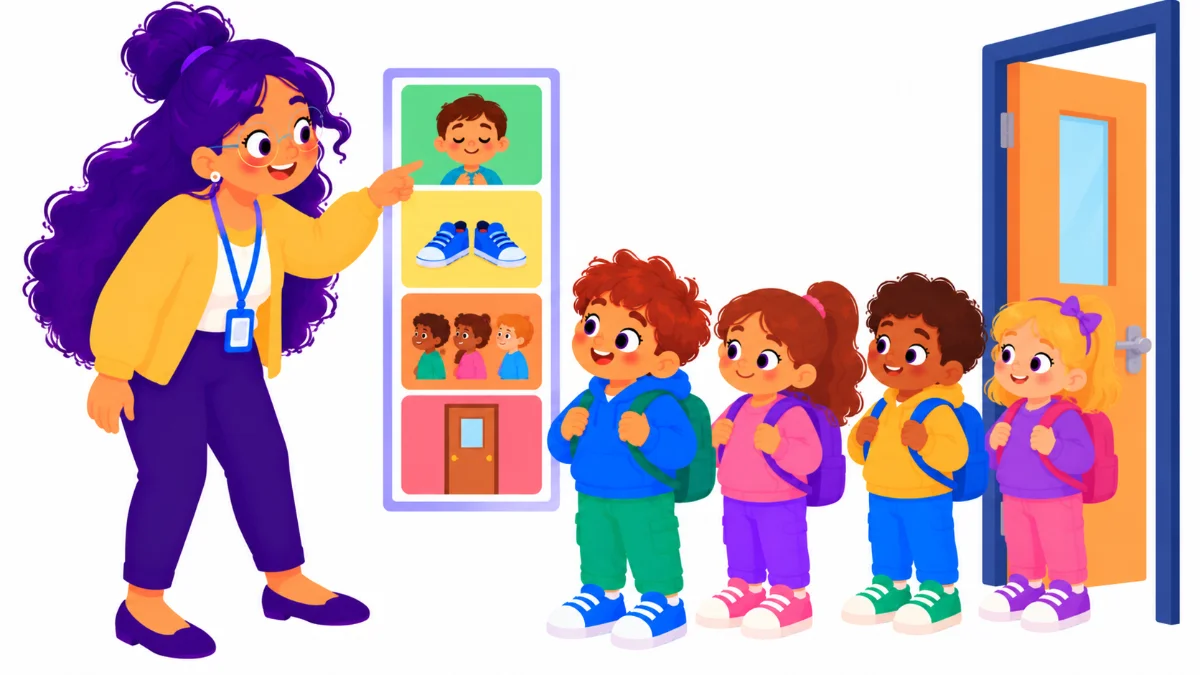

Positive behavior reminders tell children what to do, not just what to stop doing. Picture a first-grade class lining up for lunch. The teacher calls out “No pushing! No shouting!” and the line gets louder anyway. The next day she says, “Hands and feet to yourself, and whisper voices,” and points to a picture on the wall. The line is calmer, because the children know exactly what success looks like.
This guide shows you how to use positive behavior reminders in six steps: choose clear, positive expectations, teach each one directly, post them and point to them, acknowledge positive choices, re-teach calmly when needed, and review progress. By the end, you will have a simple system that helps everyone feel safe, respected, and ready to learn.
Examples are fictional. Adapt to the student’s goals and agreed supports. This is guidance, not a diagnosis.
At a glance
- Positive wording shows children what success looks like.
- Expectations need to be taught, practiced, and re-taught.
- Visual reminders let you prompt without a lecture.
- Noticing positive choices works better than only correcting.
- Positive behavior is a skill that grows with practice and support.
1. Choose clear positive behavior reminders
First, decide which expectations matter most in your room. Common ones include using kind words, keeping hands and feet to yourself, listening when someone is speaking, following directions the first time, using the right voice level, and taking care of classroom materials.
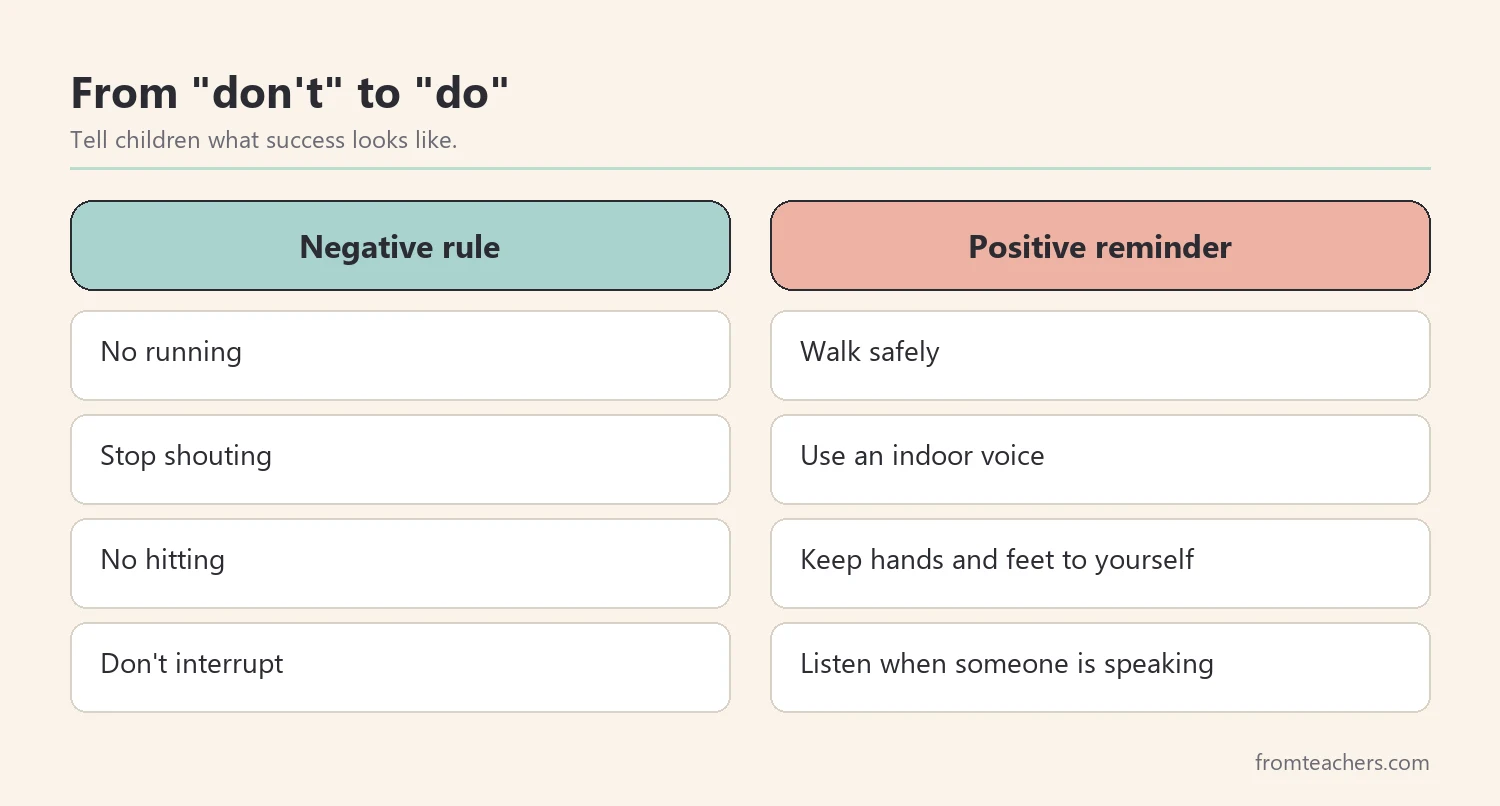
Next, word each expectation in the positive. “No running” becomes “Walk safely.” “Stop shouting” becomes “Use an indoor voice.” Positive wording tells children what to do, which is much easier to follow than a list of things to avoid.
Also, add a short reason to each expectation. “Kind words build trust and make our classroom feel welcoming.” Children follow rules more willingly when they understand why the rules exist. Reasons also turn positive behavior reminders into small lessons about respect and safety, not just orders.
In addition, keep the list manageable. Many classrooms work well with a short set of core expectations, and some teachers add a few more over time. What matters is that every child can remember and picture them.
A ready-made set can save planning time. The positive behavior reminders poster with classroom expectations for kids lays out nine encouraging choices, each with a short description and a “why it matters” note.
Worked example. Ms. Hart teaches a fictional grade 1 class. One student, Eli, often pushes in line and calls out during stories. Ms. Hart rewrites her old rules as positive behavior reminders and adds a reason to each one before the new week begins.
2. Teach each reminder directly
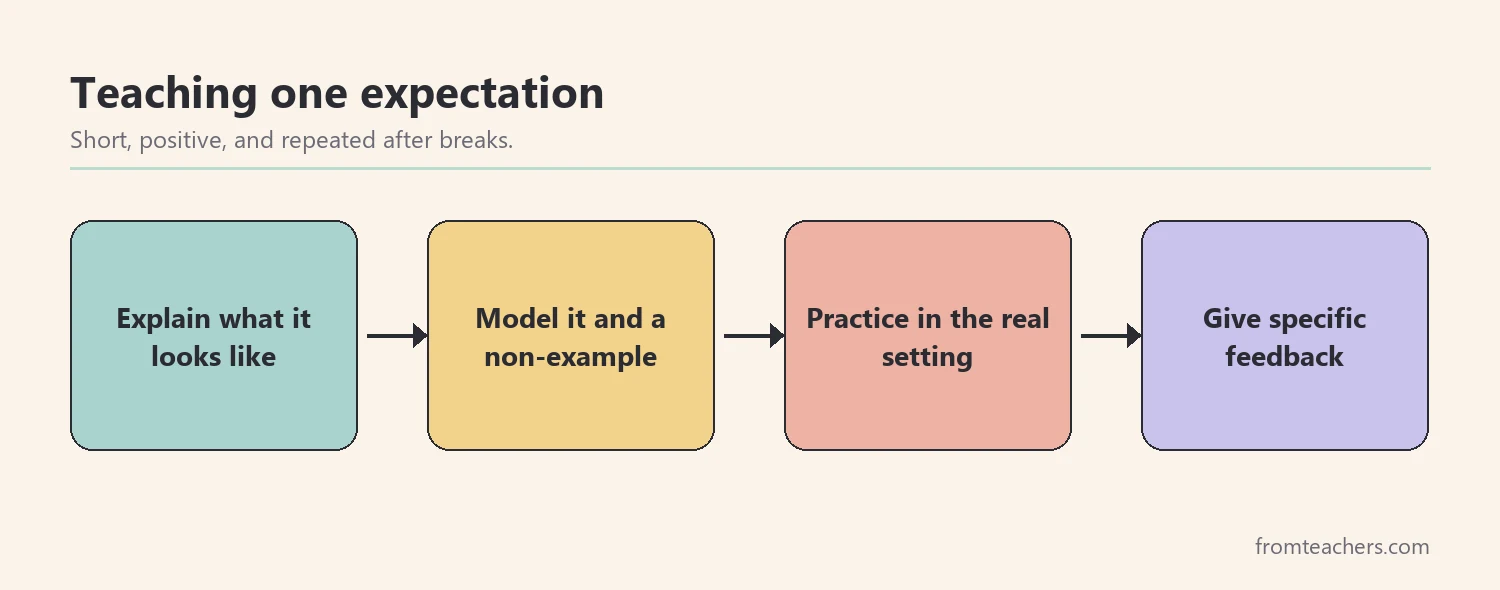
Posting rules is not the same as teaching them. So, teach each expectation the way you would teach a reading skill. Explain it, model it, let children practice it, and give quick feedback.
First, explain what the expectation looks and sounds like. “Listening when someone is speaking means eyes toward the speaker, a quiet body, and waiting your turn to talk.” Then model it yourself, and also model a non-example so children can see the difference.
Next, let children practice in a real setting. Practice lining up, partner talk, and cleaning up. Make it short and positive. Finally, give specific feedback: “You waited for your turn to talk. That shows respect.”
Also, teach one or two positive behavior reminders a day rather than all at once. Spread the lessons across the first weeks, and revisit them after long breaks. Short, regular lessons are easier for young children to remember.
Worked example. On Monday, Ms. Hart teaches “Keep hands and feet to yourself.” She models a safe line, then shows a silly non-example, and the class laughs. Then each child practices walking to the door with a safe space around them. Eli practices twice and gets specific praise both times.
3. Post the positive behavior reminders and point to them
Once expectations are taught, make them visible. Post the reminders at children’s eye level, near the areas where they matter most, such as the carpet, the door, or the supply shelf.
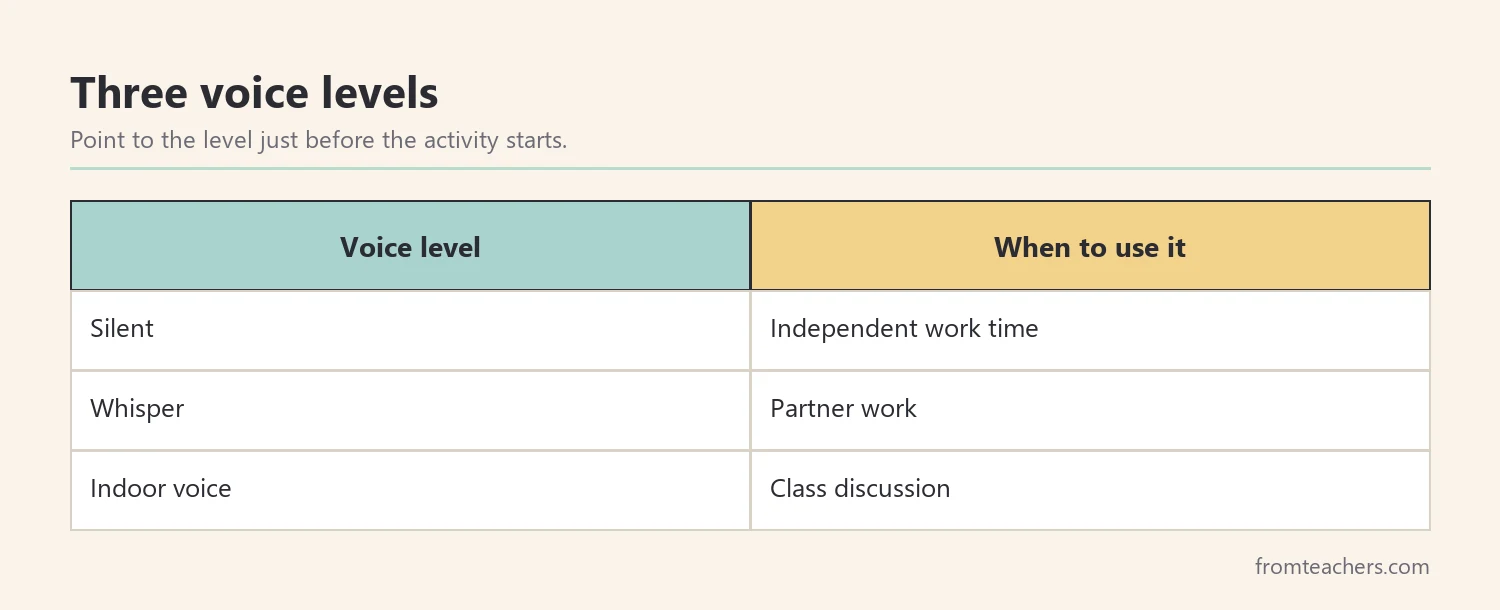
Then, use the visual instead of a lecture. A quiet point to “Use an appropriate voice level” often works better than raising your own voice. It gives the child a reminder without drawing attention from the whole class.
Also, link the reminders to routines. Before partner work, point to the voice levels. Before cleanup, point to “Take care of classroom materials.” Prompting just before the moment works better than correcting afterward.
In addition, refer to the posted positive behavior reminders by name. “Which reminder helps us right now?” invites children to think, rather than simply obey. Over time, many children start reminding themselves.
Worked example. Before story time, Ms. Hart points to “Listen when someone is speaking” and asks, “What does this look like?” Eli says, “Quiet body.” During the story, when Eli starts to call out, she simply taps the picture. He stops and raises his hand.
4. Notice and acknowledge positive choices
Children repeat what gets attention. So, make positive choices more noticeable than mistakes. Give specific praise that names the behavior: “You used kind words when you asked for the glue.” Specific praise teaches more than “Good job.”
Next, aim to notice positive choices often. Many schools that use PBIS encourage staff to acknowledge expected behavior frequently, and to keep corrections calm and brief. You do not need to count every comment, but a quick self-check helps.
Also, celebrate effort and growth, not just perfection. The final reminder on many charts is about noticing growth, acknowledging small wins, and being proud of progress. Recognizing effort builds motivation and resilience.
In addition, vary how you acknowledge. Some children love public praise, while others prefer a quiet thumbs-up or a note. Learn what works for each child, especially those who find positive behavior reminders hardest to follow.
| Behavior seen | Specific praise |
|---|---|
| Waited for a turn | “You waited your turn. That shows respect.” |
| Cleaned up the blocks | “You put the blocks back. Our room is ready.” |
| Used calm words in a conflict | “You used calm words. That keeps friendships strong.” |
Worked example. Ms. Hart makes a point of catching Eli doing the right thing. When he walks safely to the door, she says, “Safe hands and feet, Eli. Thank you.” Eli smiles and keeps a safe space for the rest of the walk.
5. Re-teach and redirect calmly
Mistakes will happen, because positive behavior is a skill that grows with practice. When a child forgets, treat it as a teaching moment. Stay calm, keep it brief, and name the expected behavior: “Walking feet, please.”
Next, re-teach privately when needed. A short, quiet practice after the moment, such as walking back to the door and trying again, teaches more than a long talk. Then give specific praise for getting it right.
Also, look for patterns. If a child struggles with the same reminder again and again, ask what is getting in the way. Is the line too crowded? Is the story too long? Small changes to the setting often help as much as reminders do.
Meanwhile, teach the problem-solving reminders as tools. “Be a problem solver” and “Choose kindness in conflicts” give children something to do when things go wrong: try calming strategies, think before reacting, take a break if needed, and look for win-win solutions.
Worked example. One day Eli pushes a classmate at the sink. Ms. Hart calmly says, “Hands to yourself. Let’s try again.” Eli walks back and waits his turn. Later, she notices the sink line is crowded and adds a second waiting spot, which helps the whole class.
6. Review progress and refresh positive behavior reminders
Finally, check how things are going. For a few weeks, keep a simple tally for one or two students who need extra support. Count how often you needed to remind them and how often you acknowledged a positive choice.
Then, use the data to adjust. If reminders are dropping, keep going. If they are not, re-teach the expectation, change the setting, or talk with the family and school team about extra support.
Also, refresh positive behavior reminders after holidays and long weekends. A quick re-teaching lesson on the first day back prevents many problems later. Ask children to act out each reminder and explain why it matters, so the review feels active and fun.
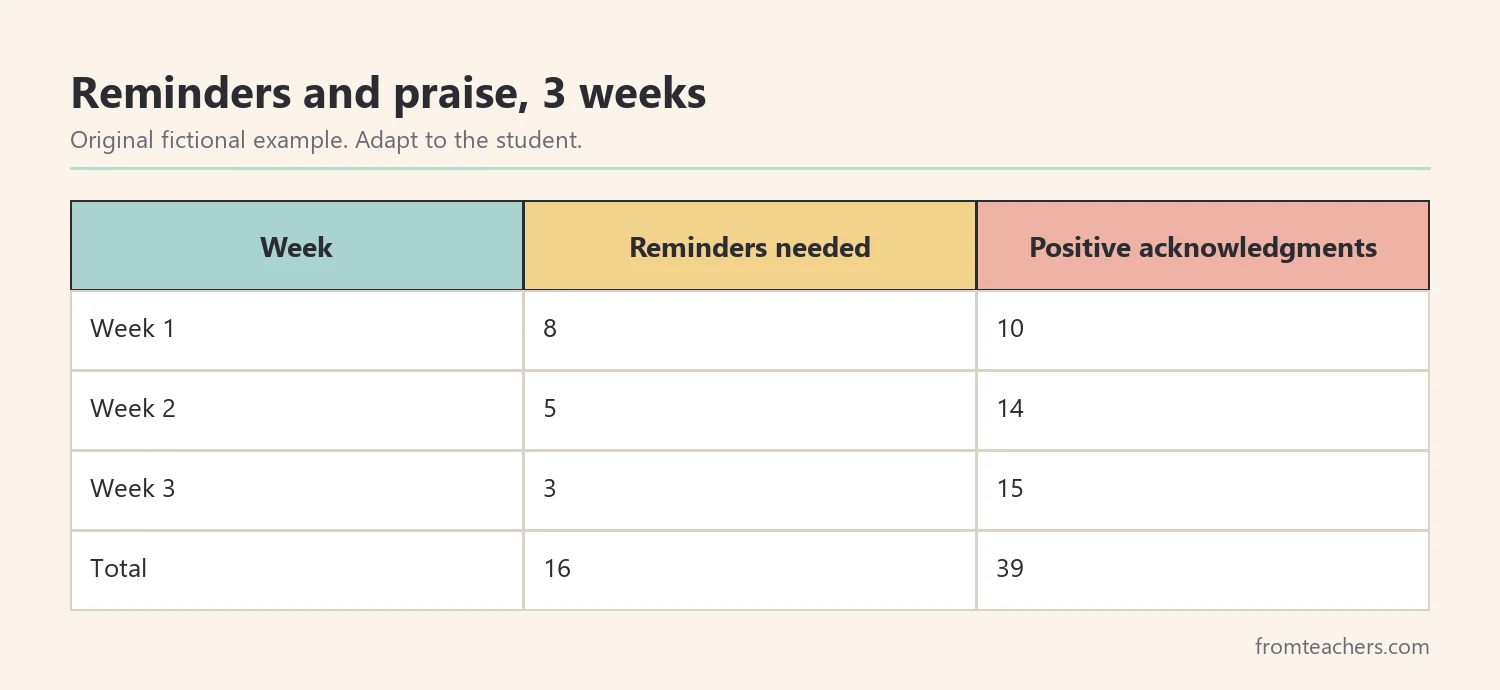
Worked example. Ms. Hart tallies Eli’s “hands and feet” reminders for three weeks: 8 in week 1, 5 in week 2, and 3 in week 3, which is 16 in total. Over the same weeks, she acknowledges his positive choices 10, 14, and 15 times, which is 39 in total. Eli’s reminders drop while praise stays high.
Sharing the reminders with families
Families can use the same language at home. Send a short note with the classroom positive behavior reminders and the reason for each. Parents can then say “Use kind words” or “Take care of your things” with the same meaning children hear at school.
Also, share good news, not only problems. A quick message such as “Eli used calm words in a conflict today” builds trust and gives families something to praise at home.
Adapting reminders for students with additional needs
Some children need more than a class poster. For a child with limited language, pair each reminder with a picture and a gesture, and use the same few words every time. For a child who forgets quickly, place a small copy of two or three positive behavior reminders on the desk or in a lanyard.
Also, teach in smaller pieces. A child might practice “Keep hands and feet to yourself” in line for a week before working on it at the carpet. Short, repeated practice in one setting builds success before you move on.
In addition, check that the expectation is realistic. A child with sensory needs may find a crowded line very hard. Adjusting the setting, such as letting the child stand at the front or back, often helps more than extra reminders. When in doubt, plan with the family and the support team so positive behavior reminders fit each child’s goals.
Common mistakes and how to avoid them
- Rules written as “don’ts.” Children do not know what to do. Fix: word every reminder positively.
- Posting without teaching. The chart becomes wallpaper. Fix: explain, model, practice, and give feedback.
- Only noticing mistakes. Attention goes to the wrong behavior. Fix: acknowledge positive choices often.
- Long lectures. Children tune out. Fix: point to the visual and keep it brief.
- Never re-teaching. Skills fade after breaks. Fix: refresh expectations after holidays.
Questions teachers and parents ask about positive behavior reminders
How many expectations should a classroom have?
Keep the list short enough for children to remember and picture. Some classrooms use a small set of core rules, while others post a few more detailed reminders. Teach each one well rather than adding many at once.
Do positive behavior reminders work with older students?
Yes, with age-appropriate wording and visuals. Older students also benefit from clear expectations, reasons, and specific feedback.
Is this the same as PBIS?
Clear, positively stated, taught expectations are a core part of PBIS. A schoolwide PBIS system also includes team planning, data, and tiered support, which go beyond a single classroom poster.
What if one child keeps struggling?
Re-teach privately, adjust the setting, and track a few simple numbers. If problems continue, talk with the family and the school team about extra support.
Should I use rewards?
Specific praise is often enough. Some classrooms add simple rewards, but praise and recognition of effort should always come first.
Related reading: Moving Beyond Shame and Behavior Charts: Positive Alternatives for Effective Classroom Management, Meltdowns vs Tantrums: A Guide to Understanding and Responding, and Essential Trauma-Informed Teaching Strategies for Modern Classrooms.
A companion resource for positive behavior reminders:
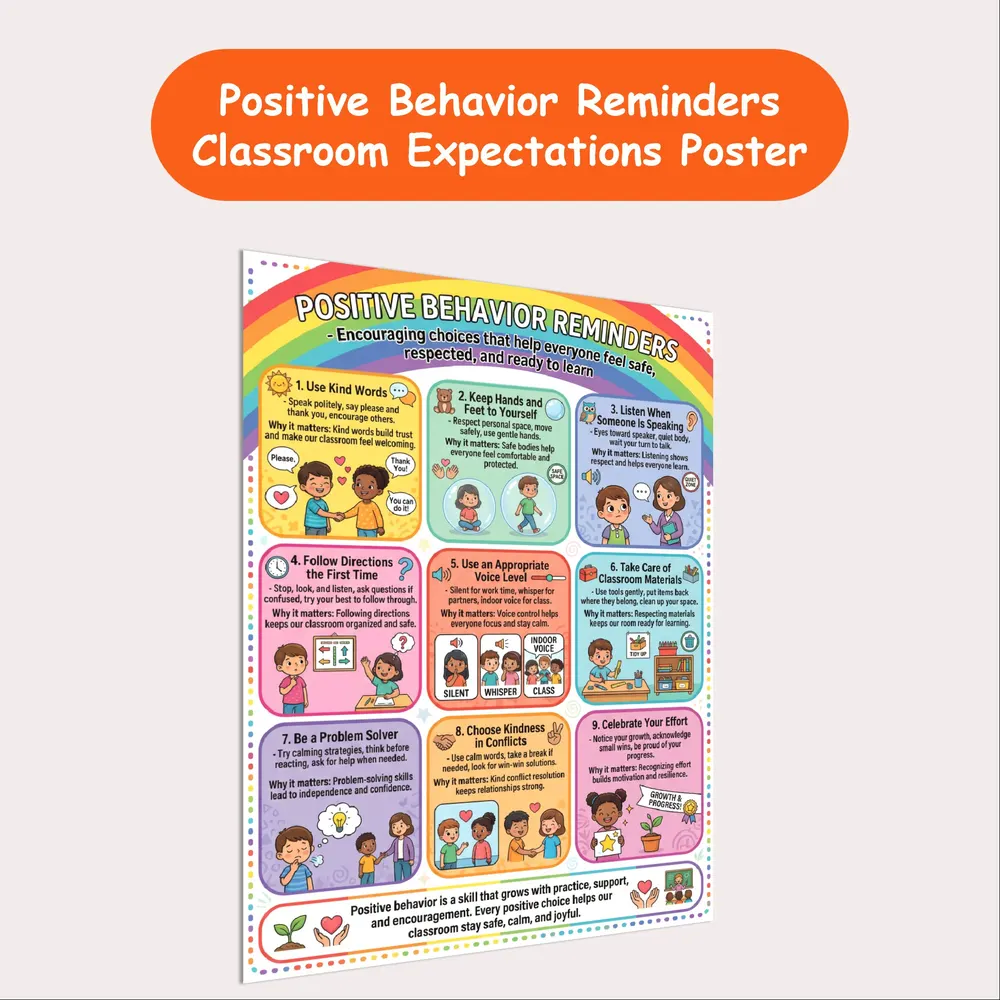
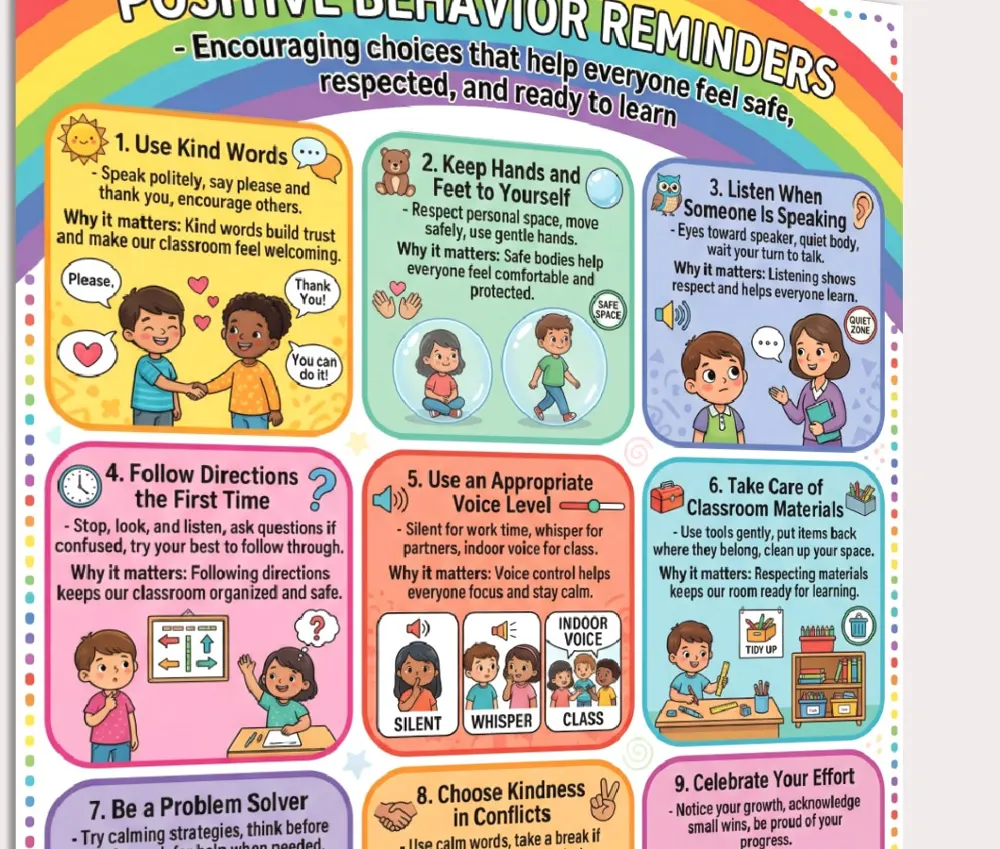
Positive Behavior Reminders Poster: a printable classroom poster with nine encouraging choices that help everyone feel safe, respected, and ready to learn. Each reminder has a short description and a “why it matters” note.
Sources and scope
- Center on PBIS: national technical assistance center on positive behavioral interventions and supports.
- IRIS Center, Vanderbilt University: free modules on classroom behavior management and expectations.
- CASEL: a leading organization for social and emotional learning.
- Understood.org: family-friendly information on behavior, learning, and thinking differences.
This guide covers teaching and reinforcing positive classroom expectations. It does not replace a schoolwide PBIS system, a behavior plan, or individualized support from a student’s team.
Key takeaways
- Word positive behavior reminders as clear “do” statements with reasons.
- Teach each expectation with explanation, modeling, and practice.
- Point to visuals instead of lecturing.
- Notice positive choices often and specifically.
- Re-teach calmly, track a few numbers, and refresh after breaks.








Leave a Comment