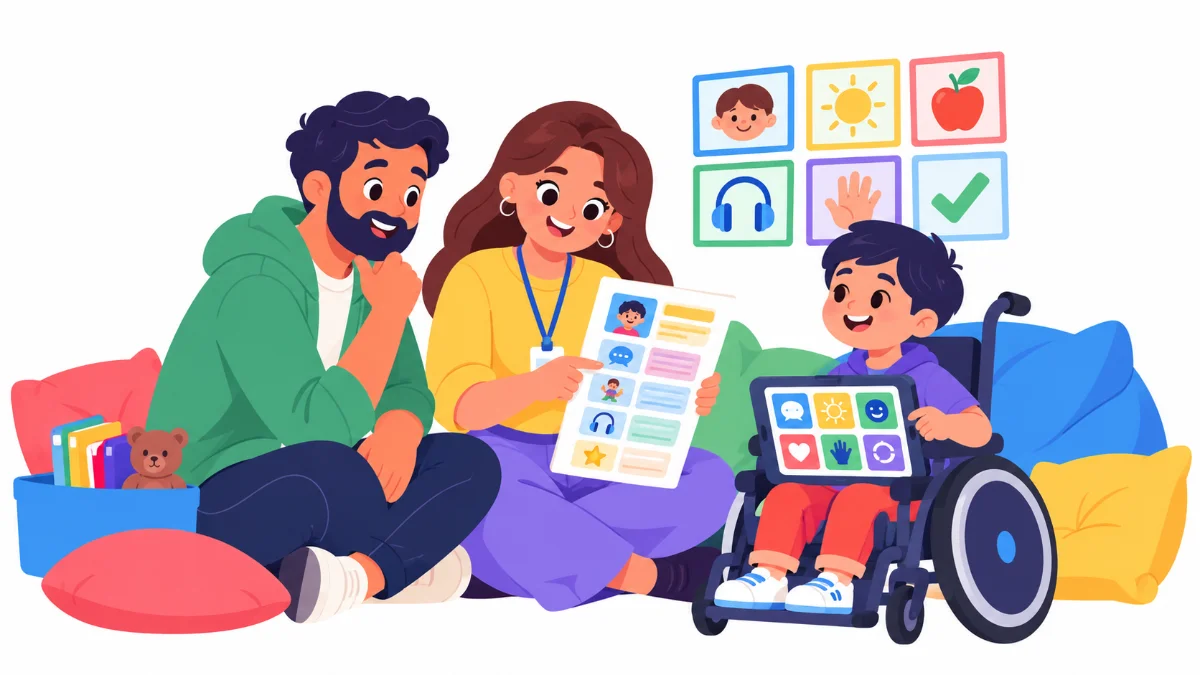

These multiple disabilities parent tips start from one truth: you know your child better than anyone on the school team. Picture the first week of a new school year. Your daughter uses a wheelchair, communicates with a tablet and a few signs, and needs careful positioning to eat. The team is kind but new, and you find yourself repeating the same information to five different people.
This list gives families ten practical ways to work with the school, ordered from the first steps before school starts to habits that last all year. Each tip explains what to do, why it helps, and how one fictional family used it. You will meet Noor, a fictional eight-year-old with cerebral palsy, a visual impairment and complex communication needs, and her mother, Samira.
Examples are fictional. Every child is different; adapt these ideas to your child’s needs, medical advice and the supports agreed in the IEP. This is guidance, not medical or legal advice.
At a glance
- You know your child best; a one-page profile helps the school learn that fast.
- Agree on one communication system that travels between home and school.
- Ask how seating, positioning and sensory needs fit into the whole school day.
- A short daily home-school note beats long emails after problems.
- Review a few clear priorities each term instead of everything at once.
How we ordered these tips
We did not rank these tips by importance, because every family’s priorities differ. Instead, we ordered them by when families usually need them: tips 1 to 5 help in the first weeks with a new team, and tips 6 to 10 are habits for the rest of the year.
Under IDEA, “multiple disabilities” describes a combination of impairments that together create needs that cannot be met in a program for only one of them. In daily life, that means communication, movement, sensory needs, health and learning all affect each other. Therefore, good teamwork matters even more.
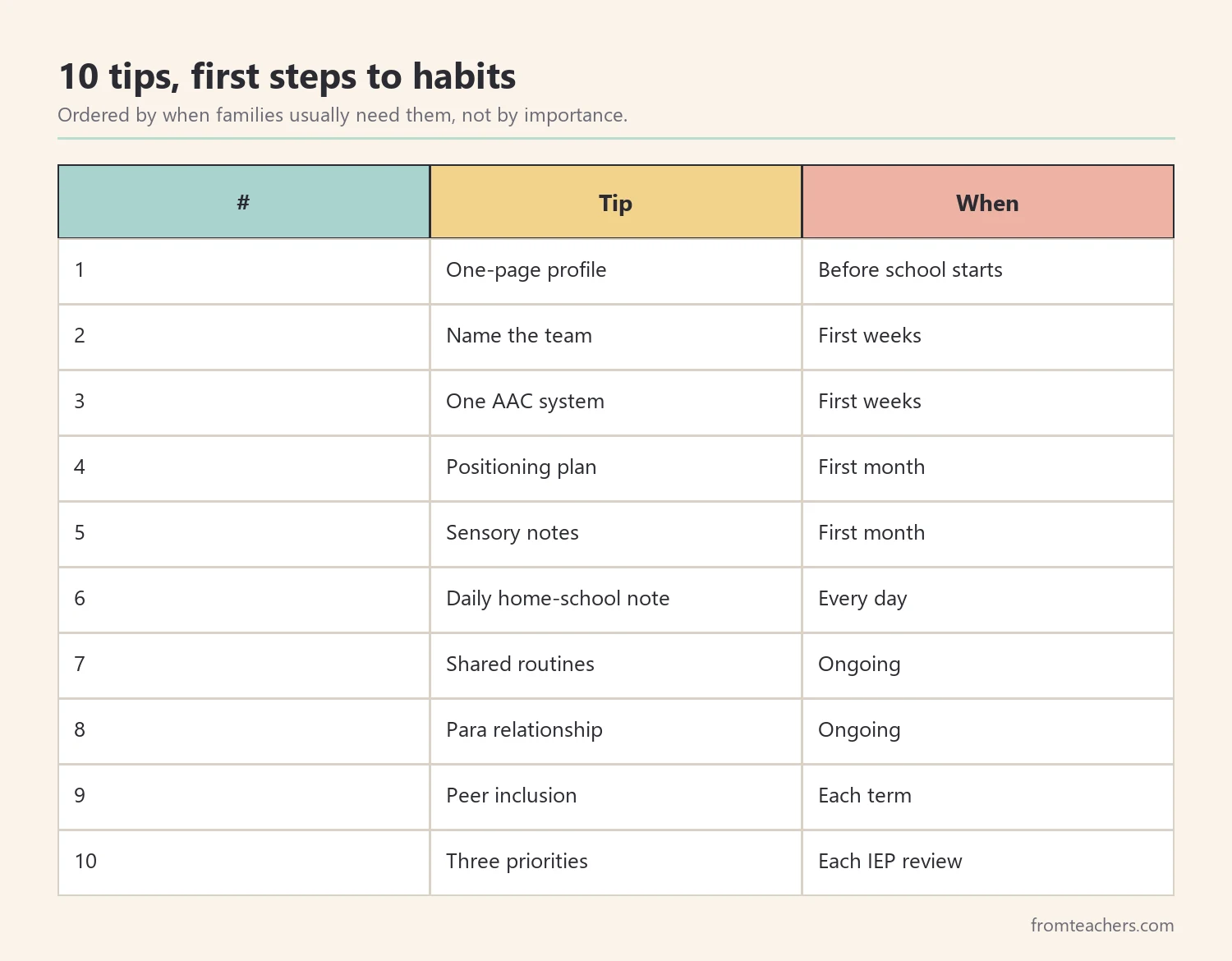
1. Write a one-page profile
What it is: a single page that introduces your child: how they communicate, what helps, what upsets them and key health needs.
Why it helps: new staff, substitutes and therapists can learn the essentials in two minutes instead of finding out by trial and error.
How to do it: use short headings and a photo. Write in your child’s voice if you like: “I say yes by looking up.” Give a copy to every adult who works with your child.
Example: Samira’s profile for Noor included “When I rub my eyes, I am tired, not bored.” The para said it was the most useful sentence she had read all week.

2. Learn who is on the team
What it is: a simple list of names and roles: teacher, para, speech-language pathologist, occupational and physical therapists, vision specialist, nurse.
Why it helps: children with multiple disabilities often have many adults involved. Knowing who does what means you know who to ask.
How to do it: ask the case manager for the list and the best way to contact each person. Keep it on your fridge.
3. Agree on one communication system
What it is: the same AAC system, symbols and core words used at school and at home.
Why it helps: communication grows when a child sees the same system modeled everywhere. If the device stays in a school cupboard overnight, home practice stops.
How to do it: ask the speech-language pathologist which words the team is modeling this month. Use the same words at home during meals, play and bath time.
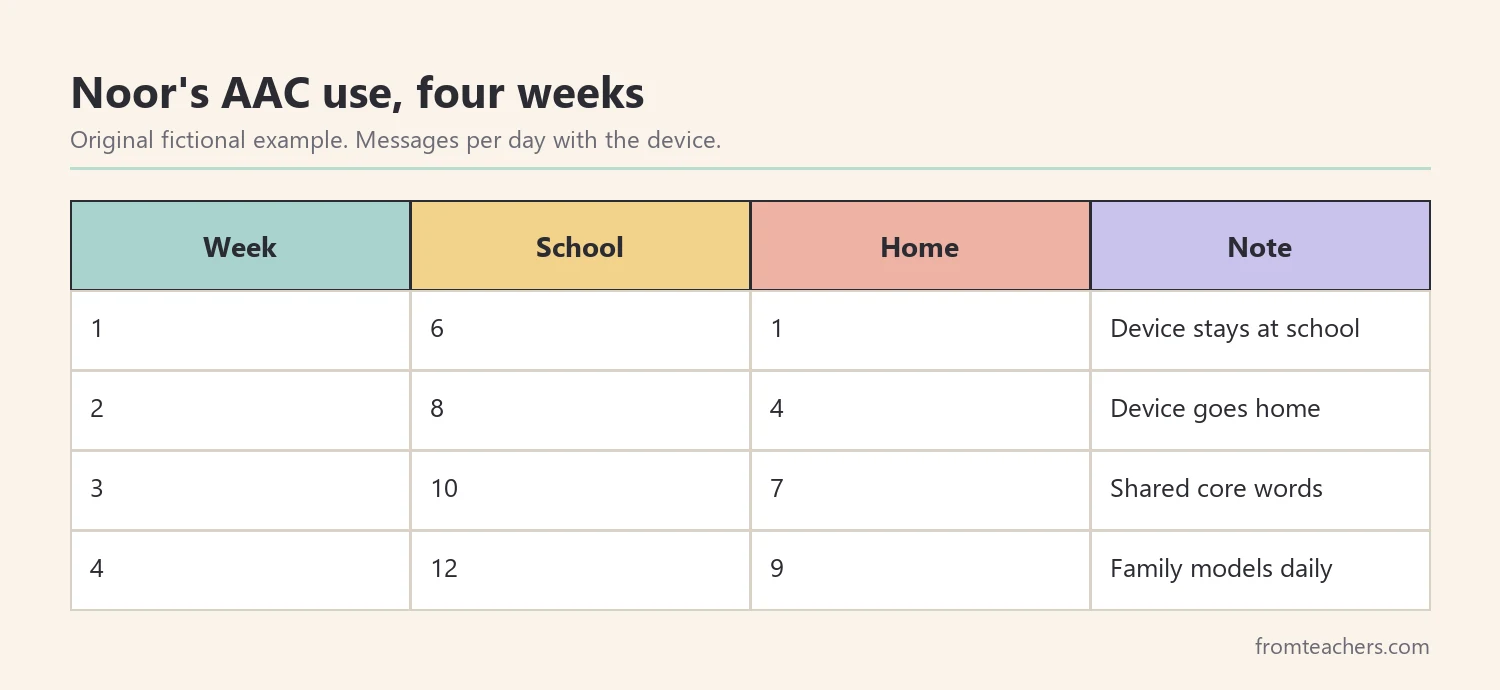
Example: Noor’s device used to stay at school. After the team agreed to send it home, her messages at home rose from about one a day to nine by week four.
4. Ask about seating and positioning across the day
What it is: a clear plan for how your child sits, moves and changes position during lessons, meals and breaks.
Why it helps: good positioning supports comfort, breathing, eating, attention and access to materials and devices. It also reduces fatigue.
How to do it: ask, “Where does my child sit for each part of the day, and who helps with changes?” Share any guidance from your child’s physical or occupational therapist.
A practical way to bring these pieces together is the multiple disabilities toolkit with AAC, access and daily plans, which combines seating, positioning, communication access and a one-page daily plan template in one guide that families and teachers can read together.
5. Share sensory notes
What it is: a short list of sounds, lights, touch and movement your child seeks or avoids.
Why it helps: sensory overload can look like distress, sleepiness or “not paying attention.” Shared notes help staff read your child accurately.
How to do it: list three things that calm your child and three that overwhelm them. Update the list when you notice changes.
Example: Samira noted that Noor startles at sudden loud sounds. The team began warning her with a touch cue before the bell.
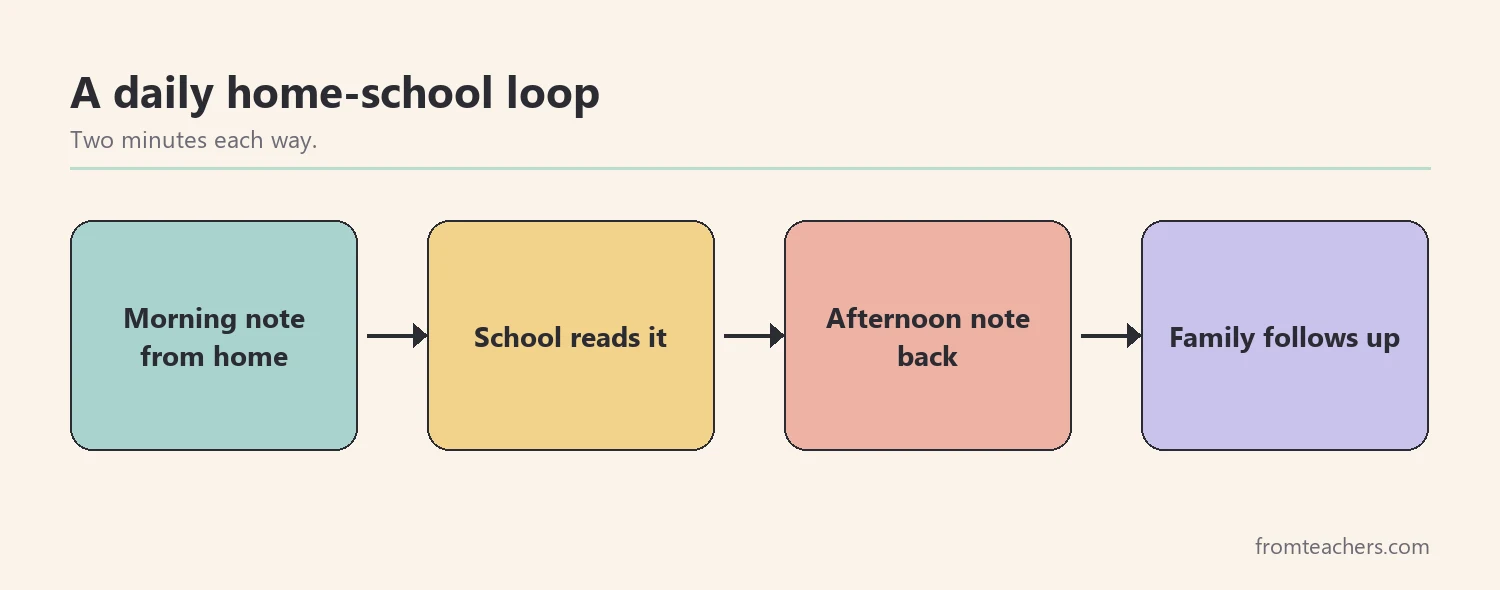
6. Use a short daily home-school note
Among all multiple disabilities parent tips, this habit often makes the biggest daily difference.
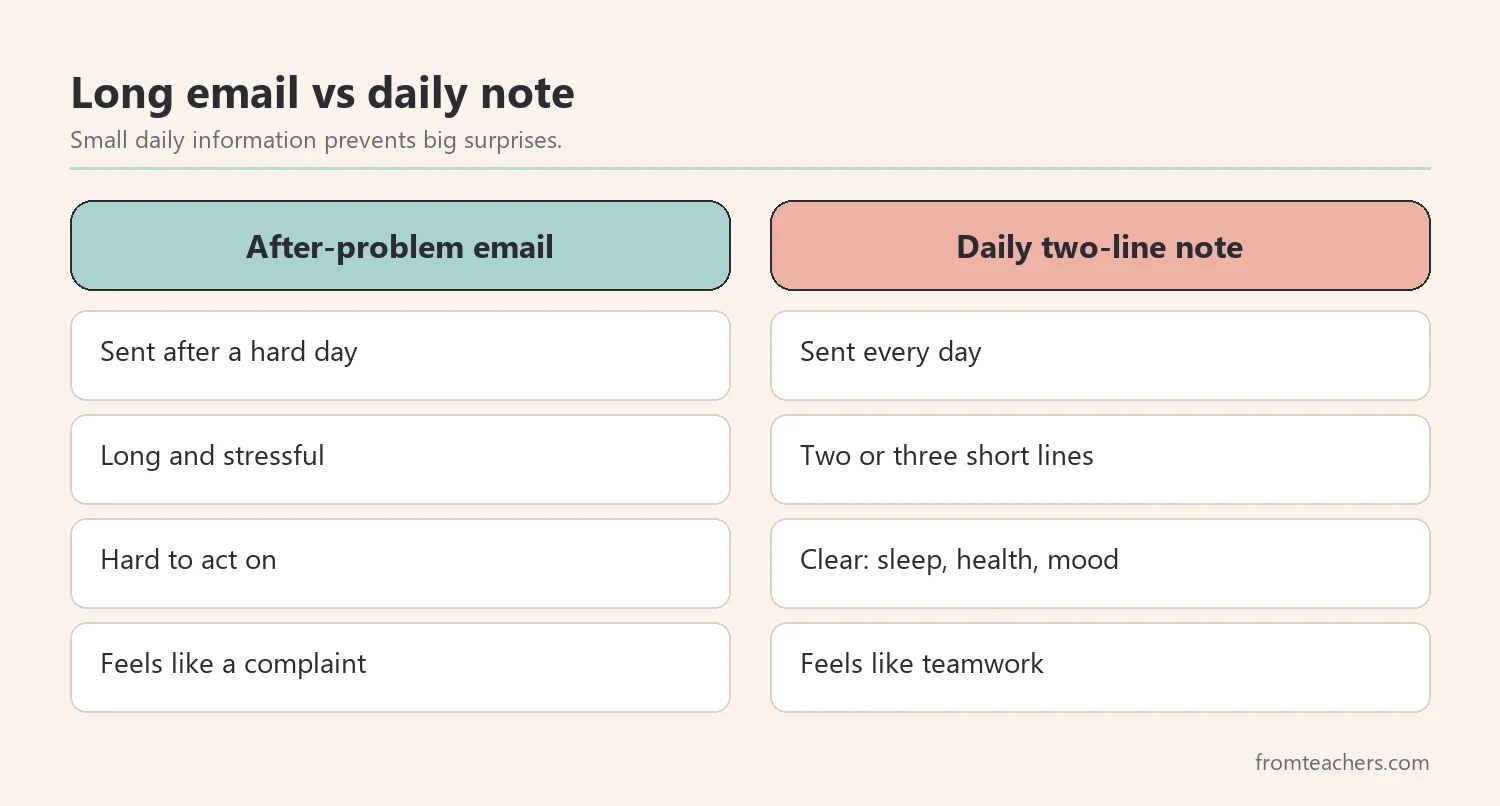
What it is: two or three lines each way: how your child slept, health notes and mood in the morning; what went well and anything to watch in the afternoon.
Why it helps: many children with multiple disabilities cannot tell you about their day yet. The note becomes their voice between settings.
How to do it: agree on a format, paper or app. Keep it short so it happens every day, not just after problems.
7. Build shared routines
What it is: the same order and cues for key routines, such as arrival, meals or getting ready to go home.
Why it helps: predictable routines reduce stress and help children anticipate what comes next, especially with limited vision or hearing.
How to do it: ask the teacher for the school’s routine for one transition, then mirror it at home with the same object or touch cue.
Example: at school, Noor held a spoon before lunch. Samira used the same spoon cue at home, and mealtimes became calmer.
8. Get to know the paraprofessional
What it is: a respectful working relationship with the adult who spends the most time with your child.
Why it helps: paraprofessionals often notice small changes first. A short, friendly exchange keeps information flowing.
How to do it: thank them for specific things and share one new tip at a time. Keep bigger concerns for the teacher or case manager, so roles stay clear.
9. Ask about peer inclusion
What it is: planned chances for your child to be with classmates, such as shared morning meetings, lunch, art or recess.
Why it helps: friendships and belonging matter for every child. Peers also become communication partners.
How to do it: ask, “When does my child spend time with peers, and how does the team support communication then?” Suggest simple activities where your child can take part.
Example: Noor’s class began a “morning helper” job. Noor pressed a button on her device to say the date for the whole class.
10. Choose three priorities each IEP review
What it is: before each review, pick the three areas that matter most for your child right now.
Why it helps: with many needs, it is easy for an IEP to try to do everything and focus on nothing. Clear priorities guide goals and services.
How to do it: think about daily life: communication, comfort, participation and independence. Bring your three priorities in writing to the meeting.
Example: Samira’s priorities for Noor were saying “more” and “stop” with her device, eating comfortably with less help, and taking part in morning circle.
What changed for Noor’s family
Samira did not use all ten tips at once. First, she wrote the one-page profile and asked for the team list. Next, she and the speech-language pathologist agreed to send the AAC device home. Then the daily note became part of every morning.
After two months, Samira said she felt like part of the team instead of a visitor. The staff knew Noor’s signs of tiredness, her device came home every day, and her priorities were clear at the IEP review. Noor still had complex needs. However, the adults around her were finally working from the same page.
Questions to ask at the start of the year
| Area | Question to ask |
|---|---|
| Communication | Which words and symbols are you modeling? |
| Positioning | Where does my child sit for each activity? |
| Health | Who handles medication and emergencies? |
| Sensory | Where can my child rest if overwhelmed? |
| Inclusion | When does my child spend time with peers? |
Moreover, ask how the team will share progress during the year, not only at IEP time.
Common mistakes and how to avoid them
- Repeating information to each new adult: share a one-page profile instead.
- Different communication systems at home and school: agree on one system and shared words.
- Contacting school only after problems: use a short daily note.
- Trying to fix everything in one IEP: choose three priorities.
- Forgetting your own needs: connect with your state’s Parent Training and Information Center or a parent group for support.
Questions families ask about multiple disabilities parent tips
What does “multiple disabilities” mean in an IEP?
Under IDEA, it describes a combination of impairments whose needs cannot be met in a program for only one of them. It does not include deaf-blindness, which is a separate category.
Can my child’s AAC device come home?
Ask the team. Under IDEA, a school-purchased device can be used at home if the IEP team decides your child needs it there to receive a free appropriate public education.
How much should I share about medical needs?
Share what staff need to keep your child safe and comfortable. The school nurse can help create a health plan for medication, seizures or feeding needs.
What if I disagree with the team?
Ask for a meeting, bring your concerns in writing, and ask about your procedural safeguards. Your state’s Parent Center can explain your options.
How can I support communication at home with little time?
Choose one routine, such as dinner, and model two or three core words on the device every day. Small, steady practice matters more than long sessions.
Related reading: how parents and teachers can team up, an assistive technology toolkit for special education.
A companion resource for multiple disabilities parent tips:
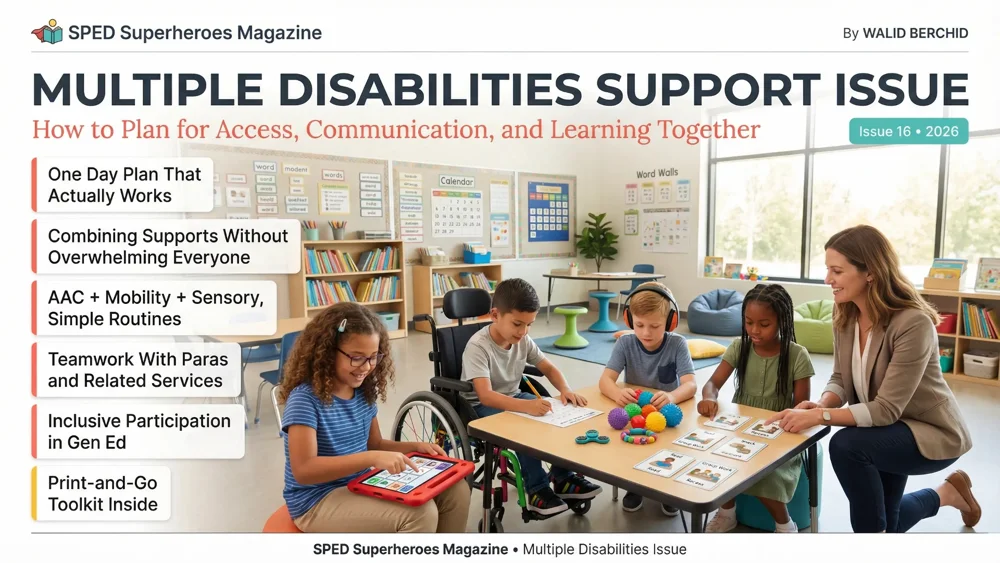
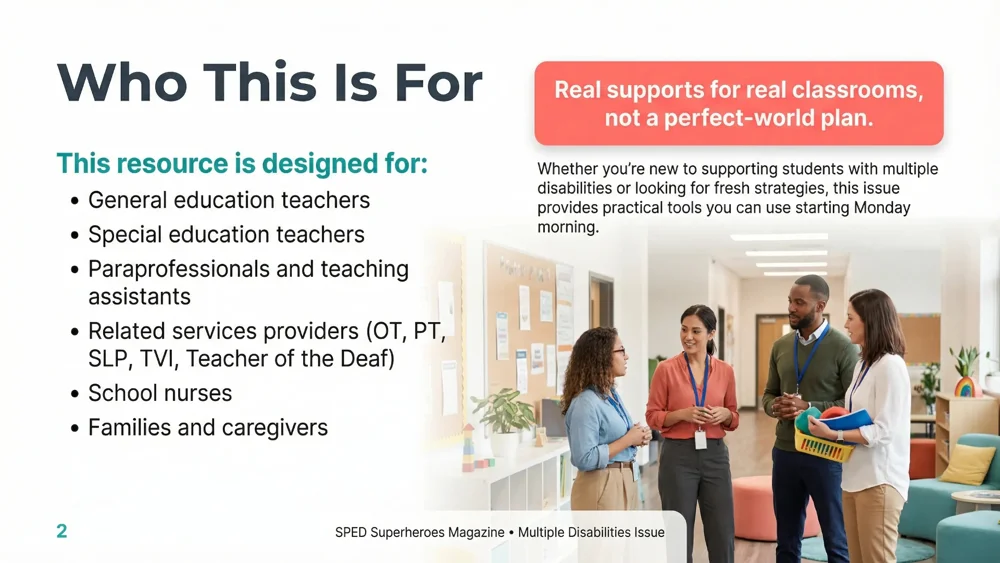
Multiple Disabilities Toolkit: AAC, Access and Daily Plans: a magazine-style guide (Issue 16) with a plain-words overview of multiple disabilities, a one-page daily plan template and routines, ways to combine AAC, mobility and sensory supports, seating, positioning and communication access strategies, paraprofessional and family teamwork tools, inclusion and peer support ideas, plus simple tracking, adjustment and safety planning tools and printable templates.
You may also need: Individual Student Communication Plan AAC Learning Plan for Classrooms.
Sources and scope
- IDEA (U.S. Department of Education): the federal law, including the definition of multiple disabilities and assistive technology rules.
- Center for Parent Information and Resources: help for families, including links to each state’s Parent Center.
- ASHA: the American Speech-Language-Hearing Association, with information on AAC.
- Understood.org: articles for families on IEPs and working with schools.
This list helps families partner with a school team. It does not replace medical advice, therapy recommendations or legal guidance about your child’s rights.
Key takeaways
- Good multiple disabilities parent tips start with sharing what you know in a clear, short form.
- Use one communication system across home and school.
- Ask how positioning, sensory needs and health fit into the whole day.
- A short daily note keeps everyone informed.
- Bring three clear priorities to each IEP review.









Leave a Comment