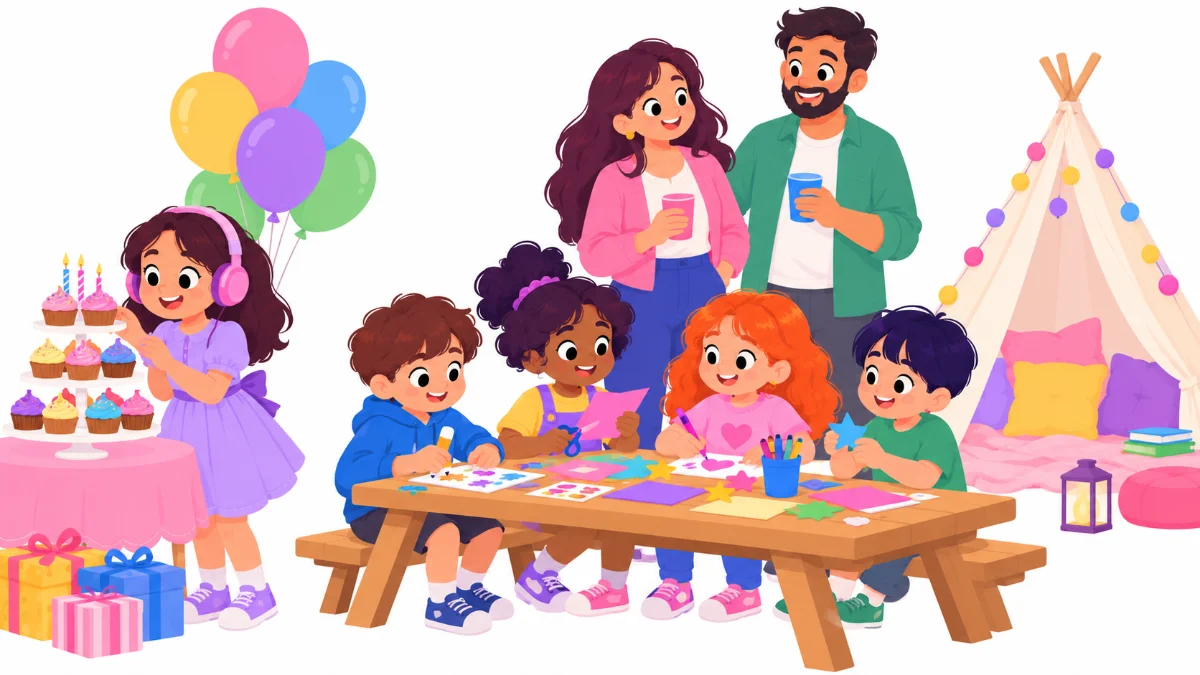

A sensory friendly birthday party lets a child enjoy their own celebration instead of hiding from it. Picture Lily, who is turning six. She has strong sensory sensitivities: loud sounds hurt her ears, crowds make her anxious, and some textures upset her. Last year, at her fifth birthday, she cried under the table while her guests sang. Her parents want this year to feel different.
This list is for parents planning a party for a child with sensory processing differences, and for parents who want to make a party welcoming for a guest with sensory needs. It ranks seven common mistakes, from the ones most likely to cause overload to the smaller details, with what to do instead. Each item includes a short example from Lily’s party. By the end, you will have a simple plan, a checklist and ideas to keep the day fun for everyone.
Examples are fictional. Every child is different, so adapt to your child’s needs and any guidance from their occupational therapist. This is guidance, not a diagnosis.
At a glance
- A sensory friendly birthday party is planned around your child’s comfort, not a standard party format.
- Smaller, shorter and quieter often works better than bigger and longer.
- A quiet space gives your child a way to reset without leaving the party.
- Preview the day with pictures or a simple story.
- Let your child skip or change traditions, such as singing or candles.
How this list is ranked
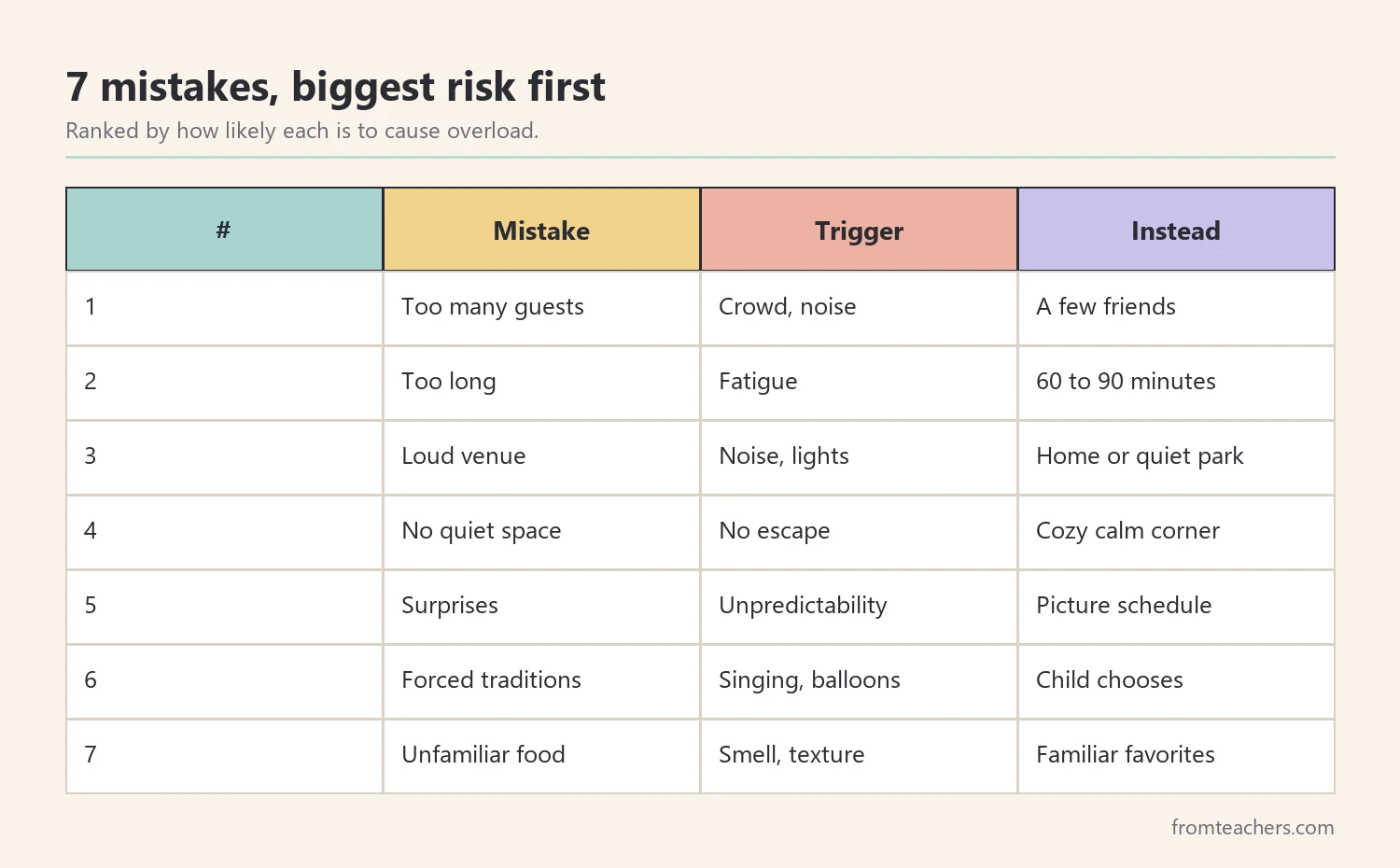
We ranked these seven mistakes by how likely they are to cause sensory overload, based on common sensory triggers such as noise, crowds and unpredictability. The first mistakes affect the whole party. The later ones are smaller details. This order is a practical guide, not a research ranking, and your child’s triggers may be different.
Children with sensory processing differences may be hypersensitive (over-responsive), hyposensitive (under-responsive) or a mix of both. A child who avoids noise may still seek movement. Therefore, a sensory friendly birthday party starts with knowing your own child’s profile. Figure 1 shows the seven mistakes.
Before you start: know your child’s sensory profile
Before choosing a date or a venue, take ten minutes to list what your child finds hard and what calms them. This short step shapes every later decision about a sensory friendly birthday party. For instance, a child who avoids sound needs a very different plan from a child who seeks movement and deep pressure.
| Sense | Possible over-response | Possible under-response |
|---|---|---|
| Sound | Covers ears at singing | Makes loud noises, seeks music |
| Touch | Dislikes costumes, face paint | Seeks hugs, rough play |
| Movement | Avoids bouncy castles | Wants to jump and spin |
| Smell and taste | Upset by food smells | Seeks strong flavors |
If you want a clear starting point, the sensory processing disorder guide for parents and teachers explains hypersensitive and hyposensitive profiles and includes a parent section with practical strategies. Many families find it easier to plan a sensory friendly birthday party once they can name their child’s patterns.
Lily’s parents noticed that she was over-responsive to sound and touch, but she loved swinging and jumping. As a result, they removed balloons and face paint, yet kept a trampoline game. Her profile, not a party catalog, guided every choice. In the same way, your list becomes the filter for the seven decisions below. When in doubt, choose the option that fits the profile, even if it differs from what other families do for their parties.
1. Inviting too many guests
First, size matters most. A big group means more noise, more movement and more social demands at once.
What to do instead: keep the guest list small. For a sensory friendly birthday party, many families choose a few close friends or family members. Ask your child who they feel comfortable with.
Example: Lily chose four friends instead of the whole class. Her parents sent a separate small treat to school for classmates.
2. Making it too long
Next, energy runs out. Even a fun party can become overwhelming after a couple of hours.
What to do instead: plan a shorter sensory friendly birthday party, such as 60 to 90 minutes, with a clear end time on the invitation.
Example: Lily’s party ran for 75 minutes. She was still smiling when the guests left, which had not happened before.
3. Choosing a loud, crowded venue
Many popular party venues are loud, bright and busy, such as indoor play centers on a weekend. For a sensory friendly birthday party, the setting is a big decision.
What to do instead: choose home, a quiet park or a venue that offers a private room or sensory-friendly hours. Visit before the party if possible.
Example: Lily’s family held the party in their backyard. She knew every corner and could go inside whenever she wanted.

4. No quiet space
Even with careful planning, your child may need a break. Without a planned quiet space, the only option may be a meltdown or hiding.
What to do instead: set up a calm corner with soft lighting, headphones, a favorite blanket and a few calming items. Show it to your child before guests arrive and agree on a signal for a break.
Example: Lily took two short breaks in her “cozy tent” during the party. Each time, she came back ready to play.
5. Surprises
Surprises are exciting for some children, but unpredictability can be stressful for many children with sensory differences.
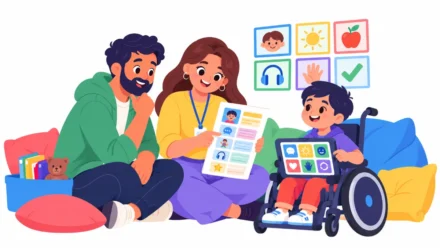
What to do instead: preview the party with a simple picture schedule or short story: who is coming, what you will do and when it ends. Avoid surprise guests or performers.
Example: Lily’s parents made a five-picture schedule: friends arrive, games, snack, cake, goodbye. She checked it several times during the party.
6. Forcing traditions
Singing loudly, blowing out candles in front of everyone, popping balloons and opening presents in a crowd can all be hard. A sensory friendly birthday party can change or skip traditions.
What to do instead: ask your child which traditions they want. Try quiet singing, clapping without singing, battery candles or opening gifts after the party.
Example: Lily wanted the cake but not the singing. Her guests did a “silent cheer” with waving hands, and she loved it.
7. Ignoring food and texture needs
Finally, food can be a sensory challenge. Strong smells, mixed textures and unfamiliar foods may cause distress.
What to do instead: serve familiar foods your child enjoys, keep options simple and avoid pressure to try new things. Ask guests’ parents about allergies and needs too.
Example: Lily chose plain cupcakes, fruit and crackers. Everyone ate happily, and nobody worried about trying new foods.
It also helps to think about smells beyond the food. Scented candles, strong cleaning products and perfumed party favors can bother some children. Keep the space as neutral as possible, and serve food in a separate area if smells are a known trigger for your child.
A simple party plan
Putting it together, a sensory friendly birthday party often follows a short, predictable flow. Start with a calm arrival activity, such as coloring or play dough, rather than a loud game. Then add one active game, snack and cake, and a calm goodbye. In addition, consider the sensory profile of your child: a movement-seeking child may love a bounce activity, while a sound-sensitive child may prefer a craft table.
| Time | Activity | Sensory note |
|---|---|---|
| 0 to 15 min | Calm arrival craft | Gentle start |
| 15 to 40 min | One active game | Movement |
| 40 to 60 min | Snack and cake | Familiar foods |
| 60 to 75 min | Calm goodbye | Clear ending |
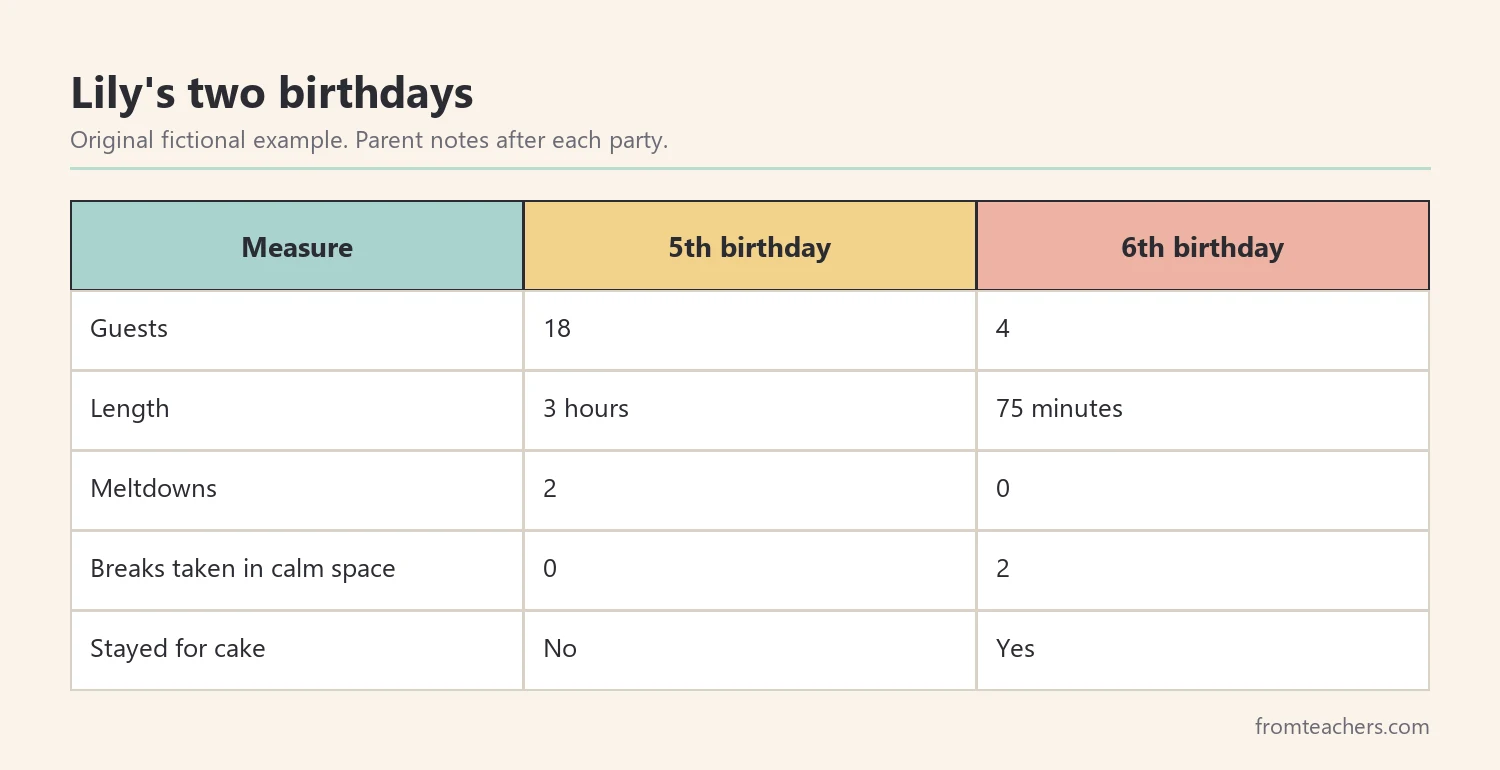
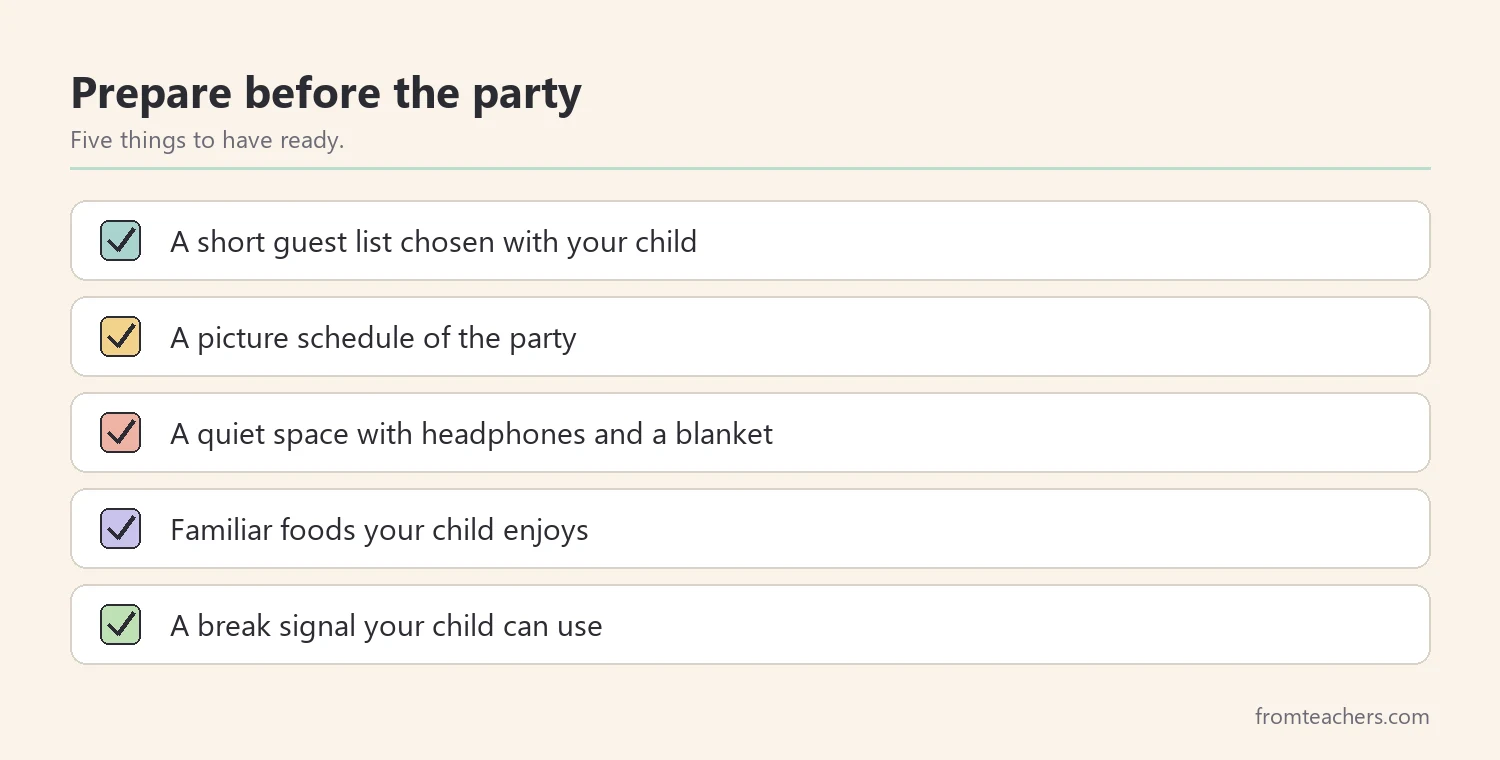
Figure 3 shows how Lily’s party compared with her fifth birthday, and Figure 4 lists five things to prepare.
Involving siblings and family
Siblings and relatives can make or break the day, so share the plan early. A sensory friendly birthday party works best when every adult knows the plan. Explain the plan to them beforehand, including the quiet space and the change to traditions. Older siblings can be great helpers, for example by leading the calm arrival craft. Grandparents may expect a traditional party, so a short, friendly explanation helps everyone enjoy a sensory friendly birthday party together.
When your child is the guest
Many parents face the opposite situation: their child is invited to a loud party. Talk with the host if you feel comfortable. You might ask about timing, so you can arrive early before it gets busy or leave before the loudest part. Bring headphones and a comfort item, and agree with your child on a signal for leaving.
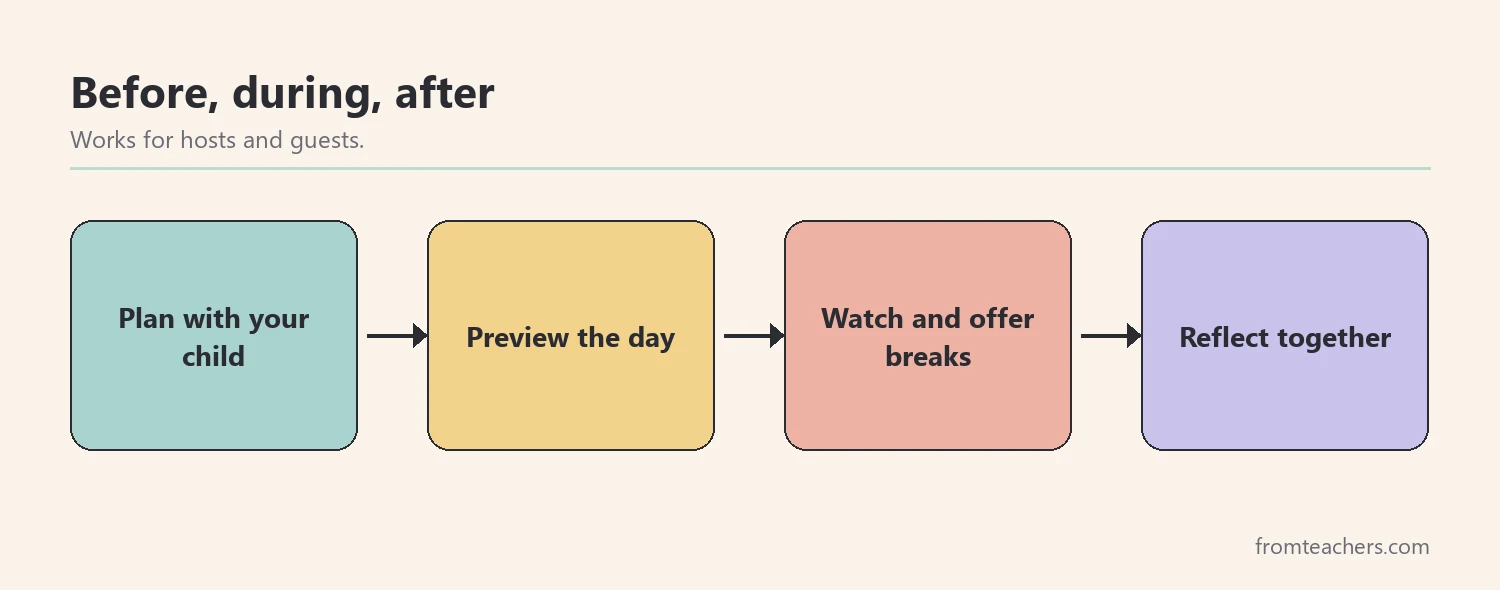
Hosts can help too. Mentioning a quiet room on the invitation, or asking parents whether any guests have sensory needs, makes a party more welcoming for everyone. Figure 5 shows a simple before, during and after cycle that works for both hosts and guests.
Common mistakes after the party
- Planning a busy evening afterward. Fix: keep the rest of the day quiet for recovery.
- Opening all presents at once. Fix: open a few at a time over several days.
- Judging the party only by how long your child stayed. Fix: notice moments of joy, not only the hard ones.
- Not asking your child. Fix: ask what they liked and what to change next time.
Questions parents ask about a sensory friendly birthday party
Should I tell guests about my child’s sensory needs?
That is your family’s choice. Many parents share a short, positive note, such as “We’ll have a quiet room and soft music,” without details.
What if my child does not want a party at all?
That is okay. A family outing, a special meal or a small activity with one friend can be a lovely celebration.
Can a sensory friendly birthday party still be fun for other kids?
Yes. Small groups, clear activities and calm moments often make parties more enjoyable for many children.
What activities work well?
Crafts, building blocks, a scavenger hunt, play dough, bubbles outside or a gentle movement game. Choose based on your child’s interests and sensory profile.
Should my child’s occupational therapist be involved?
If your child sees an occupational therapist, they may have helpful ideas about breaks and calming strategies. It is a good question to ask.
Related reading: Managing Sensory Overload in Autism and ADHD, Meltdowns vs Tantrums, and Autism Social Skills.
You may also need: SPD Support Toolkit: Sensory Spaces and Calming Strategies.
A companion resource for a sensory friendly birthday party:
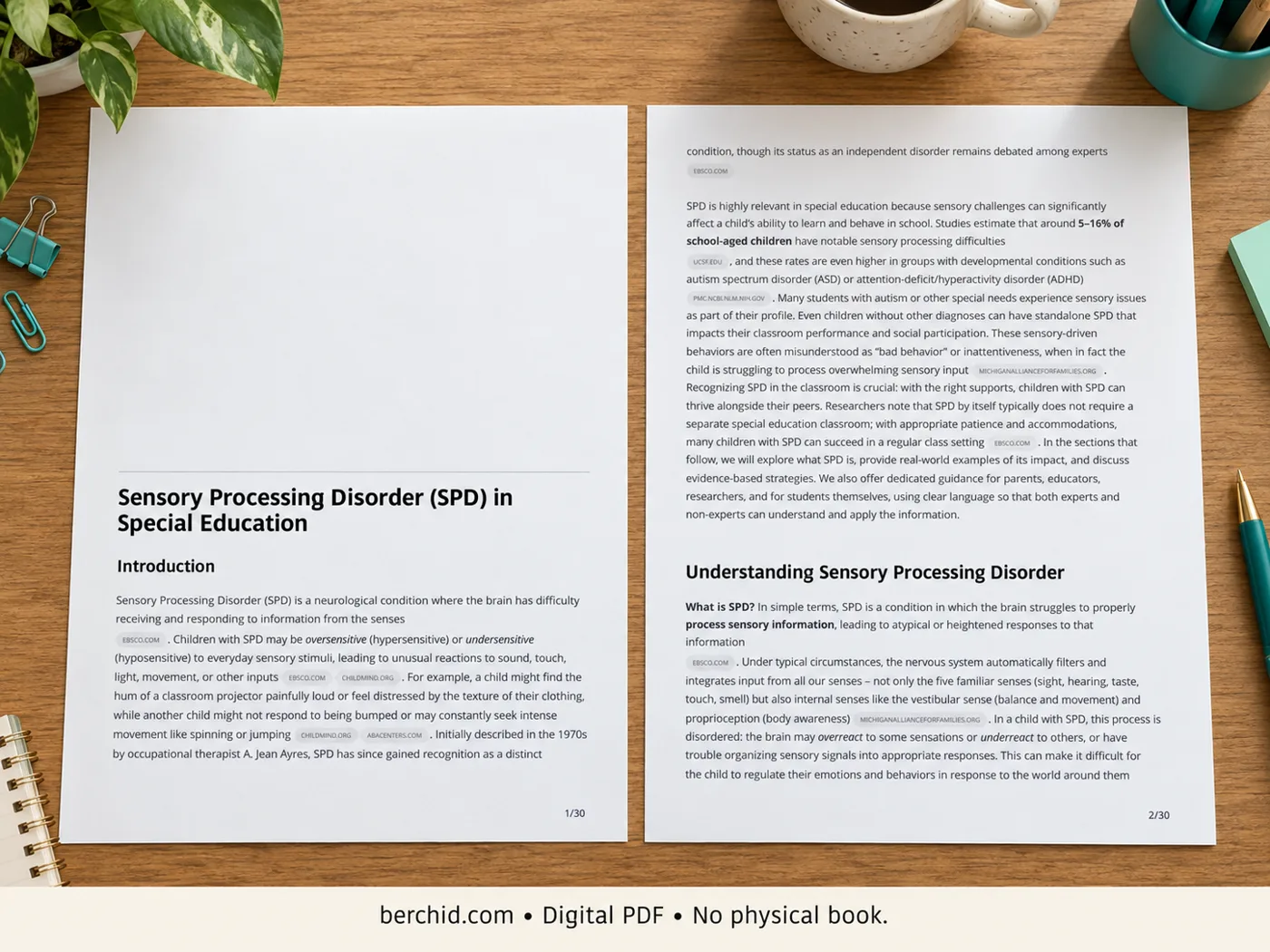
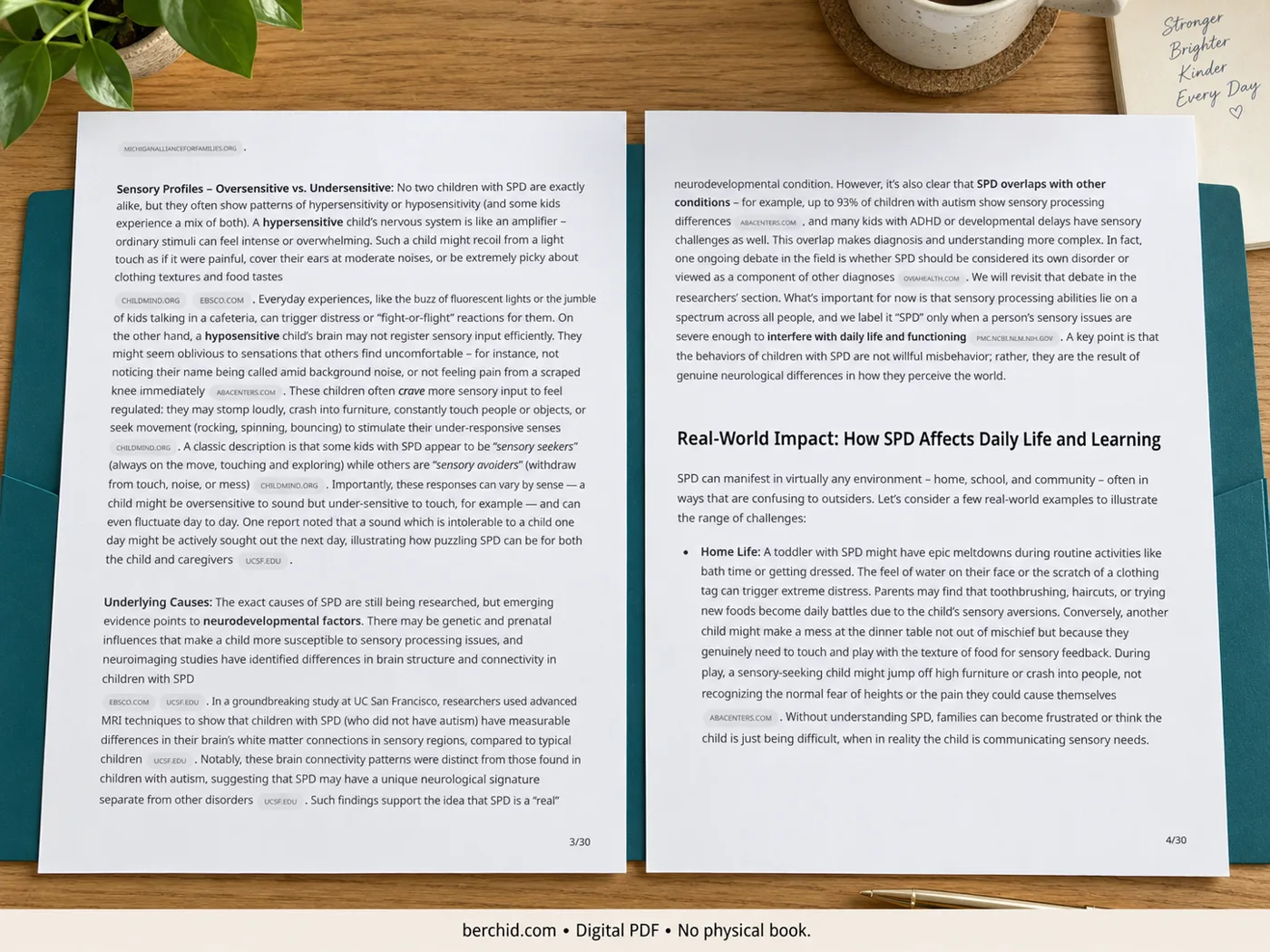
Sensory Processing Disorder (SPD) Guide: Strategies for Parents & Teachers: a 30-page guide with an overview of hypersensitive and hyposensitive profiles, a parent section, an educator section on classroom adjustments, sensory breaks and accommodations across art, music, PE, lunch and recess, a research summary and a student section on self-regulation.
Sources and scope
- American Occupational Therapy Association: information on sensory processing and occupational therapy for children.
- Understood.org: guidance for families on sensory processing challenges.
- HealthyChildren.org (American Academy of Pediatrics): parent information on child development and family life.
- National Autistic Society: practical information on sensory differences and social events.
This list covers practical planning tips for birthday parties for children with sensory differences. It does not cover diagnosis or therapy and does not replace advice from an occupational therapist or pediatrician.
Key takeaways
- A sensory friendly birthday party is smaller, shorter and calmer.
- Choose a familiar, quiet setting and plan a quiet space.
- Preview the day and avoid surprises.
- Let your child change or skip traditions.
- Serve familiar foods and plan a calm evening afterward.







Leave a Comment