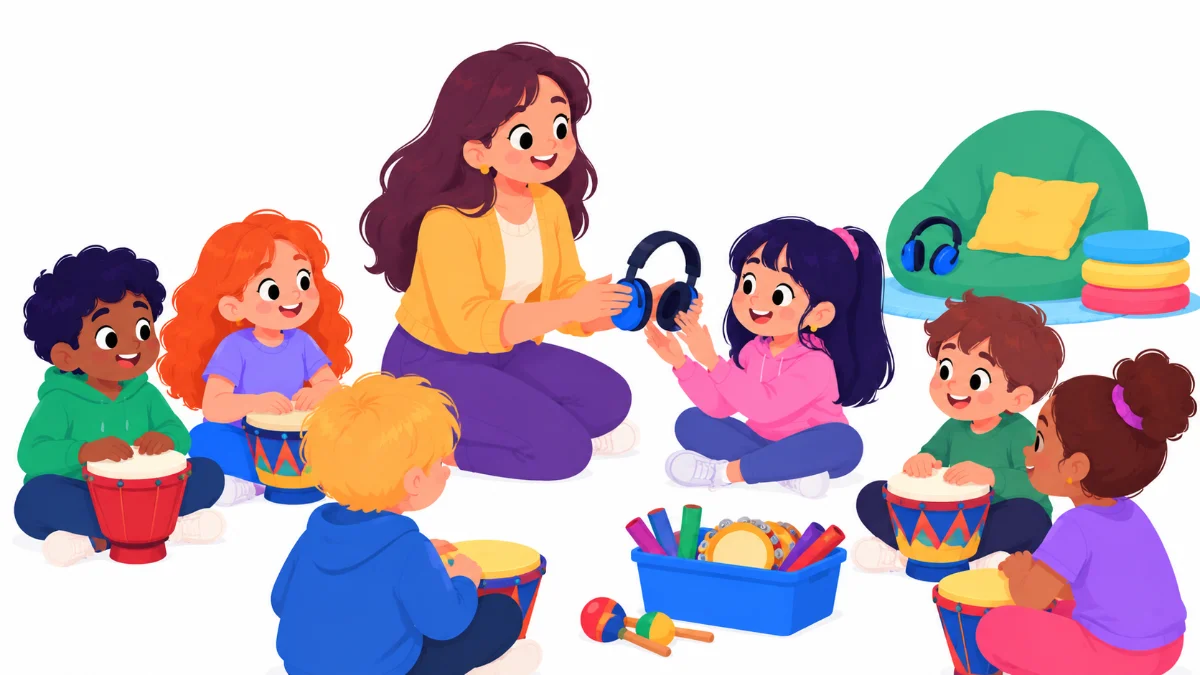

Sensory strategies for specials teachers rarely get the attention they deserve, even though art, music and PE are often the loudest, messiest and busiest parts of a school day. Picture Ava, a grade 3 student who is very sensitive to sound. She manages well in her calm homeroom, then walks into the music room on a Tuesday afternoon as thirty children start drumming.
This list is for art, music and PE teachers, plus lunch and recess staff, who see many students for short periods. It ranks seven practical supports by how many settings each one works in, so you can start with the strategies that help across the whole school. For each, you will find what it is, how to use it and how it played out for Ava.
Examples are fictional. Adapt to the student’s goals and agreed supports. This is guidance, not a diagnosis.
At a glance
- Specials settings are often the most sensory-intense part of the day.
- Warning students about noise and change is the simplest support.
- Offer choices of position, tools and volume where you can.
- Movement and heavy work help some students stay regulated.
- Ask the homeroom teacher and OT what already works.
How these strategies are ranked
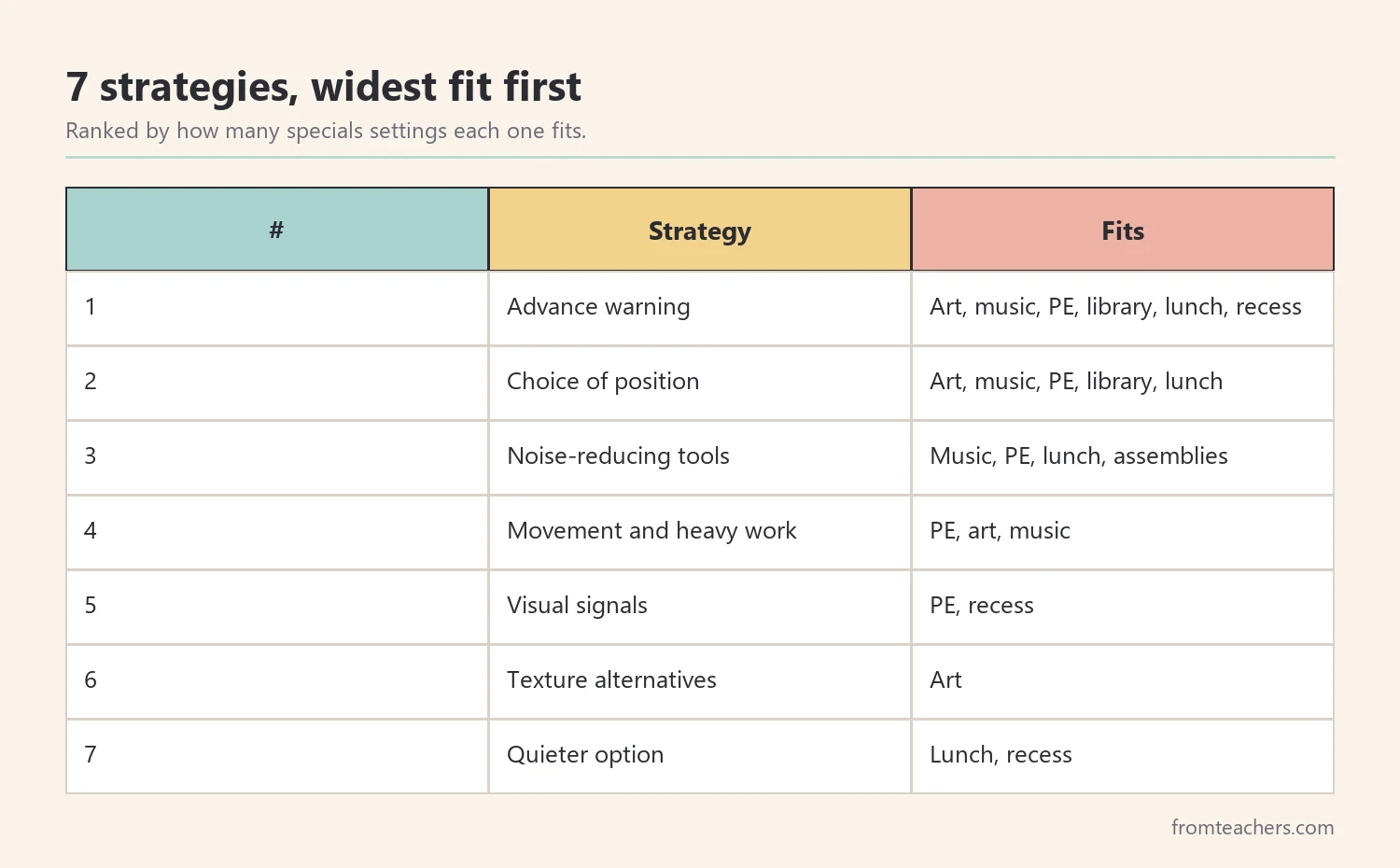
We did not rank these strategies by how effective they are, since every student’s sensory profile is different. Some students are oversensitive and avoid input. Others seek more input. Instead, the order follows one clear criterion: how many specials settings each strategy fits, from all six (art, music, PE, library, lunch and recess) down to one or two.
As a result, the first strategies are the best place for a whole school team to start. Figure 1 shows the ranking.
1. Give advance warning of noise and change
The simplest of all sensory strategies for specials teachers is a heads-up. Tell students before a loud activity starts, before lights go off for a film or before a whistle blows.
Why it works: unexpected input is often harder to manage than input a student knows is coming. Warning gives time to prepare or use a coping tool.
How to use it: start each lesson with a quick preview: “Today we will drum for five minutes, then work quietly.” Show it on a simple visual schedule. The sensory processing disorder guide for parents and teachers can help a whole team plan this, since its educator section covers accommodations across art, music, PE, lunch and recess, alongside sensory breaks and tools.
Example: Ava’s music teacher began announcing “drum time” two minutes ahead. Ava put on her ear defenders before the noise started and stayed in the circle.
2. Offer a choice of position
Where a student sits or stands changes how much sensory input reaches them. Next to the speakers, near the door or in the middle of a crowd are very different experiences.
Why it works: a small change of position can reduce input for a sensitive student, or give more space to move for a student who seeks input.
How to use it: offer two or three spots, such as the edge of the circle, the end of a table or the side of the gym. Keep it low-key, so the student does not feel singled out.
Example: In art, Ava chose the table farthest from the sink, where chatter and running water were quieter.
3. Make noise-reducing tools available
Ear defenders or noise-reducing headphones are among the most common tools for students who are sensitive to sound. They are useful in music, gym, assemblies and the lunchroom.
Why it works: they reduce the volume without shutting the student out of the activity.
How to use it: keep a labeled set in each specials room, or agree that the student brings their own. Explain to the class that tools help different people in different ways.
Example: Ava used ear defenders in PE during whistle games. She joined every activity instead of standing by the wall.
4. Build in movement and heavy work
Some students seek movement and pressure. Heavy work, such as carrying, pushing or pulling, is a common strategy that many occupational therapists suggest to help these students feel more settled.
Why it works: it gives sensory-seeking students a useful outlet, rather than leaving them to find one on their own.
How to use it: assign jobs like carrying instruments, stacking mats, wiping tables or pushing the equipment cart. Check with the student’s OT about which activities fit them.
Example: A classmate of Ava’s who often crashed into mats became the PE “equipment captain.” He carried cones and balls at the start of each lesson and found it easier to join the warm-up.
5. Use visual signals as well as sound
Whistles, bells and shouted instructions are standard in many specials settings. However, sudden loud sounds can be very hard for some students.
Why it works: visual signals, such as a raised hand, a colored card or a light, give the same message without the sound spike.
How to use it: teach a few visual signals at the start of the year. Keep the whistle for safety, but use it less often.
Example: Ava’s PE teacher switched to a raised red card for “freeze.” Most students responded just as quickly, and Ava no longer flinched.
6. Offer texture and tool alternatives in art
Art often involves glue, paint, clay and other textures. For students who are sensitive to touch, these materials can be overwhelming.
Why it works: alternatives let students take part in the creative task without the part that feels unbearable.
How to use it: offer brushes, sponges, gloves or glue sticks instead of fingers in paint. Let students explore a new texture at their own pace, without pressure.
Example: In a clay lesson, Ava wore thin gloves and used shaping tools. She finished a small bowl and proudly showed it to her family.
7. Provide a quieter option at lunch and recess
Finally, lunch and recess can be the most overwhelming times of all: echoing rooms, crowds and unpredictable play. A quieter option can help some students recharge.
Why it works: a calmer space gives students a break from intense input, so they return to class ready to learn.
How to use it: consider a quieter table, a lunch bunch in a classroom or a calm area on the playground. Keep it a choice, not a punishment, and make sure students still have social time.
Example: Ava ate lunch with two friends in the library on two days a week. Her afternoon teacher noticed she settled faster on those days. On the other days, she sat at the end of a cafeteria table near a wall, which felt calmer than the middle of the room. Recess staff also agreed that she could spend part of recess on the quieter side of the playground, close to the garden beds.
Tracking sensory strategies for specials teachers
A short record helps the team see what works. Specials teachers can note which supports were used and how the student took part. Here is a summary of Ava’s first month.
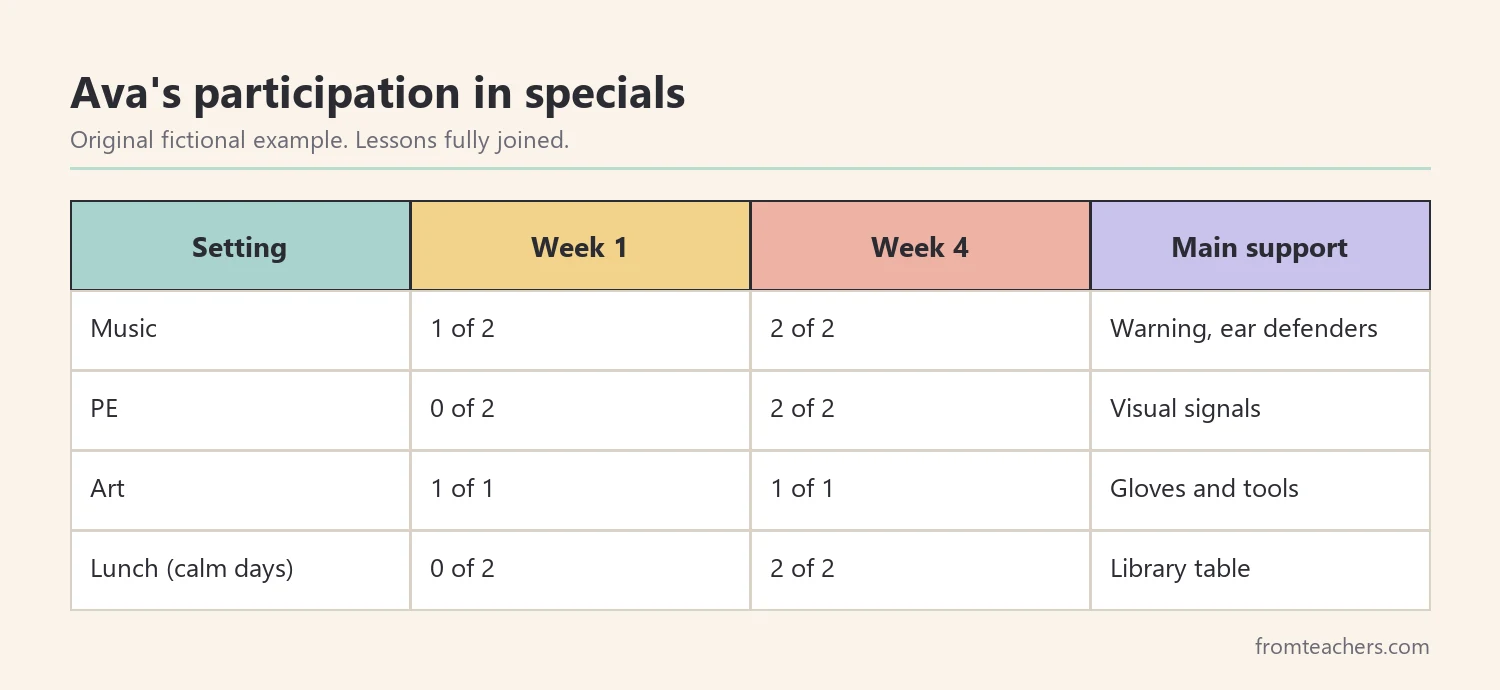
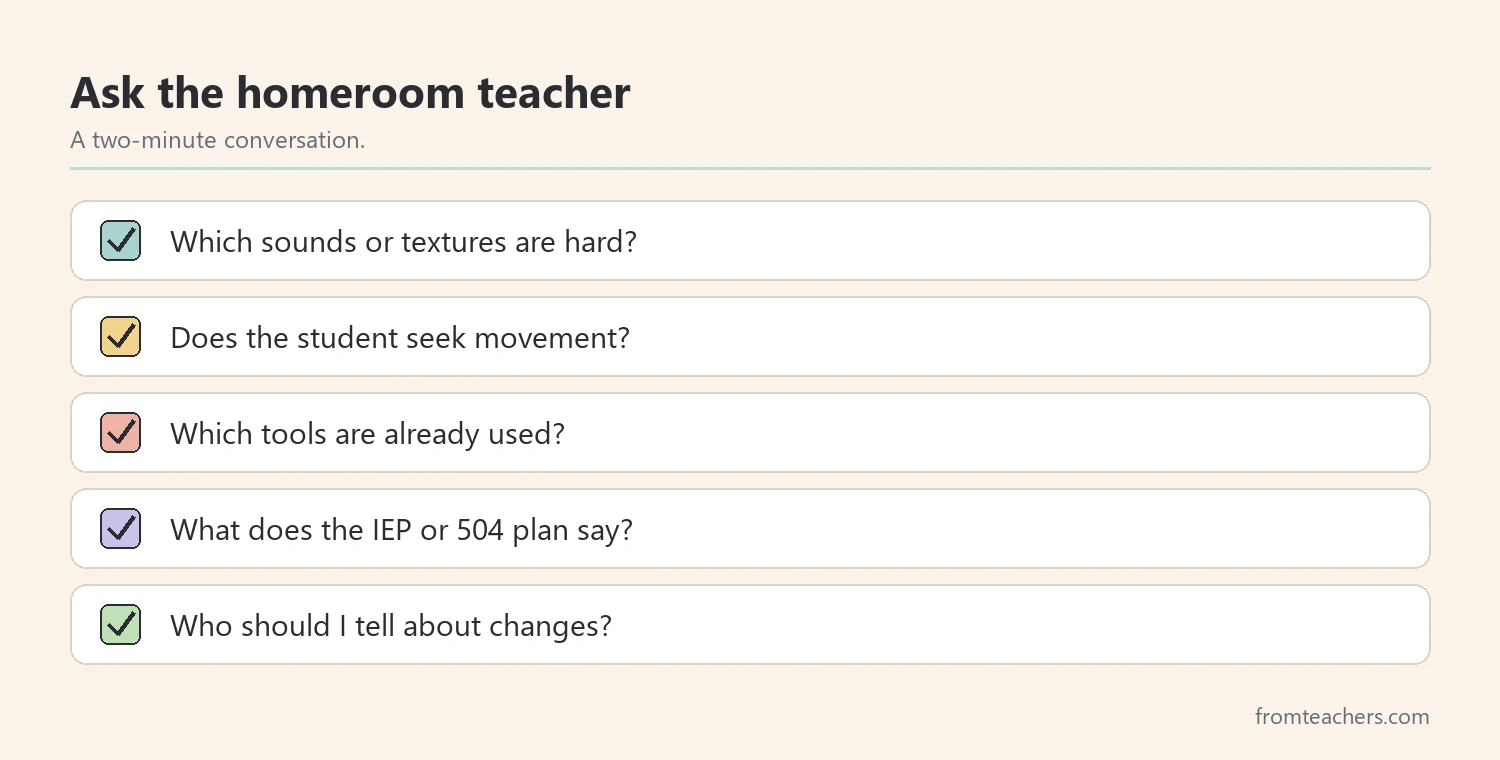
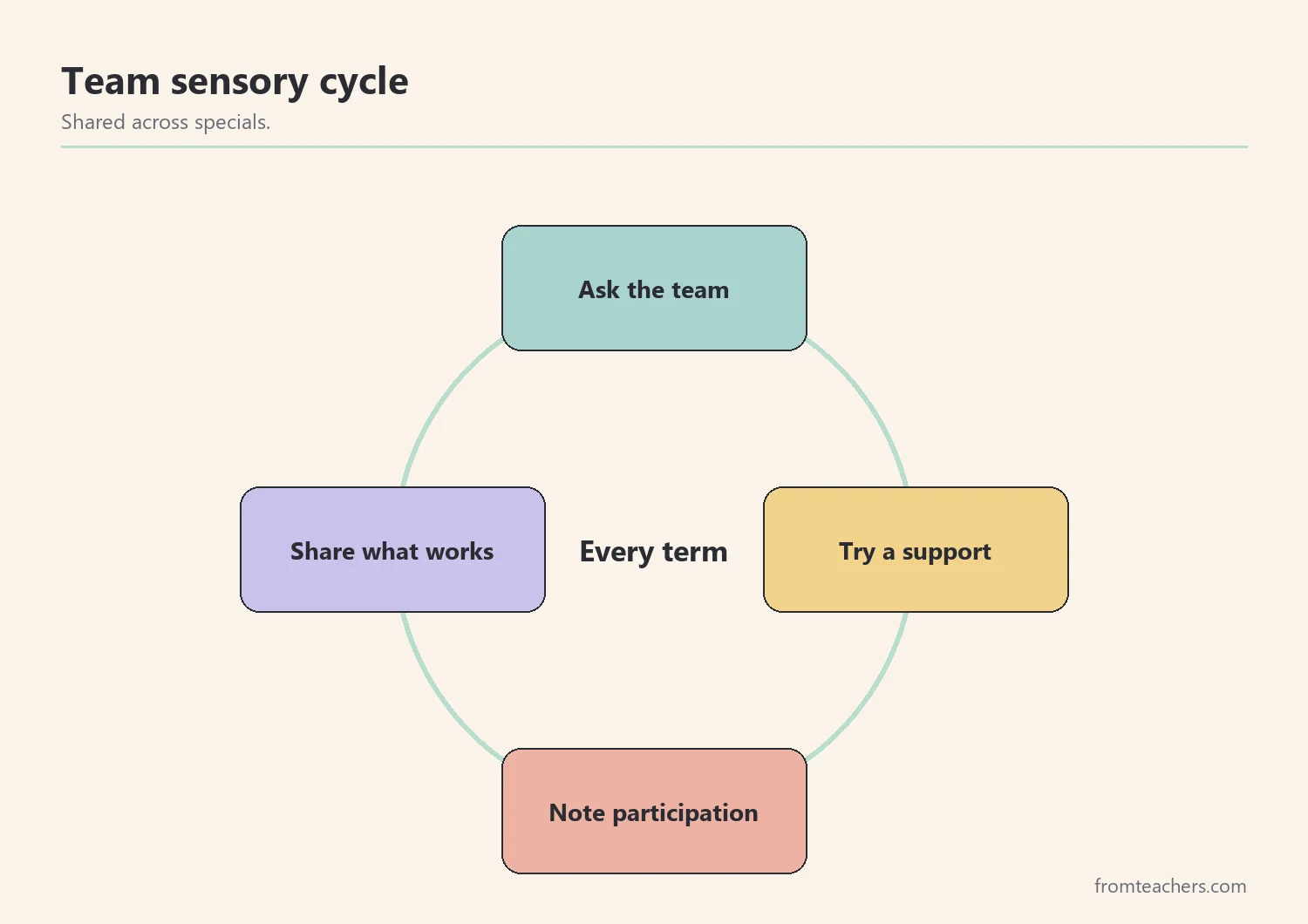
The pattern was encouraging. Participation rose in every setting once warnings and tools were in place. Consequently, the team kept the supports and shared them with the substitute folder. Figure 4 lists questions to ask the homeroom teacher, and Figure 5 shows a simple team cycle.
Working with the student’s team
Specials teachers often see a student for only an hour a week. Therefore, a short conversation with the homeroom teacher, OT or case manager is worth a lot. Ask what the student’s IEP or 504 plan says, what helps in class and what to avoid.
Also, share what you notice. A music teacher may see sound sensitivity more clearly than anyone else. That information helps the whole team.
In addition, plan for special events. Assemblies, concerts, field days and fire drills bring sudden noise, crowds and changes of routine. A short plan agreed in advance, such as sitting near the exit, wearing ear defenders or arriving a few minutes early, can turn a hard event into a manageable one.
Likewise, remember that sensory needs can change during the year. A student who coped well in September may struggle after a long illness, a move or a stressful period at home. Keep checking in, and adjust supports when the student’s needs shift.
Finally, involve the student. Even young children can often say which sounds feel “too big” or which jobs help them feel calm. Older students can help choose their own tools and signals. When students understand their own needs, they become more confident asking for help across every setting, not only in your room.
Common mistakes and how to avoid them
- Treating sensory reactions as misbehavior. Fix: ask what the student might be experiencing before responding.
- Forcing participation in an overwhelming activity. Fix: offer a modified role or a short break.
- Removing the student from fun activities. Fix: change the input, not the access.
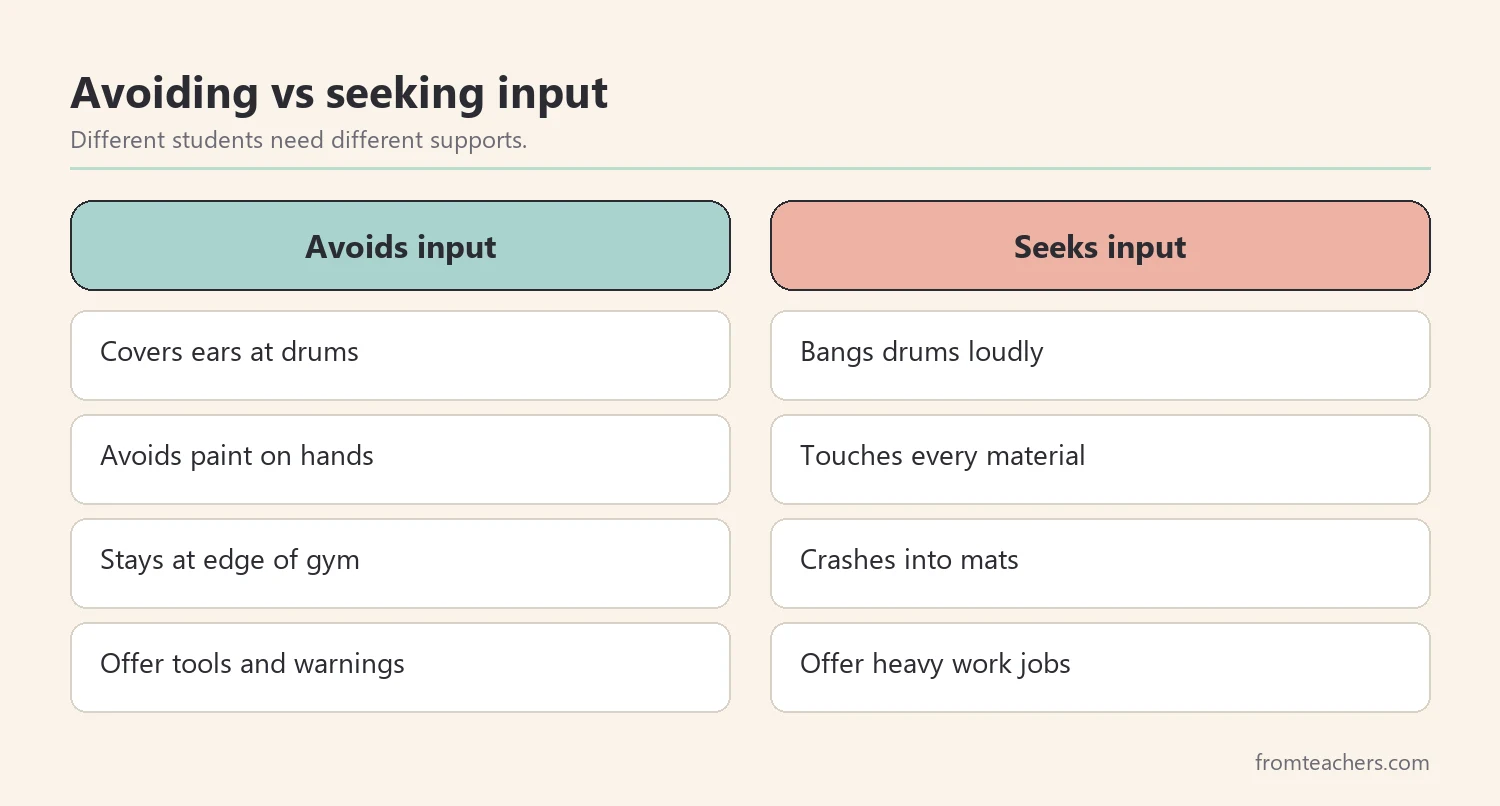
- Using one strategy for every student. Fix: remember that some students avoid input and others seek it.
- Not telling the homeroom teacher. Fix: share a short note about what worked.
Questions teachers and parents ask about sensory strategies for specials teachers
Do specials teachers have to follow sensory accommodations in the IEP?
Generally, yes. Accommodations in an IEP or 504 plan apply across the school day, including art, music, PE, lunch and recess. Ask the case manager for the relevant information.
What if I teach hundreds of students a week?
Start with whole-class strategies like warnings, visual signals and position choices. They help many students without individual planning.
Are ear defenders a crutch?
For many students, they are simply a tool that makes participation possible. Discuss long-term use with the family and the OT.
How can parents help?
Parents can share what helps at home, such as warnings before loud events, and tell the school about any new sensitivities. Consistent strategies across home and school are helpful.
Should I ask an occupational therapist for help?
Yes, if your school has one. OTs can suggest strategies that fit a particular student’s sensory profile.
Related reading: Managing Sensory Overload: Practical Strategies for Autism and ADHD, Meltdowns vs Tantrums: A Guide to Understanding and Responding, and Understanding Autistic Burnout and School Exhaustion.
You may also need: SPD Support Toolkit: Sensory Spaces and Calming Strategies.
A companion resource for sensory strategies for specials teachers:
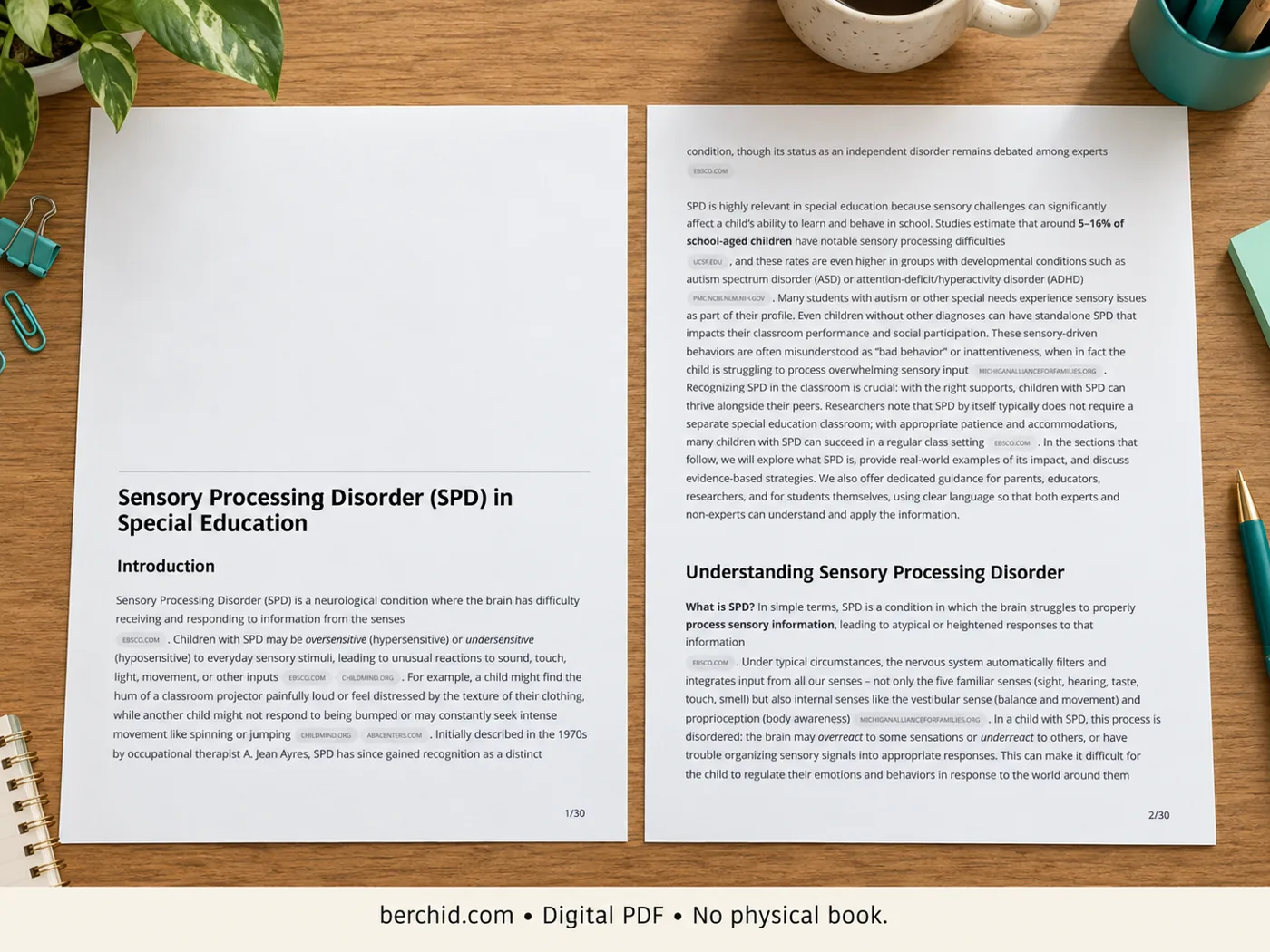
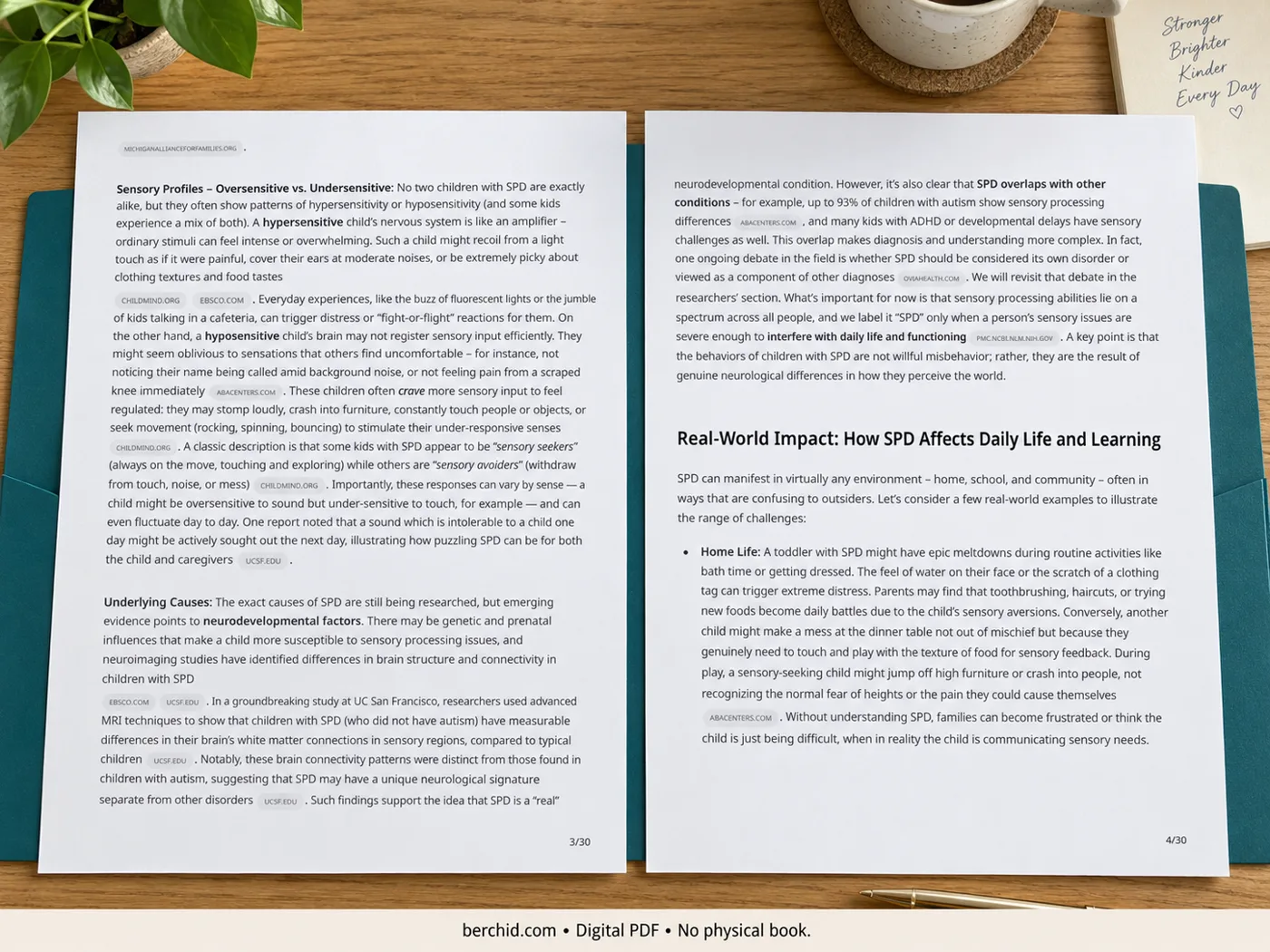
Sensory Processing Disorder (SPD) Guide: Strategies for Parents & Teachers: a 30-page guide with an overview of hypersensitive and hyposensitive profiles, a parent section, an educator section on classroom adjustments, sensory breaks and accommodations across art, music, PE, lunch and recess, a research summary and a student section on self-regulation.
Sources and scope
- American Occupational Therapy Association: information on occupational therapy and sensory-related support in schools.
- SHAPE America: resources for physical education teachers, including inclusive practice.
- Understood.org: plain-language articles on sensory processing challenges at school.
- HealthyChildren.org (American Academy of Pediatrics): parent information on child development and sensory concerns.
This list covers everyday sensory supports for art, music and PE teachers and lunch and recess staff. It does not diagnose sensory processing difficulties or replace an occupational therapist’s assessment, a student’s IEP or 504 plan, or school safety procedures.
Key takeaways
- Sensory strategies for specials teachers start with simple warnings.
- Offer choices of position, tools and volume.
- Use movement and heavy work for students who seek input.
- Replace some sound signals with visual ones.
- Talk with the homeroom teacher and OT, and share what works.










Leave a Comment