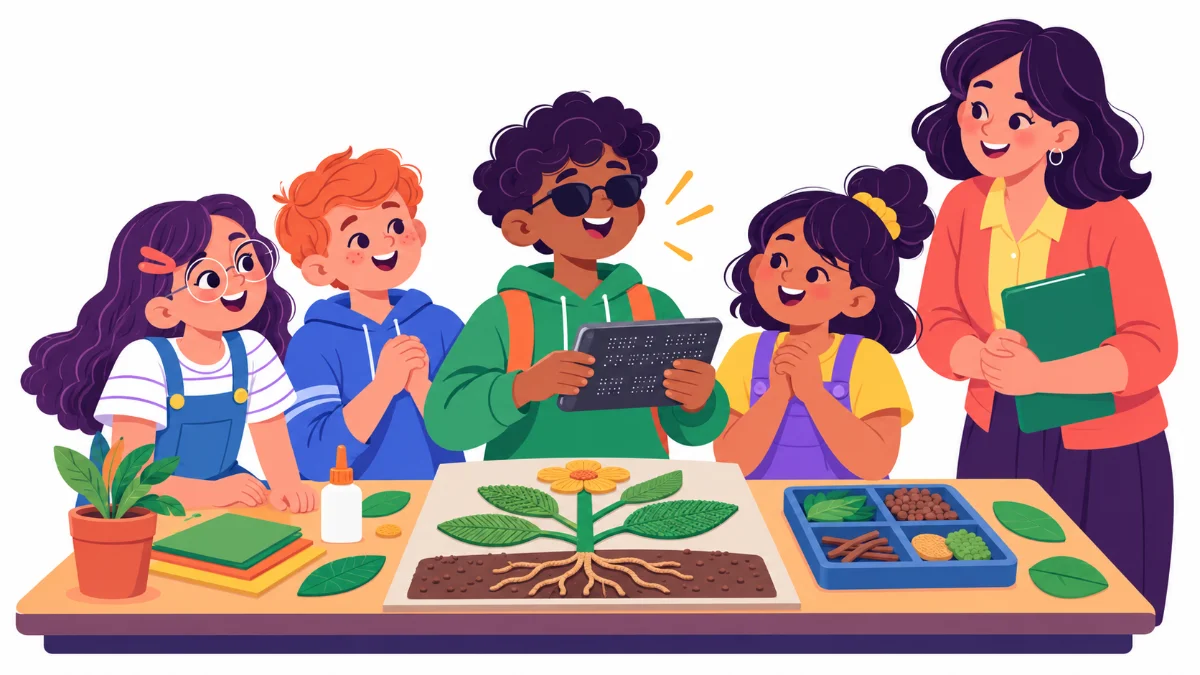

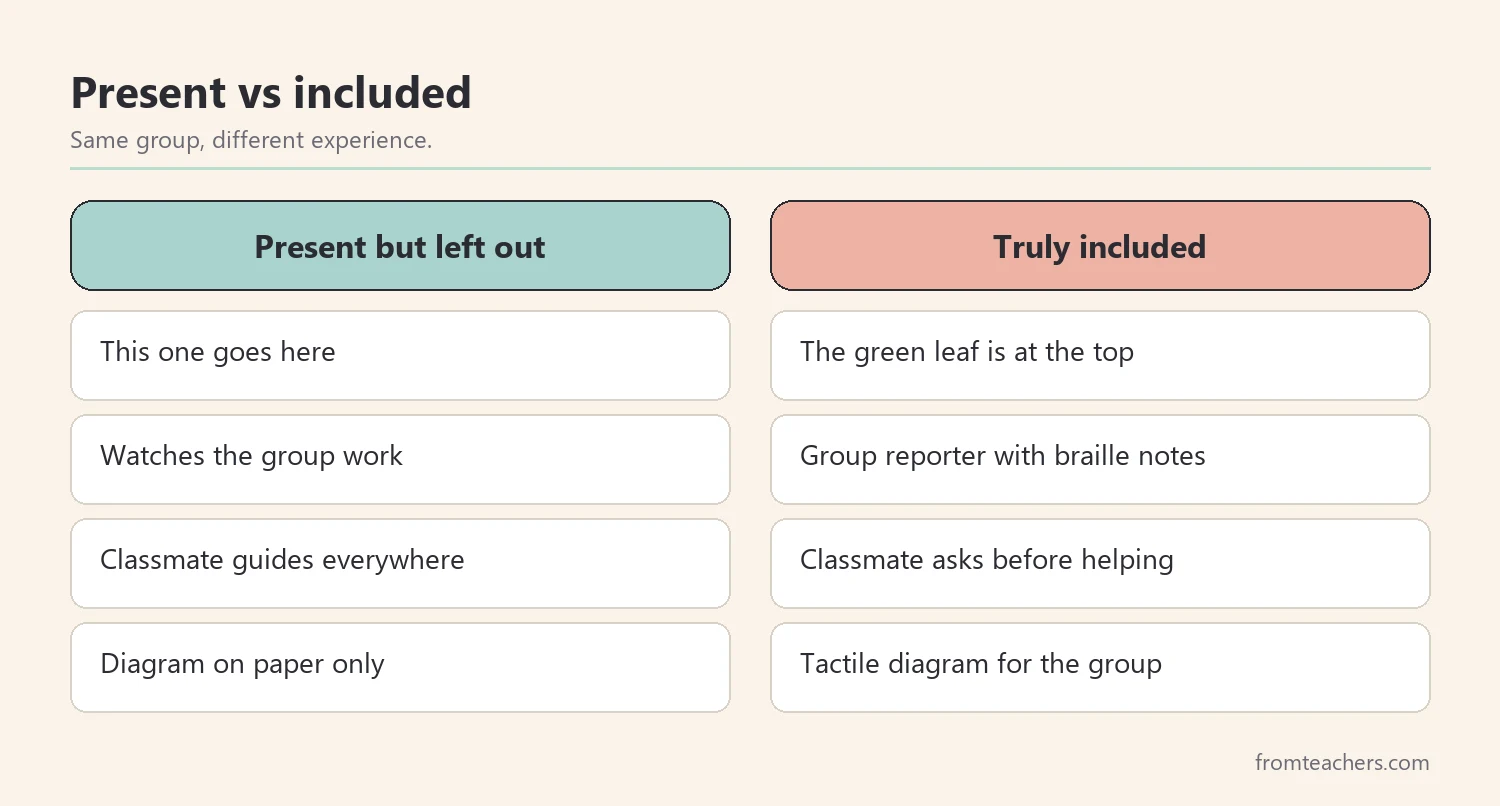
Including blind students in group activities takes more than a seat at the table. Picture Mateo, a fourth grader who is blind and reads braille, during a science group project on plants. His three classmates lean over a diagram, point at the leaves and say “this one goes here.” Mateo sits quietly, holding a pencil he cannot use for this task, and waits for the group to finish.
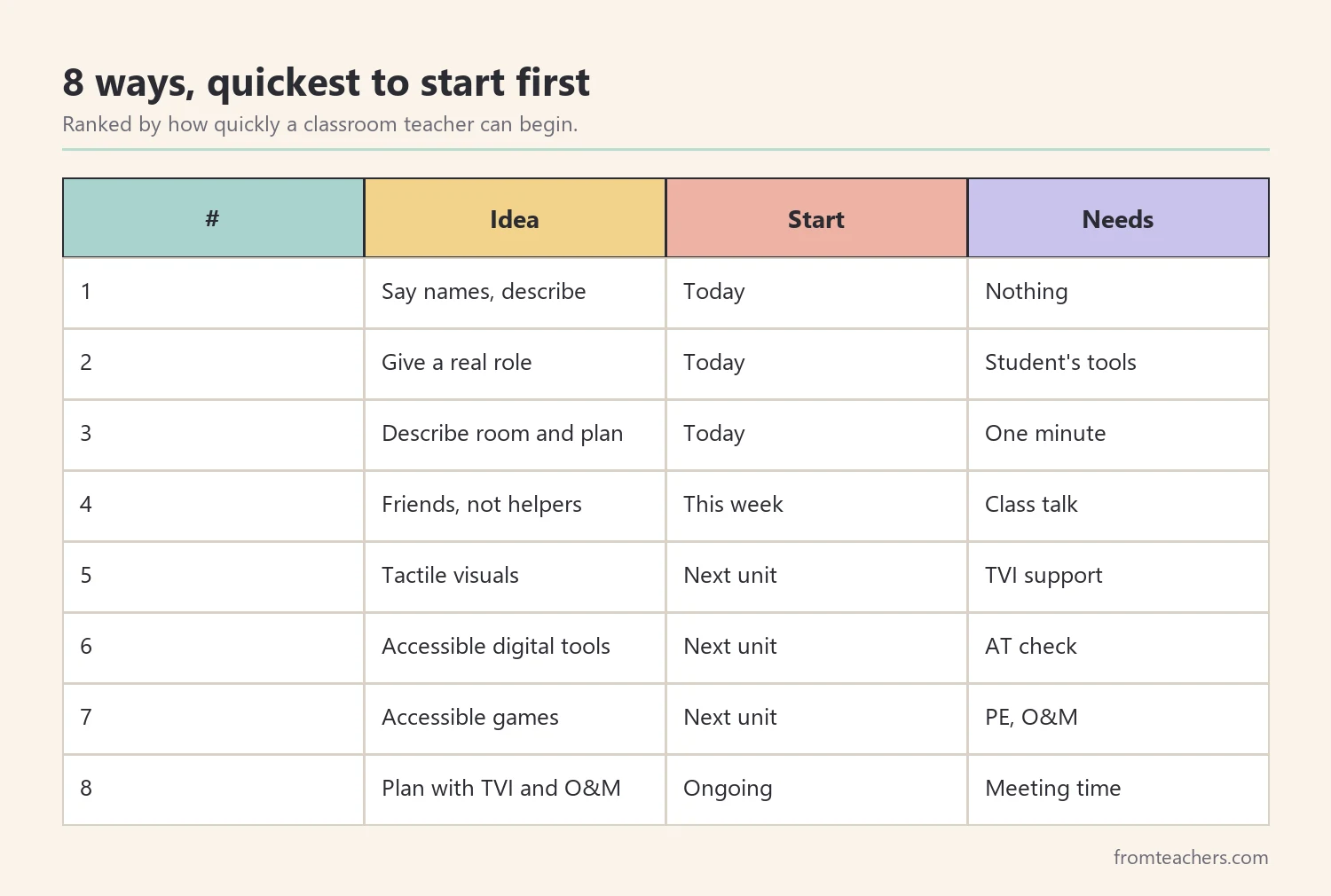
This list is for general education teachers, paraprofessionals and specials teachers who lead group work, games and projects. It ranks eight practical ways to include a blind or low vision student, from changes you can make today to ones that need planning with the teacher of students with visual impairments (TVI). Each idea includes why it works, how to set it up and a short example from Mateo’s class.
Examples are fictional. Adapt to the student’s goals, the IEP and the advice of the TVI and orientation and mobility (O&M) specialist. This is guidance, not a diagnosis.
At a glance
- Group work is where many blind students are physically present but socially left out.
- Clear spoken language and described visuals help the whole group, not only one student.
- A real role with real responsibility matters more than a helper beside the student.
- Tactile and audio versions of materials should be ready before the activity starts.
- The TVI and O&M specialist are key partners for planning.
How this list is ranked
We ranked these ideas by how quickly a classroom teacher can start them. The first ideas cost nothing and start today. Later ideas need materials prepared in advance or planning with the TVI. We did not rank them by impact, because what helps most depends on the student, the task and the group.
Every blind or low vision student is different. Some have no usable vision, while others have some light perception or low vision. Some read braille, some read large print, and many use both along with audio. Including blind students in group activities starts with knowing how this particular student accesses information. Figure 1 shows all eight ideas.
1. Say names and describe what you point at
First, change the language of the group. Words like “this,” “that” and “over here” mean nothing to a student who cannot see the pointing finger.
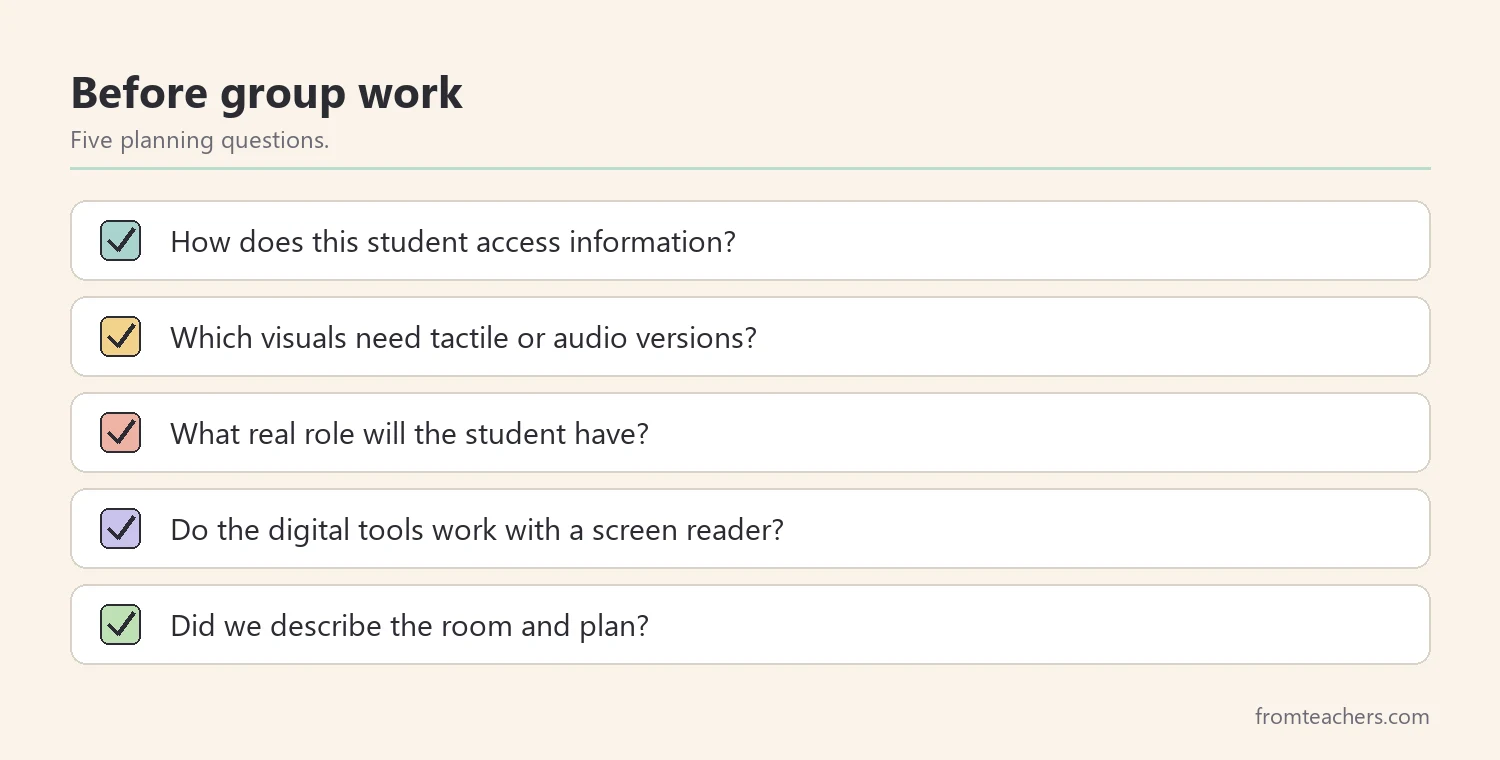
How to set it up: teach the whole class to say their name before speaking in groups and to describe instead of point. For example, “The green leaf is at the top of the stem.”
Example: Mateo’s teacher, Ms. Reyes, made “Say it, don’t point it” a class rule. Within a week, students reminded each other.
2. Give a real role
Next, avoid the “watcher” seat. A blind student should have a role that matters to the group’s result, not a role made up to keep them busy.
How to set it up: rotate roles such as reader, timekeeper, reporter, materials manager or recorder. Give the student the tools to do the role, such as a talking timer or a braille device.
Example: Mateo became the group’s reporter. He took notes in braille during the discussion and presented the group’s findings to the class.
3. Describe the room and the plan at the start
Before group work begins, describe where each group is sitting, where materials are and how the activity will run. This takes one minute and helps everyone.
How to set it up: keep group locations and materials in the same places when possible, and tell the student about any changes before the lesson.
4. Build friendships, not helpers
Classmates often want to help, but constant help can turn peers into assistants instead of friends. Social inclusion means shared fun, shared decisions and shared credit.
How to set it up: teach classmates to ask, “Do you want help?” before helping. Plan group tasks where everyone contributes something unique.
Example: one classmate used to guide Mateo everywhere. After a short talk about asking first, they started choosing games together at recess instead.
For more ideas on belonging and friendship, the Visual Impairment Toolkit for classroom access and braille includes a social inclusion section, guidance on working with the TVI and O&M team, and printables and data trackers.
5. Prepare tactile versions of visuals
Diagrams, maps and charts are common in group tasks. A tactile version lets the student explore the same content with their hands.
How to set it up: ask the TVI which visuals in the unit need tactile versions, and share materials well in advance. Simple options include raised lines with glue, textured stickers or real objects.
Example: for the plant project, the TVI made a tactile plant diagram with different textures for roots, stem and leaves. Mateo’s group used it together.
6. Use accessible digital tools in shared work
Many group projects happen on shared documents or slides. Some tools work well with screen readers, while others are hard to use.
How to set it up: check with the TVI or assistive technology specialist which tools the student uses, and choose shared formats that work with them. Avoid tasks that rely only on images or drag-and-drop.
Example: Mateo’s group switched from a picture-heavy slide deck to a shared text document with headings. He could navigate it with his screen reader and added the group’s conclusions himself.
7. Make games and recess accessible
Group activities include games, PE and recess. These are often where social connections are made.
How to set it up: use balls with bells, sound cues and clear boundaries. Work with the O&M specialist and PE teacher on safe, independent movement.
8. Plan with the TVI and O&M team
Finally, the most powerful idea needs the most planning. The TVI and O&M specialist know the student’s skills, tools and goals. Regular planning time with them makes every other idea easier.
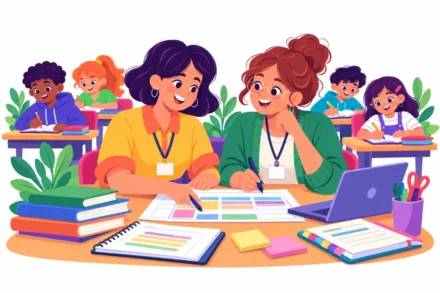
How to set it up: share upcoming units a few weeks ahead, ask which materials need adapting, and invite the TVI to suggest group roles that build IEP skills.
Example: Ms. Reyes and the TVI met for fifteen minutes every two weeks. They chose one group activity to adapt each time.
Adapting common group formats
Most classrooms use a handful of group formats again and again. Therefore, adapting each format once saves planning time for the rest of the year. The table below shows simple adaptations for four common formats.
| Format | Common barrier | Simple adaptation |
|---|---|---|
| Think-pair-share | Partner points at a page | Partner reads and describes aloud |
| Gallery walk | Posters on walls | Audio or braille copy at each stop |
| Card sorts | Print-only cards | Braille or large print labels |
| Whiteboard brainstorm | Ideas written on the board | Recorder reads ideas back |
For example, Ms. Reyes used card sorts often in science. Once the TVI added braille labels to one master set, the class used the same cards all year, and Mateo sorted alongside his group instead of waiting for someone to read each card.
Also, think about timing. Reading braille or listening to audio can take longer than skimming print. Building a little extra time into group tasks, or giving the student the materials a day early, helps them join the discussion with ideas ready. In fact, previewing materials helps many classmates too, especially those who need more time to process.
Checking whether including blind students in group activities is working
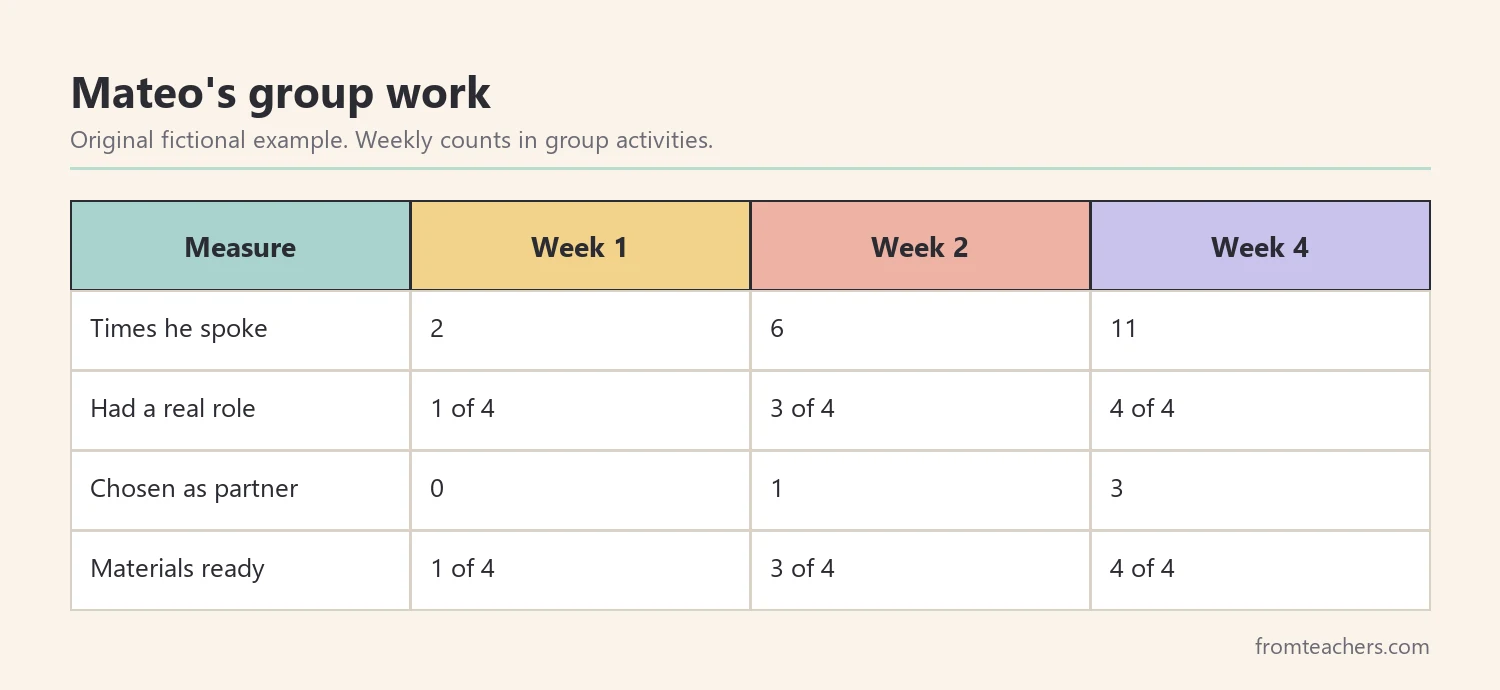
It is easy to assume a student is included because they are in the group. Instead, look for simple signs: Does the student speak during the activity? Do they have a real role? Do classmates talk to them, not only about them?
For example, Ms. Reyes tracked three simple measures for four weeks: how many times Mateo spoke in group work, whether he had a defined role and whether a classmate chose to work with him. Figure 3 shows the change as the class adopted the new habits.
Also, ask the student. A short, private check-in, such as “What part of group work was easy today? What was hard?”, gives information no checklist can provide.
In addition, watch the less structured moments, such as the minutes before a lesson starts or while groups clean up. These are often when classmates chat and make plans. A student who is included in the task but alone in these moments may need help joining conversations, such as a seat near friends or a shared job during cleanup.
Next, involve families. Parents often know which classmates their child mentions at home and which activities feel hard. A short note or call each month can confirm whether the changes in class feel real to the student.
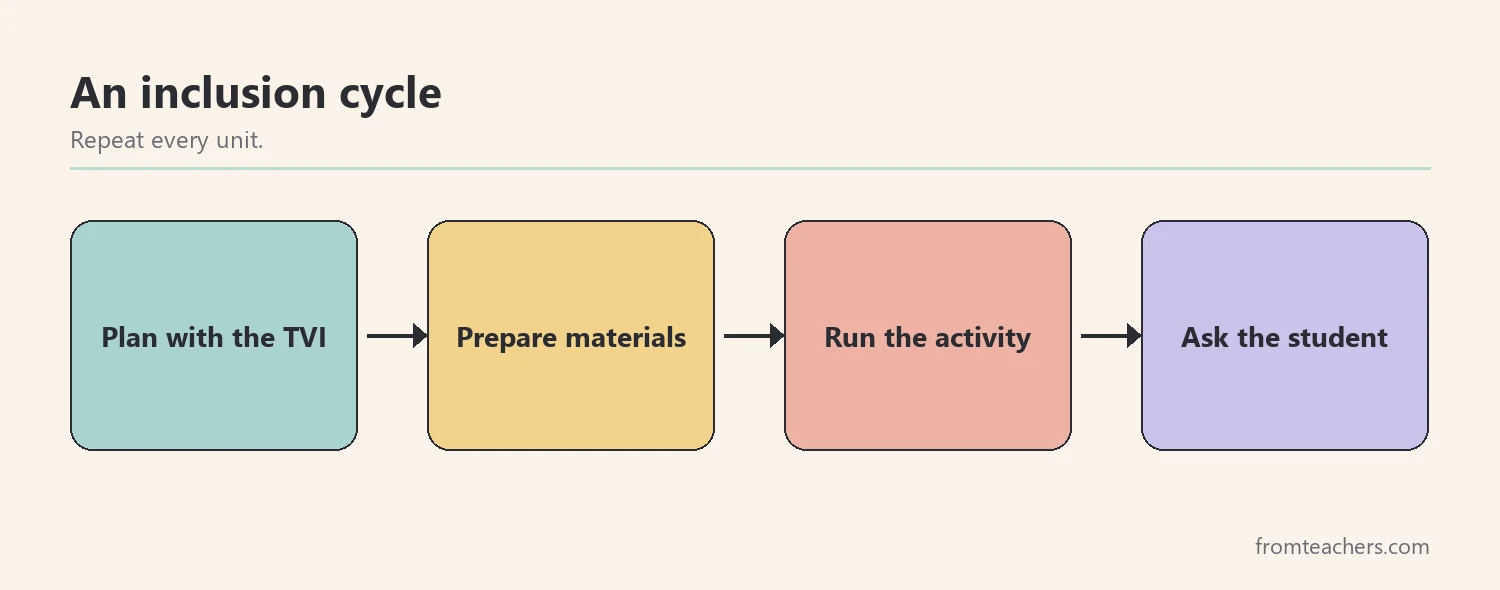
Finally, share what works with the IEP team. Inclusion strategies that help in one class can help in specials, lunch and field trips too. Figure 5 shows a simple cycle for planning and reviewing.
Common mistakes and how to avoid them
- Assigning a permanent peer helper. Fix: rotate partners and teach classmates to ask before helping.
- Preparing materials on the day. Fix: share units with the TVI weeks ahead.
- Giving a made-up role. Fix: choose roles that affect the group’s result.
- Talking to the aide instead of the student. Fix: speak directly to the student.
- Moving furniture without warning. Fix: describe changes before the lesson.
Questions teachers ask about including blind students in group activities
Should a paraprofessional sit with the student during group work?
It depends on the student’s needs and IEP. Often, an adult nearby but not beside the student allows more natural peer interaction.
What if the activity is very visual?
Ask the TVI for an adapted version, such as a tactile model or a verbal description. Sometimes the whole group benefits from a hands-on version.
How do I explain blindness to classmates?
Keep it simple and positive, and ask the student and family how they would like it explained. Many students like to share how they read braille or use their tools.
Is it safe for a blind student to play group games?
With adaptations and guidance from the O&M specialist and PE teacher, many games can be played safely. Plan boundaries and sound cues in advance.
How often should I meet with the TVI?
Schedules vary. Even short, regular check-ins, such as every two weeks, help you plan materials and roles ahead.
Related reading: Best Assistive Technology for Special Education Classrooms, Assistive Technology in Special Education, and Accommodations vs Modifications in Special Education.
You may also need: Deaf-Blindness Toolkit: Tactile Communication and Access.
A companion resource for including blind students in group activities:
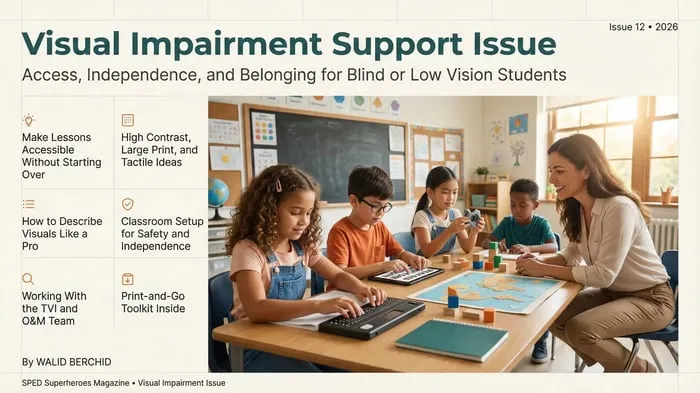
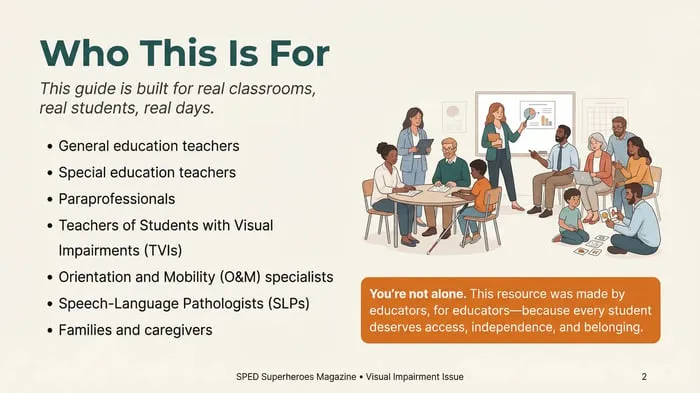
Visual Impairment Toolkit: Classroom Access & Braille: a 49-page guide with classroom access setup, accessible materials, assistive technology guidance, social inclusion strategies, teamwork with the TVI and O&M team, and printables and data trackers.
Sources and scope
- American Foundation for the Blind: information for educators and families on blindness and visual impairment.
- American Printing House for the Blind: accessible materials and resources for students who are blind or have low vision.
- Perkins School for the Blind: teaching resources on inclusion, braille and accessible learning.
- Individuals with Disabilities Education Act (IDEA): the federal law that includes visual impairment as a disability category.
This list covers practical ways to include blind and low vision students in group work, games and projects. It does not replace the student’s IEP or guidance from the TVI, O&M specialist or eye care professionals.
Key takeaways
- Including blind students in group activities starts with clear, descriptive language.
- Give a real role and the tools to do it.
- Build friendships by teaching classmates to ask before helping.
- Prepare tactile and accessible digital materials ahead with the TVI.
- Check inclusion with simple measures and by asking the student.
Leave a Comment