
Special education magazines offer something busy teachers rarely get: short, focused reading that fits into a planning period. Picture a special education teacher who wants to grow in her practice but has no time for long courses. She has a stack of magazines on her desk, and they stay unopened until the end of the year.
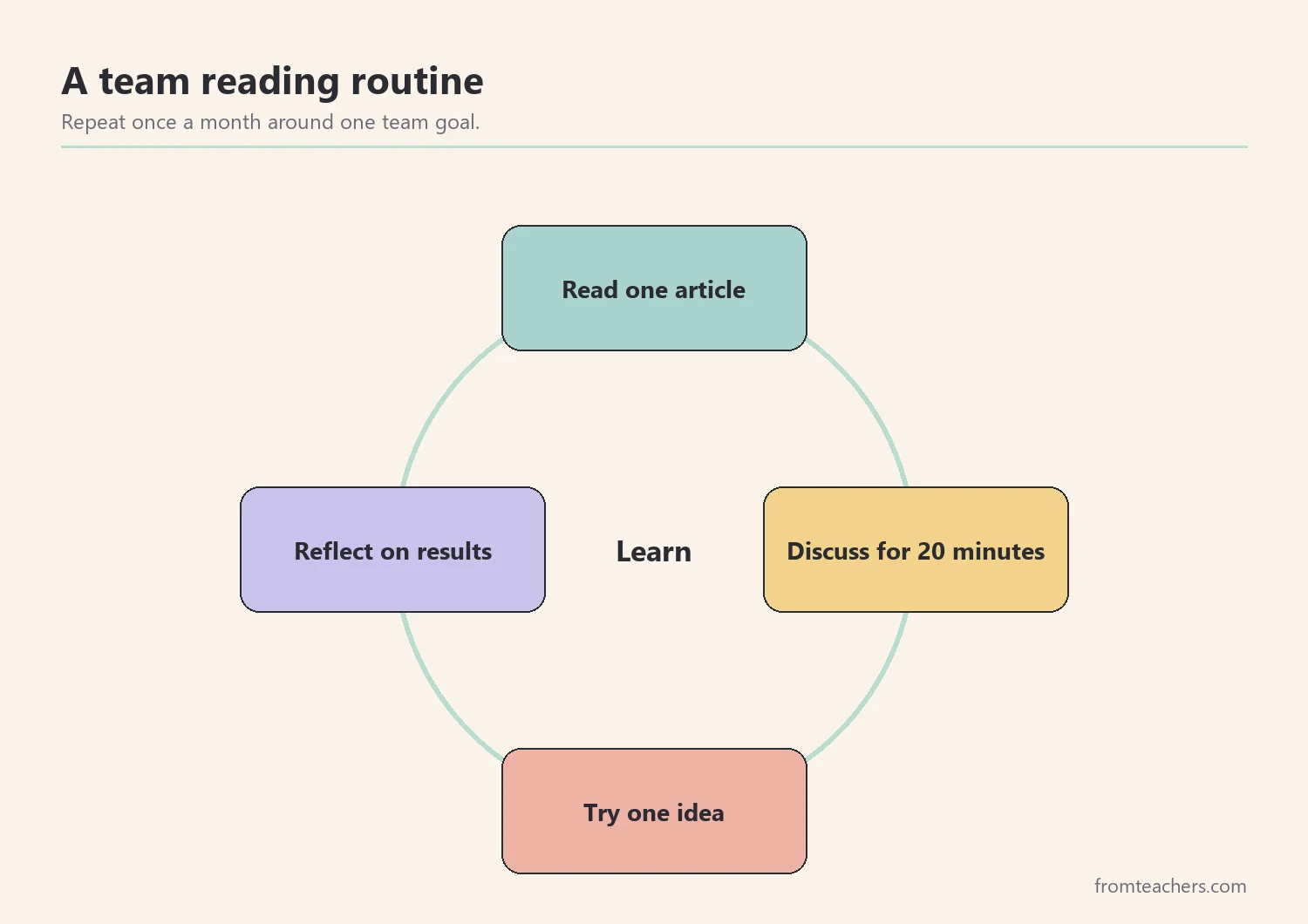
This guide turns that stack into a working routine in six steps: set a reading goal, choose the right articles, read with a simple note page, run a short team discussion, try one idea in class, and share what works with families and new staff. By the end, you will have a low-cost professional learning routine your team can actually keep.
Examples are fictional. Adapt to your team’s goals and your school’s policies. This is guidance, not a formal training program.
At a glance
- Start with one team goal, so reading has a clear purpose.
- Choose one short article per month instead of whole issues.
- Use a one-page note to capture a single idea to try.
- Meet for twenty minutes with a fixed agenda.
- Test the idea in class, then share what worked with families and new staff.
1. Set a reading goal for special education magazines
First, decide why your team is reading. Without a purpose, special education magazines become one more pile on the desk. With a purpose, each article answers a real question from your classrooms.
A good reading goal is narrow and practical. For example, “improve how we handle transitions” or “write clearer IEP progress notes” both work. By contrast, “learn more about special education” is too broad to guide your choices.
Next, keep the goal for a full term. Teams that change focus every month rarely see results. In addition, write the goal at the top of a shared document, so everyone sees it when choosing articles.
| Too broad | Practical reading goal |
|---|---|
| Learn about autism | Make transitions calmer for autistic students |
| Better behavior | Use more positive feedback during group work |
| Improve IEPs | Write clearer, data-based progress notes |
| Work with families | Send one useful update home each week |
Why magazines suit busy teams
Many teachers want to keep learning but cannot add another course to a full week. Special education magazines fit that gap, because articles are short, practical, and written for working educators. In addition, they cover a wide range of topics, from behavior to family partnerships.
Also, magazines feel approachable to everyone on a team. Aides, specialists, and new teachers can read special education magazines without a background in research. As a result, the whole team builds a shared language, not only the most experienced members.
Worked example. Ms. Rivera is a fictional special education teacher in an elementary school. Her team of four teachers and two aides chooses one goal for the fall: “make transitions between activities calmer.” Every article they read this term will connect to that goal.
2. Choose the right articles from each issue
Next, select what to read from your special education magazines. Most teams cannot read entire issues, and they do not need to. One well-chosen article per month is enough to keep learning moving.
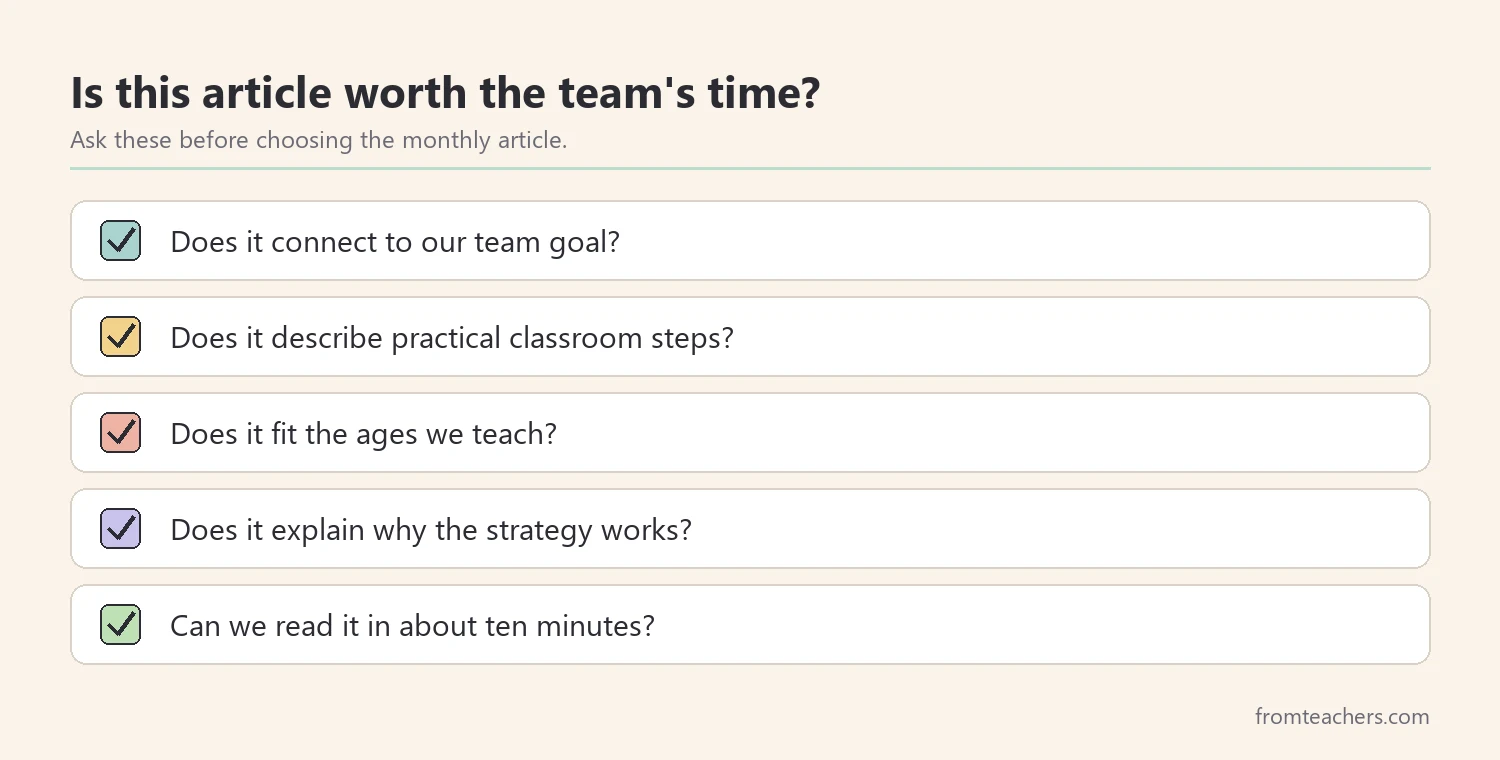
When you scan special education magazines, look for pieces that connect to your goal, describe practical classroom steps, and fit the ages you teach. Also, prefer articles that explain why a strategy works, not only what to do. That context helps your team adapt the idea instead of copying it blindly.
Then, rotate who chooses. When different team members pick the article, the reading reflects more voices, including aides and specialists. As a result, more people feel ownership of the routine.
A ready collection makes this step much easier. The special education magazines bundle gathers a set of issues in one place, so your team can pick from several topics without searching for new material each month.
Worked example. In September, Ms. Rivera picks an article about visual supports during transitions. In October, an aide on the team chooses one about using timers and warnings before changes. Both connect to the same goal.
3. Read with a simple one-page note
Reading special education magazines alone does not change practice. However, reading with a clear note page often does. Ask every team member to fill in the same short page before the meeting.
Keep the note page to four prompts. What is the main idea? Which part fits our students? What is one thing I could try? What might get in the way? These four answers take about ten minutes and make the discussion far more focused.
Also, encourage people to mark the article itself. A quick underline or a star in the margin helps readers find key lines during the meeting. If you share printed copies, keep one clean master copy for future staff.
One-page note prompts
- Main idea in one sentence.
- The part that fits our students best.
- One thing I could try this month.
- One barrier I can already predict.
Worked example. Before the September meeting, each team member reads the visual supports article and fills in the note page. One aide writes that a “first, then” card could help a student who struggles to leave the reading corner. Another teacher predicts that cards will get lost unless they have a fixed place.
4. Run a twenty-minute team discussion
Busy teams need short meetings with a fixed shape. Therefore, use the same twenty-minute agenda each month. When everyone knows the plan, the discussion stays on track and ends on time.
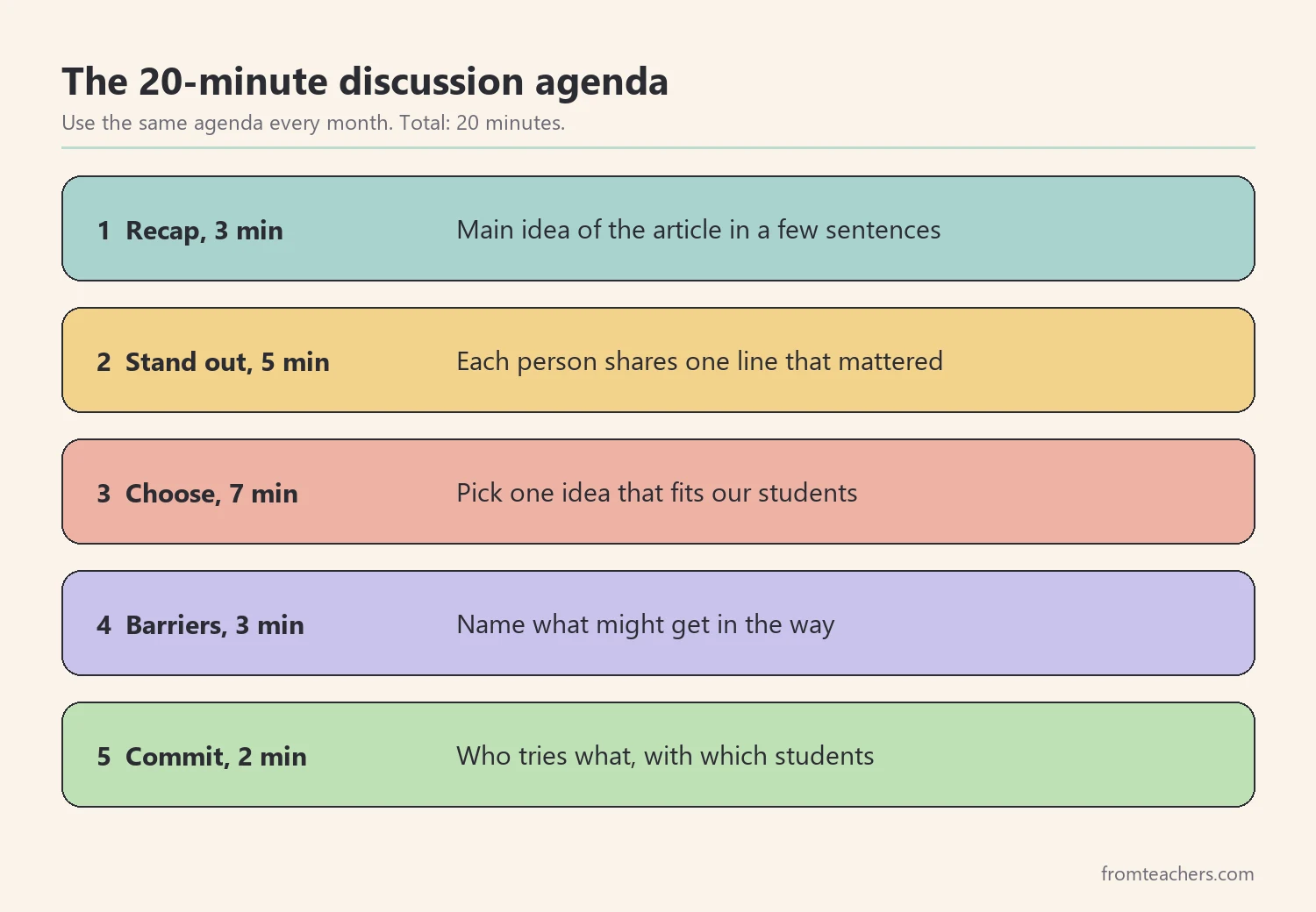
Begin with a quick recap of the article. Then, let each person share what stood out. Next, choose one idea to try, talk through likely barriers, and end with clear commitments: who will try what, and with which students.
Also, rotate the facilitator role. A different person leads each month, which spreads the work and builds confidence. In addition, keep a running list of every idea the team has tried, so the routine builds a shared record over time.
Finally, protect the time. Twenty minutes during a regular team meeting is easier to keep than a separate session after school. Reading special education magazines together only works if the meeting actually happens.
Worked example. In the September meeting, Ms. Rivera’s team spends 3 minutes on the recap, 5 minutes on what stood out, 7 minutes choosing an idea, 3 minutes on barriers, and 2 minutes on commitments. They agree that two teachers will try “first, then” cards during the move from reading to math.
5. Try one idea in class and track it
An idea becomes learning only when someone tests it. So, after each discussion, choose one small change to try for two to four weeks. Keep it specific enough that you can tell whether it worked.
Next, decide on one simple measure. For example, count how many minutes a transition takes, or how many times a student needs a reminder. Record it on the same days each week, using a sticky note or a clipboard.
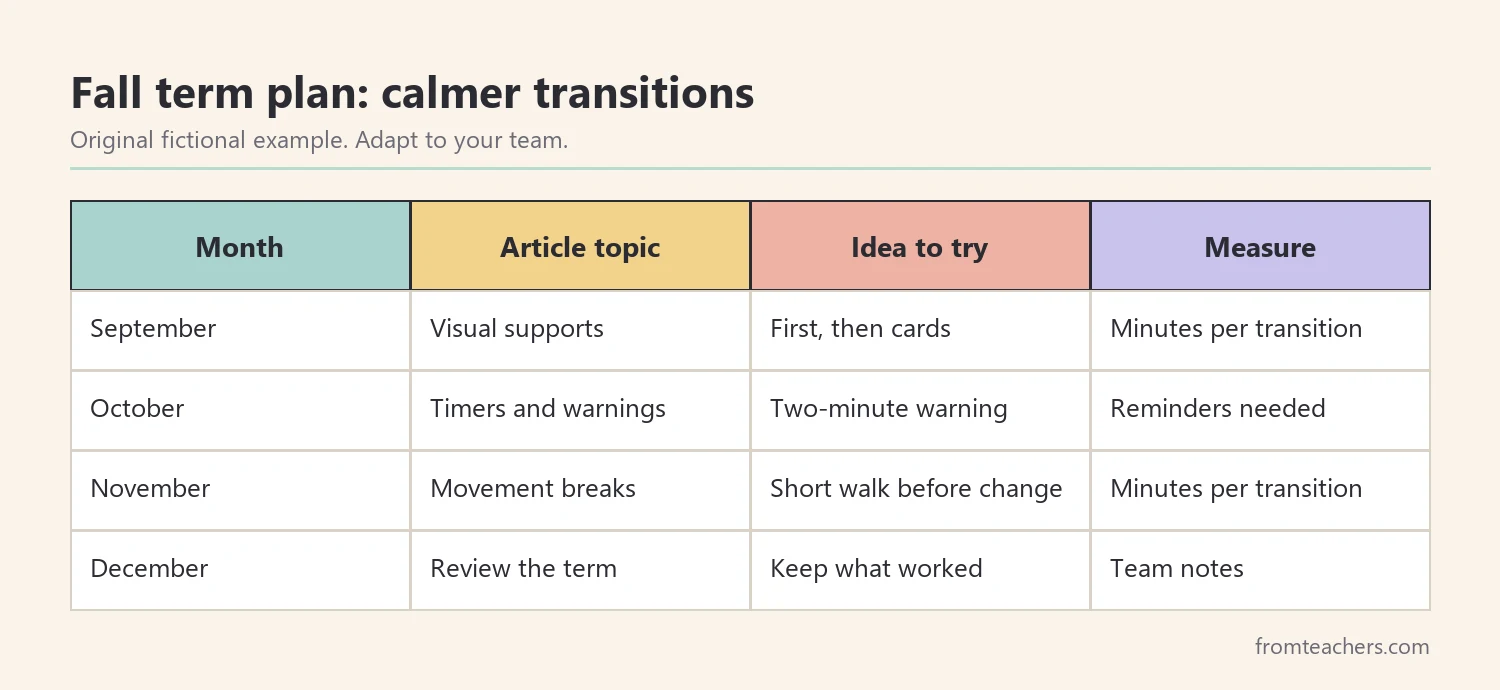
Then, bring the results back to the next meeting. Share what changed, what did not, and what you would adjust. Even a strategy that did not work teaches the team something useful. For example, it may show that a strategy needs more practice, a different time of day, or a better fit for the students involved.
Keeping a shared idea log
Over time, the ideas your team tests become a valuable record. Therefore, keep one shared log with the month, the article, the idea, and what happened. When someone asks, “Have we tried anything for this before?”, the answer is easy to find.
In addition, the log turns special education magazines into a resource that outlasts any single issue. New team members can scan it in a few minutes and see which strategies already fit your students. Meanwhile, experienced staff can see how the team’s practice has changed across the year.
Worked example. The two teachers use “first, then” cards during the reading-to-math transition for three weeks. In week one, the transition takes about six minutes. By week three, it takes about three minutes on most days. At the October meeting, they share the cards with the rest of the team.
6. Share special education magazines with families and new staff
Good reading from special education magazines should not stay in the staff room. Many parents feel lost in special education vocabulary, and a friendly article can help. Similarly, new teachers and aides often start the year with little background.
For families, choose short, plain-language articles connected to a real conversation. For example, send home an article about routines before a meeting about homework struggles. Also, place a few issues in a family resource area where parents wait for meetings.
For new staff, build a small starter stack. Pick three or four articles on behavior basics, data collection, and working with families. Then, pair each new person with a team member who can answer questions after reading.
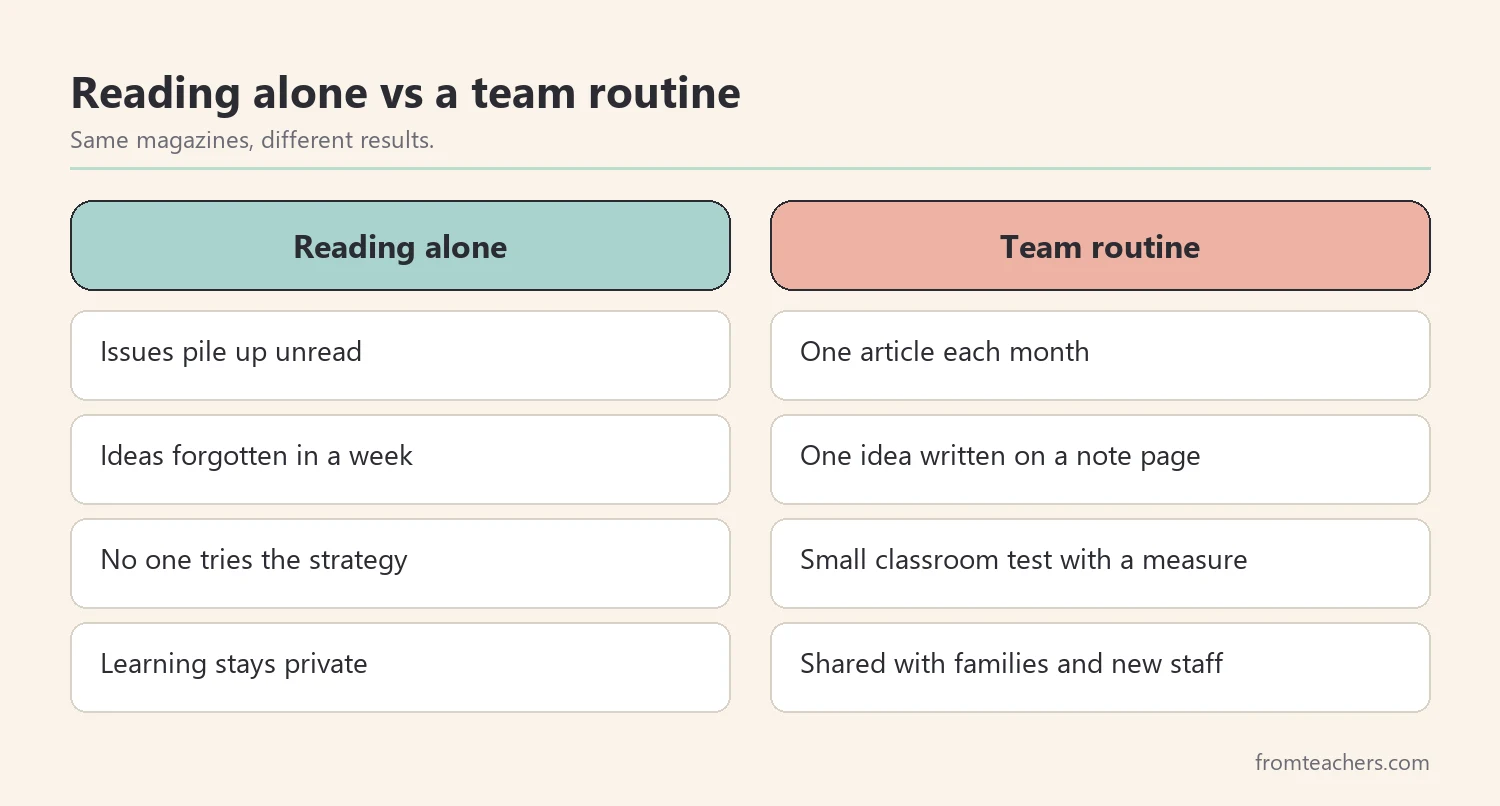
When you share with families, add a short note explaining why you chose the article. One or two sentences are enough, such as “This piece describes the visual cards we are starting in class.” Then, invite questions at the next meeting or by message. That small step turns a handout into a real conversation, and families often bring back ideas that work at home.
Finally, respect each reader’s time. Offer articles as an option, not an assignment, and keep the number small. A single helpful piece that a parent actually reads does more than a folder of materials that stays closed.
Worked example. In January, a new aide joins Ms. Rivera’s classroom. The team gives her the transitions articles from the fall, along with the list of ideas they tried. Within a week, she uses the same “first, then” cards with the same students.
Common mistakes and how to avoid them
- Reading without a goal. Articles feel interesting but change nothing. Fix: tie special education magazines to one team goal per term.
- Assigning too much reading. People stop reading when it feels like homework. Fix: one short article per month is enough.
- Meetings without an agenda. Discussion drifts and runs long. Fix: use the same twenty-minute structure each time.
- Never testing ideas. Learning stays theoretical. Fix: end every meeting with one small classroom commitment.
- Leaving out aides and specialists. Valuable views are lost. Fix: invite everyone and rotate who chooses and leads.
Questions teachers and parents ask about special education magazines
Are magazines a good substitute for formal training?
They work best as a supplement. Magazines offer quick, practical ideas between formal trainings. Required training, licensure, and district programs remain separate.
How much time does this routine take each month?
About ten minutes of reading and a twenty-minute meeting. Many teams fit the meeting into an existing team or grade-level session.
Can parents use special education magazines on their own?
Yes. Short articles can help families understand terms and ideas before meetings. Teachers can suggest specific pieces that match a current conversation.
What if team members disagree with an article?
That is useful. Disagreement often leads to the best discussions. Ask what the article gets right for your students, what does not fit, and why.
How do we keep the routine going all year?
Keep it small, protect the time, and rotate leadership. Also, celebrate one success at each meeting, so people see that reading leads to real change.
Related reading: Special Education: A Complete Guide for Parents and Educators, How Teachers Communicate With Parents in Special Education, and Bridging Gaps: A Practical Handbook on Special Education.
A companion resource for special education magazines:
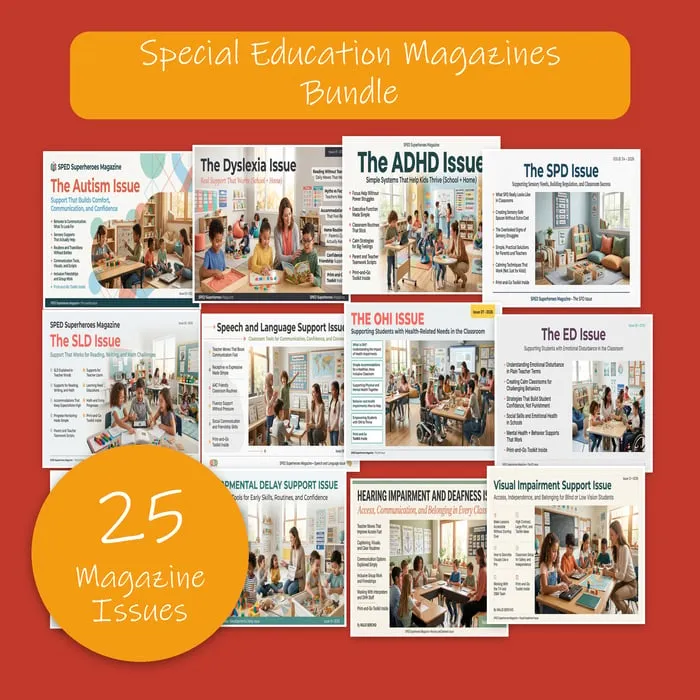
Special Education Magazines Bundle: a collection of special education magazine issues in one bundle, ready for team reading, new staff onboarding, or sharing with families.
Sources and scope
- Council for Exceptional Children: a professional association for special educators with resources and professional learning.
- IRIS Center, Vanderbilt University: free modules that pair well with team reading on evidence-based practices.
- IDEA, U.S. Department of Education: the law behind special education services and IEPs.
- Center for Parent Information and Resources: plain-language materials for families.
This guide covers an informal reading routine for teachers, aides, and families. It does not replace required training, licensure requirements, or district professional development plans.
Key takeaways
- Give special education magazines a purpose with one team goal per term.
- Read one short article per month and capture one idea on a note page.
- Discuss in twenty minutes with a fixed agenda and rotating leaders.
- Test one idea in class and bring results back to the team.
- Share useful articles with families and new staff.







Leave a Comment