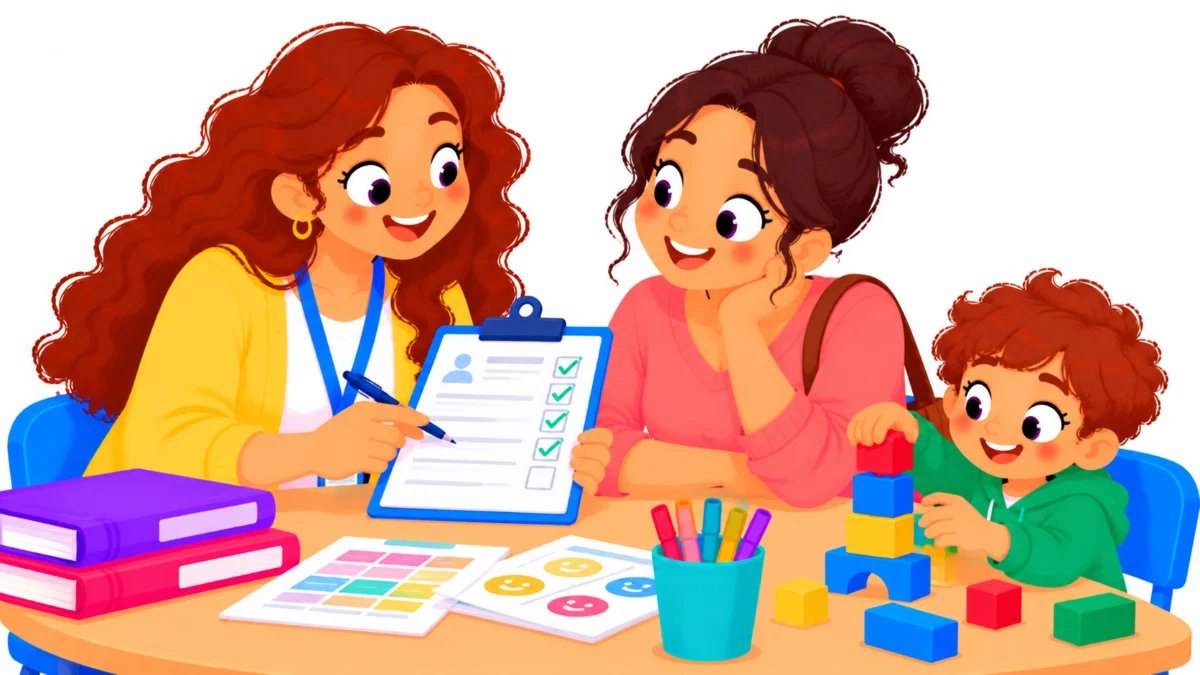

An early childhood IEP goes more smoothly when the key details are gathered in one place before anyone sits down at the table. Picture a kindergarten teacher at the first planning meeting of the year, searching three folders and an inbox for a speech therapist’s phone number while a parent waits. Nothing is wrong with the plan itself, but the meeting starts on the wrong foot.
This guide walks directors, kindergarten teachers, and coordinators through a five-step intake process. You will collect student information, record services and providers, capture health and support notes, log every participant, and keep the record current through the year. By the end, you will have a clear, repeatable intake routine for young learners.
Examples are fictional. Adapt to the child’s goals and agreed supports. This is guidance, not a diagnosis or legal advice.
At a glance
- Collect basic student details before the first meeting.
- Keep every service, location, and contact in one table.
- Write health and support notes in plain, short language.
- Log each participant with their role and signature.
- Review the record at set points during the year.
1. Gather student information before the first meeting
First, start with the basics. An early childhood IEP often brings together people who have never met: families, preschool staff, kindergarten teachers, and therapists. Therefore, a shared page with the child’s core details saves time and prevents mix-ups.
Collect the child’s full name, birthdate, kindergarten start date, and how many days the child has attended so far. These details matter more than they seem. For example, a child who started two weeks ago is still adjusting, and the team should read early observations with that in mind.
Next, ask the family how they would like their child’s name written and spoken. Also, note any preferred language for meetings and paperwork. In addition, write down who usually brings the child to school and the best way to reach the family.
Then, ask what the family most wants the team to know. A parent may share that the child loves animals, calms down with a favorite song, or gets upset when routines change. These small details help the early childhood IEP team plan a warm first day and build trust from the start.
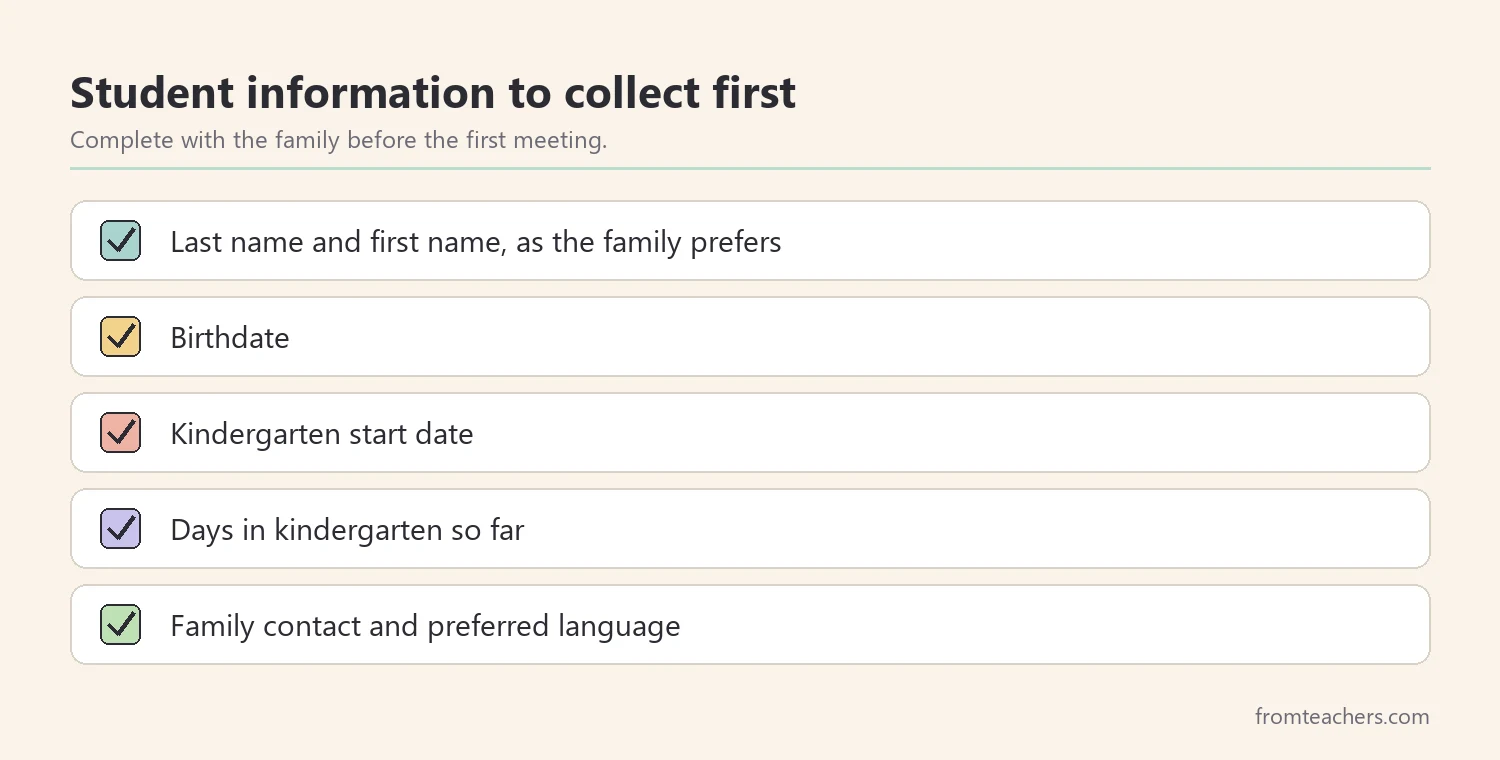
Student information checklist
- Last name and first name, spelled as the family prefers.
- Birthdate.
- Kindergarten start date.
- Days in kindergarten so far.
- Family contact and preferred language.
Worked example. Maya is a fictional five-year-old who received preschool special education services and is now starting kindergarten. Her teacher completes the student section during a short call with Maya’s father. Maya started kindergarten 12 school days ago. Her father asks that the team use “Maya” rather than her full given name.
In short, a few minutes of intake prevent confusion later. As a result, everyone at the early childhood IEP meeting starts with the same facts.
2. Record services and providers in one table
Next, list every service in the early childhood IEP that the child receives or is expected to receive. Young children often move between programs, so services can be spread across several providers and buildings. One table keeps it all visible.
For each service, record the service name, where it happens, the provider’s phone and email, who created the plan, and the director or teacher sign-off with a date. Keep each row short. Therefore, anyone on the team can find a contact in seconds.
| Field | Why it helps |
|---|---|
| Service name | Shows what support the child gets |
| Location | Avoids scheduling mix-ups |
| Phone and email | Makes follow-up quick |
| Created by | Shows who to ask about the plan |
| Sign-off and date | Confirms the entry was checked |
Also, check the table with the family. Families often know about services the school has not yet heard of, such as private therapy or a community program. You do not have to coordinate every service, but knowing about them helps the early childhood IEP team avoid gaps and overlaps.
If you want a ready-made layout, the Kindergarten IEP Intake Form includes a service details table with these fields, plus sections for student information, health notes, and an IEP participants log.
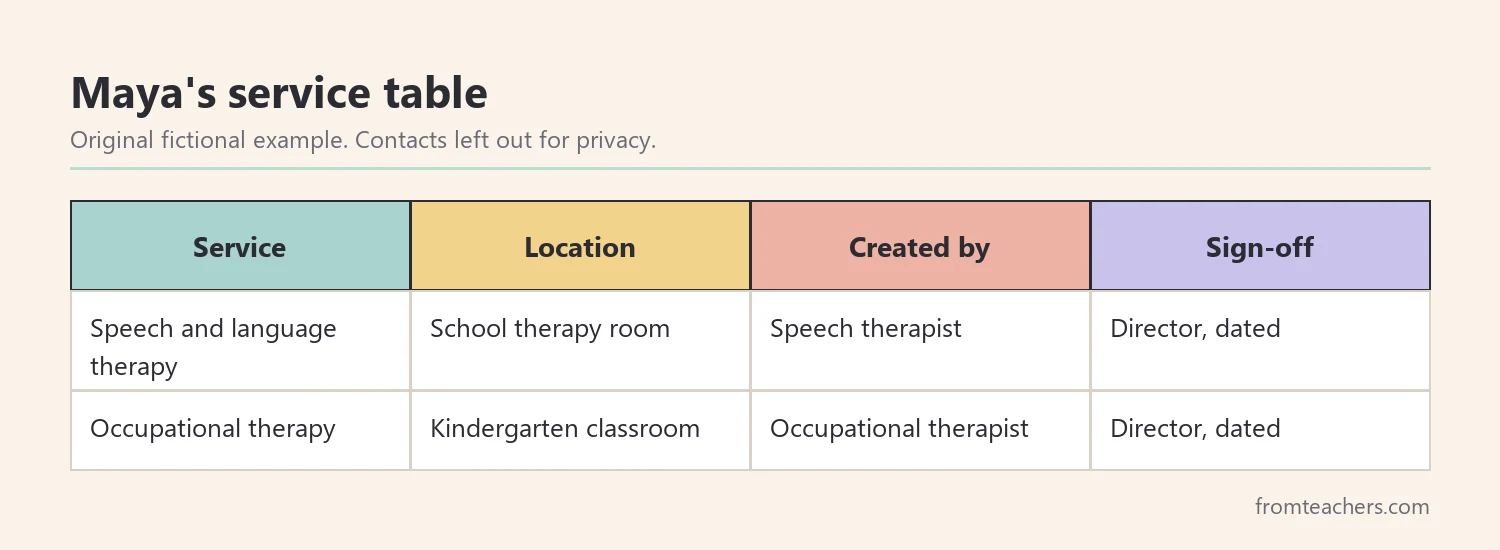
Worked example. Maya receives two services: speech and language therapy in the school therapy room and occupational therapy in her kindergarten classroom. Her teacher records each one with location and contact details. The director signs and dates both rows after checking them with Maya’s father.
3. Capture health notes and support agencies
Now, add the health and support section of the early childhood IEP intake. For an early childhood IEP, this part often explains a lot about a child’s day: why she tires after lunch, why she needs a snack at ten, or why loud rooms are hard. Keep the notes short, factual, and focused on what school staff need to know.
Record the child’s condition or disability as the family and records describe it, any health notes that affect school, and the support team or agencies involved. Also, note whether the child attended an early childhood program before kindergarten and how to contact it. Previous programs can share useful details about what helped.
However, protect privacy. Write only what the team needs to support the child at school. Store the form securely and follow your school’s rules on who can see health information. In addition, ask the family before contacting outside agencies.
Then, translate health notes into simple school actions. For example, “Needs a water bottle at her desk” is more useful to a substitute than a long medical term. Ask the school nurse to help with anything you are unsure about.
Also, date every health note. A note written in August may not match the child in March, and the early childhood IEP team needs to know which details are current. When a family shares a change, add it with the new date instead of overwriting the old line.
Worked example. Maya’s health note says she has a speech and language delay and mild seasonal allergies. Her support team includes a community speech clinic, which her father agrees the school may contact. She attended an early childhood program for two years, and the teacher records its contact so she can ask about strategies that worked.
4. Log every early childhood IEP participant
Next, keep a participants log. An early childhood IEP meeting may include families, teachers, therapists, administrators, and staff from previous programs. A simple log shows who attended, how each person connects to the child, and how to reach them.
For each participant, record the name, organization or connection to the child, phone number, and signature. Pass the log around at the start of the meeting. Then, check it before everyone leaves so no one is missing.
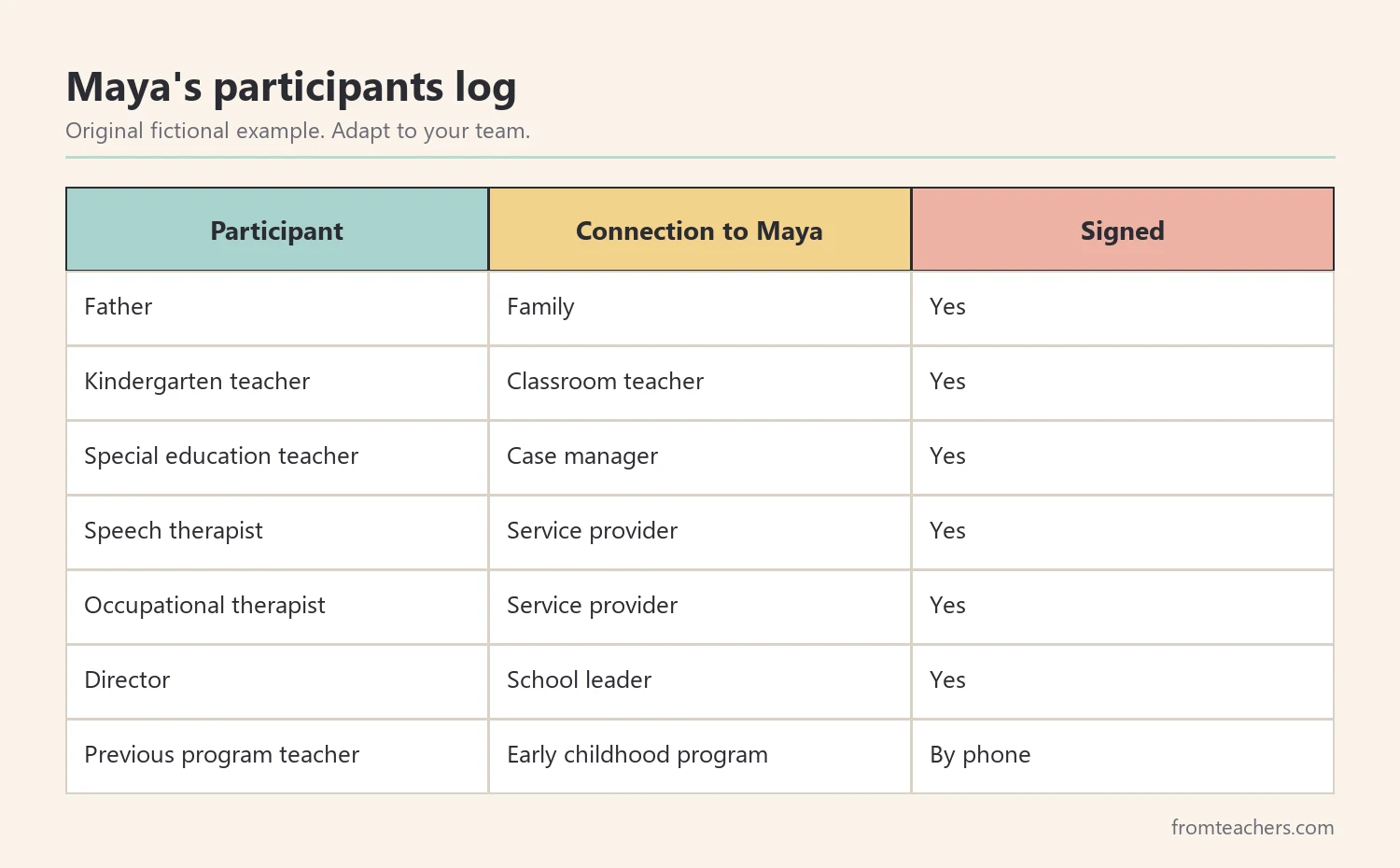
Also, use the log after the meeting. When a question comes up in October, you can see exactly who was there and who to ask. In addition, the log helps when the child moves to a new classroom or school, since the next team can see who has been involved.
Above all, make families feel like full members of the team. Introduce each person by name and role at the start. Ask the family to sign in the same way as staff, so the log reflects a shared team.
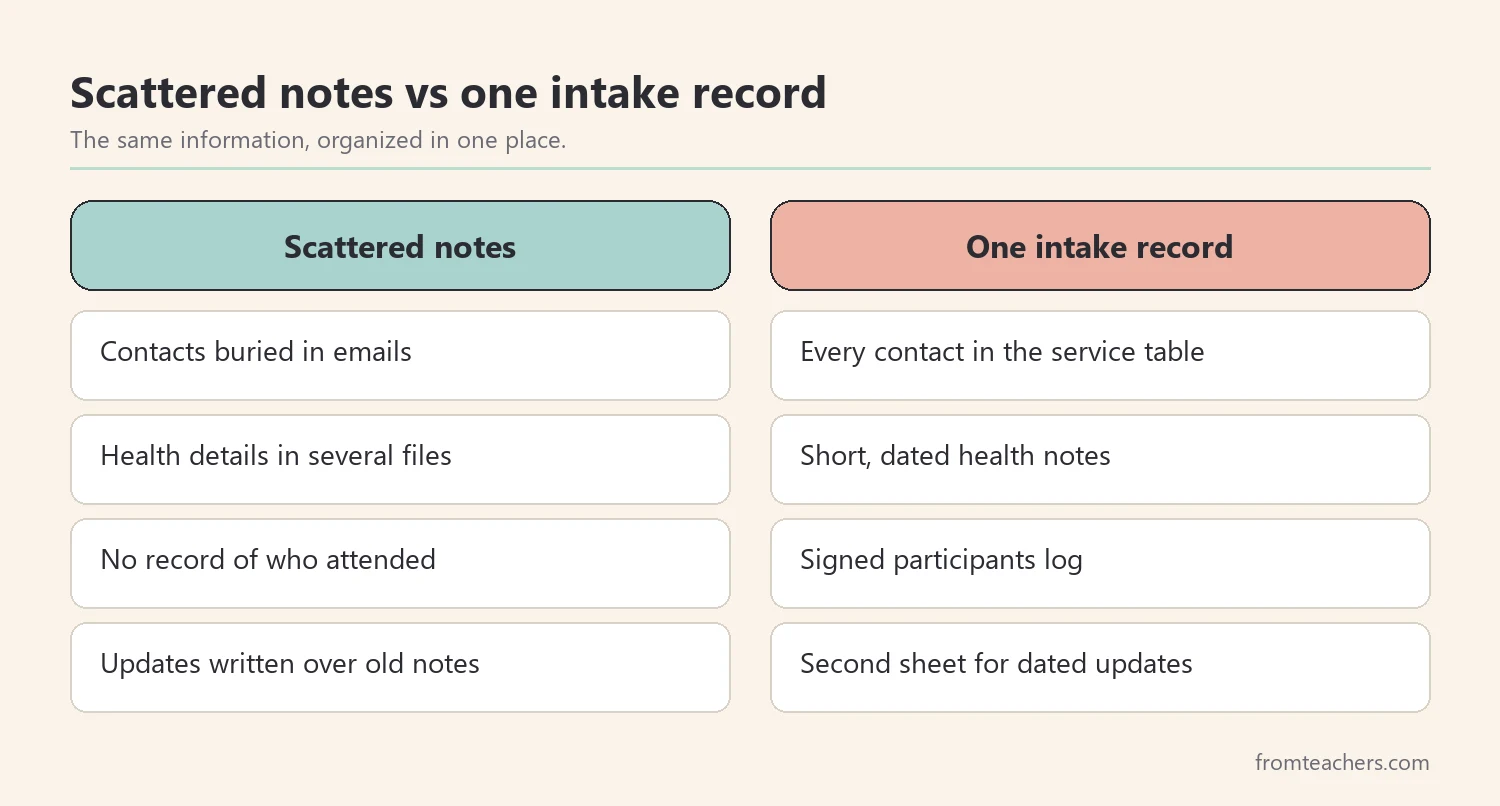
Moreover, keep the early childhood IEP participants log with the rest of the intake record. When papers are stored in different places, the log is easy to lose. One folder, printed or digital, keeps student details, services, health notes, and participants together.
Worked example. Seven people take part in Maya’s meeting. Six are in the room: her father, her kindergarten teacher, the special education teacher, the speech therapist, the occupational therapist, and the director. Each one signs the log with their role. The seventh, her previous program teacher, joins by phone, so the director writes her name and notes “by phone” in place of a signature.
5. Review the early childhood IEP record through the year
Finally, keep the intake record alive. Young children grow and change quickly, and services can shift during the kindergarten year. So, set a few check points to review and update the form.
A simple schedule works well: before the first meeting, right after the meeting, at midyear, and before the annual review. At each point, check contacts, services, health notes, and the participants log. Use a second sheet for updates rather than crossing out the first, so the history stays clear.
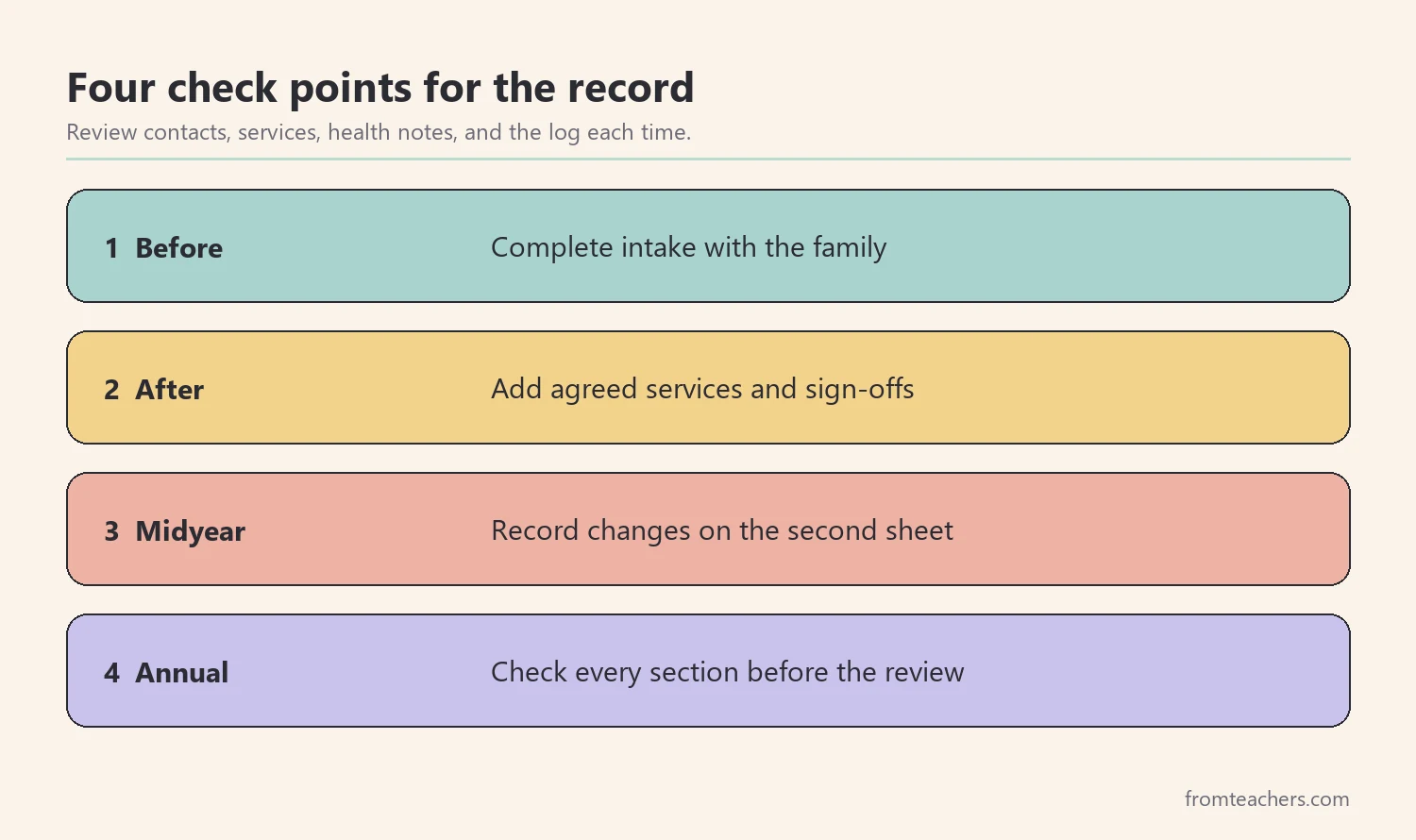
Also, share updates with the family. A short note when a provider changes or a new service starts helps parents stay informed. Families who feel informed are more likely to share what they see at home.
In addition, plan for transitions. When the child moves to first grade or a new school, a clean, current intake record helps the next team start well. It turns a pile of papers into a clear story of the child’s supports.
Finally, ask the family for feedback on the process. Did the early childhood IEP meeting feel organized? Was anything missing from the form? Their answers help you improve the intake routine for the next child.
Worked example. At midyear, Maya’s occupational therapy moves from her classroom to the therapy room. Her teacher records the change on the second intake sheet, notes the date, and emails Maya’s father. Before the annual review, the team checks every section and finds only one phone number to update.
Common mistakes and how to avoid them
- Collecting details at the meeting. Searching for basics wastes meeting time. Fix: complete the student section with the family beforehand.
- Services spread across emails. Contacts get lost. Fix: keep every service in one table with location and contact.
- Too much medical detail. Long notes are hard to use and may overshare. Fix: write short notes that lead to school actions.
- No participants log. Later, no one remembers who attended. Fix: pass a log at the start and check it at the end.
- A record that never changes. Old contacts cause delays. Fix: review the early childhood IEP record at set check points.
- Leaving families out. Families know details the school does not. Fix: review each section with them.
Questions teachers and parents ask about an early childhood IEP
What ages does an early childhood IEP cover?
Under IDEA, preschool special education services generally serve children ages 3 through 5, and many children continue with an IEP into kindergarten. Younger children may receive early intervention under a different plan. Your state and district can explain local rules.
Who attends an early childhood IEP meeting?
Typically, the family, a general education teacher, a special education teacher, someone who can interpret evaluation results, and a district representative. Therapists and staff from previous programs often join too. The participants log keeps track of everyone.
How often is the plan reviewed?
An IEP is reviewed at least once a year, and families or staff can request a meeting sooner. Many teams also check progress more often. Updating the intake record at the same times keeps everything aligned.
Can the intake form be digital?
Yes. Many schools use a printed form for the meeting and keep a digital copy. Either way, store it securely and follow your school’s privacy rules.
What if the family does not want to share health details?
Respect that choice. Record only what the family agrees to share and what the school already has on file. You can revisit the conversation later as trust grows.
Related reading: Special Education: A Complete Guide for Parents and Educators, How Parents and Teachers Can Team Up for Special Education Success, and Special Education Accommodation and Modification Tracker.
A companion resource for an early childhood IEP:
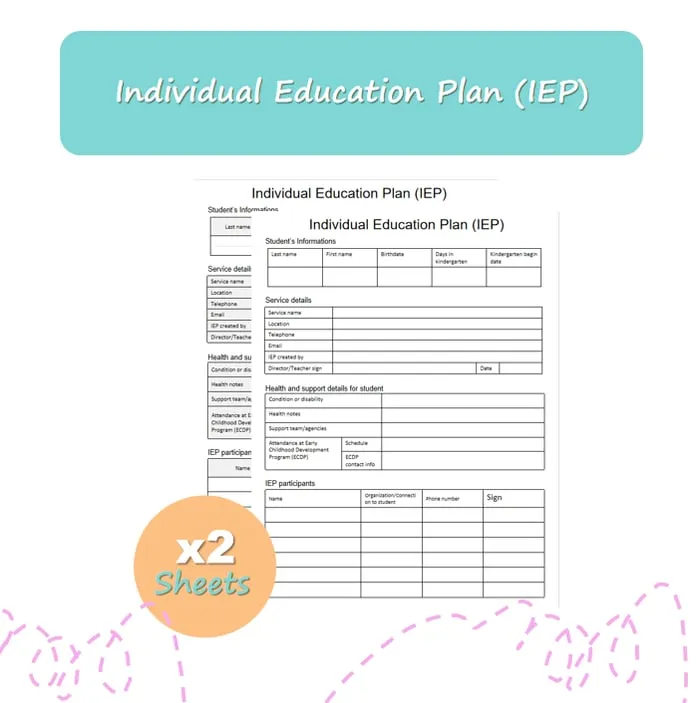
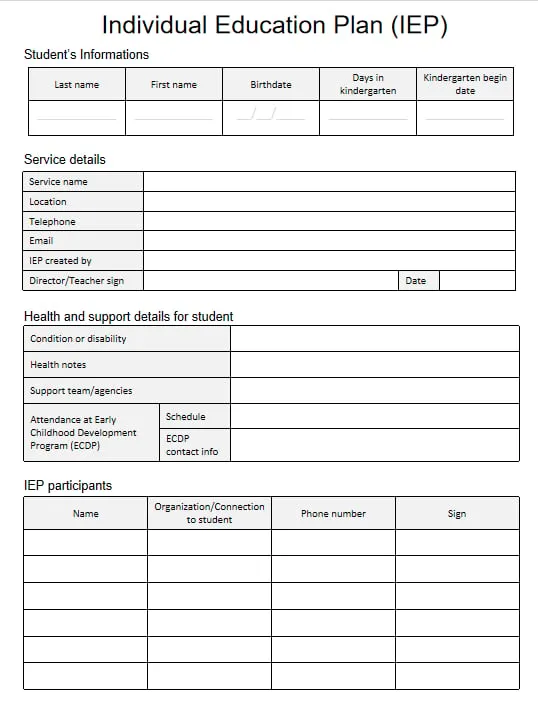
Kindergarten IEP Intake Form: 2 Sheets: a printable intake form with student information, a service details table, health and support details including early childhood program attendance, and an IEP participants log with signatures.
Sources and scope
- IDEA, U.S. Department of Education: the law behind early intervention, preschool special education, and IEPs.
- Early Childhood Technical Assistance Center (ECTA): resources on early intervention and preschool special education.
- Division for Early Childhood (DEC): a professional organization focused on young children with disabilities and their families.
- Center for Parent Information and Resources: information for families about IEPs and how to find a state parent center.
This guide covers organizing intake information for early childhood and kindergarten IEP meetings. It does not cover eligibility decisions, evaluations, or legal requirements in your state, which belong to the IEP team and your district.
Key takeaways
- An early childhood IEP runs more smoothly when core details are gathered first.
- Keep every early childhood IEP service and contact in one short table.
- Write health notes as simple school actions and protect privacy.
- Log every participant with their role and a way to reach them.
- Review the record at set points and share updates with the family.

Leave a Comment