

Sensory issues at home often show up in the smallest moments: a sock seam that ends the morning, a hair wash that turns into a battle, a busy kitchen that sends a child under the table. Picture Maya, age 7, who holds it together all day at school and then falls apart the minute she walks through the front door.
This list is for parents and caregivers. It walks through eight common mistakes families make when a child has sensory differences, why each one backfires, and what to try instead. By the end, you will have a short home plan, a simple way to track what helps, and a clear idea of when to ask for more support.
Examples are fictional. Adapt to your child’s needs and any advice from your child’s occupational therapist or doctor. This is guidance, not a diagnosis.
At a glance
- Sensory reactions are not bad behavior; they are often a nervous system that feels too much or too little.
- Most hard moments at home cluster around a few routines, such as dressing, bathing, meals and bedtime.
- Small, predictable changes usually help more than big room makeovers.
- A one-week log shows which routine to change first.
- School and home work best when they share the same calming tools and words.
How this list is ordered
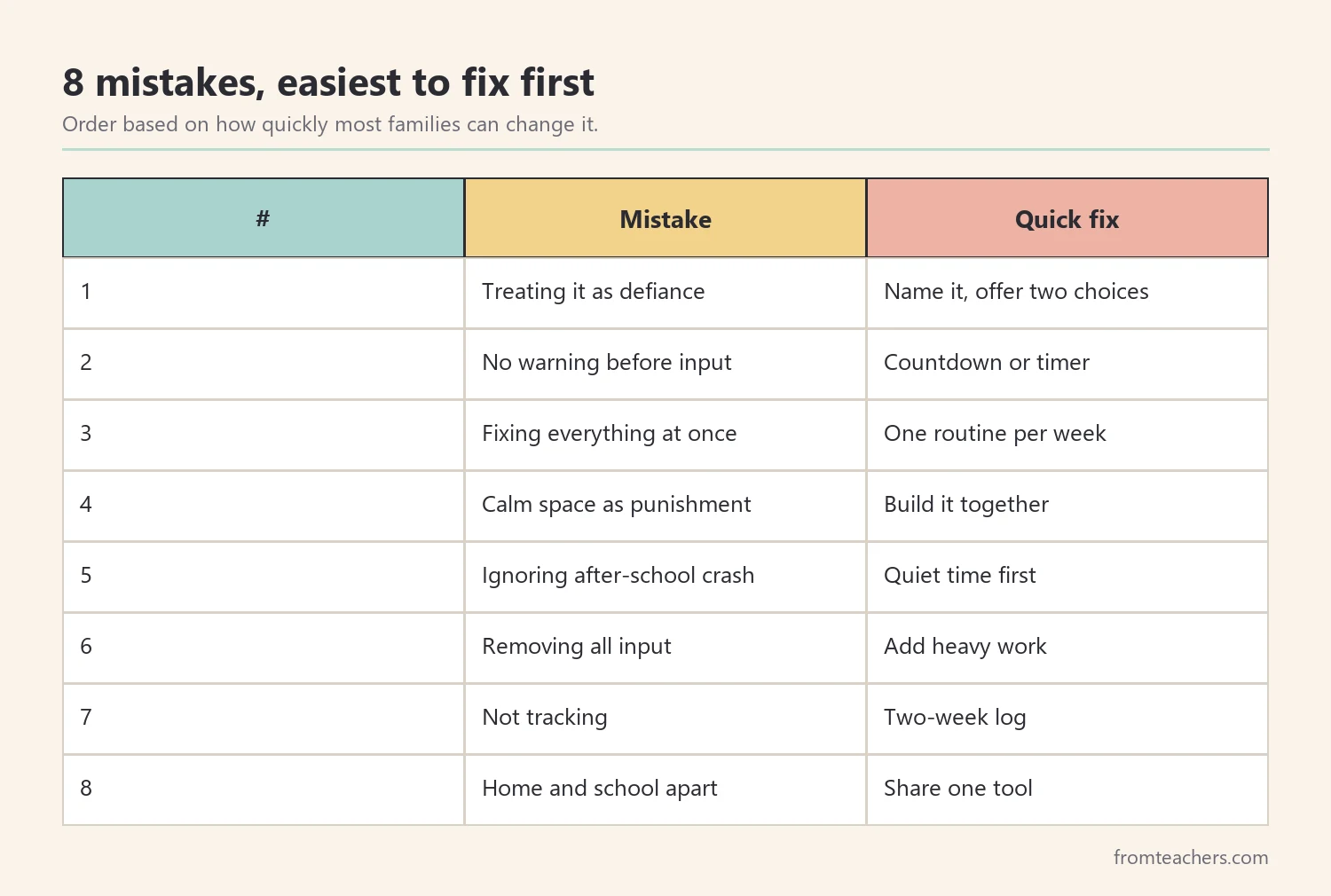
We did not rank these mistakes by how often they happen, because no reliable data exists for your family. Instead, the list is ordered by how quickly most families can fix them, from changes you can make tonight to changes that take a few weeks. As a result, you can start at the top and work down.
Keep in mind that every child is different. Some children avoid sensations, such as noise, light touch or strong smells. Others seek sensations, such as spinning, crashing or chewing. Many children do both, depending on the day. Figure 1 shows the full list with a quick fix for each mistake.
1. Treating sensory issues at home as defiance
The first mistake is also the most understandable. When a child screams about a shirt for the fifth time this week, it can feel like a power struggle. However, many sensory reactions are not a choice. The tag may truly feel like sandpaper to that child.
Why it backfires: punishment adds stress on top of discomfort. Consequently, the child’s body stays on alert, and the next reaction often comes faster.
What to try instead: name what you see in a calm voice. For example, say “That shirt feels scratchy to you. Let’s find a softer one.” Then offer two acceptable choices.
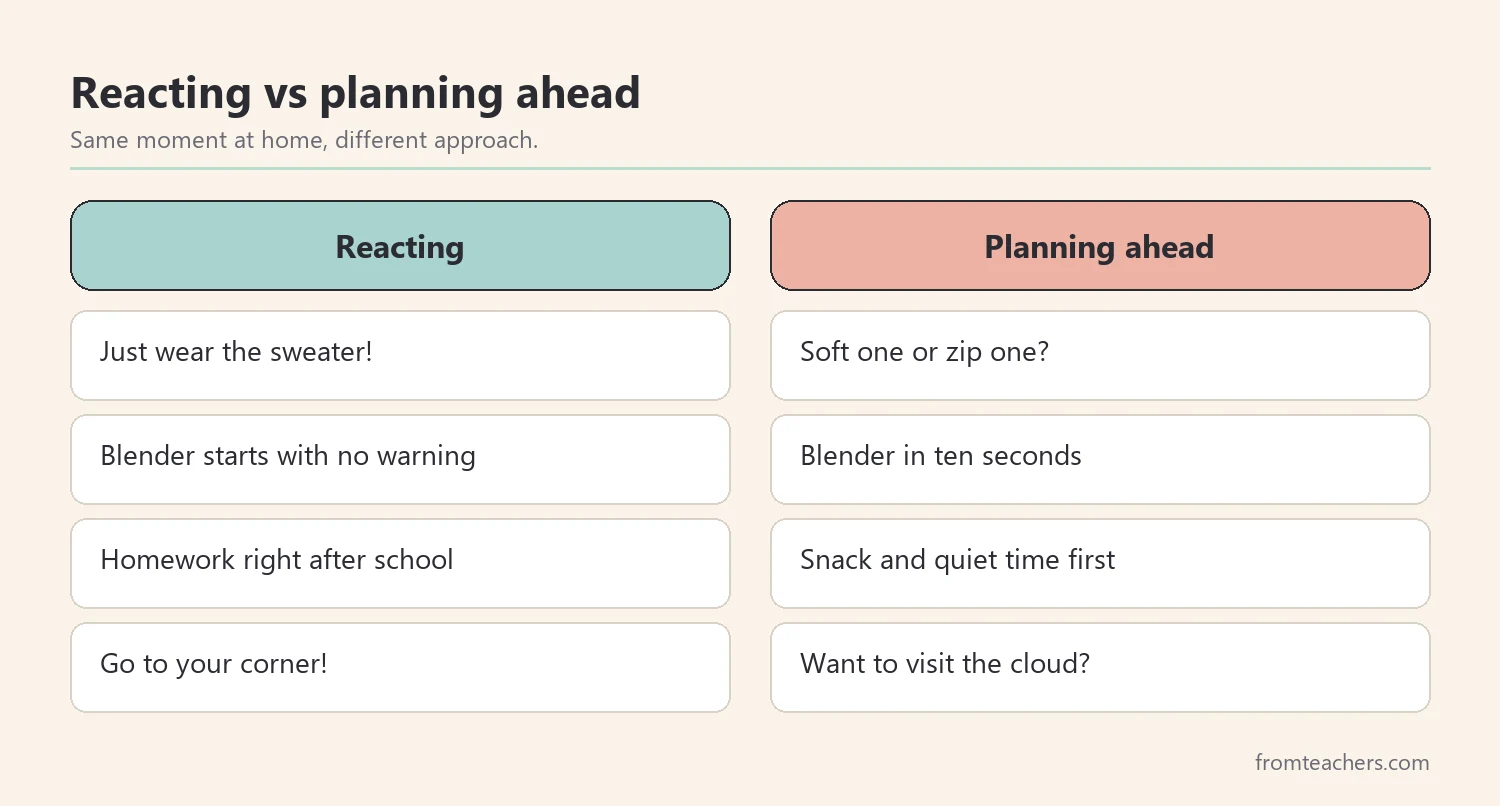
Example: Maya’s dad used to insist she wear the new school sweater. Once he tried “Soft one or zip one?”, mornings became shorter and calmer.
2. Skipping the warning before a sensory activity
Next comes surprise. Turning on the blender, running a bath or brushing hair without a warning can feel like an ambush to a sensitive child.
Why it backfires: sudden input gives the nervous system no time to prepare. Therefore, a small sensation can trigger a big reaction.
What to try instead: give a short warning and a countdown. For instance, “Blender in ten seconds. Want to cover your ears or go to the hallway?” A visual timer works well for longer tasks such as hair washing.
Example: Maya’s mom started counting down from five before rinsing her hair. Maya began holding a dry washcloth over her eyes, and bath time tears dropped within a week.
3. Fixing everything at once
When families first learn about sensory issues at home, many try to change the whole house in one weekend. New lights, new clothes, new rules, new schedule.
Why it backfires: too many changes can feel unsettling, even when each one is helpful. In addition, you cannot tell which change made the difference.
What to try instead: pick the one routine that causes the most stress, such as getting dressed, and change one or two things for a week. Then review.
Example: Maya’s family chose mornings first. They laid out clothes the night before and cut tags from her favorite shirts. That was all for week one.
4. Making the calm space a punishment
A quiet corner can be a wonderful tool. However, if a child is sent there only after hard behavior, it starts to feel like time out.
Why it backfires: children avoid places linked to shame. As a result, they stop using the space when they actually need it.
What to try instead: introduce the calm space on a good day. Let your child help set it up with a few comfortable items, such as a blanket, a pillow, headphones or a favorite book. Visit it together when everyone is calm.
Example: Maya named her corner “the cloud.” She chose a beanbag, a soft blanket and a small lamp. Within two weeks, she started going there on her own after school.
If you want ideas for building this kind of space without a big budget, the SPD Support Toolkit for sensory spaces and calming strategies includes a full section on sensory-safe spaces, calming techniques for kids and adults, and a dedicated home strategies section.
5. Ignoring the after-school crash
Many children work hard to cope at school, then release everything at home. Parents often hear “She’s fine at school” and wonder what they are doing wrong.
Why it backfires: asking for homework, chores and conversation right away adds more demands to a tired nervous system.
What to try instead: plan a quiet transition after school. For example, a snack, a dim room and twenty minutes without questions. Movement, such as jumping on a small trampoline, helps some children reset.
Example: Maya’s family moved homework to after dinner. Her after-school meltdowns went from almost daily to about twice a week.
6. Removing all sensory input
When a child is easily overwhelmed, it is tempting to make the house silent and bare. Yet many children also need certain sensations to feel organized.
Why it backfires: without enough of the input their body seeks, some children start crashing, climbing or chewing to get it.
What to try instead: balance calming and active input. For example, offer heavy work, such as carrying groceries, pushing a laundry basket or helping move cushions, before tasks that need focus.
Example: Maya liked to bump into furniture before bed. Ten minutes of “pillow pile” games and carrying books upstairs helped her settle faster.
7. Not tracking what actually helps
Most parents remember the worst moments. However, memory is not a good guide to patterns. A simple log shows where sensory issues at home cluster and whether a change worked.
Why it backfires: without notes, families often drop strategies too early or keep ones that are not helping.
What to try instead: for one or two weeks, jot the time, the routine, what happened before and what helped. Then count the hard moments by routine.
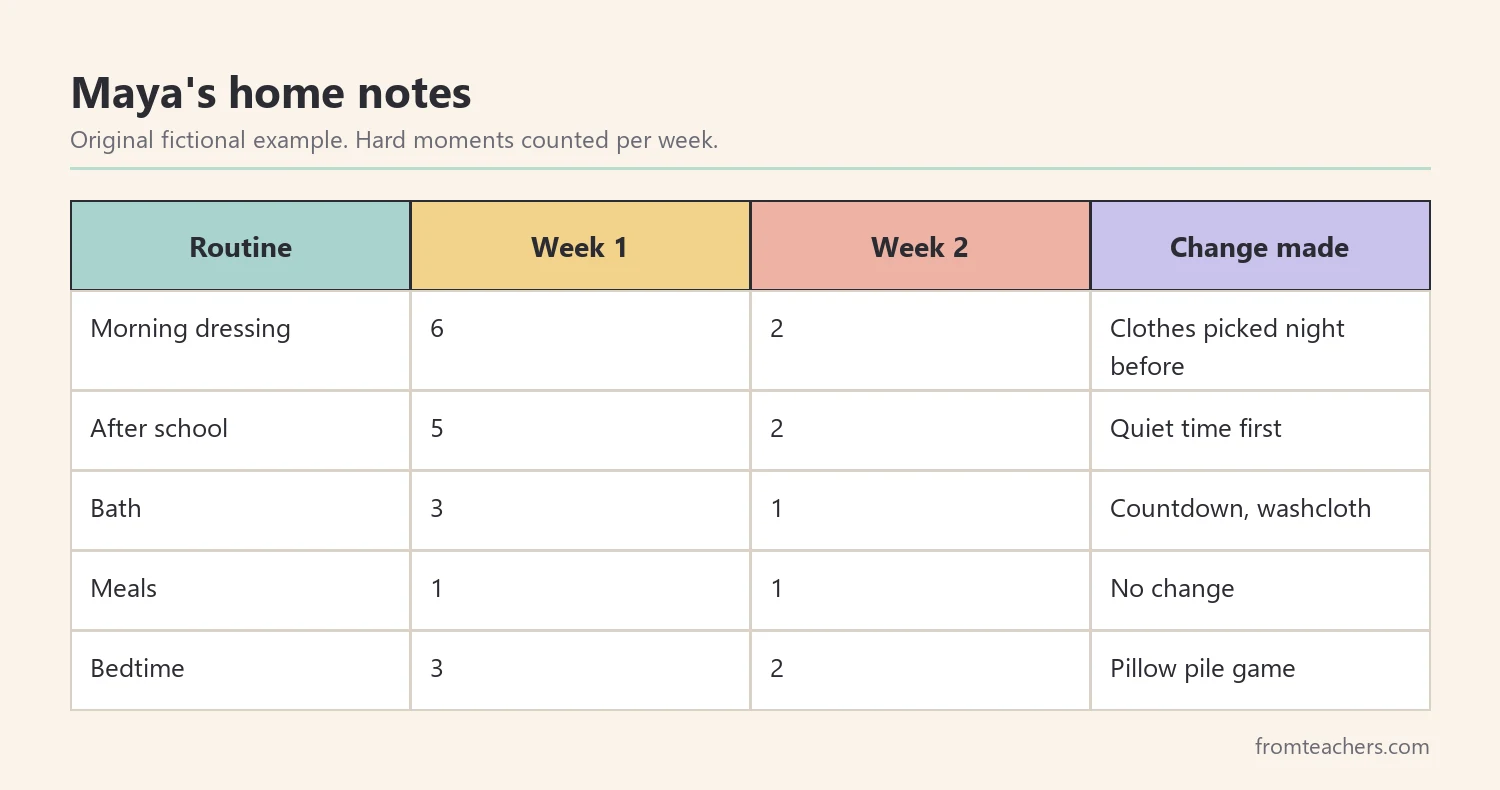
Example: Maya’s parents tracked two weeks. Mornings and after school were the hardest, while meals were easier than they thought. Figure 3 shows their simple counts.
8. Keeping home and school separate
Finally, many families and teachers never compare notes. Yet the same child moves between both places every day.
Why it backfires: different words and tools in each place can confuse a child. Moreover, the school may already know a strategy that works.
What to try instead: share your log with the teacher and ask what helps in class. Agree on one or two shared tools, such as the same calm-down words, the same break card or the same noise-reducing headphones.
Example: Maya’s teacher used a “break card” in class. Her parents made the same card for home, and Maya started using it in both places.
Building a simple home plan for sensory issues at home
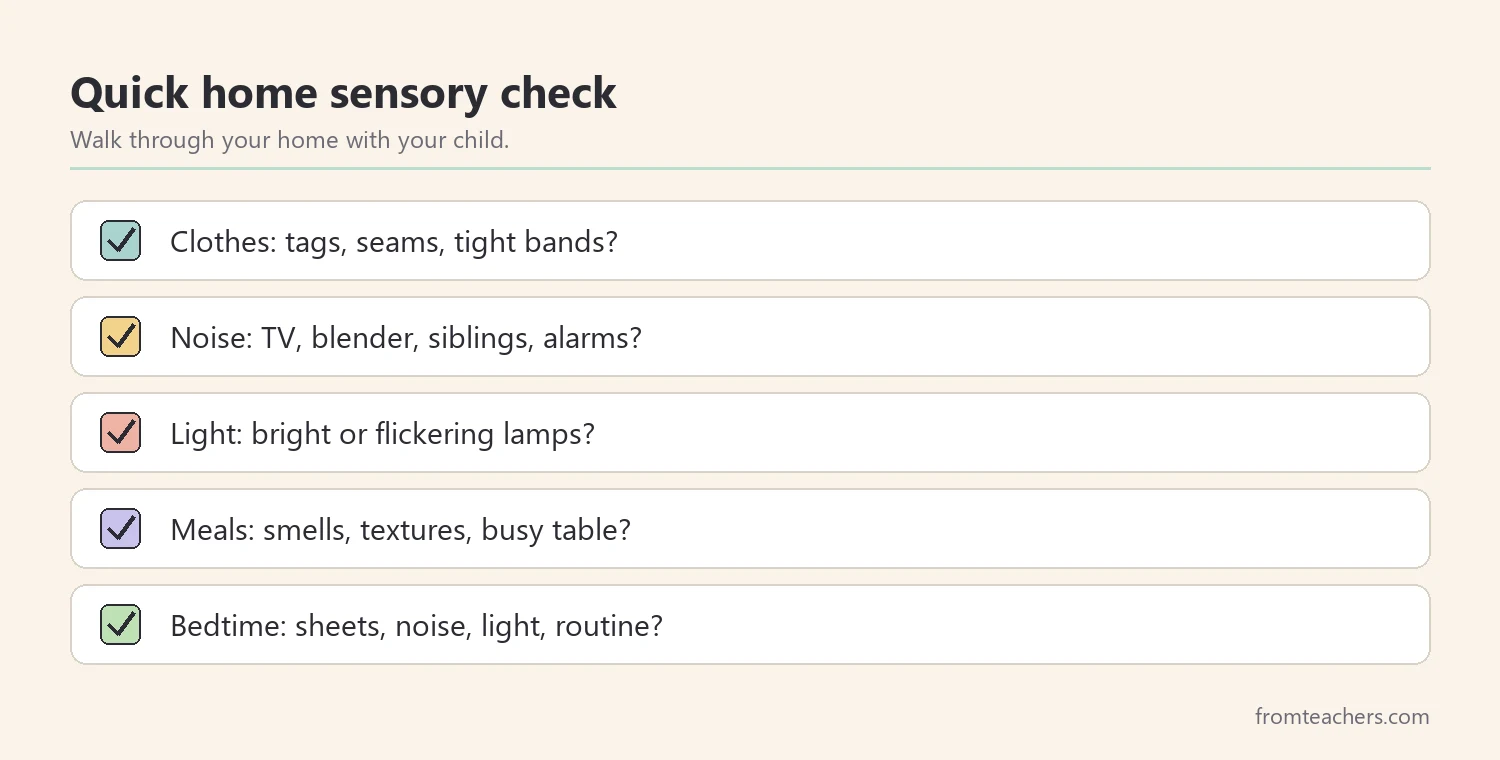
A home plan does not need to be long. In fact, one page is often enough. Start with your log, choose one routine, plan one or two changes and review after a week. Figure 5 shows the cycle.
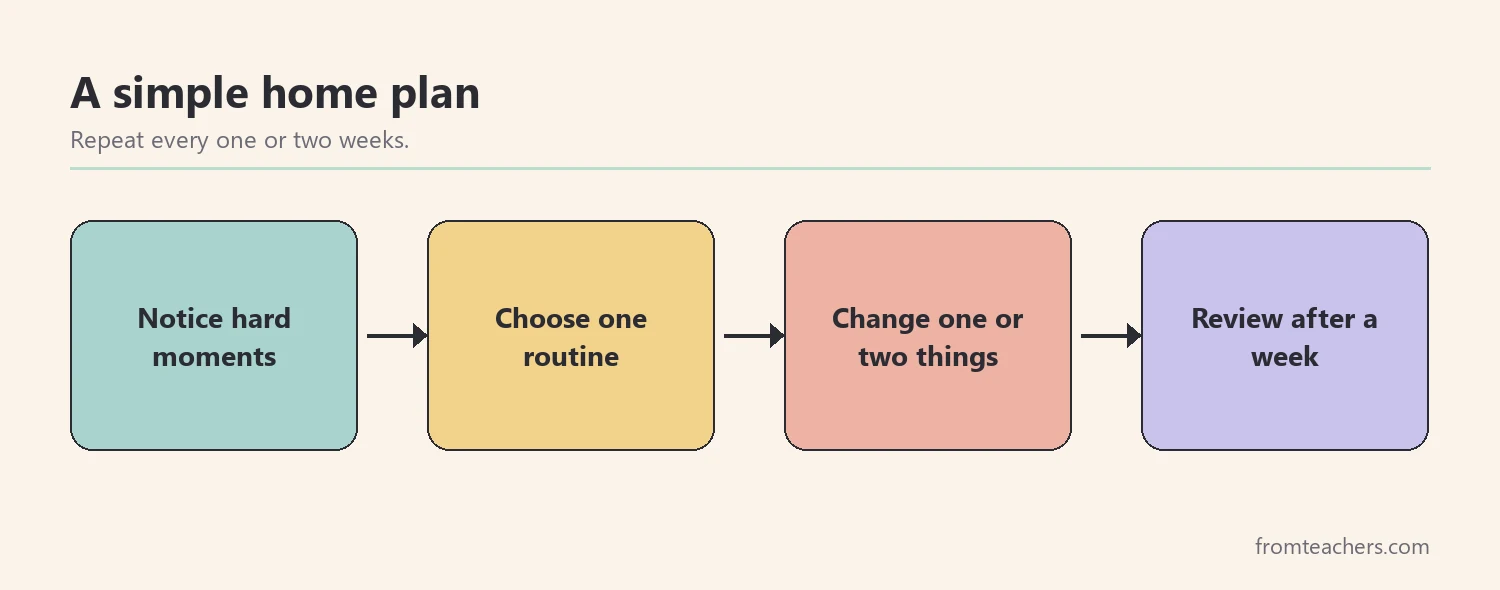
For example, Maya’s first plan looked like this:
| Routine | Change | Who | Review |
|---|---|---|---|
| Morning dressing | Clothes picked the night before | Maya and dad | Friday |
| After school | Snack and quiet time first | Mom | Friday |
| Bath | Countdown and dry washcloth | Mom | Sunday |
After two weeks, the family kept what worked and added bedtime to the plan. Also, they shared the plan with Maya’s teacher, who added the same countdown before fire drills.
Next, involve your child as much as possible. Ask simple questions, such as “What feels too loud?” or “What helps your body feel calm?” Children often have good ideas once they feel safe to share them. Even a young child can point to a picture of a quiet place or a soft shirt.
A closer look
In addition, think about siblings. A brother who loves loud music and a sister who covers her ears can share a home with a few simple agreements, such as headphones during certain hours or a quiet room that is always available. Make the rules about the space, not about one child, so nobody feels singled out.
Also, plan for outings, since they often bring the strongest sensory demands. Before a trip to the store or a family party, tell your child what to expect, pack headphones or a favorite comfort item, and agree on a signal that means “I need a break.” Keep the first outings short and end on a good moment.
Finally, take care of yourself. Supporting a child with sensory differences can be tiring. Calming techniques, such as slow breathing or a short walk, work for adults too, and children learn a lot by watching how their parents calm down.
Common mistakes and how to avoid them
- Waiting for a diagnosis before helping. Fix: start with simple, low-risk changes now and talk with your pediatrician if you are concerned.
- Copying a strategy from social media without watching your child. Fix: try it for a week and check your notes.
- Forcing exposure to a hated sensation. Fix: go slowly, with choices, and follow therapist advice.
- Only noticing the bad days. Fix: write down good moments too, so you see what works.
- Talking during a meltdown. Fix: use few words, lower your voice and keep everyone safe.
Questions parents ask about sensory issues at home
Are sensory issues at home a sign of a disorder?
Not always. Many children have sensory preferences. If reactions are frequent, intense and affect daily life, talk with your child’s doctor, who may suggest an occupational therapy evaluation.
Why is my child fine at school but not at home?
Many children use a lot of energy to cope at school and release it at home, where they feel safe. A quiet transition after school often helps.
How long should I keep a log?
Usually one to two weeks is enough to see a first pattern. Keep going if the picture is still unclear.
Do I need special equipment?
No. Blankets, pillows, headphones, a dim lamp and everyday heavy work tasks cover most needs. Start with what you have.
Should I tell the teacher?
Yes. Sharing what you see at home helps the teacher understand your child, and the teacher may share strategies that already work in class.
Related reading: Managing Sensory Overload in Autism and ADHD, Meltdowns vs Tantrums: A Guide to Understanding and Responding, and How Parents and Teachers Can Team Up.
You may also need: Sensory Toolkit: Calming Strategies for the Five Senses.
A companion resource for sensory issues at home:

SPD Support Toolkit: Sensory Spaces & Calming Strategies: a 50-page guide that shows what sensory struggles look like, with low-cost sensory-safe spaces, calming techniques for kids and adults, a home strategies section for families and print-and-go tools.
Sources and scope
- Understood.org: parent-friendly information on sensory processing challenges and learning differences.
- American Occupational Therapy Association: information on the role of occupational therapy for children and families.
- HealthyChildren.org (American Academy of Pediatrics): parent information on child development and behavior.
- Child Mind Institute: family guides on sensory issues, anxiety and behavior.
This list covers everyday home strategies for children with sensory differences. It does not replace an evaluation by a doctor or occupational therapist, or advice that is specific to your child.
Key takeaways
- Sensory issues at home are usually not defiance, so respond with calm words and choices.
- Warnings, countdowns and one change at a time reduce surprise and stress.
- A calm space works best when children help build it and use it freely.
- Two weeks of simple notes show which routine to change first.
- Share tools and words with school so your child hears the same message.










Leave a Comment