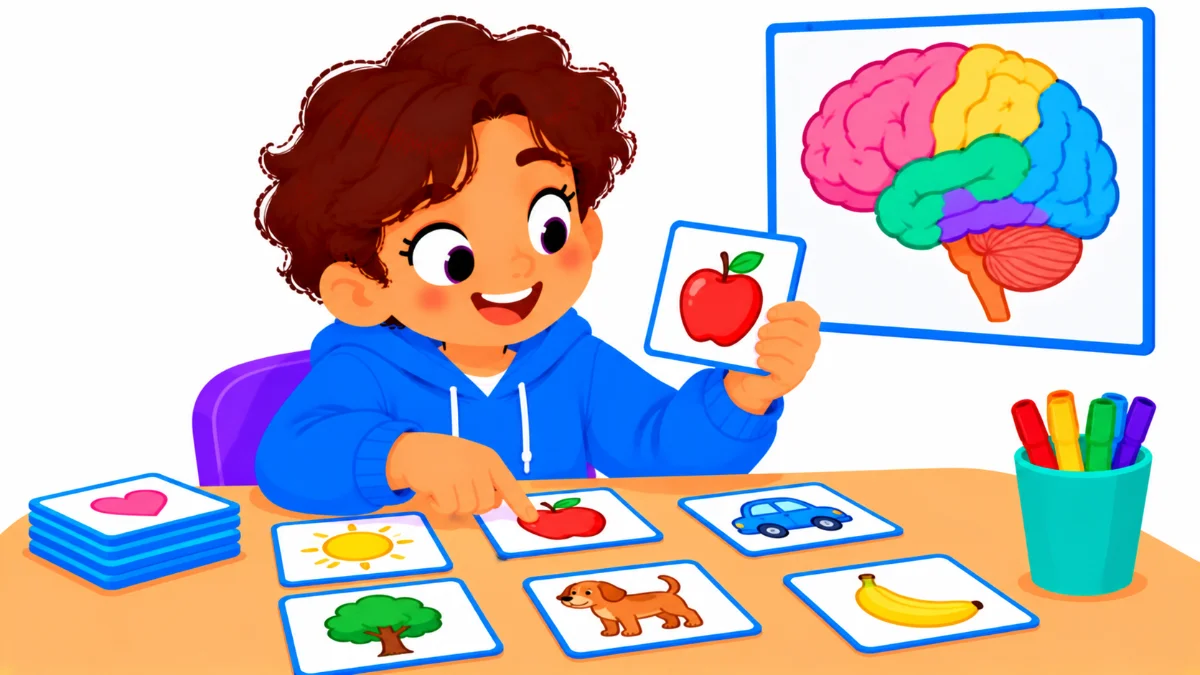

Memory strategies for kids turn remembering into a skill children can practice, instead of something they either have or lack. Picture a second grader who hears, “Put your book away, get your lunchbox, and line up at the door.” She puts the book away, then stands still, unsure what comes next. She is not ignoring the teacher. Her memory simply dropped the rest.
This guide gives you a five-step plan to help. By the end, you will be able to explain memory in kid-friendly words, teach chunking, visualizing, and linking, build practice through games, and fold the strategies into daily routines at school and at home.
Examples are fictional. Adapt to the student’s goals and agreed supports. This is guidance, not a diagnosis.
At a glance
- Working memory is small, so children can hold only a few things at once.
- Chunking, visualizing, and linking make information easier to hold.
- Saying it, seeing it, and using it helps facts stick.
- Games make memory practice fun and low pressure.
- Routines and visual supports reduce the load on memory every day.
1. Explain how memory works in kid-friendly words
First, help children understand their own memory. When kids know how it works, they stop saying “I’m just bad at remembering” and start trying tricks. A simple picture helps a lot.
For example, compare memory to a desk and a filing cabinet. Working memory is the small desk, where we hold what we need right now, such as a three-step direction. Long-term memory is the big filing cabinet, where facts and skills are stored for later. Because the desk is small, it fills up fast, and things fall off.
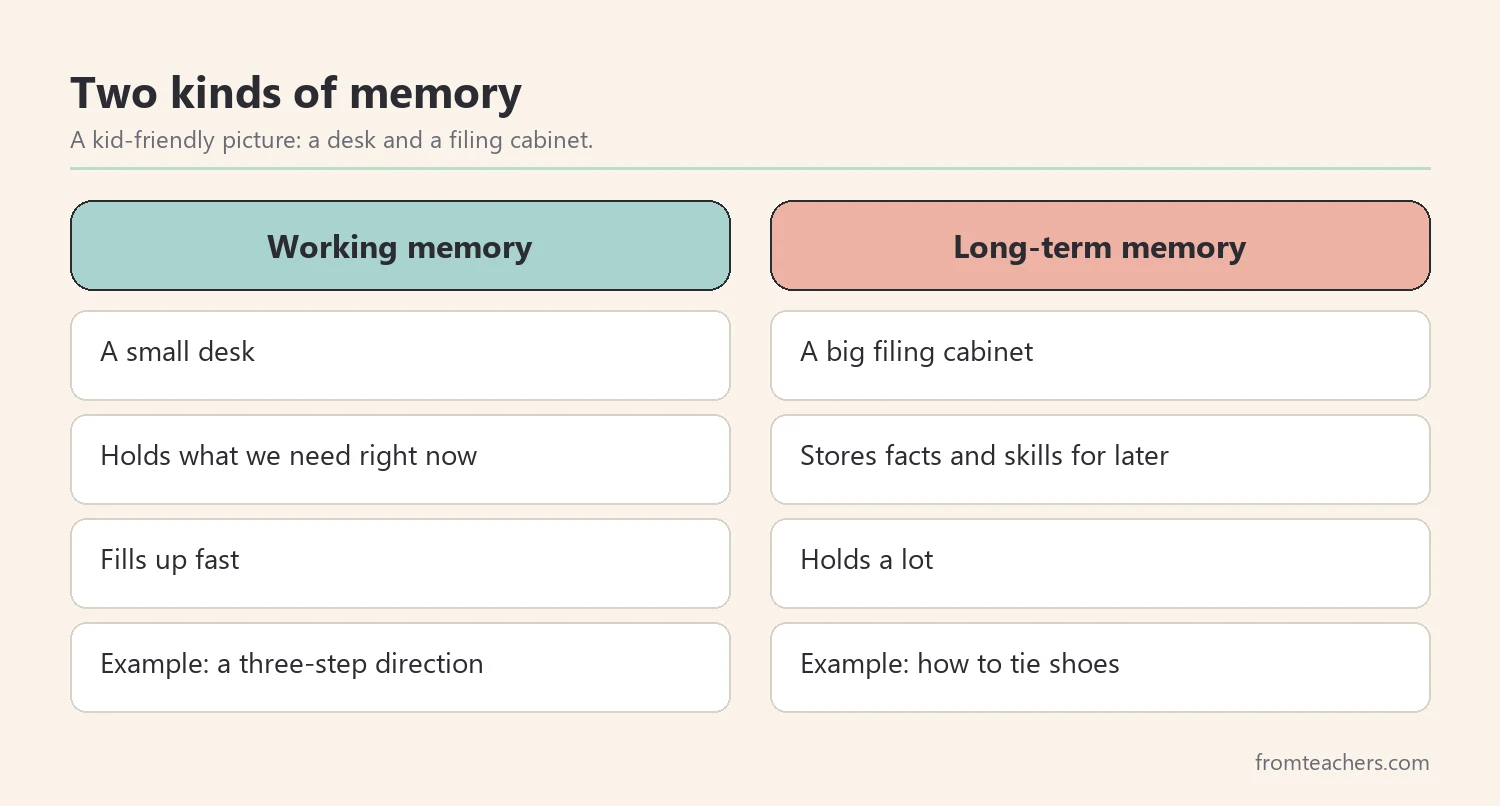
In addition, use the same picture all year. When a child forgets something later, you can say, “Your desk was full. Which trick could help?” That shared language makes memory strategies for kids easy to bring up without blame.
Next, explain that memory can get stronger with the right tricks. That message matters, especially for children who already feel behind. Many children with ADHD or learning differences find working memory harder, so they benefit most from clear strategies and steady practice.
In addition, invite children to notice when their own desk feels full. Ask, “When is it hard to remember?” Many will mention long directions, busy rooms, or being tired. Those answers show you where memory strategies for kids will help most.
Also, keep this first talk short and concrete. Draw a desk on the board, stack a few sticky notes on it, and show how a fourth note pushes one off the edge. Children remember the picture long after the lesson.
Worked example. Lina is a fictional student in grade 2. She often forgets the second and third parts of directions. Her teacher, Mr. Reyes, draws the desk picture and says, “Your desk is small, like everyone’s. Let’s learn tricks so more fits.” Lina nods and says, “So I’m not bad at it. My desk is just full.”
2. Teach chunking as a first memory strategy for kids
Once children understand the small desk, teach chunking. Chunking means grouping small pieces of information into fewer, bigger pieces. It is one of the simplest memory strategies for kids, and it works for numbers, spelling, and directions.
For example, eight single digits are hard to hold. However, two groups of four are much easier. The same idea works for words: a long spelling word becomes easier in syllables, and a long list becomes easier in small groups.
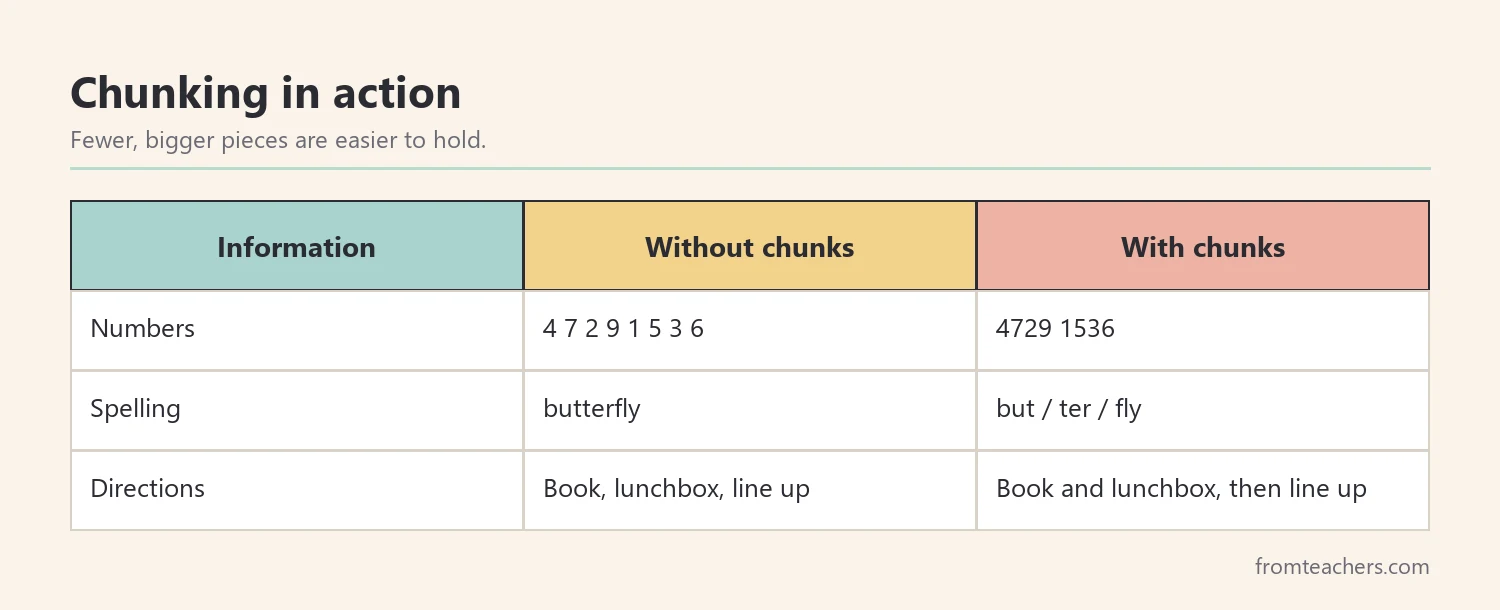
Then practice with real classroom content. Clap out syllables in spelling words. Group math facts into families. Break a long direction into two short parts and pause between them.
Also, model chunking out loud. When you give a direction, say, “I will give this in two parts.” Children hear the strategy in action, and they begin to expect shorter, clearer pieces of information. Simple memory strategies for kids work best when adults use them too.
In addition, teach children to chunk on their own. Ask, “How could you split this into smaller parts?” Over time, they start doing it without a prompt.
Worked example. Mr. Reyes gives Lina the spelling word “butterfly.” She claps it into three chunks: but, ter, fly. Next, he splits the line-up direction into two chunks: “Book away, lunchbox,” then a pause, then “Line up.” Lina completes all three actions for the first time that week.
3. Use visualizing and linking
Next, add two strategies that make information more vivid. Visualizing means making a “movie in your mind.” Linking means connecting new information to something the child already knows.
For visualizing, ask children to picture each step. To remember “coat, shoes, and bag,” they imagine putting on the coat, tying the shoes, and lifting the bag. A picture is often easier to hold than a list of words.
Also, give children time to build the picture. Pause for a few seconds after you give the information and ask them to close their eyes if they like. Rushed visualizing rarely works, so a short pause makes these memory strategies for kids far more effective.
For linking, connect new facts to familiar ones. A new vocabulary word can be linked to a favorite story, and a new math fact can be linked to a fact the child already knows. For example, if a child knows 5 + 5 = 10, then 5 + 6 is “one more,” so it equals 11.
Meanwhile, let children create their own pictures and links. A silly image is often easier to remember than a sensible one. When children invent the picture, these memory strategies for kids become personal, and personal links tend to stick.
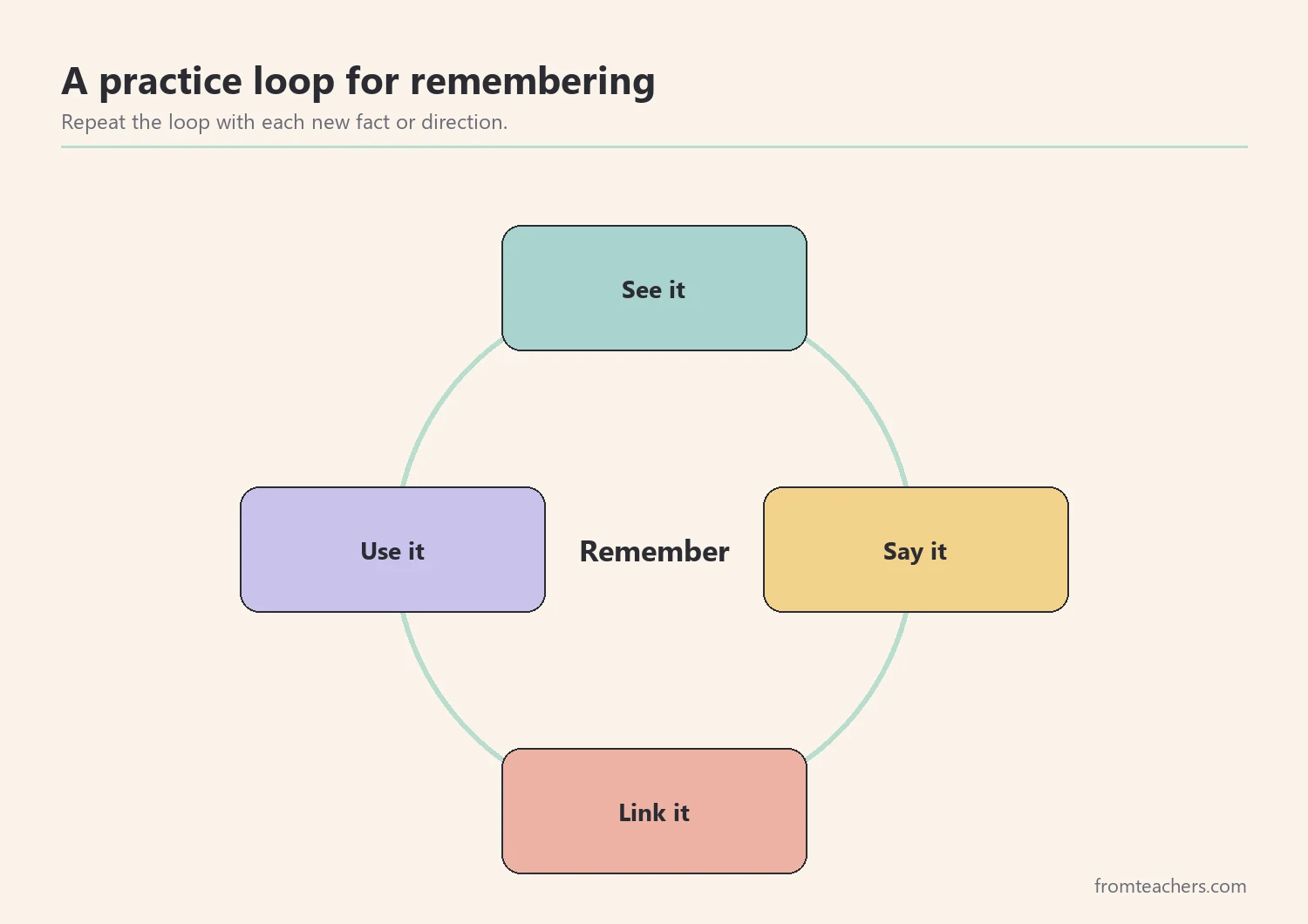
Then combine the strategies into a short practice loop. Children see it, say it, link it, and then use it. Repeating this loop makes memory strategies for kids feel like a habit rather than a trick.
If you want child-friendly material for this step, the Memory Skills for Kids guide explains how the brain stores information and includes memory tricks and everyday examples like morning routines.
Worked example. Mr. Reyes asks Lina to remember three items for a science table: magnet, paper clip, and spoon. She pictures a magnet pulling a paper clip off a spoon. Later in the day, she lists all three without help and explains her “movie” to a classmate.
4. Practice memory strategies for kids with games
After that, build practice through games. Games lower the pressure and give children many chances to use memory strategies for kids without feeling tested.
Start with simple, short games. For example, play “I went to the store,” where each child repeats the list and adds one item. Use matching games with picture cards. Try “What’s missing?”: show a tray of objects, cover it, remove one, and ask which one is gone.
Memory game checklist
- Start small, with three or four items.
- Add one item at a time as children succeed.
- Ask children which strategy they used.
- Keep rounds short, about five minutes.
- Celebrate effort, not just correct answers.
For example, after each round, ask, “How did you remember that?” Some children will say they made a picture, while others grouped items or said them quietly. Talking about the strategy helps everyone learn new memory strategies for kids from each other.
Also, connect games to real content. A matching game can use spelling words, and a “What’s missing?” tray can hold science vocabulary. That way, practice builds both memory skills and classroom learning.
In addition, rotate games so practice stays fresh. A different game each day keeps interest high, while the strategies stay the same. Varied games are an easy way to practice memory strategies for kids across a whole term.
Meanwhile, watch for frustration. If a child keeps missing, reduce the number of items. Success builds confidence, and confidence builds effort.
Worked example. Lina’s class plays “What’s missing?” with five objects. In the first round, Lina finds the missing item using visualizing. By the end of the week, the tray holds seven objects, and she still finds the missing one in most rounds.
5. Build routines and track progress
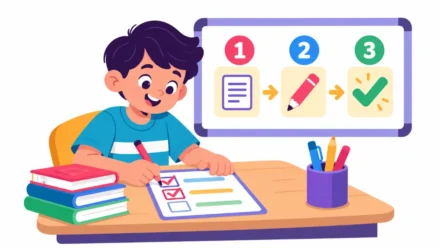
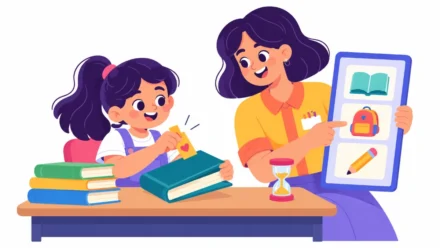
Finally, reduce the daily load on memory with routines and visual supports. When routines stay the same, children do not have to hold every step in working memory. Instead, the steps become automatic.
For example, post a picture sequence for the morning routine at school, or a toothbrushing sequence at home. Teach it with the same order every day, and point to each picture as the child does the step. Gradually, fade the pictures as the routine becomes automatic.
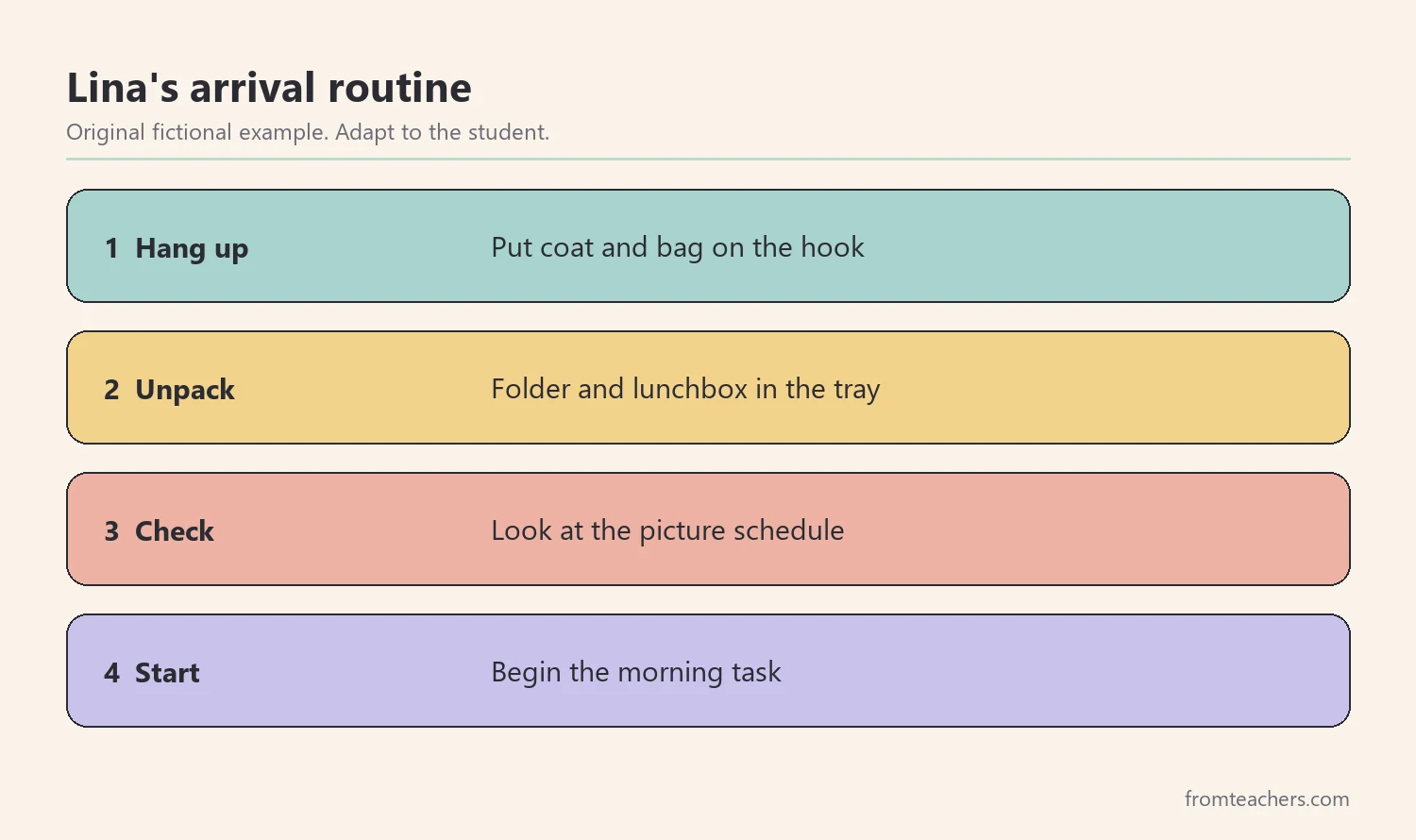
Also, involve families in the routines. A short note or picture sequence sent home helps parents use the same steps for getting ready in the morning or brushing teeth. When school and home match, memory strategies for kids get much more practice.
Then track a few simple measures. For instance, count how many steps of a three-step direction the child completes without a reminder. Write it down on the same days each week. Memory strategies for kids grow slowly, so small gains are worth noticing.
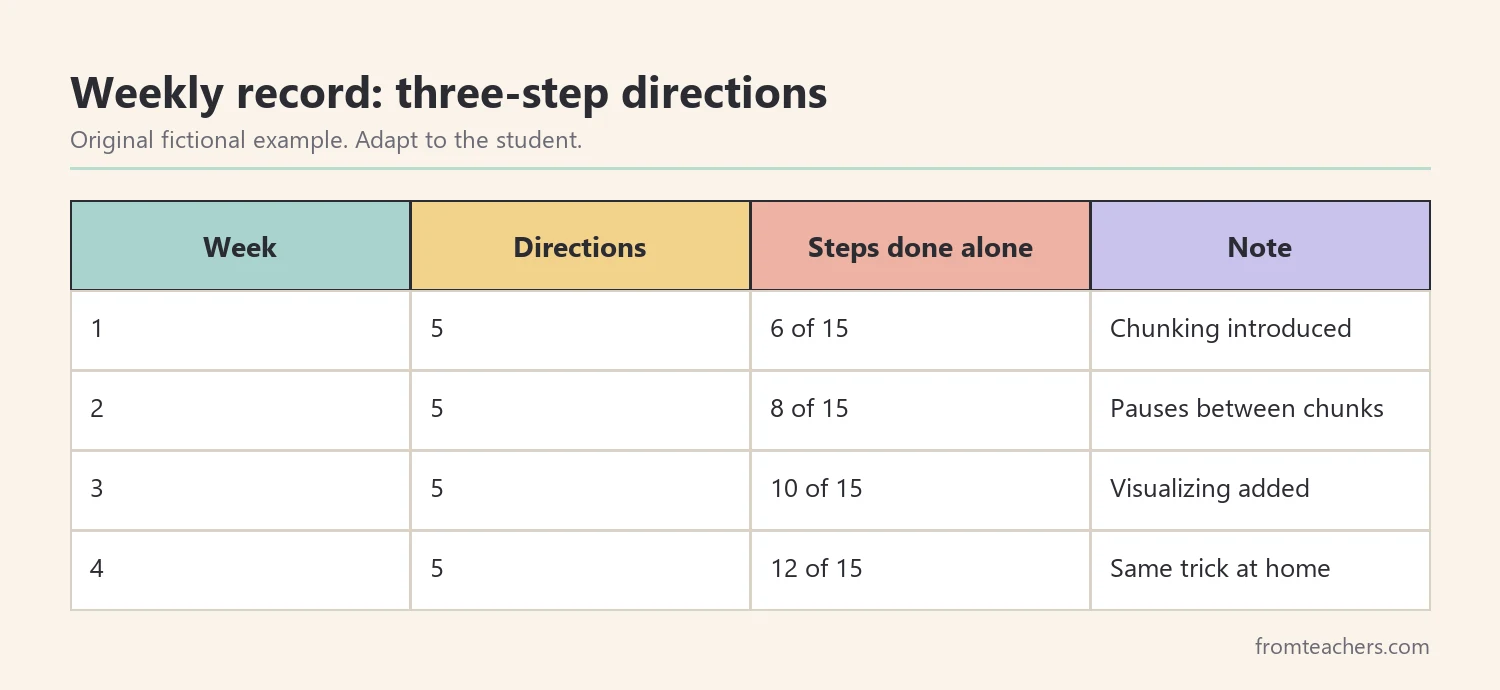
Finally, share progress with the child. A simple chart showing more steps completed each week is very motivating. Children who see their own growth start to believe that memory strategies for kids really work for them.
Worked example. Mr. Reyes gives Lina five three-step directions each Friday, so 15 steps in total. In week 1, she completes 6 of 15 steps without a reminder. By week 4, she completes 12 of 15. Her parents use the same chunking trick at home for getting ready for bed.
Adapting the strategies for different learners
Children learn differently, so offer more than one way in. Some prefer pictures, while others prefer saying things aloud or moving. When you teach memory strategies for kids, let each child try a few and notice which one helps them most.
For children with ADHD or learning differences, keep directions short and add visual supports early. Also, check in more often, because a quick reminder at the right moment can prevent frustration later.
Finally, celebrate the strategy, not only the result. Saying “You used chunking, and it worked” helps children connect effort with success. Over time, they start reaching for memory strategies for kids on their own.
Common mistakes and how to avoid them
- Giving long directions all at once. The small desk overflows. Fix: chunk directions into short parts.
- Teaching too many strategies together. Children mix them up. Fix: teach one strategy at a time, then combine.
- Treating forgetting as laziness. It hurts confidence. Fix: explain that memory is a skill that grows.
- Skipping practice. Strategies fade without use. Fix: play short memory games several times a week.
- Removing supports too fast. Routines fall apart. Fix: fade pictures slowly as steps become automatic.
Questions teachers and parents ask about memory strategies for kids
What age can children start learning memory strategies?
Young children can start with simple tricks, such as picturing steps or clapping syllables. Older children can learn to choose a strategy on their own. Keep the language simple and the practice playful.
Which memory strategy should I teach first?
Chunking is often the easiest place to start because it works with directions, numbers, and spelling. After that, add visualizing and linking. Teach one at a time.
Do memory strategies help children with ADHD?
Many children with ADHD find working memory hard, so clear strategies and visual supports can help. However, every child is different. Work with the child’s teacher and support team to find what fits.
How often should children practice?
Short, frequent practice works better than long sessions. Five to ten minutes a few times a week is a good start. Games make this easy to fit into the day.
How can parents help at home?
Use the same strategies the school uses, such as chunking directions and picture routines. Also, play memory games together and praise effort. Consistency between home and school makes a real difference.
Related reading: ADHD in Children: A Guide to Effective Classroom and Home Support, 5 Practical Teaching Tips to Boost Classroom Focus and Learning, and Learning Styles Student Success Guide.
A companion resource for memory strategies for kids:
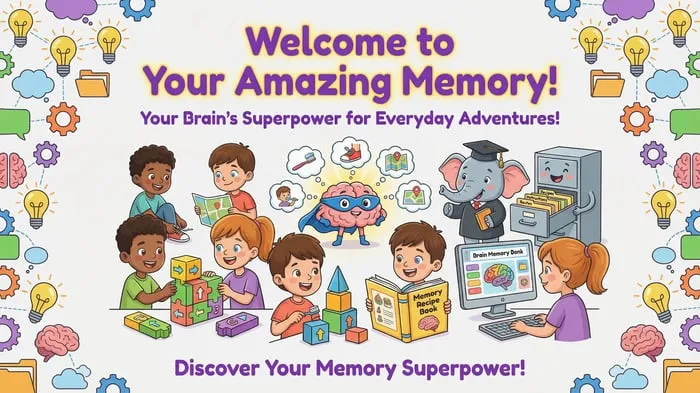
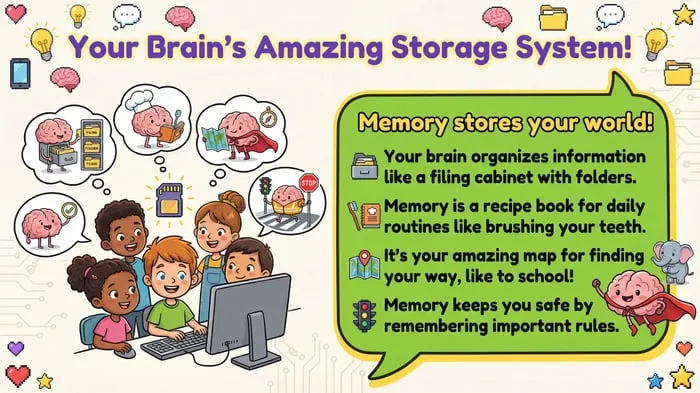
Memory Skills for Kids: Your Brain’s Superpower: a kid-friendly guide to how memory works, with everyday examples, memory games, and tricks for remembering important information, for young learners in special education and general classrooms.
Sources and scope
- Understood.org: family-friendly information on working memory and learning differences.
- Child Mind Institute: articles for parents and teachers on attention and learning.
- What Works Clearinghouse: reviews of education research and practice guides.
- CAST: the Universal Design for Learning framework, including ways to support memory and access.
This guide covers everyday memory strategies for the classroom and home. It does not replace assessment or advice from qualified professionals.
Key takeaways
- Memory strategies for kids work best when children understand their small “desk.”
- Chunking is a simple first strategy for directions, numbers, and spelling.
- Visualizing and linking make new information more vivid.
- Short games give low-pressure practice.
- Routines and simple tracking show steady growth.


Leave a Comment