

Procrastination vs executive dysfunction is a question many teachers and parents face without realizing it. Picture a tenth grader with an essay due Friday. On Monday she says she will start tonight. On Wednesday she has a blank document open for an hour. By Thursday night, she stays up late and writes the whole thing. From the outside, it looks like simple procrastination. Underneath, something else might be going on.
This guide offers a five-step way to look more closely at delays. By the end, you will be able to describe the delay pattern, ask questions that separate avoidance from executive dysfunction, choose tools that match each, and review whether the tool is actually helping.
Examples are fictional. Adapt to the student’s goals and agreed supports. This is guidance, not a diagnosis.
At a glance
- Not every delay is procrastination, and not every delay is a skill gap.
- Avoidance is usually about the task or the feelings it brings up.
- Executive dysfunction is usually about planning, starting, or holding the steps in mind.
- The best tool depends on which one is happening, and many students have both.
- Try one tool, track the result, and adjust with the student.
1. Describe the delay before labeling it
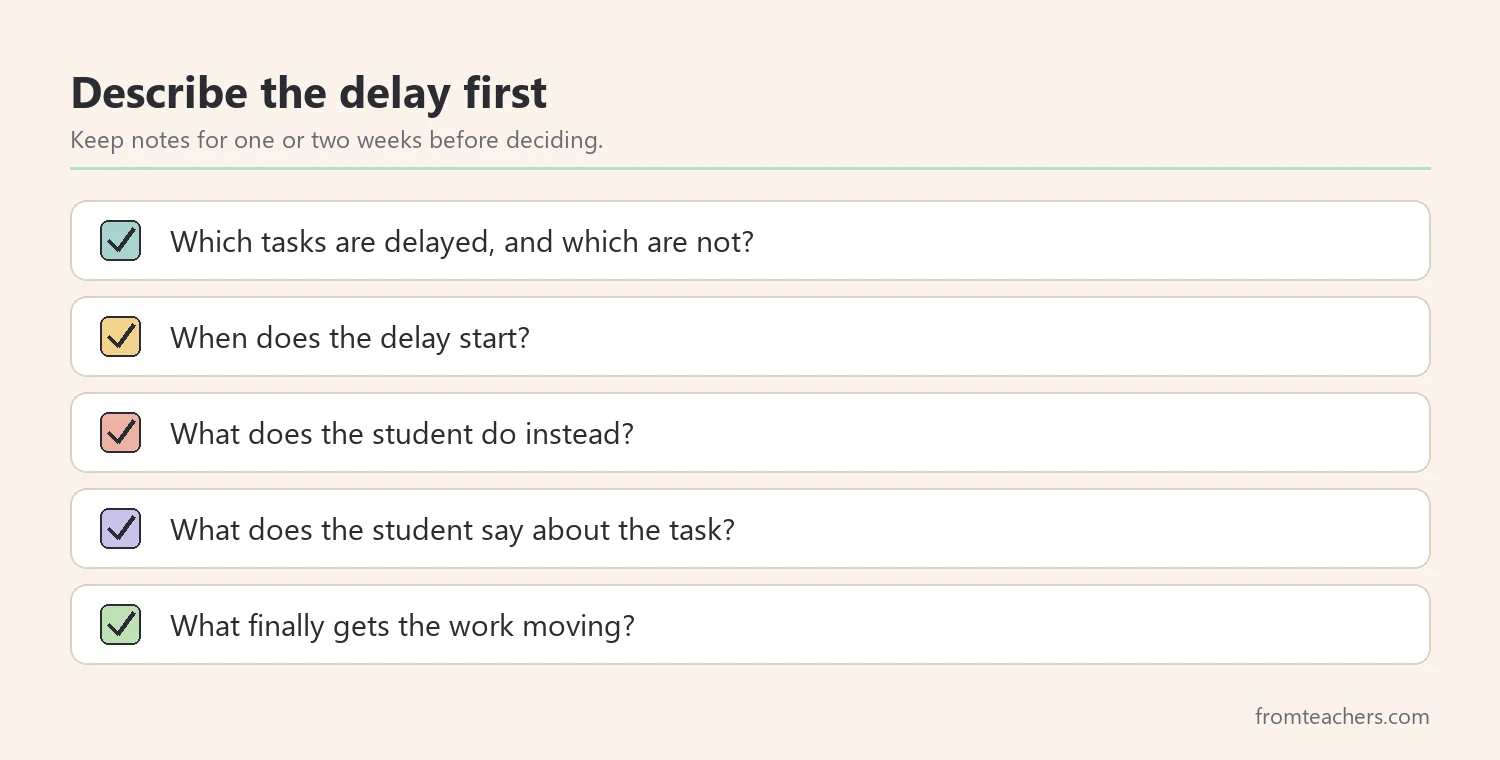
First, describe what actually happens. “She always procrastinates” is a label, not a description. Instead, write down when the delay starts, what task it involves, what the student does instead, and what finally gets the work moving.
Next, look at more than one task. A student who delays only on essays may be avoiding writing. A student who delays on everything, including things they enjoy, may be struggling with starting or planning in general. Patterns across tasks tell you more than a single example.
Then, notice what the student says. Comments like “I’ll do it later, it’s boring” point in one direction. Comments like “I want to start, I just can’t figure out how” or “I forgot it was due” point in another. These words are useful clues.
Meet Jordan, a fictional tenth grader. Her English teacher, Mr. Silva, notices that Jordan turns in essays late or rushed, but her short daily assignments arrive on time. Her family reports that she also delays starting long chores, even ones she does not mind, like organizing her room for a trip she is excited about.
A closer look
Finally, keep notes for one or two weeks before deciding anything. A short record keeps the conversation focused on facts. It also helps the student see their own pattern without feeling judged.
In addition, notice the setting. Some students delay mostly at home, where there is less structure and more distraction. Others delay mostly at school, where noise or social pressure makes it hard to begin. Knowing where the delay happens helps you decide where the first support should go.
Also, keep the tone curious. Students who delay often hear a lot of criticism. If they sense that the goal is to understand, not to blame, they are much more likely to share what is really going on.
2. Ask questions that tell procrastination vs executive dysfunction apart
Now, use a few simple questions to sort the delay. Understanding procrastination vs executive dysfunction starts with one idea: avoidance is mostly about the task or the feelings it brings up, while executive dysfunction is mostly about the mental steps needed to plan, start, and keep going.
Ask the student, in a calm moment, questions like these. Do you know what the first step is? Do you want to start but feel stuck? Does the task make you feel bored, anxious, or worried about doing it wrong? Do you forget the task exists until it is almost due? Does it help when someone sits with you?
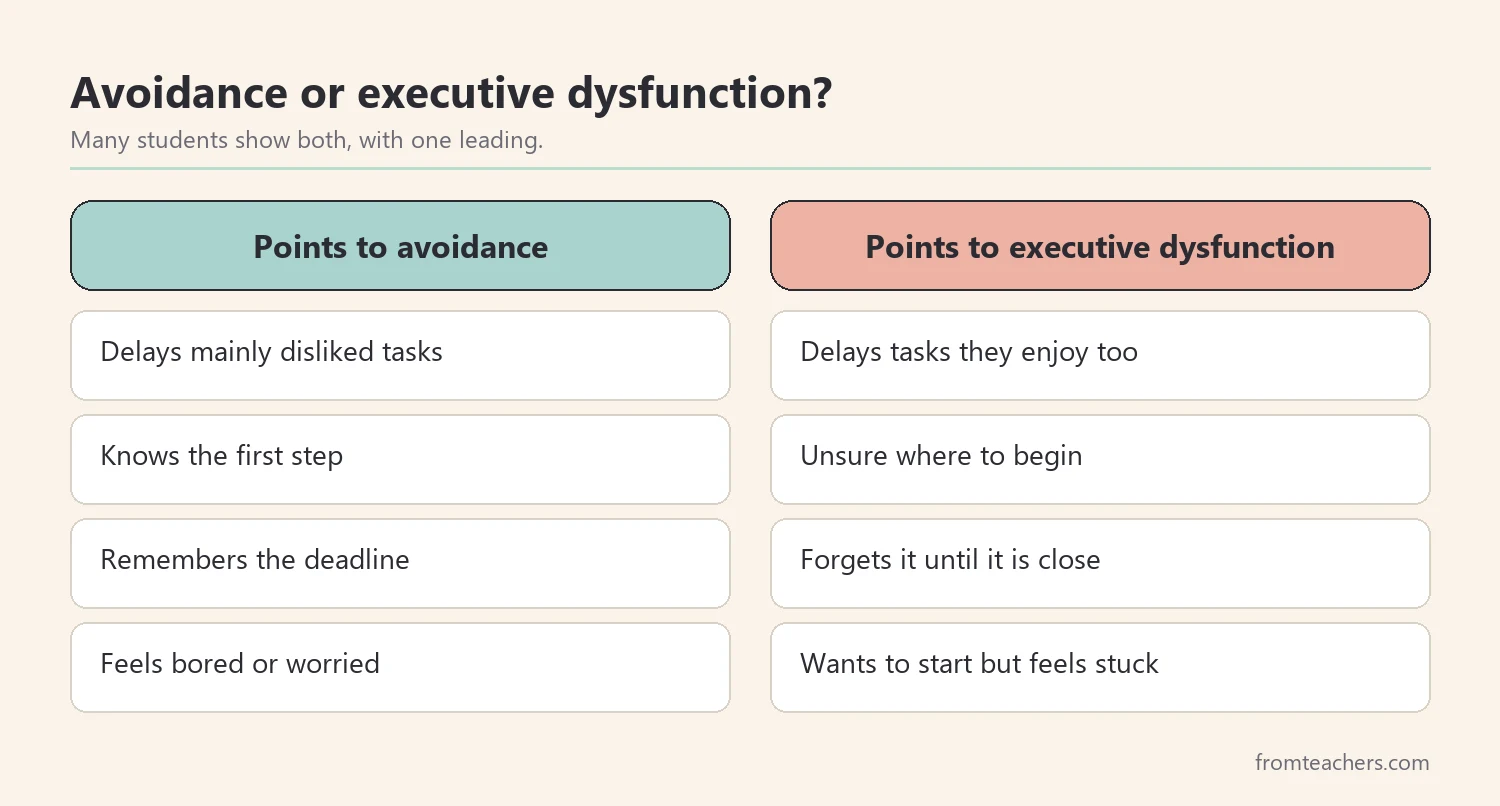
Then, compare the student’s answers with your notes. If the student says they forget deadlines and your notes show no planner use, the two pieces of information support each other. If they do not match, ask more questions before choosing a tool.
What this looks like in class
Next, remember that both can happen together. A student with executive dysfunction often starts to avoid tasks after many experiences of getting stuck. Over time, the task itself begins to feel bad. So the answer is not always one or the other. Often, it is both, with one leading.
For Jordan, the answers are revealing. She says she wants to write the essay and usually likes the topics. However, she does not know where to start, and she loses track of how much time is left. Once she starts, she can keep going. That pattern points mostly toward executive dysfunction, with some avoidance growing on top of it.
If you want a structured reference for this conversation, the procrastination vs executive dysfunction strategy tables from berchid.com help students and adults separate avoidance from executive dysfunction and choose a tool that matches the real struggle.
3. Match tools to avoidance
Next, if avoidance is leading, focus on the task and the feelings around it. Avoidance often grows when a task feels boring, pointless, too hard, or emotionally loaded. The goal is to lower the barrier to starting and make the task feel more manageable or meaningful.
Useful tools include connecting the task to something the student cares about, offering a choice in topic or format, setting a short timed start (“work for ten minutes, then decide”), and pairing a less preferred task with a preferred one afterward. For students who fear mistakes, a “messy first draft” rule can help.
| What drives the avoidance | Tool to try |
|---|---|
| Task feels boring | Link to an interest or offer choice |
| Fear of doing it wrong | “Messy first draft” rule |
| Task feels endless | Ten-minute timed start |
| Low reward | Preferred activity right after |
Also, talk about feelings directly. Some students avoid tasks because the task brings up worry or shame. Naming that feeling, without judgment, can take away some of its power. If anxiety seems strong or persistent, involve the school counselor or the student’s team.
Tips to keep in mind
For Jordan, there is a small layer of avoidance. Essays now feel stressful because past ones went badly. Mr. Silva introduces a “messy first draft” rule: the first draft is never graded. That helps Jordan feel safer starting.
Meanwhile, watch your own language. Phrases like “Just get it done” or “You could do it if you tried” can deepen avoidance, because they add pressure without a plan. Instead, try “What is the smallest piece you could do in the next ten minutes?” That question lowers the barrier and invites the student to choose.
In addition, keep rewards simple and immediate. A short break, a favorite song, or time on a preferred activity right after finishing a chunk is often more motivating than a far-off grade.
4. Match tools to executive dysfunction
Then, if executive dysfunction is leading, build structure around the skills that are hard. These tools do not try to make the student “want it more.” Instead, they make planning, starting, and tracking easier.
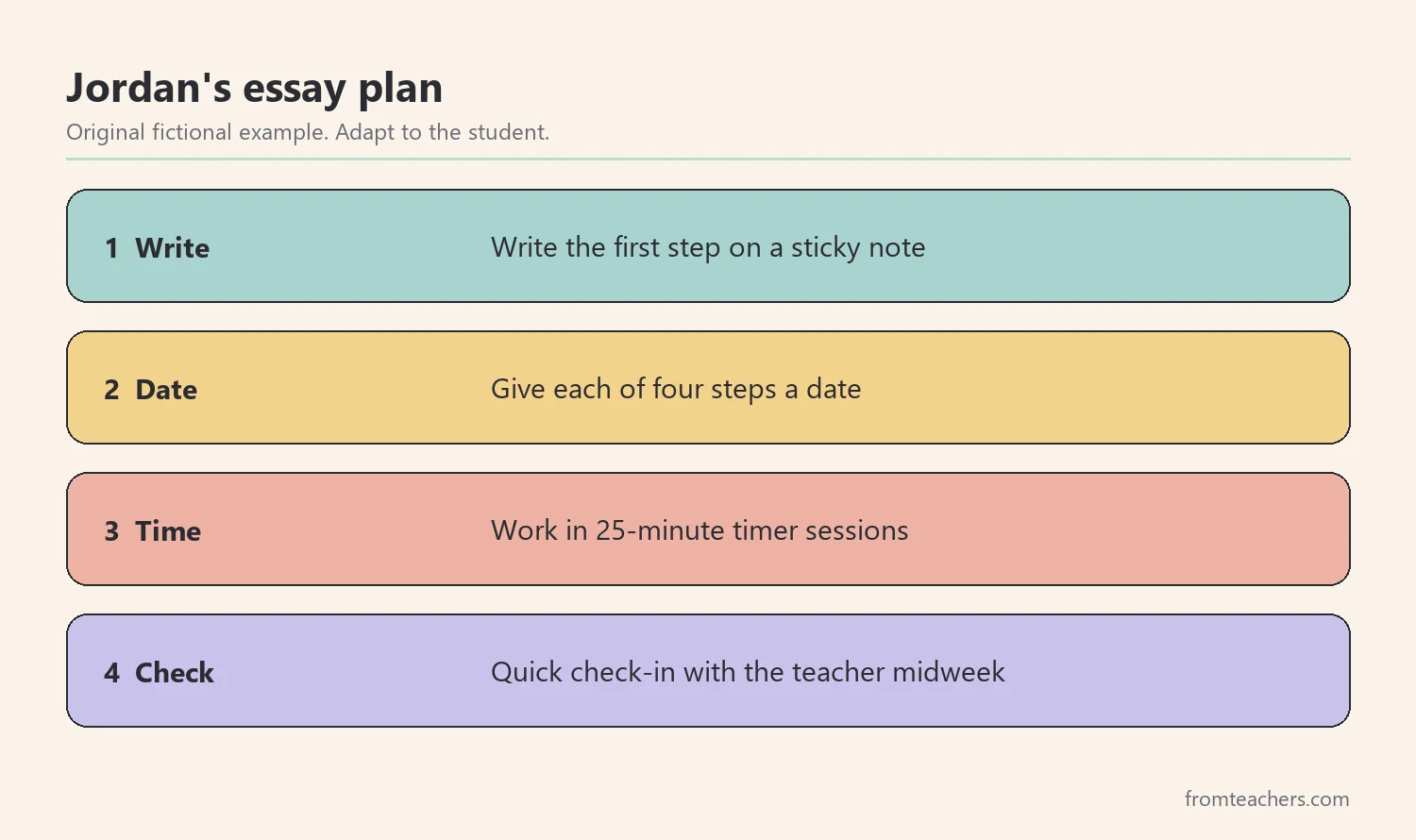
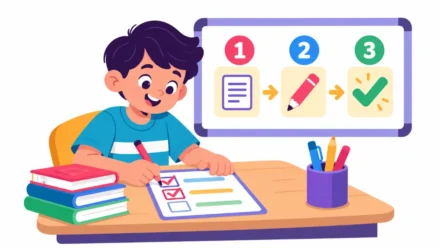
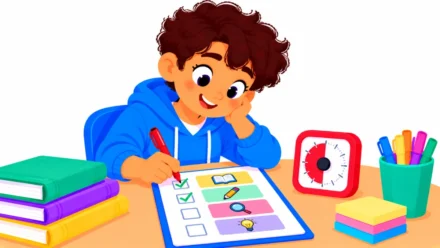
Helpful tools include breaking the task into small written steps, giving each step a date, using visual timers, setting reminders, and body doubling, which means working alongside another person so starting feels easier. A clear first step, written down, is often the single most useful change.
Next, make time visible. Many students with executive dysfunction struggle to feel how much time is left. A calendar with the steps marked, a countdown, or a simple progress bar on the planner can help the deadline feel real earlier.
For Jordan, Mr. Silva and Jordan write four steps for the next essay, each with a date. Jordan uses a 25-minute timer for each work session. She also joins a quiet study group at lunch twice a week, which works as body doubling. The essay is finished one day early.
Making it stick
In addition, plan for the middle of the task, not only the start. Some students start well and then stall halfway, especially on long writing. A planned check-in at the halfway point, or a second sticky note with the next step, keeps the work moving when energy drops.
Moreover, keep the tools the same across classes when possible. If every teacher uses a different planning system, the student must remember several. One shared approach makes the tools easier to use.
Also, teach the tools, do not just hand them over. Model how to break a task into steps, practice with a small assignment, and give feedback. Tools only help once the student knows how to use them.
5. Review the tools and adjust together
Finally, check whether the tools are working. The answer to which one is leading is not settled once. Patterns can change as tasks get harder, as the student grows, or as stress rises during busy times of year.
Keep the record short. For each long assignment, note when the student started, how many steps were finished on time, and whether the work was turned in on time. Over a few assignments, you will see whether the plan is helping.
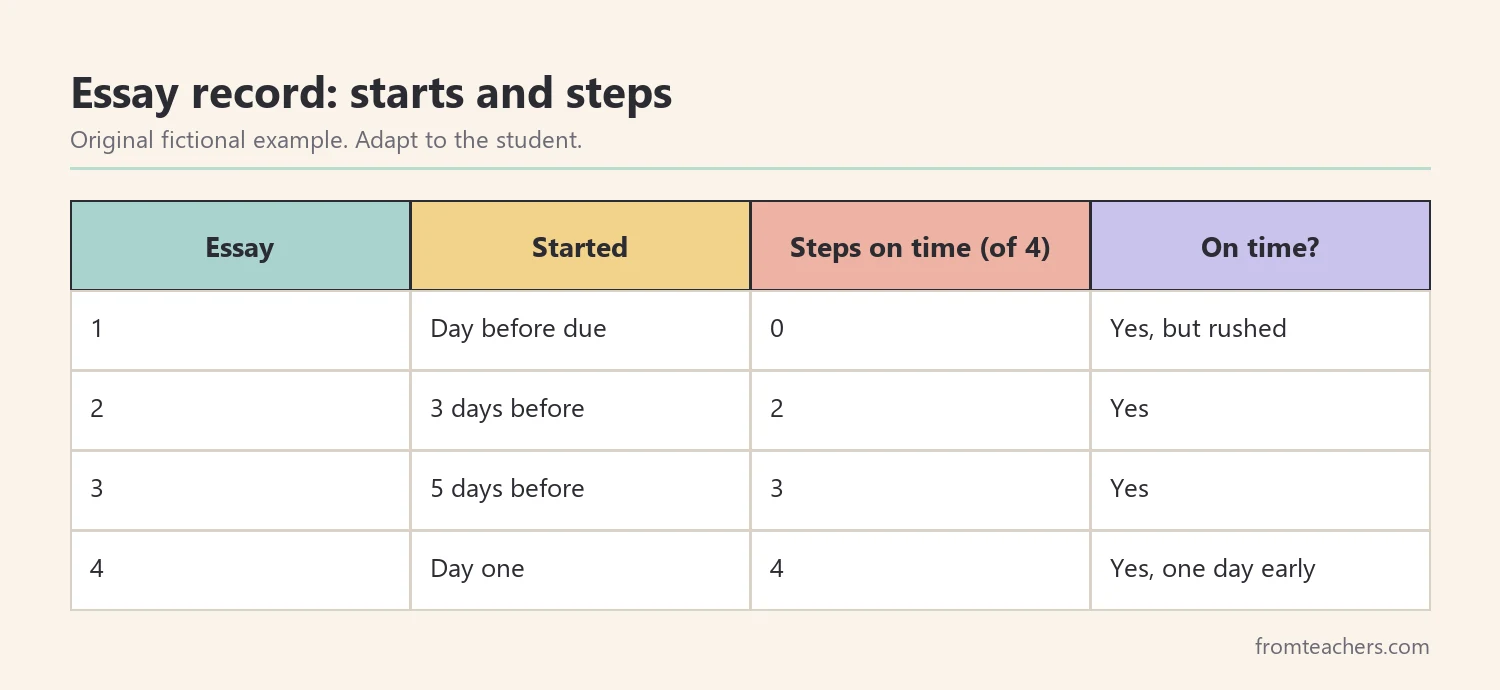
For Jordan, the first essay is started the day before it is due. By the fourth essay, she starts on day one and finishes all four steps on time. She also says essays feel “less scary,” which suggests the avoidance layer is shrinking as well.
Then, review with the student. Ask which tool helped most and which felt like extra work. Students who understand their own pattern can start choosing tools for themselves, which is the long-term goal.
Also, plan for busy seasons. Exam weeks, sports seasons, and holidays bring extra demands. A student who manages well in a quiet month may slip when several deadlines pile up. Reviewing the plan before those periods, and adding a little more structure for a short time, can prevent a return to old patterns.
In addition, share what works with the family and other teachers. A tool that helps in English may also help with science projects or college applications. Consistency across settings makes the habits stronger.
Common mistakes and how to avoid them
- Calling every delay laziness. Fix: describe the pattern first and ask what makes starting hard.
- Using only motivation tools for a skills problem. Fix: add structure such as written steps, dates, and timers.
- Using only structure for an avoidance problem. Fix: address the feelings and the meaning of the task too.
- Assuming it is one or the other. Fix: expect a mix and decide which one is leading.
- Handing over tools without teaching them. Fix: model, practice, and give feedback.
Questions teachers and parents ask about procrastination vs executive dysfunction
Is procrastination always a bad habit?
Not always. Everyone delays sometimes. It becomes a concern when delays regularly affect learning, grades, or well-being, and when the usual reminders do not help.
Does executive dysfunction mean a student has ADHD?
Not necessarily. Executive function difficulties are common in ADHD, but they can also appear with autism, learning disabilities, anxiety, and other conditions. Only a qualified professional can make a diagnosis.
Can a student have both?
Yes. In fact, this is common. Repeated struggles with starting can make a student start to avoid tasks, so support often needs to address both skills and feelings.
Do these tools work for adults too?
Yes. Written steps, timers, body doubling, and “messy first draft” rules help many adults. Teachers and parents can model these tools in their own work.
Should executive function supports be in an IEP or 504 plan?
If difficulties affect learning across classes, the team may discuss supports such as chunked assignments, check-ins, or planning help. Bring your notes and data to that meeting.
Related reading: ADHD in Children: A Guide to Effective Classroom and Home Support, Effective ADHD Classroom Strategies to Support Student Success, and Learning Styles Student Success Guide.
A companion resource for procrastination vs executive dysfunction:
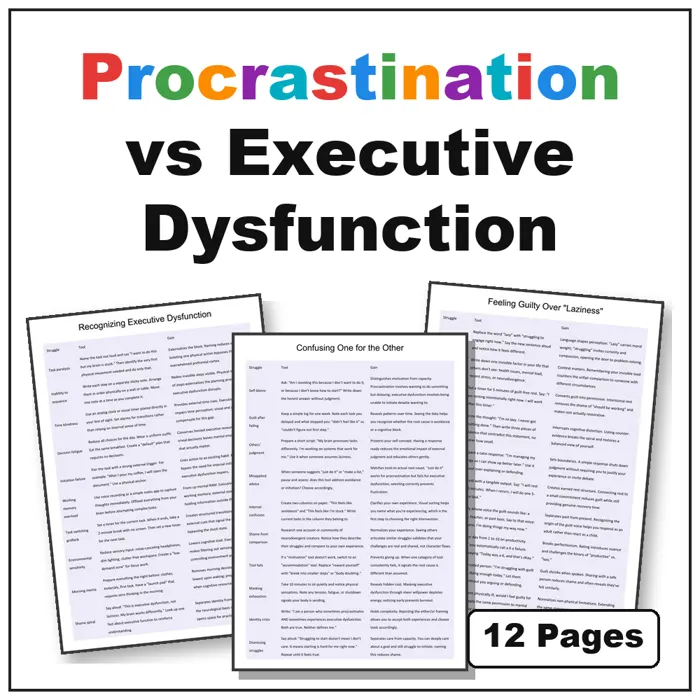
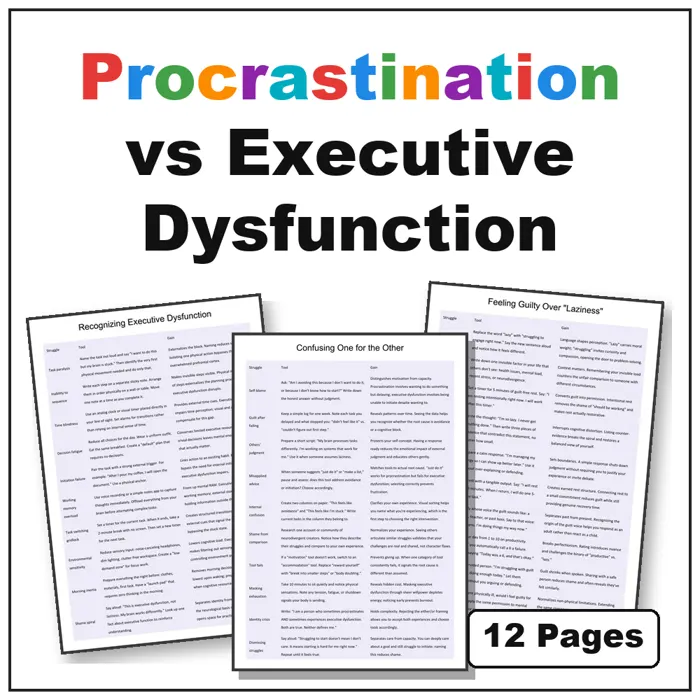
Procrastination vs Executive Dysfunction: Strategies to Tell the Difference: 12 strategy tables that help students and adults separate avoidance from executive dysfunction and choose a tool that matches the real struggle.
Sources and scope
- Center on the Developing Child at Harvard University: background on executive function and how these skills develop.
- Understood.org: plain-language information on executive function and learning differences for families and teachers.
- CHADD: a national organization offering information on ADHD for families, adults, and educators.
- IRIS Center, Vanderbilt University: free modules on classroom supports and evidence-based practices.
This guide covers practical ways to understand and respond to delays at school and at home. It does not diagnose any condition or replace guidance from qualified professionals or the student’s team.
Key takeaways
- Describe the delay pattern before labeling it.
- Ask simple questions to see whether avoidance or executive dysfunction is leading.
- Match avoidance with tools that address feelings and meaning.
- Match executive dysfunction with structure: steps, dates, timers, and body doubling.
- Track starts and on-time steps, and review the tools with the student.






Leave a Comment