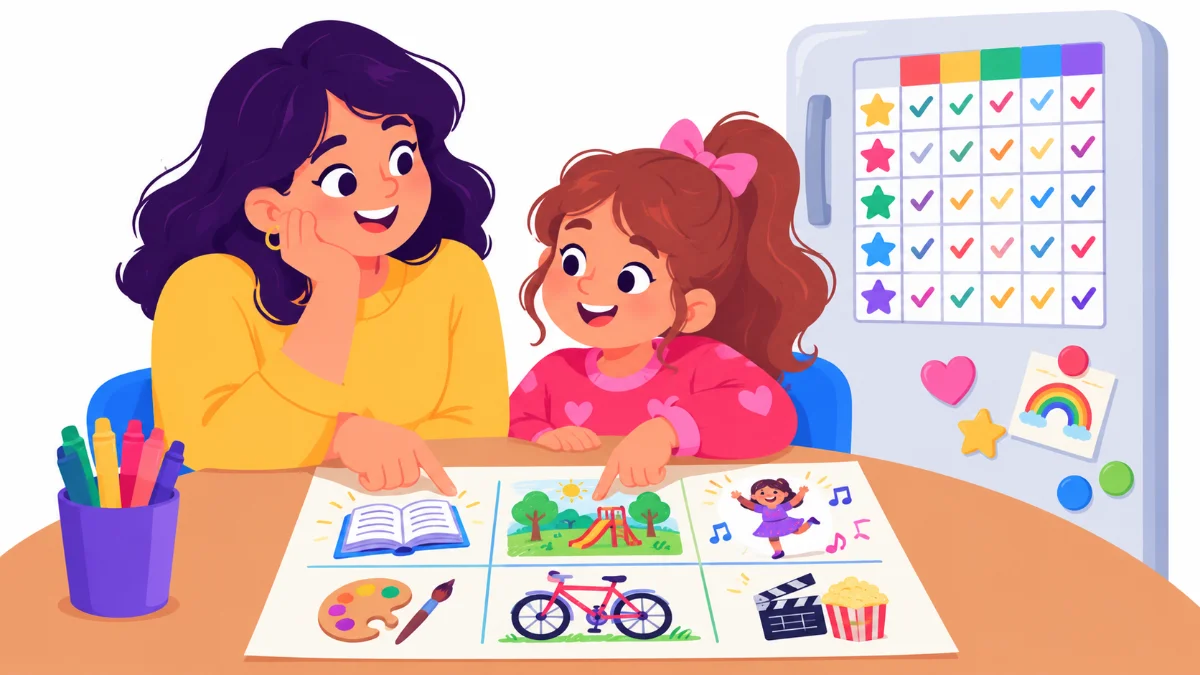

Free reward ideas for kids can make a weekly behavior chart work without turning your home into a toy store. Picture a Sunday evening. Maya, age 6, has checked off “good manners” and “listening the first time” most days this week, and she is asking what she gets. Many parents reach for candy or a new toy, then worry about the cost and the habit it builds.
This list offers twelve rewards that cost nothing, ranked from the easiest to give tonight to the ones that need a little planning. By the end, you will know how to pick rewards your child actually wants, how to link them to a chart, and how to fade them as habits grow.
Examples are fictional. Adapt to your child’s age, interests and family routines. This is guidance, not a diagnosis or a treatment plan.
At a glance
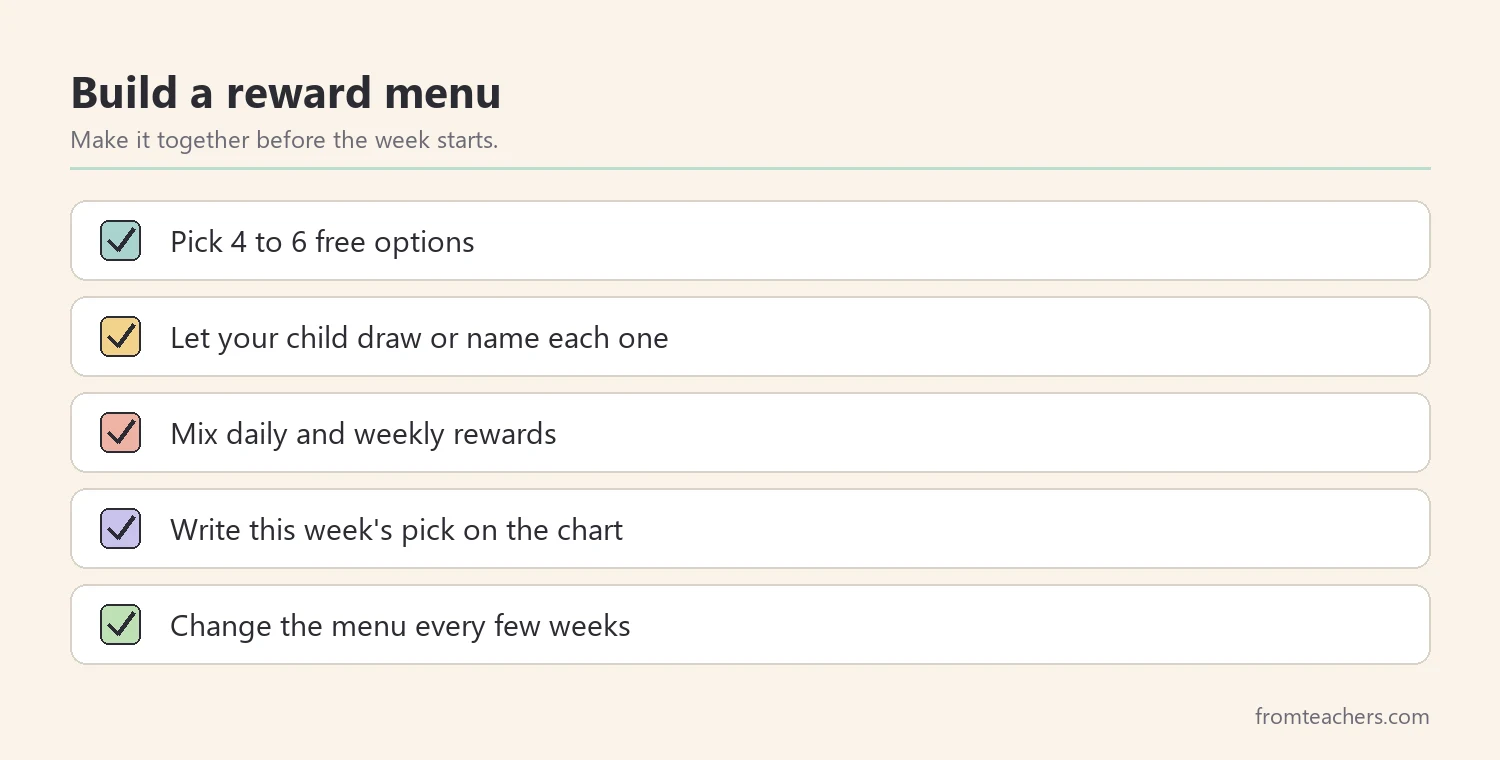
- The best reward is one your child chooses from a short menu.
- Praise, stories and small jobs cost nothing and start tonight.
- Write the reward on the chart so the goal stays visible.
- Start with reachable targets and raise them slowly.
- Keep earned rewards, and keep praise as rewards fade.
How we ranked these rewards
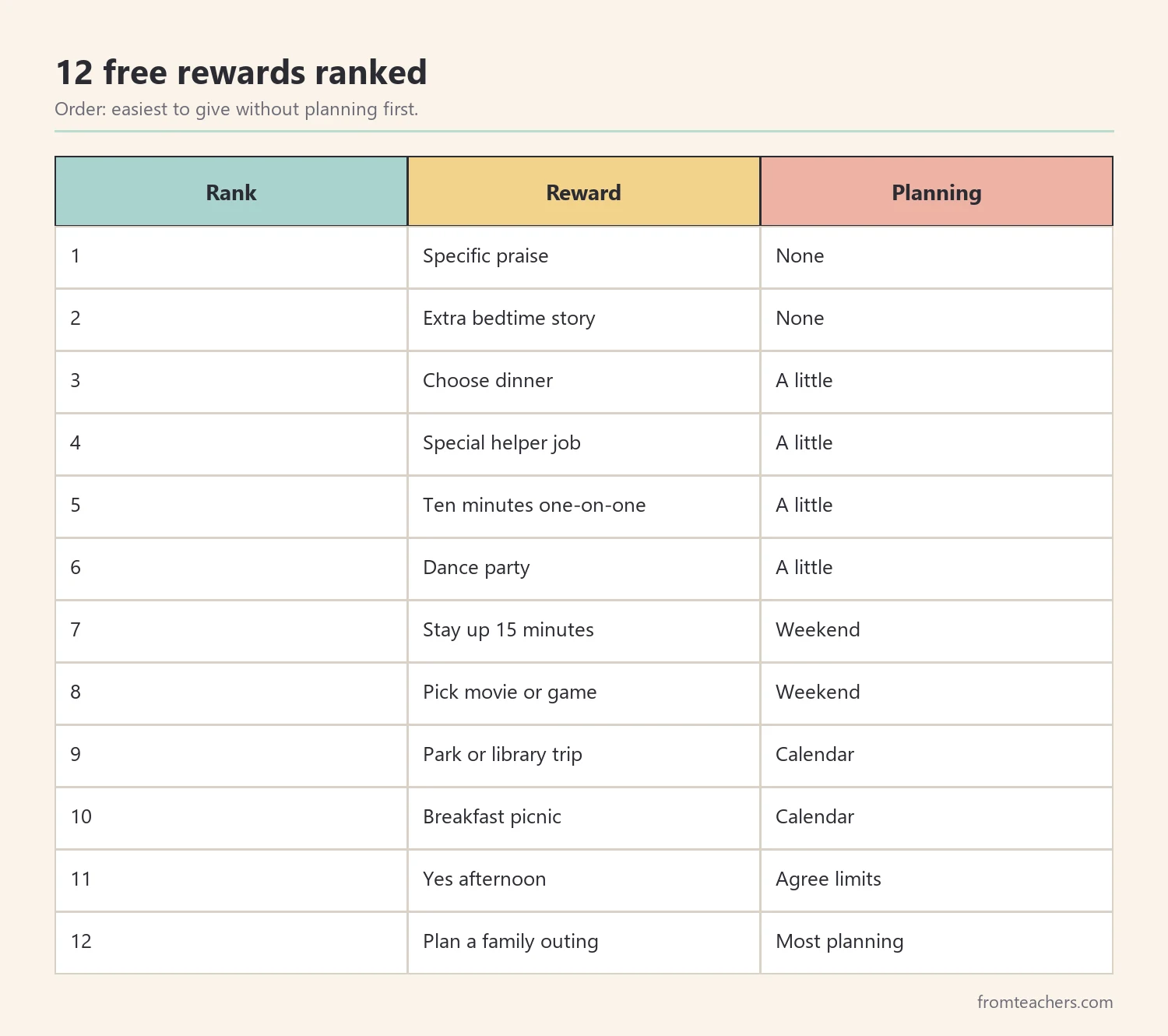
We did not rank by “best,” because the best reward is the one your own child cares about. Instead, we used a simple, stated rule: how easy each reward is to give without planning or money. Rewards at the top take a few minutes tonight. Rewards near the bottom need a calendar spot or a little preparation.
All ideas suit roughly ages 4 to 8. Older children may prefer the later ones, such as choosing a family plan or earning extra responsibility.
The ready-made option: a weekly chart with a reward box
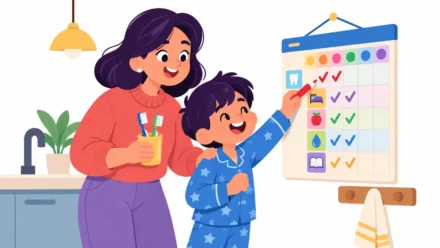
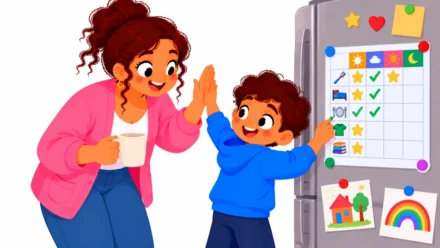
A reward only works when your child can see the path to it. The editable weekly behavior chart for kids with a reward section lets you type your child’s name, track eleven positive daily habits from Sunday to Saturday, note behaviors to work on in a Things to Avoid section, and write the chosen reward in a Reward box.
As a result, your child sees the checks build up during the week and knows exactly what they are working toward.
1. Specific praise right away
What it is: naming the exact behavior you liked, as soon as it happens.
Why it works: parenting resources such as HealthyChildren.org, from the American Academy of Pediatrics, describe praise as a simple way to encourage behavior you want to see again.
How to use it: say “You put your shoes by the door without a reminder. That helped us leave on time,” instead of only “Good job.”
Example: Maya’s dad named one checked habit every evening as they marked the chart. She started pointing to the box herself.
2. An extra bedtime story
What it is: one more book, or one more chapter, at bedtime.
Why it works: it is calm, cozy, and many children love it. It also adds reading time.
How to use it: keep it short and predictable. Your child picks the book.
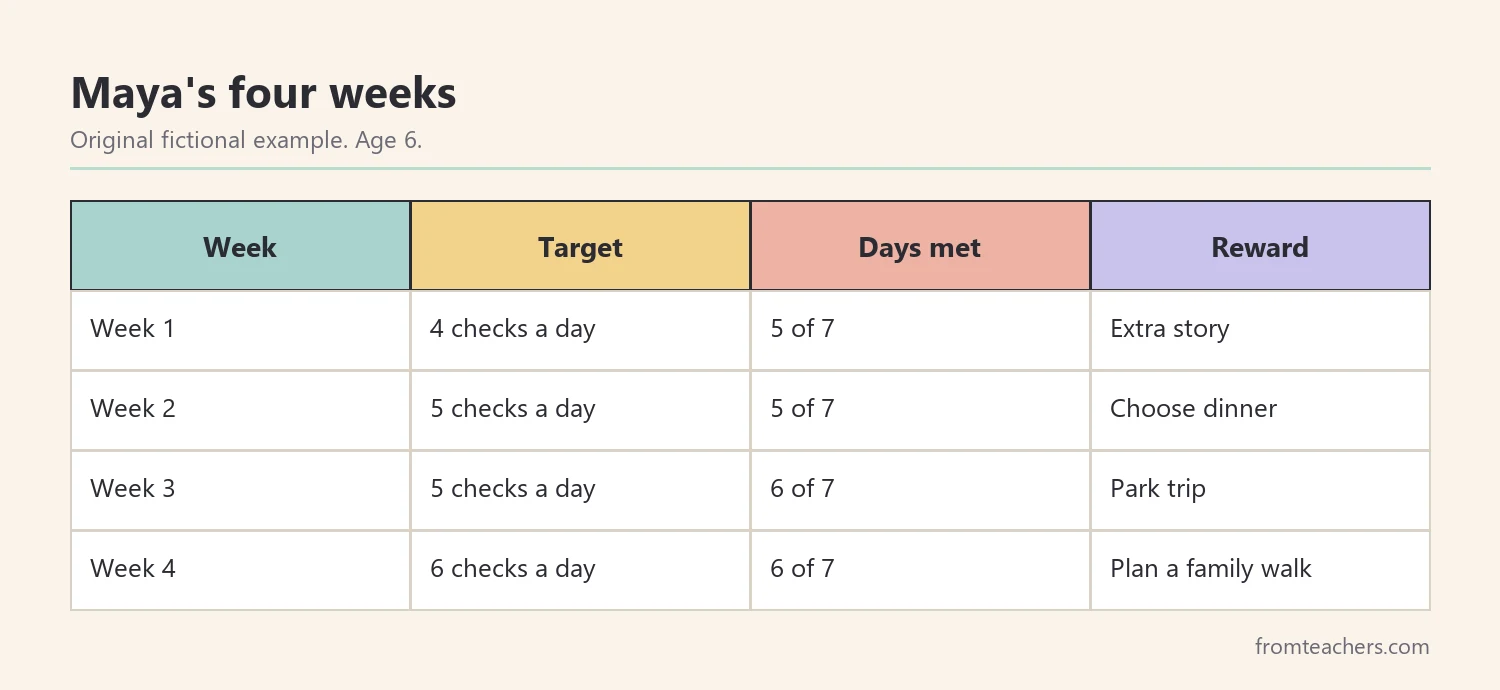
Example: Maya earned an extra story on any day with five checks.
3. Choosing dinner or a side dish
What it is: your child picks dinner from two or three options you already have.
Why it works: it gives a feeling of control and costs nothing extra.
How to use it: offer limited choices: “Pasta or tacos on Thursday?”
Example: Maya chose “breakfast for dinner” and helped stir the pancake batter.
4. A special job or helper role
What it is: a “grown-up” job, such as feeding the pet, pressing the elevator button, or holding the shopping list.
Why it works: many young children feel proud when trusted with responsibility.
How to use it: call it a privilege, not a chore. Rotate jobs between siblings.
Example: Maya became “door captain,” locking the front door each evening with a parent.
5. Ten minutes of one-on-one time
What it is: a short, planned block where your child chooses the activity and has your full attention.
Why it works: attention is often the reward children want most. Focused time also builds connection.
How to use it: set a timer, put your phone away, and follow your child’s lead in play.
Example: Maya chose building a blanket fort with her mom for ten minutes.
6. A dance party or silly game
What it is: a five-minute burst of music, tickles, or a favorite silly game.
Why it works: it releases energy and turns success into fun.
How to use it: let your child choose the song.
Example: on Friday, the whole family danced to Maya’s song for her “listening” checks.
7. Staying up 15 minutes later
What it is: a slightly later bedtime, once a week.
Why it works: it feels very special to many children. However, it works best on a weekend night, so sleep stays protected.
How to use it: keep it to one night and spend the time calmly together.
Example: Maya used her 15 minutes to look at stars from the window.
8. Picking the family movie or game
What it is: your child chooses the movie for movie night or the board game for game night.
Why it works: it is a shared reward, so siblings enjoy it too, and it builds family time.
How to use it: offer a short list of approved options.
9. A trip to the park or library
What it is: a free outing, chosen by your child.
Why it works: movement and a change of scene are rewarding, and public libraries often run free story times.
How to use it: put it on the calendar so your child can look forward to it.
Example: Maya’s weekly reward box said “Saturday park, my choice of slide.”
10. Breakfast picnic on the floor
What it is: the usual breakfast, eaten on a blanket in the living room.
Why it works: it costs nothing, but the novelty feels like a treat.
11. A “yes” afternoon of small choices
What it is: for one afternoon, you say yes to small, free requests you agreed on in advance, such as which room to play in or which cup to use.
Why it works: children often hear “not now” many times a day. A planned “yes” block feels big.
How to use it: agree on limits first, so it stays safe and calm.
12. Making a family plan together
What it is: your child helps plan the next weekend activity, from the route to the snack list.
Why it works: older children, around 7 or 8, often value input and responsibility more than small prizes.
Example: by week four, Maya asked to plan a family walk instead of an extra story.
How to link free reward ideas for kids to the chart
First, ask your child to pick a reward from a short menu before the week starts. Next, write it in the reward box so the goal is visible. Then agree on a clear target, such as “five checks a day on four days.” Finally, give the reward when promised, and keep the tone warm.
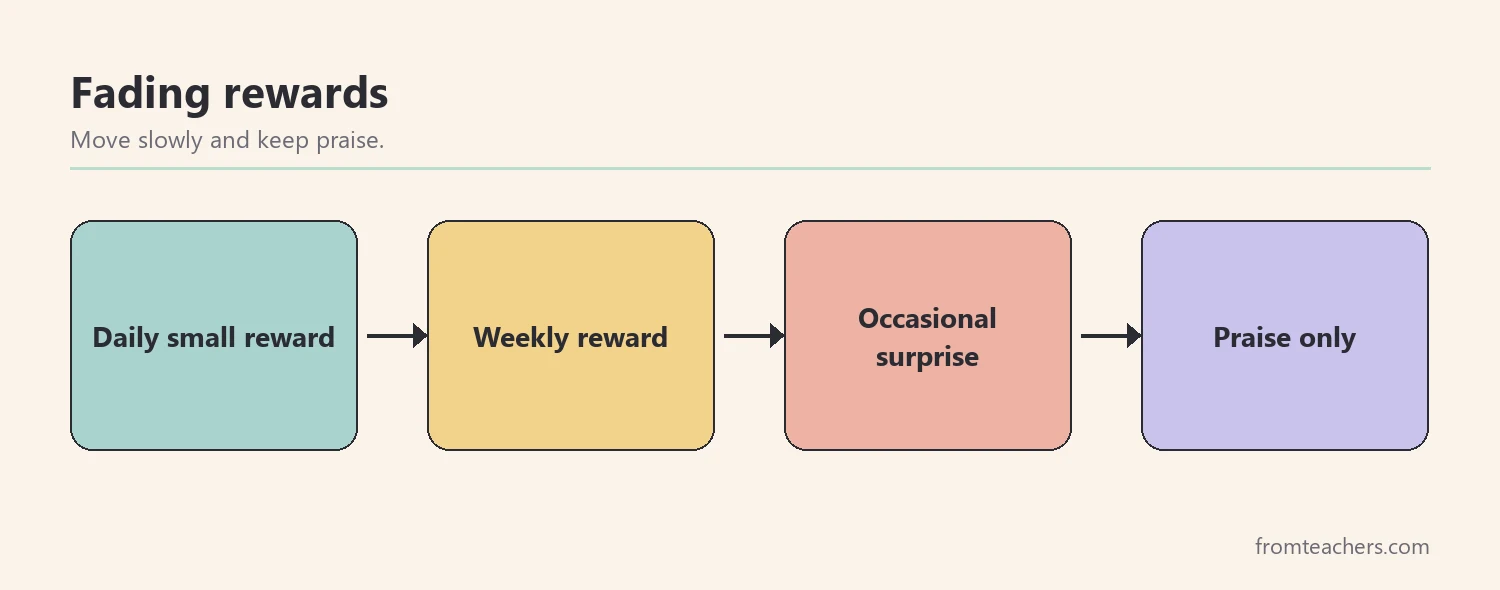
Over time, move from daily to weekly rewards, and keep praise going. Maya’s four weeks in Figure 4 show how the target can grow slowly.
Matching rewards to your child’s age
Children change a lot between 4 and 8, so the same reward will not land the same way for every child. Use the guide below as a starting point, then watch your own child.
| Age | Often works well | Reward timing |
|---|---|---|
| 4 to 5 | Praise, stories, dance party | Same day |
| 6 | Helper jobs, choosing dinner | Daily or every two days |
| 7 to 8 | Planning, later bedtime, outings | Weekly |
In addition, think about your child’s personality. A quiet child may love one-on-one reading time, while an active child may prefer the park or a dance. Some children enjoy being in charge, so helper jobs and planning roles mean more to them than any object.
Also, keep siblings in mind. When one child earns a shared reward, such as choosing the movie, the others still join in, which reduces jealousy. Each child can still have a personal reward on their own chart.
Finally, remember that consistency matters more than the size of the reward. A small reward given exactly when promised teaches more than a big reward that arrives late or not at all. If a week goes badly, keep the chart, lower the target slightly, and try again on Sunday.
For example, Maya’s parents noticed that she lost interest when the reward was more than three days away. They kept a small daily reward, such as an extra story, and added one weekly reward from the menu. That mix kept her motivated through the whole month.
Common mistakes and how to avoid them
- Choosing rewards for your child: offer a menu and let them pick.
- Targets that are too hard: start with a goal your child can reach this week, then raise it.
- Taking earned rewards away: keep what was earned. Handle new problems separately.
- Using the same reward forever: rotate options every few weeks to keep interest.
- Forgetting praise: rewards work best alongside daily specific praise.
Questions parents ask about free reward ideas for kids
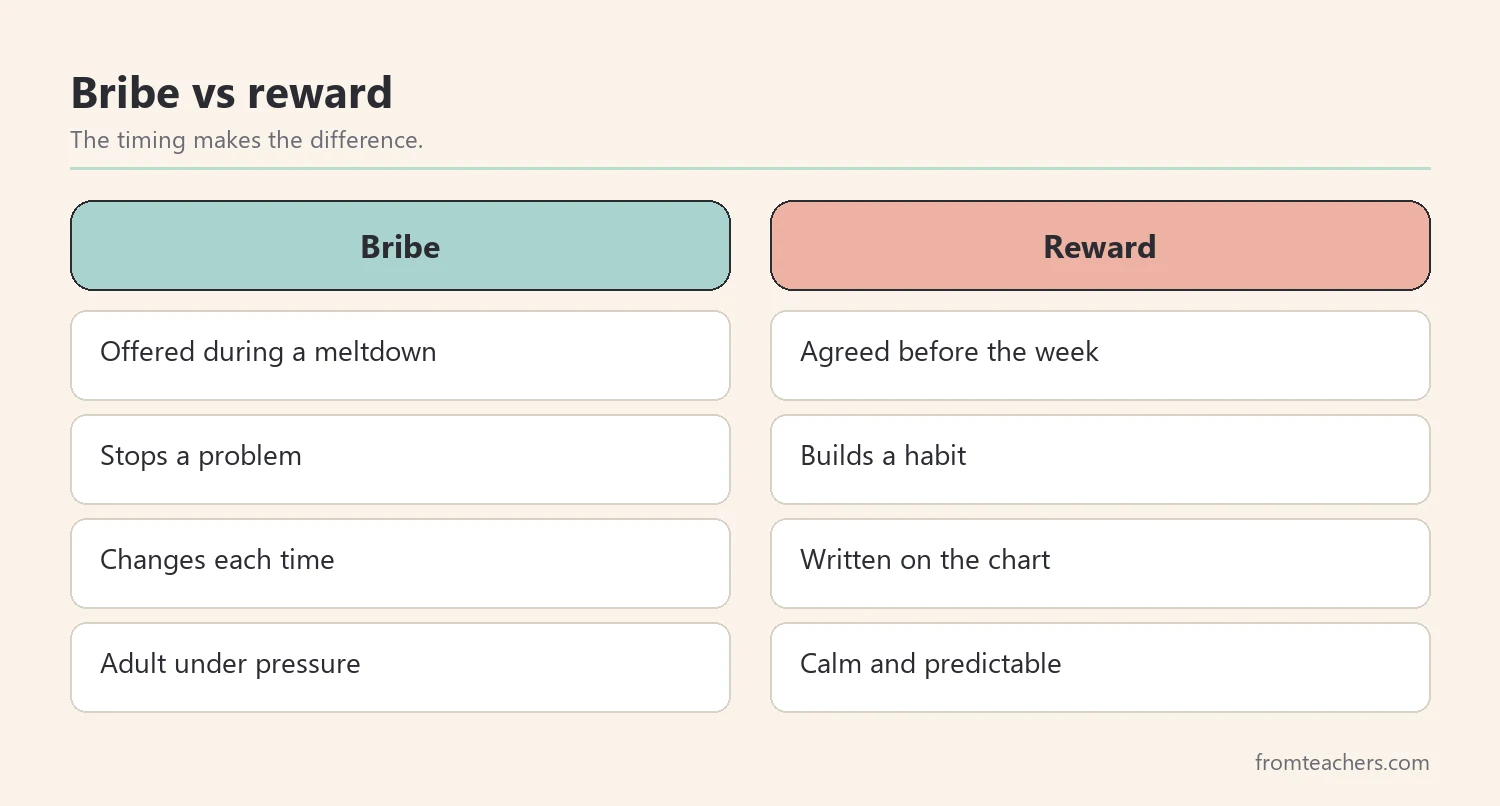
Are rewards the same as bribes?
A bribe is offered in the middle of a problem to stop it. A reward is agreed in advance for a positive habit. The chart keeps the agreement clear and calm.
How often should a young child get a reward?
Children around 4 or 5 often need small daily rewards. Many 7 and 8 year olds can wait for a weekly reward. Watch your own child’s interest.
What if my child does not care about any reward?
Ask them to make the menu with you, and watch what they choose during free time. Attention-based rewards, such as one-on-one time, often work when objects do not.
Should siblings have the same rewards?
Each child can have their own chart and menu. Shared rewards, such as movie night, can still include everyone.
When should we stop using the chart?
When a habit happens most days without reminders, replace it with a new habit or fade the chart. Keep praising the old habit.
Related reading: positive alternatives to shame and behavior charts, ADHD support at home and in class.
A companion resource for free reward ideas for kids:
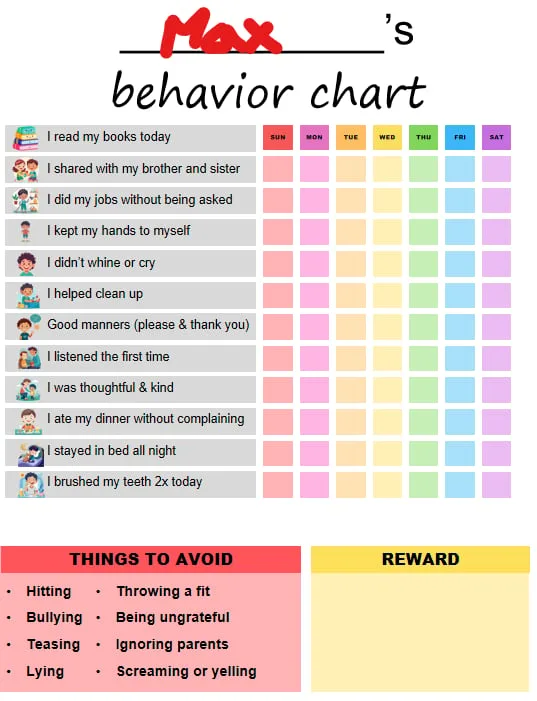
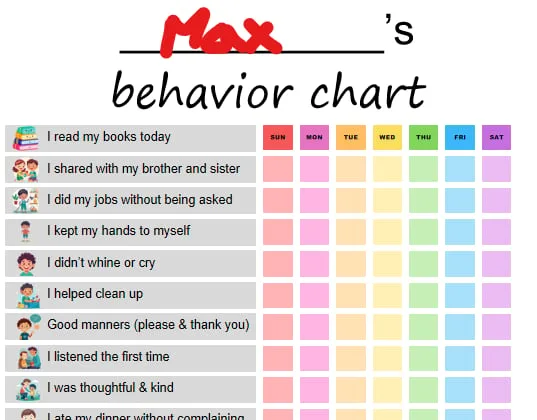
Weekly Behavior Chart for Kids: Editable Reward Chart for Home: one full-page editable chart with space for your child’s name, eleven positive daily habits to track, a Sunday to Saturday grid in bright colors, a Things to Avoid section and a Reward section for the weekly goal.
You may also need: Positive Reinforcement Tracking Sheet Editable Behavior Data Collection.
Sources and scope
- HealthyChildren.org (American Academy of Pediatrics): parenting information on discipline, praise and routines.
- Child Mind Institute: articles for families on behavior and positive attention.
- ZERO TO THREE: resources on young children’s development and behavior.
- Center on PBIS: information on positive behavior support used in schools and families.
This list covers free, positive rewards for typical home routines with children around ages 4 to 8. It does not replace advice from a pediatrician or psychologist for ongoing behavior concerns.
Key takeaways
- The best free reward ideas for kids are the ones your child chooses from a menu.
- Start with praise, stories and small jobs, which take no planning.
- Write the reward on the chart so your child can see the goal.
- Set reachable targets, then raise them slowly.
- Never take away an earned reward, and keep praise going as rewards fade.


Leave a Comment