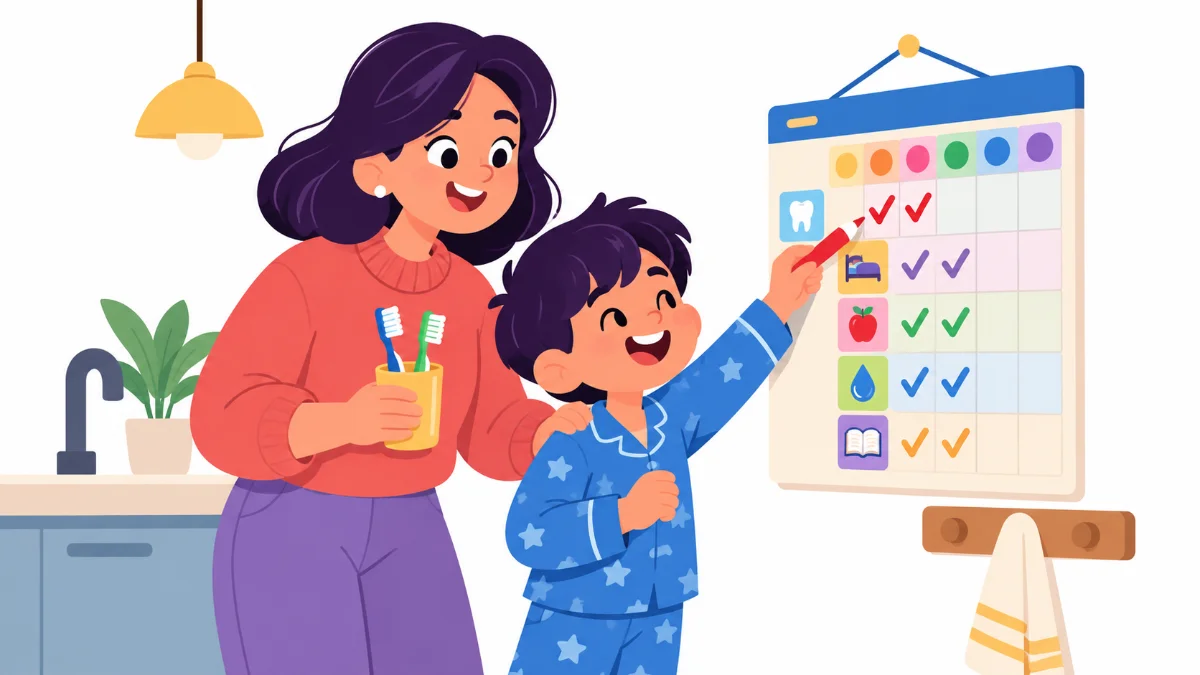

Choosing the right habits for a kids behavior chart is the difference between a chart that motivates and one that ends up behind the fridge. Picture a Sunday evening at home. Sam, age 6, has a new chart on the wall with fifteen rules in small print, and by Wednesday nobody remembers to check it.
This list ranks ten positive habits that work well on a weekly chart for children roughly ages 4 to 10. By the end, you will know which habits to start with, how to word them so a child understands, and how to review the week together without turning it into a lecture.
Examples are fictional. Adapt to your child’s age, needs, and any supports agreed with school or professionals. This is guidance, not a diagnosis.
At a glance
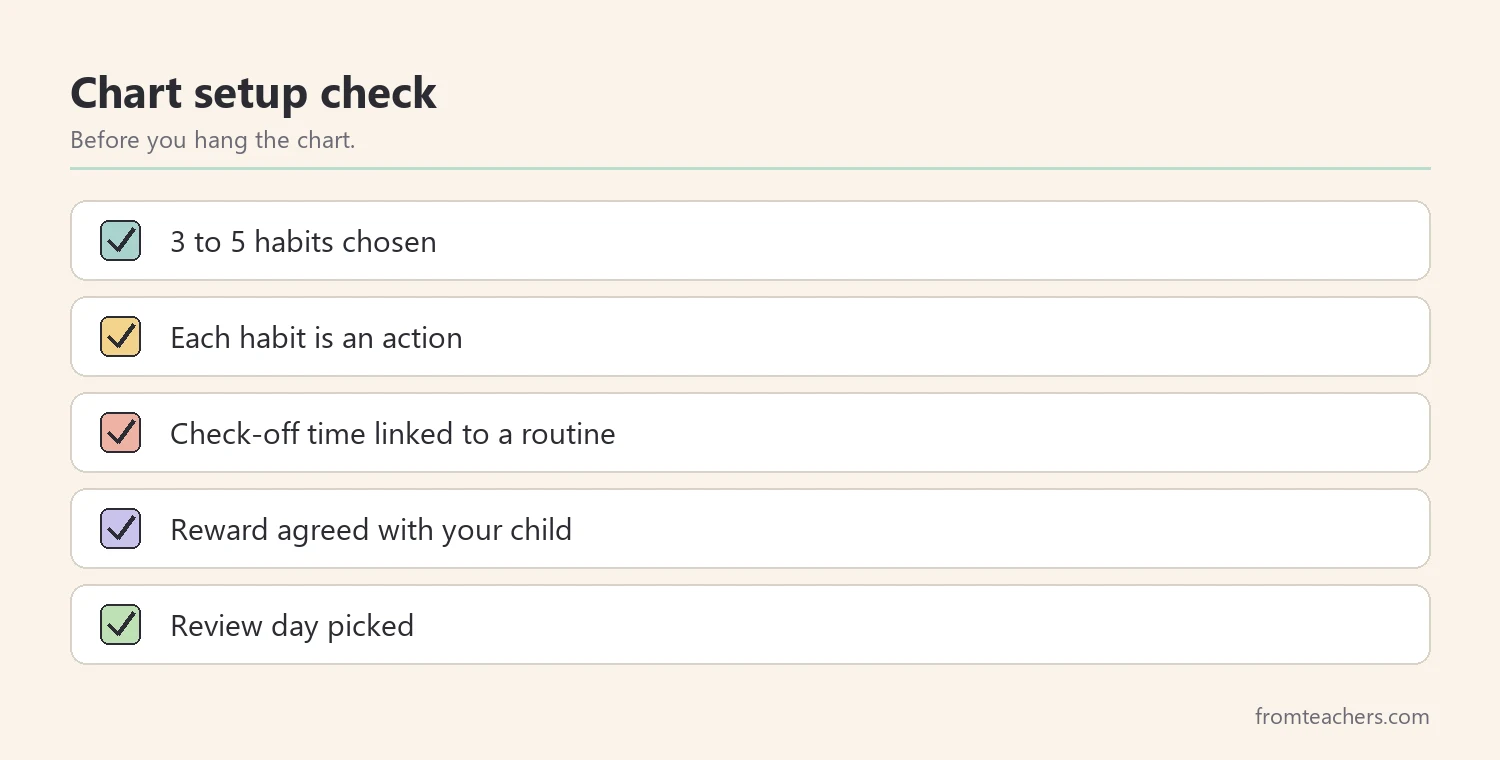
- Choose three to five concrete, positive habits to start.
- Habits that happen every day give more chances to succeed.
- Word each habit as an action a child can see.
- Check off right after the habit, linked to a routine.
- Review weekly, start with what went well, and celebrate.
How we ranked these habits
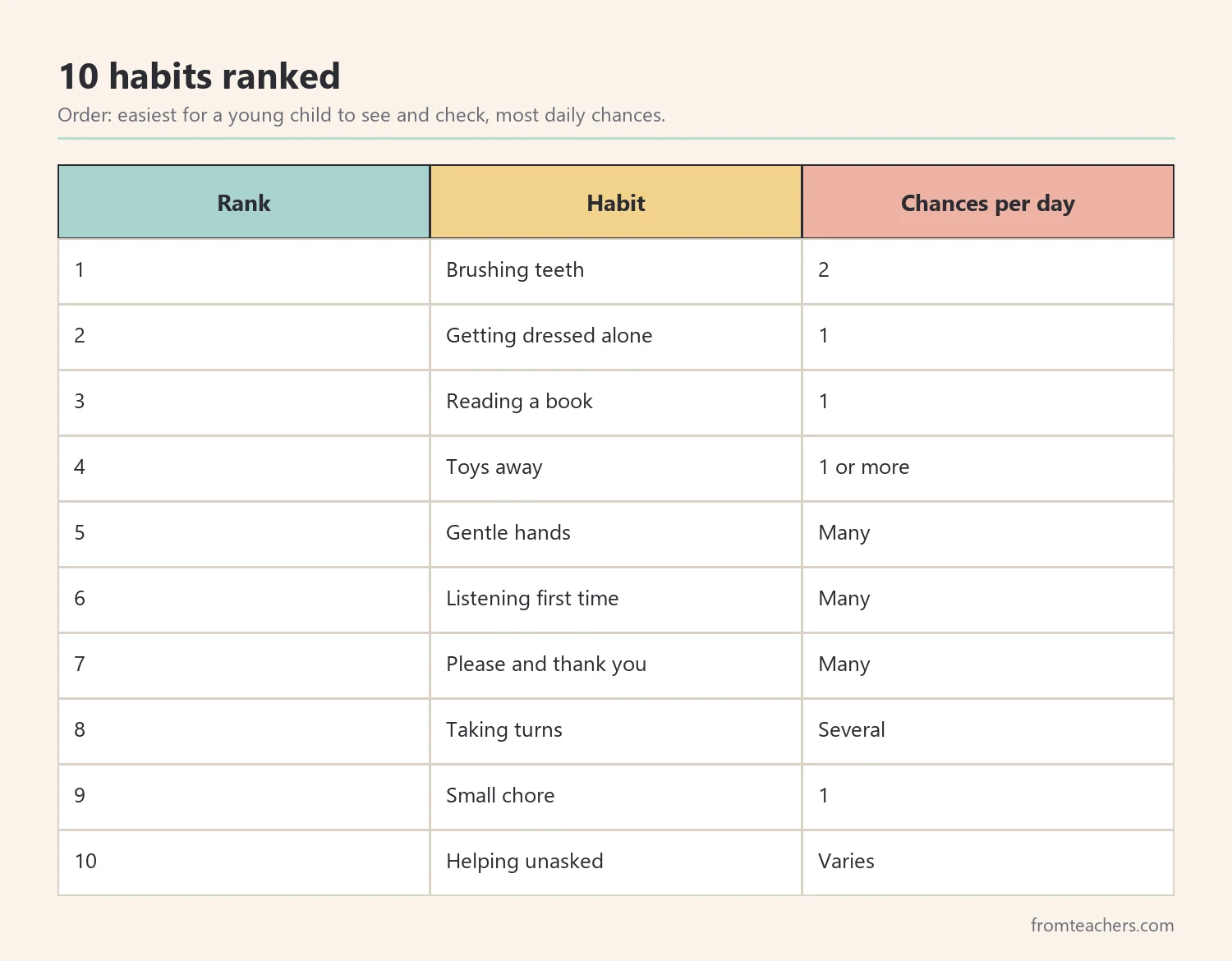
There is no official top ten list of habits, so we did not pretend to have one. Instead, the order follows two practical criteria. First, how easy the habit is for a young child to see and check off without an adult explaining it. Second, how often it happens every day, which gives the child many chances to succeed.
So, the habits near the top are concrete and frequent, like brushing teeth. The habits lower down are still valuable but need more explanation, like helping without being asked. Pick three to five habits to start, not all ten.
The ready-made option: a weekly chart with habits already listed
If you would rather not design a chart from scratch, a printable one saves an evening. The editable weekly behavior chart for kids lets you type in your child’s name and print it. It lists eleven positive daily habits, such as reading, sharing, chores without being asked, keeping hands to themselves, good manners, and listening the first time, in a Sunday to Saturday grid with bright, kid friendly colors.
It also includes a Things to Avoid section and a reward area, so you can look back at the end of the week and celebrate together. You can still highlight only the habits you want to focus on, which keeps the chart simple for younger children.
1. Brushing teeth morning and night
Why it works: it happens twice a day, it is easy to see, and most young children already know what it means.
How to use it: put the check right after brushing, in the bathroom or on the way to bed. Young children respond best to quick feedback.
Example: Sam checked his chart every night after brushing. After a week, he reminded his dad instead of the other way around.
2. Getting dressed on your own
Why it works: it builds independence, and the result is visible.
How to use it: lay out clothes the night before for younger children. Then the habit is “put on the clothes,” not “choose an outfit in two minutes.”
Example: Sam’s parents put his clothes on a chair each evening. On school mornings, he dressed himself on most days by the second week.
3. Reading or looking at books
Why it works: it is a calm daily routine, and it supports early literacy. It also gives families a shared moment.
How to use it: set a small, realistic target, such as one book or ten minutes. For pre-readers, looking at pictures together counts.
Example: Sam chose a book every night before bed. Some nights he “read” the pictures aloud, and that was enough for a check.
4. Putting toys away
Why it works: it is concrete, and children can see the result: a clear floor.
How to use it: make it specific, such as “toys in the bin before dinner.” A timer or a short song can help.
Example: Sam’s family used a two-minute song. When the song ended and the toys were in the bin, he got his check.
5. Keeping hands to yourself
Why it works: it targets a common issue with siblings and friends, and it is easy to explain.
How to use it: phrase it positively. “Gentle hands” or “hands to myself” works better than “no hitting.” Talk about what to do instead, such as walking away or asking an adult.
Example: Sam and his younger sister often pushed each other during TV time. With “gentle hands” on the chart, and a reminder to ask for help, the pushing happened less often.
6. Listening the first time
Why it works: it reduces repeated reminders, which helps the whole household.
How to use it: get close, say the child’s name, give one clear direction, and wait a few seconds. Then praise the quick response.
Example: Instead of calling Sam from the kitchen, his mom walked over, said his name, and asked him to wash hands for dinner. He responded more quickly, and the habit became easier to check.
7. Good manners: please and thank you
Why it works: it happens many times a day, so there are lots of chances to notice it.
How to use it: model it yourself and notice it aloud: “You said thank you to Grandma. That was kind.”
Example: Sam earned his check most days by dinner time. His parents noticed he also said thank you more at school pickup.
8. Sharing and taking turns
Why it works: it supports friendships and family play.
How to use it: this habit is harder to judge, so define it. For example, “let your sister have a turn with the tablet when the timer rings.”
Example: With a kitchen timer, turn-taking became clear. When the timer rang and Sam handed over the tablet, he earned a check.
9. Doing a small chore
Why it works: children feel useful, and the family gets real help.
How to use it: choose a chore that fits the child’s age, such as feeding a pet, setting spoons on the table, or matching socks.
Example: Sam’s chore was putting spoons and napkins on the table. He liked being the one who “set dinner.”
10. Helping without being asked
Why it works: it rewards initiative, which is a big step for young children.
How to use it: because it is less predictable, add it after the child is succeeding with more concrete habits. Notice and name it when it happens.
Example: In week three, Sam picked up his sister’s dropped crayons without being asked. His parents added a star and told him exactly what he did.
Choosing rewards that keep the chart meaningful
A reward does not need to cost money. In fact, many children care most about time with a parent. Ideas include choosing the weekend breakfast, an extra bedtime story, a trip to the park, a board game with a parent, or picking the music in the car.
First, decide the reward together before the week starts. Children are more motivated when they helped choose. Next, make the target realistic. For a young child, “most checks this week” is clearer and kinder than “every single box.”
In addition, mix the weekly reward with daily praise. A specific comment like “You put your toys away when the song ended” tells your child exactly what went well. Over time, that praise matters as much as the reward itself.
Finally, keep siblings in mind. If one child has a chart, a brother or sister may want one too. A simple chart for each child, with different habits, often prevents arguments and makes the routine a family project rather than a spotlight on one child.
Reviewing the week with your child
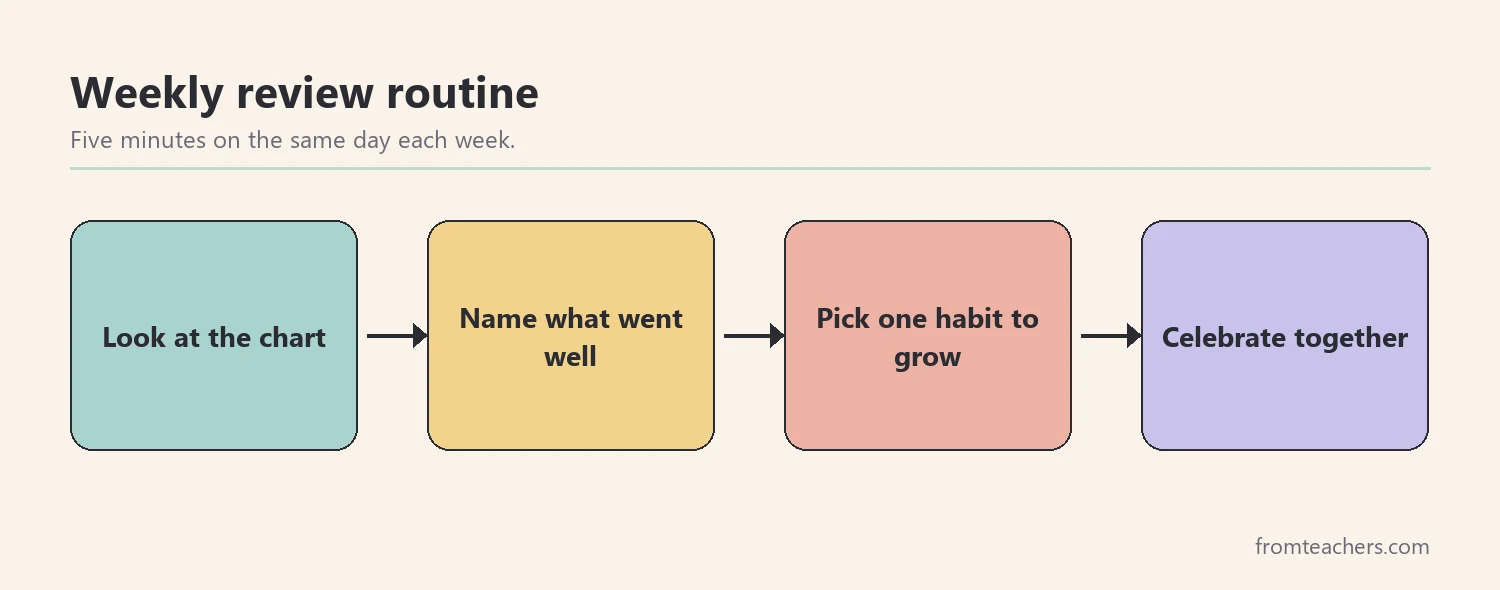
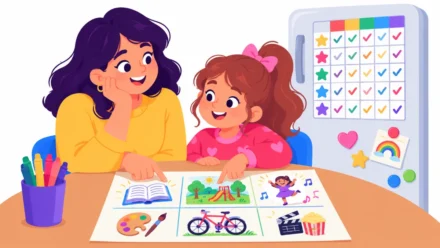
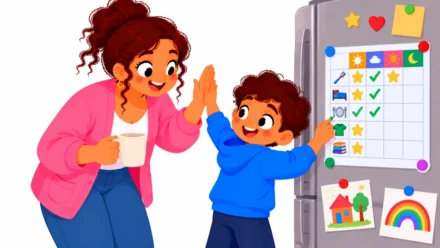
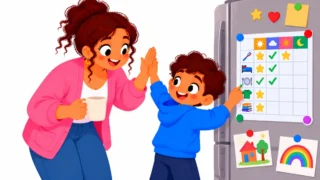
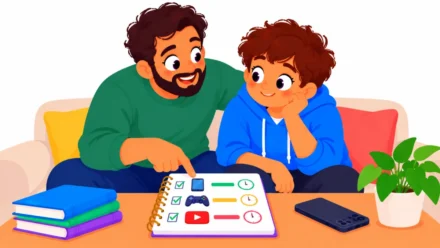
Once a week, sit together for five minutes and look at the chart. Start with what went well. Then choose one habit to keep working on. Finally, celebrate with the reward you agreed at the start, such as a park visit, a special breakfast, or choosing the family movie.
Here is how Sam’s first four weeks looked when his parents chose four habits for a kids behavior chart and reviewed every Sunday.
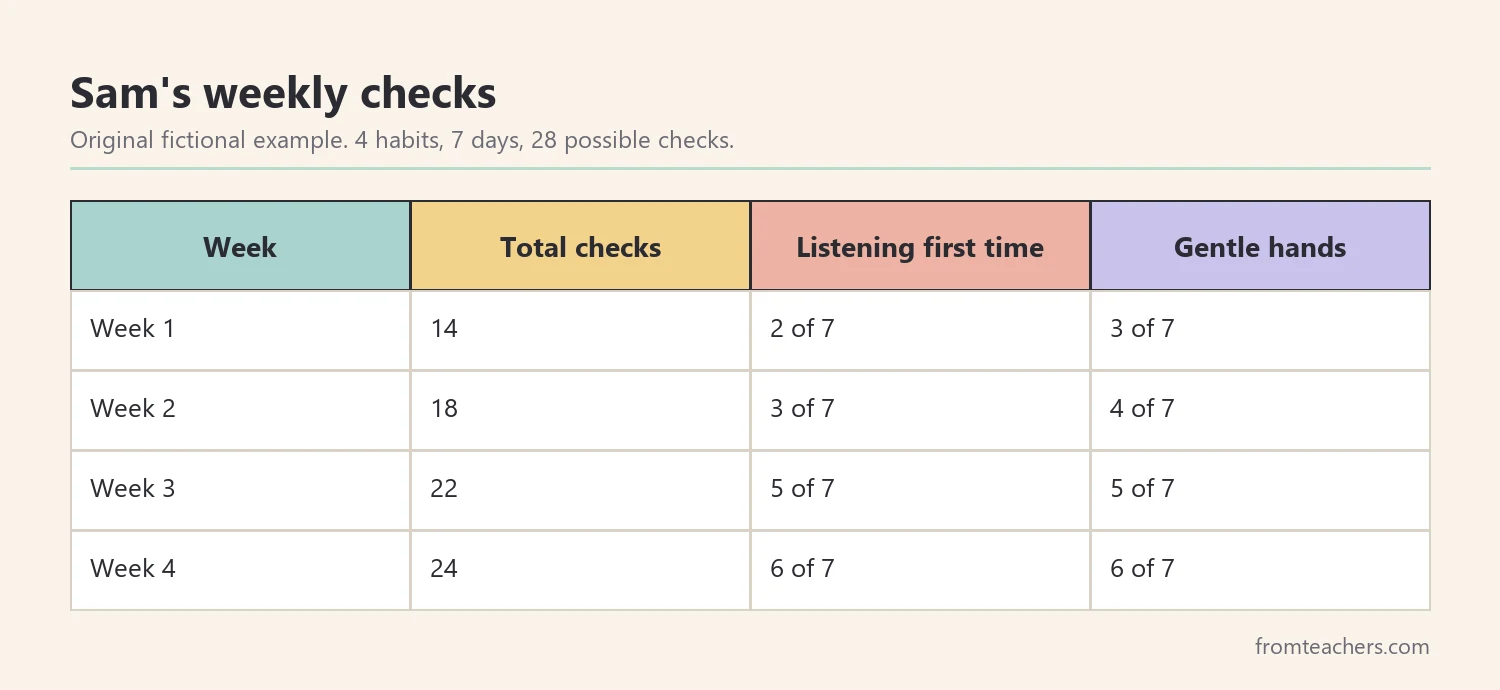
The pattern was encouraging. Checks rose steadily, and the habits that started low, such as listening the first time, improved most once the family changed how they gave directions. As a result, they added a fifth habit in week five.
Common mistakes and how to avoid them
- Too many habits at once. The chart becomes a to-do list nobody reads. Fix: start with three to five habits.
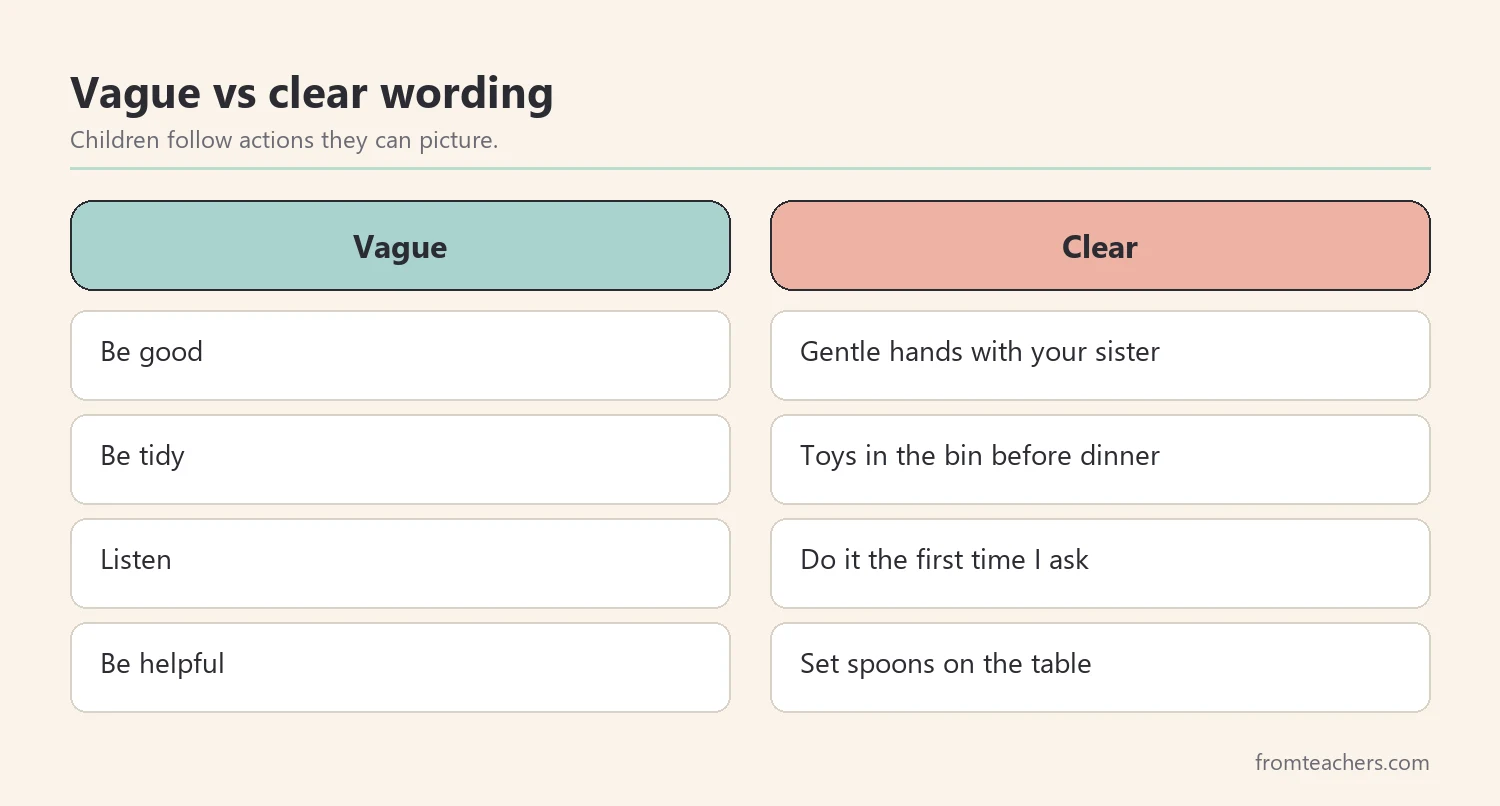
- Vague wording. “Be good” cannot be checked. Fix: describe the action, such as “toys in the bin before dinner.”
- Taking away checks already earned. This can make the chart feel like punishment. Fix: keep earned checks and talk about tomorrow.
- Rewards that are too far away. Young children struggle to wait a month. Fix: celebrate weekly.
- Forgetting to update. A chart nobody fills in loses meaning. Fix: link check-off times to routines like brushing teeth.
Questions parents ask about habits for a kids behavior chart
At what age does a behavior chart work?
Many families use simple charts with preschool and early elementary children. Younger children usually need pictures, very few habits, and quick rewards. Older children can help choose the habits and the reward.
How many habits should I include?
Start with three to five. Once your child succeeds with most of them, add one more or swap in a new habit.
What if my child loses interest?
That is common after a few weeks. Change the reward, let your child decorate the chart, or choose a new habit together. A fresh start often helps.
Should I include behaviors to avoid?
A short Things to Avoid list can help children understand limits. However, keep the main focus on positive habits, and talk about what to do instead.
When should I stop using the chart?
When a habit happens most days without reminders, you can remove it from the chart and celebrate. Many families fade the chart gradually rather than all at once.
Related reading: Moving Beyond Shame and Behavior Charts: Positive Alternatives, Meltdowns vs Tantrums: A Guide to Understanding and Responding, and ADHD in Children: A Guide to Effective Classroom and Home Support.
You may also need: Daily Reflection Journal for Students SEL Check In and Goal Setting Sheet.
A companion resource for habits for a kids behavior chart:
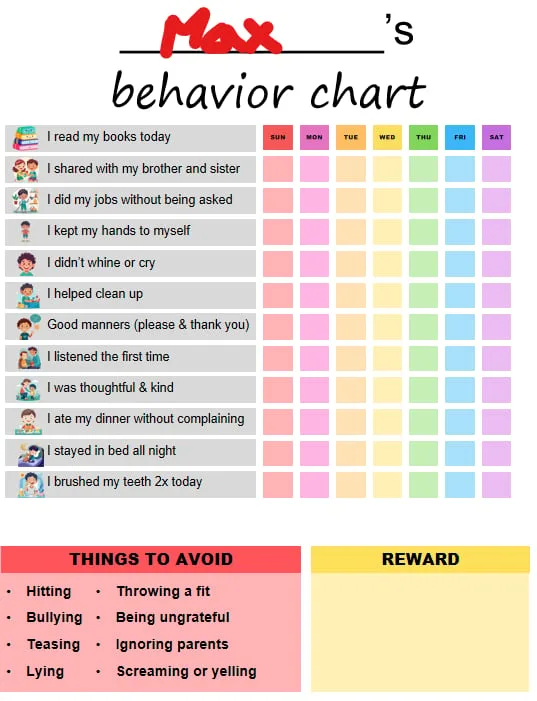
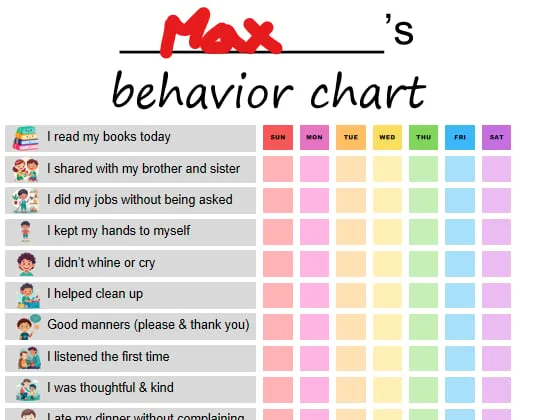
Weekly Behavior Chart for Kids Editable Printable Reward Chart for Home: a one-page editable weekly chart with space for your child’s name, eleven positive daily habits, a Sunday to Saturday grid in bright colors, a Things to Avoid section, and a reward area.
Sources and scope
- Center for Parent Information and Resources: plain-language information and resources for families.
- Understood.org: practical articles for families on behavior, routines, and learning differences.
- Center on PBIS: resources on positive behavior support, including family materials.
- CHADD: information for families of children with attention challenges, including home routines.
This list covers simple positive habits for home behavior charts with young children. It does not cover serious or unsafe behavior, which should be discussed with your child’s doctor, school team, or a qualified professional.
Key takeaways
- The best habits for a kids behavior chart are concrete, frequent, and positive.
- Start with three to five habits and add more as your child succeeds.
- Check off right after the habit, linked to a daily routine.
- Review the week together and celebrate what went well.
- Keep earned checks and talk about tomorrow instead of punishing.



Leave a Comment