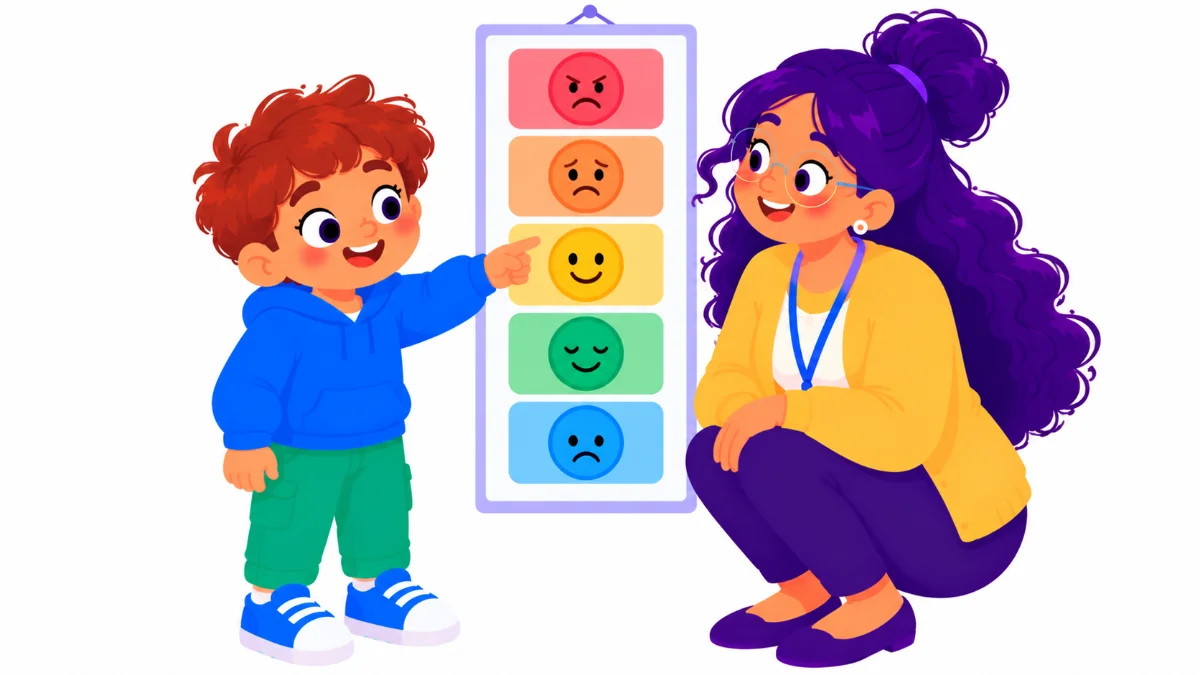

A feelings identification chart gives children words for what is happening inside them. Picture a first grader who comes in from recess with clenched fists and a red face. When the teacher asks what is wrong, he says “nothing” or “I don’t know.” He is not refusing to talk. He simply does not have the words yet, and it is hard to calm down from a feeling you cannot name.
This guide shows you how to turn a chart on the wall into a daily skill. You will learn how to introduce the chart, teach body clues, build a short check-in routine, connect feelings to calming choices, and review progress with families. By the end, you will have a clear plan you can start next week with one student or a whole class.
Examples are fictional. Adapt to the student’s goals and agreed supports. This is guidance, not a diagnosis.
At a glance
- Naming a feeling is a first step toward managing it.
- Introduce a few feeling groups at a time, with clear examples.
- Teach body clues so children notice feelings early.
- Use a short daily check-in so the chart becomes a habit.
- Link each feeling to a safe choice and review with families.
1. Introduce the feelings identification chart
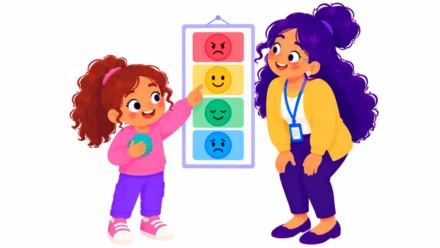
First, place the chart where children can see and reach it, at their eye level. A feelings identification chart works best when it is part of daily life, not a poster that hangs unnoticed. Choose a spot near your calm corner or your morning meeting area.
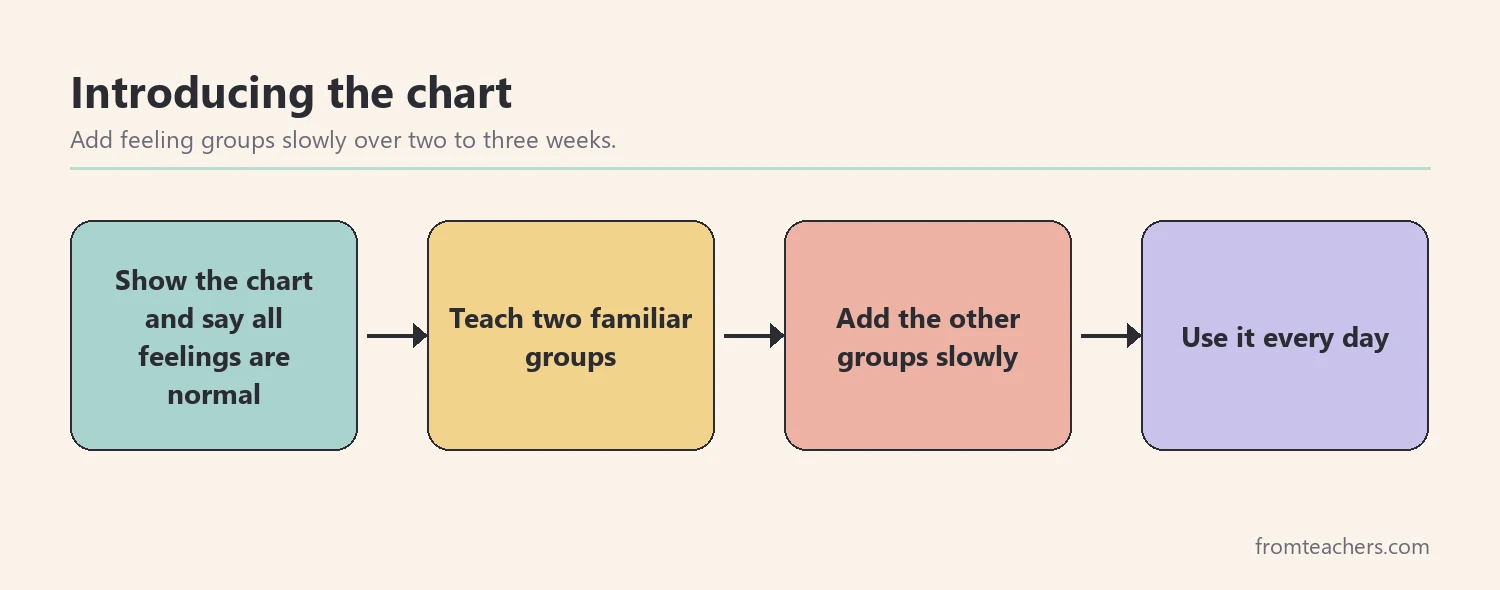
Next, introduce the feeling groups slowly. Many charts group feelings into a small number of families, such as happy, sad, angry, worried, calm, and tired. Start with two or three groups children already know, then add the rest over a week or two. For each group, read the words, look at the character, and share a simple example from daily life.
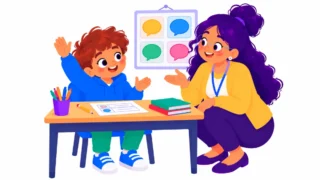
Meet our fictional student, Sam, a first grader. Sam is energetic and loves building with blocks. However, when he is upset, he often shouts or hides under a table. His teacher noticed that he rarely uses feeling words beyond “mad” and “fine.” She decided to teach the chart to the whole class, with extra practice for Sam.
| Week | Feeling groups introduced | Activity |
|---|---|---|
| 1 | Happy, sad | Picture book talk |
| 2 | Angry, worried | Act out faces with a mirror |
| 3 | Calm, tired | Sort feeling word cards |
Also, keep the language simple and warm. Tell children that all feelings are normal and that naming them helps us make good choices. This message lowers shame and makes children more willing to use the chart honestly.
In addition, model the chart yourself. Say things like, “I feel worried because the bus is late. I’m going to take a slow breath.” When adults name their own feelings, children see that the chart is a tool for everyone, not a punishment.
Picture books are a gentle way to practice. Pause on a page and ask, “How do you think this character feels? Which group on our chart?” Children can look at faces and body language in the pictures, then point to the matching group. Because the feeling belongs to a character, children often find it easier to talk about than their own feelings.
2. Teach body clues for each feeling
Next, connect feelings to the body. Many children notice their body before they can name the feeling. A tight tummy, hot face, or heavy arms can all be early clues. A good feelings identification chart includes short body-clue descriptions for exactly this reason.
Teach the body clues with simple questions: “Where do you feel it?” and “What does your body do?” Use mirrors, drawings, and role-play. Children can trace a body outline and color the places where they feel angry or worried.
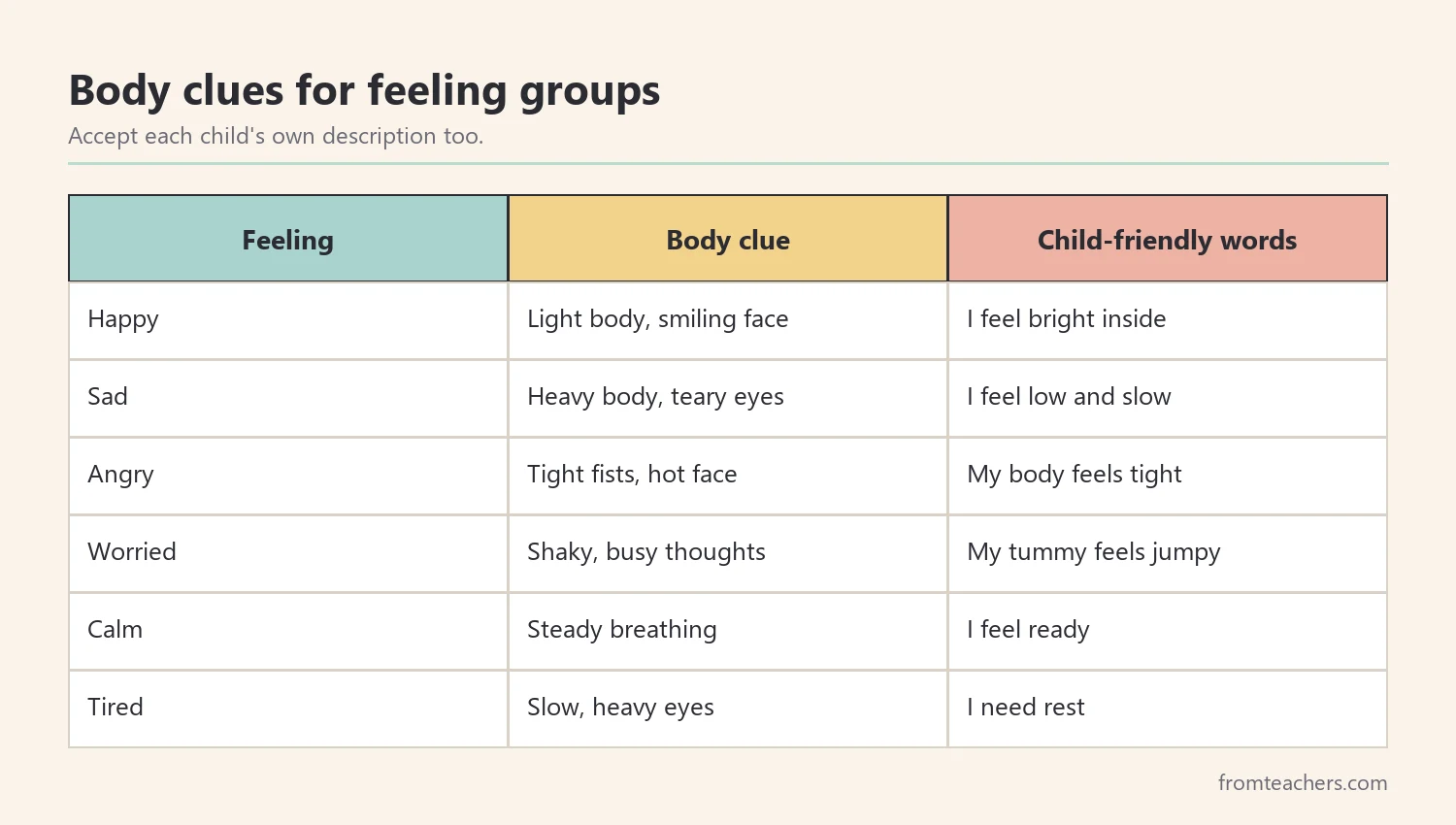
For Sam, body clues made a big difference. He learned that his “hot face and tight fists” meant angry. His teacher started gently pointing to his fists and asking, “What is your body telling you?” Over time, Sam began to notice the clues before he shouted.
In addition, remember that body clues vary. One child may feel worry in the tummy, another in the chest. Accept the child’s own description. The goal is noticing, not getting the “right” answer.
Also, teach the difference between small and big versions of a feeling. Annoyed and furious both belong to the angry group, but they feel very different in the body. Some teachers use a simple scale, such as a little, medium, or a lot. This helps children see that feelings can grow, and that noticing them early makes them easier to handle.
If you want a ready-made poster for this step, the feelings identification chart poster shows six color-coded feeling groups, each with a friendly character and a short body-clue description.
3. Build a daily check-in with the feelings identification chart
Then, make the chart a routine. A short daily check-in gives children regular practice when they are calm, which makes it easier to use the chart when they are upset. Two or three minutes is enough.
Many teachers use the chart during morning meeting or after lunch. Each child points to a feeling, says the word, and optionally shares why. Children who prefer not to speak can point or place a clip. Keep it relaxed, and never require a child to explain.
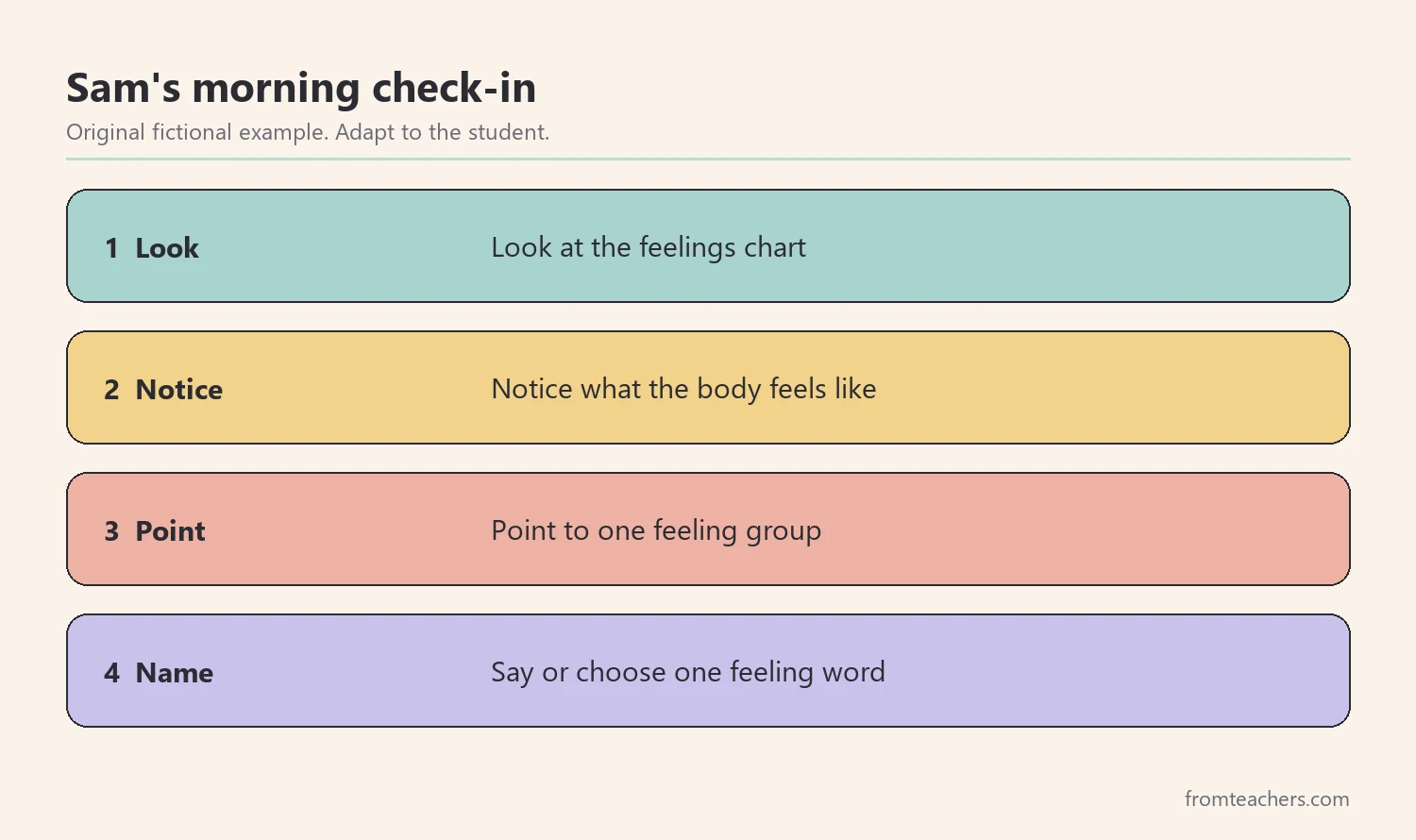
For Sam, the morning check-in took about a minute. He looked at the chart, noticed his body, pointed to a feeling group, and chose a word from the list. On calm days, he usually picked happy or excited. On harder days, he pointed to tired or worried, which told his teacher to offer extra support early.
Older children can add a reason to their check-in. A simple sentence frame such as “I feel ___ because ___” builds vocabulary and self-awareness at the same time.
Also, use the check-in data gently. If a child often chooses sad or worried, talk privately and share with the family or the school counselor. The feelings identification chart is a communication tool, and sometimes it shows a need that adults should follow up.
Finally, vary the format to keep interest. Try feelings check-ins with a puppet, a short drawing, or a “thumbs on the chart” game. Variety keeps the routine fresh while the core skill stays the same.
For children who need extra support, offer a personal copy of the feelings identification chart at their desk or in a folder. A small copy lets the child check in privately during the day, without walking to the wall. It is especially helpful for children who feel shy about pointing in front of classmates.
4. Connect feelings to safe choices
Naming a feeling is the first step. The next step is knowing what to do. For each feeling group, help children build a short list of safe, helpful choices. Post the choices near the chart or in a calm corner.
- Angry: squeeze a stress ball, take three slow breaths, ask for space.
- Worried: talk to a trusted adult, hold a comfort object, count to ten.
- Sad: sit in the calm corner, draw a picture, ask for a hug or a check-in.
- Tired: stretch, drink water, rest for a few minutes if possible.
- Happy or calm: share the feeling, help a friend, keep learning.
Keep each list short. Two or three choices per feeling group are easier to remember than ten. Let children help pick the choices, since they are more likely to use ideas they suggested. Add simple pictures next to each choice so that non-readers can use the list independently. Review the list every few weeks and swap out choices that no one uses.
Practice the choices in calm moments. Role-play situations, such as a friend taking your seat, and let children choose a feeling and a response. Practice makes the choices easier to remember when emotions run high.
For Sam, his teacher created a small card with three angry choices. When he noticed his hot face, he pointed to the angry group and then to one choice on the card. Within a few weeks, he was choosing slow breaths instead of shouting more often.
In addition, praise the process. Say, “You noticed your fists and chose to breathe. That was a strong choice.” Specific praise teaches children exactly what to repeat. A feelings identification chart becomes powerful when it is linked to action like this.
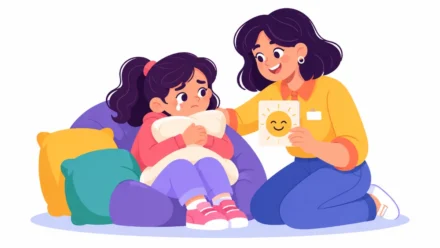
Finally, remember that adults are part of the plan. A calm, quiet adult voice helps a child use the chart in a hard moment. Avoid long talks while the child is upset. Point to the chart, offer one or two choices, and save the conversation for later, when the child is calm and ready to reflect.
5. Review the feelings identification chart with families
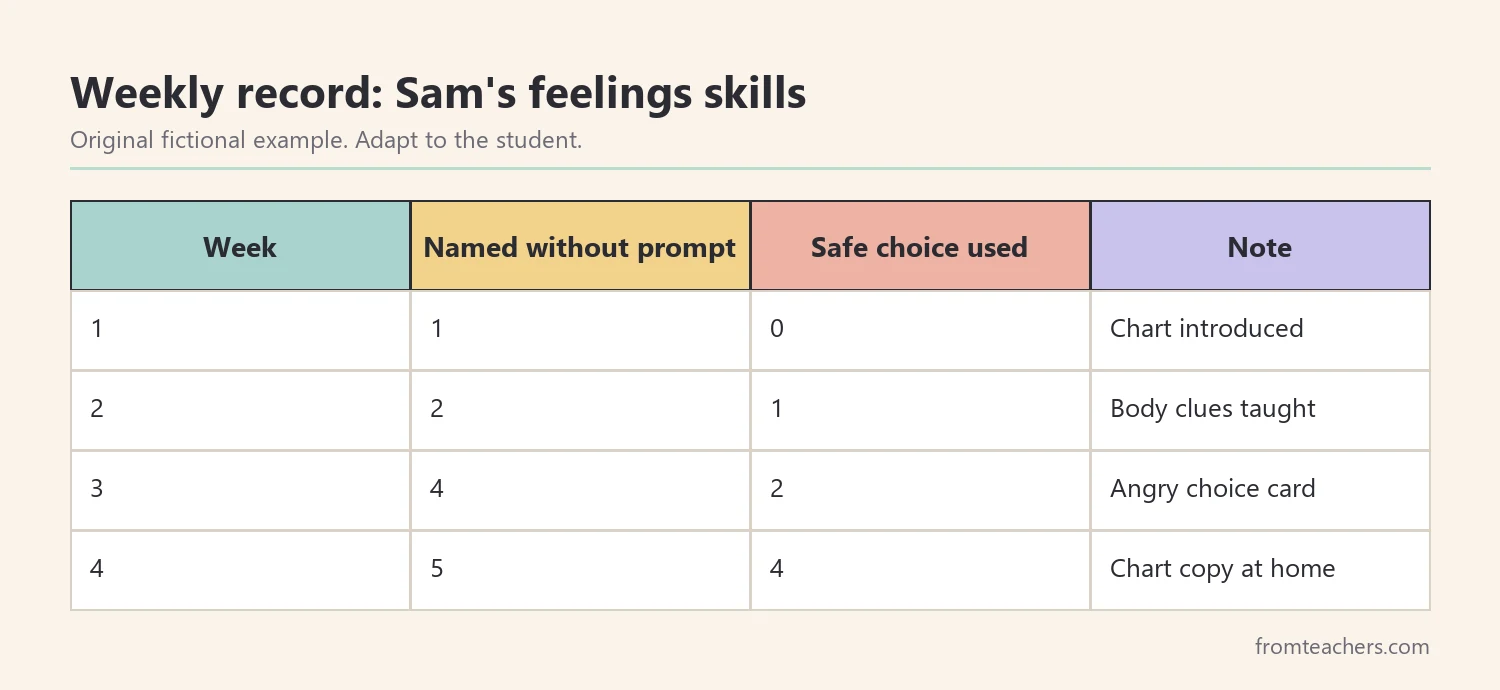
Finally, check how the skill is growing. Choose one simple measure, such as how many times per week the child names a feeling without a prompt, or how often they choose a safe option. Review every few weeks.
Share the chart and the words with families. When home uses the same feeling groups and choices, children practice in more places. Some families put a small copy of the chart on the fridge and use it at dinner or bedtime.
Also, include the child. Ask which feelings are easy to name and which are tricky. Celebrate progress together. For children who continue to struggle, talk with the school counselor or the student’s team about additional support.
In Sam’s case, the review showed real growth at school. His family said bedtime was still hard, so they added a short chart check-in before stories. Because home and school used the same feeling words, Sam practiced more often, and the feelings identification chart became a shared language for the whole family.
Over time, you can fade prompts. Move from pointing at the chart for the child, to asking “What does your body say?”, to simply waiting while the child checks in alone. Fading slowly helps children own the skill.
Keep records light. A tally on a sticky note or a quick checkmark on a class list is enough. The point is to see a trend, not to create paperwork.
Common mistakes and how to avoid them
- Introducing every feeling at once. Add a few groups at a time with clear examples.
- Using the chart only during meltdowns. Practice daily in calm moments.
- Labeling feelings as good or bad. Teach that all feelings are normal, while some actions are not okay.
- Forcing children to explain. Let them point or choose quietly.
- Stopping at the name. Link each feeling to a safe choice.
Questions teachers and parents ask about the feelings identification chart
What age is a feelings identification chart for?
Many preschool and elementary children benefit, and older students who are still learning emotional vocabulary can use one too. Adjust the words and activities to the child’s age and language level.
How many feelings should a chart include?
A small number of groups, each with a few related words, is easier to learn than a long list. Children can add more words as their vocabulary grows.
Can children who do not speak use the chart?
Yes. Children can point, use a clip, or select a picture. Pictures and colors make the chart accessible to readers and non-readers.
Where should I put the chart?
Place it at children’s eye level near the calm corner or meeting area, where it is easy to reach during the day.
What if a child always picks the same feeling?
Notice it without judging. Talk privately, share with the family, and involve the school counselor if a child often reports sad or worried feelings.
Related reading: Meltdowns vs Tantrums: A Guide to Understanding and Responding, Moving Beyond Shame and Behavior Charts: Positive Alternatives for Effective Classroom Management, and Essential Trauma-Informed Teaching Strategies for Modern Classrooms.
A companion resource for feelings identification chart:
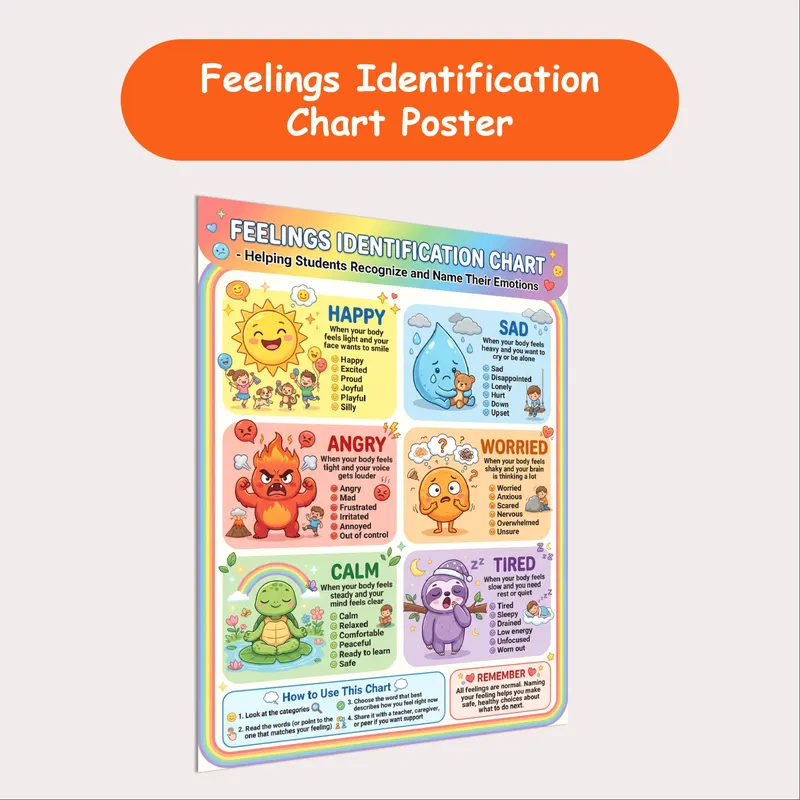
Feelings Identification Chart Poster | Emotions Chart for Kids: a printable emotions chart that helps students recognize and name their emotions using six color-coded feeling groups, each with a friendly character and a short body-clue description.
Sources and scope
- CASEL: a leading organization for social and emotional learning, including self-awareness skills.
- National Center for Pyramid Model Innovations: resources on teaching young children emotional literacy.
- ZERO TO THREE: information for families and educators on early childhood social and emotional development.
- Understood.org: practical articles for families and teachers on emotions and learning differences.
This guide covers everyday classroom and home strategies for teaching children to recognize and name feelings. It does not cover mental health assessment or treatment, which belong to qualified professionals.
Key takeaways
- A feelings identification chart gives children words for what they feel.
- Introduce a few feeling groups at a time and model them yourself.
- Teach body clues so children notice feelings early.
- Use a short daily check-in to build the habit.
- Link feelings to safe choices and share the chart with families.
Leave a Comment