

De-escalation scripts give you calm, simple words to use when a student starts to unravel and your mind goes blank. Instead of searching for the right thing to say, you already have a short phrase ready.
In tense moments, adults often talk too much, raise their voices, or argue. As a result, a small problem turns into a big one. This guide explains how scripts work, what to say at each phase, and how to practice so the words come naturally.
Why De-Escalation Scripts Work
When a student is upset, their stress response takes over. Because of this, they cannot process long explanations or reason through choices. Short, calm words are much easier to hear.
Scripts also help the adult. Under stress, our own thinking narrows. So having a planned phrase keeps us steady and prevents words we may regret.
- Fewer words: less to process means less overload.
- Calm tone: a steady voice signals safety.
- Consistency: every adult says similar things, so students know what to expect.
The Three Phases of Escalation
Most escalations follow a pattern. First comes the early warning phase, when the student shows signs of stress. Next is the peak, when behavior is most intense. Finally comes recovery, when the student slowly calms down.
Each phase needs different words. For example, early on you can still offer choices. At the peak, however, you mainly focus on safety and silence. In recovery, you gently reconnect.
De-Escalation Scripts for the Early Phase
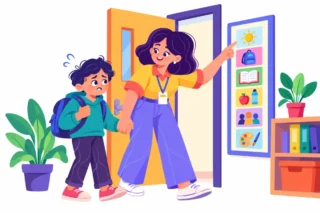
This is your best chance to prevent a crisis. So notice the signs early, such as pacing, clenched fists, or a raised voice.
- “I notice you seem frustrated. I’m here.”
- “Do you want a break or some water?”
- “Let’s do just the first problem together.”
- “You can sit here or in the calm corner.”
Also, lower your body and your voice. Stand at an angle, not face to face. These small moves make your words feel safer.
De-Escalation Scripts for the Peak
At the peak, talking less is the goal. Instead of reasoning, focus on safety for everyone.
- “You are safe. I’m going to stay right here.”
- “I’ll wait until you are ready.”
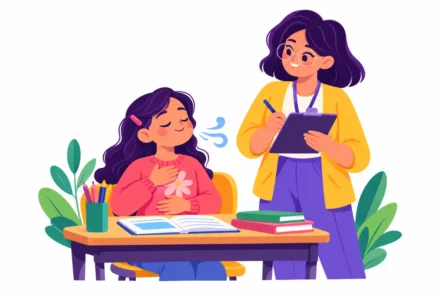
- “Let’s breathe together.”
Then give space and remove an audience if possible. For instance, quietly move other students to another activity. Avoid demands, threats, or touching unless there is immediate danger. Also, follow your school’s safety plan.
De-Escalation Scripts for Recovery
After the peak, students often feel tired, embarrassed, or sad. So keep your tone warm and your demands small.
- “You calmed your body. That was hard work.”
- “When you’re ready, let’s get a drink of water.”
- “We’ll talk about it later. Right now, just rest.”
Later, when the student is fully calm, talk briefly about what happened. Next, plan together what might help next time. Finally, welcome the student back without grudges.
Using the CALM Approach
A simple framework helps you remember the basics. One useful version is CALM: Control yourself first, Acknowledge the feeling, Lower demands and voice, and Move toward safety and support.
For example, you might take one slow breath, then say, “You’re really angry right now.” Next, you remove the task for now. Then you offer the calm corner. Each step lowers the temperature a little more.
Words and Actions to Avoid
Some common responses make escalation worse. So it helps to know what not to say as well.
- “Calm down!” often sounds like a demand and adds pressure.
- Threats: warnings about consequences can push a student to the peak.
- Sarcasm or jokes: students may feel mocked when they are already upset.
- Crowding: standing too close can feel like a threat.
Instead, replace each one with a calm alternative. For example, swap “Calm down!” for “I’m here. Let’s breathe.” Also, wait before you speak again. Silence gives the student time to process.
In addition, watch your face and hands. Crossed arms, pointing, or an eye roll can undo calm words. So keep your hands relaxed and your expression neutral. Your body should say the same thing as your script.
Practicing De-Escalation Scripts as a Team
Scripts only work if they feel natural. So practice them before you need them. Role-play short scenes at staff meetings, just like a fire drill.
Also, write the key phrases on a small card for each adult. Keep one in your lanyard or on your desk. In addition, agree as a team on two or three phrases for each phase. When everyone uses the same de-escalation scripts, students get one clear, calm message.
Finally, debrief after real incidents. Ask what helped and what could change. Then adjust your scripts based on what you learn.
If you want ready-made language, this de-escalation guide with calming phrases for special education gives exact words for every phase. For more on child mental health, the CDC children’s mental health pages are a helpful starting point.
Frequently Asked Questions About De-Escalation Scripts
Won’t scripts sound robotic?
Not if you practice them. With time, they become your own natural words.
Can parents use these phrases at home?
Yes. The same calm, short language works well during hard moments at home.
What if a student becomes unsafe?
Follow your school’s safety plan and get help right away. Scripts support safety, but they do not replace a crisis plan.
Ready-to-use resource:
De-Escalation Scripts for Special Education: Calming Phrases and Strategies: exact words for every phase of escalation, built on the CALM method, so staff respond with one steady voice.
Related reading: Meltdowns vs Tantrums: A Guide to Understanding and Responding and Understanding Autism ADHD Meltdowns: Signs and Support Strategies.
Also on FromTeachers:
Key Takeaways
- De-escalation scripts keep your words short, calm, and consistent.
- Use different phrases for the early phase, the peak, and recovery.
- Lower your voice and demands, and focus on safety at the peak.
- Practice scripts as a team so they feel natural in real moments.







Leave a Comment