

A self-regulation checklist turns everyday classroom moments into clear, useful evidence. It helps you see how a student handles feelings, focus, and behavior across the day.
Without structure, observations often become vague, such as “had a rough day.” However, a checklist captures specific skills you can teach and track. This guide explains what to observe, how to record it, and how to use the results.
What a Self-Regulation Checklist Covers
Self-regulation is the ability to manage emotions, attention, and actions to meet a goal. It overlaps closely with executive function and behavior skills.
A strong checklist usually includes three areas:
- Emotional regulation: recovering from frustration, accepting “no,” and handling mistakes.
- Behavioral regulation: waiting, following routines, and keeping hands to self.
- Cognitive regulation: staying on task, shifting between activities, and monitoring work.
As a result, you get a fuller picture than any single behavior count could provide.
Why Use a Self-Regulation Checklist
Teachers notice a lot, but memory is not reliable. For example, one loud outburst can overshadow a week of quiet progress. A checklist keeps your view balanced.
Also, checklists make conversations easier. When you meet with parents or the IEP team, you can point to specific skills and dates. In addition, the data helps you decide whether a support is working.
For more on how children develop these skills, the CDC Learn the Signs. Act Early. program offers helpful developmental information.
How to Observe With a Self-Regulation Checklist
First, choose a clear observation window, such as morning work or a transition. Shorter, focused windows give better data than all-day guessing.
Next, mark each skill as observed, emerging, or not yet seen. Then add one short note with a real example. For instance, write “Took three breaths and returned to work after losing a game.”
Tips for accurate observations
- Observe at different times of day.
- Record facts, not interpretations.
- Note the setting, task, and adults present.
- Include strengths, not only problems.
Because context shapes behavior, these details make your notes far more useful.
Spotting Patterns in the Data
After a week or two, look across your checklists. Patterns often appear quickly. For example, a student may regulate well in art but struggle during independent reading.
Then ask what is different about those settings. It might be noise, task difficulty, or the amount of choice. Meanwhile, look for times of day when skills drop, such as before lunch.
These patterns point you toward practical changes. So, a small adjustment to the schedule or seating may help more than a new reward system.
Turning a Self-Regulation Checklist Into Support Plans
Data should lead to action. Therefore, choose one or two skills to target at a time.
- Waiting: teach a waiting strategy, such as squeezing a fidget or counting.
- Recovering from mistakes: model calm self-talk like “Oops, I can fix it.”
- Transitions: use visual timers and two-minute warnings.
- Staying on task: break work into short chunks with check-ins.
Also, teach new skills when the student is calm. Practice first, then expect use during hard moments.
Sharing Results With the Team
A completed self-regulation checklist is a great conversation tool. Share it with parents, specialists, and support staff. As a result, everyone works on the same skills with the same language.
In addition, invite others to complete the same form. A parent’s view of home behavior or a specialist’s view of therapy sessions adds depth. Finally, use the combined data to write clear present levels and goals.
If you want printable forms ready to go, these behavior and emotional regulation checklists include student and observer fields plus space for notes. Therefore, you can start observing tomorrow.
Using a Self-Regulation Checklist With Students
Older students can benefit from seeing their own data. For example, show a simple version of the checklist and ask them to rate themselves. Then compare their view with yours.
This conversation builds self-awareness, which is the base of self-regulation. Also, students often feel more motivated when they help choose their goals. However, keep the tone positive and focused on growth.
- Start with a skill the student does well.
- Pick one skill to practice this week.
- Check in briefly every few days.
Adapting a Self-Regulation Checklist for Different Ages
Young children and teens show regulation in different ways. For example, a kindergartner may need help waiting for a turn. Meanwhile, a middle schooler may struggle more with handling feedback or managing stress before tests.
So, adjust the wording and examples for each age group. In addition, keep the core skill areas the same. That way, you can still compare growth from year to year and share consistent data at transition meetings.
Common Mistakes to Avoid
First, avoid observing only during hard times. That gives a skewed picture. Next, avoid changing the checklist every week, since consistent tools make data comparable. Finally, do not let data sit in a drawer. Review it at least every two weeks.
Frequently Asked Questions
How often should I use a self-regulation checklist?
Two or three short observations a week usually give enough data. Increase frequency when you start a new support.
Can parents use the same checklist at home?
Yes. Using the same skills at home and school makes patterns easier to compare and support.
Is this checklist a diagnostic tool?
No. It is an observation tool that guides support. Diagnosis requires a qualified professional.
Ready-to-use resource:
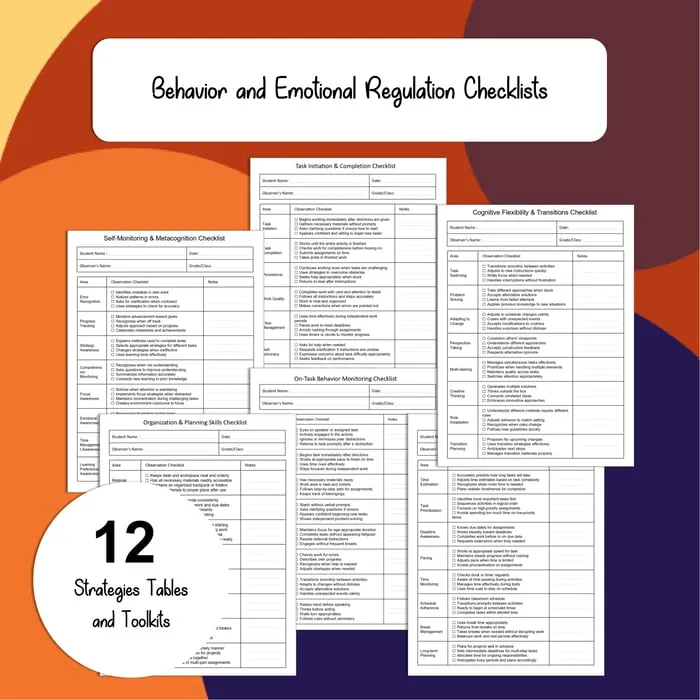
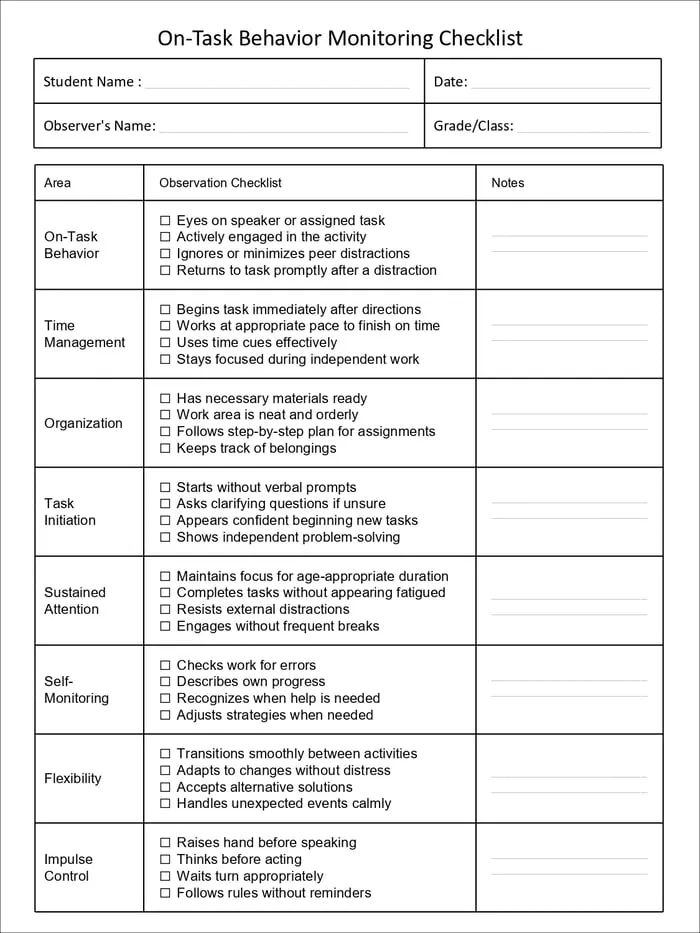
Behavior and Emotional Regulation Checklists: twelve printable, fillable checklists for executive function, self-regulation, and behavior, with fields for notes and observers.
Related reading: The Power of Data Tracking in Special Education and Managing Sensory Overload: Practical Strategies for Autism and ADHD.
Also on FromTeachers:
Key Takeaways
- Self-regulation includes emotional, behavioral, and cognitive skills.
- Short, focused observations give more accurate data.
- Look for patterns across settings and times of day.
- Use the data to choose one or two skills to teach at a time.







Leave a Comment