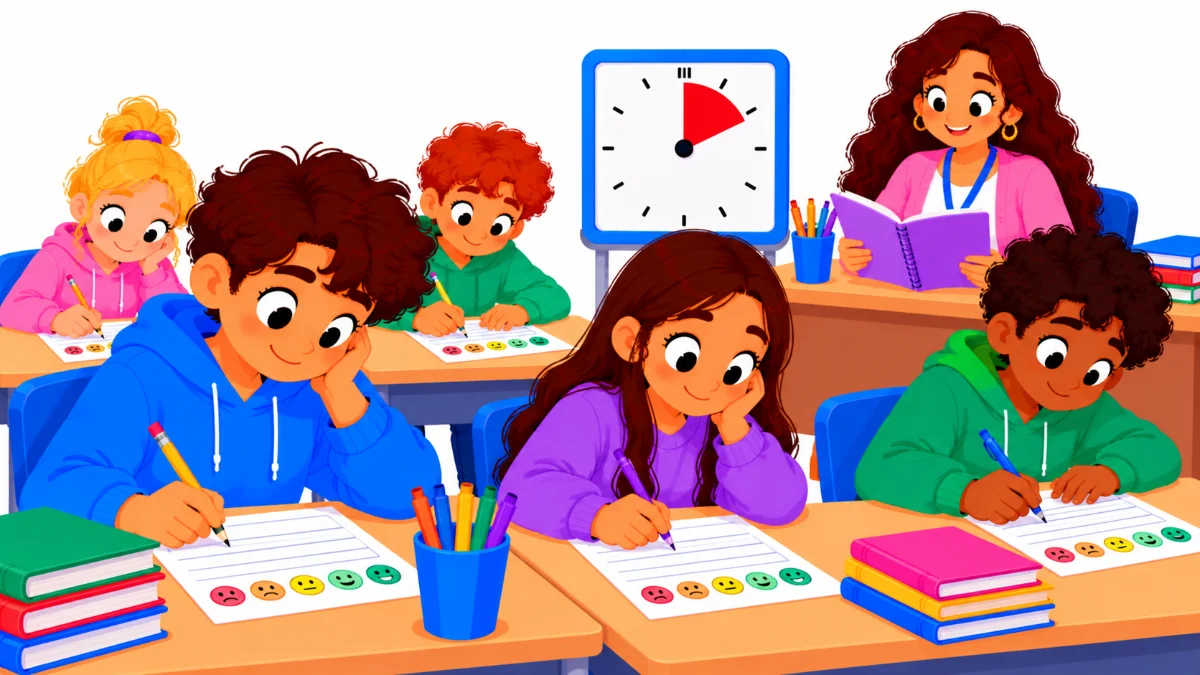

Student journaling mistakes can quietly turn a helpful SEL routine into a chore that middle schoolers dread. Picture a grade 7 advisory period. The teacher hands out journals, says “Write about your day,” and waits. Jordan writes “fine” and closes the notebook. Two weeks later, half the class has stopped writing at all.
Journaling can help students notice feelings, celebrate small wins, and plan a goal for tomorrow. However, the setup matters. This list covers eight common mistakes in middle school reflection journals, grouped in the order they happen: setting up, running the routine, and responding. By the end, you will know how to fix each one with small, practical changes.
Examples are fictional. Adapt to the student’s goals and agreed supports. A journal is a learning routine, not counseling. Share safety concerns with your school counselor and follow your school’s procedures.
At a glance
- Replace the blank page with short, fixed prompts.
- Keep journaling to five to seven minutes at a set time.
- Do not grade feelings or spelling, and keep entries private.
- Teach small, checkable goals for tomorrow.
- Respond in rotation and watch for patterns and concerns.
How we ordered these mistakes
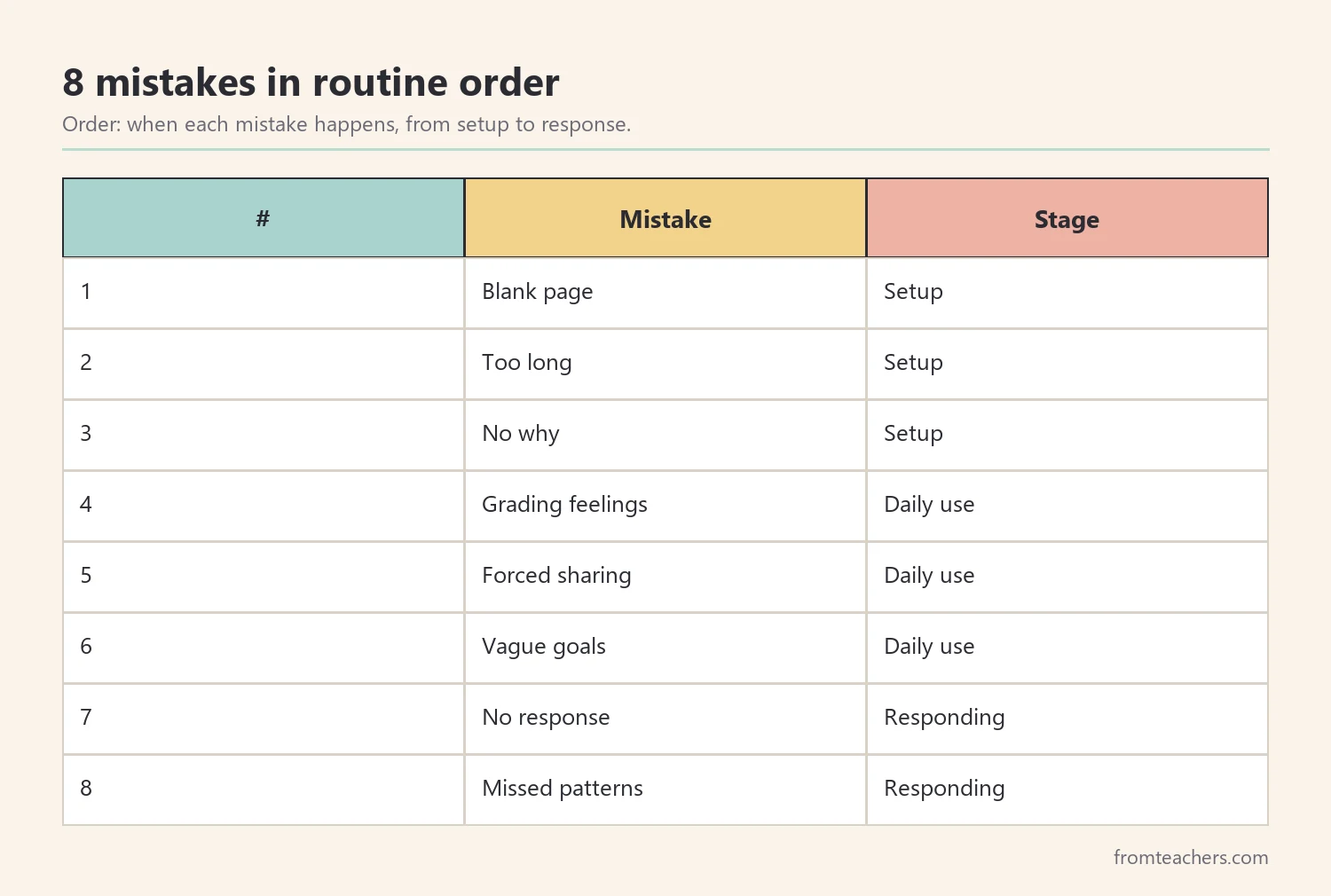
We did not rank the mistakes by how common they are, because there is no reliable data for that. Instead, we ordered them by when they happen in the routine: mistakes 1 to 3 happen during setup, 4 to 6 during daily use, and 7 to 8 when teachers respond. This order also works as a checklist when you start or restart a routine.
The fixes draw on widely shared SEL ideas, such as those described by CASEL: self-awareness, self-management, and relationship skills grow through regular, low-pressure practice.
The ready-made option: a one-page daily reflection journal
Many student journaling mistakes start with a blank page. The daily reflection journal for students with SEL check-in and goal setting replaces the blank page with short, repeated prompts: What I Did Today, How I Felt Today with a three-face feeling scale, What Went Well, Something I Can Improve, My Goal for Tomorrow, a Did I Meet My Goal From Yesterday check, Who Helped Me Today, What I’m Grateful for Today, and Comments From My Teacher.
Because the same questions repeat each day, students can finish in a few minutes and start to notice their own patterns.
1. Starting with a blank page
The mistake: asking students to “write about your day” with no structure.
Why it backfires: many middle schoolers, especially those with writing difficulties or ADHD, freeze at an open page. They write one word or nothing.
The fix: use short, fixed prompts and a quick rating, such as a feeling scale. Students can answer in a phrase.
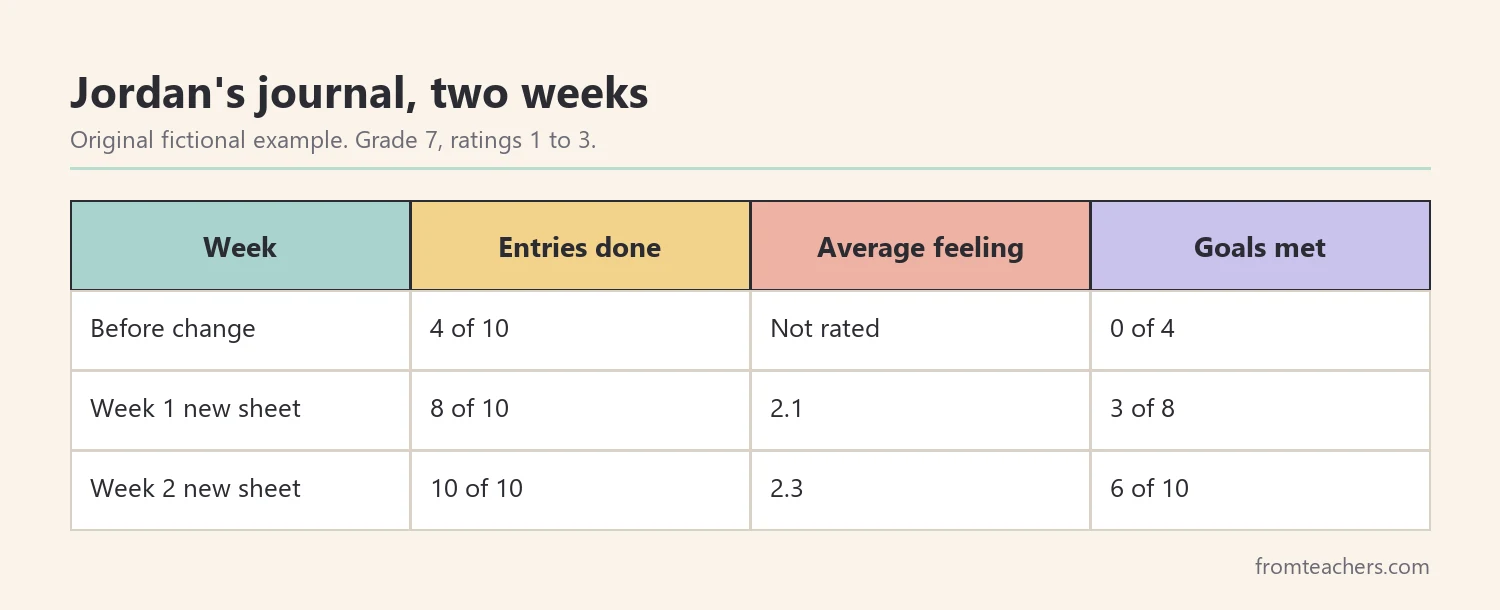
Example: when Jordan’s advisory switched to a one-page sheet, he started writing short lines in every box instead of “fine.”
2. Making it too long
The mistake: planning a 20-minute writing block.
Why it backfires: long journaling competes with other work and quickly gets cut. Students also lose focus.
The fix: aim for five to seven minutes at the same time each day, for example at the end of advisory or before dismissal.
Example: Jordan’s teacher set a visible five-minute timer. Completion went up within a week.
3. Skipping the “why”
The mistake: handing out journals without explaining their purpose.
Why it backfires: teenagers are more likely to engage when a task feels useful, not like busywork.
The fix: explain in one minute: “This helps you notice what works for you and set one small goal.” Model your own short entry once.
4. Grading feelings or spelling
Among student journaling mistakes, this one does the most damage to honesty.
The mistake: correcting spelling or grading what students wrote about feelings.
Why it backfires: students learn to write what they think the teacher wants, not what is true.
The fix: give completion credit only, if any. Keep writing corrections for other assignments.
Example: after the teacher stopped marking spelling, Jordan began rating his day honestly, including two sad faces in one week.
5. Forcing students to share aloud
The mistake: asking students to read entries to the class.
Why it backfires: public sharing makes many students write safe, empty answers.
The fix: keep journals private between the student and teacher. Offer optional sharing of one “What Went Well” line.
Example: Jordan’s advisory ended each Friday with an optional “good news” round. Students could read one What Went Well line or pass. Most students shared something small, such as a goal they met, and nobody had to reveal a hard day. As a result, the private pages stayed honest while the class still built a sense of community around progress.
6. Goals that are too big or vague
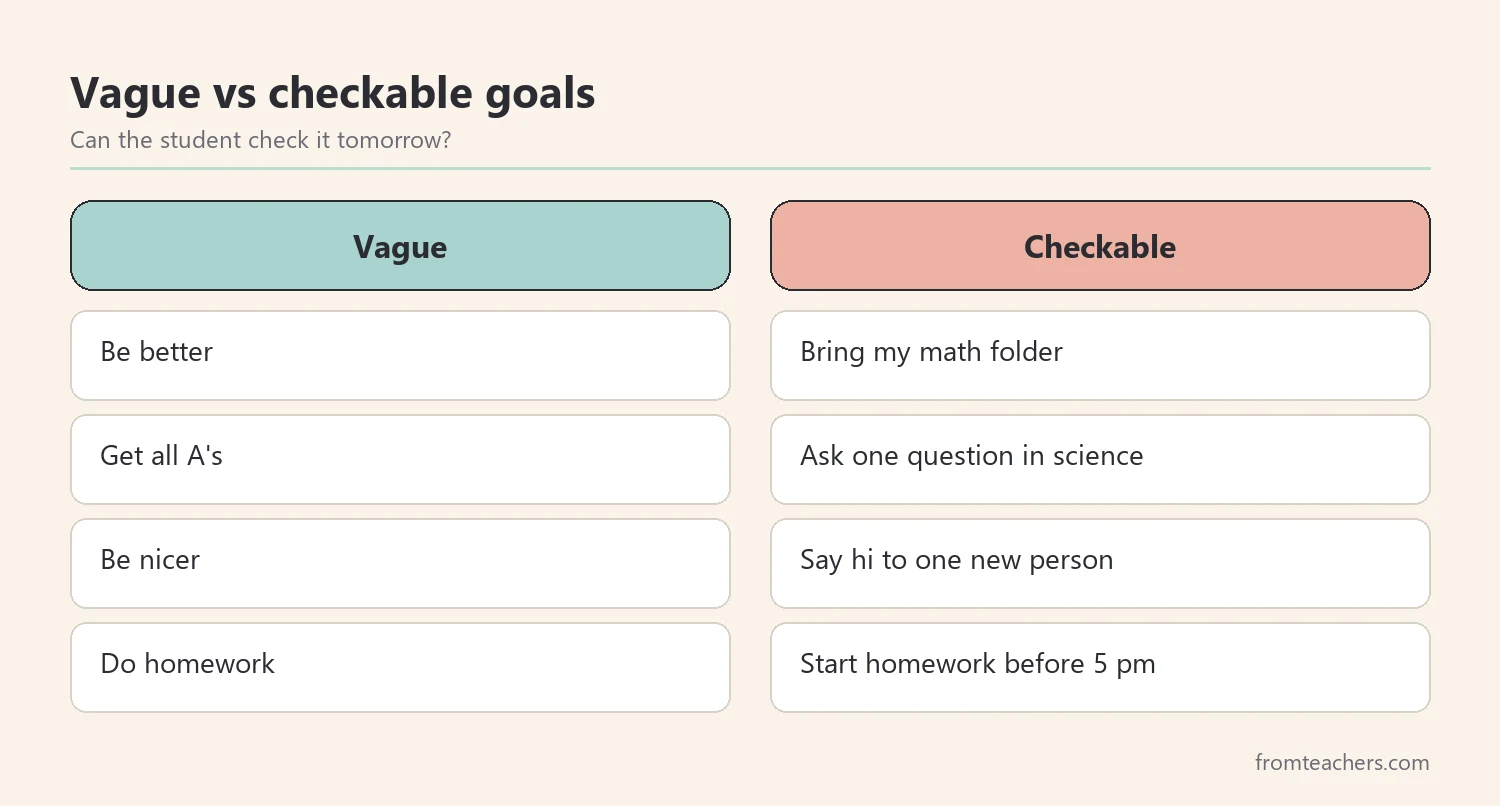
The mistake: accepting goals like “be better” or “get all A’s.”
Why it backfires: big, vague goals cannot be checked tomorrow, so students feel they failed.
The fix: teach small, checkable goals: “Bring my math folder” or “Ask one question in science.” Then use the “Did I meet my goal from yesterday?” check every day.
Example: Jordan’s goals moved from “do better” to “start homework before 5 pm,” which he could check the next morning.
7. Never reading or responding
The mistake: collecting journals that no adult ever looks at.
Why it backfires: students notice quickly, and the routine loses meaning.
The fix: read a few journals each day in rotation, so every student hears from you once a week. Write one short, specific comment.
8. Ignoring patterns and concerns
The mistake: reading entries one by one without looking across days.
Why it backfires: patterns, such as low ratings every Monday, are easy to miss. Rarely, an entry may raise a safety concern.
The fix: scan the feeling ratings for each student every week or two. If an entry suggests a student may be unsafe, follow your school’s procedures and contact the counselor the same day.
Example: Jordan’s teacher saw that his low days matched days with a quiz. She offered a short check-in before quizzes.
What a useful entry looks like
Teachers sometimes expect long, thoughtful paragraphs. In practice, a useful entry from a middle schooler is short and specific. It names one real event, one feeling, and one small next step. That is enough for the student to notice patterns over time.
Here is a fictional before and after from Jordan’s journal. Before the change, his entry on a Tuesday said only “fine” in the space for the whole day. After switching to fixed prompts, his Tuesday entry looked like this:
- What I did today: science lab, basketball at lunch.
- How I felt: middle face.
- What went well: our lab group finished first.
- Something I can improve: I forgot my math folder again.
- My goal for tomorrow: put the folder in my bag tonight.
- Who helped me: Sam explained the lab steps.
- Grateful for: pizza at lunch.
A closer look
None of these lines is long. However, together they tell the teacher much more than “fine.” The next morning, Jordan could check his goal in seconds, and his teacher could add a short comment such as “Nice plan for the folder. Did it work?”
Notice also what the teacher did not do. She did not correct grammar, ask for full sentences, or comment on the “middle face.” Instead, she responded to the goal, which kept the focus on something Jordan could control.
Over several weeks, entries like this build a simple record. Students can look back and see which days go well, which supports help, and which goals they meet most often. That self-knowledge is the real point of the routine, much more than polished writing.
Finally, share a sample entry like this with the class when you introduce the routine. Many students relax when they see that short, honest answers are exactly what you want.
Fixing student journaling mistakes in your classroom
You do not need to fix everything at once. Start with the setup mistakes, because they shape the rest of the routine. Next, protect time and privacy. Then add teacher responses and pattern checks once the routine feels stable.
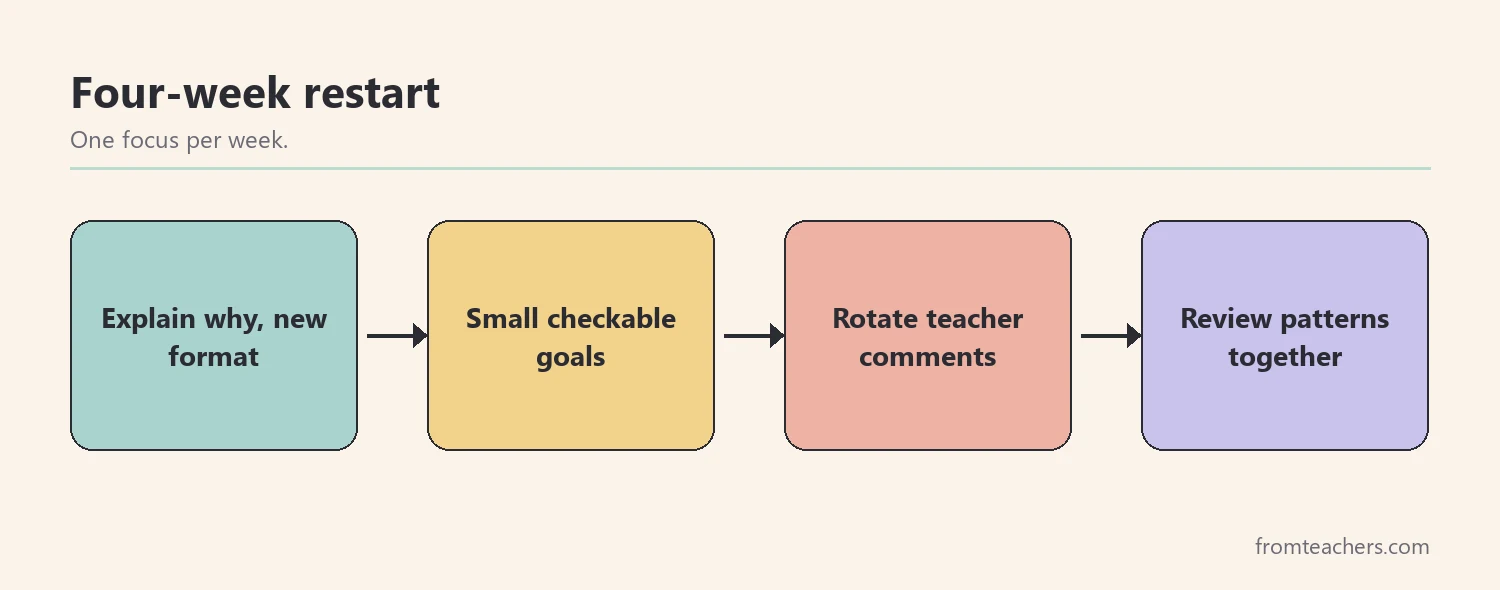
A simple restart plan over four weeks often works. In week one, explain the purpose and introduce the one-page format. In week two, focus on small, checkable goals. During week three, begin rotating teacher comments. In week four, review patterns and ask students what they have noticed about themselves.
Also, invite students to give feedback on the routine itself. Ask, “What makes the journal easy or hard to finish?” Middle schoolers often have useful ideas, such as moving journaling earlier or adding a drawing option.
Adapting journals for different learners
Some students need extra supports to take part fully. These small changes keep the routine accessible.
| Need | Adaptation |
|---|---|
| Writing difficulties | Single words, drawings, or dictation |
| Attention | Timer and one prompt at a time |
| Language learners | Sentence starters and a word bank |
| Anxiety | Optional prompts and no sharing |
Moreover, students with IEPs may already have accommodations, such as reduced writing or speech-to-text. Apply those to journaling too, so the routine matches their agreed supports.
Common mistakes and how to avoid them (quick review)
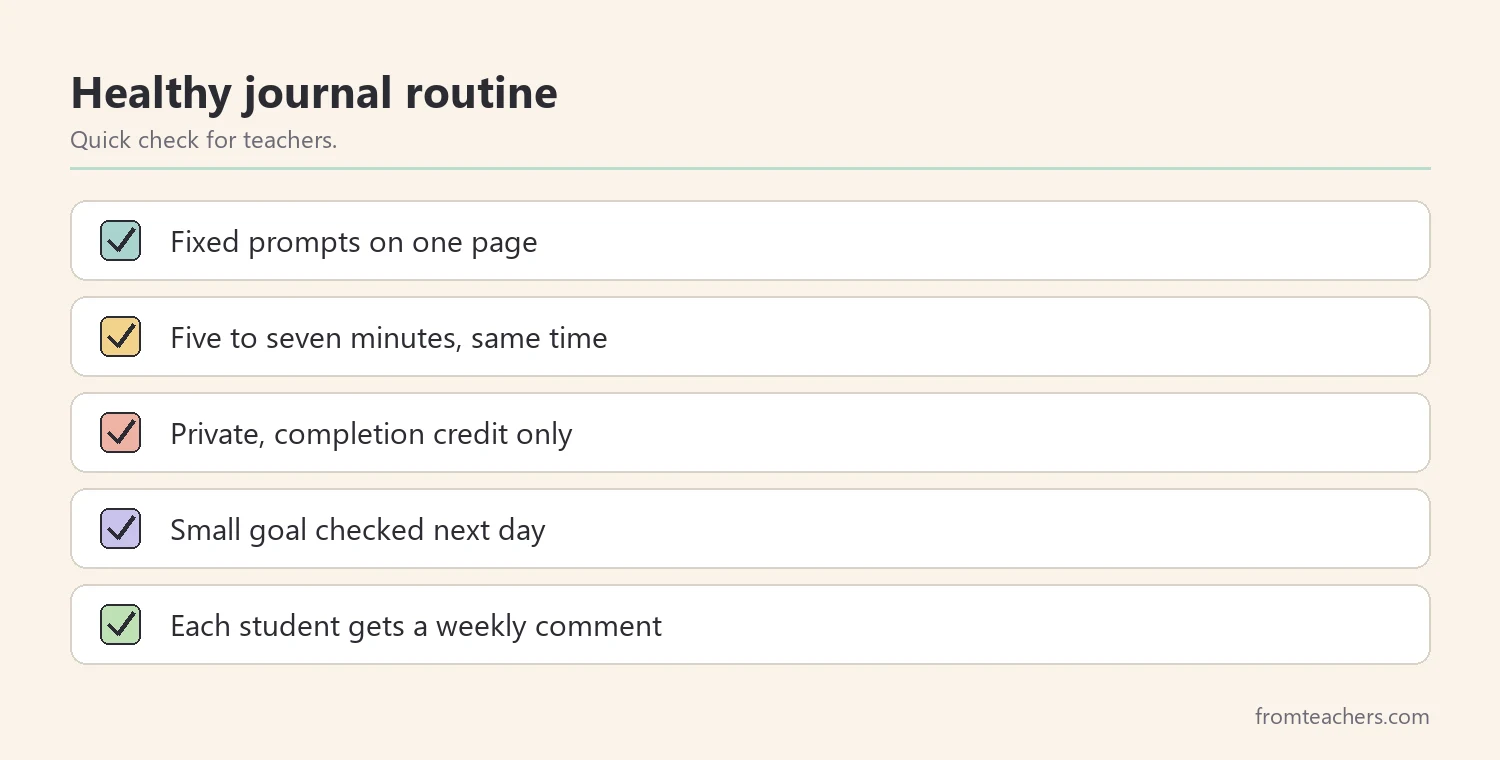
- Blank page: use short fixed prompts and a feeling scale.
- Long block: keep it to five to seven minutes daily.
- Grading: give completion credit only.
- Public sharing: keep it private, with optional sharing.
- No response: rotate short comments so each student hears from you weekly.
Questions teachers and parents ask about student journaling mistakes
How often should middle schoolers journal?
Daily works well when entries are short, about five minutes. If that is not possible, three times a week at a fixed time still builds the habit.
Should journals be digital or on paper?
Either can work. Paper avoids device distractions and makes quick drawings easy. Digital may help students who type more easily than they write.
What if a student writes something worrying?
Tell students at the start that you will share safety concerns with the counselor. If an entry suggests risk, follow your school’s procedures the same day.
Can parents use the same journal at home?
Yes. A short evening reflection with the same prompts can support the school routine. Keep it relaxed and private.
What if students keep writing “fine” or “nothing”?
Narrow the prompt. Ask for one thing that happened at lunch, or a rating with one reason. Model a short, honest example of your own.
Related reading: building stronger school counseling programs, autistic burnout and school exhaustion.
A companion resource for student journaling mistakes:
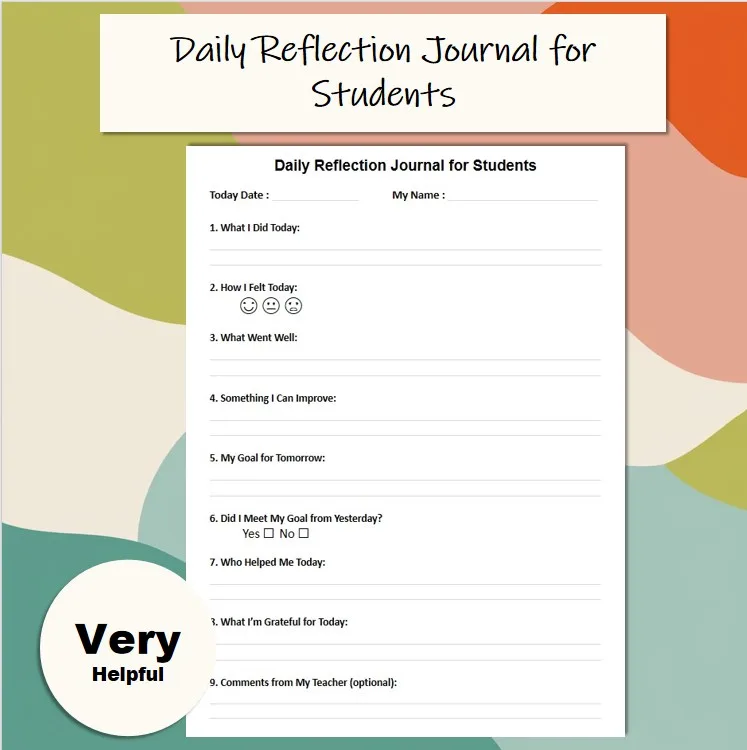
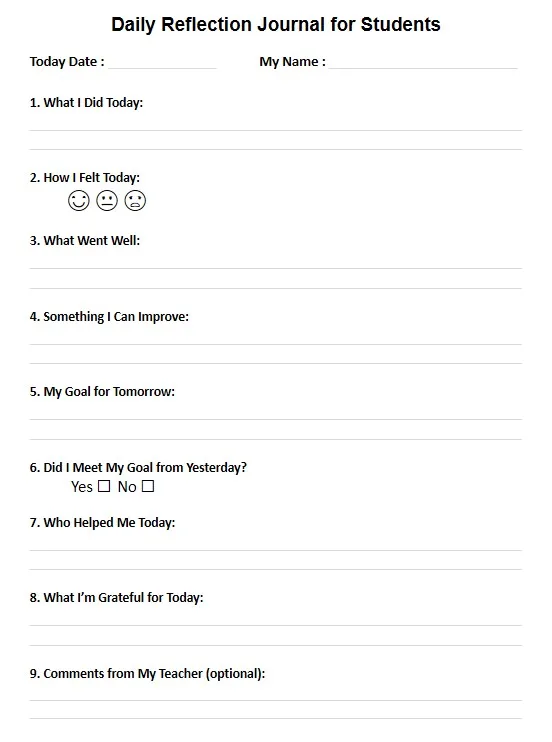
Daily Reflection Journal for Students: SEL Check-In and Goal Setting Sheet: a one-page journal with name and date fields, What I Did Today, a three-face feeling scale, What Went Well, Something I Can Improve, My Goal for Tomorrow with a check on yesterday’s goal, Who Helped Me Today, a gratitude prompt and space for teacher comments.
You may also need: Daily Energy Level Tracker Sleep Mood and Habit Reflection Worksheet.
Sources and scope
- CASEL: the Collaborative for Academic, Social, and Emotional Learning, with SEL frameworks for schools.
- Child Mind Institute: articles on adolescent emotions and school supports.
- Understood.org: resources on writing difficulties, ADHD and classroom supports.
- LD OnLine: articles for educators on learning disabilities and writing supports.
This list covers classroom journaling routines for middle school SEL. It is not counseling or mental health treatment; safety concerns go to the school counselor under school procedures.
Key takeaways
- Most student journaling mistakes come from a blank page, long blocks, or grading.
- Use short fixed prompts, a feeling scale, and five to seven minutes daily.
- Keep journals private and teach small, checkable goals.
- Read and respond in rotation so every student hears from you weekly.
- Look for patterns, and follow school procedures for any safety concern.










Leave a Comment