

An FBA routines analysis is a quick screening step that helps teams decide where to look before collecting detailed behavior data. Instead of observing a student all day, you identify the routines where behavior is most likely to happen.
This saves time and leads to better data. Below, you will learn how the process works and how to use the results in a functional behavior assessment.
What Is an FBA Routines Analysis?
A functional behavior assessment (FBA) looks for the purpose behind a behavior. However, it often starts too broad. Teams collect ABC data at random times and miss the patterns.
A routines analysis lists the student’s daily schedule, such as arrival, reading, lunch, and dismissal. Then adults rate how likely the behavior is during each one. As a result, you get a map of the day.
Why Start With a Routines Screen
Observation time is limited. Therefore, it makes sense to spend it where behavior actually occurs.
- Focus: ABC observations target the right times.
- Patterns: high-risk routines often share features, like transitions or writing demands.
- Strengths: low-risk routines show what already works.
In addition, the screen brings in perspectives from several staff members. A para, a specials teacher, and a classroom teacher may notice different things.
How to Complete an FBA Routines Analysis
Step 1: List the Routines
First, write out the student’s actual schedule. Include unstructured times like recess, hallway transitions, and bus lines.
Step 2: Rate Each Routine
Next, rate the likelihood of the target behavior on a simple scale, such as low, medium, or high. Also, note the specific activity or demand involved.
Step 3: Gather Multiple Raters
Ask at least two adults to complete the form separately. Then compare. Agreement increases confidence, while differences point to questions worth exploring.
Step 4: Choose Observation Targets
Finally, pick the two or three highest-rated routines. These become your ABC observation windows.
Reading the Patterns
Once ratings are complete, look for common threads. For example, if behavior is high during reading, writing, and science notes, the trigger may be written work.
Similarly, if behavior spikes during transitions and specials, changes in routine may be the issue. Because patterns guide hypotheses, write them down before observations begin.
Also, notice the routines with low ratings. What is different about them? Perhaps there is more adult attention, a preferred activity, or a visual schedule.
Connecting Results to ABC Observations
An FBA routines analysis is not the whole assessment. Instead, it tells you where the ABC work should happen. During those windows, record what happens right before the behavior, the behavior itself, and what follows.
Next, look for a function, such as escape, attention, access to items, or sensory input. Then the team can design a behavior plan that teaches replacement skills. The IDEA website describes when FBAs and behavior plans are part of special education decisions.
Tips for Accurate Ratings
Ratings are only useful if they are honest. Therefore, rate based on the past two to four weeks, not a single bad day.
- Define the target behavior clearly before rating.
- Rate behavior likelihood, not how difficult the student is.
- Include notes about staffing or schedule changes.
Also, repeat the screen after an intervention starts. Comparing ratings shows whether high-risk routines are improving.
Making It Easy With a Ready Form
Teams are busy, so a clear template helps. This behavior likelihood screening form for ABC tracking lists routines and rating columns in one place.
In addition, keep completed forms in the student’s behavior file. They show how the team chose observation times, which is helpful documentation for IEP meetings.
Common Mistakes in an FBA Routines Analysis
Even a simple screen can go wrong. First, teams sometimes rate the student’s general mood instead of the target behavior. As a result, every routine looks “medium” and the data loses meaning.
Second, unstructured times are often left out. However, recess, lunch, and hallways are exactly where many behaviors appear. Include them every time.
Third, results are filed away and never used. Instead, bring the completed form to the next team meeting and choose observation windows together. Also, record the date so the team can compare later screens.
Sharing Results With Families
Parents often notice similar patterns at home. For example, a child who struggles with school transitions may also find bedtime hard. Therefore, ask families which daily routines go smoothly and which do not.
In addition, explain the routines map in plain language. When families see that behavior is tied to specific situations, they are more likely to partner on solutions rather than feel blamed.
Frequently Asked Questions
Who should complete an FBA routines analysis?
Any adult who regularly sees the student, including teachers, paraprofessionals, and specials staff. Multiple raters give a fuller picture.
How long does a routines screen take?
Usually 10 to 15 minutes per rater. It is a fast step that saves hours of unfocused observation.
Does a routines analysis replace ABC data?
No. It guides where to collect ABC data. Both pieces work together in a complete functional behavior assessment.
Ready-to-use resource:
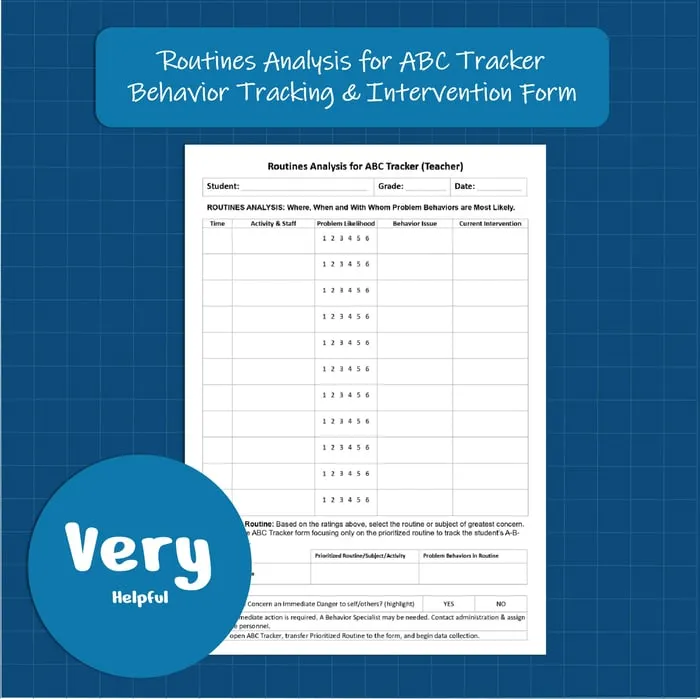
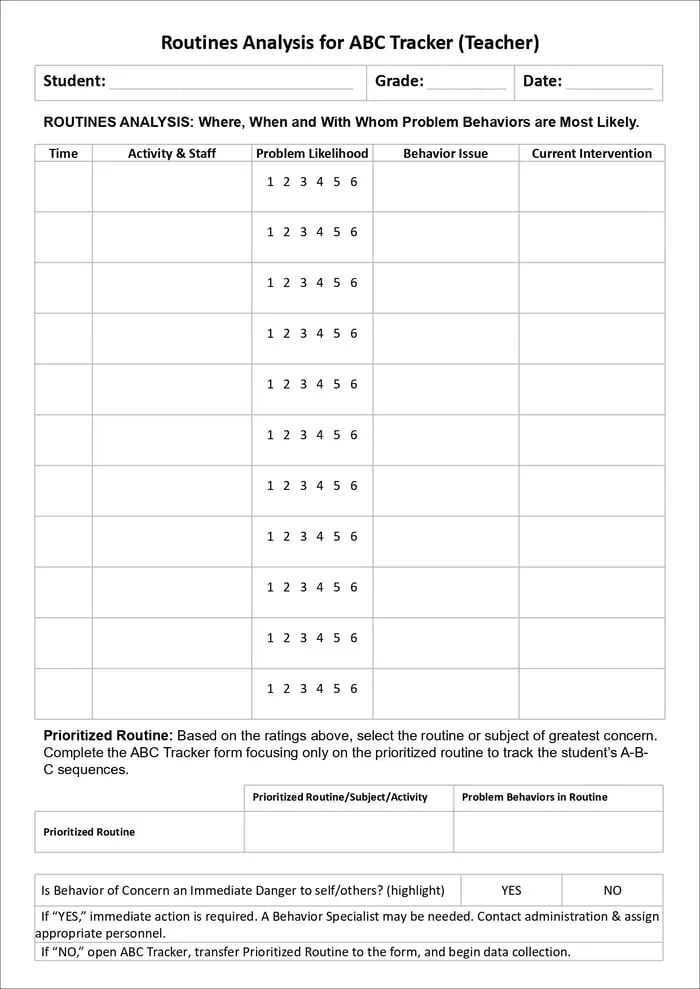
Routines Analysis for ABC Tracking: FBA Behavior Likelihood Screening Form: A screening form that rates behavior likelihood across routines, so you know exactly where to start ABC observations.
Related reading: The Power of Data Tracking in Special Education and Meltdowns vs Tantrums: A Guide to Understanding and Responding.
Also on FromTeachers:
Key Takeaways
- An FBA routines analysis shows where and when behavior is most likely.
- Rate each routine with input from several adults.
- Use the results to focus ABC observations on high-risk times.
- Low-risk routines reveal what supports already work.






Leave a Comment