

The FACTS interview for FBA gives behavior teams a structured way to gather information from the people who know a student best. Instead of a loose conversation, you ask focused questions that reveal routines, triggers, and likely functions. As a result, your functional behavior assessment starts on solid ground.
This guide explains what the FACTS is, how to run the interview, and how to use the answers. It is written for school psychologists, behavior specialists, special educators, and teachers.
What Is the FACTS Interview for FBA?
FACTS stands for Functional Assessment Checklist for Teachers and Staff. It is a brief, two-part interview tool used in many school-wide positive behavior support systems.
Part A looks at the student’s strengths, routines, and the problem behaviors. Part B zooms into the most difficult routine. In addition, it helps the team form a hypothesis about why the behavior happens.
Why Use a Structured Interview?
Open conversations often drift. For example, a teacher may share frustrations but leave out key timing details. A structured interview keeps the focus on useful facts.
Also, it saves time. A well-run FACTS interview usually takes a short meeting. Because the questions are consistent, results can be compared across staff members and settings.
Part A: Strengths, Routines, and Behaviors
First, start with strengths. This sets a positive tone and highlights skills to build on. Next, map the student’s daily schedule and rate how likely problem behavior is in each routine.
Then, describe the problem behaviors clearly. For example, “throws materials” is more useful than “acts out.” Finally, choose the routines with the highest risk for Part B.
Part B: Digging Into the Hardest Routine
Part B examines one routine in depth. The interviewer asks about:
- Antecedents: what predicts the behavior
- Setting events: things like poor sleep or missed medication
- Consequences: what usually happens afterward
- Function: what the student seems to get or avoid
In addition, the interviewer rates confidence in the summary. That rating tells the team whether more observation is needed.
Tips for Running the FACTS Interview for FBA
Good interviews feel collaborative, not like an evaluation of the teacher. Therefore, explain the purpose clearly at the start.
- Ask for specific recent examples
- Avoid leading questions that suggest an answer
- Interview more than one staff member when possible
- Write answers in observable terms
Also, a clean, ready-to-fill form makes the process smoother. This printable two-part FACTS functional assessment checklist keeps every interview organized.
Combining FACTS With Direct Observation
Interviews tell you what staff believe. However, direct observation confirms it. Therefore, pair the FACTS with ABC data collection in the target routine.
If interview and observation data agree, confidence in the hypothesis grows. If they differ, collect more data before writing a behavior intervention plan. The IDEA website describes the legal context for FBAs and behavior plans.
Writing the Summary Statement
The FACTS ends with a summary statement that ties everything together. It usually follows a simple pattern: during this routine, when this happens, the student does this behavior, and as a result, gets or avoids something.
For example, “During independent writing, when given a long assignment, Sam tears his paper, and as a result, he is sent to the hallway and avoids the task.” This statement points directly to a plan.
Checking Your Summary
- Is the routine specific?
- Is the behavior observable and measurable?
- Does the consequence explain why the behavior continues?
- Do other staff agree with the summary?
From the FACTS Interview for FBA to a Behavior Plan
Once the team has a clear hypothesis, plan supports for each part of the pattern. First, prevent triggers by adjusting the routine. Next, teach a replacement behavior that meets the same need. Finally, change consequences so the problem behavior no longer works.
In addition, plan how you will measure progress. As a result, a well-run FACTS interview for FBA leads to a behavior plan that targets the real reason behind the behavior.
Getting Started This Week
First, schedule the interview at a calm time when the teacher is not rushed. Next, review any existing behavior records beforehand. Then, explain that the goal is to understand the student, not to judge anyone. In addition, bring a printed form so notes stay organized. Finally, plan a follow-up observation within a week to test the hypothesis while details are fresh.
Frequently Asked Questions
How long does a FACTS interview take?
Most interviews take about 20 to 30 minutes. Complex cases may need a follow-up meeting.
Who should be interviewed?
Interview staff who see the behavior often, such as the classroom teacher or paraprofessional. Parents can provide valuable input too.
Is the FACTS enough to complete an FBA?
Usually not on its own. It works best combined with direct observation data and records review.
Ready-to-use resource:
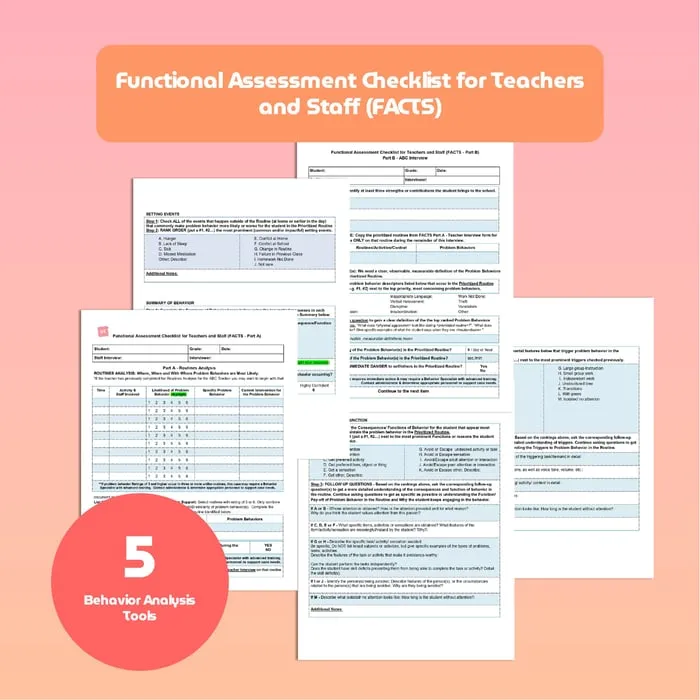
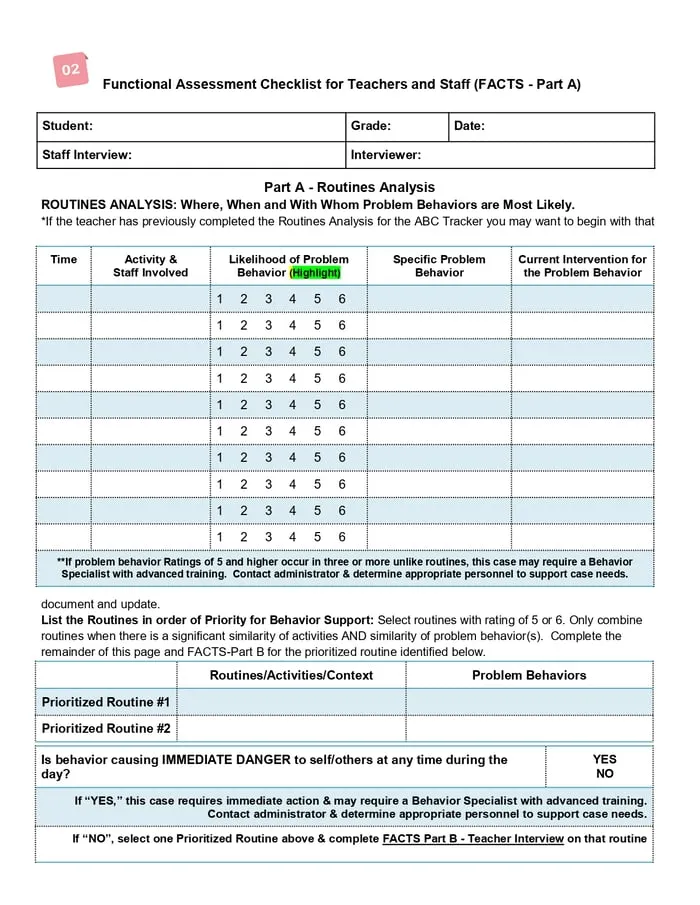
FACTS Functional Assessment Checklist: FBA Interview for Teachers & Staff: A ready-to-fill, two-part Functional Assessment Checklist for Teachers and Staff for clearer, faster FBA interviews.
Related reading: positive alternatives to behavior charts and understanding autism and ADHD meltdowns.
Also on FromTeachers:
Key Takeaways
- The FACTS interview for FBA structures conversations with staff.
- Part A maps routines and behaviors; Part B examines the hardest routine.
- Ask for specific examples and use observable language.
- Confirm interview results with direct observation data.










Leave a Comment