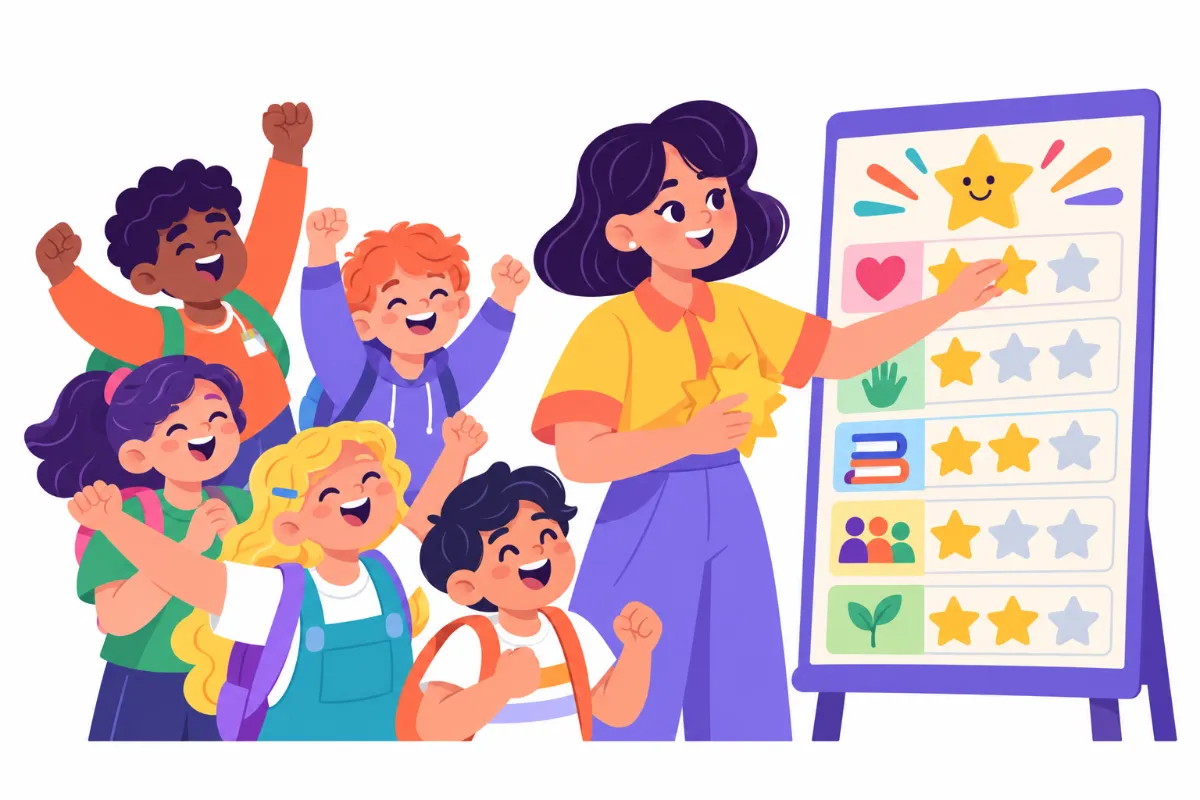

PBIS in special education works best when it is built for the students in front of you, not copied from a hallway poster. Picture a third grader who melts down at almost every transition, from math to reading, from recess to lunch. The school-wide expectations are on the wall, yet nobody has taught him what “be ready” looks like when the timer rings and his favorite activity is ending.
This guide gives you a five-step process for making positive behavior support work in a special education classroom. By the end, you will be able to define a few clear expectations, teach them with visuals, acknowledge positive behavior, plan for transitions and hard moments, and use simple data to review progress with the team and the family.
Examples are fictional. Adapt to the student’s goals and agreed supports. This is guidance, not a diagnosis.
At a glance
- PBIS is a tiered framework: support for all, more for some, and individual plans for a few.
- Three short, positive expectations are easier to teach than a long list of rules.
- Expectations are taught and practiced like any academic skill, with visuals.
- Specific acknowledgment builds the behavior you want to see more often.
- Simple data, reviewed with the team and family, shows what to keep and what to change.
1. Define clear expectations for PBIS in special education
First, understand the big picture. PBIS stands for Positive Behavioral Interventions and Supports. It is a tiered framework. Tier 1 supports every student, Tier 2 adds targeted help for some students, and Tier 3 provides individualized, intensive support for a few.
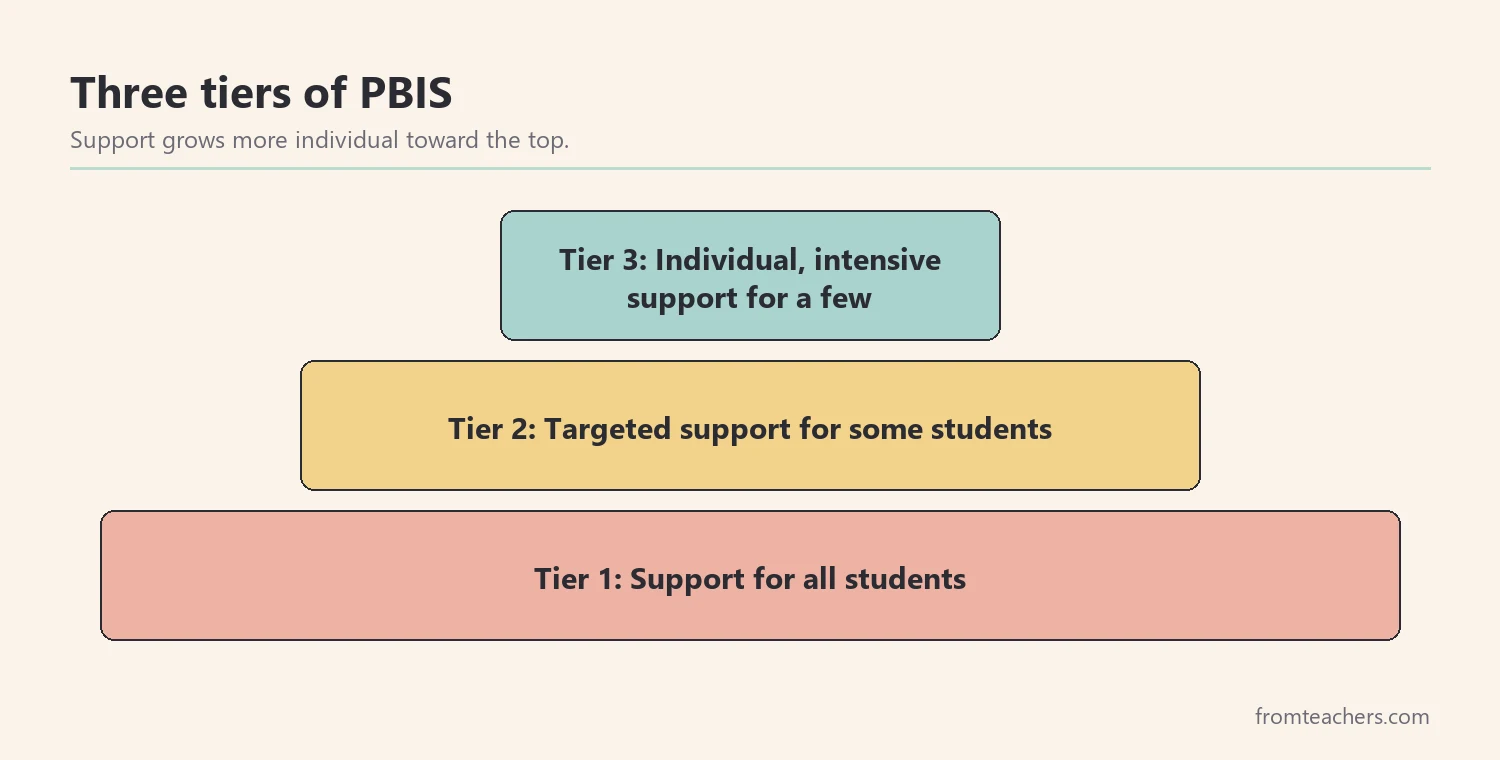
In a special education classroom, many students already receive individualized supports through an IEP or a behavior intervention plan. Even so, PBIS in special education still starts with a strong classroom foundation. Clear, shared expectations help every student, and they make individual plans easier to carry out.
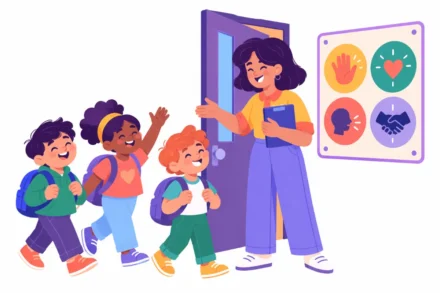
Next, choose three expectations, stated positively. Many schools use “Be safe, be respectful, be ready.” If your school already has expectations, keep the same words so students hear one language everywhere. Then define what each expectation looks like in each part of your day.
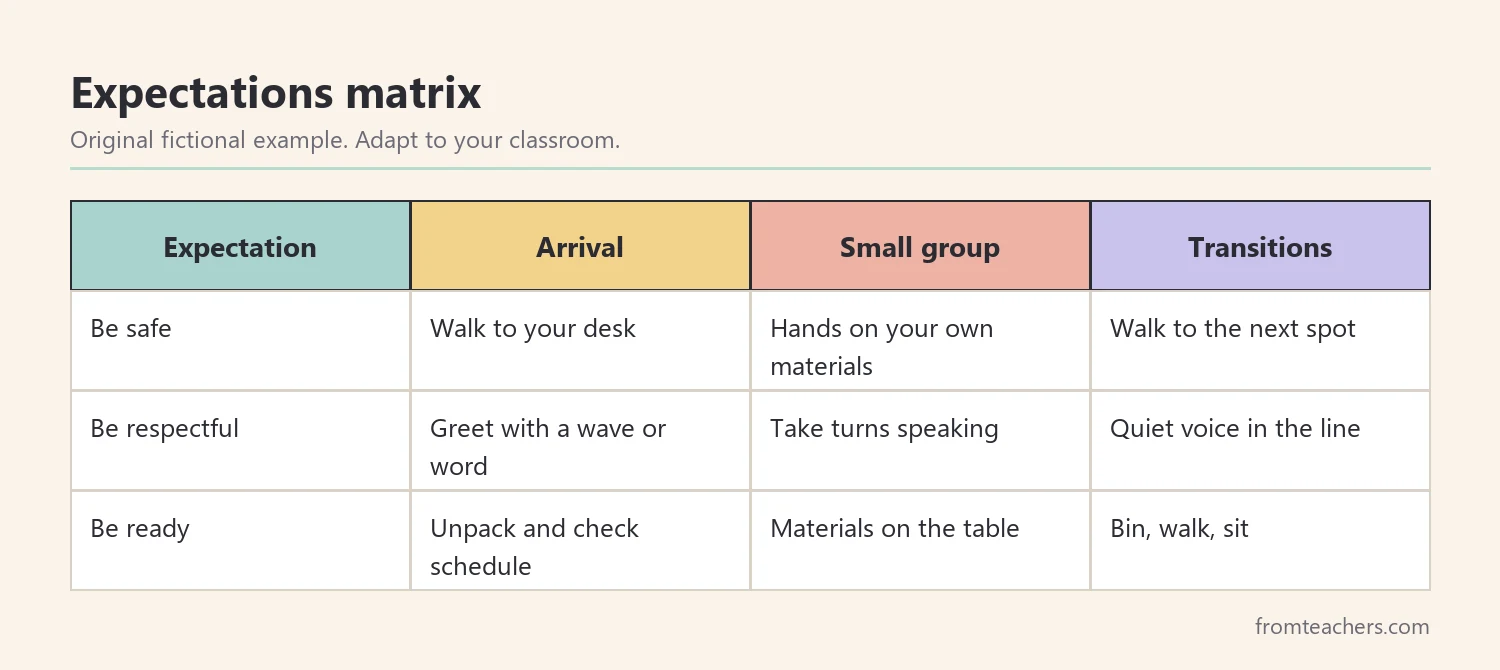
For example, meet Jonah, a fictional third grader in a resource classroom. His teacher, Ms. Reyes, notices that “be ready” means nothing to him during transitions. So she defines it in three concrete actions: put materials in the bin, walk to the next spot, and sit with hands in lap. Now Jonah has something specific to do, rather than something vague to avoid.
Finally, keep the language short and observable, because PBIS in special education depends on adults noticing the same behavior. “Walk in the hallway” is easier to teach and notice than “show responsibility.” In short, if two adults could watch the same moment and agree whether the expectation was met, your definition is clear enough.
2. Teach expectations with visuals and practice
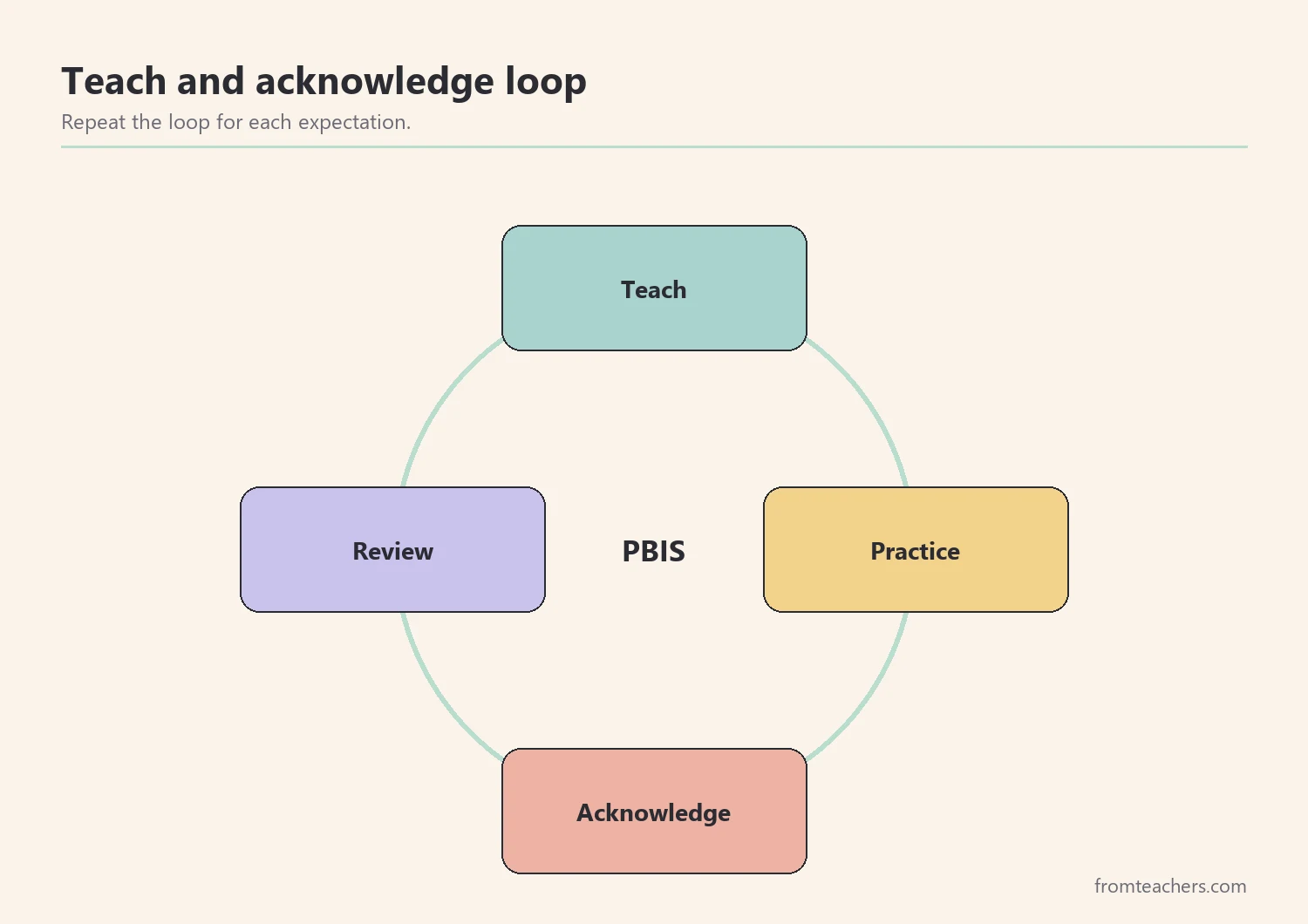
Expectations do not work just because they are posted. Students learn them the same way they learn reading or math: through modeling, practice, and feedback. Teaching is the heart of PBIS in special education.
First, model the expectation. Show what it looks like and, briefly, what it does not look like. Then invite students to practice it while you give quick, specific feedback. Short, frequent lessons work better than one long lesson at the start of the year.
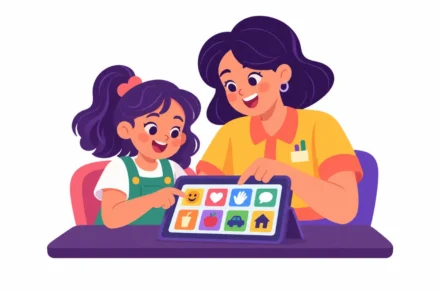
Next, add visual supports. Many students in special education rely on visuals to understand and remember routines. A picture card for each expectation, a visual schedule, and a first-then board all make the expectation concrete. For instance, a card showing a bin, a walking figure, and a chair can represent “be ready” at transitions.
Put this step into practice
Then, practice at the real moment. PBIS in special education is most effective when practice happens where the behavior is needed. Rehearse the transition at the actual time it happens, not only during a separate lesson. Also, pre-teach before predictable hard moments, such as the end of recess or a schedule change.
| Teaching move | What it looks like |
|---|---|
| Model | Teacher shows the routine slowly |
| Practice | Student rehearses at the real time |
| Visual | Picture card at the student’s desk |
| Feedback | Short, specific praise right away |
Ms. Reyes teaches Jonah’s transition routine for five minutes each morning during the first week. She uses a three-picture card taped to his desk. Moreover, she practices the routine right before math ends, when the real transition happens. By Friday, Jonah can point to each picture and name the step.
When you need a ready reference while planning lessons like this, a PBIS strategy guide for special education classrooms can save time, with tables on transitions, visual supports, and classroom expectations.
3. Acknowledge positive behavior with PBIS in special education
Once students know the expectations, notice when they meet them. Acknowledgment is how PBIS in special education builds the behavior you want. It is also how students learn that following the expectations is worth the effort.
First, use specific praise. “Great job” is pleasant, but “You put your folder in the bin and walked to the rug, that is being ready” tells the student exactly what worked. Specific praise teaches as well as encourages.
Next, aim for a high ratio of positive to corrective feedback. Many PBIS resources encourage teachers to give several positive comments for every correction. In practice, this means catching students being successful often, especially during hard parts of the day.
A quick classroom example
Then, consider a simple visual reinforcement system. Visual systems are common in PBIS in special education because students can see their progress build across the day. Tokens, stickers on a chart, or points toward a chosen activity can help some students see progress. Choose rewards with the student when possible, and pair every token with specific praise, so the student connects the reward with the behavior.
For Jonah, Ms. Reyes uses a small card with six boxes, one for each daily transition. Each time he follows the three-step routine, he earns a check and hears specific praise. When the card is full, he chooses five minutes with the building blocks. As a result, transitions become a chance to succeed instead of a daily battle.
Finally, fade the system slowly. As the behavior becomes routine, move from a token every time to praise most of the time. The goal is lasting habits, not permanent rewards.
4. Plan for transitions and hard moments
Even with strong teaching, hard moments will happen. PBIS in special education plans for them in advance, so adults respond calmly and consistently instead of reacting in the moment.
First, prevent what you can. Many challenging behaviors happen at predictable times: transitions, unexpected changes, demanding tasks, or noisy settings. Use a visual timer, a warning before the change, and a first-then board to make transitions predictable.
Next, agree on a short de-escalation sequence that every adult uses. Consistency matters, because a student who hears different responses from different adults has a harder time calming down. Keep the sequence simple enough to remember under stress.
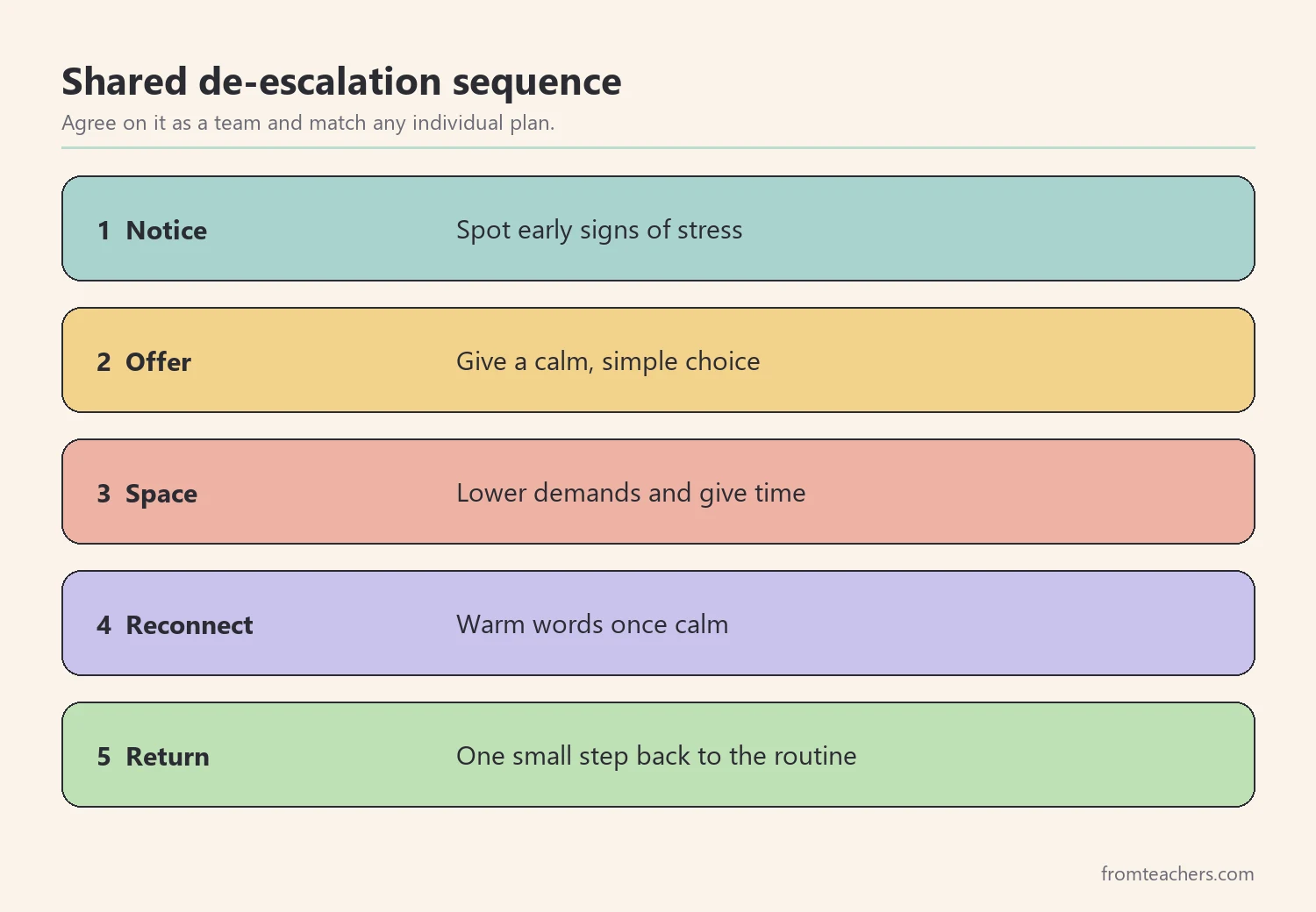
Then, plan the return. A calm return to the routine is part of PBIS in special education, not an afterthought. After a student calms, reconnect warmly and guide them back to the routine with a small, doable step. Avoid long lectures in the moment. Instead, if teaching is needed, do it later when the student is calm.
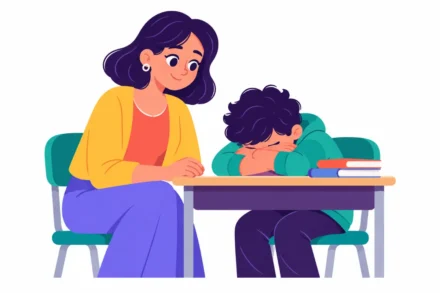
For Jonah, the hardest transition is the end of recess. Ms. Reyes adds a two-minute warning with a visual timer and a first-then card: “First line up, then water break.” If Jonah shows early signs of stress, such as stopping still or covering his ears, an adult offers a calm choice: “Walk with me or walk with your buddy?” Consequently, most recess endings now pass without a meltdown.
Also, connect this step to individual plans. If a student has a behavior intervention plan, the classroom sequence should match it. When in doubt, check with the IEP team and the behavior support staff, so everyone uses the same approach.
5. Use data to review PBIS in special education with the team
Finally, measure what matters. Data keeps PBIS in special education honest, because it shows whether supports are helping or simply feel busy. Data does not have to be complicated. One simple measure, recorded daily and reviewed weekly, tells you whether your plan is working.
First, pick a measure tied to your goal. For Jonah, the goal is calm, on-time transitions. So Ms. Reyes counts how many of his six daily transitions he completes using the routine. She already has the card from Step 3, so the data is almost free.
Next, look at the weekly average, not single days. A hard Tuesday after a fire drill does not mean the plan failed. Over several weeks, the trend tells the real story.
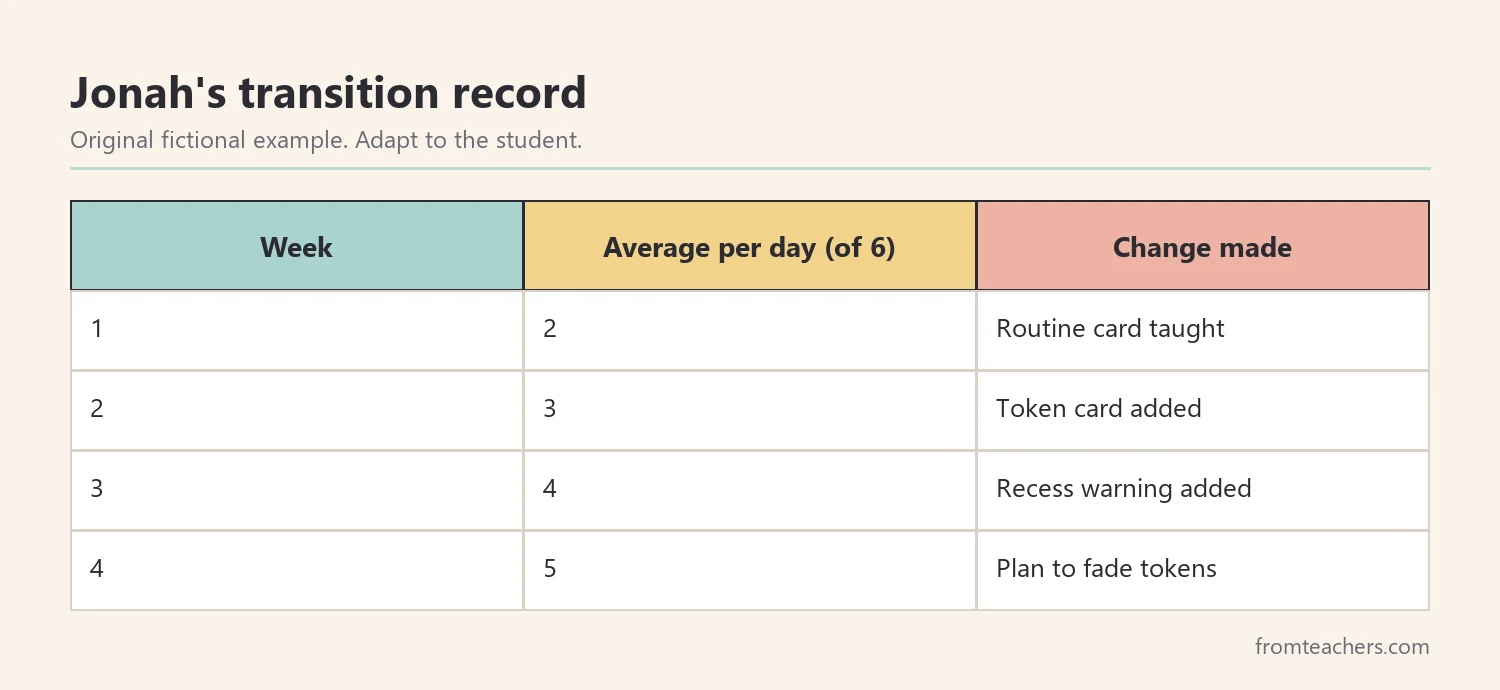
Look at Jonah’s record. In week 1, he completed an average of 2 out of 6 transitions each day using the routine. By week 2, the average rose to 3. In week 3, after the recess warning was added, it reached 4. By week 4, Jonah averaged 5 out of 6 transitions per day.
Then, review the data with the team and the family. Share what worked, what still needs support, and one change to try next. For Jonah, the team decides to keep the routine, start fading tokens to every other transition, and ask his family to use the same first-then language at home.
In addition, invite the student into the review when appropriate. Student voice is a natural part of PBIS in special education, and even young learners can say which supports help them most. Showing Jonah his own chart and saying, “Look how many transitions you finished this week,” builds pride and ownership.
Common mistakes and how to avoid them
- Posting rules without teaching them. Fix: model, practice, and give feedback at the real moment.
- Too many expectations. Fix: keep three short, positive expectations and define each by setting.
- Vague praise. Fix: name the exact behavior the student showed.
- Different adults responding differently. Fix: agree on one de-escalation sequence and practice it as a team.
- Rewards with no plan to fade. Fix: move gradually from tokens to praise as habits form.
- Collecting data nobody reviews. Fix: choose one measure and look at it weekly with the team.
Questions teachers and parents ask about PBIS in special education
Is PBIS only for students with behavior plans?
No. PBIS is a framework for all students. Tier 1 supports the whole class, while Tiers 2 and 3 add more targeted and individual support for students who need it.
How is PBIS in special education different from school-wide PBIS?
The framework is the same, but the teaching is often more explicit and visual. Special education classrooms may use more picture supports, more practice, and closer links to each student’s IEP or behavior plan.
Does PBIS replace a behavior intervention plan?
No. A behavior intervention plan is an individual plan developed by the student’s team. Classroom PBIS should support and match that plan, not replace it.
Are rewards the same as bribes?
A bribe is offered during a problem to stop it. A planned reward is agreed in advance and earned for practicing a taught skill. Pair rewards with specific praise and fade them over time.
How can families support PBIS at home?
Families can use the same expectation words, the same visual cards, and similar specific praise. A short weekly note about what went well helps home and school stay connected.
Related reading: Moving Beyond Shame and Behavior Charts: Positive Alternatives for Effective Classroom Management, Meltdowns vs Tantrums: A Guide to Understanding and Responding, and The Power of Data Tracking in Special Education.
A companion resource for PBIS in special education:
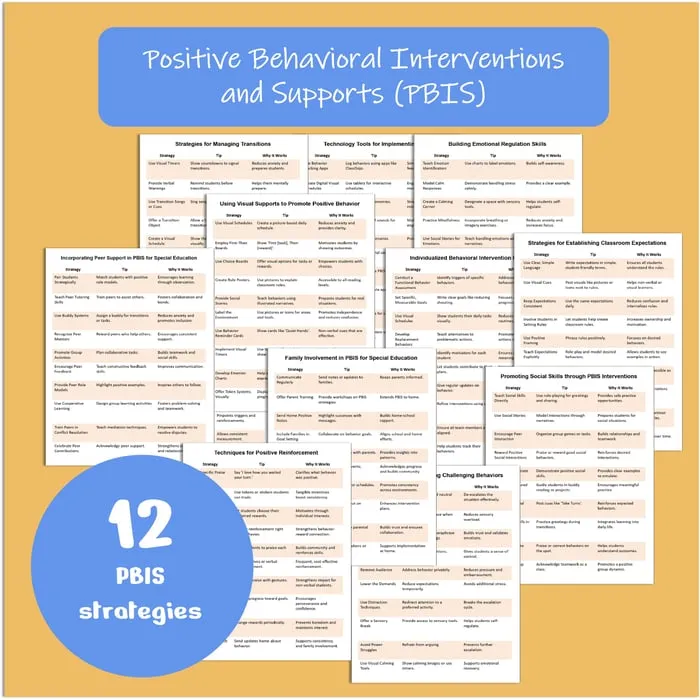
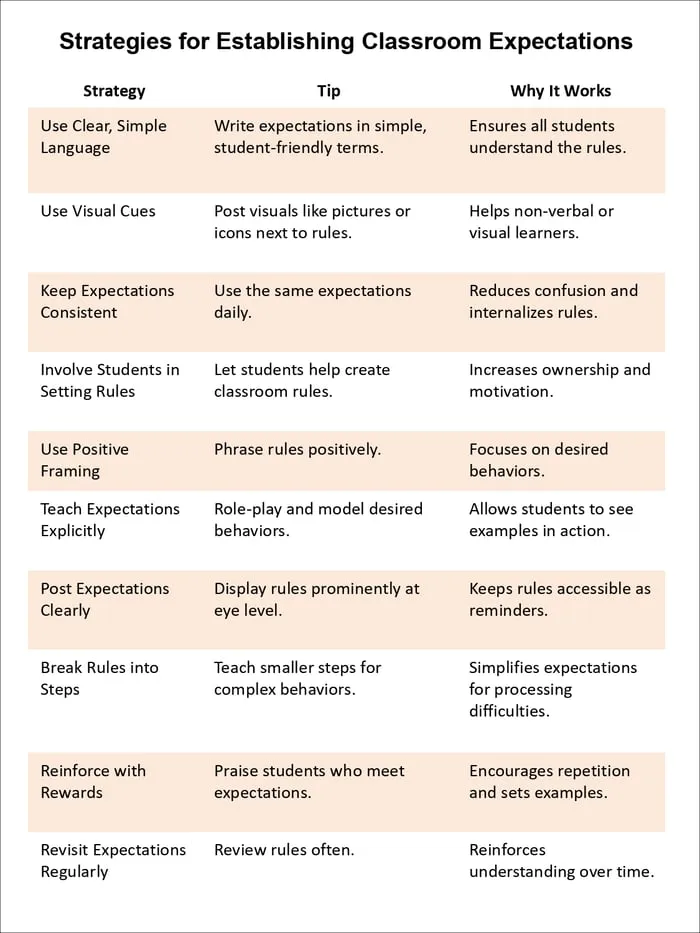
PBIS Positive Behavior Interventions for Special Education: a printable reference with twelve strategy tables covering transitions, classroom expectations, visual supports, reinforcement, de-escalation, peer support, and family involvement, each in a Strategy, Tip, and Why It Works format.
Sources and scope
- Center on PBIS: the national technical assistance center for Positive Behavioral Interventions and Supports.
- IRIS Center, Vanderbilt University: free modules on classroom behavior management and evidence-based practices.
- IDEA, U.S. Department of Education: the law behind special education services, IEPs, and positive behavioral supports.
- What Works Clearinghouse: reviews of research on education programs and practices.
This guide covers practical classroom steps for using positive behavior supports in special education settings. It does not replace a functional behavior assessment, a behavior intervention plan, or guidance from the student’s IEP team.
Key takeaways
- PBIS in special education starts with three clear, positive expectations defined by setting.
- Teach expectations with modeling, visuals, and practice at the real moment.
- Use specific praise and simple reinforcement, then fade rewards over time.
- Plan one shared de-escalation sequence and match it to individual plans.
- Track one measure and review PBIS in special education weekly with the team and family.
Leave a Comment