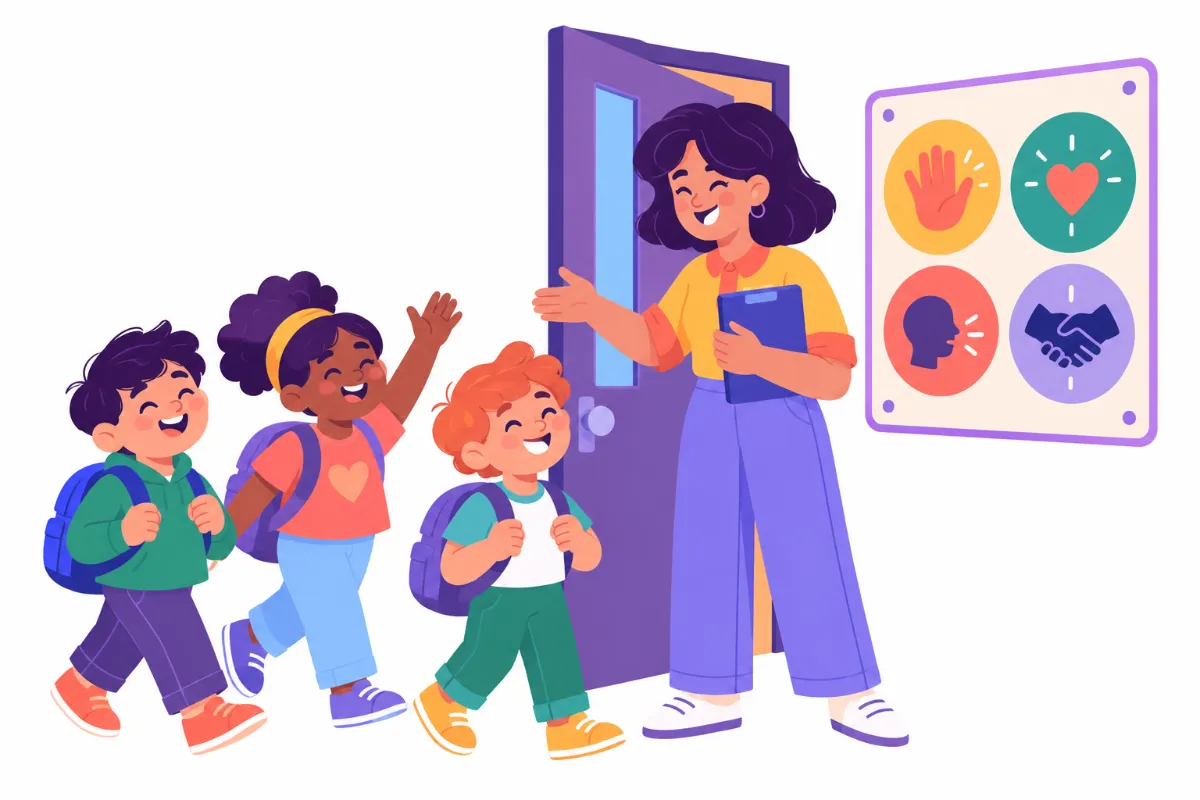

Proactive behavior strategies work best in the quiet minutes before a problem starts. Picture a third grader at the end of reading time. Her pencil starts tapping, her eyes drift to the door, and two minutes later she is under the table refusing to line up for lunch. Looking back, the signs were there. The question is how to act on them earlier next time.
This guide gives you a five-step process for preventing challenging behavior in a classroom: spot early warning signs, find triggers in the environment, teach routines on purpose, respond early and calmly, and learn from each incident. By the end, you will have a short prevention plan you can test with one student or a whole class.
Examples are fictional. Adapt to the student’s goals and agreed supports. This is guidance, not a diagnosis.
At a glance
- Most challenging behavior has early warning signs you can learn to see.
- Small changes to the room and schedule prevent many problems before they start.
- Routines are skills: teach them, practice them, and review them.
- A calm, early response is usually shorter and kinder than a late one.
- Every incident is data that can make the next plan better.
1. Spot early warning signs with proactive behavior strategies
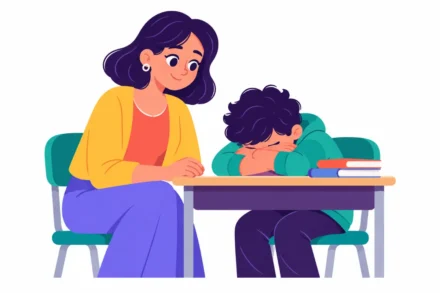
First, notice that most outbursts do not come from nowhere. Students often show small signals before a bigger behavior: fidgeting, a change in voice, a lowered head, or pushing materials away. Proactive behavior strategies start by learning what those signals look like for each student.
Next, watch one student for three or four days during the times that tend to go badly. Write a short note each time: the time, the activity, the first small sign you saw, and what happened next. A sticky note per lesson is enough. Over a few days, you will usually see the same first sign appear again and again.
Then, list the signs in order, from earliest to latest. This list becomes your early-alert guide. When you see the first sign, you know it is time to act, not to wait.
| Early sign | Later sign | What it may tell you |
|---|---|---|
| Tapping or fidgeting | Leaving the seat | Restless, may need to move |
| Head down, quiet | Refusing to start | Task may feel too hard |
| Louder voice | Arguing with peers | Frustration is building |
| Watching the door | Hiding or running | Worried about the next change |
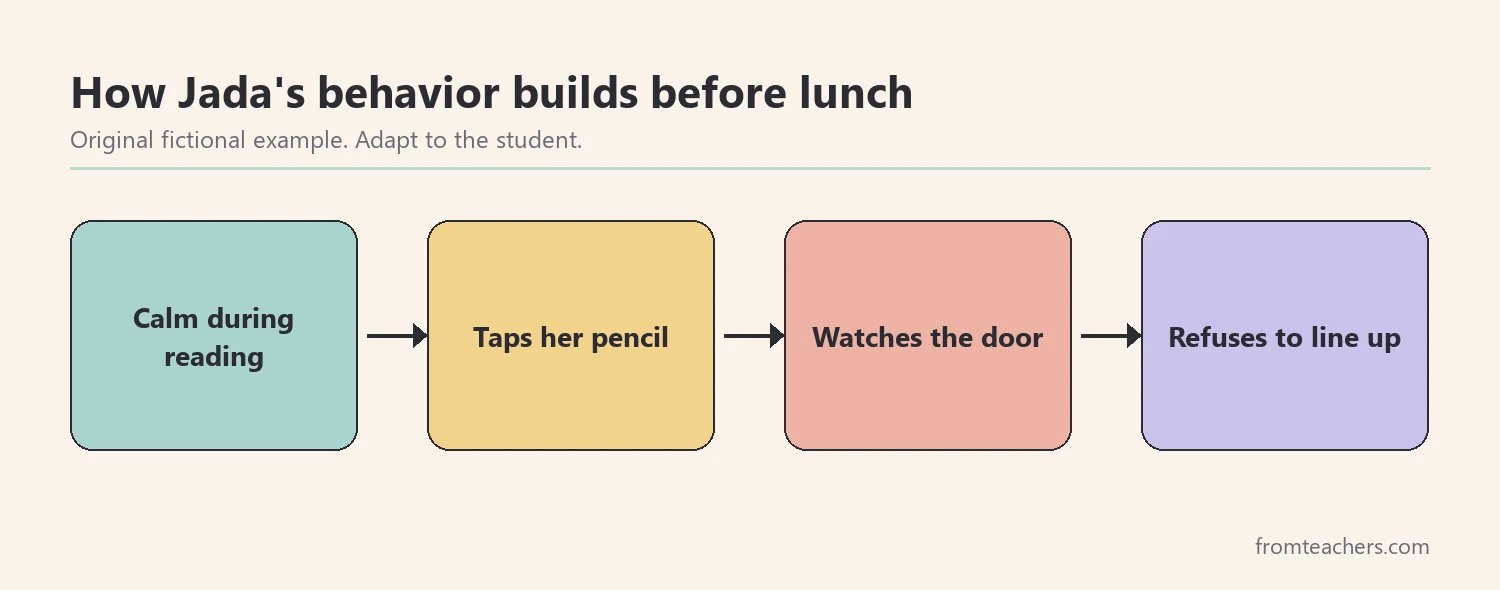
Worked example. Jada is a fictional student in grade 3. Her teacher notes that on four of five days, Jada refuses to line up for lunch. Each time, she first taps her pencil, then watches the door, then slides under the table. However, on the day lunch was announced early with a visual timer, she lined up with the class.
In short, the warning signs show you when to step in. As a result, your proactive behavior strategies can start minutes earlier.
2. Identify triggers in the environment
Once you know the signs, look at what comes right before them. A trigger is anything in the setting that makes a behavior more likely: a sudden transition, a noisy area, a hard task, or a long wait. Proactive behavior strategies focus on changing these triggers, because the room is easier to change than the student.
Start with four common areas. Look at the schedule, the physical space, the task, and the people nearby. For each one, ask whether something changed right before the first warning sign. In addition, notice what is different on good days.
Trigger checklist
- Transitions without warning or without a clear next step.
- Seats near doors, noisy areas, or busy walkways.
- Tasks that are too long, too hard, or unclear.
- Long waits with nothing to do.
- Crowded spaces, such as lines and hallways.
- Changes in staff, such as a substitute.
Then, pick one trigger to change first. For example, give a two-minute warning before transitions, move a seat, or split a long task into parts. Keep it to one change so you can tell what helped. If the first change does not help after a week or two, try the next trigger on your list instead of adding more pressure on the student.
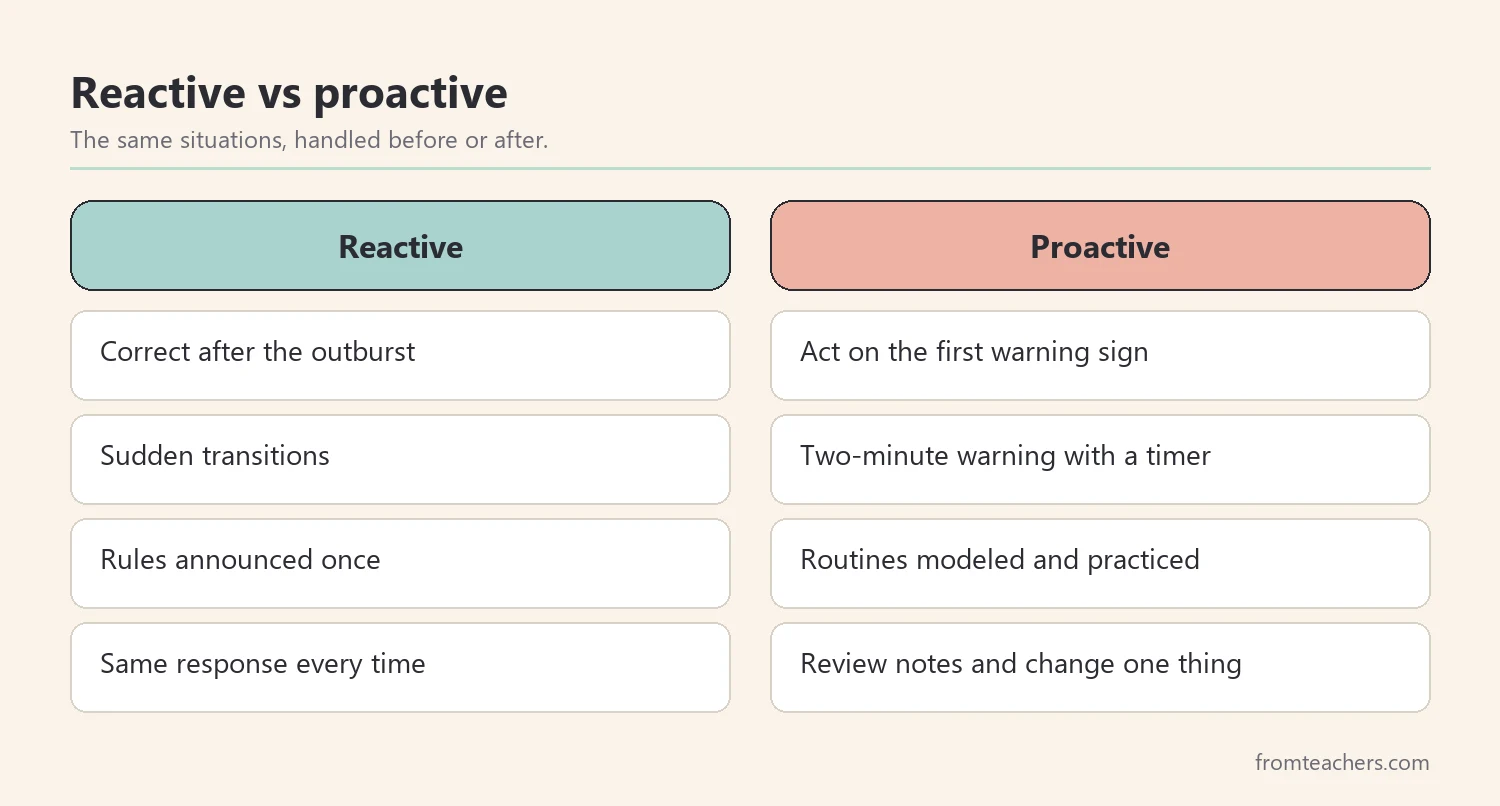
Worked example. Jada’s teacher sees that the trigger is the sudden end of reading time. Lunch is announced with no warning, and the line forms by the noisy door. She starts giving a two-minute warning with a visual timer. She also gives Jada the job of holding the door at the front of the line.
In other words, the plan changes the moment, not the child. That is the core idea behind proactive behavior strategies.
3. Teach routines as proactive behavior strategies
Routines lower the number of decisions a student has to make. When a routine is clear, the student knows what to do next, and many behaviors never start. Therefore, treat routines as skills you teach on purpose, not rules you announce once.
Choose two or three routines that matter most, such as entering the room, moving between activities, and asking for help. For each routine, write four to six short steps. Then, model the steps, practice them while the class is calm, and give quick, specific feedback.
Next, add visuals. A short picture list or a posted set of steps lets students check what to do without asking. In addition, revisit the routines after breaks, holidays, or schedule changes, when many students need a reminder.
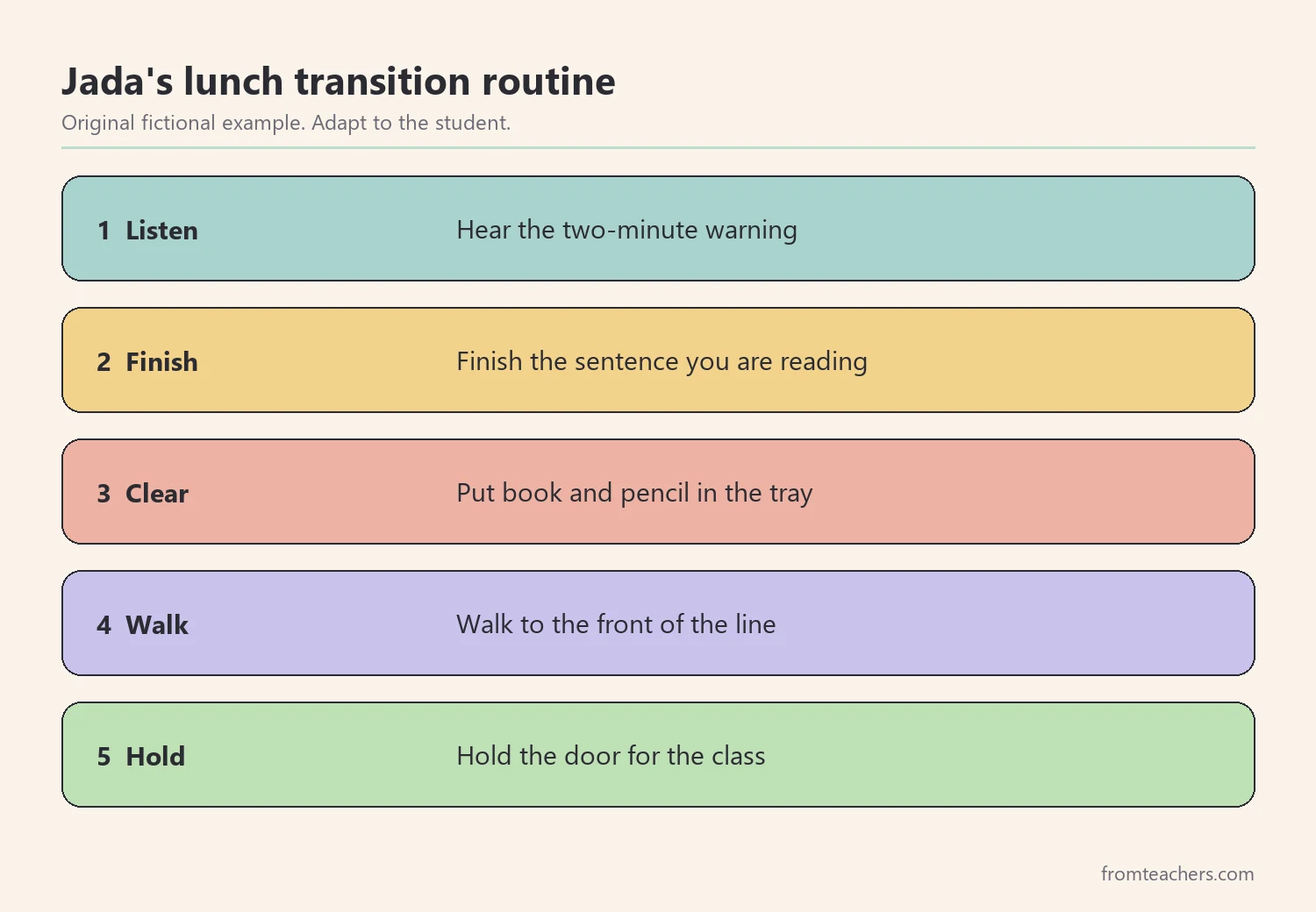
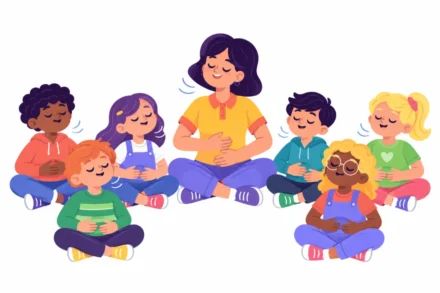
Also, practice the hard parts more often. Practice is one of the simplest proactive behavior strategies, and it costs only a few minutes. If lining up is the problem, practice lining up at a calm time of day, two or three times, with praise for each step done well. Short practice is better than a long lecture.
If you want ready-made planning pages, the Back to School Behavior Strategies tables cover situations such as recognizing early warning signs, identifying triggers, and celebrating a smooth transition day, each with clear steps.
Worked example. Jada’s class practices a five-step transition routine every morning for a week. Jada also practices her door-holder job twice before lunch on a calm day. By the second week, she reaches the line before most classmates on most days.
4. Respond early and calmly
Even with good prevention, some warning signs will still appear. The goal now is to respond early, while the behavior is small. Proactive behavior strategies at this stage are quiet and brief, so they do not draw attention or escalate the moment.
Start with the lightest response that might work. For example, move closer, make eye contact, or point to the posted routine. Next, try a short private reminder, such as “Next step is pencils away.” If the student needs more, offer a simple choice: “Do you want to hold the door or walk second?”
| Response | When to use it |
|---|---|
| Move closer, nod | First small sign |
| Point to the routine | Unsure of the next step |
| Quiet one-line reminder | Sign continues |
| Simple choice of two | Starting to resist |
| Short planned break | Needs time to reset |
However, avoid long talks or public correction during the moment. Students who are already upset struggle to process many words. Keep your voice low, your words few, and your body relaxed. Then, praise the student quietly once they follow through. Specific praise, such as “You put your pencil away right away,” tells the student exactly what to repeat. Over time, these small proactive behavior strategies add up to fewer hard moments for everyone.
Also, plan a calm break the student can use. An agreed spot, a timer, and a clear return step make breaks short and predictable. Without a return step, breaks can stretch and become a new problem.
Worked example. One day a substitute rings the bell early, and Jada starts tapping. Her teacher steps closer and points to the timer. Jada glances at the routine card, puts her pencil away, and walks to the door. Her teacher whispers, “Great job getting ready.”
5. Learn from incidents and review the plan
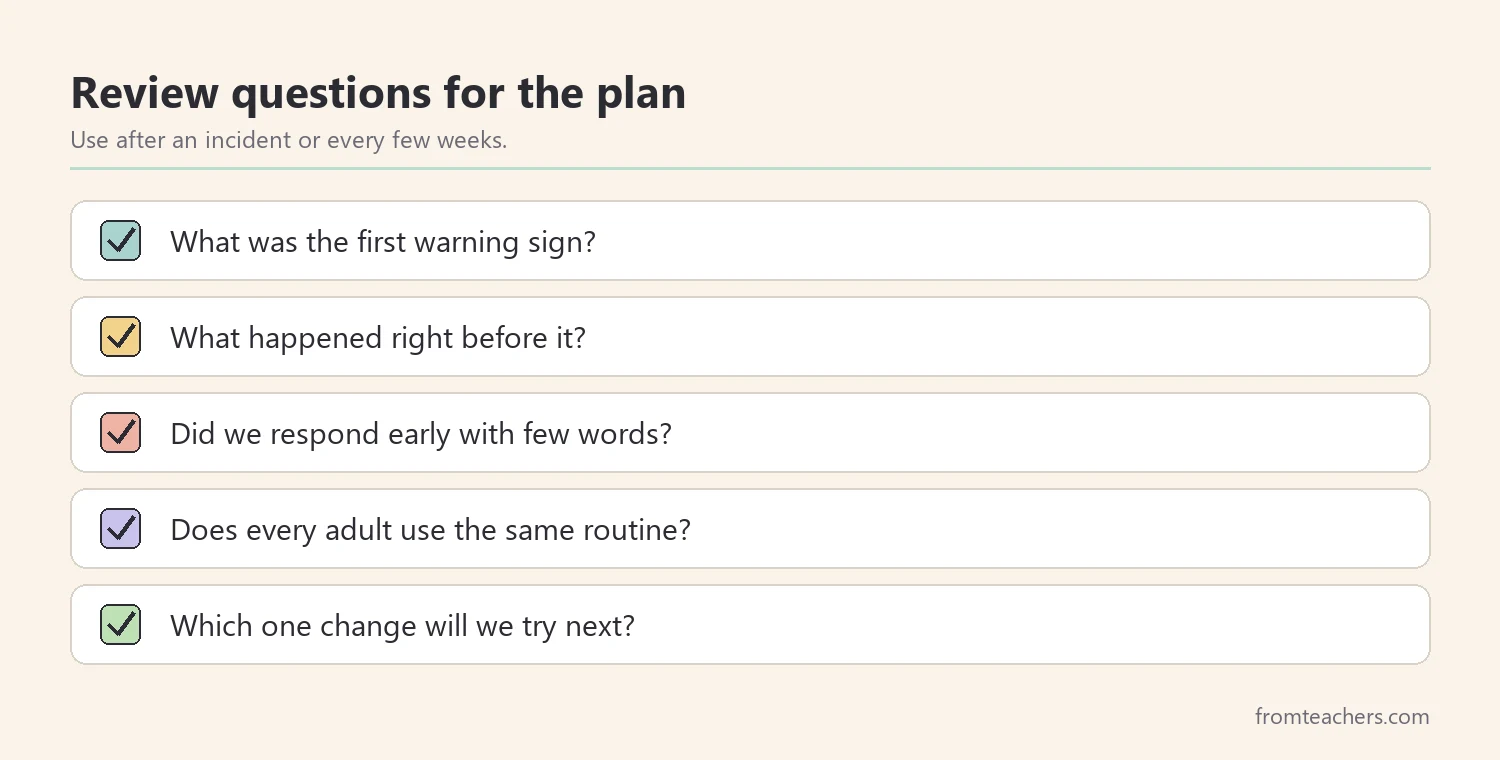
When a hard moment still happens, treat it as information. Afterward, once everyone is calm, take five minutes to write what happened: the time, the trigger, the first sign, your response, and the result. Proactive behavior strategies improve every time you learn from a real incident.
Next, look for one change. Ask whether the warning sign was missed, whether a trigger can be removed, or whether a routine needs more practice. In addition, notice your own response. Repeating the same intervention that did not work last time is a common trap for every teacher.
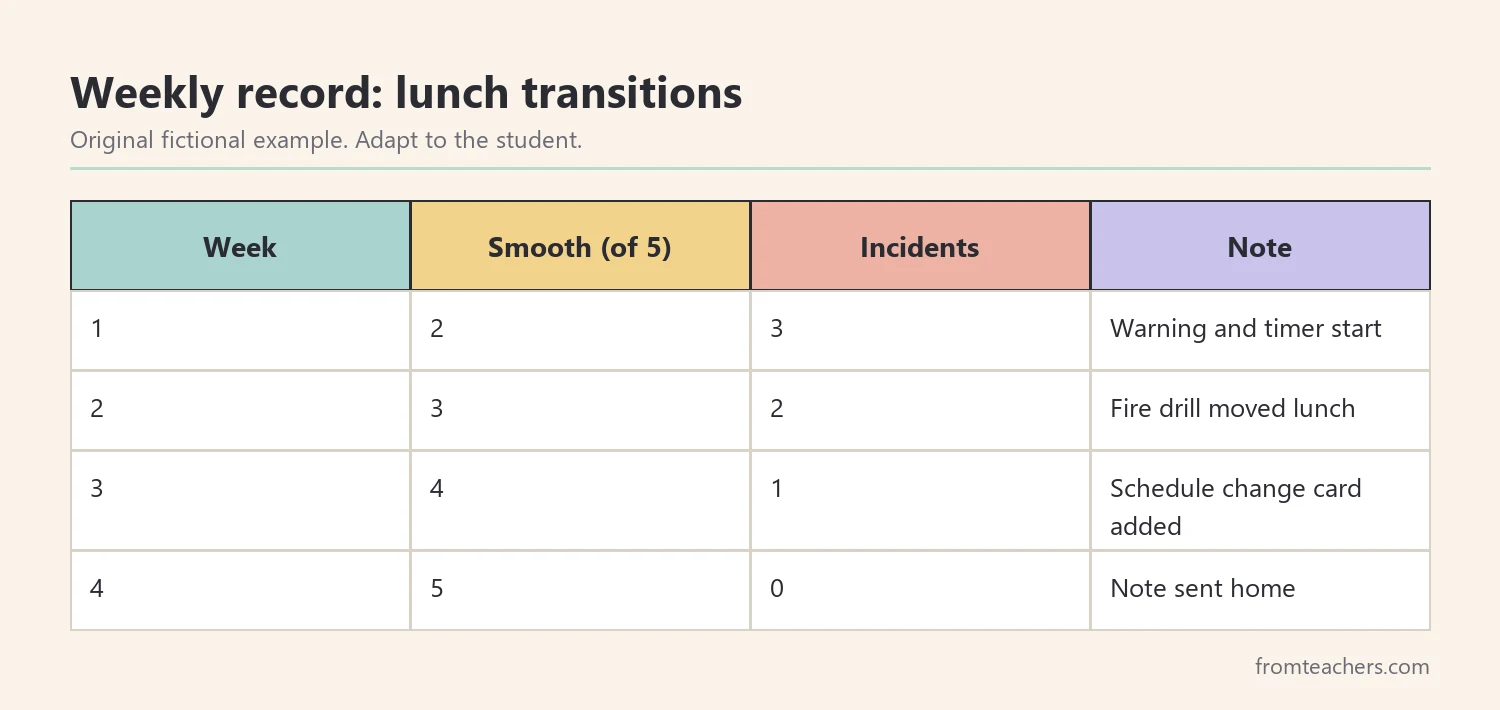
Then, review your plan every three or four weeks. Track one simple measure, such as smooth transitions out of five, and look at the trend rather than a single day. Celebrate progress with the student, too. A short note home about a smooth week builds trust with families.
Finally, share what works with other adults who work with the student. Consistent responses from every adult help proactive behavior strategies hold up across the day.
Worked example. Jada’s teacher records lunch transitions each school day. In week 1, Jada makes 2 smooth transitions out of 5. By week 4, she makes 5 out of 5. One of the two incidents in week 2 happened when a fire drill moved lunch, so the teacher adds a “schedule change” card to the routine.
Common mistakes and how to avoid them
- Waiting for the big behavior. By then, choices are fewer and the moment is harder. Fix: act on the first warning sign.
- Changing too many things at once. You cannot tell what helped. Fix: change one trigger, track it, then add the next.
- Announcing rules instead of teaching routines. Students need practice, not only reminders. Fix: model, practice, and give feedback.
- Long lectures in the moment. Upset students cannot process many words. Fix: use few words, a calm voice, and a simple choice.
- Repeating an intervention that failed. The same response often gives the same result. Fix: review incident notes and try one new step.
- Skipping the celebration. Progress goes unnoticed. Fix: name the smooth days with the student and the family.
Questions teachers and parents ask about proactive behavior strategies
Are proactive behavior strategies only for students with IEPs?
No, most of these ideas help a whole class. Clear routines, transition warnings, and calm responses support every student. Students with IEPs or behavior plans may need more individual steps agreed by their team.
How long before I see a change?
It depends on the student and the behavior. Some changes, like transition warnings, can help within days, while new routines often take a few weeks of practice. A simple weekly record will show you the trend.
What if a behavior is unsafe?
Safety always comes first. Follow your school’s safety procedures and involve your administrator and the student’s team. Proactive behavior strategies are for everyday prevention, not emergency responses.
How do I involve families?
Share one success and one goal in a short note or call. Ask families which signs and calming strategies they see at home. Matching words and routines between home and school helps students feel secure.
Can proactive behavior strategies work with older students?
Yes, the same process applies at any age. Older students can help name their own warning signs and choose their own break options. That ownership often makes the plan stronger.
Related reading: Moving Beyond Shame and Behavior Charts: Positive Alternatives for Effective Classroom Management, Meltdowns vs Tantrums: A Guide to Understanding and Responding, and Essential Trauma-Informed Teaching Strategies for Modern Classrooms.
A companion resource for proactive behavior strategies:
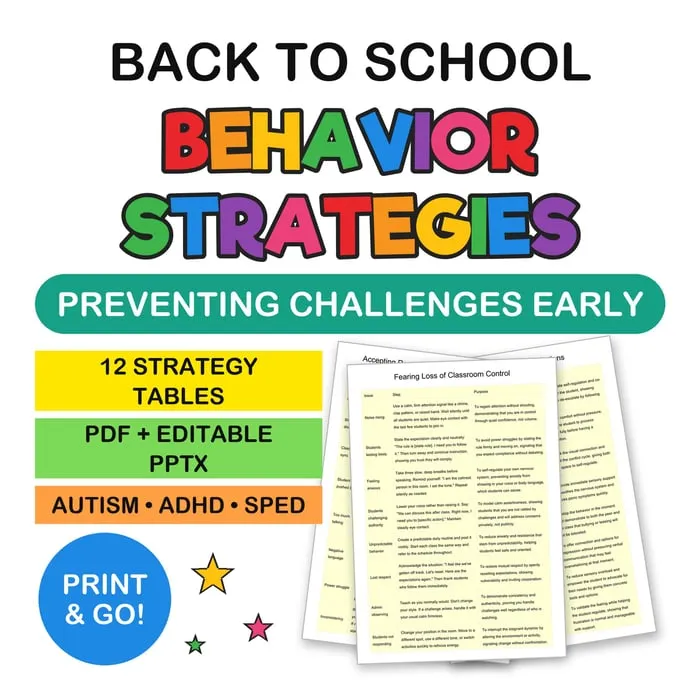
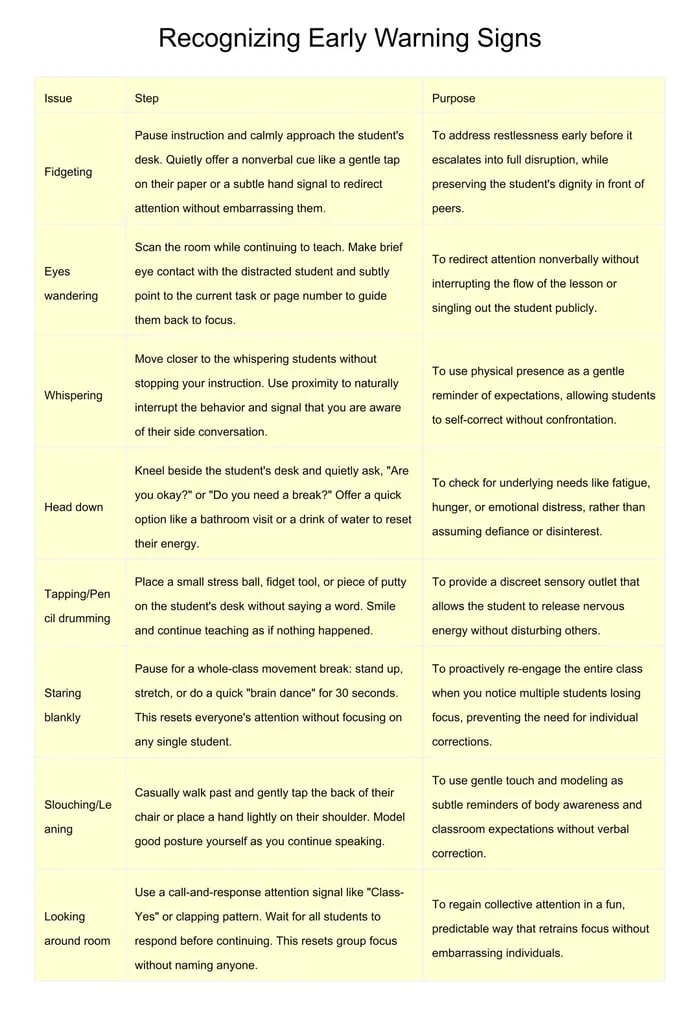
Back to School Behavior Strategies: Preventing Challenges Before They Start: 12 strategy tables for special education teachers and support staff, each focused on one real situation, such as early warning signs, triggers, off-task behavior, and smooth transitions. Includes a PDF and an editable PowerPoint.
Sources and scope
- Center on PBIS: information on positive behavioral interventions and supports for schools.
- IRIS Center, Vanderbilt University: free modules on classroom behavior management and routines.
- What Works Clearinghouse: reviews of education research, including classroom behavior practices.
- Council for Exceptional Children: a professional association for special educators.
- IDEA, U.S. Department of Education: the law behind special education services and IEPs.
This guide covers everyday classroom prevention: warning signs, triggers, routines, and early responses. It does not cover crisis intervention, formal behavior assessments, or diagnosis, which belong to trained staff and the student’s team.
Key takeaways
- Proactive behavior strategies begin with learning each student’s early warning signs.
- Change one trigger in the room or schedule before asking the student to change.
- Teach routines with modeling, practice, and feedback.
- Respond early with few words, a calm voice, and simple choices.
- Use each incident and a weekly record to improve the plan.






Leave a Comment