

Gestalt language learners build language from whole chunks before they break those chunks into smaller, flexible parts. Picture a six-year-old who says, “To infinity and beyond!” every time he wants to go outside. To a new adult, it sounds like a random movie line. To the child, it means something clear and important: “Let’s go, I’m excited.”
This guide gives you five steps to support gestalt language learners respectfully: recognize the style, find the meaning in scripts, model useful language, respond to communication breakdowns, and track progress with the team. By the end, you will be able to respond to scripting and echolalia as real communication.
Examples are fictional. Adapt to the student’s goals and agreed supports. This is guidance, not a diagnosis.
At a glance
- Some children learn language in whole chunks, often called gestalts or scripts.
- Scripts and echolalia usually carry meaning, so treat them as communication.
- Model short, useful phrases the child can borrow and later mix.
- Communication breakdowns are chances to learn, not failures.
- Work closely with the speech-language pathologist and the family.
1. Recognize gestalt language learners
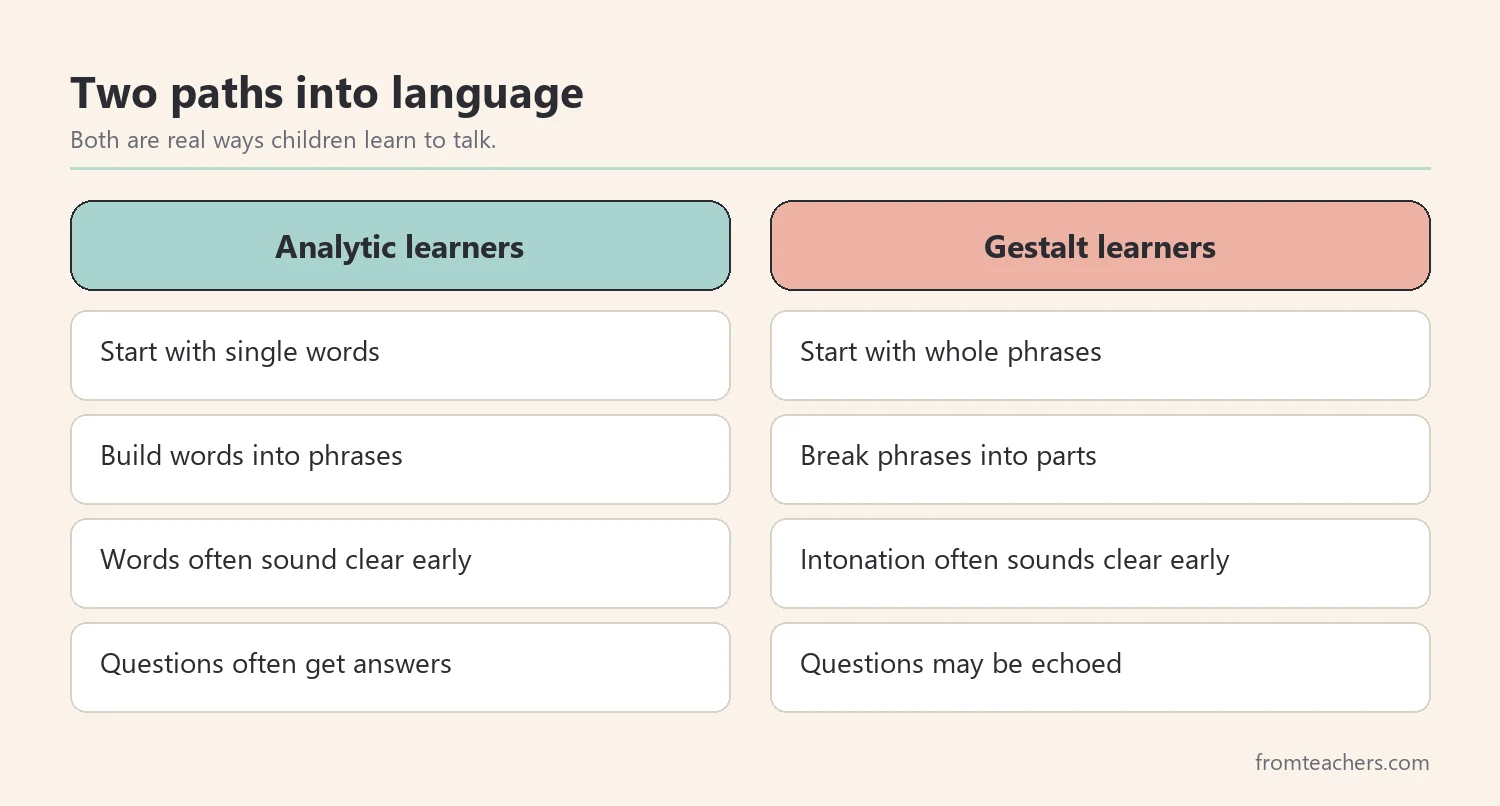
First, understand the difference in style. Many children learn language analytically: single words first, then two-word phrases, then sentences. Gestalt language learners often start the other way around. They use whole phrases or longer chunks, sometimes from songs, shows, or things adults say, and only later break them into smaller parts.
Next, notice what this looks like in class. A child may repeat lines from a favorite show, use the same phrase in many situations, or echo a question instead of answering it. The intonation of a script is often very clear, even when single words are hard to pick out.
Also, remember that this is a way of learning language, not a lack of language. Gestalt language processing has been discussed widely by speech-language pathologists, especially in relation to autistic children, and professional understanding continues to develop. So, work with your school’s speech-language pathologist instead of relying on one source.
In addition, avoid trying to stop scripting. Blocking scripts can remove a child’s main way of communicating. Instead, the goal is to understand the scripts and help the child build more flexible language from them over time.
Then, keep a simple script log. Write the phrase, where it happened, and what seemed to happen next. Over days, patterns appear, and those patterns help you understand gestalt language learners in your class.
Worked example. Theo is a fictional kindergarten student. His teacher, Ms. Patel, notices that he uses several movie lines each day. Over one week, she logs 12 scripts. “To infinity and beyond!” appears 5 times, always near the door before recess.
2. Find the meaning in scripts
Next, look for meaning. Gestalt language learners often use a script because of a feeling or situation linked to it, not because of the exact words. A line from an exciting movie scene may mean “I’m excited.” A phrase an adult once said during a hard moment may mean “I need help.”
For example, ask yourself three questions each time. Where did the child probably hear this phrase? What was happening when they first heard it? What is happening now? The overlap between those moments usually points to the meaning.
Also, ask the family. Parents often know the source of scripts and what they tend to mean at home. A short shared list of “script and likely meaning” helps every adult respond in the same way.
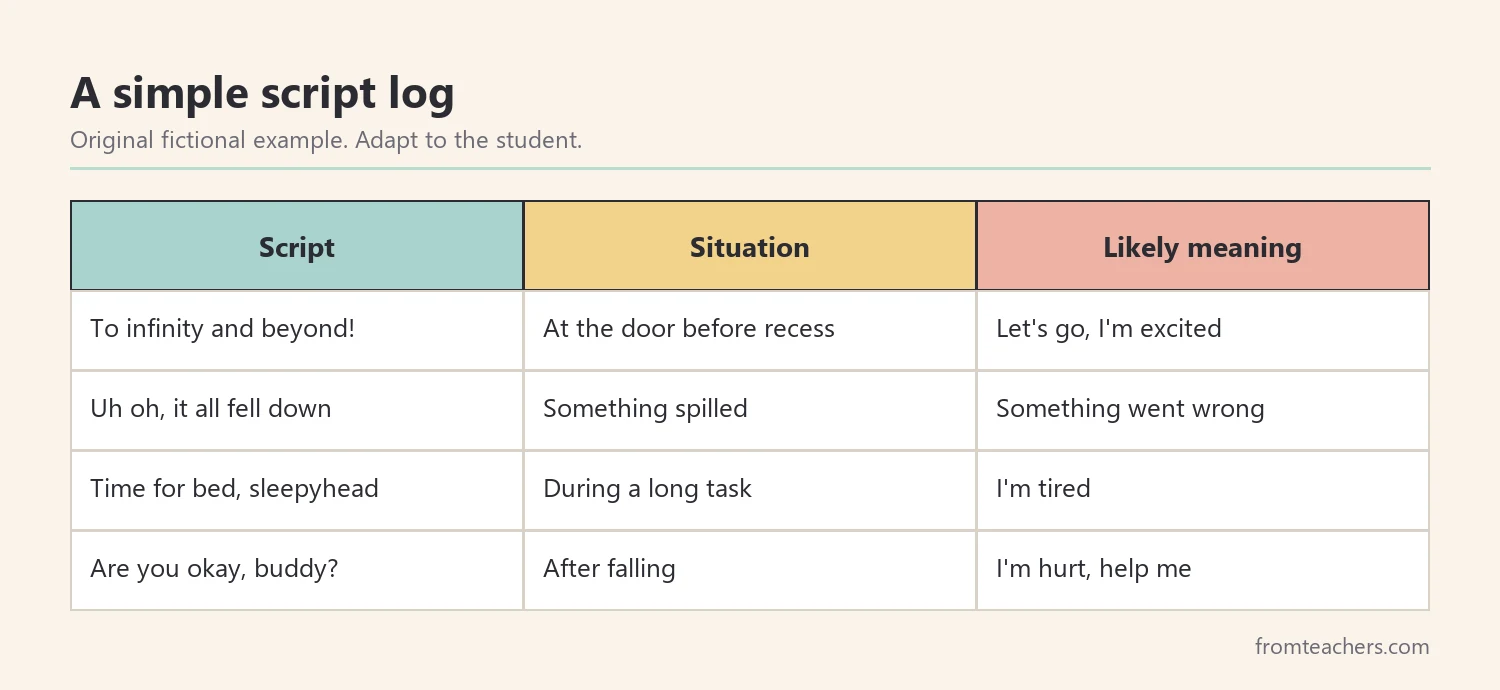
Meanwhile, respond to the meaning, not the words. If “To infinity and beyond!” means “Let’s go outside,” say, “You want to go outside! Let’s go.” This shows the child that their communication worked, which encourages more communication.
For ready-made responses, the gestalt language processing strategy tables include 12 tables with practical, respectful responses for scripting, echolalia, gestalt stages, and communication breakdowns. They can help a whole team respond to gestalt language learners consistently.
Worked example. Ms. Patel shares Theo’s script log with his mother. She explains that “To infinity and beyond!” comes from a movie Theo watches when he is happy and ready to play. Ms. Patel now responds, “You’re ready to go out! Let’s go,” and opens the door.
3. Model useful language for gestalt language learners
Next, give the child good chunks to borrow. Because gestalt language learners pick up whole phrases, adults can model short, natural phrases that the child may use and later mix. Many speech-language pathologists suggest modeling from the child’s point of view, such as “Let’s go!” or “I need help,” instead of “Do you want to go?”
Also, keep the phrases flexible. A phrase like “Let’s go” can later combine with other parts: “Let’s go outside,” “Let’s go eat.” Phrases that can be split and recombined support the move toward more flexible language over time.
In addition, use natural intonation and repeat phrases in real moments. Say “Uh oh, it fell” when something actually falls. Say “All done” when an activity actually ends. Real moments give meaning to the chunk.
Also, think about the classroom day as a series of modeling chances. Arrival, snack, tidy-up, recess, and dismissal happen every day, so they are ideal times to repeat the same short phrases. Predictable routines give gestalt language learners many chances to hear a phrase in the right moment, which makes it easier to borrow. A short list of target phrases posted near each routine area reminds every adult to use them, including substitutes and support staff who may not know the child well.
Meanwhile, avoid too many questions. Repeated questions can lead a child to echo the question rather than answer it. Comments and models usually work better for gestalt language learners than “What’s this?” or “Say …”.
Then, coordinate with the team. The speech-language pathologist may suggest specific phrases or stages to focus on. When every adult models the same phrases, the child hears them more often and in more places.
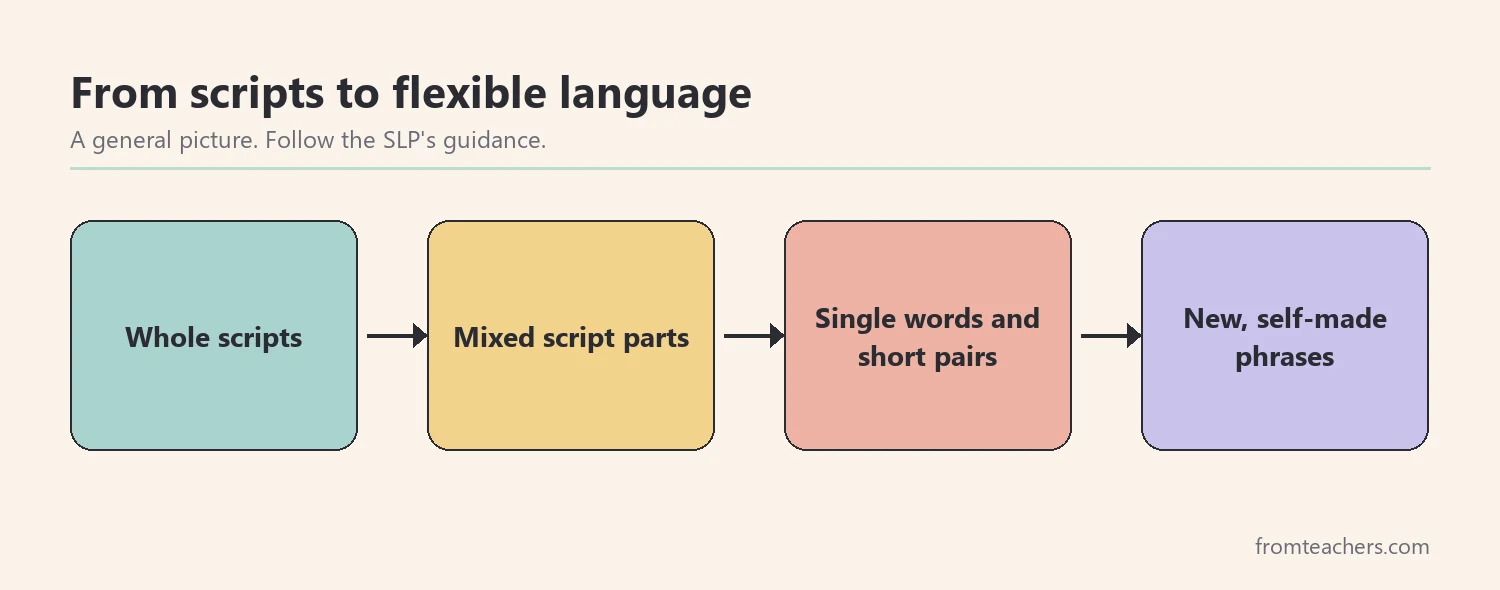
Worked example. With the speech-language pathologist, Ms. Patel chooses three phrases to model: “Let’s go,” “I need help,” and “All done.” She uses each one in real moments every day. After two weeks, Theo says “Let’s go!” at the door one morning, alongside his movie line.
4. Respond to communication breakdowns
Next, plan for moments when you do not understand. Communication breakdowns happen with all children, and they can be especially frustrating for gestalt language learners. The child may repeat a script louder, become upset, or give up.
First, stay calm and show that you are trying. Say, “I’m listening. Show me.” Then look at the situation for clues: where the child is looking, what they are holding, and what just happened. Offer a guess with a model: “Do you mean, let’s play?”
Also, accept that you will not always understand right away. Note the script and the situation in your log, and check with the family later. Many breakdowns become clear once you learn the source of the phrase.
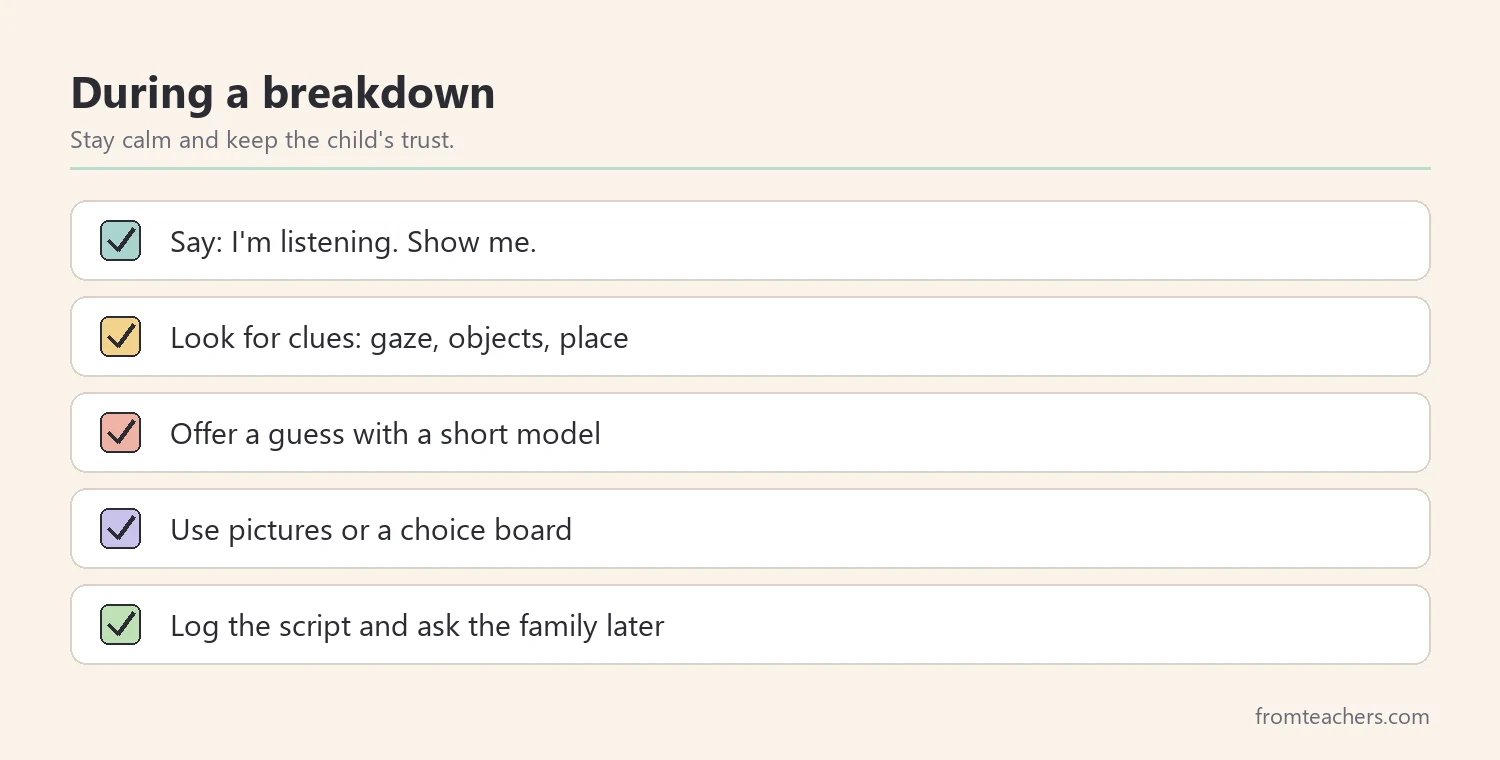
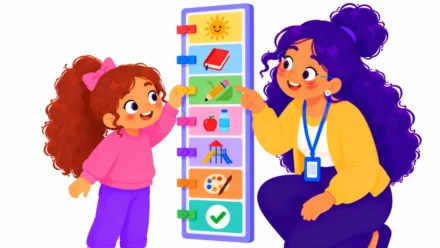
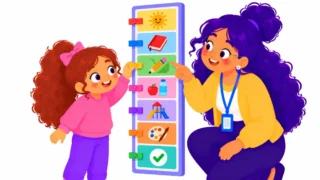
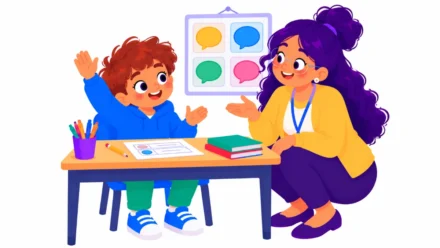
In addition, use visual supports. Pictures, objects, or a simple choice board can help the child show what they mean when words are hard. Visuals do not replace speech. Instead, they give another path through a breakdown.
Meanwhile, learn from each breakdown. Ask, “What was the child trying to say, and how can I model that next time?” This turns frustrating moments into useful information about gestalt language learners and their scripts.
Worked example. One afternoon, Theo repeats a line from a cartoon and starts to cry. Ms. Patel says, “I’m listening. Show me.” Theo points to the shelf. She sees his favorite puzzle and models, “I want the puzzle.” Later, his mother explains that the cartoon line comes from a scene about a lost toy.
5. Track progress with the team
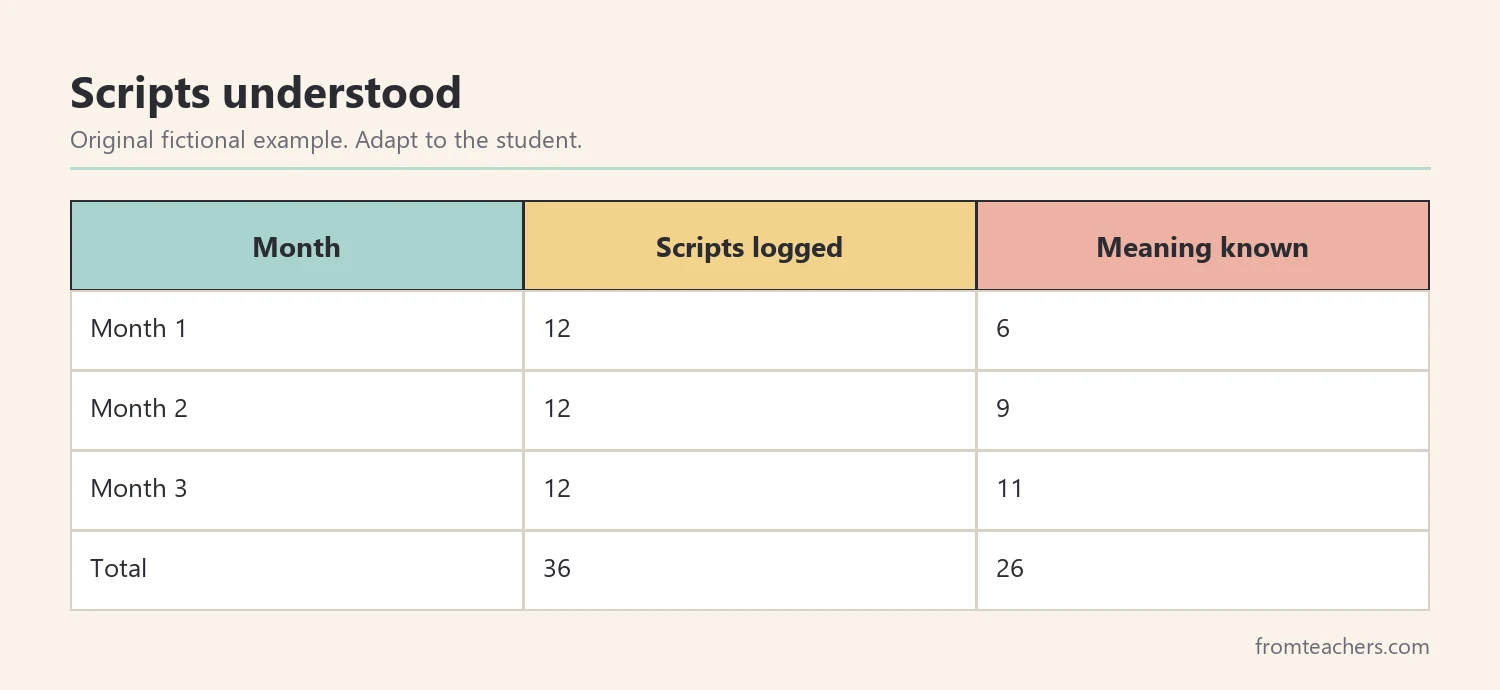
Finally, keep a simple record. Progress for gestalt language learners can look different from typical milestones, so track what matters: how many scripts have a known meaning, how often new combinations appear, and how often breakdowns are repaired.
Also, meet regularly with the speech-language pathologist and family. Share your script log and ask about current stages and goals. A shared picture helps everyone model the same phrases and respond the same way.
Next, celebrate small changes. A new mix of two scripts, a phrase used in a fresh situation, or a quicker repair after a breakdown are all signs of growth. Share these wins with the family in plain words. A short note such as “Theo used let’s go in a new place today” is clear, encouraging, and easy for families to build on at home.
In addition, be patient. Language development takes time for every child, and gestalt language learners may move through changes at their own pace. Consistent, respectful modeling matters more than speed.
Then, review the plan each term. Adjust the phrases you model as the child’s language grows, and keep the script log going so new adults can understand the child quickly.
Worked example. Ms. Patel tracks Theo for three months. In month 1, she logged 12 scripts and knew the meaning of 6. By month 2, she logged 12 and knew 9. In month 3, she logged 12 and knew 11. Across three months, that is 26 of 36 scripts understood. Theo also used 4 new combinations, such as “Let’s go puzzle.”
Working respectfully with families
Families are the experts on their child’s scripts. So, ask before you assume, and share what you learn. A two-way script log, sent home weekly, keeps everyone connected.
Also, use respectful language. Talk about scripts as communication, not as “nonsense” or “parroting.” The way adults describe gestalt language learners shapes how others treat them.
Finally, follow the guidance of the child’s speech-language pathologist and support plan. Your role is to support communication in daily routines, not to diagnose or provide therapy.
Common mistakes and how to avoid them
- Trying to stop scripts. It removes a way to communicate. Fix: find and respond to the meaning.
- Asking too many questions. The child may echo instead of answer. Fix: comment and model.
- Modeling from the adult’s view. “Do you want help?” is harder to borrow. Fix: model “I need help.”
- Working alone. Adults respond in different ways. Fix: share a script log with the team and family.
- Treating breakdowns as failure. Frustration grows. Fix: stay calm, look for clues, and offer a model.
- Expecting typical milestones. Progress may look different. Fix: track meaning, combinations, and repairs.
Questions teachers and parents ask about gestalt language learners
Is echolalia always a sign of autism?
No. Echolalia appears in many children, including during typical development. It is often discussed in relation to autism, but only qualified professionals can diagnose. Your role is to observe and support communication.
Should I correct a child who scripts?
Correcting scripts usually does not help. Instead, respond to the meaning and model a short, useful phrase. This keeps communication positive while offering new language to borrow.
What is a mitigated gestalt?
It is a term often used for a script that has been changed or mixed with another, such as part of one phrase combined with part of another. Speech-language pathologists see this as a sign that language is becoming more flexible.
How can parents help at home?
Parents can note scripts and their likely meanings, model short phrases from the child’s point of view, and share what they learn with school. A shared log helps everyone respond the same way.
Who should lead language goals?
The speech-language pathologist usually leads communication goals, working with teachers and families. Teachers support those goals in daily classroom routines.
Related reading: Autism Spectrum Disorder: A Guide to Early Signs, Support, and Effective Strategies, How Parents and Teachers Can Team Up for Special Education Success, and Autism Social Skills Development: Practical Strategies for Growth.
A companion resource for gestalt language learners:

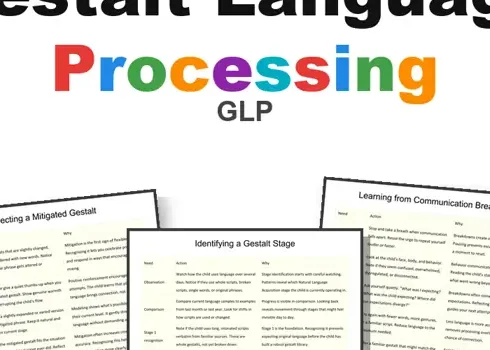
Gestalt Language Processing (GLP): Support Strategies for Gestalt Language Learners: 12 strategy tables with practical, respectful responses for scripting, echolalia, gestalt stages, and communication breakdowns.
Sources and scope
- American Speech-Language-Hearing Association (ASHA): professional information on language development and speech-language services.
- IRIS Center, Vanderbilt University: free modules on autism, communication, and classroom supports.
- Understood.org: family-friendly information on learning and thinking differences.
- IDEA, U.S. Department of Education: the law behind special education and related services, including speech-language services.
This guide covers everyday classroom and home support for children who learn language in chunks. It does not replace speech-language therapy, evaluation, diagnosis, or the decisions of the child’s support team.
Key takeaways
- Gestalt language learners build language from whole chunks first.
- Scripts usually carry meaning, so respond to that meaning.
- Model short, flexible phrases from the child’s point of view.
- Handle breakdowns calmly, with clues, visuals, and models.
- Track progress with the speech-language pathologist and family.



Leave a Comment