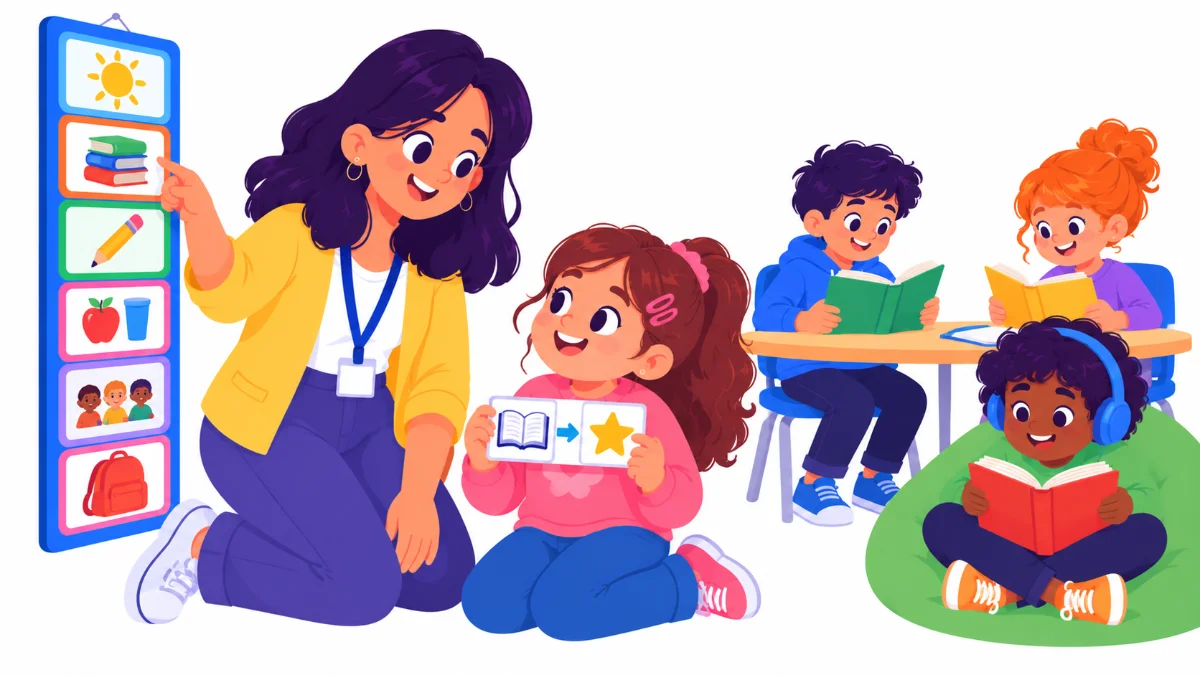

Knowing what to say instead of no can change the mood of a classroom within a week. Picture a grade 2 inclusive classroom at 10:15 am. Sofia, who has an IEP for attention and self-regulation, asks to go outside, to use the markers, and to sit on the floor, all in five minutes. Her teacher hears herself say “No” three times, and by the third one, Sofia is under the table.
“No” is sometimes necessary, especially for safety. However, a steady stream of “no” can trigger power struggles, especially for students who already find school hard. This list gives you twelve phrases that keep the same limits but sound different, ranked from the easiest to start using to the ones that take more practice. By the end, you will have ready-to-say words for requests, behavior, and transitions.
Examples are fictional. Adapt to the student’s goals and agreed supports, including any behavior plan. This is guidance, not a diagnosis.
At a glance
- Keep the same limits, but say what to do instead.
- “Yes, after” and the visual schedule reduce arguments.
- Real choices and first, then language give structure and control.
- Ask “What do you need?” to find the reason behind a request.
- Keep short, firm words for safety, and share one phrase list with the team.
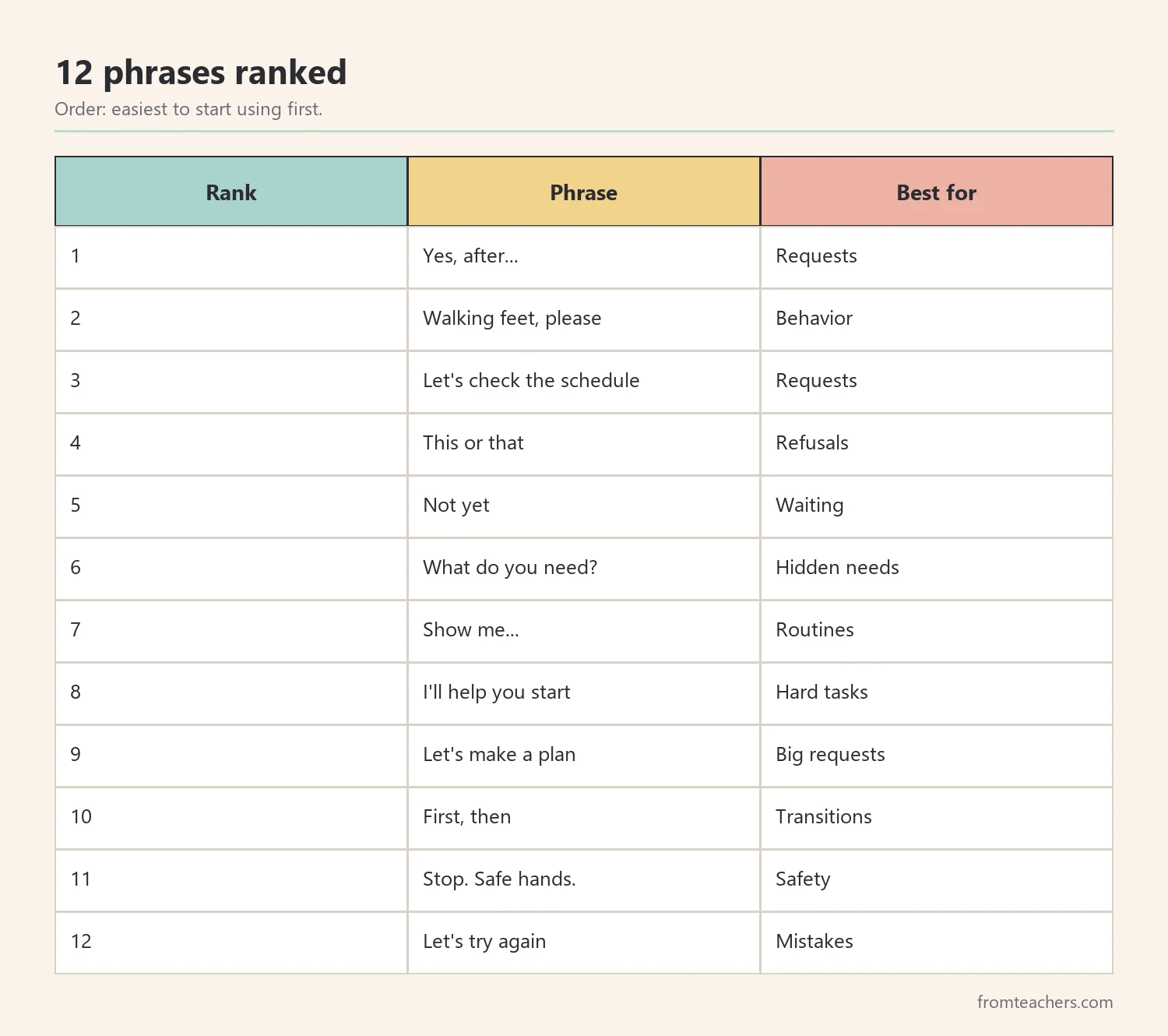
How we ranked these phrases
We ranked the twelve phrases by one clear rule: how easy each is to start using tomorrow without extra planning. Phrases at the top are simple swaps. Phrases near the bottom need a visual, a routine, or a short conversation with the student first.
In addition, all phrases follow positive behavior support ideas promoted by groups such as the Center on PBIS: tell students what to do, not only what to stop, and keep limits clear, calm, and consistent.
The ready-made option: a visual dos and don’ts guide
Changing your words is easier when you can see the difference. The visual classroom management dos and don’ts guide for SPED teachers is a 51-page comic-style guide that pairs a “what not to do” scene with a “do this instead” scene, covering engagement, behavior, transitions, differentiation, and communication.
As a result, you can flip through it during planning time or share pages with a paraprofessional, so the whole team uses the same language.
1. “Yes, after…”
What it is: you agree to the request but place it later. “Yes, after we finish this page, you can get the markers.”
Why it works: the student hears “yes” first, which lowers resistance, and learns that waiting leads to the thing they want.
How to use it: only promise what you will really allow. Then follow through.
Example: Sofia heard “Yes, after math, you can use the markers,” and went back to her worksheet.
2. “Walking feet, please”
What it is: you name the behavior you want, not the one you want to stop. “Walking feet” replaces “No running.”
Why it works: the student hears a clear instruction, and the positive form is easier to follow.
How to use it: practice swaps: “Quiet voice” for “Stop yelling,” “Hands in your lap” for “Don’t touch.”
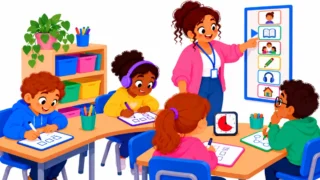
3. “Let’s check the schedule”
What it is: you point to the visual schedule instead of saying no yourself.
Why it works: the schedule becomes the authority, not the adult, which reduces arguments.
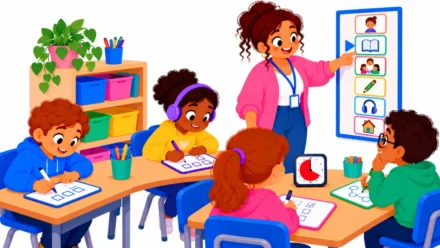
How to use it: keep the schedule visible. Point and say, “Outside is after lunch. Now it’s reading.”
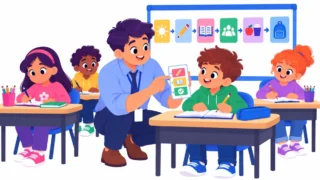
Example: when Sofia asked to go outside, her teacher pointed to the recess picture. Sofia counted the pictures before it.
4. “You can choose this or that”
What it is: offering two acceptable options.
Why it works: a real choice gives the student some control, which often reduces pushback.
How to use it: both choices must be fine with you. “You can sit on the chair or the wobble cushion.”
5. “Not yet”
What it is: a softer way to say “not now,” with a promise of later.
Why it works: it keeps hope alive and pairs well with a visual timer.
How to use it: “Not yet. When the timer ends, it’s your turn.”
6. “What do you need?”
What it is: asking about the need behind a request or behavior.
Why it works: many requests hide another need, such as a movement break or help with a hard task. Asking often solves the real problem.
How to use it: ask calmly, offer two guesses if the student cannot say: “Do you need a break or help?”
Example: Sofia’s floor request meant her body needed movement. A two-minute walk to deliver a note helped.
7. “Show me…”
What it is: inviting the student to demonstrate the expected behavior. “Show me how we line up.”
Why it works: it gives the student a chance to succeed, instead of being corrected.
How to use it: praise right away: “Yes, that’s it.”
8. “I’ll help you start”
What it is: offering support for a hard task instead of saying “No, you need to do it.”
Why it works: refusal often comes from not knowing how to begin. Starting together breaks the freeze.
How to use it: do the first problem together, then step back.
9. “Let’s make a plan”
What it is: turning a “no” into problem solving. “You want more computer time. Let’s make a plan for Friday.”
Why it works: it shows respect for the request and teaches planning.
How to use it: write the plan down where the student can see it.
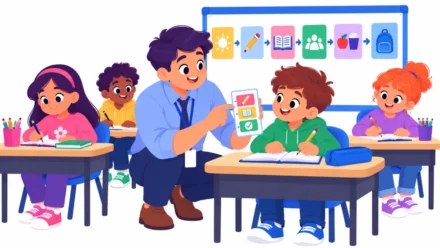
10. “First, then”
What it is: a short structure: “First reading, then blocks.”
Why it works: first, then language is widely used in special education because it makes the order of events clear.
How to use it: use a small first, then card with pictures for students who need visuals.
Example: Sofia’s first, then card showed a book and a block tower. It reduced her questions during reading.
11. “Stop. Safe hands.” (for safety)
What it is: a short, calm command when safety is at risk.
Why it works: safety needs a fast, clear limit. Short words are easier to process in a stressful moment.
How to use it: keep your voice calm and low, follow the student’s behavior plan, and save long talks for later.
12. “Let’s try again”
What it is: after a mistake, you invite a do-over instead of a punishment.
Why it works: practice teaches the expected behavior, and it keeps the relationship positive.
How to use it: “That was loud. Let’s try again with a quiet voice.” Praise the second try.
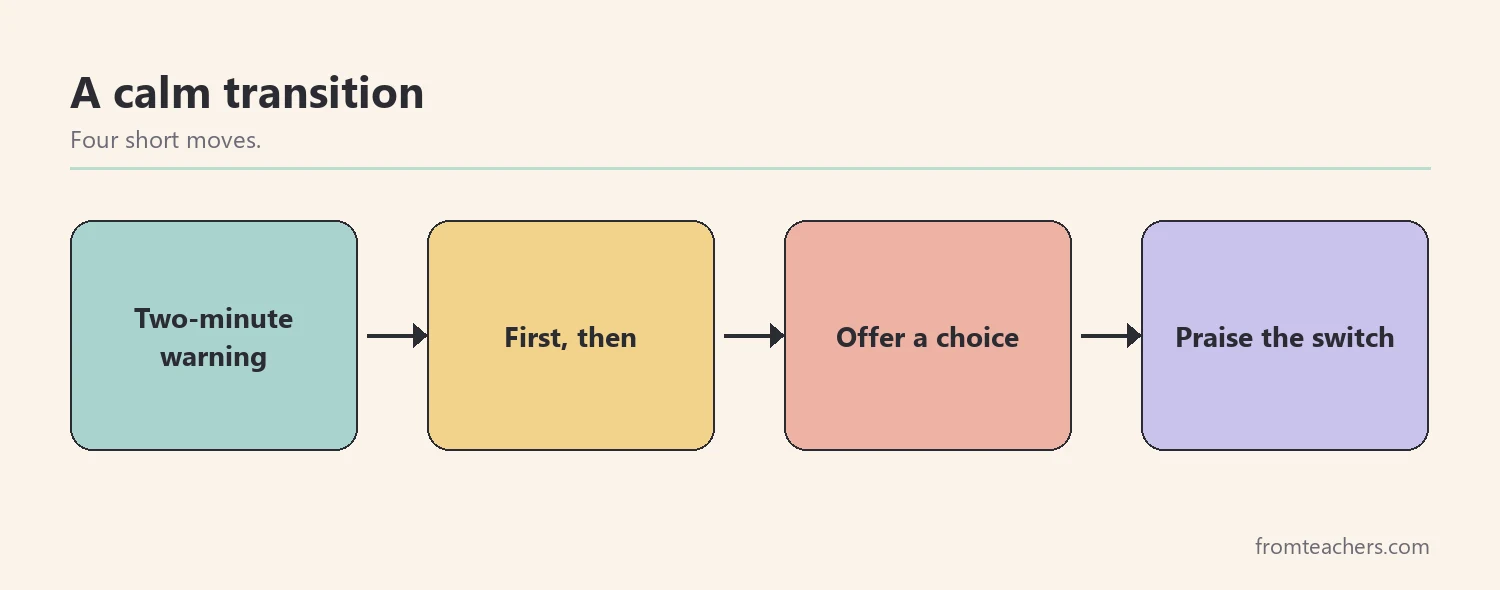
Using what to say instead of no during transitions
Transitions are where many “no” moments happen. Students do not want to stop a fun activity, or they want to skip a hard one. A small set of phrases can carry most transitions.
First, give a warning: “Two more minutes, then cleanup.” Next, use first, then: “First clean up, then snack.” Then offer a choice: “Do you want to carry the blocks or the box?” Finally, praise the move: “You switched quickly. Thank you.”
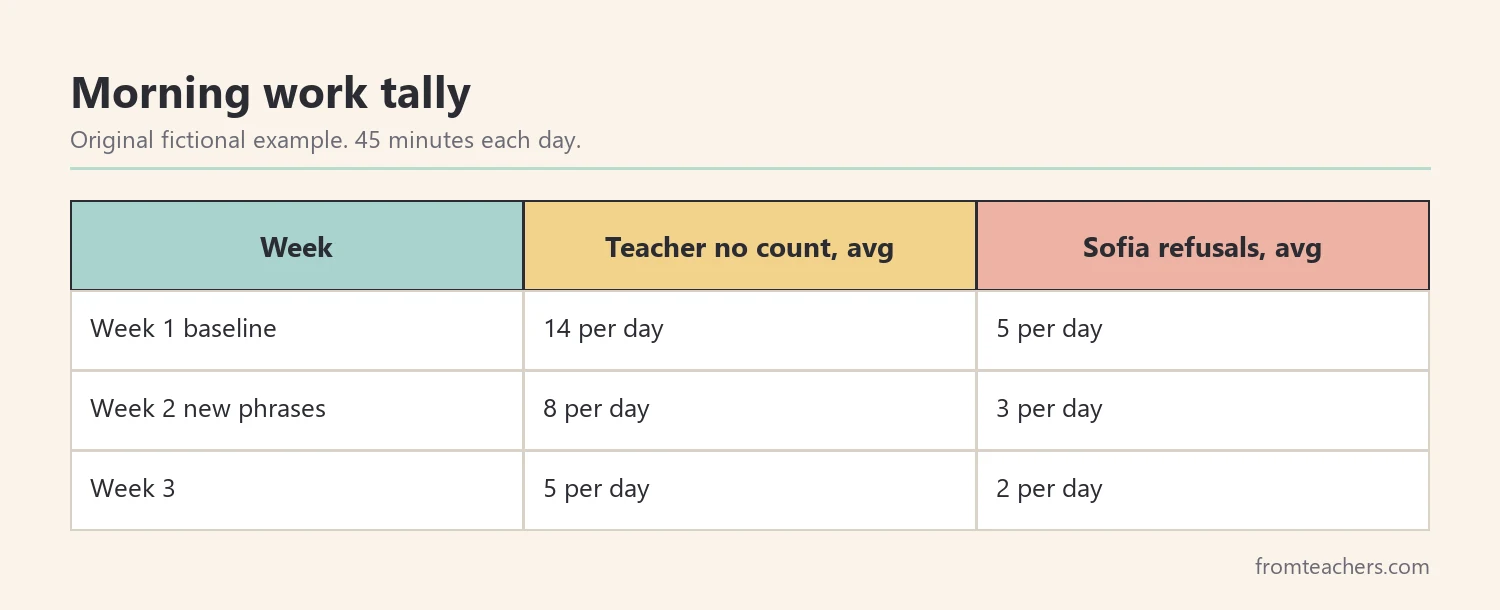
Sofia’s teacher counted her own “no” responses during morning work for two weeks. The results are in Figure 4. As she swapped to the phrases on this list, her count dropped, and so did Sofia’s refusals.
Teaching your team the same phrases
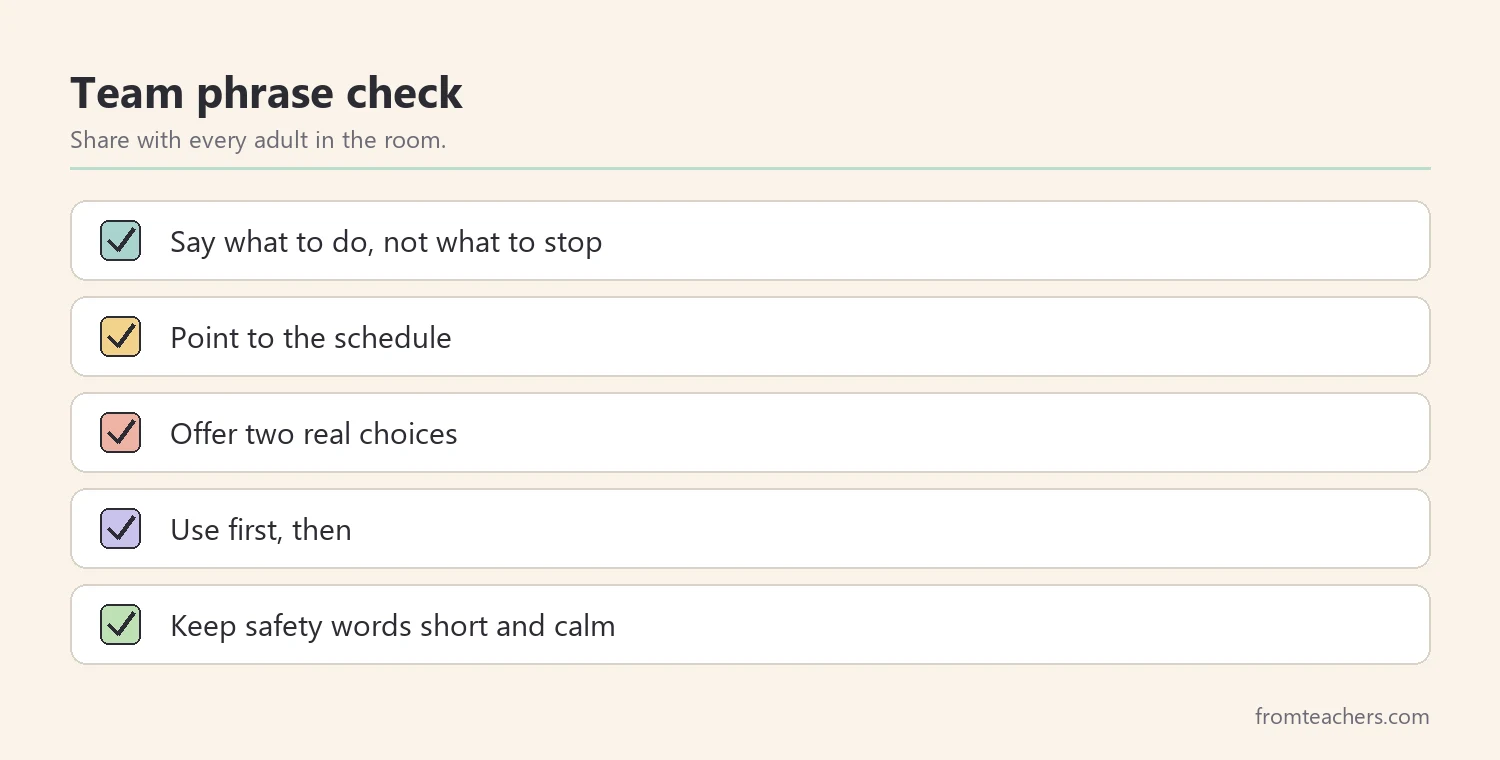
Students do better when every adult uses similar words. Share a short phrase list with paraprofessionals, specialists, and substitutes. Practice a few swaps in a staff meeting.
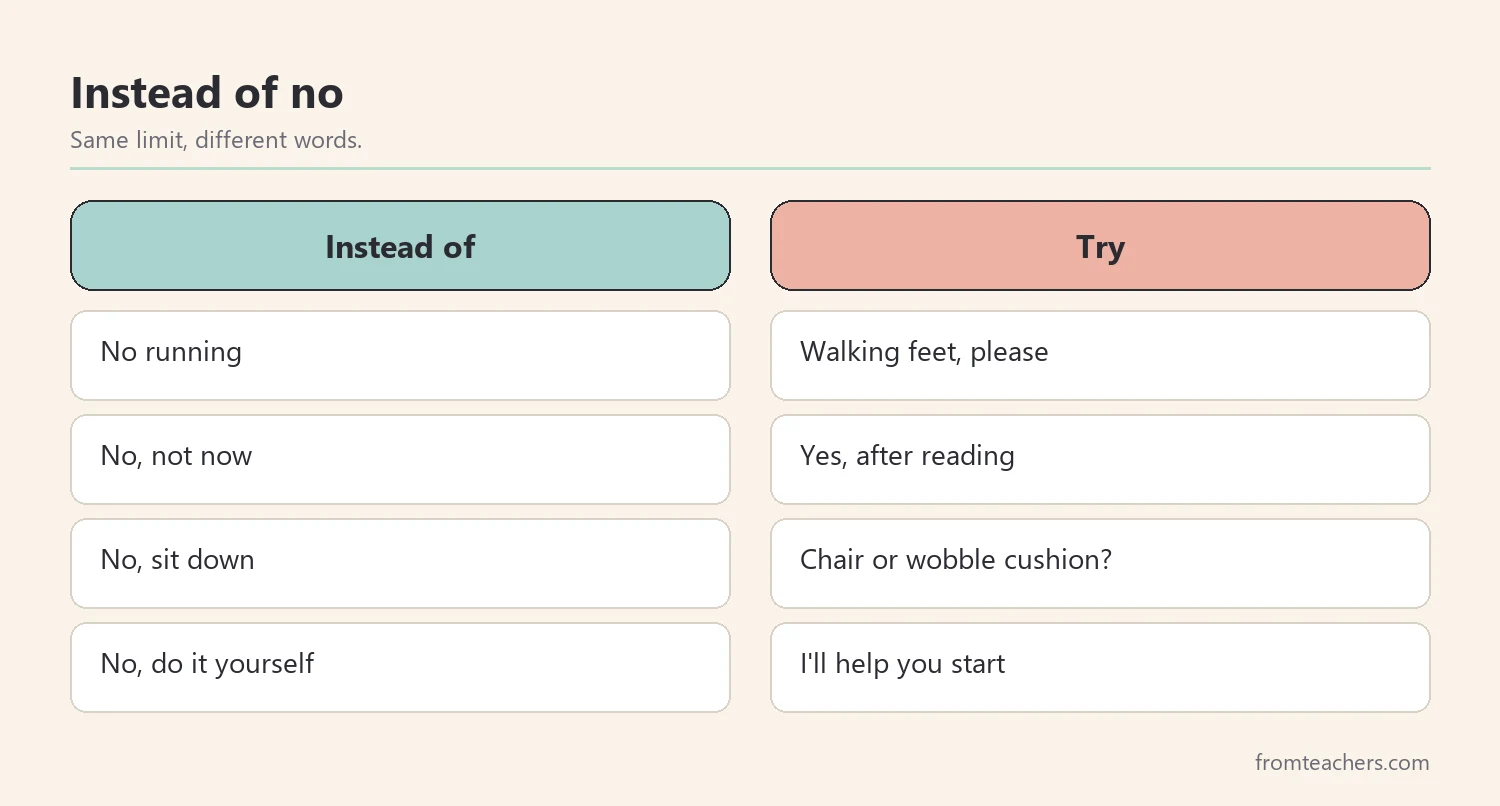
| Instead of | Try |
|---|---|
| No running | Walking feet, please |
| No, not now | Yes, after reading |
| Stop arguing | You can choose this or that |
| No, do it yourself | I’ll help you start |
Also, keep the phrases visible near your desk for the first few weeks. Habits change slowly, especially under stress.
Practicing new phrases under pressure
Most teachers agree with positive phrasing in a calm staff meeting. The hard part is remembering it at 2 pm on a Friday, when three students need you at once. That is why practice matters more than good intentions.
First, pick only two or three phrases to start. Trying all twelve at once usually ends with none of them sticking. Next, write them on a sticky note on your clipboard or lanyard. Then choose one predictable “no” moment, such as requests during independent work, and use your new phrases only there for a week.
After that, notice what happens. Did the student argue less? Did you feel calmer? Small wins build the habit. Finally, add one new phrase each week until the list feels natural.
For example, Sofia’s teacher started with “Yes, after” and “Let’s check the schedule.” She used them only during morning work for the first week. By week three, she noticed she was using them at recess and lunch too, without thinking about it. Her paraprofessional began copying the same words, which made Sofia’s day more predictable from adult to adult.
When “no” is still the right word
Positive phrasing is not about avoiding limits. Some moments need a clear, immediate “no” or “stop”: running toward a street, hurting someone, or touching something dangerous. In these moments, short and calm is best.
Also, “no” is fine when you have already offered choices and the answer is truly no. The goal is to use it less often, so it carries more weight when you really need it. Many teachers find that once their daily “no” count drops, students respond faster when they do hear it.
Common mistakes and how to avoid them
- Promising “yes, after” and forgetting: only promise what you will deliver, and follow through.
- Fake choices: both options must be acceptable to you.
- Long explanations in hard moments: keep words short, explain later.
- Different words from different adults: share a team phrase list.
- Avoiding limits altogether: keep safety limits clear and firm.
Questions teachers and parents ask about what to say instead of no
Is it wrong to say no to students?
No. Clear limits are important. The idea is to reduce how often you say it, so students hear more about what to do.
Will students take advantage if I say yes more?
“Yes, after” and “not yet” keep the same limits. Students still wait and follow the schedule. They just hear it in a calmer way.
What about older students?
The same ideas work with teens, using more mature language. Choices, plans, and “what do you need” are especially useful in middle and high school.
Can parents use these phrases at home?
Yes. Many families use first, then, choices, and “yes, after” at home, which also helps students see the same language in both places.
How long until I see a change?
Some students respond within days. Others need weeks of consistent use. Track your own “no” count for a few days to see your progress.
Related reading: positive alternatives to shame and behavior charts, meltdowns vs tantrums.
A companion resource for what to say instead of no:
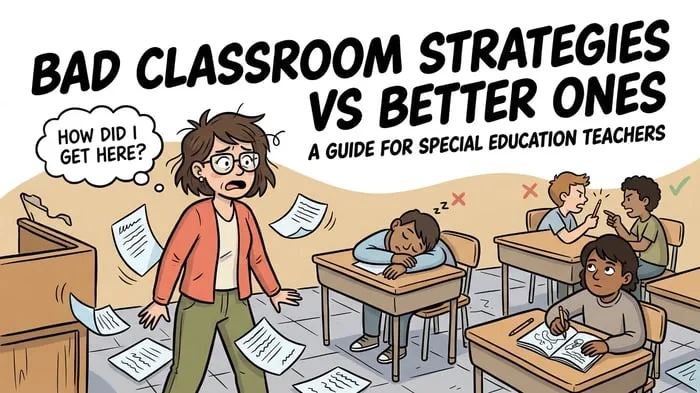
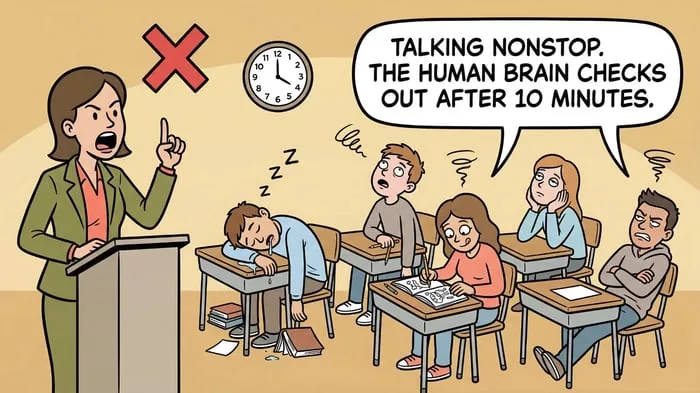
Classroom Management Strategies: Dos & Don’ts for SPED Teachers: a 51-page comic-style guide that pairs a what not to do scene with a do this instead scene, covering engagement, behavior, transitions, differentiation and communication, as a digital PDF to view or print.
You may also need: Positive Reinforcement Tracking Sheet Editable Behavior Data Collection Form.
Sources and scope
- Center on PBIS: information on positive behavioral interventions and supports in schools.
- IRIS Center: free modules on classroom behavior management.
- Intervention Central: free classroom behavior and academic intervention ideas.
- Child Mind Institute: articles on behavior, attention and positive attention.
This list covers everyday classroom language for typical requests and behavior. It does not replace an individual behavior intervention plan or crisis procedures.
Key takeaways
- Learning what to say instead of no keeps limits while reducing power struggles.
- Easy swaps include “Yes, after,” “Walking feet,” and checking the schedule.
- Choices, first, then, and “What do you need?” address the reason behind requests.
- Keep short, firm words for safety and follow any behavior plan.
- Share one phrase list with the whole team for consistency.

Leave a Comment