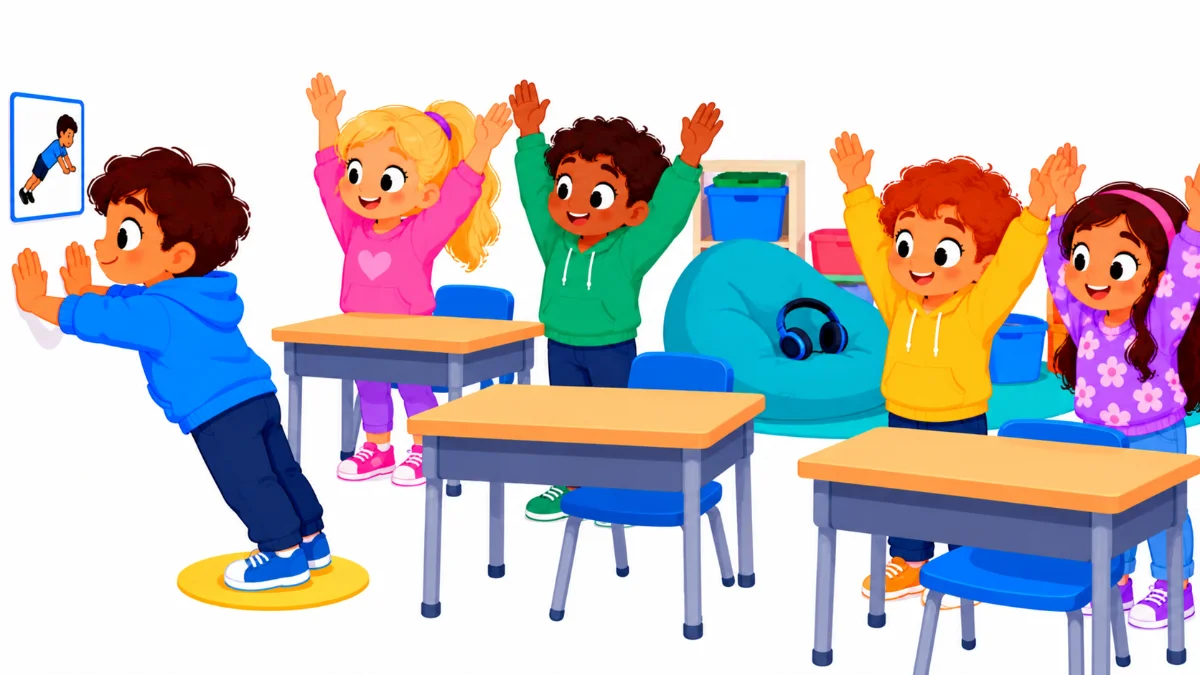

A short list of sensory break ideas for the classroom can stop a hard afternoon from turning into a meltdown or a lost hour of learning. Picture a grade 1 classroom after an indoor recess. Ethan covers his ears at the noise, then starts crashing into the reading rug and bumping classmates. He is not trying to be difficult; his body is asking for something.
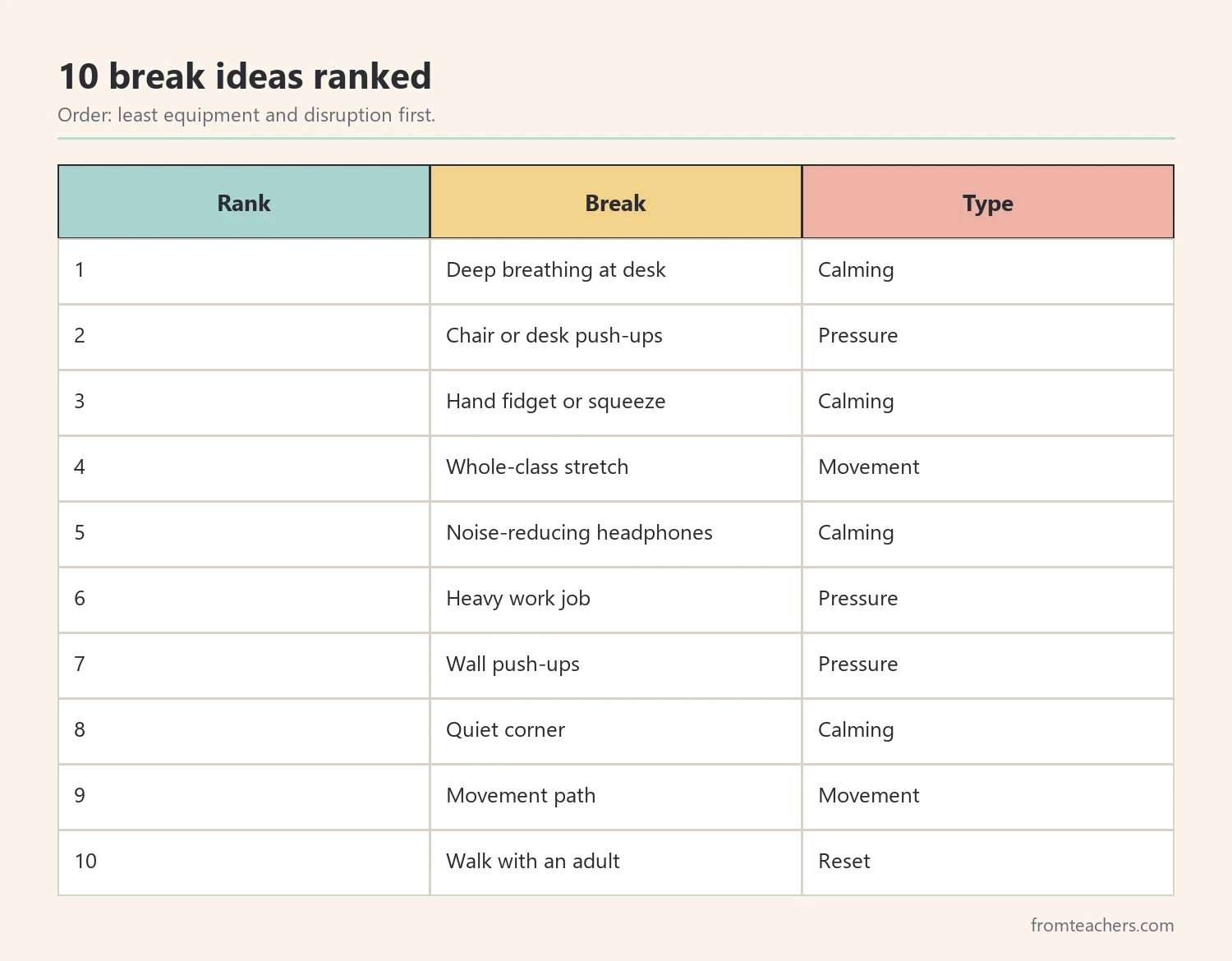
This list ranks ten break ideas by how little equipment and disruption they need, from options you can use right at the desk to ones that need a space or a plan. By the end, you will know what each break is, which students it may suit, how to teach it, and how to track whether breaks help.
Examples are fictional. Sensory needs differ widely. Work with the student’s family and an occupational therapist (OT) where possible, and follow any agreed plan. This is guidance, not a diagnosis or therapy.
At a glance
- Start with breaks that need no equipment.
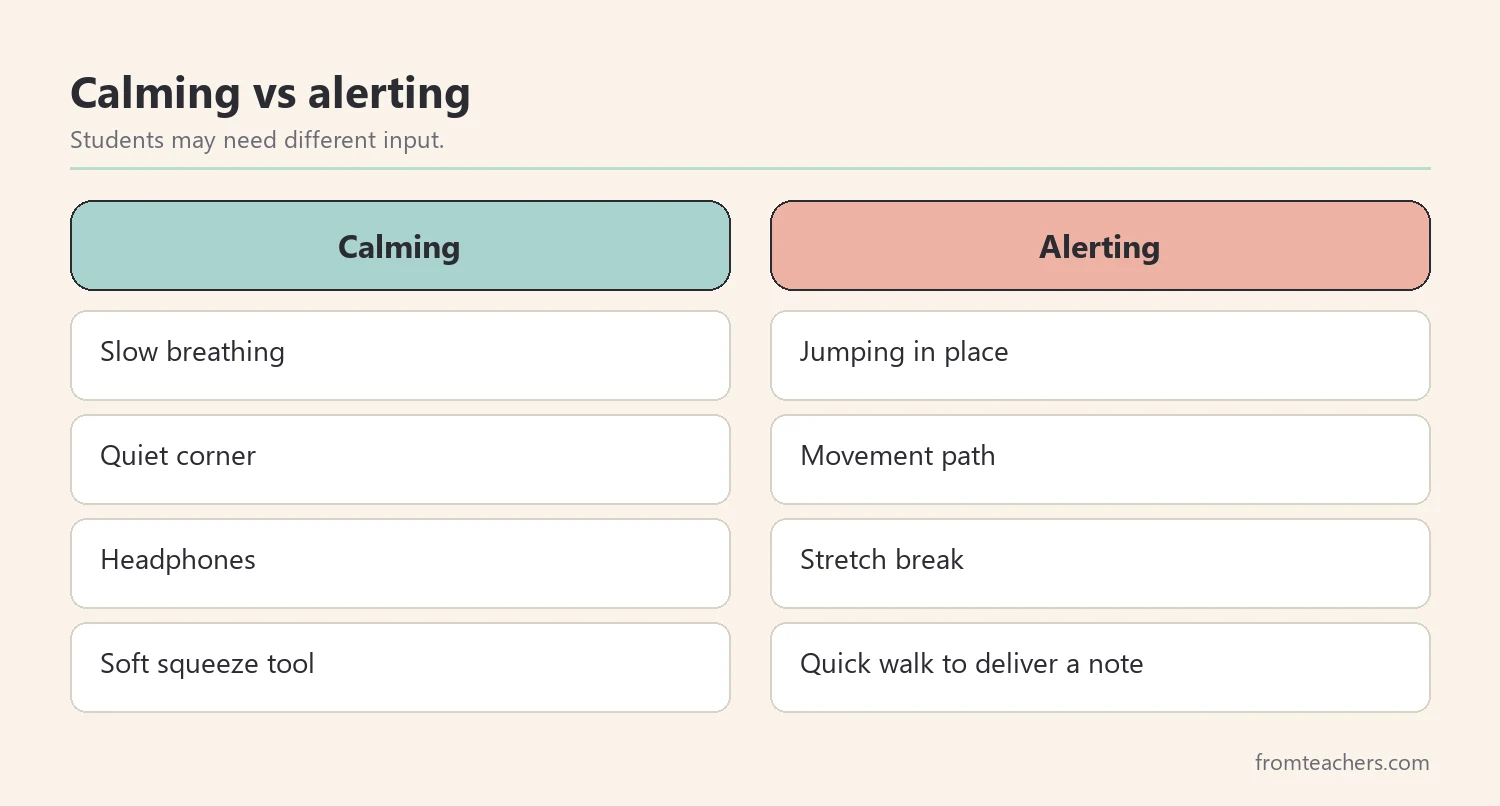
- Offer calming and alerting options; needs differ.
- Teach breaks when calm and post picture cards.
- Schedule breaks before predictable hard times.
- Plan the return and track what helps.
How we ranked these ideas
We did not rank breaks by how well they “work,” because responses are highly individual. Instead, we used two practical criteria: how little equipment the break needs, and how little it disrupts the rest of the class. Desk-based breaks come first. Breaks that need a corner, a hallway, or an adult come later.
In addition, the list includes both calming and alerting options. Some students need to settle down after too much input, while others need more movement to feel ready to learn. An OT can help identify which kind a student usually needs.
The ready-made option: a sensory processing guide for parents and teachers
If you want a fuller picture of sensory needs, the sensory processing guide with strategies for parents and teachers is a 30-page guide in four sections. It explains what sensory processing differences are, how hypersensitive and hyposensitive profiles show up, and how they affect home, classroom, and social life.
It also has a parent section on sensory-friendly routines and calm spaces, and an educator section on classroom adjustments, sensory breaks and tools, and accommodations across art, music, PE, lunch, and recess.
1. Deep breathing at the desk
What it is: slow breaths with a visual, such as tracing a square or “smelling the flower, blowing the candle.”
May suit: students who feel overwhelmed or anxious.
How to teach it: practice as a whole class when everyone is calm, so it is familiar when needed.
Example: Ethan’s class practiced “square breathing” every morning. Later, he used it on his own after a noisy assembly.
2. Chair or desk push-ups
What it is: pushing down on the chair seat to lift slightly, or pushing palms against the desk.
May suit: students who seek heavy pressure or movement.
How to teach it: model a few slow repetitions and set a number, such as five.
Example: Ethan did five desk push-ups before writing. He settled into the task more quickly.
3. Hand fidget or squeeze tool
What it is: a quiet item to squeeze or manipulate, such as a stress ball or putty.
May suit: students who focus better with busy hands.
How to teach it: set rules: quiet, at the desk, a tool not a toy.
Example: Ethan squeezed putty during read-alouds and listened without leaving the rug.
4. Stretch break
What it is: a short whole-class stretch, such as reaching high, touching toes, or rolling shoulders.
May suit: the whole class, especially after long seated work.
How to teach it: use the same short sequence so it becomes a routine.
Example: A two-minute stretch between math and reading helped the whole class, not only Ethan.
5. Noise-reducing headphones
What it is: headphones or earmuffs that reduce sound.
May suit: students sensitive to noise.
How to teach it: keep them in an easy-to-reach place and teach the student when to use them.
Example: Ethan wore headphones during indoor recess. His ear covering and crashing became less frequent.
6. Heavy work job
What it is: carrying books to the library, pushing a cart, or moving chairs.
May suit: students who seek movement and pressure.
How to teach it: make it a real classroom job so it feels purposeful, not like a punishment.
Example: Ethan carried the library book bin each afternoon. He returned calmer, and the class library bin was always delivered on time, which made him proud of the job.
7. Wall push-ups
What it is: pushing against a wall with arms straight, then bending and straightening.
May suit: students who need more input than desk push-ups.
How to teach it: mark a spot on the wall and post a picture card.
Example: Ethan used the wall spot before group work. The teacher noticed fewer bumps into classmates.
8. Quiet corner
What it is: a calm, low-stimulation space with soft seating and a few calming items.
May suit: students who need to reduce input.
How to teach it: teach that the corner is for calming, not punishment, and use a timer to return.
Example: Ethan used the corner for five minutes after lunch on loud days, then rejoined the class when the timer rang.
9. Movement path
What it is: a short route with simple actions, such as hopping, stepping, or wall pushes, often marked in a hallway.
May suit: students who need a bigger movement break.
How to teach it: check with your school about space and supervision, and teach the route step by step.
Example: Ethan’s class used a hallway path twice a day. Ethan used it with a buddy, and other students who needed movement joined at set times.
10. Walk with an adult
What it is: a short walk outside the classroom, with a trusted adult.
May suit: students who are close to overload and need a change of setting.
How to teach it: plan it with the team, including signals, staff, and route.
Example: On very hard days, Ethan walked to the office with a paraprofessional to deliver a note, then returned ready to work.
Teaching sensory break ideas for the classroom as routines
Breaks work best when they are taught and predictable. Teach each break when the class is calm. Post picture cards. Then decide whether breaks are scheduled, requested, or both.
In addition, give students a way to ask, such as a break card. Many students cannot explain what they need when they are already overwhelmed.
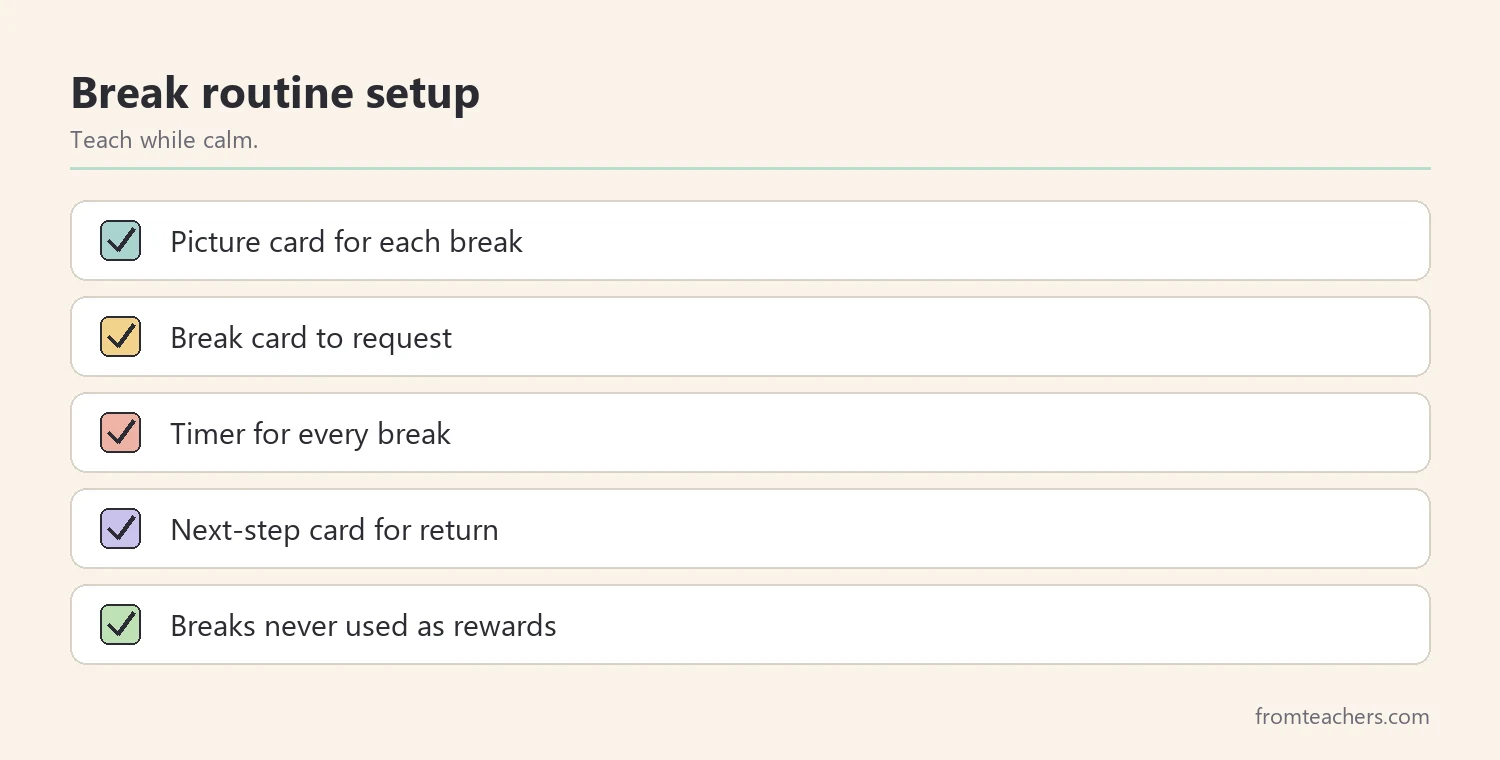
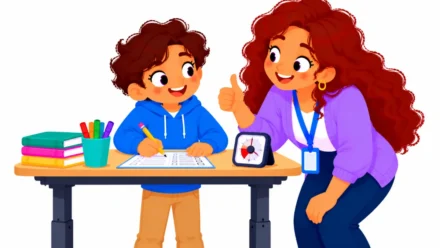
Also, plan the return. A timer and a clear “next step” card help students come back to learning instead of drifting.
Tracking whether breaks help
Track a few simple things: how often breaks are used, which ones, and what happens afterward. Over a few weeks, patterns usually appear.
Here is Ethan’s record across four weeks.
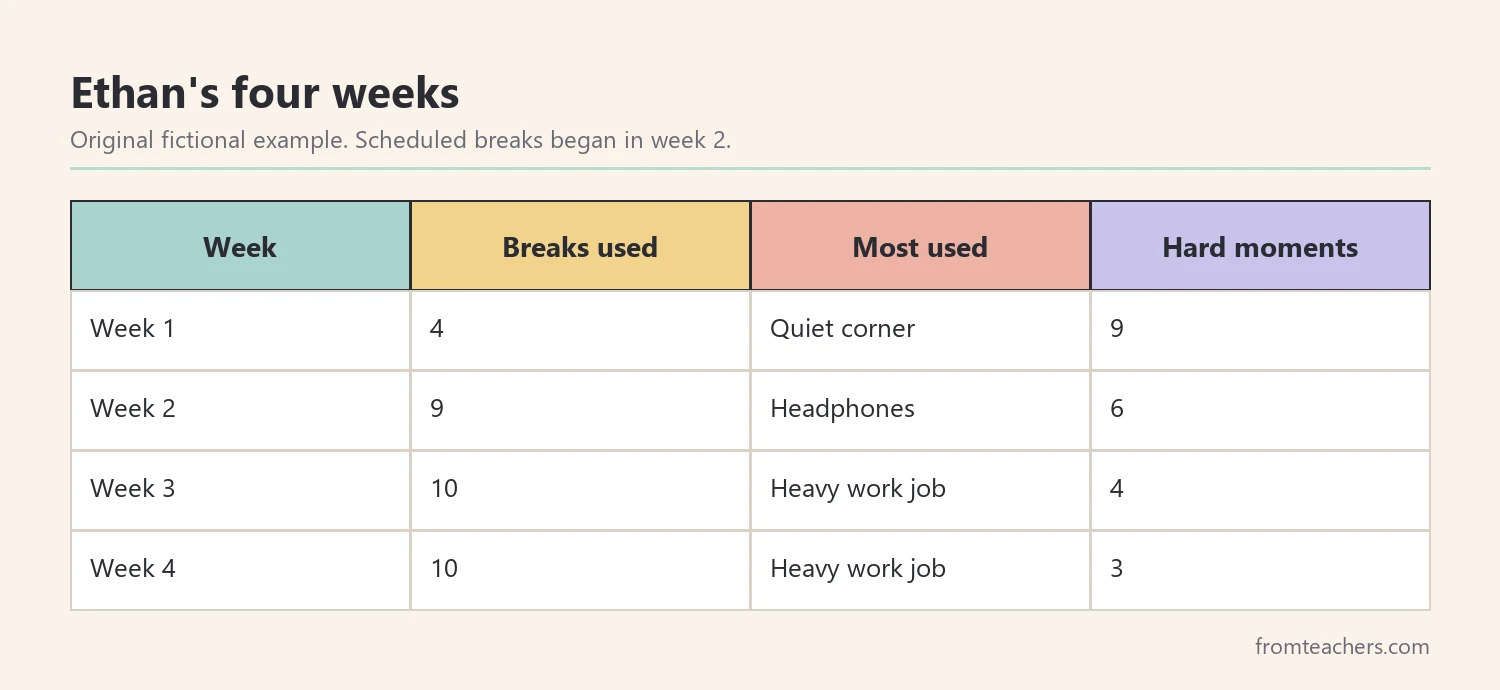
The pattern was helpful. Scheduled breaks before hard times, such as after indoor recess, reduced difficult moments. As a result, the team made the headphones and heavy work job part of his daily routine.
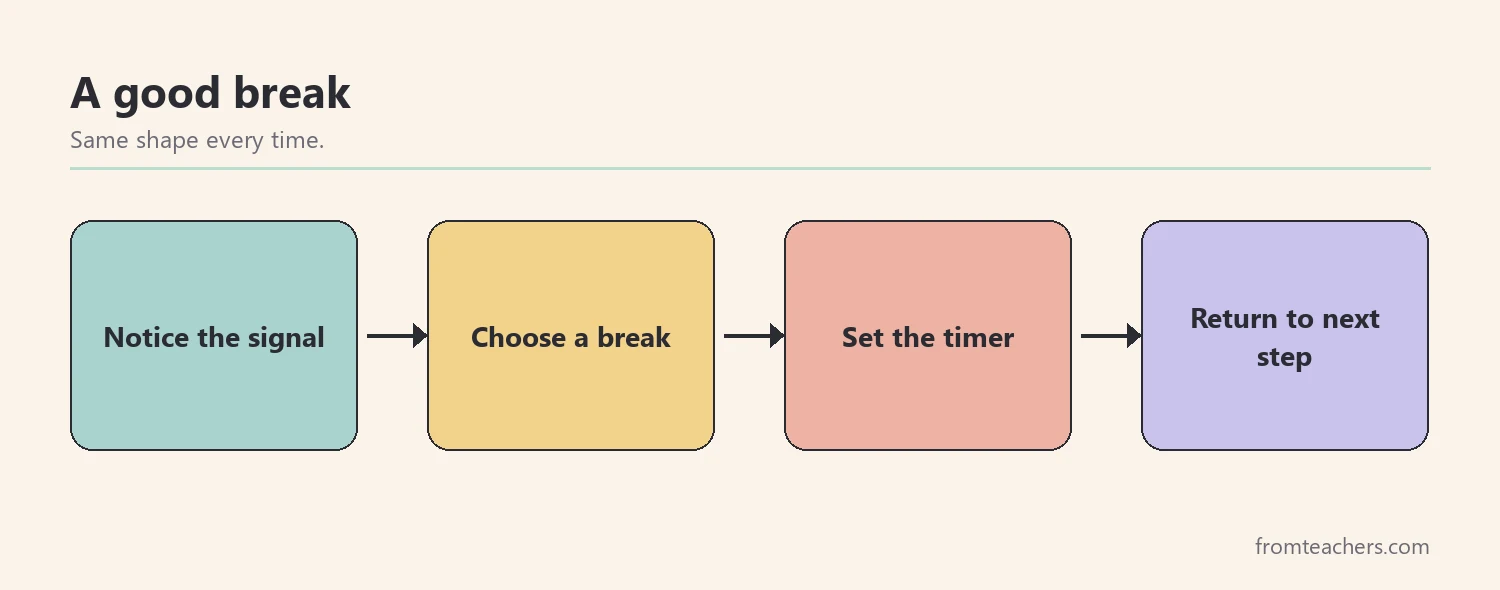
Noticing the signals before a break is needed
Breaks work best when adults and students learn to spot early signals. Waiting for a meltdown means the student has already gone past the point where a short break helps easily.
First, watch for patterns. Common signals include covering ears, rocking, crashing into furniture, chewing on clothing, putting the head down, or suddenly becoming very silly. Each student has a personal set, and they often appear at predictable times, such as after lunch, during assemblies, or before tests.
Next, write the signals down with the student and family. A short “my signals” card, with two or three signs and two or three helpful breaks, gives every adult the same information. Substitutes and specials teachers find it especially useful.
Then, teach the student to notice their own signals. Younger children might use a simple feelings thermometer or traffic light. Older students can learn to say “I need a break” or show a card before things build up.
Finally, celebrate early requests. When a student asks for a break at the first signal, that is a major self-regulation skill. Noticing it out loud, quietly, helps the habit grow.
Working with families and specialists
Sensory needs show up at home too. Share which breaks help at school, and ask families what helps at home. Moreover, involve the OT when possible. OTs can assess sensory needs and suggest a personalized plan.
Finally, keep breaks respectful. They are supports, not rewards or punishments. A student should not lose a needed break because of behavior, unless the team plan says otherwise.
It also helps to think about the environment itself. Bright lights, constant noise, strong smells, and cluttered walls can all add to sensory load. Small changes, such as softer lighting, a quieter corner, or fewer items on the walls, may reduce how often students need breaks in the first place.
Common mistakes and how to avoid them
- Waiting until a student is overwhelmed. Fix: schedule breaks before predictable hard times.
- Using breaks as rewards. Fix: treat them as supports that are always available.
- No return plan. Fix: use a timer and a next-step card.
- One break for everyone. Fix: offer calming and alerting options.
- Not involving the OT. Fix: ask for input on individual needs.
Questions teachers and parents ask about sensory break ideas for the classroom
How long should a sensory break last?
Many classroom breaks last a few minutes. The right length depends on the student and the activity. A timer helps with returning.
Do sensory breaks disrupt the class?
Desk-based breaks and whole-class stretches cause little disruption. Larger breaks need planning, but they can prevent bigger disruptions later.
Are sensory breaks only for autistic students?
No. Many students, including those with ADHD and those without any diagnosis, benefit from movement and calm breaks.
What if a student uses breaks to avoid work?
Track patterns. If breaks happen mainly before certain tasks, the task may need adjusting. Pair breaks with a clear return plan.
Can these breaks be used at home?
Yes. Breathing, stretching, heavy work chores, and a calm corner all translate well to home routines.
Related reading: Managing Sensory Overload: Practical Strategies for Autism and ADHD, Meltdowns vs Tantrums, and Understanding Autism ADHD Meltdowns.
You may also need: Morning Routine Visual Steps: Visual Schedule Cards.
A companion resource for sensory break ideas for the classroom:
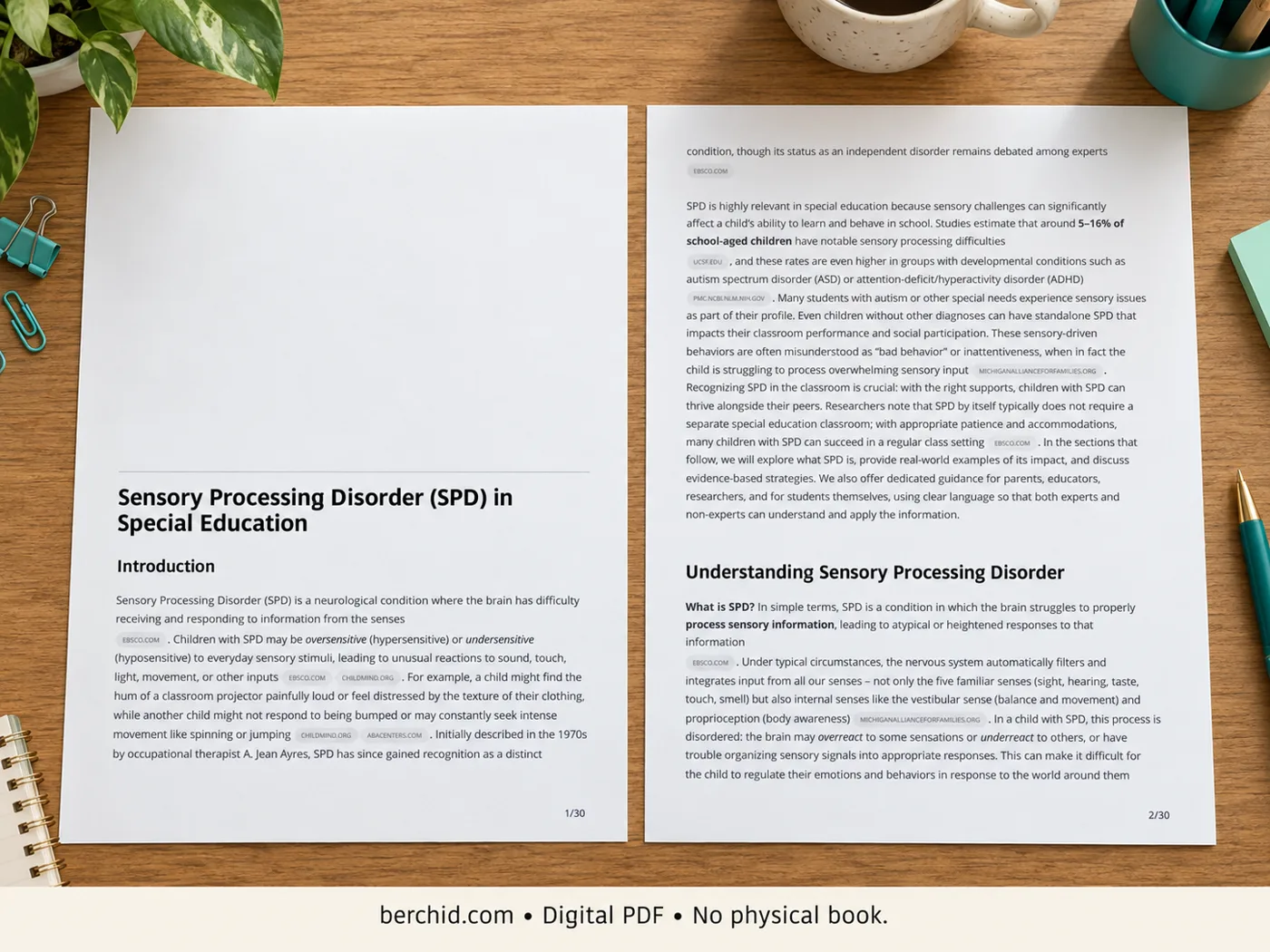
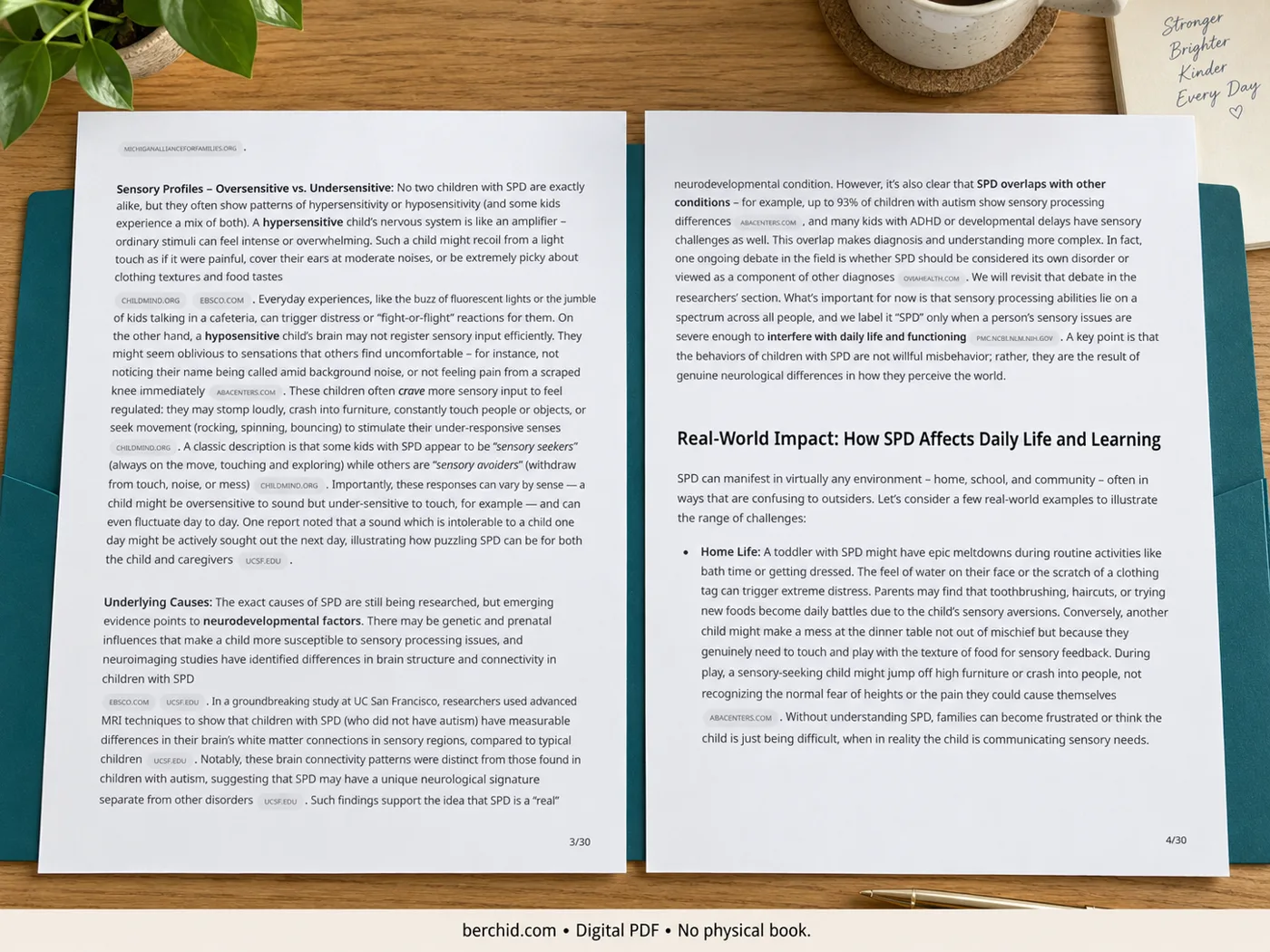
Sensory Processing Disorder (SPD) Guide: Strategies for Parents & Teachers: a 30-page guide in four sections: an overview of sensory processing differences and profiles, a parent section on sensory-friendly routines and calm spaces, and an educator section on classroom adjustments, sensory breaks and tools, and accommodations across art, music, PE, lunch and recess.
Sources and scope
- American Occupational Therapy Association: information about occupational therapy, including sensory and school-based practice.
- STAR Institute: information on sensory processing for families and professionals.
- Understood.org: articles for families and teachers on sensory processing challenges.
- AFIRM Modules: learning modules on evidence-based practices for autistic learners.
This list covers simple classroom sensory breaks. It does not replace assessment or individualized plans from an occupational therapist, and it is not a medical treatment.
Key takeaways
- Start with breaks that need no equipment, like breathing and desk push-ups.
- Offer both calming and alerting options.
- Teach breaks as routines, with picture cards and a return plan.
- Schedule breaks before predictable hard times and track what helps.
- Work with families and the OT, and never use breaks as rewards.







Leave a Comment