

Knowing what to do when sad helps children move through a hard feeling instead of getting stuck in it. Picture a second grader whose best friend has just moved to another school. At morning circle she sits very still, her eyes fill with tears, and she will not talk. She is not misbehaving. She is sad, and she needs gentle tools and caring adults to help her through it.
This guide shows you how to teach what to do when sad in six steps: notice the feeling, take slow breaths, find a comforting activity, talk to someone and use kind self-talk, do something that helps, and ask for more support when needed. By the end, you will have a soft, simple routine for a classroom, calm corner, or home.
Examples are fictional. Adapt to the student’s goals and agreed supports. This is guidance, not a diagnosis.
At a glance
- Feeling sad is a normal part of being human.
- Naming sadness is the first step to feeling supported.
- Slow breaths and comforting activities help the body feel calm.
- Talking to a trusted person helps children feel less alone.
- Ongoing or intense sadness needs adult attention and support.
1. Start what to do when sad by naming the feeling
First, help children recognize what sadness feels like. Common signs include a heavy chest, a slow body, tears or wanting to cry, and becoming quiet or withdrawn. Many children feel the feeling before they have words for it.
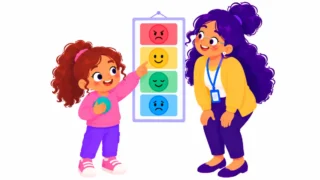
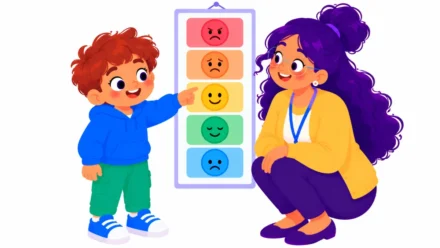
Next, teach simple words to name it: “I feel sad right now.” Naming sadness helps the brain understand what is needed. A feelings chart with faces can help younger children or those who find words hard.
Also, make it clear that sadness is allowed. Avoid “Don’t cry” or “Cheer up.” Instead, say “It looks like you feel sad. That’s okay.” When adults accept the feeling, children are more open to learning what to do when sad.
In addition, practice naming feelings during calm times. Read a picture book, pause at a sad moment, and ask, “How do you think she feels? Where might she feel it in her body?” Practice like this makes real moments easier, because the child already knows the first step of what to do when sad.
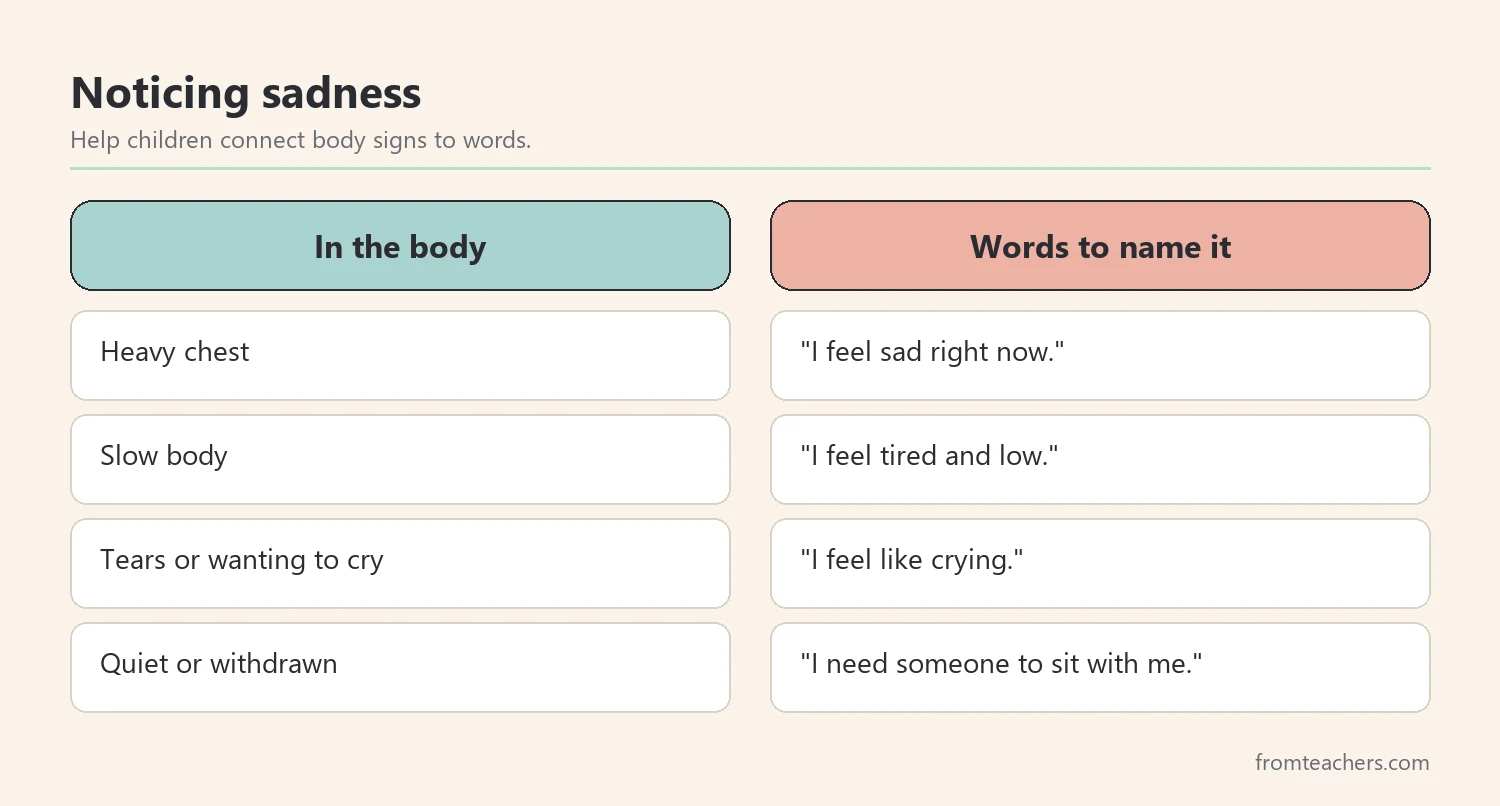
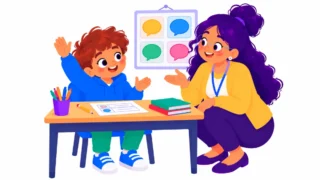
Worked example. Lily is a fictional student in grade 2. Her teacher, Ms. Grant, notices that Lily is quiet and teary after her best friend moves away. During a calm moment, Ms. Grant kneels beside her and says, “It looks like you feel sad.” Lily nods and whispers, “I feel sad right now.”
2. Teach slow, gentle breaths
Next, teach a soft breathing pattern. Children breathe in through the nose, out through the mouth, and let their shoulders relax. Soft breathing helps the body feel safe and soothed.
Then, model it calmly. Breathe slowly with the child rather than telling them to breathe. Children follow the pace of the adult beside them, so a slow, steady breath from you often helps more than any words.
Also, keep it short and gentle. Three slow breaths is a good start. This is not about stopping the tears. It is about helping the body settle, so the child can take the next step in the plan for what to do when sad.
A visual makes the steps easy to follow. The what to do when sad poster with sadness coping steps for kids gives seven gentle steps, each with a short “why this helps” note.
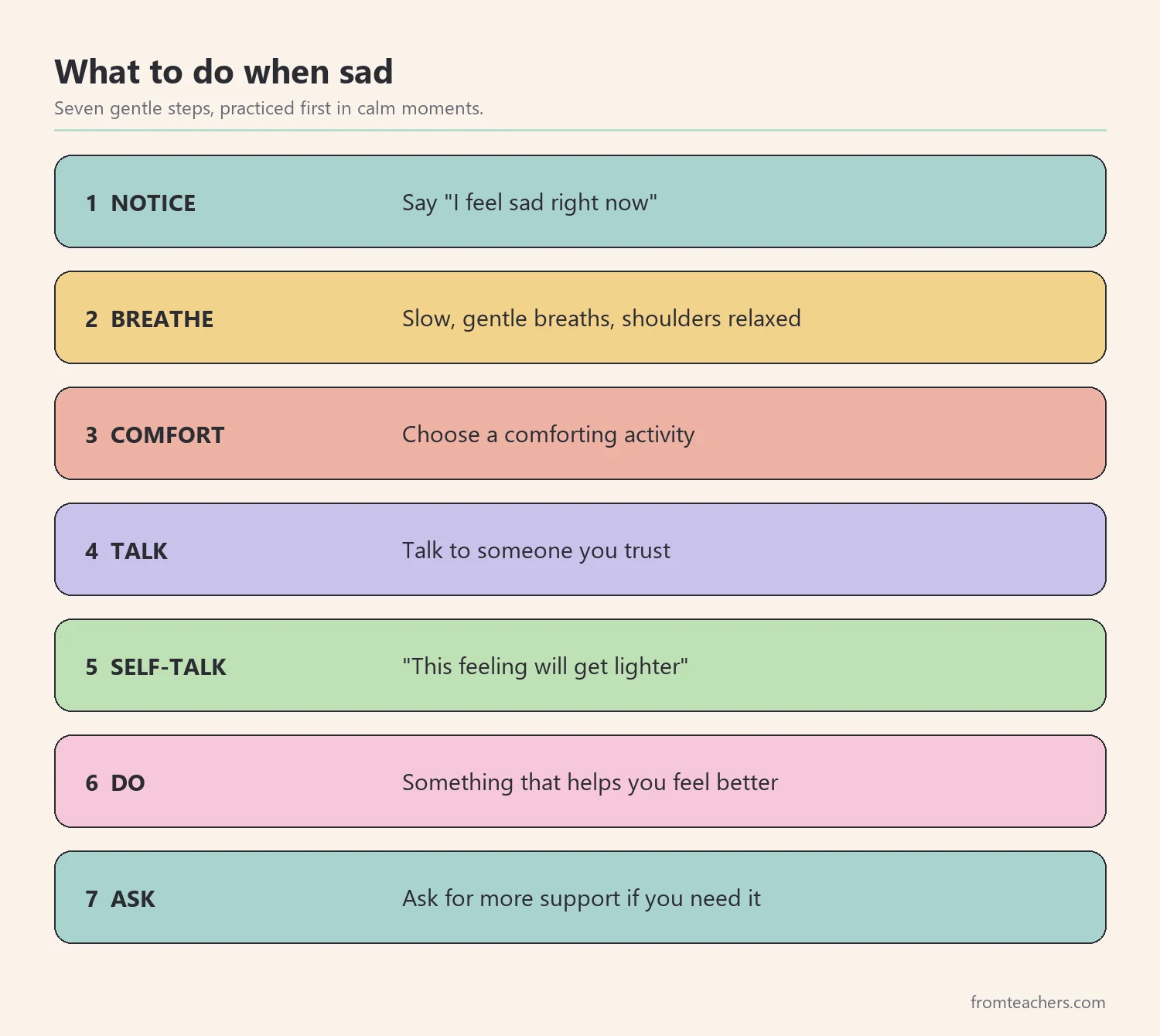
Worked example. Ms. Grant sits beside Lily and breathes slowly in through her nose and out through her mouth. After a moment, Lily joins her. They take three slow breaths together, and Lily’s shoulders drop a little.
3. Add comfort to what to do when sad
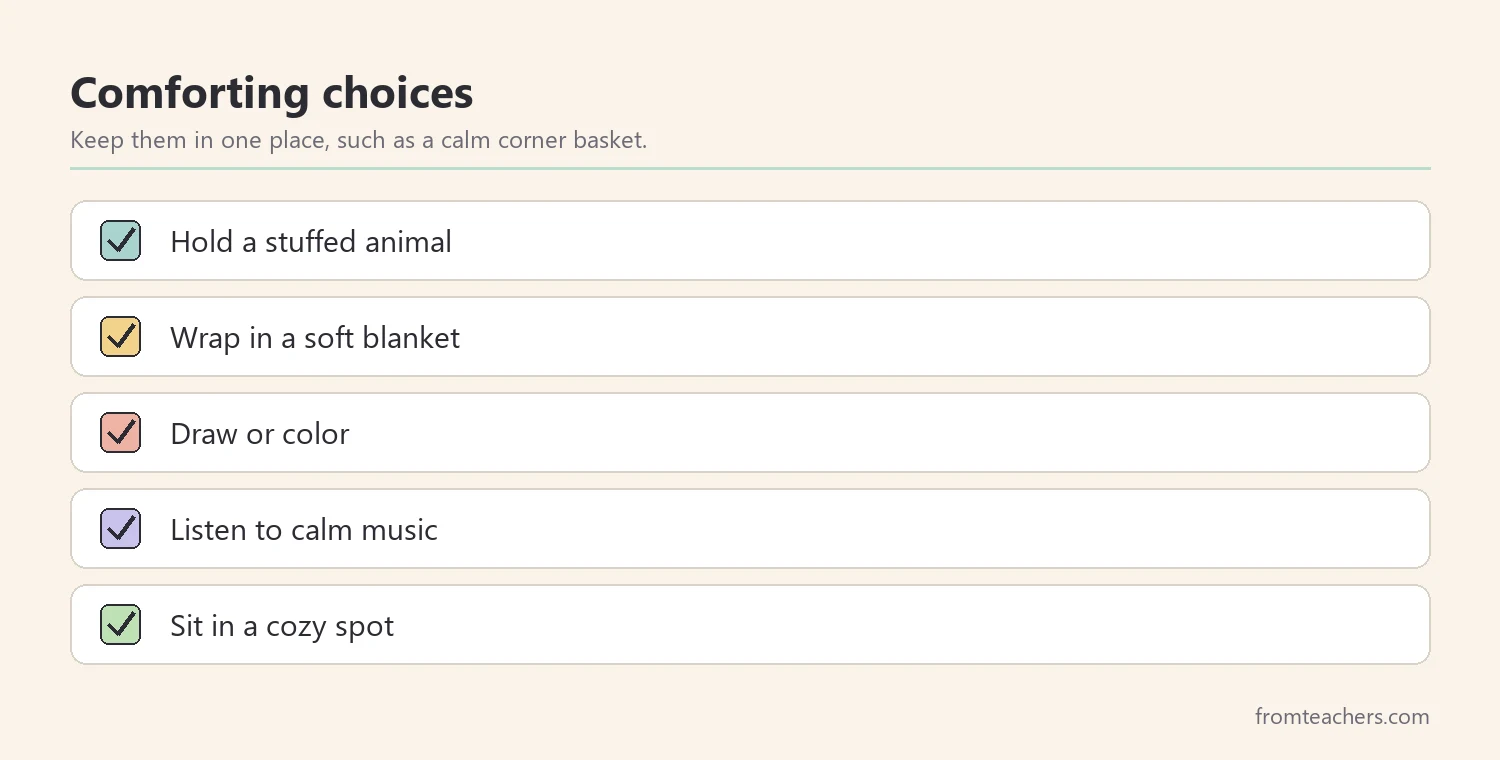
Next, give the child a few comforting choices. Options can include holding a stuffed animal, wrapping in a soft blanket, drawing or coloring, listening to calm music, or sitting in a cozy spot. Comforting activities give the body a sense of warmth and care.
Then, let the child choose. Choice helps children feel some control when a big feeling has taken over. Keep the options in one place, such as a calm corner basket, so they are easy to reach.
Also, set gentle limits. A few minutes with a comforting activity can help a lot, and then the child can rejoin the group with support. If the child is still very upset, an adult checks in rather than leaving them alone for a long time.
In addition, think about privacy. Many sad children do not want an audience. A quiet, semi-private calm corner lets a child use the steps for what to do when sad without feeling watched.
Worked example. Lily chooses to sit in the calm corner with a soft blanket and draw a picture. Ms. Grant sets a gentle five-minute timer and checks in when it rings. Lily shows her a drawing of herself and her friend.
4. Talk to someone you trust and use kind self-talk
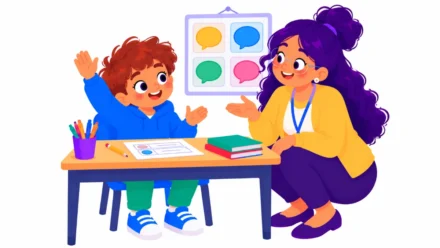
Sharing sadness helps children feel supported, not alone. So, teach simple words for reaching out: “I feel sad.” “I need someone to sit with me.” “Can I talk to you about something?” Short scripts are easier to use when feelings are big.
Then, listen more than you talk. Reflect the feeling, “You miss your friend,” and avoid rushing to fix it. Often, feeling heard is what the child needs most.
Also, teach kind self-talk. Phrases such as “It’s okay to feel sad,” “My feelings matter,” “This feeling will get lighter,” and “I can ask for help” bring comfort and reduce emotional heaviness. Practice them together, then encourage the child to say them quietly.
| Instead of | Try |
|---|---|
| “Don’t be sad.” | “It’s okay to feel sad.” |
| “Cheer up!” | “I’m here with you.” |
| “It’s not a big deal.” | “That sounds really hard.” |
Meanwhile, identify trusted people at school. A teacher, a counselor, or a familiar aide can all be part of the plan. Children should know exactly who they can go to when they need to talk about what to do when sad.
Worked example. Lily tells Ms. Grant, “I miss Maya.” Ms. Grant answers, “You miss your friend. That makes sense.” Together they choose one phrase for Lily’s card: “This feeling will get lighter.”
5. Do something that helps you feel better
Once the child feels a little calmer, gentle action can help. Options include taking a short walk, playing quietly, reading a favorite book, drinking some water, or stretching and moving the body. Positive actions can slowly lift mood.
Next, keep expectations soft. The goal is not to make sadness disappear instantly. It is to help the child feel a little better and ready to rejoin the day.
Also, plan an easy return to class. A simple, low-pressure task, such as handing out papers or reading with a partner, helps the child reconnect. Thank them for using their steps. Recognizing the effort tells the child that knowing what to do when sad is a strength.
In addition, notice what works for each child. Some children feel better after moving, while others prefer quiet reading. Over time, you and the child build a personal list for what to do when sad.
Worked example. After her drawing, Lily walks with Ms. Grant to deliver a note to the office. On the way back, she drinks some water. She rejoins the class for partner reading and smiles once at her partner.
6. Know what to do when sad feelings need more support
Sometimes the steps are not enough, and that is okay. Teach children that asking for more help is a healthy and brave choice. Give them words: “I still feel sad. Can you help me?” “I need a break.” “Can I talk to the counselor or teacher?”
Next, watch for signs that a child needs more than classroom support. Sadness that lasts many days, changes in eating or sleeping, losing interest in favorite activities, or talk of hurting themselves all need prompt attention. Follow your school’s procedures and involve the counselor, the family, and qualified professionals.
Also, keep families informed. A short, caring message about how the child is doing and which steps help gives parents tools to use at home. Shared language helps children practice what to do when sad in more places.
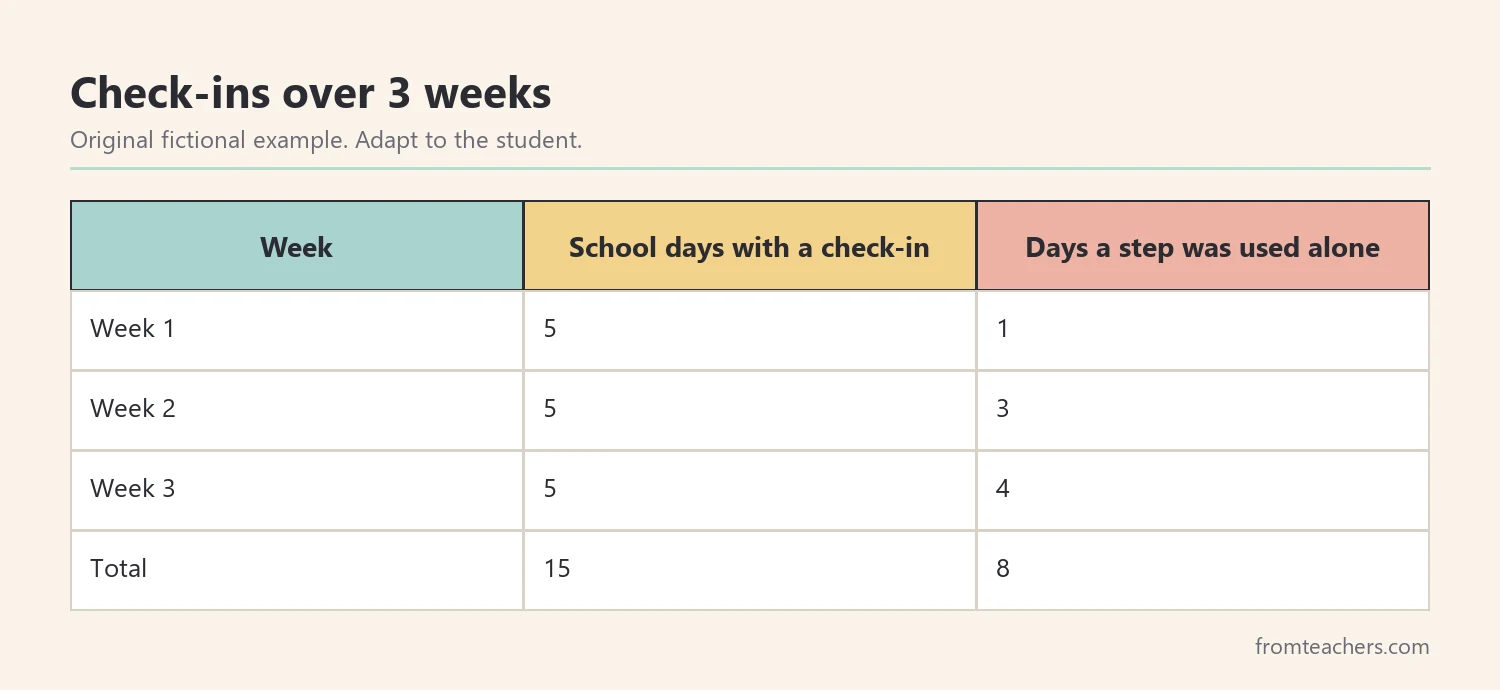
Worked example. Ms. Grant checks in with Lily each school day for three weeks. Lily uses a step on her own on 1 day in week 1, 3 days in week 2, and 4 days in week 3, which is 8 of 15 days. Ms. Grant also shares the routine with Lily’s family and lets the school counselor know about the move.
Using the steps at home
Families can use the same gentle steps at home. A cozy spot with a blanket, a favorite book, and a short list of the steps can become a safe place to go when sad. Parents can model the steps too: “I feel sad today. I’m going to take some slow breaths.”
Also, encourage families to listen without rushing. Sitting quietly with a child, or saying “I’m here,” often helps more than advice. Feeling sad is a normal part of being human, and with gentle support and healthy tools, sad feelings can soften over time.
Adapting the steps for different children
Children express sadness in different ways. Some cry openly, some go very quiet, and some seem irritable instead. So, watch for the child’s own pattern rather than expecting one picture of sadness.
Also, adapt the steps to the child’s language and needs. For a child who uses few words, use picture cards for each step of what to do when sad and let them point. For a child with sensory needs, offer a weighted lap pad or noise-reducing headphones in the calm corner if those are already part of their plan.
In addition, keep the routine short at first. A young child might use only two steps, such as naming the feeling and holding a comfort object. That is a real start. Add more steps of what to do when sad as the child grows more confident.
Common mistakes and how to avoid them
- Telling children not to cry. They learn to hide feelings. Fix: name and accept the sadness.
- Rushing to fix it. The child feels unheard. Fix: listen and reflect first.
- Leaving the child alone too long. Sadness can grow. Fix: check in regularly.
- Too many choices. The child feels overwhelmed. Fix: offer a few comforting options.
- Missing warning signs. Serious needs go unnoticed. Fix: watch for lasting changes and involve the counselor.
Questions teachers and parents ask about what to do when sad
Is it okay for children to feel sad at school?
Yes. Sadness is a normal emotion. The goal is to help children feel safe, supported, and able to use healthy tools, not to make sadness go away immediately.
What age are these steps for?
Young children can use simple steps like breathing and holding a comfort object. Older children can use the full routine, including self-talk and asking for help. Adjust the words to the child.
How is sadness different from depression?
Everyday sadness usually eases with time and support. Sadness that lasts a long time or affects daily life may need professional assessment. Talk with the school counselor or a qualified professional if you are concerned.
Should I tell the family?
Usually yes, especially if sadness is new or lasting. A calm, caring message helps families support the child at home and share anything that might explain the change.
Where should the poster go?
A calm corner, counseling office, or quiet reading area works well. Place it at the child’s eye level so it is easy to follow.
Related reading: Essential Trauma-Informed Teaching Strategies for Modern Classrooms, Building Stronger School Counseling Programs: A Framework for Student Success, and How Teachers Communicate With Parents in Special Education: Building a Strong Partnership.
A companion resource for what to do when sad:
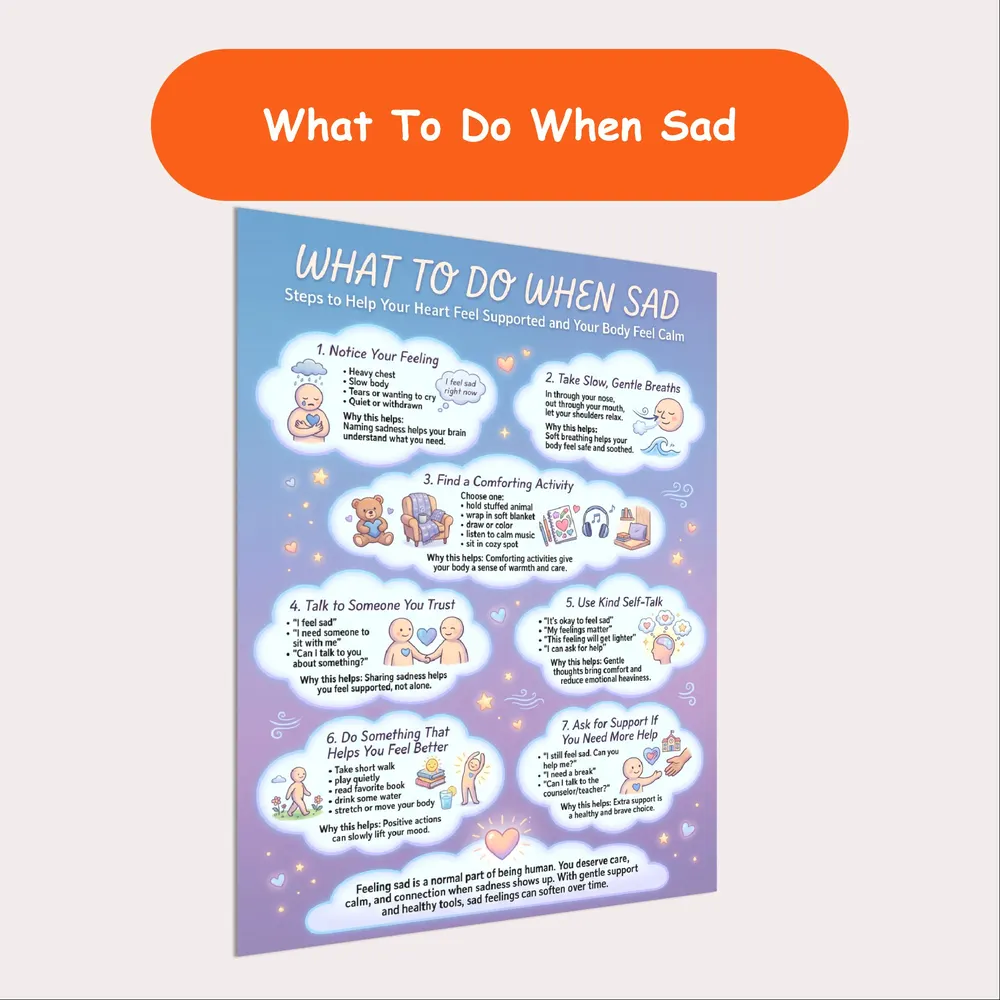
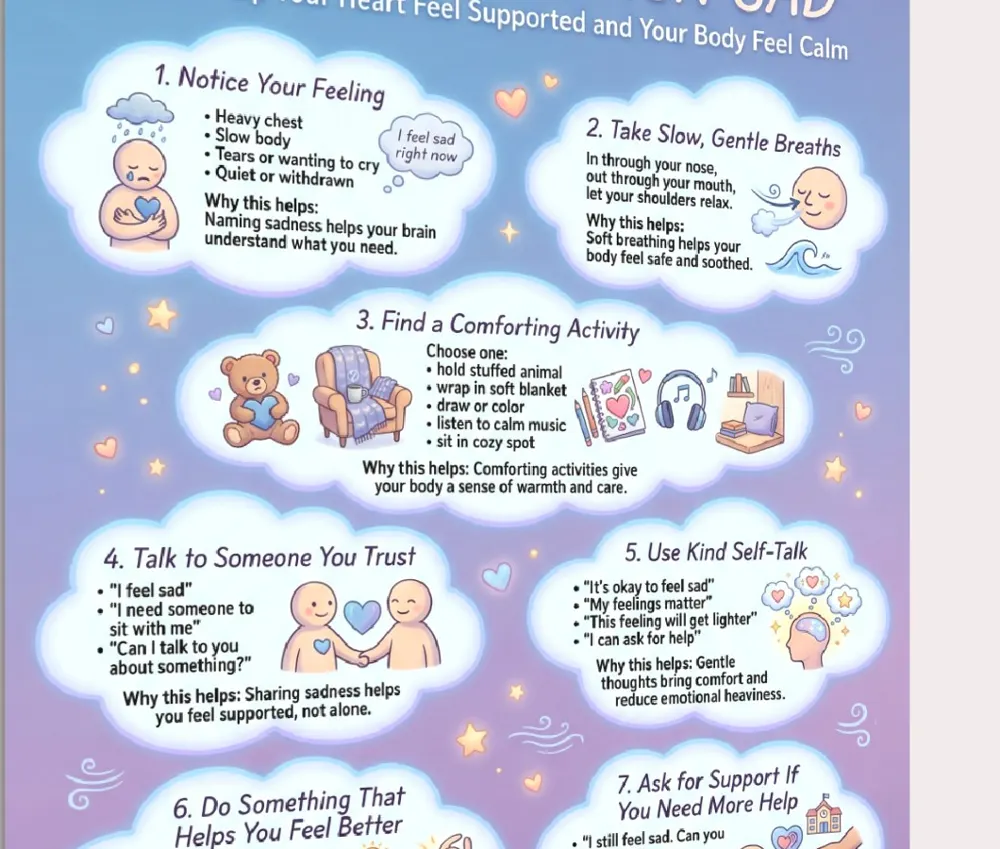
What to Do When Sad Poster: a soft, supportive printable with seven gentle steps for what to do when sad, each with a short “why this helps” note. It fits a calm corner or counseling office.
Sources and scope
- CASEL: a leading organization for social and emotional learning.
- HealthyChildren.org, American Academy of Pediatrics: parenting information on children’s emotional health.
- Child Mind Institute: information for families and educators on children’s mental health.
- National Institute of Mental Health: public information on mental health conditions, including in children.
This guide covers everyday coping steps for sadness at school and home. It does not replace mental health assessment, counseling, or treatment, and any concern about a child’s safety should be raised with the school team and qualified professionals right away.
Key takeaways
- Teach what to do when sad with gentle, simple steps.
- Name and accept the feeling before anything else.
- Use slow breaths and comforting choices to help the body settle.
- Listen, reflect, and teach kind self-talk.
- Watch for lasting sadness and involve the counselor and family.



Leave a Comment