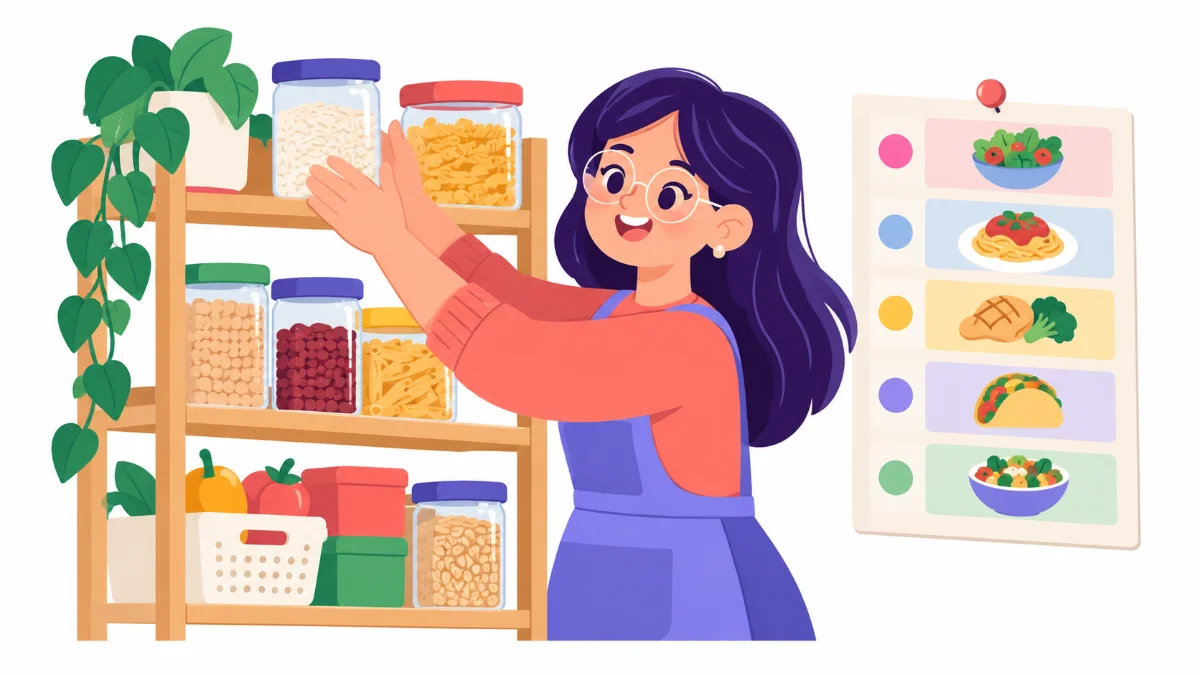

Kitchen basics are what turn cooking from a stressful guessing game into a calm weekly routine. Picture a nineteen-year-old in his first month living more independently. He can follow a recipe, but every evening starts the same way: an empty fridge, no plan, and another expensive takeout order.
This guide gives you five steps to teach kitchen basics to teens and young adults: organize the kitchen, stock a simple pantry, plan a week of meals, prep in batches, and use sauces and seasoning to keep meals interesting. Also, it works for families at home and for teachers running life skills or transition programs.
Examples are fictional. Adapt to the learner’s goals and agreed supports. This is guidance, not a diagnosis.
At a glance
- An organized kitchen saves time and lowers stress before cooking starts.
- A small pantry of staples makes many simple meals possible.
- A short weekly plan prevents the “nothing to eat” moment.
- Batch prep turns one session into several easy meals.
- Sauces and seasoning keep the same staples interesting.
1. Organize the kitchen with simple zones
First, make the kitchen easy to use. Many new cooks give up because they cannot find things. For example, organizing by zones, where each area holds the items used there, is one of the most practical kitchen basics you can teach.
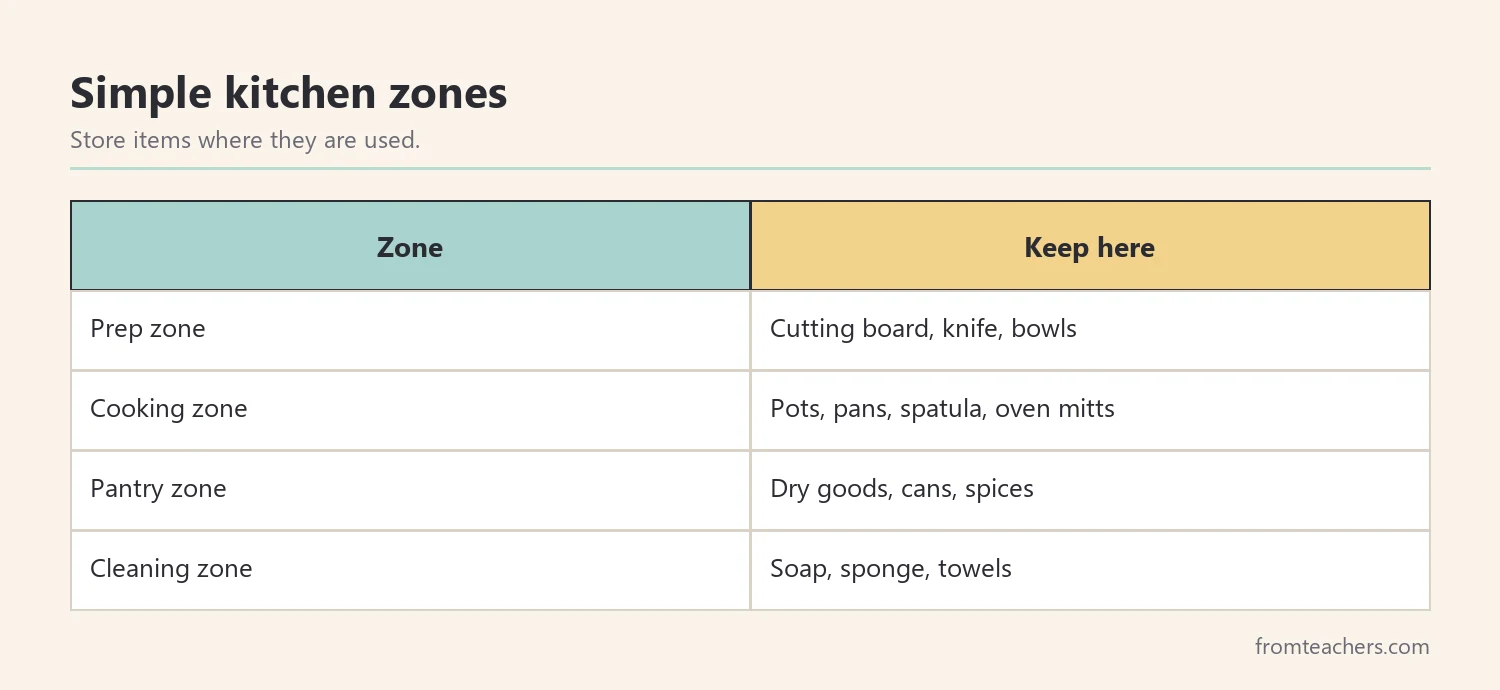
For example, set up four zones. The prep zone holds the cutting board, knife, and bowls. Next, the cooking zone, near the stove, holds pots, pans, a spatula, and oven mitts. The pantry zone holds dry goods, cans, and spices. Finally, the cleaning zone, near the sink, holds soap, sponges, and towels.
Next, label shelves or bins if it helps. Simple labels or pictures support learners who are still building reading skills, and they help anyone remember where things go. Over time, the labels become less necessary.
Also, teach the “clean as you go” habit. Wiping the counter and washing a few dishes while food cooks keeps the kitchen usable. It also prevents the overwhelming pile of dishes that makes cooking feel like a chore.
In addition, keep safety items visible. Oven mitts by the stove, a fire-safe lid near the pans, and a clean towel by the sink are small details that support safe habits from the start.
Worked example. Omar is a fictional nineteen-year-old in a transition program. His teacher, Ms. Grant, works with him and his family on kitchen basics. Together they sort his small kitchen into four zones and add picture labels to the pantry shelf.
2. Stock a starter pantry of kitchen basics
Next, build a small, useful pantry. A few staples can become many meals. Stocking these kitchen basics means there is always something to cook, even when fresh food runs low.
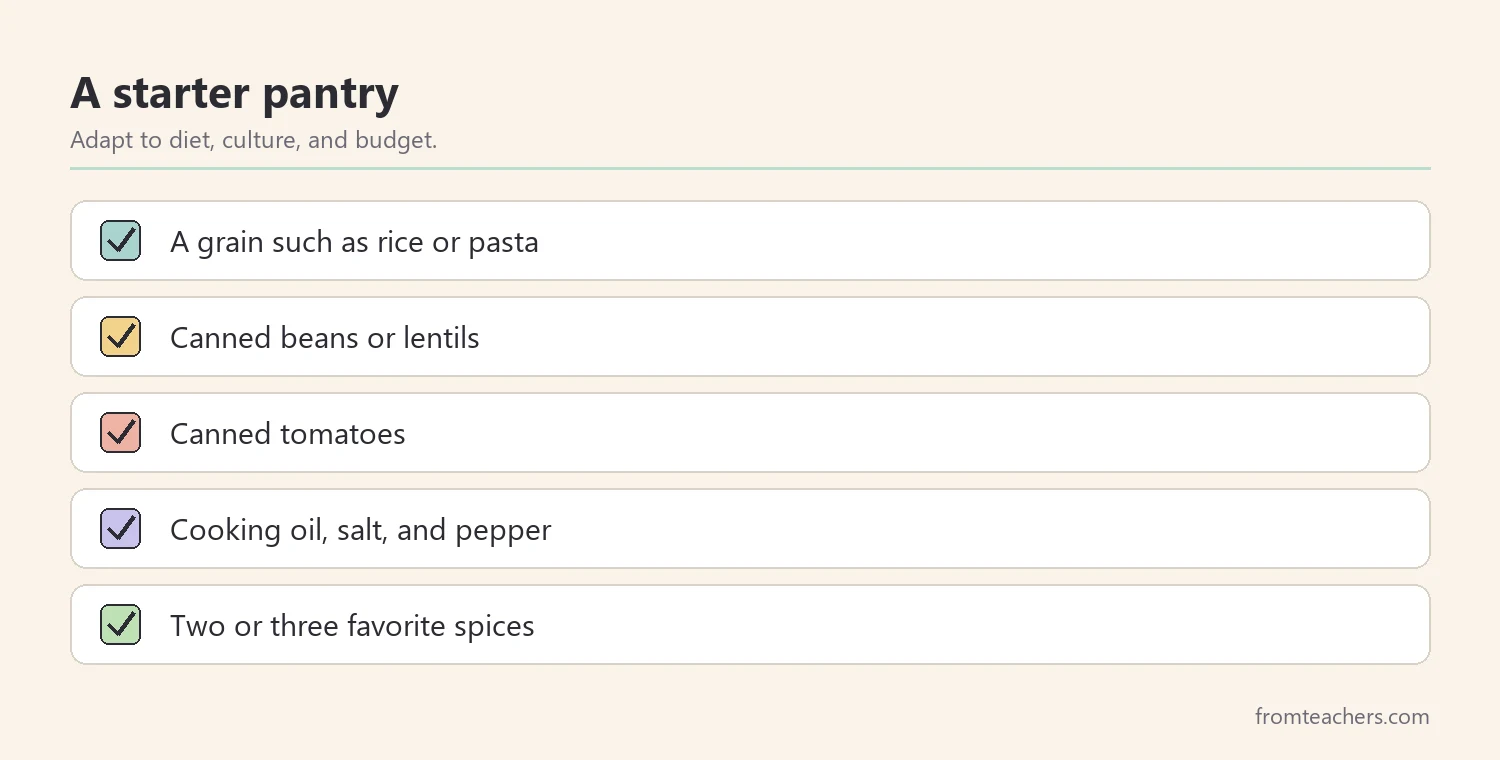
For example, a starter pantry might include a grain such as rice or pasta, canned beans or lentils, canned tomatoes, cooking oil, salt, pepper, and two or three favorite spices. Adapt the list to the learner’s diet, culture, and budget.
Then, teach how to store food. Dry goods go in sealed containers in a cool, dry place. Older items move to the front so they are used first. Opened cans should be moved to a covered container in the refrigerator.
Also, teach how to check what is there. A quick look at the pantry before shopping prevents buying three bags of rice when one is already on the shelf. A simple list on the pantry door helps track what is running low.
In addition, start small. A huge pantry can be overwhelming and expensive. Begin with the staples the learner actually uses, and add more as cooking skills grow.
For a structured reference, the Cooking Foundations for Real Life kitchen basics guide is a free practical guide for beginners and busy home cooks, organized for daily cooking from kitchen setup and tools through safety, knife skills, and pantry use.
Worked example. Ms. Grant and Omar write a pantry list of eight staples. He shops for them with his mother. At home, he puts the oldest pasta at the front and tapes a “running low” list to the pantry door.
3. Plan a simple week of meals around kitchen basics
Next, plan before you shop. A short weekly plan prevents the evening scramble. It is one of the kitchen basics that saves the most time, money, and stress.
First, keep the plan short. Four or five home-cooked meals is a realistic start. Choose meals that use the same staples in different ways, such as pasta with tomato sauce one night and rice and beans another.
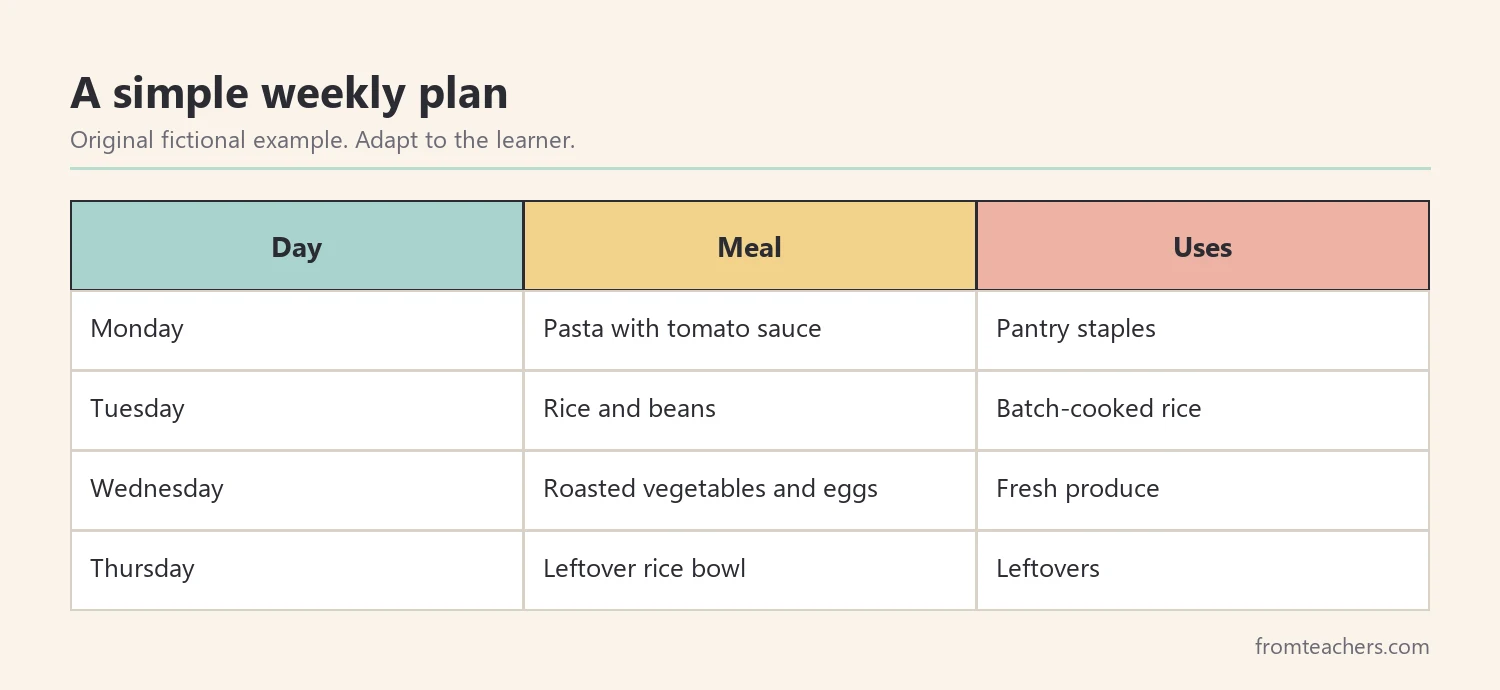
Then, plan for leftovers. Cooking a larger batch of rice on Tuesday can become a rice bowl on Thursday. Planned leftovers reduce cooking time and food waste.
Also, write a shopping list from the plan. Check the pantry first, then list only what is missing. A clear list keeps shopping short and focused, especially for learners who find stores overwhelming.
In addition, involve the learner in every choice. Meals the learner wants to eat are meals they are more likely to cook. Let them pick at least one favorite each week.
Meanwhile, keep a running list of meals that worked. After a few weeks, the learner has a personal menu of tested, favorite dishes. Choosing from that list makes planning faster, and it shows how kitchen basics build on each other over time. A notebook or a note on a phone is enough.
Worked example. On Sunday, Omar plans four dinners: pasta with tomato sauce, rice and beans, roasted vegetables with eggs, and a leftover rice bowl. He writes a shopping list for the fresh vegetables and eggs he needs.
4. Prep in batches to save time
Next, do some work ahead. Meal prep means preparing parts of meals in advance, such as cooking a pot of rice or chopping vegetables. Batch prep is one of the kitchen basics that makes weeknight cooking much easier.
First, follow the same order every week: plan meals, write a list, shop, then prep and store. A steady routine turns meal prep into a habit rather than a big decision each time.
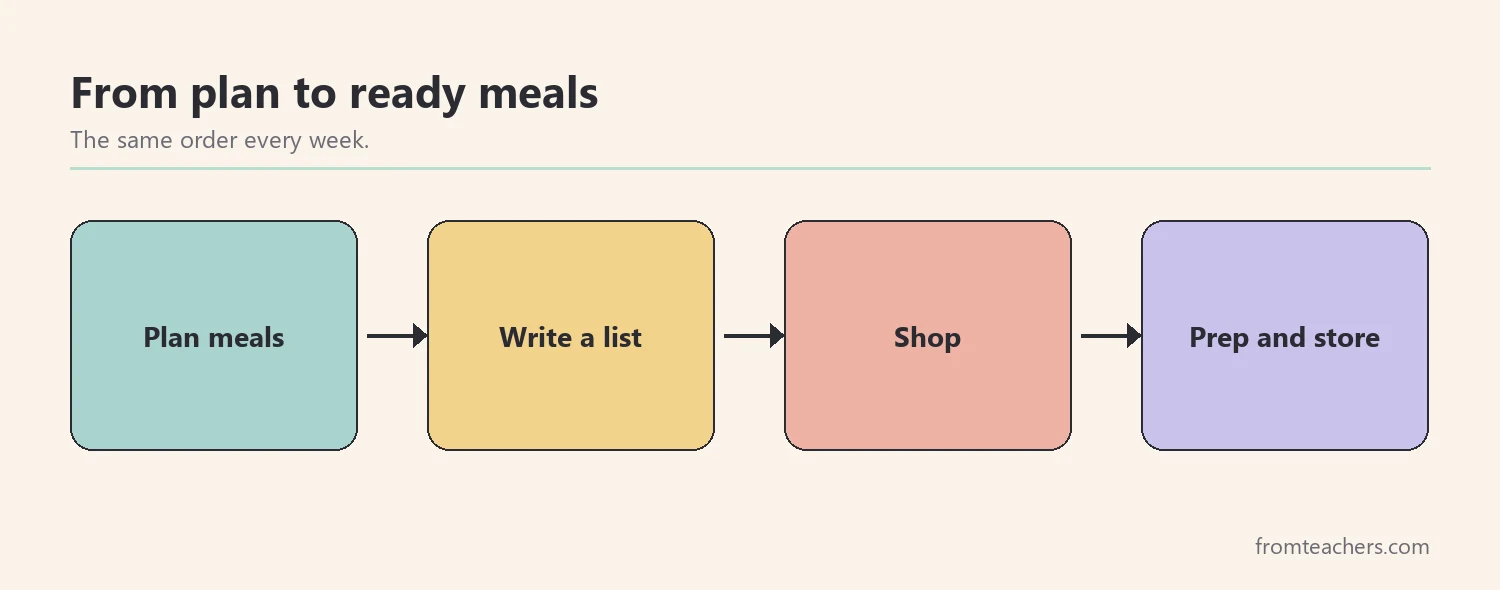
Then, choose a few prep tasks. Cook a batch of grains. Wash and chop vegetables. Make one sauce. Even thirty minutes of prep can make three or four dinners much quicker.
Also, store food safely. Cool cooked food promptly, put it in covered containers, and refrigerate it. Label containers with the date so the learner knows when to use them. Public food safety agencies publish guidance on how long leftovers keep, and it is worth checking.
In addition, keep prep realistic. A huge prep session can be tiring. Start with one or two tasks and add more as the learner gains confidence and speed.
Worked example. After shopping, Omar cooks a pot of rice and chops peppers and onions. He stores them in labeled containers. On Tuesday and Thursday, dinner takes him less than twenty minutes.
5. Use sauces and seasoning to keep meals interesting
Finally, add variety without adding complexity. The same staples can feel very different with a new sauce or spice. Seasoning is the part of kitchen basics that keeps learners from getting bored with their own cooking.
First, teach a few simple sauces. A basic tomato sauce, a simple dressing of oil and lemon juice, and a quick garlic and oil mix can change a plate of pasta, rice, or vegetables. Each sauce uses pantry staples.
Then, teach “taste and adjust.” Add a little salt, taste, and add more only if needed. Try one new spice at a time so the learner learns what each one adds.
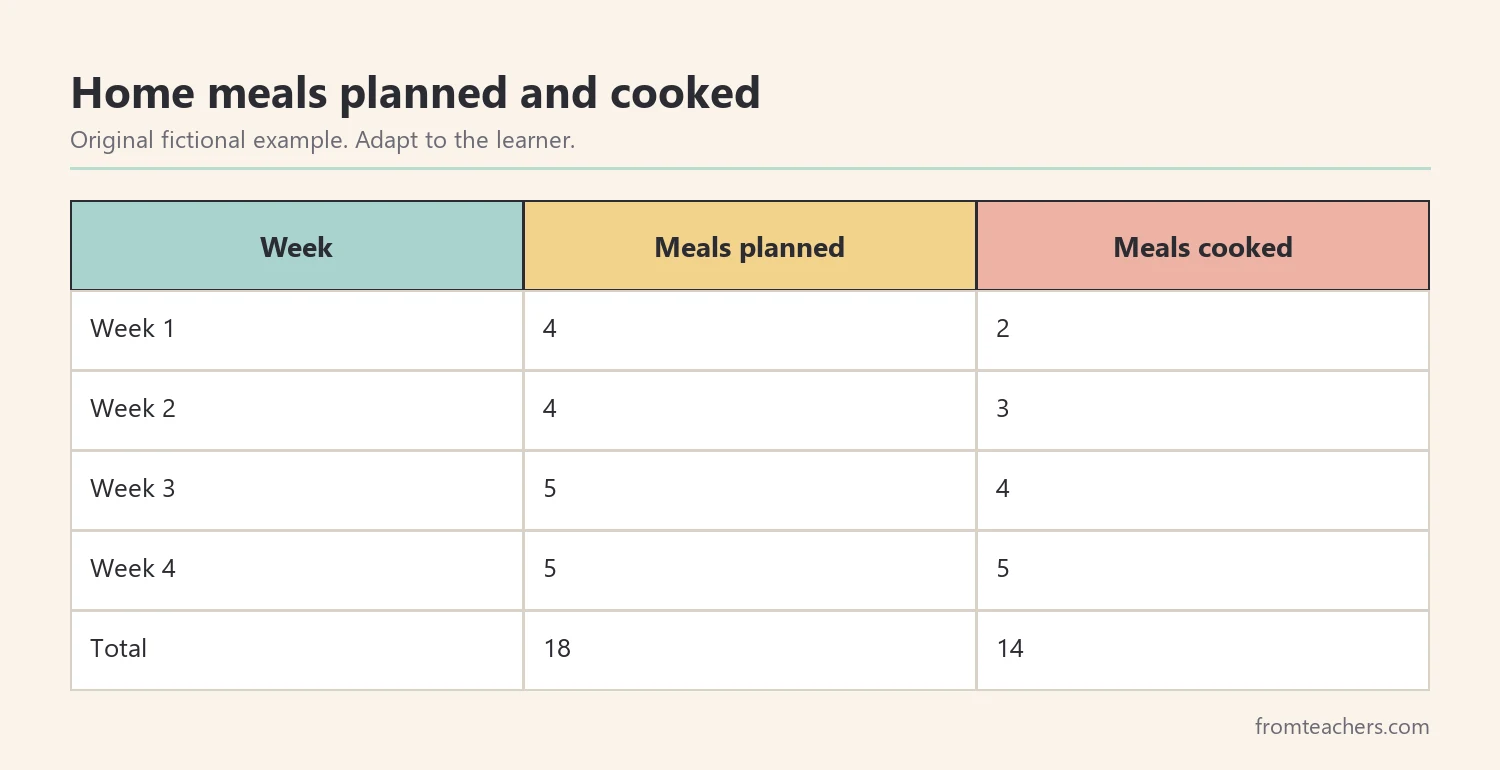
Also, track progress simply. Count the meals planned and the meals actually cooked each week. Rising numbers show that the routine is working. A dip is a signal to simplify the plan, not a failure.
In addition, connect kitchen basics to bigger goals. For learners in transition programs, planning, shopping, and cooking can support independent living goals agreed by the team. Share progress with families so practice continues at home.
Worked example. Over four weeks, Omar planned 18 meals and cooked 14. In week 1, he cooked 2 of 4. By week 2, 3 of 4. In week 3, 4 of 5. By week 4, all 5 of 5. He now makes a tomato sauce on Sunday and uses it twice in the week.
Kitchen basics in a life skills class
Teachers can use the same five steps at school. Students can plan a class meal, make a list, shop with support where the program allows, prep ingredients, and cook together. Each step practices real skills in a real setting.
Also, follow school rules on allergies, knives, and stoves. Picture recipes and clear roles help every student take part, and sending plans home helps families continue practice.
Budget-friendly habits
Kitchen basics also save money. Planning meals, shopping from a list, and using leftovers reduce waste and impulse buying. Learners can compare the cost of a home meal to a takeout meal and see the difference.
Also, teach simple swaps. Store brands, dried beans, and seasonal vegetables often cost less. Small choices add up over a month, and they build confidence in managing money as well as food.
In addition, plan one “use it up” meal each week. A soup, stir fry, or rice bowl made from leftover vegetables and grains keeps food from going to waste and teaches flexible cooking.
Supporting learners who feel anxious in the kitchen
Some learners feel nervous about cooking, especially around heat and knives. Start with no-cook meals, such as sandwiches or salads, and add one cooking step at a time. Confidence grows with each small success.
Also, keep the routine predictable. The same day, the same order, and the same simple recipes reduce worry. A visual checklist on the fridge lets the learner see each step and check it off, which turns kitchen basics into a calm, familiar habit.
Common mistakes and how to avoid them
- Disorganized storage. Learners cannot find tools. Fix: set up simple zones with labels.
- Buying too much at once. Food goes to waste. Fix: start with a small pantry of staples.
- Skipping the shopping list. Trips take longer and cost more. Fix: check the pantry, then write a short list from the weekly plan before every shopping trip.
- No plan. Every evening becomes a scramble. Fix: plan four or five meals each week.
- Prepping too much. The session becomes exhausting. Fix: start with one or two prep tasks.
- Unsafe storage. Leftovers are left out too long. Fix: cool, cover, refrigerate, and label.
- Bland food. Learners lose interest. Fix: teach a few sauces and taste as you cook.
Questions teachers and parents ask about kitchen basics
What should a beginner pantry include?
A grain, canned beans or lentils, canned tomatoes, cooking oil, salt, pepper, and a few favorite spices are a strong start. Adapt the list to diet, culture, and budget.
How many meals should a beginner plan each week?
Four or five home-cooked meals is a realistic starting point. Add more as the routine becomes comfortable.
Is meal prep safe for leftovers?
Yes, when food is cooled promptly, covered, refrigerated, and eaten within a safe time. Check guidance from public food safety agencies for specific foods.
How can I help a learner who gets overwhelmed at the store?
Shop with a short list organized by store section, go at quieter times, and start with small trips. Practice can build confidence over time.
Can kitchen basics support transition goals?
Yes, when the team agrees. Planning, shopping, and cooking can support independent living goals. Track progress the way the team decides.
Related reading: Navigating the Path to Adulthood: Building Essential Life Skills, Building Workplace Readiness: Essential Skills for Career Success, and Special Education: A Complete Guide for Parents and Educators.
A companion resource for kitchen basics:
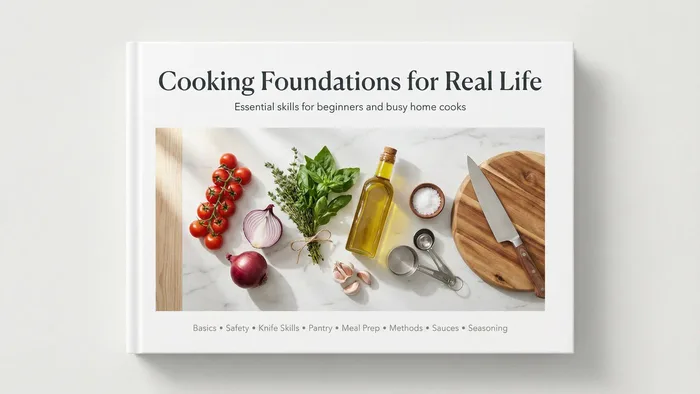
Cooking Foundations for Real Life: a free practical guide to essential cooking skills for beginners and busy home cooks, organized as a daily reference from kitchen setup and tools through safety, knife skills, and pantry use.
Sources and scope
- FoodSafety.gov: U.S. government information on safe food handling, storage, and leftovers.
- MyPlate, U.S. Department of Agriculture: general guidance on balanced meals and meal planning.
- USDA Food Safety and Inspection Service: guidance on safe storage and cooking.
- National Technical Assistance Center on Transition: resources on independent living and transition planning.
This guide covers organizing, planning, and prepping simple meals for new cooks. It does not give nutrition or medical advice, and it does not replace official food safety guidance or allergy plans.
Key takeaways
- Organize the kitchen into simple zones.
- Stock a small pantry of staples the learner will use.
- Plan four or five meals and shop from a list.
- Prep in small batches and store food safely.
- Use sauces and seasoning to keep kitchen basics interesting.









Leave a Comment