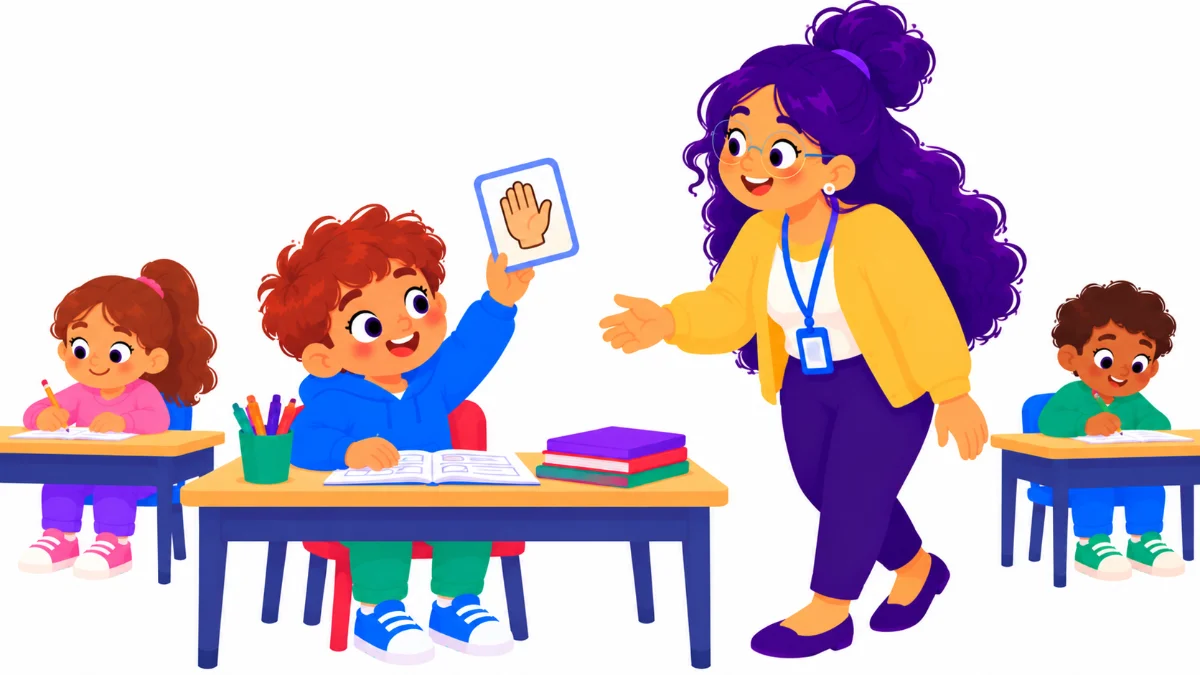

Knowing how to ask for help is one of the most useful skills a student can learn, and one of the least taught. Picture a fourth grader who sits quietly with a blank page for twenty minutes. She is not lazy or defiant. She simply does not know what to say, or she worries that asking will make her look less capable.
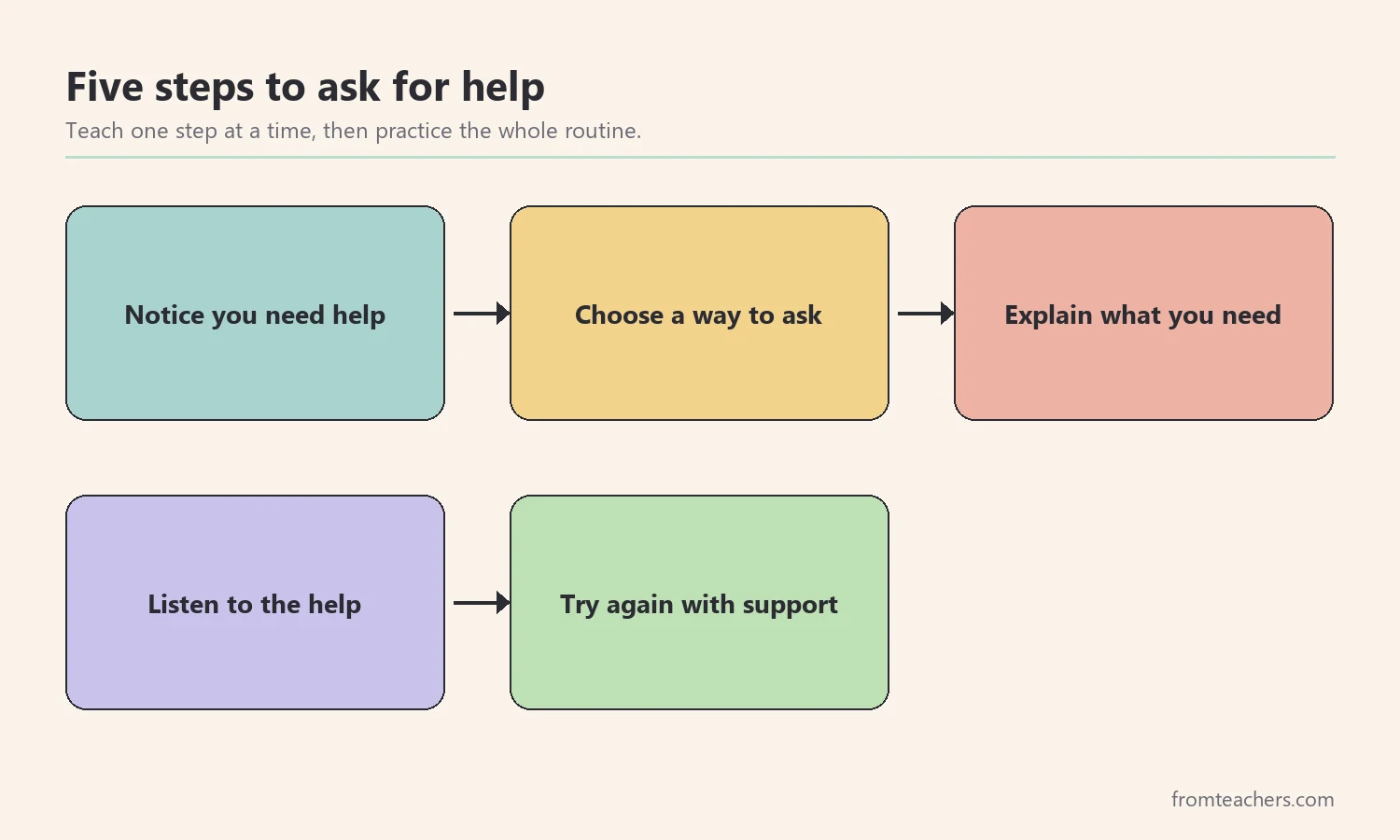
This guide gives you five steps to teach students how to ask for help: notice being stuck, choose a way to ask, explain the need, listen to the help, and try again. By the end, you will have a routine you can model, practice, and track in any classroom.
Examples are fictional. Adapt to the student’s goals and agreed supports. This is guidance, not a diagnosis.
At a glance
- Asking for help is a skill that can be taught, practiced, and praised.
- Students first need to notice that they are stuck, confused, or frustrated.
- Offer more than one way to ask: words, a card, a signal, or writing.
- A good request explains what the student needs, not just “I don’t get it.”
- After help, students try again and can ask again if they are still stuck.
Before the steps, set the tone. Many students believe that asking for help means they are not smart. So, say the opposite clearly and often: asking for help is a strong and brave skill. Then show it. When you get stuck on the projector or a tricky word, ask a student or colleague for help out loud.
1. Notice you need help
First, students have to recognize the moment. That sounds simple, but many children do not notice they are stuck until they are already upset. Teaching how to ask for help starts with teaching how to notice.
Next, give students words for their signs. Some signs are in the body: a hot face, tight hands, a heavy or tired feeling, or the urge to leave. Other signs are in the work: reading the same line again and again, a blank page, or answers that keep going wrong.
Also, use short check-ins during work time. Ask the class, “Thumbs up if you know your next step, thumbs sideways if you are not sure.” This gives every student a quick moment to notice where they are, without singling anyone out.
In addition, praise noticing, even before asking. “You noticed you were stuck. That is the first step.” This tells the student that being stuck is normal and that recognizing it is a skill.
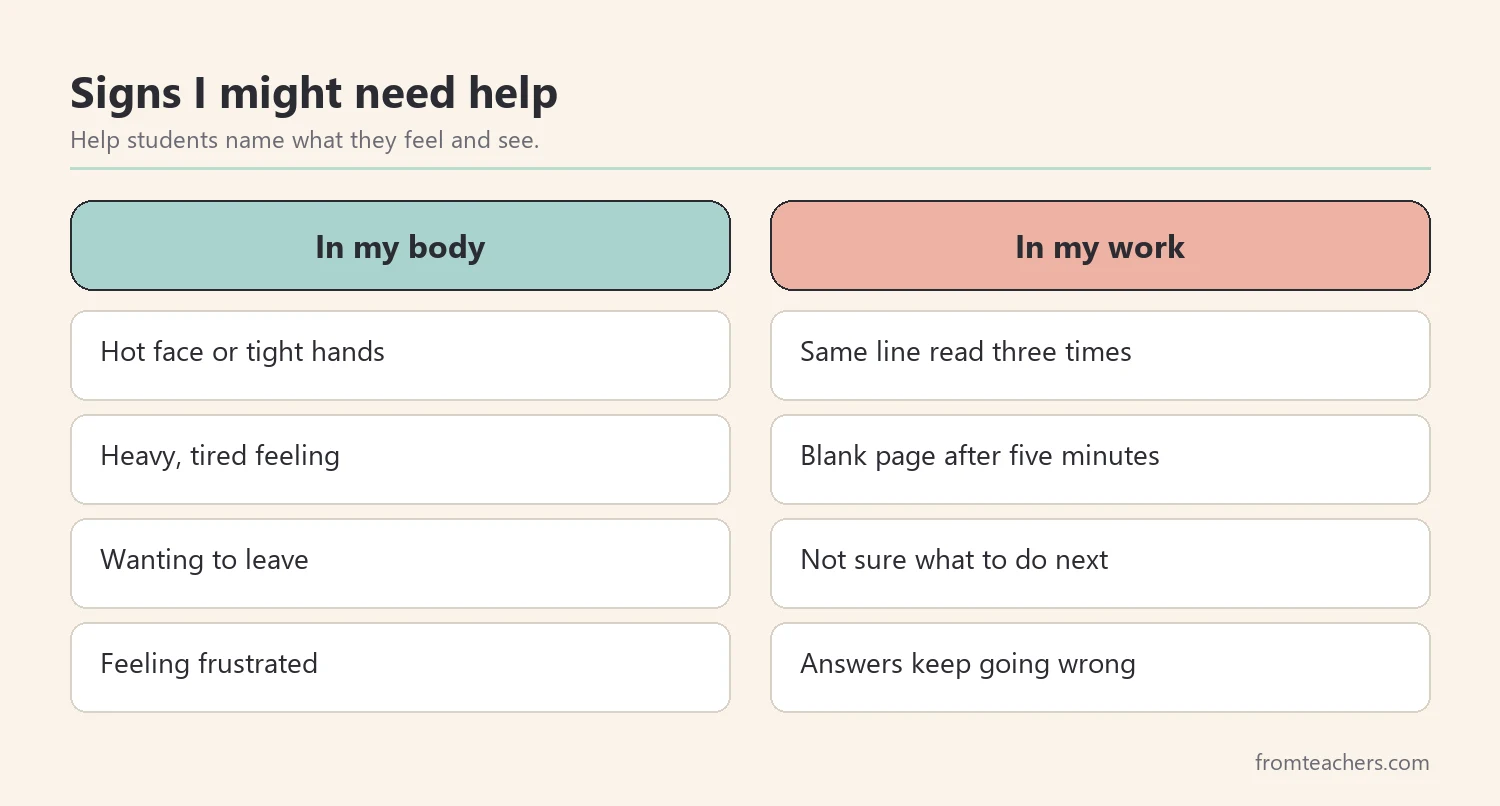
Worked example. Maya is a fictional fourth grader. Her teacher, Mr. Okafor, sees that she often stares at her math page and rubs her forehead. He teaches her two signs to watch for: “I have read the problem three times” and “My forehead feels tight.” When either happens, Maya knows it is time to move to step two.
2. Choose a way to ask for help
Next, give students options. Not every student is comfortable raising a hand and speaking in front of the class. Some students are shy, some are learning English, some use AAC, and some find speaking hard when they are upset. Teaching how to ask for help means accepting more than one way.
For example, offer five ways. Students can say it (“Can you help me?”), place a help card on the desk, use an agreed hand signal, write a short note, or point to a picture or icon. Each one is a real request and deserves the same response.
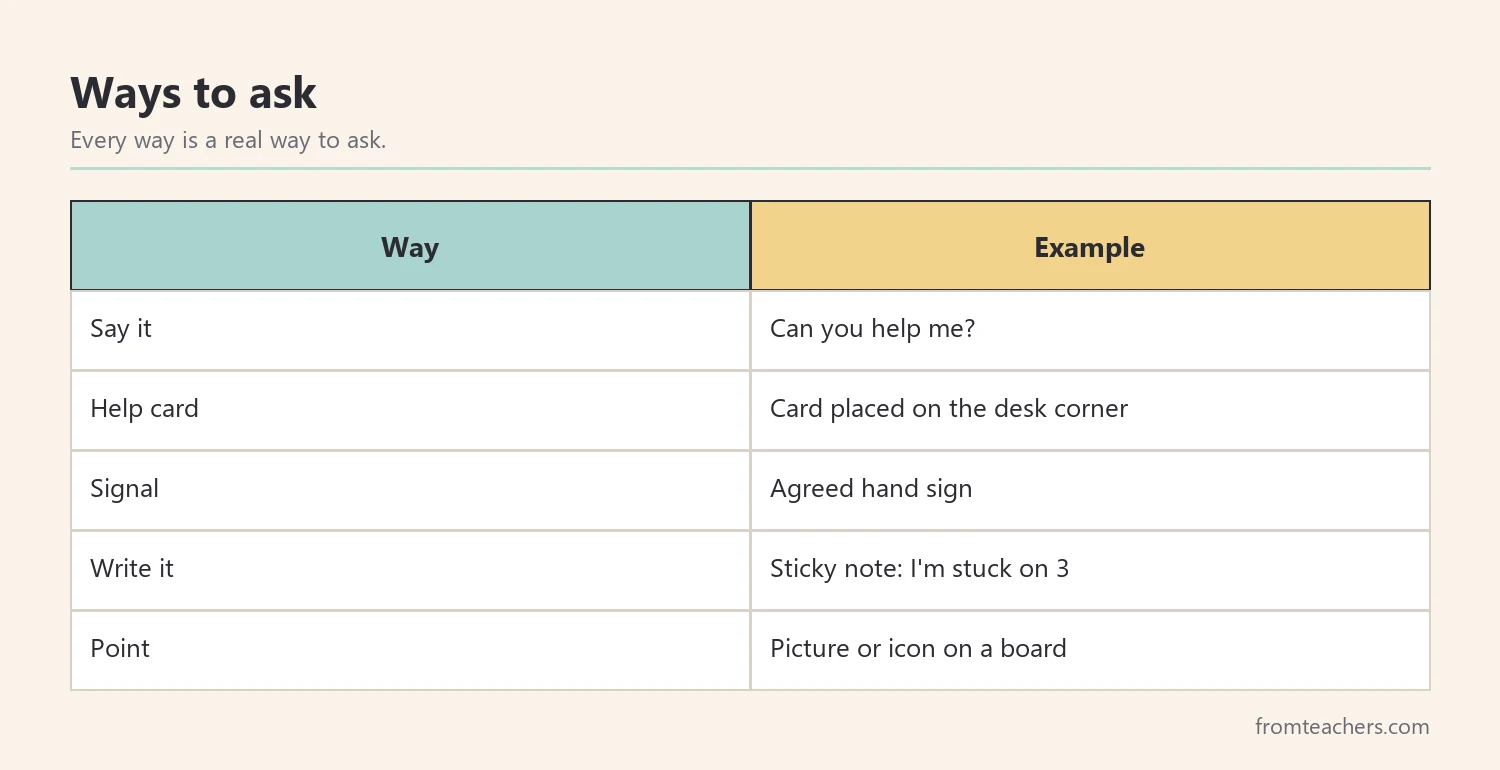
Also, practice each way. Run a short role play where students take turns using a card, a signal, and a spoken phrase. Make it light and fun. Practice when calm makes the skill easier to use when stressed.
Decide who students can ask
In addition, think about who students can ask. The teacher is one option. A paraprofessional, a trusted peer, or a written direction sheet may also help. A simple “ask three before me” rule can work for some classes, but make sure it never stops a student from reaching an adult when they need one.
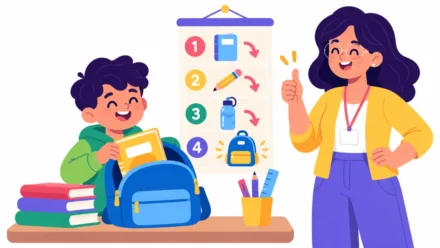
Meanwhile, keep a visual reminder in view. A poster near the board, or a small card on the desk, reminds students of the steps when they forget. The how to ask for help poster with five illustrated steps is one ready-made option for this.
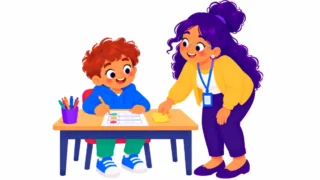
Worked example. Maya does not like speaking up in front of her group. Mr. Okafor gives her a small help card. When she places it on the corner of her desk, he knows to come over within a few minutes. Maya also keeps a note pad for writing short questions.
3. Explain what you need
Next, teach students to be specific. “I don’t get it” is a start, but it leaves the adult guessing. A clear request names the part that is hard and the kind of help that would work. Learning how to ask for help clearly saves time for everyone.
First, model clear phrases. “I don’t understand the directions.” “Can you show me the first step?” “This feels too hard right now.” “I need more time on this part.” Post a few of these near the help poster.
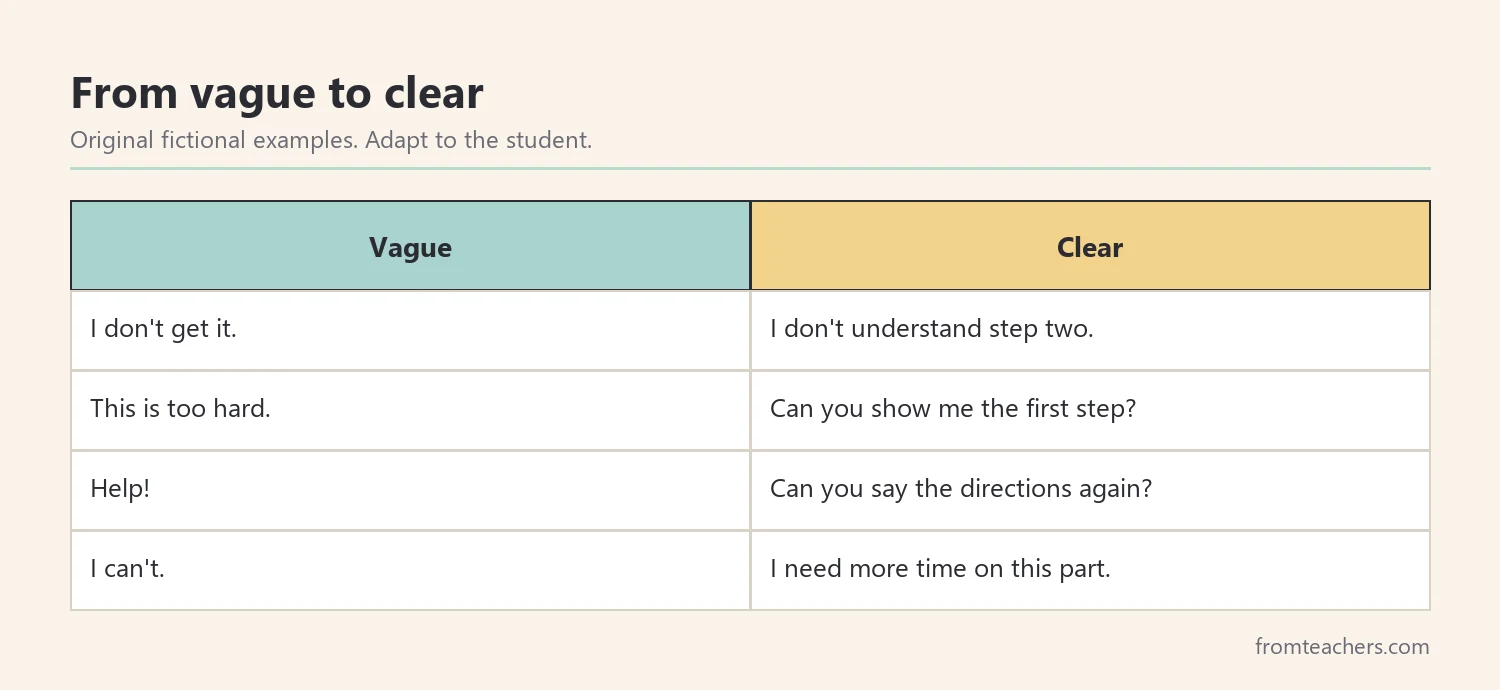
Also, use sentence frames for students who need them. “I am stuck on ____.” “Can you show me ____?” “I need ____.” Frames reduce the effort of finding words when a student is already stressed.
In addition, accept partial explanations. A student who points to the problem and says “this one” is still explaining. Over time, coach them toward more detail, but never make help depend on perfect wording.
Then, respond in a way that shows the request worked. Thank the student for asking, and repeat back what you heard: “You need the first step shown. Let’s do that.” This builds trust, and trust is what makes students willing to ask again.
Worked example. At first, Maya writes “Help” on her note pad. Mr. Okafor adds a frame to her desk card: “I am stuck on ____.” A week later, Maya writes, “I am stuck on how to start number 4.” He shows her the first step, and she finishes the rest alone.
4. Listen to the help offered
Next, teach the listening part. Asking is only half of the routine. Students also need to look at the person helping, try the strategy they suggest, and ask more questions if something is still unclear.
First, keep your help short. Long explanations can overwhelm a student who is already stuck. Show one step, give one example, or ask one guiding question. Then let the student try.
Also, teach students that it is fine to ask a follow-up question. “Can you show me again?” or “Can I try one with you watching?” are good examples of how to ask for help a second time in the same moment.
In addition, give students time. Many students need a moment to process what they heard. Wait quietly instead of filling the silence with more words.
Meanwhile, notice your own reactions. A sigh, a rushed tone, or “We just went over this” can make a student stop asking. A calm, warm response is one of the strongest supports you can give.
Worked example. When Mr. Okafor shows Maya the first step, he asks her to say it back in her own words. She says, “First I find what they want me to figure out.” He nods and steps back so she can try.
5. Try again with support
Finally, students go back to the work. They use the help they received, try one small step at a time, and ask again if they are still stuck. This step teaches persistence. Learning how to ask for help includes learning that one request is not always enough, and that is fine.
Next, collect light data. Note how often a student seems stuck and how often they ask. You can also note which way they used. Over a few weeks, these numbers show whether the routine is working.
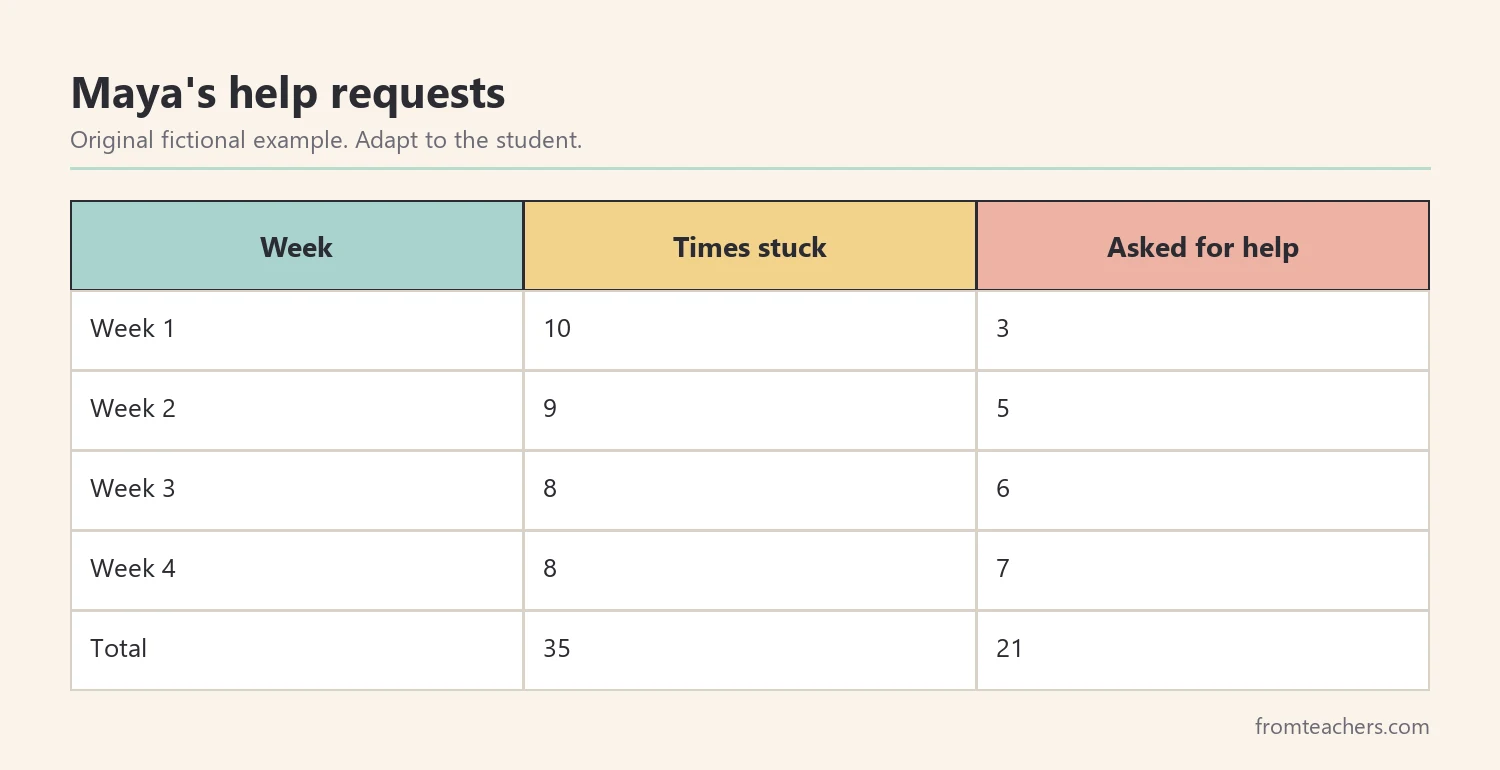
Also, celebrate growth privately. Some students do not want public praise for asking. A quiet “You asked and then you solved it. That’s how learners work” can mean a lot.
In addition, share the routine with families. Parents can use the same five steps during homework. When students hear the same words at home and school, the skill transfers more easily.
Then, review with the student. Ask which way of asking feels easiest and whether anything gets in the way. Adjust the plan together.
Worked example. Mr. Okafor tracks Maya for four weeks. In week 1, she is stuck 10 times and asks 3 times. By week 2, she is stuck 9 times and asks 5 times. In week 3, she is stuck 8 times and asks 6 times. In week 4, she is stuck 8 times and asks 7 times. Over the month, she asks for help 21 times out of 35.
Building a help-friendly classroom
Students learn how to ask for help faster when the whole room supports it. So, look at the classroom culture, not just the individual student. Do students see adults asking for help? Are mistakes treated as part of learning? Is there a calm, predictable response every time someone asks?
First, model it daily. Say things like, “I am not sure how to fix this link. Can someone help me?” When adults show how to ask for help in small, ordinary moments, students see that it is normal.
Also, teach the whole class at once. A short lesson on how to ask for help, followed by role play, helps every student, not only those with support plans. Students who already ask easily can model the steps for others.
In addition, plan for peer help. Teach peers to offer a hint instead of the answer: “Try reading the second line again.” This keeps the student who asked in charge of the work.
Finally, revisit the routine after breaks and at the start of new units. Skills fade when they are not used, and a quick refresher keeps the steps fresh.
Common mistakes and how to avoid them
- Accepting only spoken requests. Quiet students stay stuck. Fix: offer cards, signals, notes, and pictures.
- Reacting with frustration. Students stop asking. Fix: thank them and respond calmly.
- Giving long explanations. The student gets more confused. Fix: show one step, then let them try.
- Doing the work for the student. They learn to wait instead of try. Fix: guide the first step only.
- Teaching the routine once. The skill fades. Fix: practice regularly and keep the poster in view.
- Praising only correct answers. Asking feels risky. Fix: praise noticing and asking too.
Questions teachers and parents ask about how to ask for help
Why don’t some students ask for help?
Common reasons include not noticing they are stuck, worry about looking less capable, not knowing what to say, or past responses that felt unkind. Teaching the steps and responding warmly addresses many of these.
What age can students learn how to ask for help?
Young children can learn simple versions, such as a card or a short phrase. Older students can learn to explain exactly what they need. Adjust the language and examples to the student’s age and skills.
What if a student asks for help all the time?
First, check whether the work matches the student’s level. Then teach a “try one step first” routine and look for patterns. Frequent asking can also be a sign of anxiety, so discuss it with the team.
Can asking for help be an IEP goal?
Help-seeking and self-advocacy are sometimes included in IEP goals. That decision belongs to the student’s team. Simple data on requests can help the team write a clear goal.
How can parents practice at home?
Parents can model asking for help themselves, use the same five steps during homework, and praise their child for asking. Keeping the tone calm matters more than the exact words.
Related reading: Spectrum Voices: Essential Strategies for Navigating High-Functioning Autism, How Parents and Teachers Can Team Up for Special Education Success, and Navigating the Path to Adulthood: Building Essential Life Skills.
A companion resource for teaching how to ask for help:
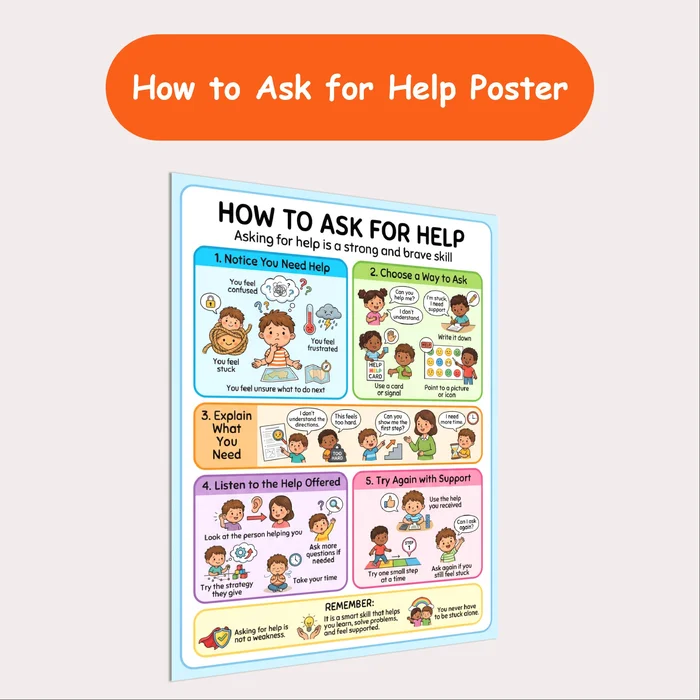
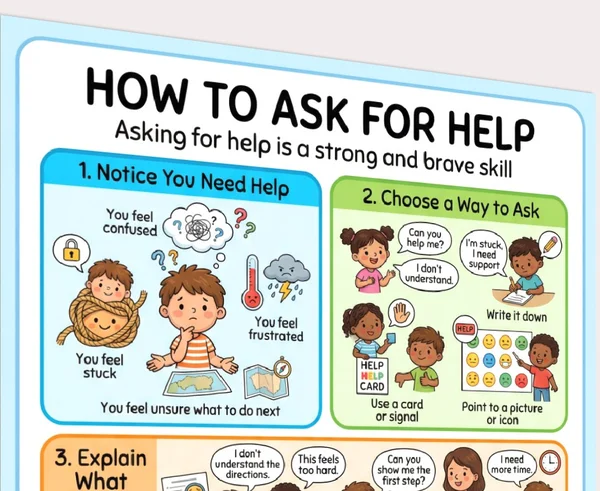
How to Ask for Help Poster: a printable poster that teaches asking for help as a strong and brave skill, using five illustrated steps. A practical self-advocacy poster for special education, speech therapy, and general classrooms.
Sources and scope
- IRIS Center, Vanderbilt University: free modules on instruction, behavior, and student supports.
- Understood.org: family-friendly information on learning differences and self-advocacy.
- American Speech-Language-Hearing Association (ASHA): professional information on communication and language development.
- CASEL: a framework for social and emotional learning, including relationship and self-management skills.
This guide covers everyday classroom and home teaching of help-seeking. It does not replace speech-language therapy, counseling, or the decisions of the student’s support team.
Key takeaways
- Teach how to ask for help as a strong and brave skill.
- Teaching how to ask for help starts with noticing signs of being stuck.
- Accept many ways to ask, from words to cards and pictures.
- Coach clear requests with frames and short model phrases.
- Keep help short, then let students try again and ask again.



Leave a Comment