


Good working memory strategies help students hold information long enough to use it. Without that support, directions slip away, math steps get lost, and writing stalls halfway through.
However, working memory is only one part of executive function. Cognitive flexibility and inhibitory control matter too. This guide explains all three and shares practical classroom supports for special education teachers.
What Is Working Memory?
Working memory is like a mental sticky note. It holds information for a short time while the brain uses it.
For example, a student uses working memory to remember a three-step direction. Also, it helps when carrying a number in math or holding an idea while writing a sentence.
Many students in special education have smaller working memory capacity. As a result, they may look distracted when they have simply lost the information.
Also, stress shrinks working memory even further. An anxious student may forget steps they knew yesterday. Because of this, a calm and predictable classroom is itself a memory support. In addition, short movement breaks can help students reset before the next demanding task.
Signs a Student Needs Working Memory Strategies
- Forgets directions right after hearing them.
- Starts tasks but cannot finish multi-step work.
- Loses place while reading or copying.
- Struggles with mental math.
- Asks the same question again and again.
Next, notice when these signs appear. They often grow during long lessons or busy, noisy times.
Classroom Working Memory Strategies That Help
The main goal is to reduce mental load. So, move information out of the head and onto paper or the board.
- Chunk directions: give one or two steps at a time.
- Write it down: post steps visually for every task.
- Use checklists: students tick off each step as they go.
- Provide models: show a finished example to compare against.
- Repeat and rehearse: have students say the steps back.
Also, give tools like number lines, word banks, and graphic organizers. These lighten the load so students can focus on thinking.
Teaching Students to Use Working Memory Strategies Themselves
Over time, students can learn to manage their own load. Because of this, teach strategies directly, not just as adult supports.
- Model the strategy aloud.
- Practice it together with easy tasks.
- Let the student try it with a cue card.
- Fade the cue as the habit grows.
For instance, teach students to whisper directions to themselves or sketch a quick picture. Then praise them when they use the strategy on their own.
Supporting Cognitive Flexibility
Cognitive flexibility is the ability to shift between ideas or adjust to change. Some students get stuck when plans change or a strategy stops working.
- Preview changes with a visual schedule.
- Teach “Plan A, Plan B” thinking.
- Practice solving one problem two different ways.
In addition, use calm, matter-of-fact language when changes happen. Students borrow your tone.
Also, praise flexible thinking when you see it. For example, say “You tried a new way when the first one didn’t work. That was smart.” As a result, students learn that changing plans is a strength.
Supporting Inhibitory Control
Inhibitory control helps students stop and think before acting. Without it, they may blurt answers or rush through work.
So, build in pause points. For example, use a “think time” signal before answers. Also, teach a simple routine: stop, think, then act.
The Understood website offers more family-friendly explanations of executive function.
Bringing Working Memory Strategies Into Every Lesson
These supports work best when they are part of daily routines. Therefore, plan them into lessons ahead of time.
First, review your lesson for heavy memory moments. Then add a visual, a checklist, or a model at each one. As a result, students spend energy on learning, not remembering.
For a complete professional development toolkit, this executive function supports resource for special education covers working memory, flexibility, and inhibitory control with practical classroom ideas.
Working Memory Strategies for Homework and Tests
Memory demands do not end when the lesson does. In fact, homework and tests often place the heaviest load on students.
First, send homework with clear written steps. Also, include one finished example at the top of the page. As a result, students and parents know exactly what to do.
- Use a planner or checklist for assignments.
- Break long projects into small dated steps.
- Allow formula sheets or word banks when appropriate.
- Read test directions aloud.
Next, think about test design. For example, place one question per section with plenty of white space. Also, avoid questions that require holding many details at once.
In addition, teach students to do a “brain dump” at the start of a test. They write key facts or formulas on scrap paper right away. Then they can refer to them without relying on memory under stress.
Finally, talk with families about these working memory strategies. When home and school use the same tools, students build habits faster.
Frequently Asked Questions About Working Memory Strategies
Can working memory be improved?
Strategies and supports help students work around limits. Practice with real tasks builds useful habits.
Are these strategies only for students with ADHD?
No. Many learners benefit, including students with learning disabilities and autism.
How can parents help at home?
Use checklists for routines, give short directions, and post visual reminders.
Ready-to-use resource:
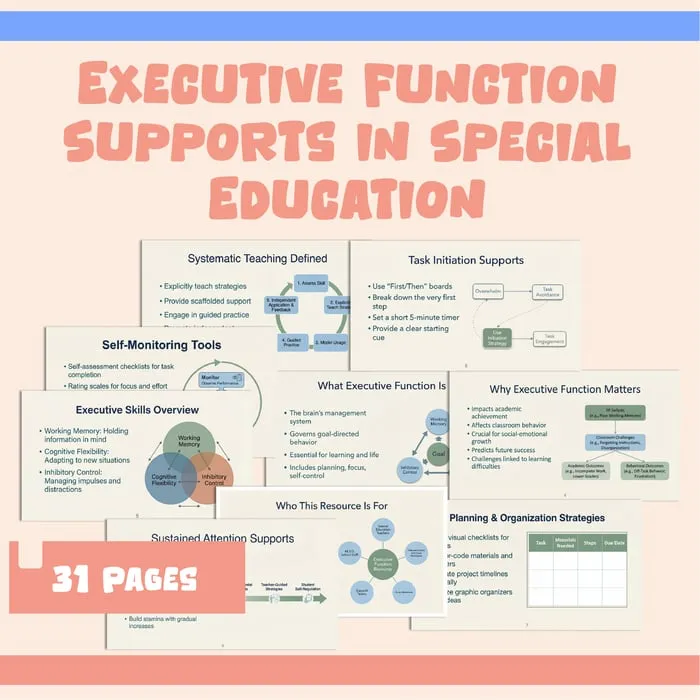
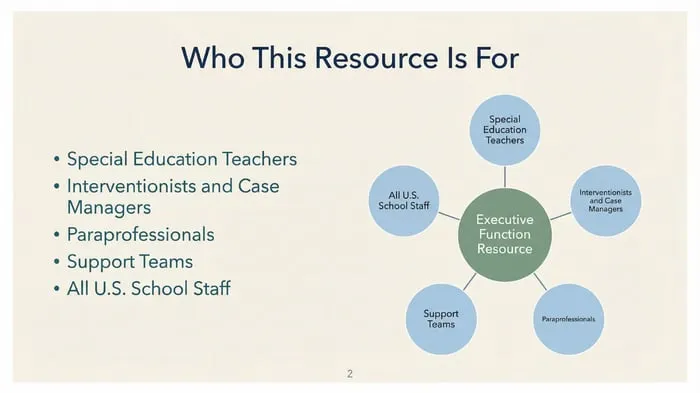
Executive Function Supports in Special Education: a 31-page professional development toolkit covering working memory, cognitive flexibility and inhibitory control with classroom supports.
Related reading: Effective ADHD Classroom Strategies and 5 Practical Teaching Tips to Boost Classroom Focus and Learning.
Also on FromTeachers:
Key Takeaways
- Working memory strategies move information out of the head and onto paper.
- Chunk directions, post steps, and use checklists and models.
- Teach students to use strategies themselves, then fade cues.
- Support flexibility and inhibitory control alongside memory.









Leave a Comment