

Anxiety-driven behavior often looks like defiance, but it usually comes from fear. When a neurodivergent student refuses, yells, or shuts down, anxiety may be steering the moment.
However, many school responses treat these behaviors as choices. As a result, consequences can raise anxiety and make the pattern worse. This guide helps teachers recognize the fear underneath and respond in ways that build safety.
What Is Anxiety-Driven Behavior?
Anxiety-driven behavior is any action that helps a student escape or manage a feeling of threat. The threat may be a task, a noise, a change, or a social situation.
For example, a student who fears making mistakes may tear up a worksheet. Also, a student who dreads the crowded hallway may “act out” right before passing time. In both cases, the behavior protects them from something that feels unbearable.
Because the brain is in survival mode, logic and reminders rarely work in that moment.
Common Forms in the Classroom
Anxiety can show up in four main ways. Each one is a survival response.
- Avoidance: delaying, asking for the bathroom, or “forgetting” materials.
- Outbursts: yelling, throwing items, or arguing (fight).
- Shutdowns: going silent, putting the head down, or refusing to move.
- Freeze: staring, seeming stuck, or not answering at all.
In addition, some students mask their anxiety at school. Then the stress spills out at home later.
Why Neurodivergent Students Are More Vulnerable
Autistic students, students with ADHD, and students with learning differences often face more daily stress. Sensory overload, unclear social rules, and repeated struggles all add up.
Also, many have experienced years of correction. As a result, school itself can feel like a place where things go wrong. The Understood website explains how anxiety and learning differences often overlap.
Therefore, a small trigger may cause a big reaction. The reaction is not about the small trigger alone. Instead, it reflects a full stress bucket.
Reframing Anxiety-Driven Behavior
Reframing means changing the question we ask. Instead of “How do I stop this?” ask “What is this student afraid of?”
- “He is being lazy” becomes “He may fear failing.”
- “She is attention-seeking” becomes “She may need connection to feel safe.”
- “They are defiant” becomes “They may feel out of control.”
Next, look for patterns. Note the time, task, setting, and what happened before. Over time, these notes reveal the true triggers behind anxiety-driven behavior.
Supports That Build Safety
When students feel safe, the thinking brain can return. So, focus on safety first and learning second.
Before the hard moment
- Preview changes and new tasks ahead of time.
- Use visual schedules and clear routines.
- Break tasks into small, doable steps.
- Offer a break card or a calm space.
During the hard moment
- Lower your voice and use fewer words.
- Remove the demand for now.
- Give space while staying nearby.
After the hard moment
Then, reconnect warmly. Later, when calm, talk about what felt hard and what might help next time.
Responding to Anxiety-Driven Behavior Without Punishment
Punishment can teach a student that school is unsafe. As a result, anxiety rises and the behavior returns. However, this does not mean there are no limits.
Instead, keep clear expectations and pair them with support. For example, say “We still need to finish this. Would you like to do two now and two after a break?” The goal stays, but the path becomes manageable.
Also, teach coping skills during calm times. Breathing, movement, and asking for help all work better when practiced first.
Working With Families and Staff
Consistency across adults builds trust. So, share what you learn about triggers and helpful supports. Families often know early warning signs that school staff miss.
In addition, train paraprofessionals and specials teachers in the same calm approach. A shared script helps everyone respond the same way.
For deeper staff training, this professional development guide on anxiety-driven behavior in neurodivergent learners reframes avoidance, outbursts, shutdowns, and freeze responses with practical supports.
Tracking Anxiety-Driven Behavior Over Time
Patterns rarely show up in a single day. So, simple tracking helps you see what memory alone misses.
First, keep a short log for two to three weeks. Write the time, the activity, what happened just before, and how the student responded. Also, note what helped the student settle.
- Which subjects or tasks come before most incidents?
- Are mornings or afternoons harder?
- Do changes in staff or routine raise stress?
- Which supports shorten recovery time?
Next, review the log with your team. For example, you may find that most outbursts happen before writing tasks. In that case, the real trigger may be fear of spelling mistakes, not the subject itself.
Then, change one thing at a time. Add a word bank, a quiet start, or a preview of the task. After a week or two, check the log again to see whether the change helped.
In addition, share the findings with the student when appropriate. Older students often feel relief when adults understand their fear. As a result, they may start to name triggers themselves.
Finally, keep the focus on support, not blame. Tracking anxiety-driven behavior is about understanding the student, not building a case against them.
Frequently Asked Questions About Anxiety-Driven Behavior
How do I know if behavior is driven by anxiety?
Look for patterns around demands, change, or social pressure. Also, watch for physical signs like a tight body or fast breathing.
Will accommodating anxiety make it worse?
Not when supports also build skills. The aim is gradual confidence, not permanent avoidance.
Should I involve the school counselor?
Yes. Counselors can help with coping skills and can connect families to outside support when needed.
Ready-to-use resource:
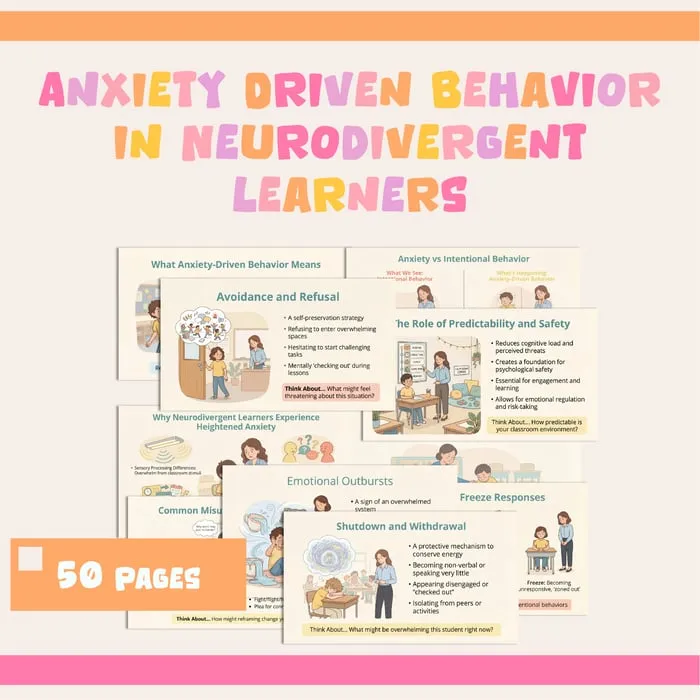
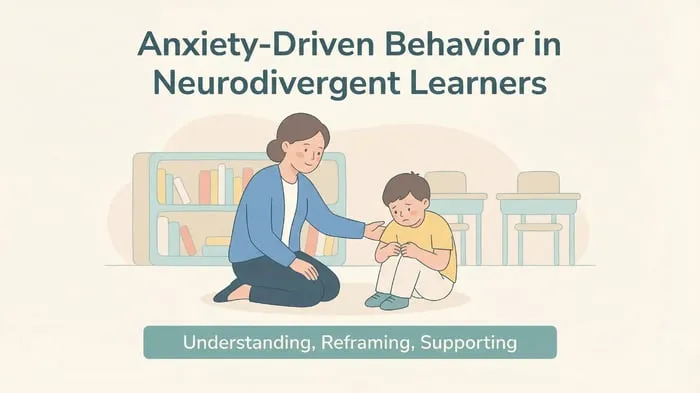
Anxiety-Driven Behavior in Neurodivergent Learners: Understanding, Reframing, Supporting: a 50-page professional development resource that reframes avoidance, outbursts, shutdowns and freeze responses through an anxiety lens.
Related reading: Moving Beyond Shame and Behavior Charts and Essential Trauma-Informed Teaching Strategies.
Also on FromTeachers:
Key Takeaways
- Anxiety-driven behavior is a survival response, not a choice to misbehave.
- Avoidance, outbursts, shutdowns, and freezing can all signal fear.
- Ask what the student is afraid of and look for patterns.
- Build safety first, then teach coping skills during calm times.









Leave a Comment