

Supporting autistic students often starts with small moments that adults barely notice. Picture a fifth grader who covers her ears when the bell rings, freezes when the class moves from reading to math without warning, and then gets called “off task.” She wants to learn. The room, the language, and the timing are simply working against her.
This guide gives you a five-step process you can use in a general or special education classroom: get to know the student, shape the environment, communicate clearly, support transitions and regulation, and adapt instruction and social life with the family as a partner. By the end, you will have a short, testable plan rather than a long list of tips.
Examples are fictional. Adapt to the student’s goals and agreed supports. This is guidance, not a diagnosis.
At a glance
- Start with the student’s strengths, interests, and own words about what helps.
- Reduce sensory load in the room before asking the student to cope with it.
- Use clear, literal language and show what you mean.
- Make transitions predictable and teach calming routines when the student is calm.
- Track one simple measure and review it with the family every few weeks.
1. Get to know the student before supporting autistic students
First, remember that autism looks different in every person. Two autistic students in the same class may have opposite needs: one may seek movement and noise, while another needs quiet and stillness. So, supporting autistic students begins with learning about this particular learner.
Next, gather information from three sources. Read the IEP or support plan if there is one. Talk with the family about what helps at home. Then, ask the student directly, in a way that fits their communication style. Some students answer best in writing, with picture choices, or through a short list of “helps me” and “hard for me.”
Also, write down strengths and interests. A deep interest in trains, maps, or animals can become a bridge into reading, math, and conversation. Strengths are not extras; they are tools.
For example, Maya is a fictional fifth grader who is autistic. Her teacher, Mr. Okafor, asked her to fill in a short card during the first week. Maya wrote that she likes drawing and marine animals, that loud sounds and sudden changes are hard, and that headphones and a written schedule help.
| Area | What helps Maya | What is hard |
|---|---|---|
| Sensory | Headphones, seat near the wall | Bells, crowded hallways |
| Communication | Written steps, short sentences | Long verbal directions |
| Routine | Daily written schedule | Unannounced changes |
| Interests | Drawing, marine animals | Group work with no roles |
Meanwhile, avoid building the profile only from what is hard. When supporting autistic students, a list of problems tends to produce a plan full of restrictions. A list that starts with strengths produces a plan full of entry points.
Finally, keep this profile short and share it with every adult who works with the student, including specials teachers and paraprofessionals.
2. Shape the room for supporting autistic students
Many students do better when the room asks less of their senses. Before you ask a student to tolerate noise, light, and clutter, check whether you can reduce them. Small changes often help the whole class.
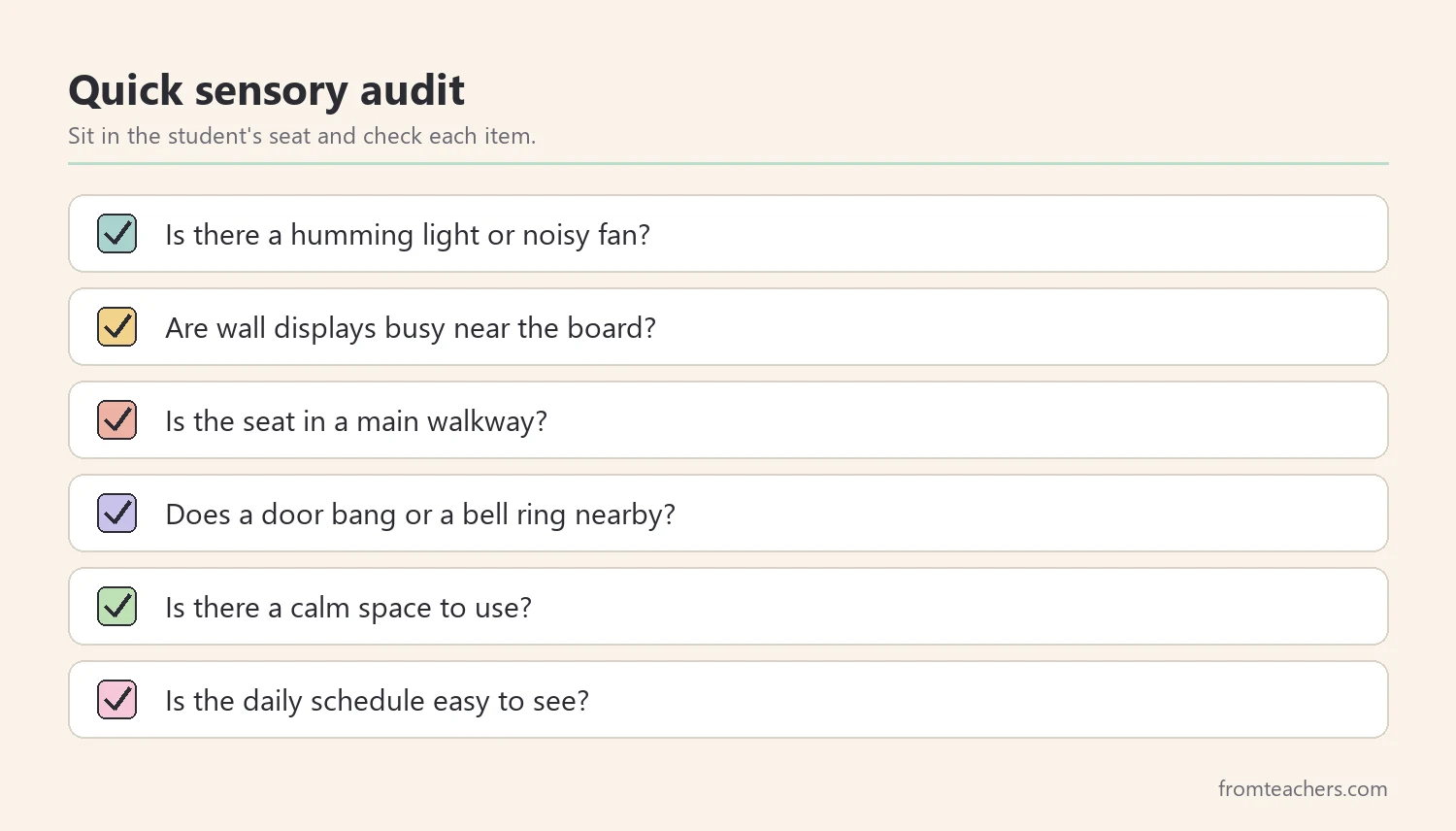
Start with a quick sensory audit. Stand where the student sits and notice what they see, hear, and feel. Is there a humming light, a busy wall display, a door that bangs, or a seat in the main walkway? Then, choose two or three changes you can make this week.
Next, create a calm space. This does not need to be large. A corner with a cushion, headphones, and a visual timer is enough. Teach every student how and when to use it, so it becomes a normal part of the room instead of a punishment.
Also, make the structure visible. A daily schedule on the board, labeled material bins, and clear areas for different kinds of work reduce guessing. For many autistic students, knowing what comes next is one of the most calming supports you can offer.
In addition, check the predictable sensory events of the day. Fire drills, assemblies, and lunch are common pressure points. When supporting autistic students, a quick heads-up the day before, plus a plan for where the student can go if it gets too loud, can prevent a hard afternoon.
For example, Mr. Okafor moved Maya’s desk away from the door, removed half of the posters near the board, and added a small calm corner with headphones. He also posted the day’s schedule at Maya’s eye level. In the first week, she asked to use the calm corner twice, both times returning within five minutes.
3. Communicate clearly when supporting autistic students
Clear communication is one of the most practical parts of supporting autistic students. Many autistic learners process language literally or need more time to respond. Long, layered directions or figures of speech can make a simple task feel confusing.
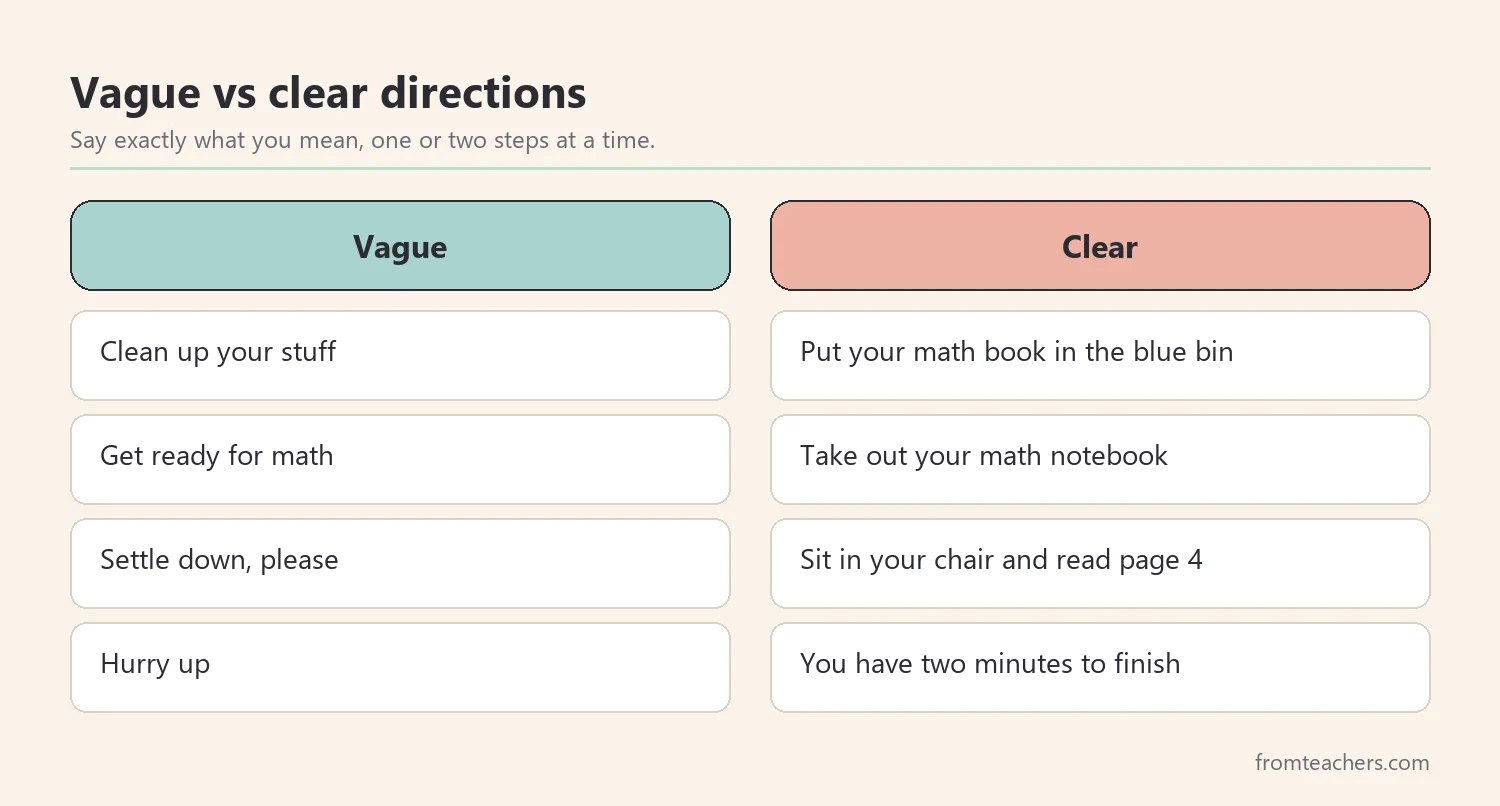
First, say exactly what you mean. “Put your math book in the blue bin” is clearer than “Clean up your stuff.” Next, give one or two steps at a time and pair them with something visual, such as a written list, an example, or a gesture.
Then, give processing time. After a question, wait several seconds before repeating or rephrasing. Repeating too quickly can feel like a new question. Also, accept different ways of answering: pointing, writing, typing, or using a communication device all count.
Similarly, be careful with sarcasm, idioms, and jokes during instructions. They are not off limits, but explain them when they come up. A quick “That is a saying; it means hurry up” keeps the student included instead of confused.
For example, Mr. Okafor used to say, “Okay, let’s wrap up and get ready for math.” Now he says, “Reading is finished. Put your book in the bin. Take out your math notebook.” He also writes the same three steps on the board. Maya follows them without asking for help most days.
If you want ready-made visual supports and planning pages, the autism classroom support guide for teachers covers communication strategies, routines, and printable tools you can adapt for your room.
4. Support transitions and emotional regulation
Many teachers find that this step is where supporting autistic students makes the biggest daily difference.
Transitions are often the hardest part of the day. Moving from a preferred task to a new one, changing rooms, or facing a surprise schedule change can lead to distress. Predictability helps a great deal.
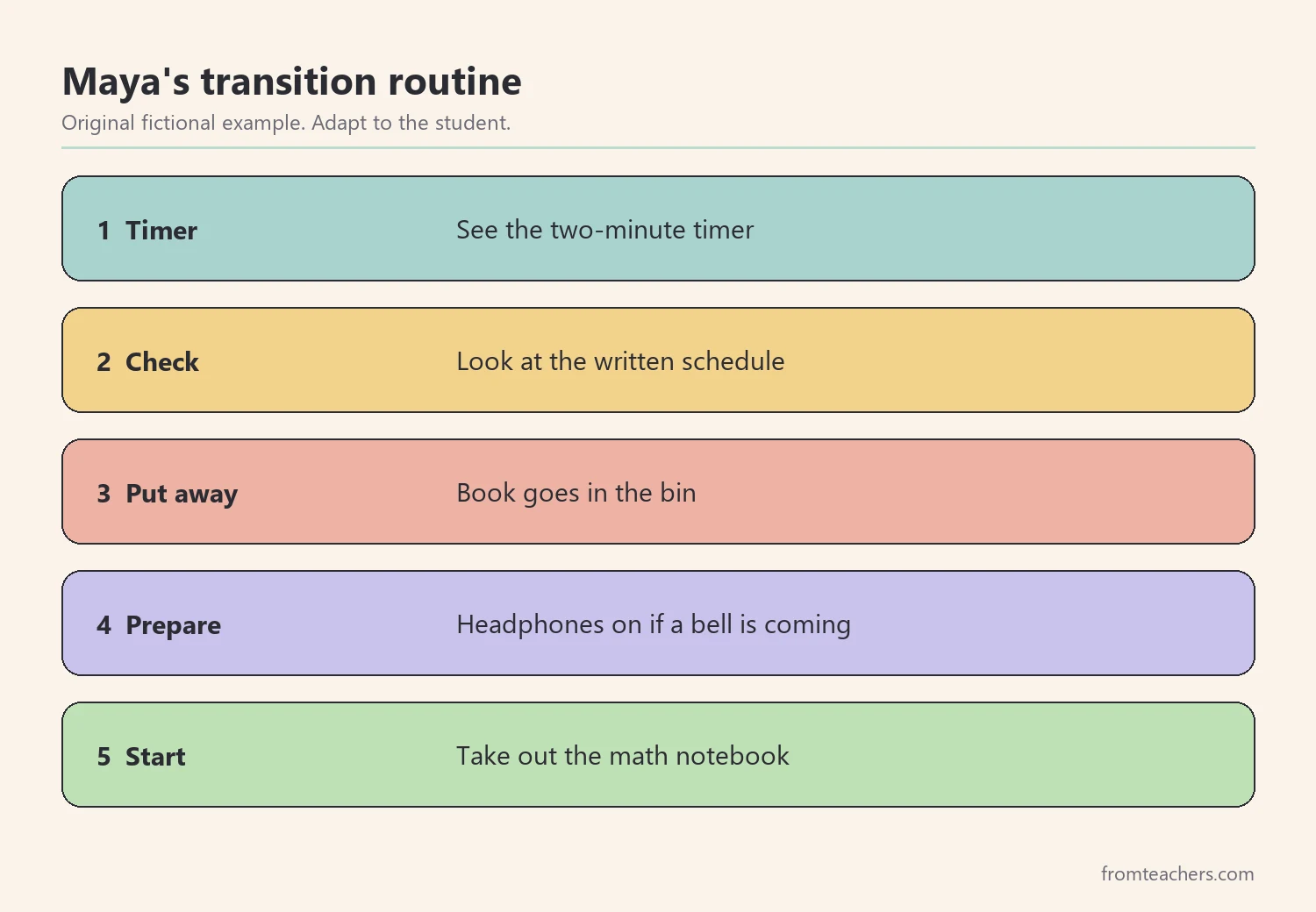
First, warn before the change. Use a visual timer, a short countdown, or a “first, then” card. Next, teach a transition routine and practice it when things are calm, just like any other skill.
Then, plan for regulation. Supporting autistic students includes teaching calming strategies before they are needed. Together with the student, choose two or three options, such as headphones, a short walk, or drawing for two minutes. Put the options on a small card the student can point to.
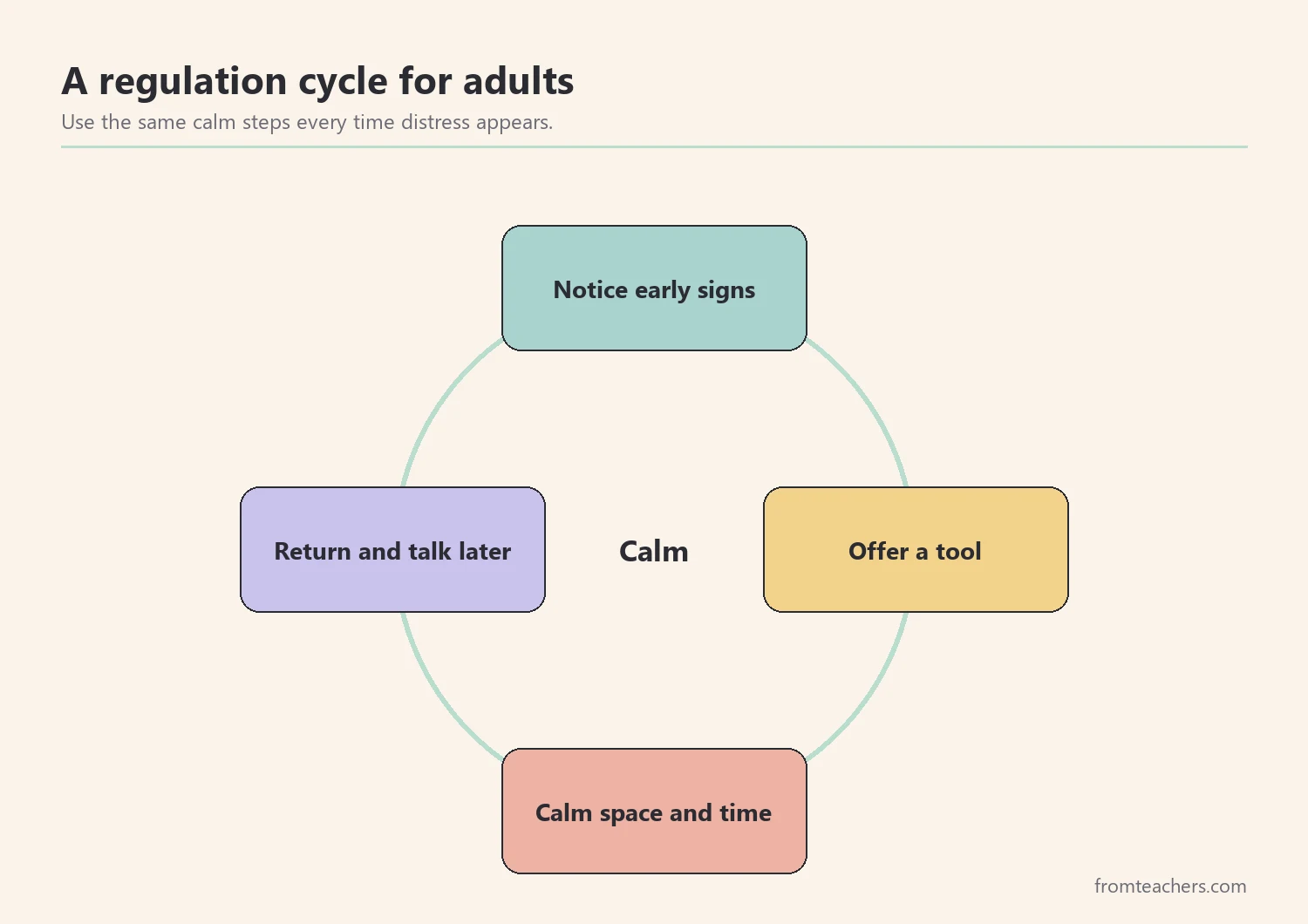
Also, respond calmly when distress happens. Lower your voice, reduce words, and offer the calm space or a familiar tool. Talk about what happened later, once the student is settled. Distress is information, not defiance.
For example, before the end of reading, Mr. Okafor shows Maya a two-minute timer. When it ends, she checks her schedule, puts her book away, and takes out her math notebook. If the hallway bell is coming, she puts on her headphones first.
5. Adapt instruction and partner with families
Finally, look at how you teach and how the student connects with peers. Supporting autistic students well means adapting instruction so the student can show what they know, and creating safe chances for social connection.
Start with instruction. Break assignments into short, visible parts. Offer choices in how to show learning, such as a drawing with labels instead of a paragraph. Use the student’s interests when you can, for example a reading passage about marine animals.
Next, support social life with structure. Give clear roles in group work, such as “materials manager” or “note taker.” Teach peers simple ways to include classmates. Avoid forcing eye contact or a single “right” way to socialize.
Also, think about homework and tests. Extra time, a quieter room, or fewer problems that still show the same skill are common supports. Check the student’s IEP or plan, and ask the team before changing what is being measured.
Then, track one measure and share it with the family. Keep it simple: for instance, how many of the day’s main transitions went smoothly. Review the data every few weeks and adjust one thing at a time.
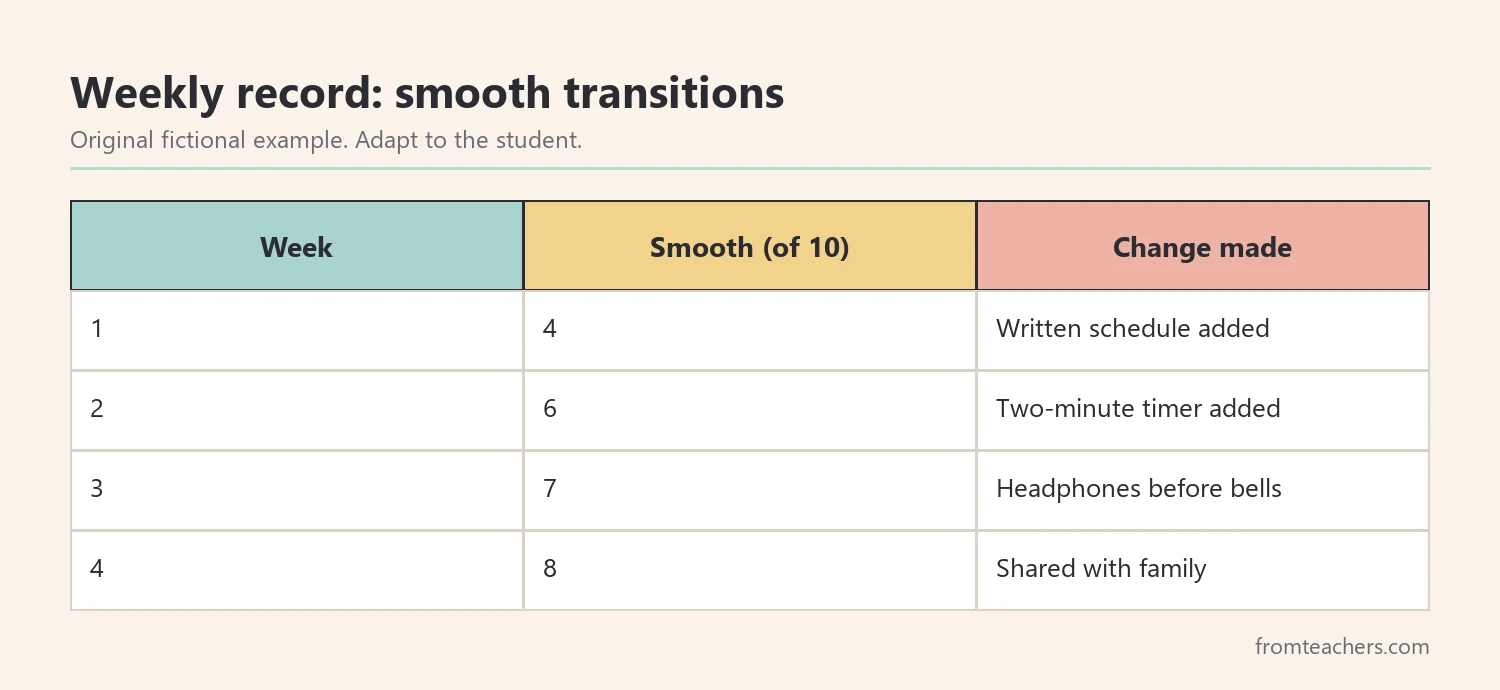
For example, Mr. Okafor tracked 10 transitions each week for Maya. In week 1, 4 of 10 went smoothly. By week 4, 8 of 10 did. He shared the record with Maya’s family, who mentioned that a written schedule was helping at home too.
Finally, remember that supporting autistic students is a team effort. Paraprofessionals, specials teachers, the counselor, and lunch staff all meet the student during the day. A one-page profile and a shared approach to transitions mean the student meets the same calm, clear adults wherever they go.
Equally important, look after yourself and your colleagues. Supporting autistic students well takes planning, patience, and energy. Share materials, divide tasks across the team, and celebrate small gains together.
Common mistakes and how to avoid them
- Using one plan for every autistic student. Fix: build a short profile for each learner and plan from it.
- Treating distress as defiance. Fix: look for the trigger, such as noise or a surprise change, and adjust that first.
- Giving long verbal directions. Fix: give one or two steps at a time, with a visual support.
- Teaching calming strategies only during a meltdown. Fix: practice them when the student is calm so they are ready when needed.
- Forcing typical social behavior. Fix: support connection through structure, shared interests, and clear roles.
Questions teachers and parents ask about supporting autistic students
Where should I start with supporting autistic students in a busy classroom?
Start with one student and one hard moment, such as a transition or a noisy period. Make one or two changes and watch what happens for a week. Small wins build confidence for the student and for you.
Do visual schedules help older students too?
Yes, many older students benefit from visual structure. The format can grow with the student, such as a planner, a phone checklist, or a written agenda. The goal is predictability, not a childish look.
How do I handle a meltdown in class?
Keep everyone safe, lower your voice, and reduce words. Offer the calm space or a familiar tool, and give time. Talk about what happened later, once the student is settled, and look for patterns you can prevent.
Should I tell classmates that a student is autistic?
That decision belongs to the student and the family. Without sharing personal details, you can teach the whole class about differences, kindness, and different ways people learn and communicate.
How can families help with supporting autistic students at school?
Families know what calms their child, what interests them, and what has worked before. Share a short profile at the start of the year and agree on a simple way to exchange updates. Consistent language between home and school helps many students.
Related reading: Managing Sensory Overload: Practical Strategies for Autism and ADHD, Meltdowns vs Tantrums: A Guide to Understanding and Responding, and Autism Social Skills Development: Practical Strategies for Growth.
A companion resource for supporting autistic students:
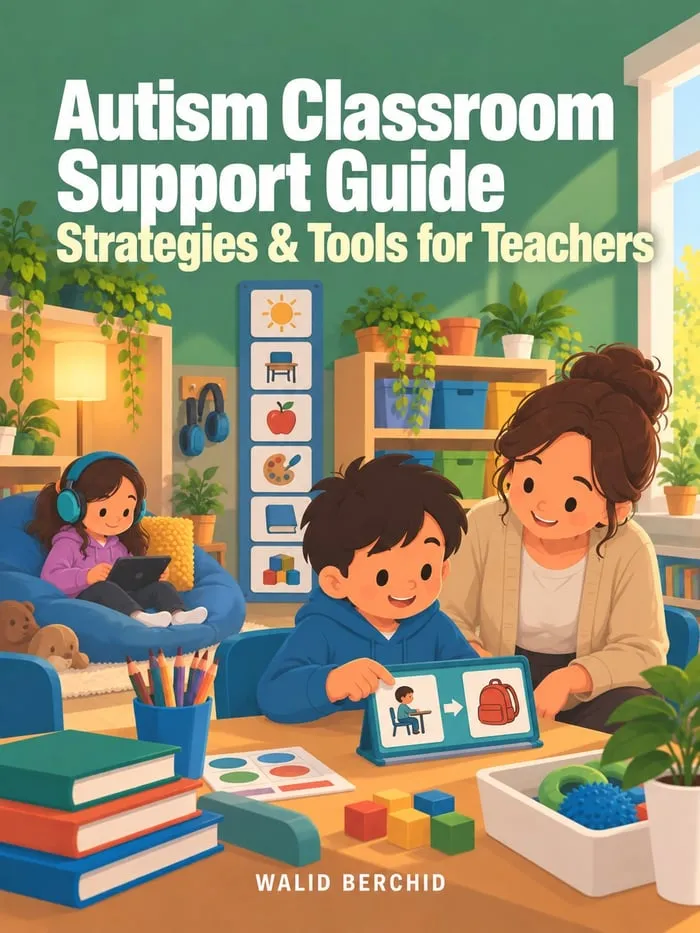
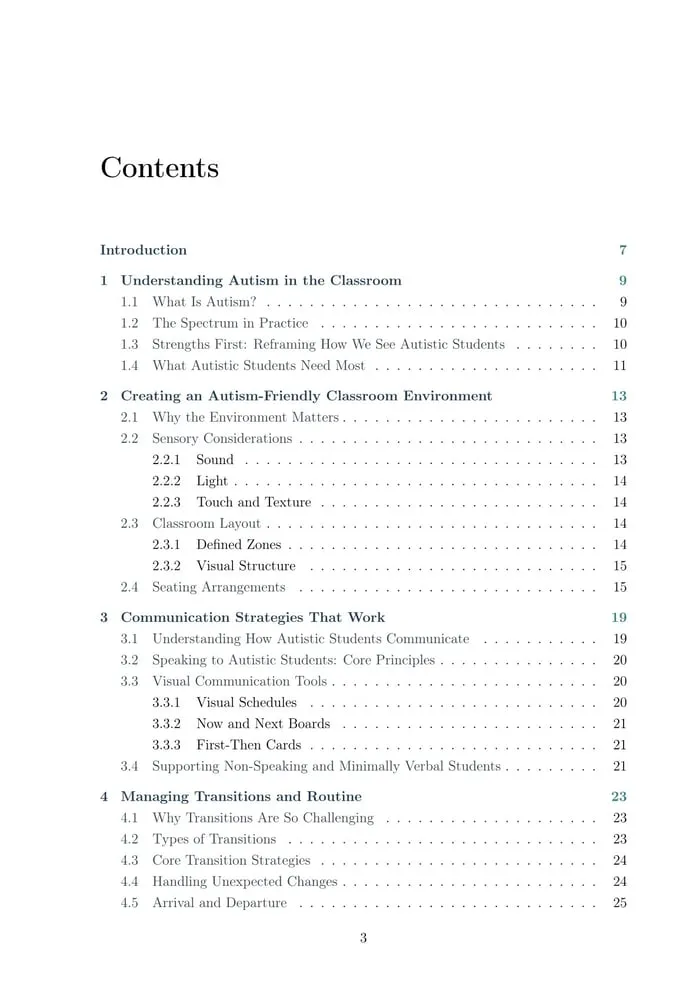
Autism Classroom Support Guide: Strategies and Tools for Teachers: a 59-page PDF covering autism in the classroom, an autism-friendly environment, communication, transitions and routine, emotional regulation, adapted instruction, social skills, behavior, and working with families, with printable tools in the appendix.
Sources and scope
- CDC autism information: general background on autism spectrum disorder in children.
- IRIS Center, Vanderbilt University: free modules on autism, classroom environment, and evidence-based practices.
- AFIRM, UNC Frank Porter Graham Child Development Institute: free online modules on evidence-based practices for autistic learners.
- American Speech-Language-Hearing Association (ASHA): information on communication and supports.
This guide covers everyday classroom strategies for supporting autistic students in communication, environment, transitions, and instruction. It does not cover diagnosis, therapy, or medical care, which belong to qualified professionals and the student’s team.
Key takeaways
- Supporting autistic students starts with a short profile of strengths, interests, and needs.
- Reduce sensory load and make the day’s structure visible.
- Use clear, literal language with one or two steps at a time.
- Teach transition and calming routines when the student is calm.
- Track one measure and review it with the family every few weeks.










Leave a Comment