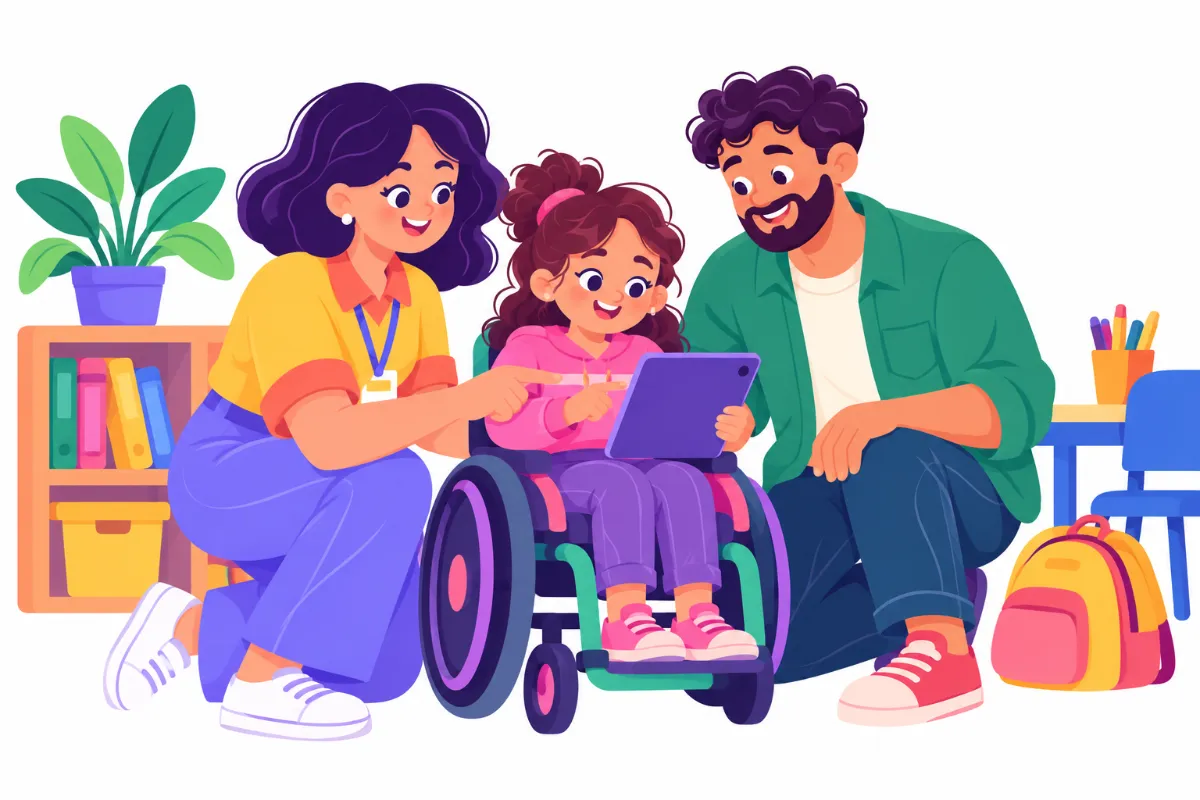

Students with physical disabilities thrive when home and school work as one team. Mobility needs, medical routines, and equipment do not stop at the school door. When adults coordinate, students spend less energy on barriers and more on learning.
However, gaps often appear between settings. A therapy exercise may happen at school but never at home. A pain signal noticed by a parent may never reach the teacher. This guide shows how to close those gaps with simple shared systems.
Why Coordination Matters for Students With Physical Disabilities
First, consistency builds skills faster. If a student practices the same stretch or grip at home and school, progress adds up. On the other hand, mixed methods confuse students and slow growth.
Also, safety depends on shared information. Staff need to know about transfers, seizure plans, or positioning needs. Families need to know about any changes the school notices.
Finally, coordination builds trust. Parents feel respected when their knowledge shapes the plan. As a result, conversations stay positive even when problems arise.
A Simple Format for Shared Planning
A clear table keeps everyone on the same page. For each need, list four things:
- The classroom strategy.
- The matching home collaboration tip.
- The person responsible.
- How often it happens.
For example, a fine motor goal might list “use pencil grip during writing” at school. The home tip could be “use the same grip for homework.” The OT is responsible, and it happens daily.
Because roles are clear, nothing falls through the cracks. Similarly, families know exactly what to practice.
Syncing Therapy for Students With Physical Disabilities
Physical and occupational therapy work best when practiced often. So, ask therapists to share short home programs.
Physical Therapy
Exercises for strength, balance, or stretching can fit into morning or evening routines. Photos or short videos help families follow the steps.
Fine Motor Skills
Activities like playdough, tweezers, or buttoning can happen at home and school. Use the same tools when possible.
Then check in monthly. Ask families what is working and what feels too hard.
Adapting Materials and Homework
Many assignments assume students can write, cut, or carry materials easily. Therefore, adapt materials for access.
Common adaptations include:
- Digital worksheets instead of paper.
- Larger spaces for writing or typing.
- Pre-cut materials for crafts and projects.
- Reduced copying from the board.
- Lightweight textbooks or digital copies at home.
In addition, share these adaptations with families. Homework should match what works in class. The [Accommodations vs Modifications guide](https://fromteachers.com/accommodations-vs-modifications/) explains how to decide which kind of change fits.
Safety Planning for Students With Physical Disabilities
Emergency drills can be stressful and risky without a plan. So, create an individual evacuation plan for each student who needs one.
The plan should cover:
- Which exit and route the student will use.
- Which adult is responsible during drills.
- Any equipment needed, like an evacuation chair.
- How to communicate with the student calmly.
Practice the plan during regular drills. Also, share it with substitutes and new staff. Meanwhile, families should know the plan too, so they can explain it at home.
Assistive Technology for Students With Physical Disabilities
Assistive technology only helps if it works everywhere. For instance, a student may use speech-to-text at school but not have it at home.
So, list each tool and where it is used. Then make sure settings, passwords, and chargers are ready in both places. Also, train families on the basics.
When a device breaks, have a backup plan. A simple low-tech option, like a letter board, keeps communication going.
Monitoring Pain and Discomfort
Some students cannot easily say when they hurt. Therefore, teams should agree on how to notice and share pain signals.
Watch for changes in posture, mood, or participation. Use a simple pain scale with pictures if the student can point. Then send a quick note home when you notice something new.
Families can do the same in reverse. A rough night or new medication may affect the school day. Clear two-way updates keep students with physical disabilities comfortable and safe.
Equipment Training for Families of Students With Physical Disabilities
Wheelchairs, standers, and communication devices can feel intimidating at first. So, offer short training sessions for families.
Start with the basics, such as charging, cleaning, and simple adjustments. Next, show safe transfer and positioning steps if the therapist recommends them. Then give a one-page reference sheet with photos.
Also, invite questions without judgment. Many parents worry about doing something wrong. A friendly demo builds their confidence quickly. In turn, students with physical disabilities get the same safe support at home and at school.
Field Trips for Students With Physical Disabilities
Every student deserves to join trips, clubs, and sports. However, these events need early planning.
Check accessibility of venues ahead of time. Confirm transportation, restrooms, and rest areas. Also, invite the family to help plan or attend if they wish.
For ready-made tables, this [home-school accessibility and physical support toolkit](https://berchid.com/b/2Lk6Q) covers therapy, safety, technology, field trips, and family training in one place. It helps teams support students with physical disabilities with confidence.
Frequently Asked Questions
Who should lead home-school coordination?
Often the case manager leads. However, therapists, nurses, and teachers each own parts of the plan.
How often should teams update the plan?
Review it at least each grading period. Also, update it after surgery, new equipment, or a change in health.
What if the family cannot practice at home?
Respect their limits. Then focus on one small home tip, or increase practice during the school day instead.
Ready-to-use resource:
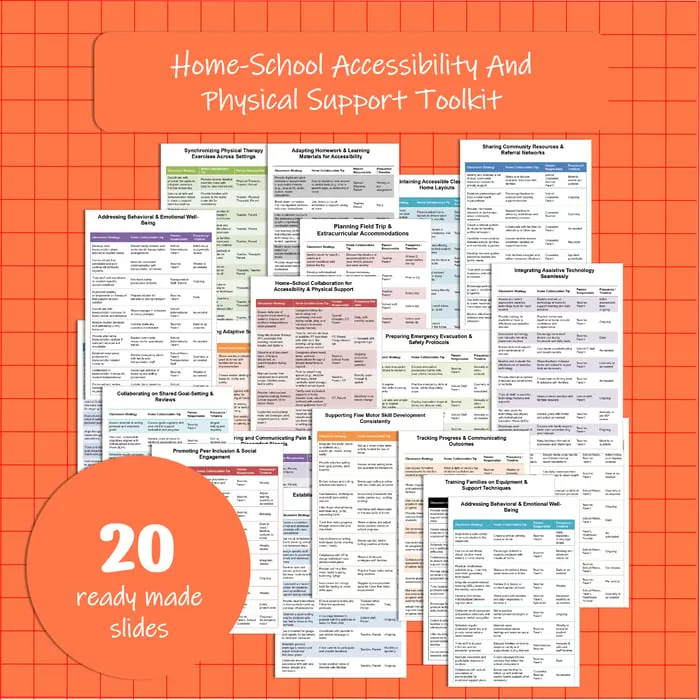
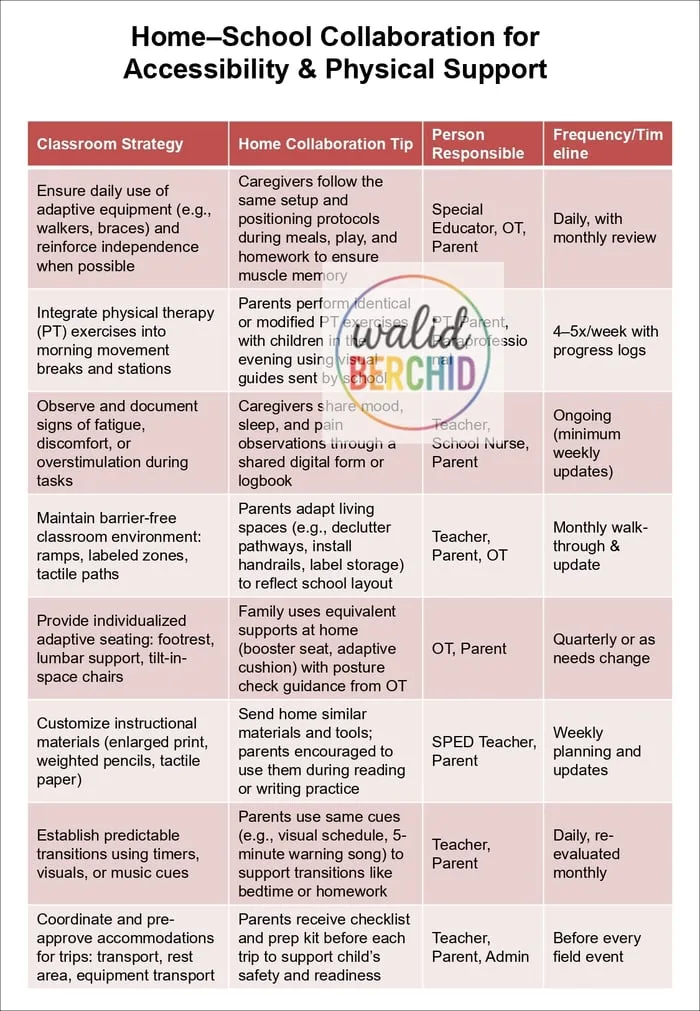
Home-School Accessibility and Physical Support Toolkit: A 20-page toolkit that pairs each classroom strategy with a home tip, a responsible person, and a frequency, so school and family stay coordinated.
Related reading: See [Best Assistive Technology for Special Education Classrooms](https://fromteachers.com/best-assistive-technology-special-education/) and [How Parents and Teachers Can Team Up for Special Education Success](https://fromteachers.com/parent-teacher-collaboration-in-special-education/). For federal guidance, visit the [IDEA website](https://sites.ed.gov/idea/).
Also on FromTeachers:
Key Takeaways
- Students with physical disabilities do best when home and school share one plan.
- List strategy, home tip, responsible person, and frequency for each need.
- Create individual safety and evacuation plans and practice them.
- Share pain signals and technology updates in both directions.




Leave a Comment