

Twice exceptional students can leave even experienced teachers puzzled. A child may read far above grade level yet struggle to write one paragraph. Another may solve logic puzzles quickly but forget basic math facts.
These learners are both gifted and have a disability. Because their strengths can hide their struggles, they are often missed. This guide explains how to spot them, support them, and build on what they do well.
What Does Twice Exceptional Mean?
“Twice exceptional,” or 2e, describes a student with high ability plus a learning or developmental disability. Common pairings include giftedness with dyslexia, ADHD, autism, or anxiety.
In addition, the two sides can mask each other. Talent may cover the disability. On the other hand, the disability may hide the talent. As a result, a 2e child can look “average” on paper.
Signs of Twice Exceptional Students in Your Class
Look for big gaps between what a child knows and what they can show. These gaps are the clearest clue.
- Rich vocabulary in talk, but very short written work.
- Deep interest in complex topics, yet trouble with simple routines.
- Strong reasoning, but slow or messy handwriting.
- Great test scores one week, very low the next.
- Frustration, avoidance, or acting out during “easy” tasks.
Also, listen to how the student talks about school. Many 2e kids say they feel “stupid” despite clear ability. That mismatch matters.
Finally, compare work across settings. A student may shine in science labs yet shut down in language arts. Those patterns point to where support is needed. Then you can plan with purpose.
Why Twice Exceptional Students Perform Inconsistently
Uneven work often confuses adults. It can look like laziness or lack of effort. However, it usually reflects a real skill gap.
For example, a gifted reader with weak executive function may know the answer but lose track of the steps. Similarly, a strong verbal thinker with dysgraphia may avoid writing because it is physically hard.
Because of this, avoid comments like “You could do this if you tried.” Instead, ask, “What part feels hard?” That question opens a real conversation.
Supporting Twice Exceptional Students Day to Day
Good support works on both sides at once. Challenge the strength and scaffold the weakness.
Challenge Their Strengths
Offer advanced content, open-ended projects, and deeper questions. Boredom can make behavior worse. So keep thinking demands high.
Scaffold the Struggles
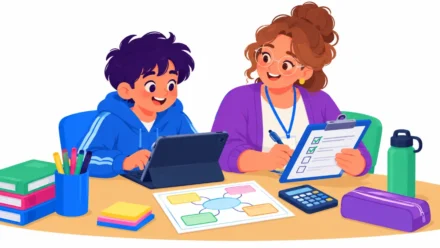
Use graphic organizers, checklists, speech-to-text, and chunked tasks. Next, allow other ways to show learning, such as oral reports or models.
Teach Self-Awareness
Help students name their strengths and needs. Then they can ask for the right help. This builds lasting confidence.
The twice-exceptional (2e) student guide pairs common signs with matching supports in a quick table format.
Correcting Misunderstood Behavior
Many 2e kids get labeled as defiant or unmotivated. Yet their behavior often signals frustration.
First, look at when the behavior happens. Is it during writing, reading aloud, or long tasks? Next, adjust the task, not just the consequence.
For instance, a student who refuses written work might thrive when allowed to type or dictate. Small changes like this prevent bigger problems later.
Twice Exceptional Students and the IEP Process
Gifted learners can still qualify for special education. High ability does not cancel a disability. Under federal law, eligibility depends on need, not just grades.
Also, review existing plans with care. Are accommodations actually used? Are IEP goals being met? Gaps in documentation can leave a student without support.
When something was missed, own it and fix it. Then update the plan with the team. The IDEA website explains eligibility rules in detail.
Partnering With Families of Twice Exceptional Students
Parents often see both sides clearly. They watch their child build huge projects at home, yet cry over homework.
So invite them in early. Share what you notice, and ask what they see. In addition, celebrate strengths in every meeting, not just concerns. Twice exceptional students do best when home and school see the whole child.
Simple Classroom Strategies That Work
Small routines can make a big difference. First, give choices whenever you can. Choice lowers stress and raises effort.
Next, split long assignments into short parts. Then check in after each part. As a result, the student sees progress and keeps going.
In addition, try these ideas with twice exceptional students:
- Let them skip practice they have already mastered.
- Offer a quiet space for tasks that need deep focus.
- Give a written copy of spoken directions.
- Pair a hard skill with a high-interest topic.
- Praise effort and strategy, not just quick answers.
Also, watch the emotional side. Many gifted kids are perfectionists. So a small mistake can feel huge. Teach them that errors are part of learning. For example, share your own mistakes out loud and show how you fix them.
Finally, track what works. Keep short notes on which supports help most. Then share them with next year’s teacher. That way, progress does not reset every fall.
Frequently Asked Questions
Can a gifted child have a learning disability?
Yes. A child can be gifted and also have dyslexia, ADHD, autism, or another disability at the same time.
Why do 2e students often go unnoticed?
Their strengths can hide their struggles. As a result, they may seem average and not qualify for either program.
Should 2e students be in gifted programs?
Often yes, with supports in place. They need challenge and accommodations together.
Ready-to-use resource:
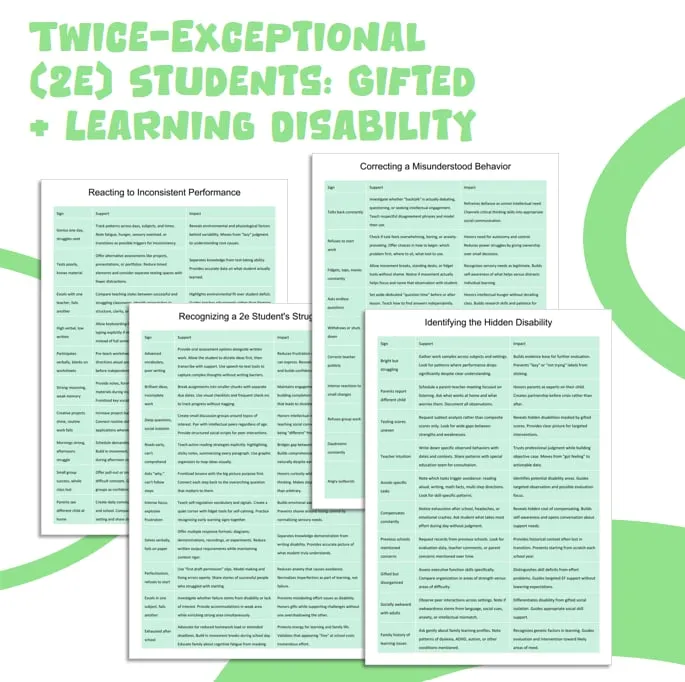
Twice-Exceptional (2e) Students: Gifted + Learning Disability: Twelve pages of Sign, Support, and Impact tables to identify hidden disabilities, understand inconsistent work, and respond with real support.
Related reading: Accommodations vs Modifications in Special Education and Learning Styles Student Success Guide.
Also on FromTeachers:
Key Takeaways
- Twice exceptional students are gifted and also have a disability.
- Big gaps between talk and written work are a key clue.
- Challenge strengths while scaffolding weaknesses at the same time.
- High ability does not cancel the right to special education support.

Leave a Comment